博客

  • Tradition and Ceremony Usher In Legal Year

    Tradition and Ceremony Usher In Legal Year

    The Belizean legal community convened in Belize City on January 19, 2026, to formally inaugurate the High Court Legal Year through a ceremony blending tradition with forward-looking judicial vision. The day’s proceedings commenced with a solemn church service at Saint John’s Cathedral, followed by a ceremonial procession along Regent Street led by Chief Justice Louise Blenman and Commissioner of Police Dr. Richard Rosado, accompanied by the Belize Defense Force Band.

    In her keynote address, Chief Justice Blenman highlighted transformative achievements in criminal justice administration during the previous legal year. “Our collaborative approach has produced exceptional results in criminal justice reform initiatives,” Blenman stated. “Longstanding backlogs are now behind us, case disposition rates have significantly improved, and historical dissonance among justice sector stakeholders has been substantially mitigated.”

    Attorney General Anthony Sylvestre endorsed the judiciary’s progress, acknowledging remarkable case reduction achievements and modernization efforts. He reaffirmed government commitment to continued investment in judicial infrastructure, professional training, and staffing resources. “There is much we in Belize are to be proud of,” Sylvestre addressed the Chief Justice, “and with the vigilance of the judiciary and stakeholders, much more is to be achieved this new legal year.”

    William Lindo Jr., President of the Bar Association of Belize, emphasized the critical role of technology in judicial evolution. “We have entered an era where technology is no longer optional but foundational,” Lindo asserted. “E-filing systems, digitalization of court records, and accessible judicial resources are no longer conveniences but necessities integral to transparency and efficiency. Belize cannot afford to be left behind in this digital transformation while preserving the essential human element in justice delivery.”

    The unified message from judicial, legal, and government leadership underscored a collective commitment to developing a more robust, efficient, and responsive justice system serving the needs of the Belizean populace as the new legal year commences.

  • Telecom Rate Freeze Pending; AG Awaits Directive

    Telecom Rate Freeze Pending; AG Awaits Directive

    BELIZE CITY – The Belizean government’s highly anticipated plan to implement a year-long freeze on telecommunications rates has encountered an administrative delay, with the Attorney General’s office confirming it has not yet received formal instructions to draft the necessary legislation.

    Attorney General Anthony Sylvestre addressed reporters outside the High Court on Monday, revealing that despite Prime Minister John Briceño’s announcement last week regarding the proposed statutory instrument, his department awaits official drafting instructions to begin the legal process. The planned measure would temporarily lock current phone and internet service prices while merger negotiations between telecommunications providers BTL and SMART continue.

    Sylvestre emphasized the standard procedural protocol, stating, “We act on instructions. A particular ministry may have an issue, so we will receive drafting instructions and would draft a rule or statutory instrument based on that instruction, ensuring it complies with the constitution and other prevailing laws.”

    The Attorney General confirmed that the proposed BTL acquisition will receive comprehensive discussion during Tuesday’s Cabinet meeting. When pressed by reporters regarding the Prime Minister’s potential participation in these discussions – given his family’s partial ownership of SMART – Sylvestre declined to speculate, noting that Cabinet had not yet collectively examined the matter.

    “The discussion will take place tomorrow at Cabinet. We don’t know what will happen tomorrow,” Sylvestre stated, adding that he wished to avoid venturing down “what could eventually be a rabbit hole” regarding procedural specifics ahead of the formal meeting.

    The development highlights the complex interplay between regulatory oversight, market consolidation, and consumer protection in Belize’s telecommunications sector, with the government attempting to balance competitive market forces with affordable public access to essential services.

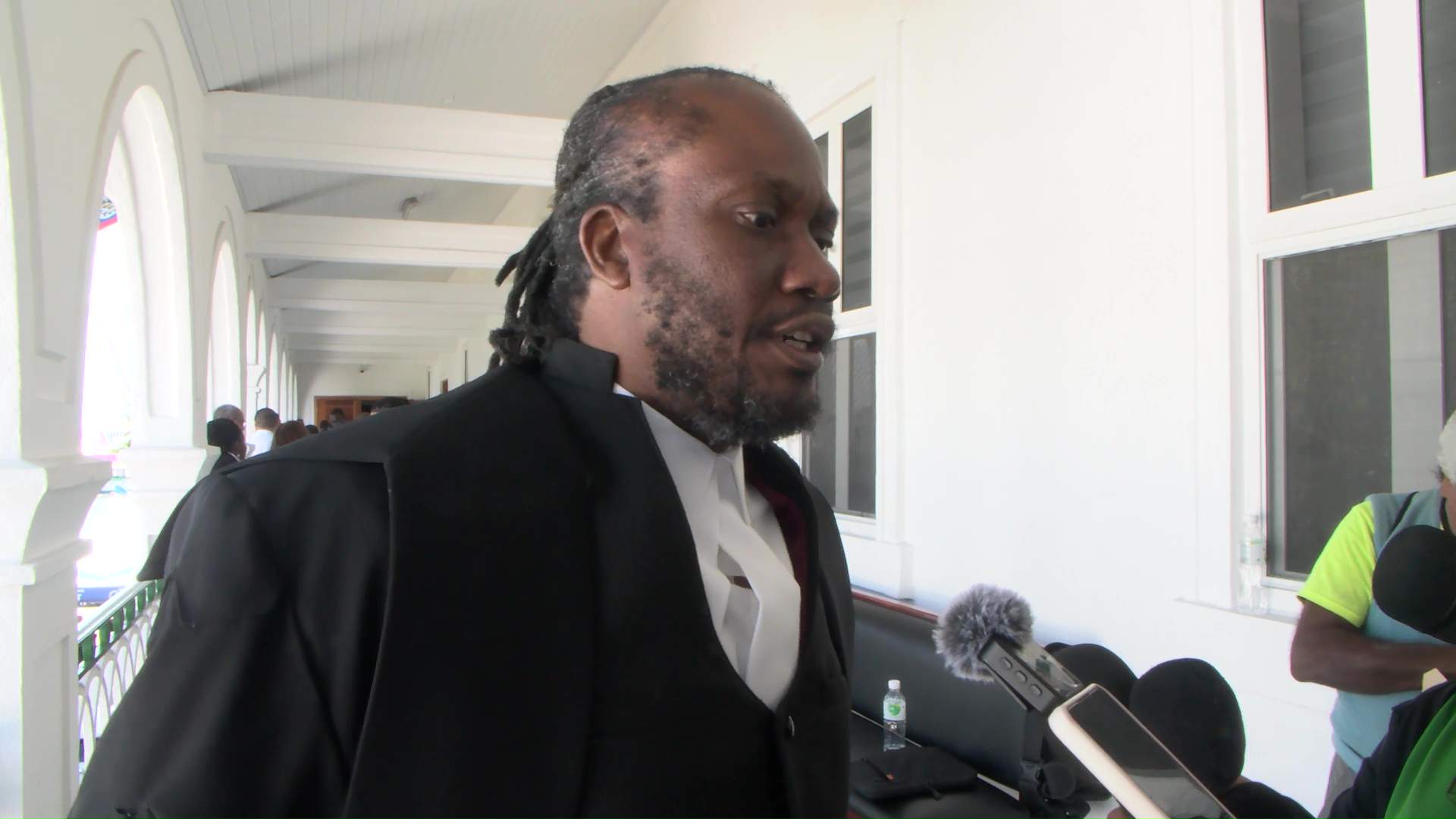
  • Briceño Pulls Plug on 13th Amendment, Gun Court Still in Play

    Briceño Pulls Plug on 13th Amendment, Gun Court Still in Play

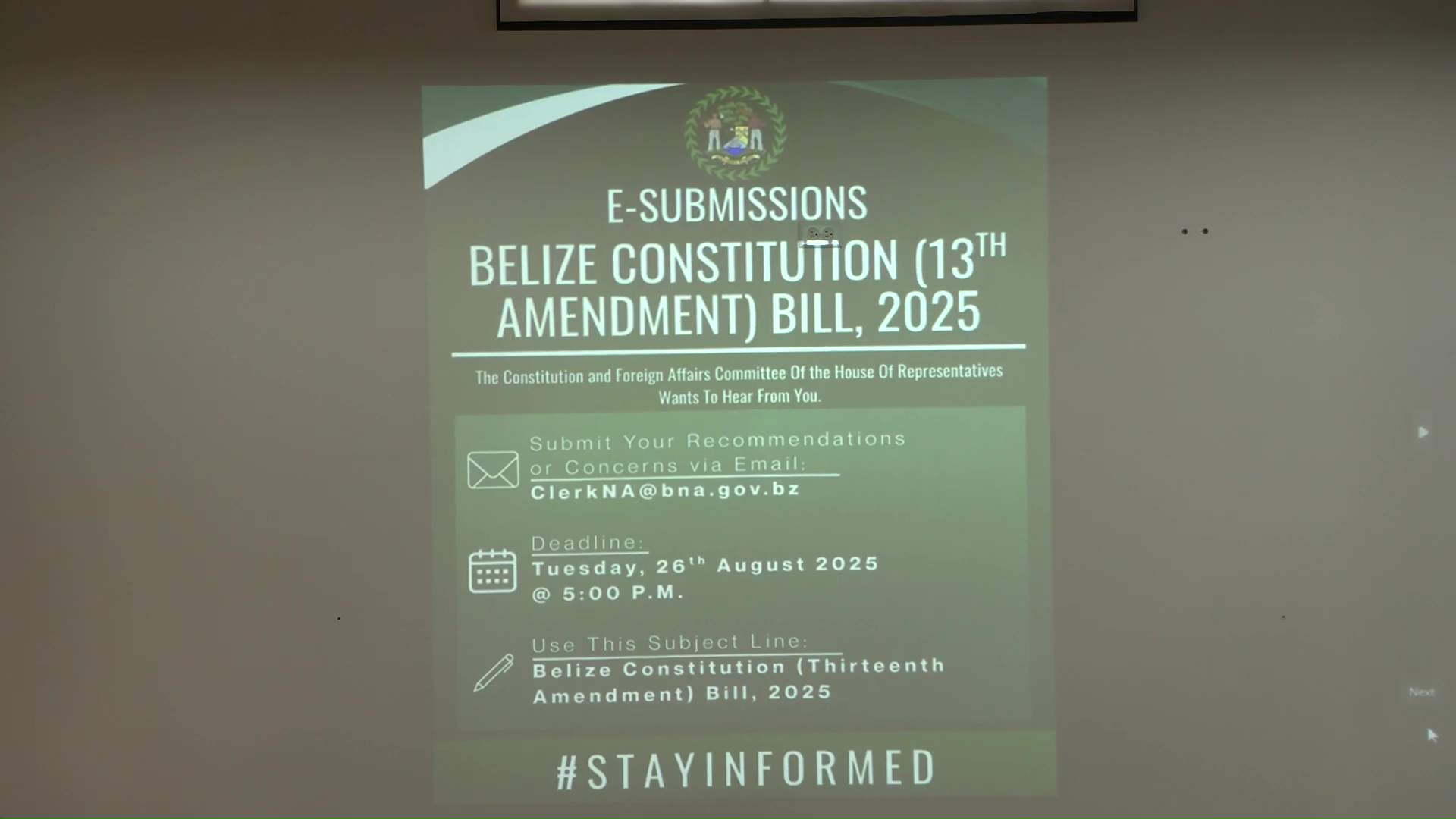
    In a significant policy reversal, the Briceño administration has formally terminated its pursuit of the Thirteenth Amendment to Belize’s Constitution as a mechanism to address the nation’s crime epidemic. The decision follows extensive nationwide consultations that revealed insufficient public and parliamentary support for the constitutional overhaul.

    Attorney General Anthony Sylvestre confirmed the administration’s shift in strategy, indicating that while the comprehensive amendment package has been shelved, certain components—notably the establishment of a specialized Gun Court—remain under consideration through alternative legislative pathways.

    “The ministry of Home Affairs and AG’s ministry are consulting and considering this matter,” Sylvestre stated. “A final product has not been determined as yet regarding what will be the next step—whether that will be an amendment to the criminal code or the Crime Control and Criminal Justice Act.”

    The Attorney General emphasized that any legislative measures derived from the original amendment proposal would require thorough parliamentary deliberation and additional public consultation. He specifically noted that the potential implementation of a Gun Court, once contemplated as part of the constitutional amendment, could potentially be enacted through regular statutory legislation rather than constitutional reform.

    Sylvestre declined to provide further specifics pending final decisions, but unequivocally stated: “The Thirteenth Amendment or parts of the Thirteenth Amendment will no longer be pursued.” The ultimate determination regarding which elements might be preserved through alternative legislation rests with parliamentary committees and elected representatives.

    This development represents a notable recalibration of the government’s approach to criminal justice reform, shifting from comprehensive constitutional change to targeted legislative measures that can be implemented through established parliamentary processes.

  • Jerry Enriquez Wins Leave to Sue JLSC

    Jerry Enriquez Wins Leave to Sue JLSC

    In a significant legal development, social advocate Jerry Enriquez has secured High Court authorization to challenge the Judicial and Legal Services Commission’s rejection of his formal complaint. The judicial body had previously dismissed Enriquez’s submission in late 2025, a decision the activist contends disregarded substantial and compelling evidence.

    The High Court’s approval enables Enriquez to pursue formal judicial review proceedings against the JLSC, marking a notable escalation in the confrontation between civil society and Jamaica’s judicial oversight mechanism. Attorney General Anthony Sylvestre acknowledged the historical precedent of such challenges, revealing this isn’t the commission’s first courtroom encounter.

    Sylvestre referenced a prior case that progressed to the Caribbean Court of Justice involving allegations against Justice of Appeal Awich. The Jamaican Bar Association had previously sought removal proceedings against Awich for alleged misconduct concerning delayed judgment delivery, though the JLSC initially declined to advance those proceedings. That case established important procedural precedents regarding the commission’s accountability mechanisms.

    The current litigation raises fundamental questions about complaint adjudication transparency within Jamaica’s judicial oversight framework. Legal observers anticipate this case could potentially reshape how the JLSC evaluates future misconduct allegations and complaint dismissals.

  • Sugar Cane Season Opens with High Hopes for Successful Harvest

    Sugar Cane Season Opens with High Hopes for Successful Harvest

    Belize’s sugar industry has officially launched its 2026 harvesting season with renewed optimism following a devastating previous year marked by agricultural disease and climate challenges. The ceremonial commencement took place at the Belize Sugar Industries compound in Tower Hill, Orange Walk, bringing together farmers, industry executives, and government representatives.

    The sector faced significant setbacks during the 2025 season when Fusarium disease severely impacted northern cane fields, substantially reducing crop yields. Compounding these difficulties, exceptionally heavy rainfall damaged transportation infrastructure critical for moving harvested cane to processing facilities, resulting in an unusually delayed start to this year’s season.

    Mac McLachlan, General Manager of Belize Sugar Industries, acknowledged the ongoing recovery process while expressing confidence in the industry’s direction. “We’re not back to where we need to be,” McLachlan stated, “but we are expecting more cane this year than we had last year.” The government allocated three million dollars for emergency intervention, enabling pesticide treatment across 54,000 acres of cane land to combat the fungal disease.

    Climate-related challenges further complicated the recovery effort, with excessive rains rendering many sugar roads virtually impassable. Vladimir Puck, Chairperson of the Corozal Sugar Cane Farmers Association, emphasized the importance of collaborative efforts among farmers, government agencies, and milling operations in addressing these multifaceted challenges.

    A significant development this season involves intensified focus on crop diversification strategies and investment in more resilient cane varieties that offer improved sugar yields. Prime Minister John Briceño reaffirmed his administration’s commitment to the industry’s revitalization, noting his personal oversight of sugar-related ministries and reference to a comprehensive 120-million-dollar investment plan.

    Price fluctuations have added another layer of complexity to the industry’s recovery. While 2024 established a record price of ninety dollars and ninety-five cents per ton, the following year witnessed a sharp decline. Salvador Martin, Chairperson of the Belize Sugar Cane Farmers Association, maintained a cautiously optimistic outlook, noting improved testing results and anticipating better pricing conditions for the current season.

    Consumers should prepare for increased sugar prices this year, according to Dr. Osmond Martinez, Minister of State in the Ministry of Economic Development. The price adjustment aims to support farmer profitability while addressing cross-border contraband issues stemming from regional price disparities.

    The industry encourages farmer participation in individual testing programs that evaluate crop quality and provide incentives for higher-quality production, representing another step toward comprehensive sector recovery.

  • Lawyer denounces YouTube for blocking videos with Dominican National Anthem

    Lawyer denounces YouTube for blocking videos with Dominican National Anthem

    SANTO DOMINGO – A significant controversy has emerged in the Dominican Republic regarding the accessibility of the country’s national anthem on digital platforms. Prominent attorney Jaime Bobadilla brought attention to YouTube’s automated Content ID system, Interstreet Records, which has systematically removed videos containing performances of the Dominican National Anthem under allegations of intellectual property infringement.

    Bobadilla expressed profound astonishment at these takedowns, characterizing them as an assault on fundamental national symbols. Through a widely circulated video on his social media account, the legal expert articulated that compositions of national significance should remain exempt from conventional copyright enforcement mechanisms.

    The Dominican Ministry of Culture has promptly responded to these developments, initiating a formal investigation through its legal division. Official statements confirm that governmental authorities are examining the precise circumstances surrounding these content removals. Culture officials have reiterated the established legal position that the Dominican National Anthem, created by poet Emilio Prud’Homme with musical composition by José Reyes, exists as national property without copyright protection or commercial ownership constraints.

    This incident has ignited broader conversations concerning the balance between digital platform policies and the preservation of cultural heritage. The blocking of these patriotic recordings has raised questions about automated content moderation systems and their ability to recognize culturally significant material that should remain in the public domain. The situation continues to develop as government institutions engage with platform representatives to resolve this conflict between technological enforcement and national identity preservation.

  • 2026 World Cup : FIFA ranking of Haiti and its opponents (+ schedule)

    2026 World Cup : FIFA ranking of Haiti and its opponents (+ schedule)

    As the 2026 FIFA World Cup approaches, Haiti’s national football team, known as Les Grenadiers, has demonstrated incremental progress in the global standings. The latest FIFA rankings released on January 19th show Haiti climbing one position to 83rd place worldwide with 1294.49 points, while maintaining their 8th-place standing within the CONCACAF region behind Jamaica’s 1362.46 points.

    The upcoming tournament presents a formidable challenge for the Caribbean nation, who face particularly demanding opponents in Group C. Haiti will commence their campaign against Scotland on June 13th, 2026, at Boston’s Gillette Stadium. The Scottish team currently occupies 38th position globally with 1506.77 points, representing European football’s characteristically competitive style.

    Their second match on June 19th at Philadelphia’s Lincoln Financial Field pits them against five-time world champions Brazil, ranked 5th worldwide with 1760.46 points. The historical record between these teams reveals Brazil’s dominance, with four comprehensive victories in senior competitive matches dating from 1974 to 2016.

    The group stage concludes on June 24th at Atlanta’s Mercedes-Benz Stadium against Morocco, Africa’s football powerhouse and 2022 World Cup semi-finalists. Currently ranked 8th globally with 1736.57 points, Morocco presents another significant challenge. Notably, Haiti has no prior competitive history against either Morocco or Scotland at senior level.

    The only bright spot in Haiti’s historical record against these opponents came in 1999, when their under-20 squad secured a 4-3 victory against Brazil’s youth team—a reminder that football occasionally produces unexpected outcomes despite overwhelming odds.

  • FGM’s Walton-Desir to boycott National Assembly; questions how Opposition Leader’s office was budgeted for

    FGM’s Walton-Desir to boycott National Assembly; questions how Opposition Leader’s office was budgeted for

    In a dramatic escalation of Guyana’s parliamentary crisis, Opposition Parliamentarian Amanza Walton-Desir has declared her party’s intention to boycott Monday’s crucial budget reading session. The leader of the Forward Guyana Movement (FGM) demands that Speaker Manzoor Nadir first convene opposition legislators to elect a formal Opposition Leader before any fiscal deliberations commence.

    Walton-Desir’s statement directly challenges the legitimacy of the upcoming budget presentation by Finance Minister Dr. Ashni Singh, scheduled for January 26, 2026. “We will not sit there and pretend that it is business as usual,” she asserted, emphasizing that her movement “will not lend legitimacy to nonsense” by participating in proceedings while the government “deliberately refuses” to facilitate the constitutional process.

    The political stalemate centers on the election of an Opposition Leader following September’s general elections, which returned the People’s Progressive Party Civic (PPPC) to power with 36 seats. The We Invest in Nationhood (WIN) party, led by Azruddin Mohamed, emerged as the main opposition with 16 seats, but Mohamed faces potential extradition to the United States over alleged financial crimes.

    Walton-Desir, a legal professional, raised substantive questions about budgetary procedures, noting that the Office of the Opposition Leader receives state funding through parliamentary subventions. “Who has been engaged to determine that figure? What figure did they budget for the operation of the Office of the Leader of the Opposition when they have deliberately refused to allow one to be elected?” she questioned.

    The constitutional impasse has drawn international attention, with Western diplomats including US Ambassador Nicole Theriot advocating for the election process to proceed. Meanwhile, Attorney General Anil Nandlall has expressed concerns that electing Mohamed would “tarnish the country’s image” and cause “permanent damage” to Guyana’s international standing.

    President Irfaan Ali recently claimed his administration has “no business” in determining the Opposition Leader selection, despite previously suggesting the position should go to a female legislator. The President has already appointed members to the Teaching Service Commission without opposition consultation, contrary to constitutional requirements.

    Walton-Desir framed the conflict as a fundamental test of Guyana’s democratic integrity: “This is not only disrespect to the Constitution, it is disrespect to the people of Guyana.” She concluded that the PPPC-led administration is “manufacturing normalcy whilst refusing to complete the constitutional architecture, and then using their majority numbers to bulldoze legitimacy.”

  • Interpol issues Yellow Notice for missing child Brianna Genao

    Interpol issues Yellow Notice for missing child Brianna Genao

    The International Criminal Police Organization (Interpol) has escalated the search for three-year-old Brianna Genao González by issuing a global Yellow Notice, marking a critical development in the transnational investigation into her disappearance from the Dominican Republic. This specialized alert mechanism enables law enforcement agencies across Interpol’s 196 member countries to coordinate efforts in locating the missing child and verifying potential leads beyond Dominican borders.

    The international response comes twenty days after Brianna was first reported missing from Barrero, a community within Puerto Plata province’s municipality of Imbert. Dominican authorities have deployed substantial resources since January, with the National Police, Public Prosecutor’s Office, Armed Forces, and specialized rescue teams conducting comprehensive search operations across densely wooded territories and adjacent areas. These efforts have incorporated advanced technologies including aerial drones, specialized canine units, and other forensic resources designed for difficult terrain.

    Initial search parameters covered over 50 kilometers of challenging landscape with technical support from international forensic experts. The investigation has now transitioned to an analytical phase examining additional evidentiary elements that might illuminate the circumstances surrounding Brianna’s disappearance. The United States Federal Bureau of Investigation provided technical assistance beginning January 12th, though the agency withdrew physical personnel from field operations on January 19th while maintaining investigative support through evidence analysis and consultation.

    The Interpol Yellow Notice represents a strategic escalation in the search methodology, creating formal channels for international intelligence sharing and cooperative investigation. Law enforcement experts indicate such notices significantly enhance visibility for missing persons cases across borders and facilitate coordinated response protocols. As the procedural framework activates across global law enforcement networks, Brianna’s family and the Dominican community continue their vigil awaiting breakthrough developments in the transnational investigation.

  • Traffic restored on 27 de Febrero Avenue after vehicle fire in tunnel

    Traffic restored on 27 de Febrero Avenue after vehicle fire in tunnel

    SANTO DOMINGO – A vehicular fire that erupted inside the westbound tunnel of 27 de Febrero Avenue during Tuesday’s morning rush hour triggered a massive emergency response before being fully contained. The incident, occurring approximately at 7:00 a.m., initially caused severe traffic gridlock throughout the National District, with congestion spilling over to adjacent alternative routes.

    The coordinated emergency operation was orchestrated by the National Emergency and Security System 911, which deployed multiple specialized units to the scene. Response teams included two firefighting units from the National District Fire Department, medical support from the Directorate of Extrahospital Emergency Services (DAEH) with ambulance deployment, and aerial surveillance through dedicated drone units. The operation received additional reinforcement from traffic management specialists of the General Directorate of Traffic Safety and Land Transportation (Digesett) and security personnel from the Military and Police Commission (Comipol).

    Authorities confirmed the successful resolution of the incident with no casualties or injuries reported. Following thorough safety checks and clearance operations, traffic circulation through the critical artery has been completely restored to normal patterns. The swift multi-agency response prevented potential escalation while demonstrating improved emergency preparedness capabilities within the city’s infrastructure crisis management systems.