博客

  • Melissa-ravaged small shopkeeper back on her feet with JN Bank support

    Melissa-ravaged small shopkeeper back on her feet with JN Bank support

    In the wake of Hurricane Melissa’s catastrophic passage over Jamaica, the storm’s legacy extended far beyond physical destruction, severely crippling the economic foundations of local entrepreneurs. Andrea Knox, a dedicated shopkeeper from Lime Hall, St Ann, faced the utter devastation of her livelihood when the Category 5 hurricane tore the roof from her establishment, a business she had painstakingly built over five years.

    The immediate aftermath forced Knox into swift action. During a brief lull in the storm, she, aided by family members, salvaged what merchandise she could, transporting it to her nearby home, which had also sustained damage. The total losses were substantial: a destroyed roof, ruined electronic equipment including a television and sound system, and a complete spoilage of refrigerated goods—three boxes of ice cream, chicken, and other items—due to prolonged power outages. Knox initially estimated her total losses at approximately $200,000 in spoiled stock and a further $250,000 required for structural repairs.

    Faced with an uncertain path to recovery, Knox found critical support through her existing relationship with JN Bank Small Business Loans. The institution provided a comprehensive financial recovery package. This began with an immediate two-month payment holiday on her existing loan, alleviating the pressure of repayments during the most critical period. Furthermore, the bank proactively restructured her loan agreement. This restructuring extended the loan’s term and provided additional capital, specifically allocated for roof repairs and replenishing inventory.

    Cian Murphy, Client Relations Manager at JN Bank Small Business Loans, emphasized the institution’s strategic approach. Murphy stated that such support, including tailored payment holidays and loan restructuring, is a fundamental commitment to the small business sector, which acts as the backbone of local communities. The goal extends beyond short-term relief, aiming to ensure long-term business viability by adjusting repayment schedules, reducing monthly obligations, and aligning terms with the client’s post-disaster financial reality. This flexibility is designed to help entrepreneurs regain stability without facing insurmountable long-term financial setbacks.

    With the injected funds, Knox successfully repaired her shop with a new roof and restocked her shelves. She expressed profound relief and confidence, noting that her business is not only operational again but is on a more secure footing. The intervention transformed a scenario of complete operational disruption into a story of resilient recovery, underscoring the vital role of responsive financial institutions in post-disaster economic healing.

  • Vatican employees voice discontent in first poll

    Vatican employees voice discontent in first poll

    In an unprecedented move, lay employees of the Vatican have publicly expressed significant discontent with workplace conditions through a first-of-its-kind survey. The Association of Vatican Lay Staff, representing approximately 300 workers in the world’s smallest state, conducted the poll between December 15 and January 7, revealing widespread dissatisfaction among the Holy See’s workforce.

    The survey, which gathered responses from 250 Vatican employees, found that 73.9% of respondents reported a substantial ‘disconnect’ with management. An even higher percentage—75.9%—stated they felt undervalued and demotivated in their positions. Most alarmingly, 56% of participants disclosed having ‘suffered injustice and harassment from their manager,’ a finding the association described as particularly concerning.

    Vatican employees, who number around 4,000 and include cooks, gardeners, and cleaners, are prohibited from forming trade unions despite their substantial workforce. Most reside outside the Vatican walls but enjoy tax-free salaries and free medical care as employment benefits.

    The historical context includes a sometimes fractious relationship between staff and the late Pope Francis. Some employees have expressed hopes for improved conditions under Pope Leo XIV, who succeeded him last year. The new pontiff’s early actions included reinstating a 500-euro bonus for employees following papal elections.

    When asked about potential suggestions for the pope, a majority of respondents advocated for ‘dignity, a voice and real protection for staff through representation, transparency, dialogue and respect.’ The Vatican, as headquarters of the Catholic Church, maintains its unique status with approximately 900 residents within its ancient walls, including cardinals, nuns, priests, diplomats, and lay people.

  • Long, winding road to self-government

    Long, winding road to self-government

    The recent electoral triumph of a Tobago-based political party in the Tobago House of Assembly (THA) elections has created a pivotal moment for advancing the island’s long-standing pursuit of genuine internal self-government. This development comes after decades of unfulfilled promises and political maneuvering that have repeatedly raised and dashed the hopes of Tobagonians.

    Audley Graham, in a compelling editorial submission, argues that any legitimate legislative arrangement must fundamentally treat the Tobagonian people with fairness, dignity, and respect. This necessitates establishing frameworks that enable Tobago to generate its own revenue, develop critical infrastructure, and exercise substantial control over local resources.

    Rather than initiating new legislative drafts, Graham recommends that Chief Secretary Farley Augustine appoint a dedicated secretary for devolution and governance matters. This official should synthesize existing proposals dating back to the Seemungal draft of the 1970s through the most recent bill from the Rowley administration, creating a robust legislative document that reflects Tobago’s aspirations.

    The editorial highlights how successive central governments—both PNM and UNC administrations—have consistently demonstrated insufficient political will to facilitate authentic self-government for Tobago. These administrations have typically employed token approaches that disregard the unique intersectional identity of Tobagonians within the unitary state of Trinidad and Tobago.

    Graham points to Tobago’s proven governance capabilities, noting that key architects of the nation’s early independence era—including Doddridge Alleyne, Eugenio Moore, Victor Bruce, and ANR Robinson—hailed from Tobago. The current practice of delaying tactics, such as appointing joint select committees under the guise of bipartisan cooperation, only serves the self-interest and neo-colonial ambitions of Trinidad-based parties.

    The prolonged denial of Tobago’s self-determination aspirations not only harms Tobagonians economically and psychologically but also weakens the nation’s overall economic potential. Graham warns that continued delays risk hardening the resolve of minority elements who might advocate for secession—an outcome beneficial to no party, least of all Tobago itself.

    With the people of Tobago having clearly expressed their political will through the ballot box, the editorial concludes that their democratic voice must now be respected through concrete action toward meaningful self-governance.

  • Congrats on icons support

    Congrats on icons support

    The Ministry of Culture and Community Development has unveiled a significant new initiative designed to provide sustained support for the nation’s cultural pioneers and veterans. Announced by Minister Michelle Benjamin, the program specifically targets those individuals who have played foundational roles in shaping the country’s cultural identity.

    This comprehensive support framework aims to ensure that cultural icons and practitioners receive meaningful assistance during difficult periods, addressing concerns about their welfare and recognition. The initiative represents a formal commitment to protecting those who have contributed substantially to the nation’s cultural heritage.

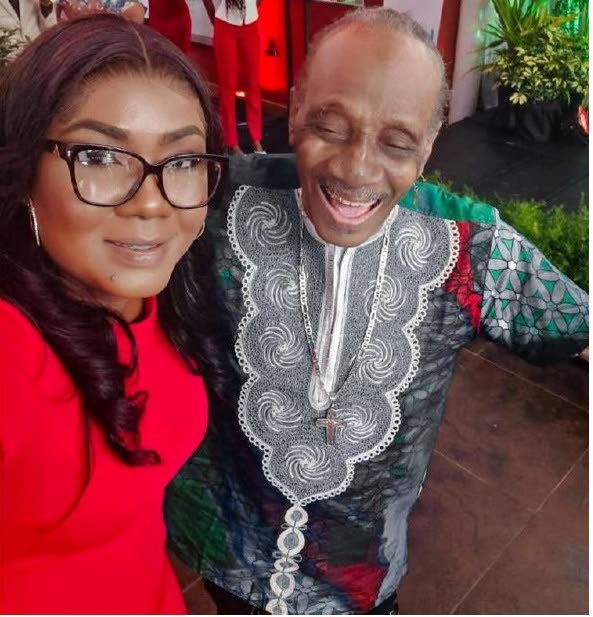
    The announcement, which featured Minister Benjamin alongside renowned calypso legend Timothy ‘Baron’ Watkins, has been welcomed as a necessary step in honoring cultural contributors. According to the ministry’s statement, the program will focus on three primary objectives: recognizing artistic achievements, securing the well-being of aging artists, and preserving their legacies for future generations.

    In a letter to the editor, commentator Gerald Agostini praised the initiative as “long overdue” and expressed hope that the support system would remain in place for years to come. The program addresses growing concerns about the welfare of aging cultural figures who have historically received inadequate institutional support despite their significant contributions to national identity.

  • Government policy only from government offices

    Government policy only from government offices

    The United National Congress (UNC), having secured a decisive victory in last April’s general election with a 29-12 parliamentary majority, followed by a clean sweep of all 15 seats in the January 12 Tobago House of Assembly election by its Tobago allies, now faces mounting criticism over its administrative practices. Despite this commanding mandate, concerns have emerged regarding the apparent conflation of party and state functions.

    Over the past month, multiple government ministers have chosen to deliver official policy announcements from the UNC’s party headquarters in Chaguanas rather than from government offices. This practice, while common when the party was in opposition, has raised eyebrows now that the UNC holds governmental power. The briefings have featured prominent cabinet members including Foreign Affairs Minister Sean Sobers, Housing Minister David Lee, Transport Minister Eli Zakour, and several others, all speaking from party premises flanked by both national and party flags.

    Journalists have reported difficulties in accessing these events, with many briefings announced merely as online occurrences without clear venue information until the last moment. Notably, only a January 14 briefing by Attorney General John Jeremie and Minister of Lands Saddam Hosein was conducted at an appropriate government ministry.

    When questioned about this blending of party and government functions, UNC Public Relations Officer Dr. Kirk Meighoo offered a straightforward defense: ‘Our members form the government and that is government policy. The UNC forms the government. We were voted in by the majority and that is how democracy works.’

    However, editorial analysis suggests that if the previous administration had similarly conducted government business from PNM headquarters, the UNC would have undoubtedly criticized such practices. The current approach raises important questions about institutional separation between governing party and state apparatus, with advocates emphasizing that utilizing proper government offices for official announcements would better serve democratic norms and transparency in Trinidad and Tobago.

  • Vulgar Fraction presents TantiBlak with live talk, band launch

    Vulgar Fraction presents TantiBlak with live talk, band launch

    Belmont-based independent mas band Vulgar Fraction is poised to introduce its groundbreaking 2026 Carnival presentation titled ‘TantiBlak’ through two significant events scheduled for January 21 and 28. Both gatherings will convene at 24 Erthig Road, Belmont commencing at 6:30 pm, featuring a live discussion and official band launch respectively.

    According to founder and creative director Robert Young, TantiBlak represents an innovative cultural synthesis that channels the anti-anti-blackness movement through the symbolic Caribbean figure of the Tantie—a revered icon embodying care, truth, and resistance. This conceptual framework extends beyond mere opposition to racism, embracing a broader practice of refusal and reimagining societal structures.

    The philosophical foundation positions Blackness not as a racial category but as a dynamic condition of becoming—characterized by fluidity, incompletion, and boundless potential. This perspective acknowledges how Blackness is shaped through historical loss, survival mechanisms, cultural improvisation, and the courage to transcend externally imposed limitations.

    Young explains the conceptual origin: ‘The terminology emerged from contemplating our collective response to anti-blackness, which we term anti-anti-blackness. The phonetic resonance between ‘anti’ and ‘aunty’ naturally evolved into Tantie—the reassuring figure who affirms self-worth while teaching resistance without self-erasure.’

    Vulgar Fraction deliberately grounds this global discourse in Caribbean vernacular through Carnival expressions, making complex theoretical concepts accessible through masquerade, kaiso, and local cultural frameworks. The project examines how blackness transcends identity politics, functioning as an experimental space that raises fundamental questions about power dynamics, historical erasure, and how marginalized communities navigate dominant systems.

    Citing philosopher Bayo Akomolafe’s concept of cracks as spaces where new worlds are rehearsed, Young emphasizes: ‘We’re fascinated by the crack not as weakness but as intelligence—precisely where the Tantie demonstrates her resilience through strategic adaptation and skillful navigation of challenging circumstances.’

    The band’s aesthetic approach will feature layered black textures creating simultaneous sensations of menace and intimacy. ‘I want the presentation to feel unsettling yet affirming,’ Young notes, ‘inviting participants to confront internalized anti-blackness while reflecting on self-definition and protection.’

    The January 21 live talk will feature cultural practitioners Camille Quamina, Omari Ashby, and mental health professional Shivonne DuBarry. The band launch culminates in a procession led by moko jumbie king Adrian ‘Daddy Jumbie’ Young accompanied by Egbe Omo Oni Isese drummers, with presentations by researcher Abeo Jackson and cultural creative Marva Newton. A post-Carnival discussion featuring Professor Kevin Adonis Brown is scheduled for February.

  • Goodbye, Newsday

    Goodbye, Newsday

    A devoted reader has expressed profound disappointment upon learning about the imminent shutdown of Newsday, marking the end of a 32-year legacy in Trinidad and Tobago’s media landscape. In a heartfelt letter to the editor, the reader identified as C Denoon acknowledged the newspaper’s pivotal role in keeping citizens informed about local, regional, and international developments.

    The correspondence, submitted via email, highlighted the publication’s significance as a platform for public discourse, noting personal gratitude for having multiple letters published over the years. The reader characterized Newsday as an institutional pillar within the nation’s media ecosystem, emphasizing its contribution to an informed citizenry.

    While expressing sadness about the closure, the author acknowledged the inevitability of such transitions, stating that goodbyes remain an unavoidable aspect of life. The message concluded with a simple yet poignant farewell to the publication that had served Trinidad and Tobago for more than three decades.

    The closure represents a significant shift in the country’s media environment, removing a long-standing voice that had provided news coverage and commentary across multiple domains including politics, social issues, and international affairs.

  • Towards better traffic management systems

    Towards better traffic management systems

    Dr. Stephen Ramroop, former CEO of Trinidad and Tobago’s Office of Disaster Preparedness and Management (ODPM), has issued a stark warning regarding the nation’s preparedness for major disasters. In a recent editorial, Ramroop contends that the country remains critically unprepared for significant hazard impacts, despite observable warning signs demonstrated through recent traffic crises.

    The assessment follows severe traffic incidents on September 8 that paralyzed the Beetham Highway, creating cascading consequences throughout the transportation network. Commuters endured excessive delays exceeding six hours, resulting in missed medical appointments for critical conditions including cancer treatments and post-operative care, numerous missed flights, and widespread physical discomfort among stranded travelers.

    Ramroop emphasizes that these incidents serve as measurable indicators within disaster risk management assessment frameworks. He poses a compelling hypothetical: had an earthquake struck during similar peak traffic periods, the consequences would have extended beyond a single highway to affect multiple transportation arteries simultaneously.

    The former disaster management executive identifies fundamental deficiencies in the national response framework, noting insufficient coordination between multiple sectors including transport, homeland security, infrastructure, defense, and local government. He specifically calls for revitalization of the National Operations Centre (NOC) beyond its current crime-fighting mandate to encompass comprehensive emergency management.

    Ramroop proposes integrated technological solutions including automated smart roadblocks with sensor connectivity, unified automatic number plate recognition systems, AI-driven traffic analytics capable of predicting congestion patterns, and drone surveillance for real-time situational awareness. Operational improvements recommended include dynamic lane control systems, queue warning mechanisms, variable speed limits, and enhanced communication protocols utilizing V2X technology.

    Additionally, he advocates for improved crisis communication strategies incorporating social media alerts, alternative route recommendations, and welfare assistance programs for stranded motorists requiring essential supplies such as water, food, and medication.

    The commentary concludes with an urgent recommendation to reconfigure the NOC to include ODPM and other agencies operational during the 2012-2015 period, emphasizing that comprehensive disaster readiness requires multi-sectoral coordination rather than isolated police responsibility.

  • PowerGen renews partnership with Secondary Schools Cricket League

    PowerGen renews partnership with Secondary Schools Cricket League

    In a significant development for youth sports in Trinidad and Tobago, the Secondary Schools Cricket League (SSCL) has formally renewed its sponsorship agreement with PowerGen for the 2026 cricket season. This partnership celebration marks an extraordinary 28-year continuum of corporate backing for SSCL competitions and developmental programs.

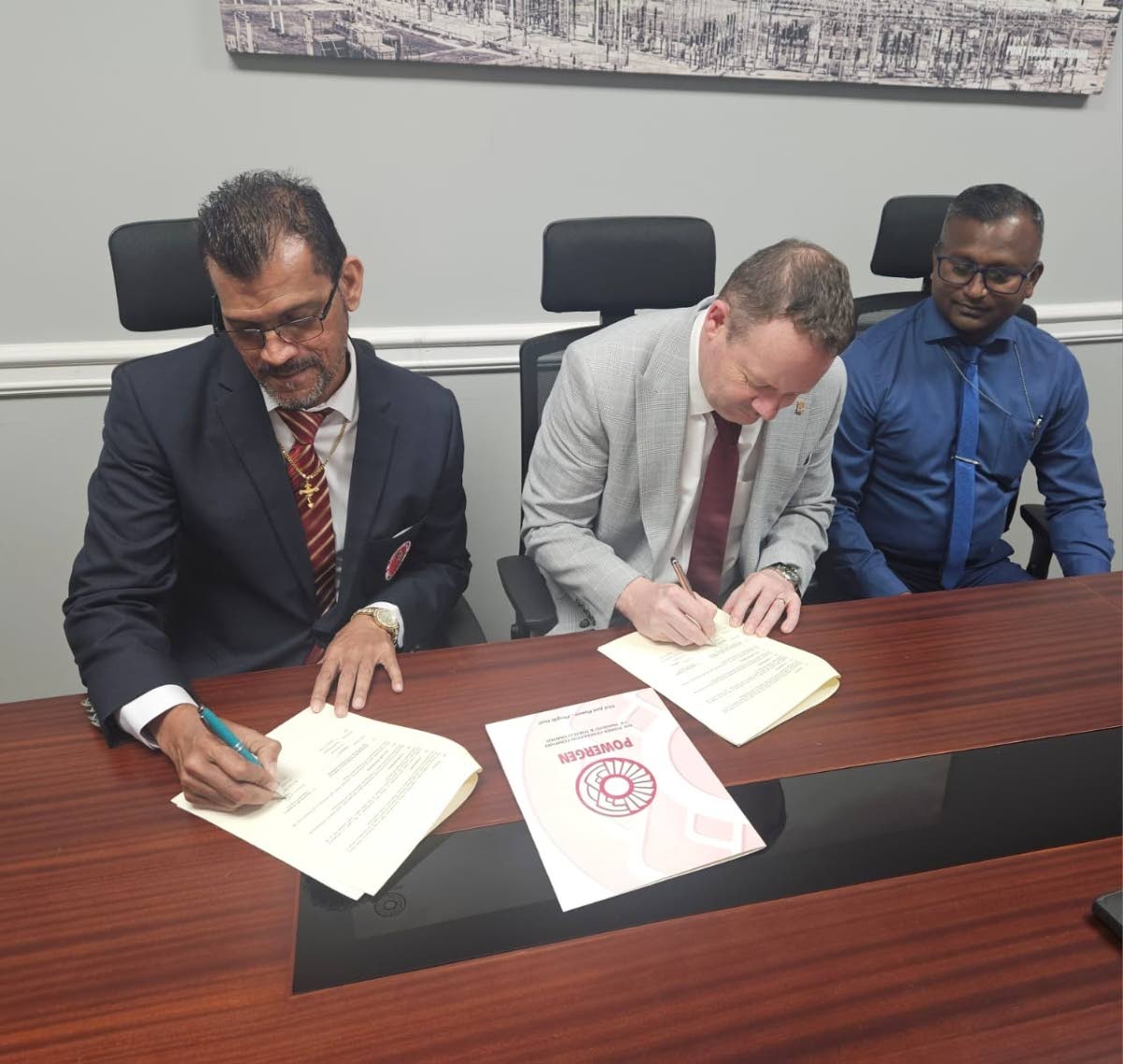
    The ceremonial contract signing occurred between SSCL President Nigel Maraj and PowerGen General Manager Ian Rogers, witnessed by Dudnath Nagessar, cricket curriculum officer at the Ministry of Education. The 2026 season has already commenced this month, featuring the premier division I 50-over competition that began on January 20.

    According to an official SSCL statement, this collaboration represents “one of the longest-standing and most impactful partnerships in the history of school sport in TT.” The release emphasized PowerGen’s “exemplary corporate social responsibility” through nearly three decades of consistent support, describing the company as “a beacon that lights the pathway for young male and female cricketers across the nation.”

    The partnership has profoundly influenced student development beyond athletic skills. Cricket has served as an instrumental vehicle for fostering discipline, teamwork, leadership, and national pride among thousands of student-athletes. PowerGen’s sustained investment has enabled the SSCL to broaden opportunities, enhance programming, and establish secure, structured environments for youth to develop both athletic and life skills.

    SSCL President Nigel Maraj reflected on the partnership’s deeper significance: “This contract signing represents far more than sponsorship. It represents belief – belief in our youth, belief in sport as a vehicle for development, and belief in the future of TT.”

    The philosophical alignment between cricket and character development finds resonance in comments from West Indies legends. Sir Vivian Richards’ assertion that “Cricket is more than a game, it is a way of life” mirrors the SSCL’s educational mission. Similarly, Sir Garfield Sobers’ emphasis on “hard work, discipline and respect” as keys to success reflects core values embedded in SSCL programs.

    National hero Brian Lara’s wisdom that “it is not where you start, but how you finish” underscores the league’s focus on resilience and perseverance—qualities that extend beyond cricket into all life domains.

    Looking forward, the SSCL remains dedicated to enhancing competitions, advancing player development, and promoting gender inclusivity in cricket. The league expressed profound gratitude for PowerGen’s 28 years of support and anticipates another successful season of collaborative achievement.

  • Trinidad and Tobago Under-20 footballers crush SVG in practice match

    Trinidad and Tobago Under-20 footballers crush SVG in practice match

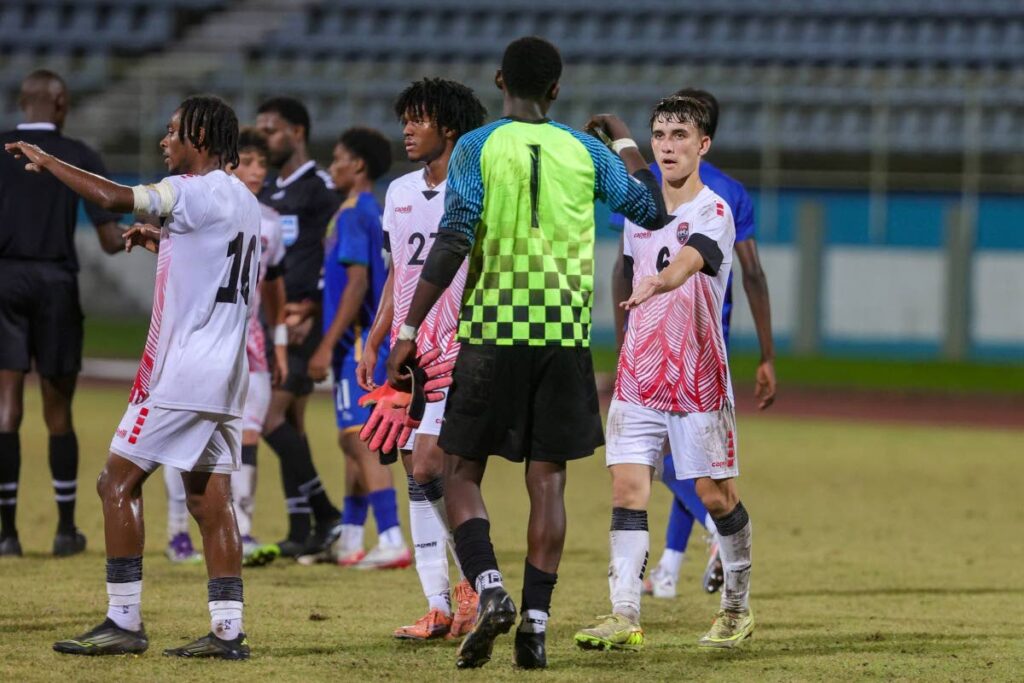
    Trinidad and Tobago’s Under-20 men’s national team delivered a commanding performance on January 19th, securing an impressive 6-0 victory against St Vincent and the Grenadines at Couva’s Ato Boldon Stadium. The comprehensive win served as crucial preparation for upcoming Concacaf qualifiers scheduled to begin next month.

    The match saw exceptional performances from captain Derrel Garcia and Fatima College student Phillip Nelson, each contributing two goals to the scoreline. Garcia, who already boasts experience in senior professional football, initiated the scoring in the 22nd minute. Nelson followed with his first goal in the 32nd minute, establishing a 2-0 lead by halftime.

    The second half began with explosive intensity as Garcia and Nelson each found the net again within a remarkable two-minute span—Garcia scoring in the 51st minute and Nelson completing his brace in the 53rd minute. Despite St Vincent’s efforts to stabilize their defense, Giovanni Hospedales extended TT’s lead in the 77th minute before Caden Trestrail concluded the scoring in the 85th minute.

    Head coach Marvin Gordon provided measured post-match commentary, expressing only partial satisfaction with the performance. ‘I think I am holding this group to a high standard,’ Gordon told TTFA media. ‘I was pleased with the ball movement today at times and then at times I was not pleased.’ The coach specifically noted that passing sequences could have been executed with greater speed and precision.

    In parallel action at the same venue, Defence Force secured a 3-2 comeback victory against Grenada’s U-20 squad. Grenada’s Nathan Mc Intosh scored twice (18th and 60th minutes), but Defence Force responded with goals from Nicholas Bobcombe (37th), Jonathan Mason (74th), and a dramatic 89th-minute winner from Josiah Superville.

    The practice tournament continues with upcoming fixtures at Hasely Crawford Stadium on January 21st featuring Grenada U-20 vs St Vincent U-20 (6 pm) followed by TT U-20 vs AC Port of Spain (8 pm). The tournament concludes on January 23rd at Ato Boldon Stadium with TT U-20 facing Grenada U-20 (6 pm) and St Vincent U-20 meeting AC Port of Spain (8 pm).