博客

  • Saint Lucia enters historic peak week with 47 000+ cruise visitors expected

    Saint Lucia enters historic peak week with 47 000+ cruise visitors expected

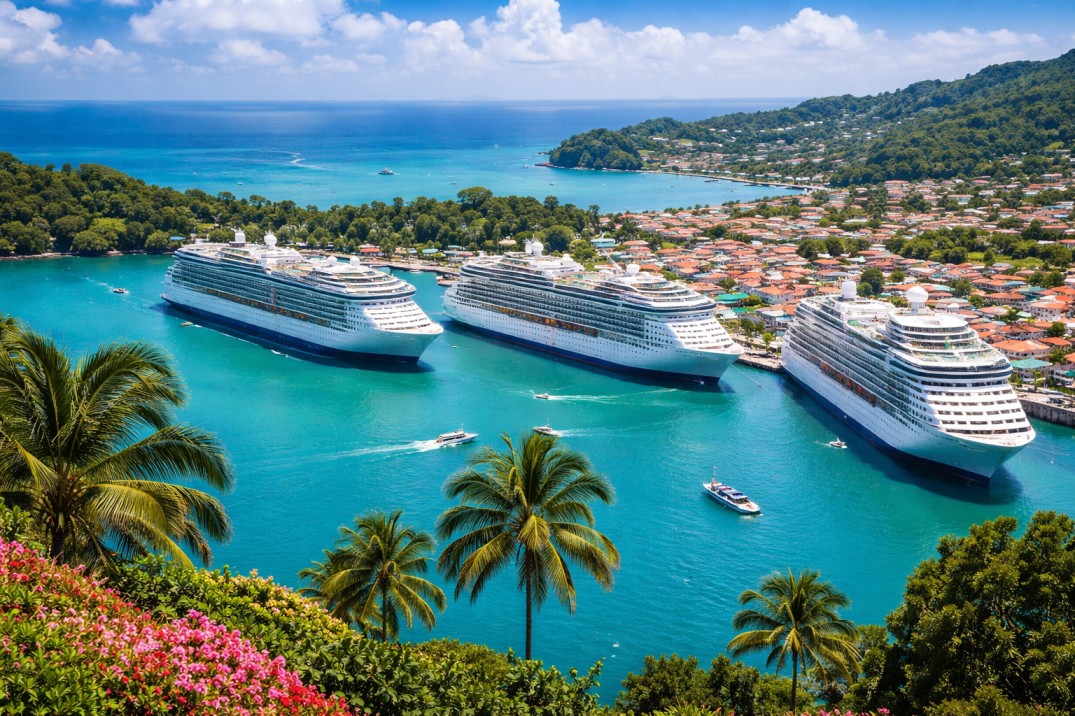
    Saint Lucia is currently witnessing an unprecedented surge in cruise tourism, marking one of the most significant maritime arrivals in its history. The Saint Lucia Tourism Authority (SLTA) has confirmed that between January 18 and 25, 2026, a total of 23 cruise vessels are scheduled to dock at the island’s ports, delivering a substantial influx of international visitors and generating remarkable economic stimulation for local enterprises.

    The week’s pinnacle occurred on January 21st, when the island hosted a massive simultaneous docking of five major cruise ships. The fleet was spearheaded by the Iona, boasting a remarkable capacity of 6,509 passengers. It was accompanied by the Enchanted Princess (3,660 capacity), Costa Fascinosa (3,780 capacity), Norwegian Sky (2,004 capacity), and Wind Surf (310 capacity). This convergence created an extraordinary scenario with over 16,000 potential visitors descending upon the island within a single day, resulting in peak demand for local vendors, tour operators, and hospitality services.

    The complete schedule reveals a diverse range of vessels throughout the week, including the MSC Virtuoso (6,334 capacity on Jan 19), Odyssey of the Seas (4,905 capacity on Jan 20), and Norwegian Epic (4,228 capacity on Jan 22), among others. The SLTA has emphasized that this phenomenon extends beyond mere numerical achievement. The strategic objective focuses on encouraging passengers to immerse themselves in local communities, ensuring that tourism-derived economic benefits permeate beyond traditional port areas and directly support grassroots businesses and cultural experiences across the island.

    This maritime tourism explosion represents a crucial development for Saint Lucia’s post-pandemic economic recovery, demonstrating the island’s growing appeal as a premier Caribbean destination while creating substantial opportunities for small and medium-sized enterprises throughout the nation.

  • OBSERVATION: Demilitarized Runway 10

    OBSERVATION: Demilitarized Runway 10

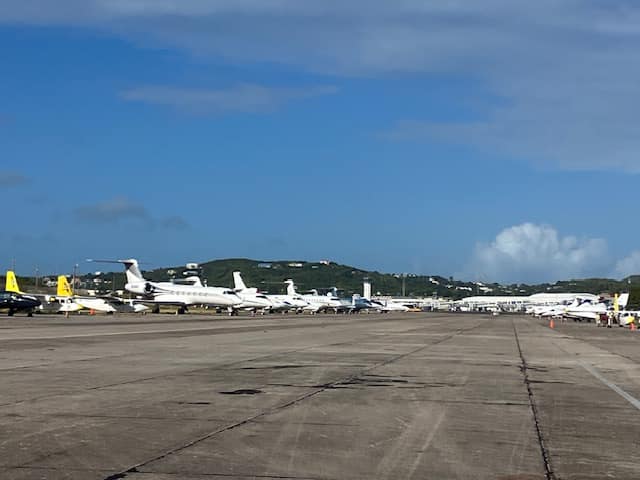
    The Eastern peninsula within Antigua’s North East Marine Management Area harbors a significant historical transformation at Runway 10. This site, originally established as a strategic U.S. Military and Air Force Base, served as a crucial surveillance and operations center for the Eastern Caribbean and Latin America throughout the post-war era. Its strategic value was immediately recognized by both British and American authorities for regional oversight.

    Following a broader trend of decommissioning smaller U.S. bases in the hemisphere, the Antiguan facility was closed. The leased territories and structures were subsequently returned to the Antiguan government, leaving the airport lands surrounding the runway in a state of abandonment. This neglect transformed the airside peninsula into a remote and largely ungoverned area, reportedly becoming a dumping ground and a site for illicit activities due to its isolation near the international airport.

    A pivotal shift began in 1999. To manage the increasing traffic of private jets from affluent residents of Mill Reef, Jumby Bay, and Barbuda’s Coco Pointe, operations were relocated to the defunct Runway 10. This initiated a comprehensive conversion from a military installation into a dedicated General Aviation Complex. Endorsed by prominent local figures like the Mellons, the government leased the land to a local aviation entrepreneur to establish Antigua’s first Fixed Base Operation (FBO), catalyzing the area’s redevelopment into an elite hub for corporate and private aviation.

    While the U.S. presence evolved—transitioning to support for the NASA Space Program—a cordial relationship with the new aviation operators was maintained. Heavy military aircraft activity gradually diminished, with only occasional visits from hurricane weather aircraft, ceasing entirely as the runway became dedicated to private use.

    The fundamental incompatibility between military protocols and the standards of high-end private aviation underpins a clear operational boundary. This principle recently guided the Prime Minister’s decision to refuse military assets on Runway 10, a stance that was accepted without contention by the previous Head of the U.S. Southern Command. Today, Runway 10 stands firmly as a exclusive General Aviation area, dedicated solely to serving the world’s wealthy, famous, and royal clientele.

  • Results of the 2025 Summer Writing Challenge

    Results of the 2025 Summer Writing Challenge

    The 2025 Summer Writing Challenge has officially concluded, marking its most successful iteration to date with unprecedented global engagement. This annual literary initiative, designed to foster creativity and discipline among writers of all levels, witnessed a remarkable 40% surge in participation compared to previous years.

    Organizers reported receiving over 15,000 submissions across various genres including fiction, non-fiction, poetry, and experimental formats. The challenge’s flexible structure, which encouraged participants to complete a writing project of their choice between June and August, proved particularly successful in attracting both established authors and first-time writers.

    This year’s iteration introduced several innovations including virtual writing workshops, author mentorship pairings, and an expanded judging panel featuring prominent literary figures from five continents. The geographic diversity of participants emerged as a notable trend, with significant representation from traditionally underrepresented regions in the literary world.

    The challenge’s emphasis on creative process rather than purely on finished products resonated with participants, many of whom reported breakthrough moments in their writing practice. Selected standout works will be featured in an upcoming anthology, with proceeds supporting literacy initiatives in developing nations. Organizers have already announced dates for the 2026 challenge, anticipating even greater participation following this year’s resounding success.

  • Plannen gepresenteerd voor STEM-campus in Diitabiki

    Plannen gepresenteerd voor STEM-campus in Diitabiki

    PARAMARIBO – Ambitious plans for the Gaanman Bono Velantie Campus in Diitabiki, deep within Suriname’s Tapanahony region, were unveiled during an educational conference at the NATIN complex. The visionary initiative, championed by Indigenous leader Gaanman Bono Velantie, aims to dramatically improve educational access for both youth and adults in the nation’s remote interior territories.

    The pioneering campus will house the School for Technology, Entrepreneurship and Management (STEM Diitabiki), delivering practical, skills-based education specifically designed to foster sustainable economic development and entrepreneurial growth within the region. The curriculum will focus on equipping students with immediately applicable technical and business capabilities.

    Notably, the project design emerged from a collaborative effort. Students from the renowned Delft University of Technology in the Netherlands partnered with local institutions NATIN and AMTO to develop the initial concept. Their proposal was informed by comprehensive field research conducted in Diitabiki, combined with prior studies on sustainable construction practices and innovative water management systems tailored to the unique rainforest environment.

    A Surinamese engineering firm has been tasked with the subsequent technical elaboration, ensuring all final plans rigorously comply with national building codes and regulations. The campus infrastructure is slated to include modern workshops and a dedicated business incubator, creating a direct pipeline from education to practical application and stimulating local enterprise.

    To oversee realization and long-term management, the Stichting Gaanman Bono Velantie Campus foundation has been established. A specially appointed working group will provide supervisory governance. The initial operational phase anticipates accommodating approximately 100 students, with a targeted launch of educational activities by October 2026.

  • BHTA chair warns next government on legislative reform

    BHTA chair warns next government on legislative reform

    With Barbados’ February 11 general election approaching, tourism industry leader Javon Griffith has presented an urgent reform agenda for the incoming administration, simultaneously warning that geopolitical tensions originating from the United States threaten the island’s most critical tourism market.

    Griffith, Chairman of the Barbados Hotel and Tourism Association (BHTA), identified two legislative priorities requiring immediate attention. First, he demanded the formal integration of residential tourism companies—specifically car rental firms—under the Tourism Act, arguing their economic significance has surpassed their current regulatory classification under the Ministry of Transport and Works.

    “Bringing car rental firms under the Tourism Act would formally recognize them as integral components of the tourism ecosystem, alongside hotels and restaurants, reflecting their substantial contribution to the industry,” Griffith stated. He emphasized that administrative oversight should transfer to the Ministry of Tourism to align regulatory framework with economic reality.

    Second, the BHTA chairman called for urgent reform of duty-free concessions for hospitality businesses approaching the expiration of their statutory 15-year benefits window. Griffith advocated for either expanding existing concessions or completely redesigning the legislative framework through new parliamentary legislation to ensure continuity for affected establishments.

    These demands emerge against a backdrop of growing industry anxiety over external geopolitical factors. Recent disruptions to Caribbean airspace during US military operations against Venezuelan leadership resulted in significant flight cancellations and delays at Grantley Adams International Airport, stranding passengers and highlighting the vulnerability of Barbados’ tourism sector to international political developments.

    Griffith expressed particular concern about US foreign policy directions, noting that the United States has recently surpassed Britain as Barbados’ primary source market. “The US market is pivotal to our continued growth,” he stressed. “It’s the fastest-growing market currently, and we cannot afford regression after the substantial efforts invested by Barbados Tourism Marketing Inc.”

    The BHTA maintains weekly coordination with tourism authorities to strategize for upcoming 2025/26 winter and summer seasons, with additional collaboration planned with the National Cultural Foundation to leverage events like the Crop Over Festival as summer tourism drivers. Griffith emphasized that these critical discussions will continue with whatever government emerges from the upcoming election.

  • Grief grips St Philip as two die in separate road crashes

    Grief grips St Philip as two die in separate road crashes

    Barbados was struck by a devastating sequence of events on Sunday afternoon as two separate fatal road collisions occurred within a mere thirty-minute span, sending waves of grief through the communities of St Philip and Christ Church.

    The first tragedy unfolded at approximately 3:45 p.m. along Crane Road, St Philip. Roland Arthur, a 30-year-old man described by loved ones as possessing immense promise, was riding his bicycle in the direction of Rices when he collided with a van. Despite emergency response efforts, Arthur sustained catastrophic injuries and was pronounced deceased at the scene. Preliminary police reports indicate both vehicles were traveling in the same direction prior to the impact. Investigations into the precise circumstances remain active.

    Merely minutes earlier, at around 3:18 p.m., a second fatal incident had occurred at the junction of Searles Road and Leadvale in Christ Church. This collision involved a motorcycle and a van. The motorcyclist, identified as 54-year-old Edzii Edinboro of Bottom Bay, St Philip, was urgently transported to the Queen Elizabeth Hospital. He subsequently succumbed to his injuries, marking the island’s second road fatality in under an hour.

    The human toll of these events was poignantly articulated by Clifton “Frankie” Franklyn, who served as a father figure to Roland Arthur. Overcome with emotion outside his Crane home, Franklyn memorialized Arthur as ‘the son I never had,’ highlighting his recent employment at the airport and his aspirations to pursue basketball abroad. ‘He was a very bright boy, very good with his hands… All people through here can tell that he was nothing but good,’ Franklyn recounted, detailing the profound personal loss he feels. He recalled his last interaction with Arthur just a day prior to the accident, a moment now overshadowed by tragedy. Arthur, who leaves behind no children, is remembered as a respectful and quietly ambitious individual whose potential was tragically cut short.

  • St Peter: Jordan cites progress amid water, waste woes

    St Peter: Jordan cites progress amid water, waste woes

    As Barbados enters a period of intense electoral campaigning, incumbent St Peter representative Colin Jordan has declared his candidacy with robust confidence, citing a portfolio of tangible accomplishments both within his constituency and at the national level. The Barbados Labour Party (BLP) stalwart articulated his re-election platform during an address at Coleridge and Parry School’s annual speech day, framing his bid as a continuation of proven leadership and measurable progress. Jordan’s campaign narrative is fundamentally anchored in extensive infrastructure enhancements, enumerating a comprehensive list of roadways that have undergone significant upgrades, including Station Hill, Clarke’s Gap, Chapel Street, Garden Alley, Black Bess, and Skeetes Road. While acknowledging that certain projects remain ongoing, the MP emphasized the transformative impact of these developments. Beyond transportation networks, his report to constituents highlighted critical advancements in environmental initiatives and the resolution of protracted land tenure disputes in areas like Maynards. Utility modernization formed another pillar of his report, with the installation of new water pipelines in the Boscobel area cited as a key achievement. Economic revitalization, particularly through tourism, featured prominently in Jordan’s remarks. He pointed to the successful refurbishment and reopening of a local jetty, now in its second full operational season, and heralded the commencement of new construction at Penry and anticipated development work by Sandals at Heywoods as catalysts for local economic activity. Bridging his national ministerial role with local impact, Jordan connected broad policy reforms—including the introduction of paternity leave, extended maternity leave, and the establishment of a national minimum wage—to their direct benefits for St Peter families and workers. He framed the upcoming election as a referendum on this seven-and-a-half-year partnership, asking constituents to judge his performance on this track record. However, the dialogue also surfaced persistent constituent concerns, particularly regarding intermittent water supply and unreliable garbage collection services. In response, Jordan provided detailed explanations for water discoloration issues in Boscobel and Six Men’s, attributing them to ongoing pipe replacement projects in northern St Lucy and St Peter. He outlined broader challenges within the water infrastructure system, including pressures on the Allendale well and reservoirs, but assured residents that work at the Hope site in St Lucy is expected to deliver relief in the near future. On waste management, the MP acknowledged collection delays, citing high demand, vehicle availability constraints, and access difficulties in smaller communities like Mount Brevitor, but expressed confidence that imminent solutions are being finalized. St Peter remains a historically significant BLP stronghold, previously represented by the late Prime Minister Owen Arthur.

  • WEATHER (6:00 AM, Jan 21): Trough system affecting Dominica

    WEATHER (6:00 AM, Jan 21): Trough system affecting Dominica

    A significant trough system is forecast to influence local weather patterns across the island within the next 24 to 48 hours, introducing elevated levels of atmospheric moisture and instability. Meteorological projections indicate predominantly overcast conditions interspersed with intermittent showers, which are expected to intensify to moderate or heavy intensities at times. Concurrently, sustained breezy conditions are anticipated to prevail throughout the upcoming week.

    Residents residing in regions prone to flooding, landslides, or falling rock hazards are strongly advised to implement necessary precautionary measures to ensure personal safety and property protection.

    Maritime conditions are projected to maintain a moderate state, with wave heights anticipated to reach approximately 5 feet along western coastal areas. However, more challenging sea conditions are forecast for eastern coastal regions and open waters, where waves could surge up to 10 feet. In response to these conditions, authorities have maintained an active Small Craft Advisory. All marine operators and recreational sea users, particularly those navigating eastern coastal waters, are emphatically encouraged to maintain heightened vigilance and exercise extreme caution during this period.

  • High Surf Advisory Issued for Antigua as Hazardous Seas Affect Northern Coastlines

    High Surf Advisory Issued for Antigua as Hazardous Seas Affect Northern Coastlines

    Meteorological authorities across the Eastern Caribbean have issued urgent warnings as significant ocean swells pose severe threats to northern coastlines. The Antigua and Barbuda Meteorological Service activated a high surf advisory Tuesday afternoon, alerting residents and visitors to hazardous marine conditions expected to persist through the weekend.

    The advisory specifically targets exposed northern and north-facing shorelines across multiple territories. Forecast models indicate powerful wave systems generating swells of 2-3 meters (6-10 feet), with sea conditions occasionally reaching 4 meters (13 feet). These formidable waves are accompanied by long-period swells averaging 10 seconds, significantly elevating the risk of deadly rip currents throughout the region.

    Impact timelines vary across the archipelago: Antigua and Barbuda face hazardous conditions from Wednesday morning through Saturday midday; St. Kitts and Nevis from Wednesday morning through Sunday night; Montserrat from early Wednesday through Sunday night; Anguilla from Wednesday morning through Saturday morning; and the British Virgin Islands from Wednesday morning through early Saturday.

    The meteorological service outlined multiple potential consequences including significant beach erosion, coastal flooding, dangerous sea splash onto low-lying roadways, and possible damage to sensitive coral ecosystems. Marine businesses may experience operational disruptions, while desalination facilities could encounter saltwater intrusion issues.

    Authorities strongly recommend avoiding affected beaches and rocky shorelines entirely, particularly remaining clear of exposed jetties and reef areas. Swimmers are advised to use only sheltered southern beaches with lifeguard supervision present. For those caught in rip currents, safety guidelines emphasize remaining calm, floating rather than swimming against the current, and attempting to move parallel to shore while signaling for assistance.

  • The continuous American sneeze and the Caribbean cold (Part I)

    The continuous American sneeze and the Caribbean cold (Part I)

    Recent US policy directives have placed Caribbean nations at a critical juncture, compelling regional leaders to navigate complex diplomatic and sovereignty challenges. Key developments include American requests for third-country deportee acceptance, withdrawal from international organizations, and the controversial suspension of visa categories for several Caribbean states.

    This geopolitical dynamic revives the adage that ‘when America sneezes, the Caribbean catches cold,’ highlighting the region’s vulnerability to US policy fluctuations. The current situation reflects not merely policy disagreements but fundamental questions about neocolonial practices and power asymmetry. Historical doctrines like the Monroe Doctrine and Roosevelt Corollary appear to persist through modern mechanisms that potentially compromise Caribbean sovereignty.

    The Citizenship by Investment (CBI) programs frequently cited as justification for US actions demonstrate questionable relevance, as data reveals no substantial evidence linking these programs to increased migration threats or security concerns. Countries without CBI programs face similar treatment, suggesting broader geopolitical motivations beyond stated immigration concerns.

    Caribbean leaders face a dilemma between ideological consistency and economic pragmatism. Saint Lucia’s Prime Minister recently signed a memorandum understanding deportee acceptance, illustrating the practical compromises smaller economies must consider. Meanwhile, Trinidad and Tobago’s energy-based alignment with US interests has spared it from certain restrictions, creating regional divisions that undermine integration efforts.

    The fundamental tension centers on whether Caribbean nations can maintain sovereign decision-making while acknowledging economic dependencies on US tourism, trade relationships under the Caribbean Basin Initiative, and remittance flows. Professor Justin Robinson’s framework emphasizes preserving the region’s ‘deep bonds driven by geography, family, culture, and shared values’ while navigating these complex international relations.