博客

  • House debates private motion on socio-economic concerns

    House debates private motion on socio-economic concerns

    The Trinidad and Tobago House of Representatives convened a critical session on January 23rd to examine a pressing private motion filed by Laventille West MP Kareem Marcelle, addressing what he characterizes as a deepening socio-economic emergency. The motion demands governmental recognition of severe unemployment impacts and implementation of substantial social relief measures.

    Marcelle’s proposition emphasizes the state’s fundamental obligation to ensure citizen welfare and foster conditions conducive to dignified living standards. The parliamentarian cited widespread terminations and non-renewals of contracts across public institutions, state agencies, and local government bodies as primary drivers of the crisis. These developments have particularly devastated vulnerable demographics including single mothers, female-headed households, youth, elderly citizens, and persons with disabilities.

    The motion further outlines severe consequences stemming from employment instability: intensified food insecurity, rising school absenteeism, deteriorating mental health conditions, and increased risks of exploitation and social marginalization. Marcelle cautioned that diminished employment opportunities coupled with reduced community engagement directly threaten public safety and social stability while undermining local commerce and micro-enterprise sustainability.

    The political context reveals sharp contrasts between governing and opposition parties. Following the April general election that resulted in a 26-13-2 victory for the UNC, the opposition PNM has consistently criticized the new administration for terminating thousands of positions through closures of Cepep, the Unemployment Relief Programme (URP), and other social initiatives established during the PNM’s 2015-2026 governance period.

    Opposition Leader Pennelope Beckles reinforced these criticisms during a January 21st press conference, accusing Prime Minister Persad-Bissessar of misleading voters into believing job security would continue post-election. Beckles characterized the current government as indifferent to citizen welfare and urged public awareness regarding employment protections.

    Simultaneously, the Senate convened to advance debate on the Law Reform (Zones of Special Operations) Bill 2026, previously approved by the House on January 16th. This legislation empowers the National Security Council chair, in consultation with police and defense force leadership, to designate special security zones for maximum 180-day periods.

    Preceding both parliamentary sessions, the Finance and Legal Affairs joint select committee conducted a public inquiry into credit union supervisory frameworks, chaired by Independent Senator Dr. Marlene Attzs with participation from Justice Minister Devesh Maharaj and San Fernando East MP Brian Manning.
  • Rowley: Zones of special operations will breed abuse

    Rowley: Zones of special operations will breed abuse

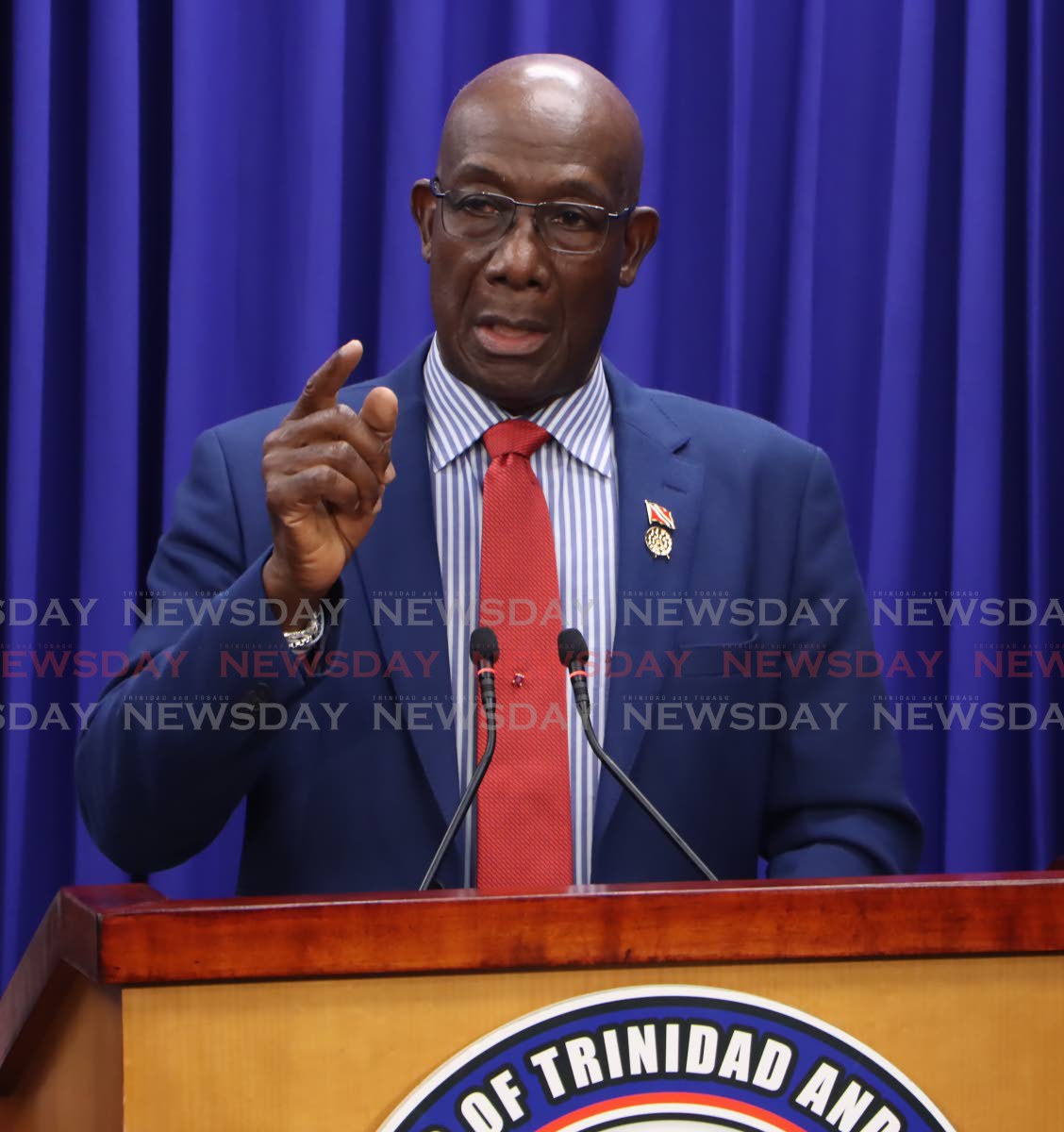
    In a significant political development, former Trinidad and Tobago Prime Minister Dr. Keith Rowley has publicly challenged current Prime Minister Kamla Persad-Bissessar’s approach to the Law Reform (Zones of Special Operations) Bill, 2026. The controversial legislation, which passed the House of Representatives on January 16, is currently undergoing Senate debate requiring a three-fifths majority for final approval.

    The proposed law would empower Prime Minister Persad-Bissessar, in her capacity as National Security Council chair, to designate specific areas as Zones of Special Operations (ZOSOs) for periods up to 180 days, following consultation with police and military leadership. This measure has sparked intense parliamentary discussion, with the government holding 15 Senate seats against the Opposition’s 6 and Independent senators’ 9.

    Through a January 22 Facebook statement, Rowley expressed profound concerns about the legislation’s potential societal impact. He criticized the administration’s rhetoric toward independent senators, noting Persad-Bissessar’s suggestions that their opposition stemmed from alleged ties to his party, the PNM. “If I had said anything nearly as offensive and arrogant,” Rowley remarked, “everyone in this country would have known not to accept that from the Prime Minister.”

    The former leader argued that the bill represents inappropriate crime-fighting methodology for Trinidad and Tobago’s diverse society, warning that it could stigmatize communities and remove fundamental rights without proper parliamentary oversight. Rowley cautioned that unsupervised authority would inevitably “breed abuse and resentment,” questioning whether crime-fighting justification would sufficiently address potential fallout when the law is implemented. He maintained that his administration was held to higher standards, expressing pride in having met those expectations during his tenure.

  • Griffith backs judge’s call to hold abusive cops responsible

    Griffith backs judge’s call to hold abusive cops responsible

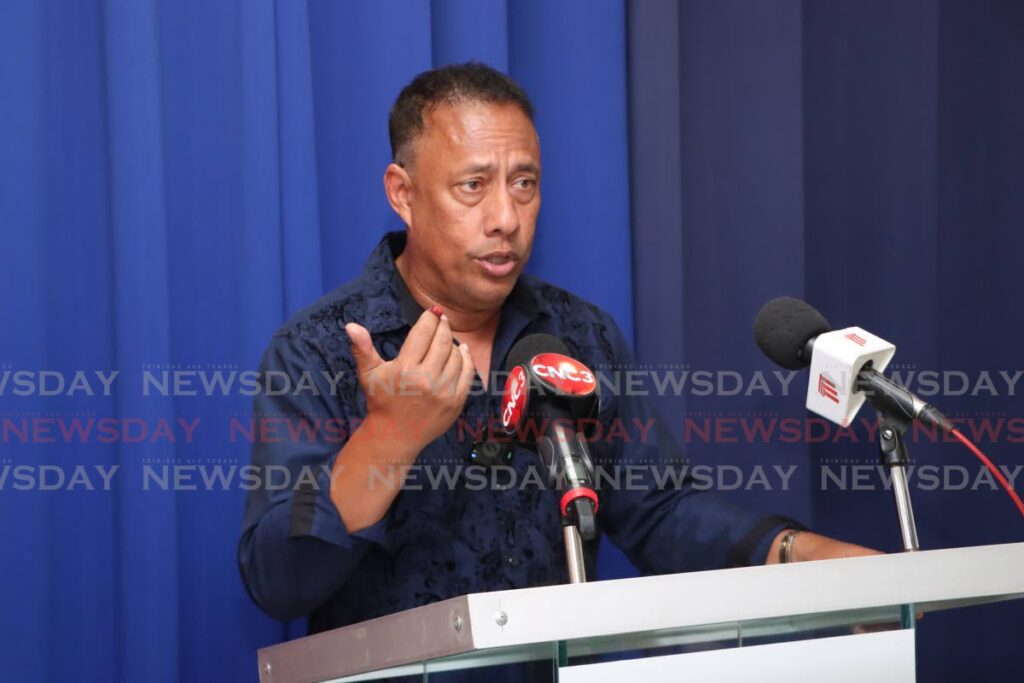
    Former Police Commissioner Gary Griffith has endorsed Justice Frank Seepersad’s recent demand for legislative changes to hold law enforcement officers personally accountable for unlawful arrests. In a January 22 social media statement, Griffith emphasized that officers demonstrating negligence, incompetence, or malicious intent should face disciplinary consequences, while acknowledging that those making good-faith judgment calls during lawful duties should remain protected.

    Griffith revealed that during his tenure as both National Security Minister and police commissioner, he witnessed numerous instances of officers operating outside legal boundaries and abusing authority. These actions frequently resulted in substantial financial settlements paid by the state, while the responsible officers faced no personal repercussions.

    The context for this discussion emerged from a January 20 High Court ruling where Justice Seepersad determined that a special reserve police officer had acted maliciously beyond legal parameters during a 2019 arrest and prosecution of a Sangre Grande resident.

    Griffith disclosed facing significant opposition from the Police Welfare Association regarding accountability measures, accusing the organization of tolerating unlawful police conduct and avoiding responsibility. He clarified that his position isn’t about punishing officers making difficult decisions under pressure, but rather addressing clear misconduct.

    Illustrating his point, Griffith recalled an incident where two new police vehicles were completely destroyed when officers engaged in unauthorized high-speed racing back to their station. GPS data confirmed the excessive speed occurred without operational justification, yet taxpayers bore the financial burden.

    The former commissioner advocated for mandatory body cameras as objective evidence sources that could either defend officers against false accusations or validate accountability claims. He referenced a particularly concerning case where officers traveled to Barbados to unlawfully abduct a citizen—an operation that might cost Trinidad and Tobago taxpayers tens of millions in damages.

    Another example involved a senior officer wrongfully arresting a Police Commissioner due to failure to comprehend firearm licensing laws, an act Griffith characterized as pure incompetence that damaged institutional credibility without resulting in personal consequences.

    Griffith maintained that accountability for negligence and malicious conduct strengthens rather than weakens police services by reinforcing professionalism, discipline, and legal respect. He emphasized that the vast majority of officers perform their duties honorably, and proper accountability measures protect their reputation while ensuring public trust in policing institutions.

  • Privy Council dismisses contractor’s claim against WASA

    Privy Council dismisses contractor’s claim against WASA

    In a landmark legal reversal, the Judicial Committee of the Privy Council has unanimously allowed an appeal by Trinidad and Tobago’s Water and Sewerage Authority (WASA), nullifying a multimillion-dollar award previously granted to contractor Uniform Building Contractors Ltd (UBC). The January 22 judgment reinstates the High Court’s original dismissal of UBC’s claims, marking a significant victory for the state utility.

    The dispute originated from a 2007 design-build contract valued at $28 million for pipeline installation between Rio Claro and Mayaro. WASA terminated the agreement in 2009, prompting UBC to seek $13.9 million in compensation for alleged variations beyond the lump-sum contract. The contractor claimed additional costs for roadway pipe-laying, material disposal, backfill importation, and night work.

    Delivering the ruling, Sir Peter Coulson declared the Court of Appeal’s 2023 decision “fundamentally flawed” in its legal reasoning. The Privy Council determined that all four contested work items were expressly or implicitly included within the original contract scope and pricing structure. Crucially, the judgment emphasized that contractual interpretation—not an engineer’s on-site opinion—governs variation determinations.

    The Board further rejected appellate arguments regarding waiver and estoppel, noting these issues were never properly pleaded or evidenced during trial proceedings. Most damningly, UBC failed to comply with mandatory contractual procedures requiring variation claims to be submitted within 28 days—a condition precedent that barred any entitlement to additional payment.

    The ruling clarified that contract termination operates prospectively, unable to resurrect time-barred claims. “The eventual termination could not, in law, resurrect claims that had not been made in time,” the judgment stated, underscoring that contractual rights and obligations accrued before termination remain unaffected.

    Legal representation featured Anand Ramlogan, SC, Kate Temple-Mabe, and Ganesh Saroop for WASA, while Irshaad Ali and Adam Razack represented UBC. The decision reinforces strict adherence to contractual notice provisions and affirms that fairness arguments cannot override clear procedural requirements.

  • President proclaims stand-your-ground legislation

    President proclaims stand-your-ground legislation

    Trinidad and Tobago has officially enacted groundbreaking stand-your-ground legislation, marking a significant shift in the nation’s approach to self-defense and property protection. President Christine Kangaloo formally proclaimed the Home Invasion (Self-Defence and Defence of Property) Act, 2025 into effect on January 20 through Legal Notice 16, implementing one of the United National Congress’s key electoral promises to address rising crime rates.

    The comprehensive legislation establishes home invasion as a specific criminal offense, defining it as unlawful entry into a dwelling with intent to use force against occupants. The act explicitly removes the duty to retreat, granting occupants the legal right to stand their ground when facing home invaders. The law permits the use of defensive force, including deadly force, when occupants reasonably believe their lives are in immediate danger or face threats of grievous bodily harm, sexual assault, or death.

    The legislation outlines detailed parameters for justified self-defense, requiring that the occupant’s response must be proportionate to the perceived threat and based on honest, instinctive assessment of the situation. Courts must consider multiple factors when evaluating the reasonableness of defensive actions, including the nature of the threat, weapon involvement, and the proportionality of the response.

    However, the act establishes crucial limitations on the use of defensive force. Protections do not apply against lawful occupants or law enforcement officers performing official duties. The law excludes those engaged in criminal activities, individuals with substantially impaired mental faculties due to voluntary drug consumption, and cases where the force used is grossly disproportionate to the threat encountered.

    The legislation specifically addresses aggravated circumstances, providing enhanced considerations for invasions involving criminal organizations or occurring in the presence of children, senior citizens, or vulnerable persons. This legislative reform represents Trinidad and Tobago’s substantial policy response to public safety concerns while maintaining legal safeguards against potential misuse of self-defense claims.

  • High Court dismisses habeas corpus application by SoE detainee

    High Court dismisses habeas corpus application by SoE detainee

    In a significant judicial ruling, High Court Justice Karen Reid has rejected the habeas corpus petition filed on behalf of Kevin Mills, a customs clerk from La Horquetta currently held under a preventative detention order (PDO). The decision, delivered during a January 21 hearing, reinforces the government’s controversial emergency powers amid ongoing security concerns.

    Mills was initially detained on December 13, 2025, under a PDO authorized by Homeland Security Minister Roger Alexander. The order alleges Mills’ involvement in facilitating “brazen and well-orchestrated attacks” against civilians and law enforcement personnel. According to police intelligence assessments, Mills and associates from the La Retreat Gang were planning additional shootings and homicides that would constitute a severe threat to public safety.

    Legal representative Nestor Dinnoo-Alloy mounted a multifaceted challenge against the detention’s legality. The defense contended that the government failed to publish the PDO notice in the Gazette within the mandated seven-day window stipulated by the Emergency Powers Regulations 2025. Documentation indicated the notice only appeared on December 25—12 days after the order’s issuance—which Dinnoo-Alloy argued rendered the detention unlawful.

    Additional arguments highlighted that Mills was already on bail for unrelated ammunition possession charges, questioning the justification for preventive detention under these circumstances. Concerns were also raised regarding the extended duration of Mills’ confinement without formal charges.

    Representing the state, Senior Counsel Anand Ramlogan characterized the habeas corpus application as “fundamentally flawed.” Ramlogan asserted that although Gazette publication occurred later than technically required, the PDO had been properly served to Mills within the statutory timeframe, preserving its legal validity. He emphasized that service—not publication—represented the critical legal requirement, noting there was no challenge against the minister’s fundamental authority to issue such orders.

    Ramlogan further observed that Mills had already pursued alternative recourse through the Emergency Powers Review Tribunal, with judgment pending just one day prior to the habeas corpus hearing. He additionally contextualized the publication delay within the framework of the Christmas holiday period and existing legal precedents.

    Senior Counsel Ian Benjamin, representing the Commissioner of Prisons, aligned with these arguments and described the application as an abuse of judicial process.

    Justice Reid’s dismissal continues a pattern of unsuccessful legal challenges against preventive detentions during the ongoing state of emergency. Previous petitions from Isaiah Greenidge and Rajaee Ali were similarly rejected by Justices Devindra Rampersad and Frank Seepersad in October and July 2025 respectively.

    The state of emergency remains in effect and is currently scheduled to expire on January 31, unless further extended by government authorities.

  • Trinidad and Tobago Newsday – Friday January 23rd 2026

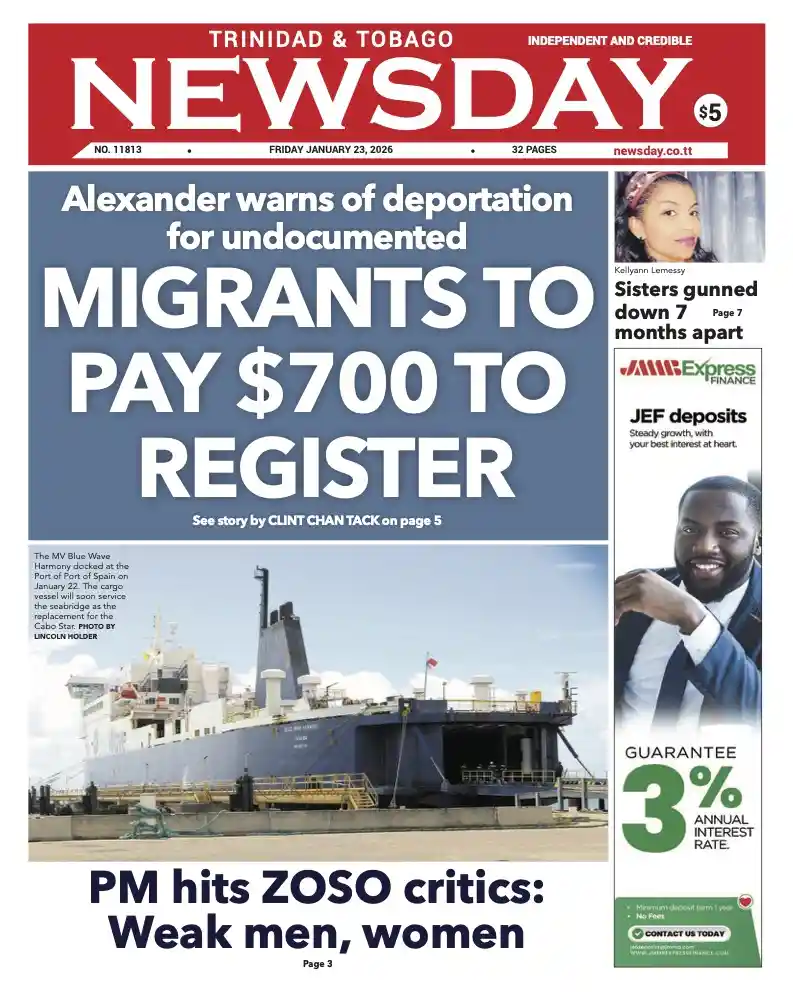
    Trinidad and Tobago Newsday – Friday January 23rd 2026

    The global dietary supplement industry, valued at over $50 billion, presents consumers with a complex landscape of health promises and scientific uncertainties. A comprehensive analysis reveals a sector experiencing unprecedented growth yet facing critical scrutiny regarding efficacy, safety, and regulatory oversight.

    Unlike pharmaceutical products requiring rigorous FDA approval for both safety and effectiveness before market entry, dietary supplements operate under a different regulatory paradigm. The 1994 Dietary Supplement Health and Education Act (DSHEA) permits supplements to reach consumers without pre-market authorization, placing the burden of proof for safety concerns on the Food and Drug Administration after products are already available to the public.

    This regulatory framework has enabled an explosion of products ranging from traditional vitamins and minerals to botanicals, probiotics, and innovative compounds targeting various health aspects from cognitive function to metabolic performance. However, this accessibility comes with significant challenges: inconsistent product quality, potentially misleading marketing claims, and limited scientific validation for many popular formulations.

    Medical professionals emphasize that while certain supplements demonstrate clear benefits for specific populations (such as folic acid for pregnant women or vitamin D for those with deficiencies), many products lack robust clinical evidence. The absence of mandatory third-party testing creates quality control issues, with some products containing ingredients not listed on labels or contaminants that pose health risks.

    Consumers navigating this market must exercise critical evaluation, consulting healthcare providers about potential supplement-drug interactions and recognizing that these products are intended to complement—not replace—a balanced diet and healthy lifestyle. The industry continues to evolve with increasing calls for stricter regulation and more transparent labeling practices to better protect public health.

  • No water, weak security: Court staff livid

    No water, weak security: Court staff livid

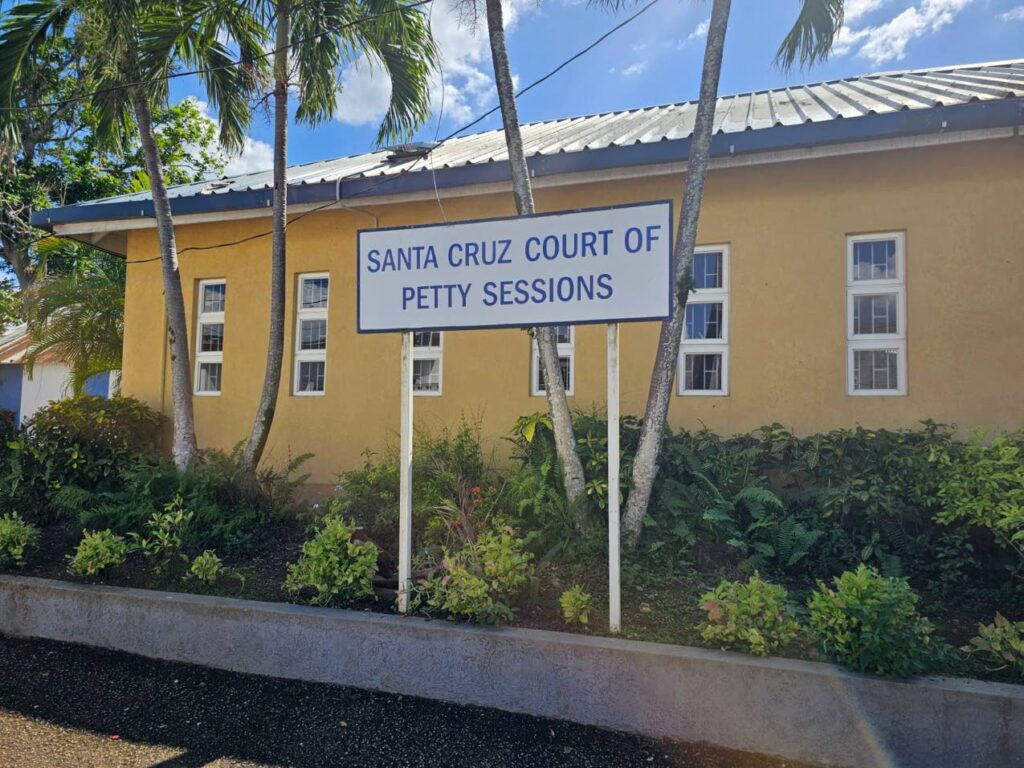
    Court employees in Santa Cruz, St Elizabeth, are voicing grave concerns over inadequate security provisions and a severe water shortage at their temporary workplace. The staff was relocated from their original Black River courthouse following the devastating impact of Hurricane Melissa, a Category 5 storm that struck Jamaica on October 28, 2025. The hurricane caused extensive damage to critical infrastructure in Black River, including the complete destruction of the courthouse, alongside hospitals, schools, and commercial buildings.

    Despite the move to a facility behind the Santa Cruz Police Station on Coke Drive, intended to minimize delays in judicial services, employees report feeling vulnerable and unsupported. Their anxieties were sharply heightened by a recent security breach where an individual entered the office and forcibly seized a box of legal files. Staff intervened to recover the documents, and the perpetrator was subsequently detained by police. This incident has underscored the palpable lack of permanent security personnel, with police patrols provided only sporadically following the event.

    Compounding the security fears is a critical lack of running water, which has rendered restrooms unusable and forced staff to resort to collecting water in buckets for basic sanitation. Employees, who spoke on condition of anonymity, expressed frustration that their repeated appeals to administrators for solutions have yielded no tangible improvements.

    The situation in Santa Cruz reflects a broader national issue highlighted by Chief Justice Bryan Sykes. He has consistently criticized the dilapidated state of court buildings across Jamaica. In recent pointed remarks, Justice Sykes questioned the government’s commitment to judicial infrastructure, noting a conspicuous silence regarding plans to repair or reconstruct courthouses demolished by Hurricane Melissa, particularly in western parishes like St Elizabeth and Westmoreland. He emphasized that the rebuilding of critical justice infrastructure appears to be treated as a matter of low priority, despite official rhetoric about creating more resilient communities.

  • All-new Q5 from Audi Jamaica

    All-new Q5 from Audi Jamaica

    KINGSTON, JAMAICA – Audi Jamaica has officially introduced the highly anticipated third-generation Q5 to the local market, marking a significant milestone for the luxury automotive sector. The official launch event, held on Saturday, January 17th at the Jamaica Pegasus Hotel in New Kingston, was met with exceptional consumer enthusiasm, signaling a strong post-hurricane economic rebound.

    Company executives reported an overwhelmingly positive response, with over 200 guests attending the exclusive unveiling. Channa Kay Walker, Sales Manager for Audi Jamaica, confirmed the substantial market interest, while Damien Kerr, General Manager of Oxford Road, revealed that the entire initial shipment of vehicles had already been pre-sold prior to the official launch.

    The new Q5 represents Audi’s engineering evolution, built upon the innovative Premium Platform Combustion architecture. This third iteration of Audi’s global best-seller over the past 15 years incorporates significant advancements across multiple domains including powertrain efficiency, performance metrics, interior spaciousness, and cutting-edge technology integration.

    Exterior styling embraces Audi’s contemporary design philosophy, featuring the distinctive singleframe grille and state-of-the-art lighting systems both front and rear. The vehicle’s expanded dimensions translate to enhanced passenger comfort and cargo capacity, while the interior showcases four fundamental design concepts: human-centric layout, visual clarity, digital stage presentation, and material-driven aesthetics. The cockpit is dominated by a sophisticated triple-screen configuration comprising an 11.9-inch Virtual Cockpit, 14.5-inch MMI interface, and an optional 10.9-inch passenger display.

    Powertrain options demonstrate Audi’s commitment to performance-efficiency balance. The standard variant features a 204bhp 2.0-liter turbocharged four-cylinder engine with front-wheel drive. For consumers seeking enhanced dynamism, the Q5 Sportback offers coupé-like styling, while the high-performance SQ5 variant delivers 367bhp through a 3.0-liter turbocharged V6 engine complemented by Quattro all-wheel drive. Mild-hybrid and Quattro versions are scheduled for later release in 2026.

    Despite challenges posed by Hurricane Melissa in late October 2025, Audi Jamaica maintains optimistic projections for the coming year. The company has announced plans to introduce additional models including the S3 and Q3 in subsequent months, reinforcing their product portfolio in the Jamaican luxury automotive market.

  • Disciplinary actions taken by JRC stewards

    Disciplinary actions taken by JRC stewards

    The Jamaica Racing Commission has issued disciplinary sanctions against two professional jockeys following official inquiries conducted on January 20, 2026. The proceedings took place at the Commission’s offices located in Big Buy Plaza, Portmore, St Catherine.

    Jockey Shane Richardson faced financial penalties for regulatory breaches during competitive events. Richardson, who rode Oro Oro in the eighth race on January 3, 2026, received a $12,500 fine for employing his whip excessively during the competition.

    In a separate incident, Jockey Jerome Innis incurred a $10,000 penalty for dangerous riding conduct. During the eighth race on January 1, 2026, while mounted on Mamma Mia, Innis engaged in intimidating behavior and caused improper interference with another competitor, Digital One. The infraction occurred approximately 200 meters from the finish line, potentially affecting race outcomes.

    The disciplinary actions demonstrate the racing authority’s continued commitment to maintaining safety standards and fair competition practices within Jamaican horse racing. Such measures aim to protect both equine athletes and human participants while ensuring the integrity of the sport.