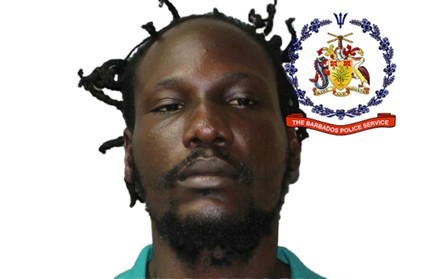
Barbados law enforcement authorities have successfully taken into custody Omar Ricardo Best, a 32-year-old resident of 2nd Avenue, Vauxhall, Christ Church, who had been the subject of an active police search. The detention occurred on Saturday following the issuance of an official “Wanted Man” bulletin on February 27th in connection with serious criminal allegations. The suspect is currently cooperating with investigators as the inquiry progresses. The Barbados Police Service has extended formal gratitude to both citizens and media outlets for their crucial assistance in the matter, highlighting the effectiveness of community-police collaboration in addressing security concerns. The arrest demonstrates the continued efforts of Barbadian authorities to maintain public safety and combat criminal activity through coordinated public engagement strategies.
博客
-
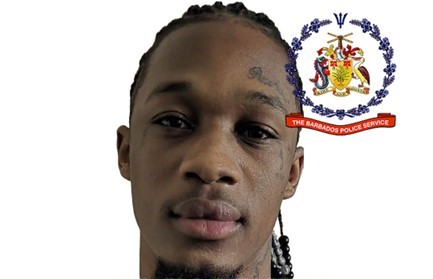
‘Gringo’ in police custody
Barbados law enforcement authorities have successfully apprehended Justin Omari Jones, a high-priority fugitive known by the aliases ‘Gringo’ and ‘Elgringo’. The suspect, residing at Fairfield Cross Roads in Tudor Bridge, St Michael, was taken into police custody on Saturday following an intensive public manhunt.
The arrest comes precisely three weeks after the Barbados Police Service issued an official ‘Wanted Man’ bulletin on November 7, 2025, seeking public assistance in locating Jones regarding multiple serious criminal investigations. Authorities have confirmed that the suspect is currently cooperating with detectives and providing information relevant to their ongoing investigations.
In an official statement released following the capture, the Barbados Police Service expressed gratitude to both media outlets and civilian residents for their crucial assistance in the successful resolution of this security operation. The collaborative effort between law enforcement and the community demonstrates the effectiveness of public-police partnerships in addressing criminal activities that impact societal safety.
The apprehension of this wanted individual marks a significant development in the ongoing criminal investigations and reinforces the commitment of Barbadian authorities to maintaining public security and judicial accountability.
-
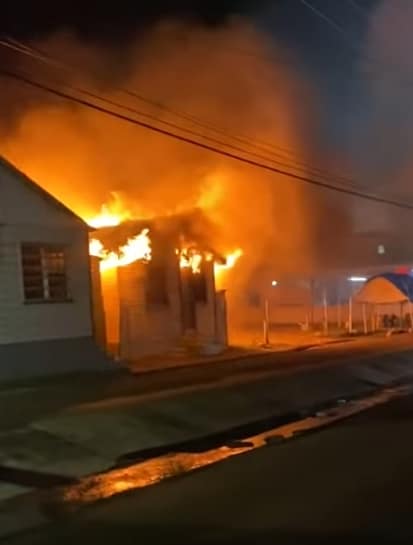
House on Fire Near Big Gutter in St John’s
Emergency services in St. John’s swiftly responded to reports of a fire outbreak in the vicinity of the area colloquially known as the Big Gutter. Initial dispatches indicate that firefighting units were deployed to the scene to contain and extinguish the blaze. The exact cause of the fire remains under investigation by local authorities, who are working to determine the origin and the extent of the damage. While the specific location details are often familiar to residents, the incident highlights ongoing concerns regarding fire safety in community areas. Officials have urged the public to avoid the area to allow emergency crews to operate unimpeded and efficiently. Further updates are anticipated as the situation develops and more information is formally released by the city’s emergency management team.
-
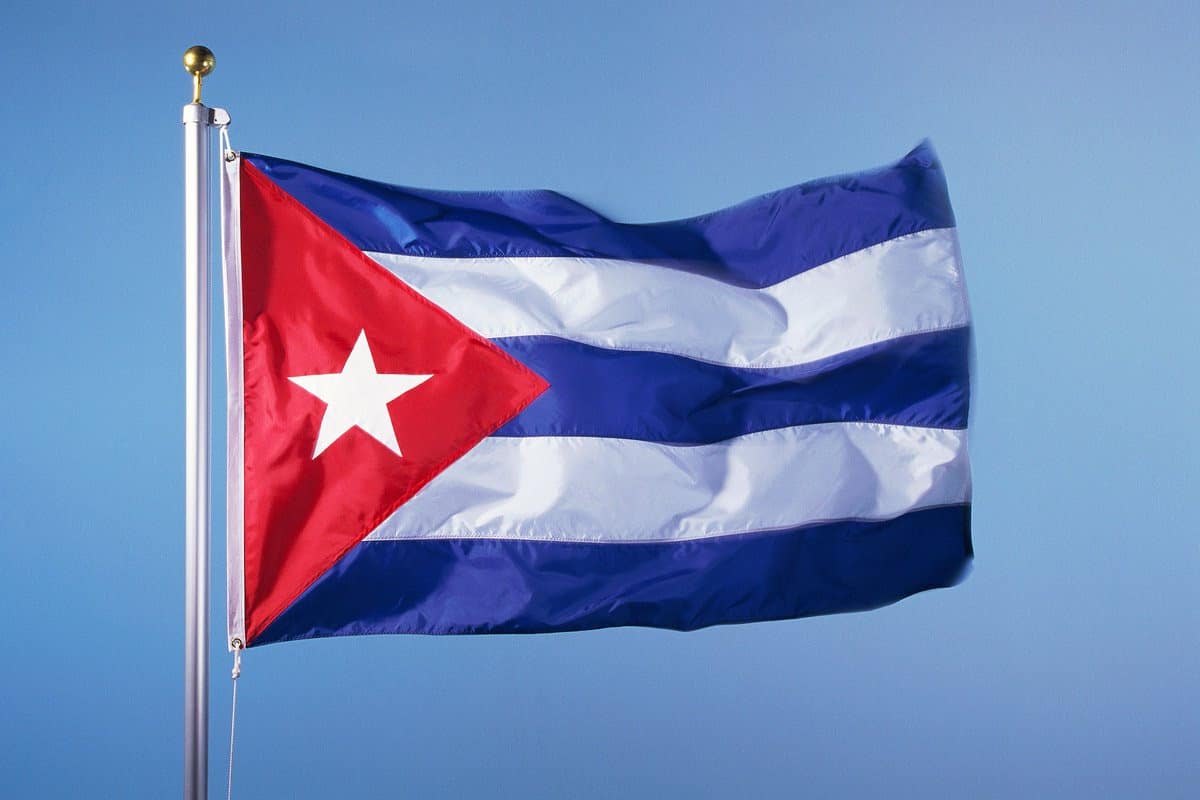
Friends of Cuba appeal for urgent donations to support hospitals in Cuba
In a powerful demonstration of international solidarity, Antigua and Barbuda has initiated a humanitarian fundraising campaign titled “Gratitude – Cuba: A friend indeed is now a friend in need” to address critical medical supply shortages in Cuban healthcare facilities. The initiative, orchestrated by the Friends of Cuba organization based in Antigua and Barbuda, specifically targets individuals who have previously benefited from Cuba’s extensive medical assistance programs while simultaneously welcoming contributions from the general public.
The campaign operationalizes through multiple donation channels, accepting both monetary contributions and checks made payable to Williams and Associates Dental Ltd. The designated collection point operates at the Williams and Associates Dental Clinic in Deanery during standard weekday business hours with additional Saturday morning availability. All contributors will receive official receipts for their donations.
According to campaign coordinators, the raised funds will be allocated exclusively toward procuring urgently needed medical equipment and supplies for Cuba’s struggling hospital system. Organizers have indicated potential supplementary fundraising events in the future should additional support become necessary. The initiative’s core message appeals directly to past recipients of Cuba’s medical outreach, encouraging them to “give as willingly as you’ve been given” in this reciprocal act of humanitarian support.
-
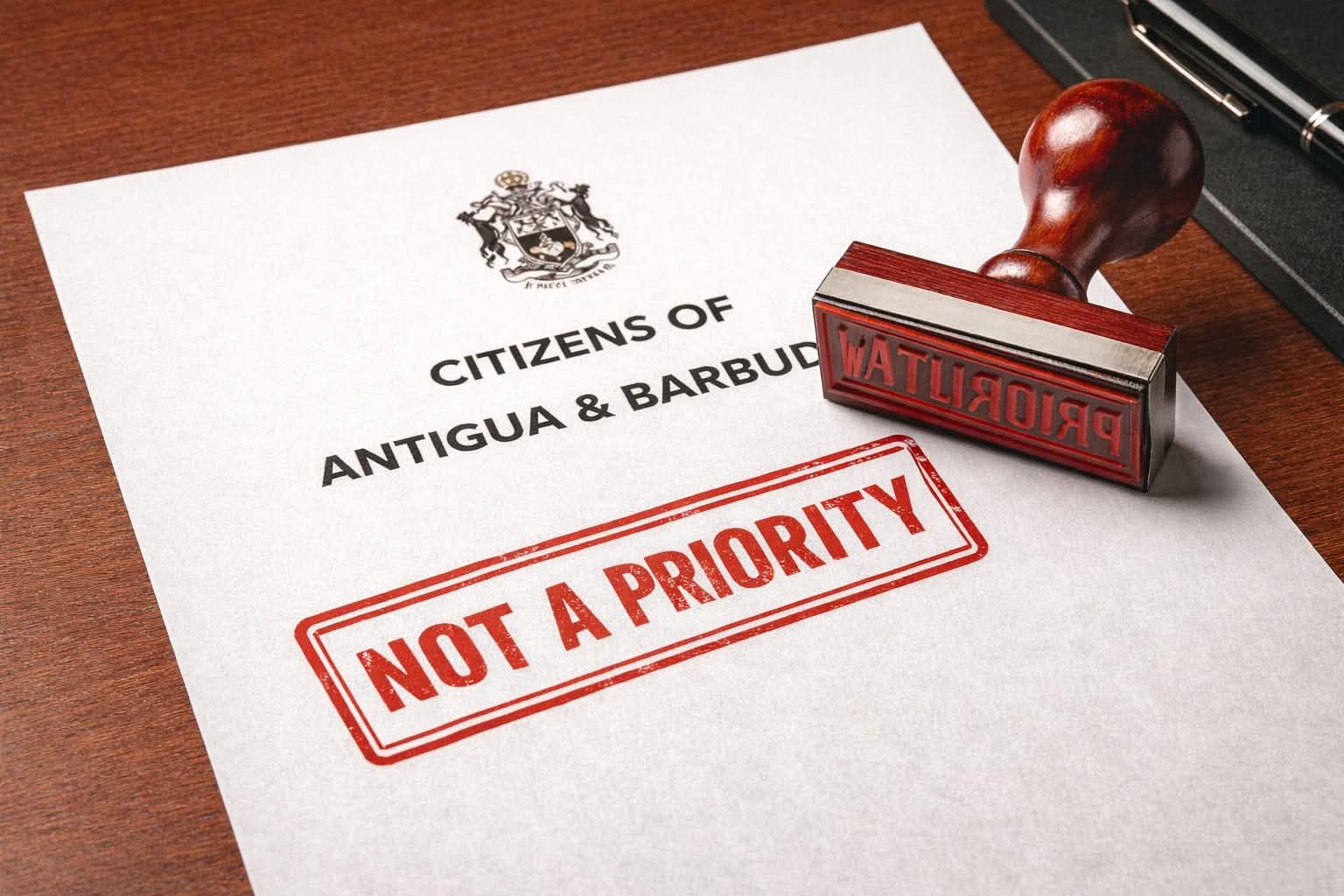
COMMENTARY: The Government of Antigua and Barbuda hates Antiguan and Barbudans
A chance encounter between two former classmates at a local Roti Hut has unveiled profound disillusionment with the state of Antigua and Barbuda. After two decades apart, the reunion quickly turned into a somber assessment of their homeland’s decline, revealing a pattern of national abandonment by its own citizens.
The conversation exposed a troubling reality: numerous middle-class families from formerly prosperous areas like Villa have completely vanished from the country. These families, who once represented Antigua and Barbuda’s most promising citizens, have relinquished property ownership and severed ties entirely. The authors identify systemic government neglect as the root cause, arguing that Antiguans and Barbudans have been treated as secondary citizens in their own country.
Cultural erosion compounds the problem. Traditional Antiguan dishes like ‘ducana and saltfish’ have become increasingly rare, while neighboring islands proudly maintain their culinary heritage. This cultural disappearance symbolizes a broader loss of national identity.
The government stands accused of prioritizing foreign interests over domestic welfare. Land disputes consistently favor foreign parties or the government itself, while infrastructure needs like reliable electricity, water access, and well-maintained parks remain unaddressed. Recent tariff reductions appear as election-year manipulations rather than genuine concern for citizens’ economic hardship.
The article highlights the paradoxical treatment of different communities: while government officials quickly address concerns of non-national groups following incidents of violence, born Antiguans and Barbudans await meaningful engagement on crime affecting their communities. This differential treatment reinforces the perception that political leaders value foreign votes more than native constituents.
The conclusion presents a stark reality: after six decades of residency, the author feels increasingly marginalized by a government that appears to harbor animosity toward its own people. The fundamental desire to live, work, and thrive in one’s homeland without seeking refuge abroad remains an unfulfilled aspiration for many Antiguans and Barbudans.
-
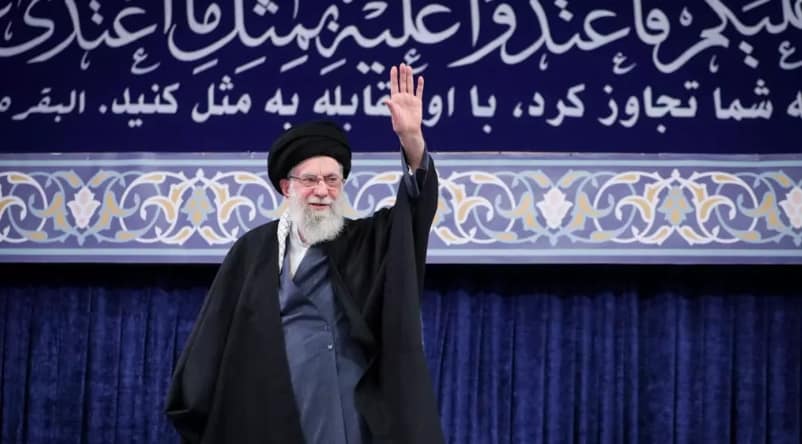
Iran’s Supreme Leader Ayatollah Ali Khamenei Killed in US-Israeli Air Strikes Aged 86
Ayatollah Ali Khamenei, Iran’s supreme leader who ruled with an iron fist for nearly four decades, was killed on February 28 during a coordinated military operation conducted by Israeli and American forces. The 86-year-old cleric, who had dominated Iran’s political landscape since 1989, died when his compound in Tehran was targeted in what officials described as a ‘preventive’ aerial campaign against Iran’s nuclear facilities.
Khamenei’s journey to power began in the religious circles of Qom, where he studied under Ayatollah Ruhollah Khomeini. His political awakening during the Shah’s regime led to multiple arrests and imprisonment for anti-monarchy activities. Following the 1979 Islamic Revolution, Khamenei rapidly ascended through the ranks, becoming president in 1981 at age 41 and eventually succeeding Khomeini as supreme leader in 1989 despite his intermediate clerical rank.
The controversial succession saw Khamenei consolidate power through constitutional amendments that established the principle of velayat-e-faqih (rule of religious jurists), granting him ultimate authority over all state institutions. He maintained control through brutal suppression of dissent, including the bloody crackdowns on the 1999 student protests, 2009 Green Movement, and the 2022 ‘Woman, Life, Freedom’ uprising sparked by Mahsa Amini’s death.
Internationally, Khamenei became the central figure in the geopolitical conflict over Iran’s nuclear program. His approval of the 2015 nuclear deal marked a rare moment of diplomacy, though the US withdrawal in 2018 under President Trump reignited tensions. Khamenei ordered the acceleration of nuclear activities in response, reaching unprecedented uranium enrichment levels.
The October 2023 Hamas attack on Israel triggered a chain of events that ultimately weakened Khamenei’s regional influence. As Israel systematically eliminated leaders of Iran’s proxy networks—including Hezbollah’s Hassan Nasrallah and Hamas’s Yahya Sinwar—Tehran’s defensive perimeter crumbled. The June 2025 twelve-day war saw direct Israeli strikes on Iranian nuclear and military sites, followed by US involvement that forced a ceasefire.
Khamenei’s death creates profound uncertainty for Iran’s political future, its nuclear program, and the survival of a regime that faces both international isolation and widespread domestic discontent. The operation that killed him represents the dramatic culmination of decades of confrontation between Iran and Western powers.
-
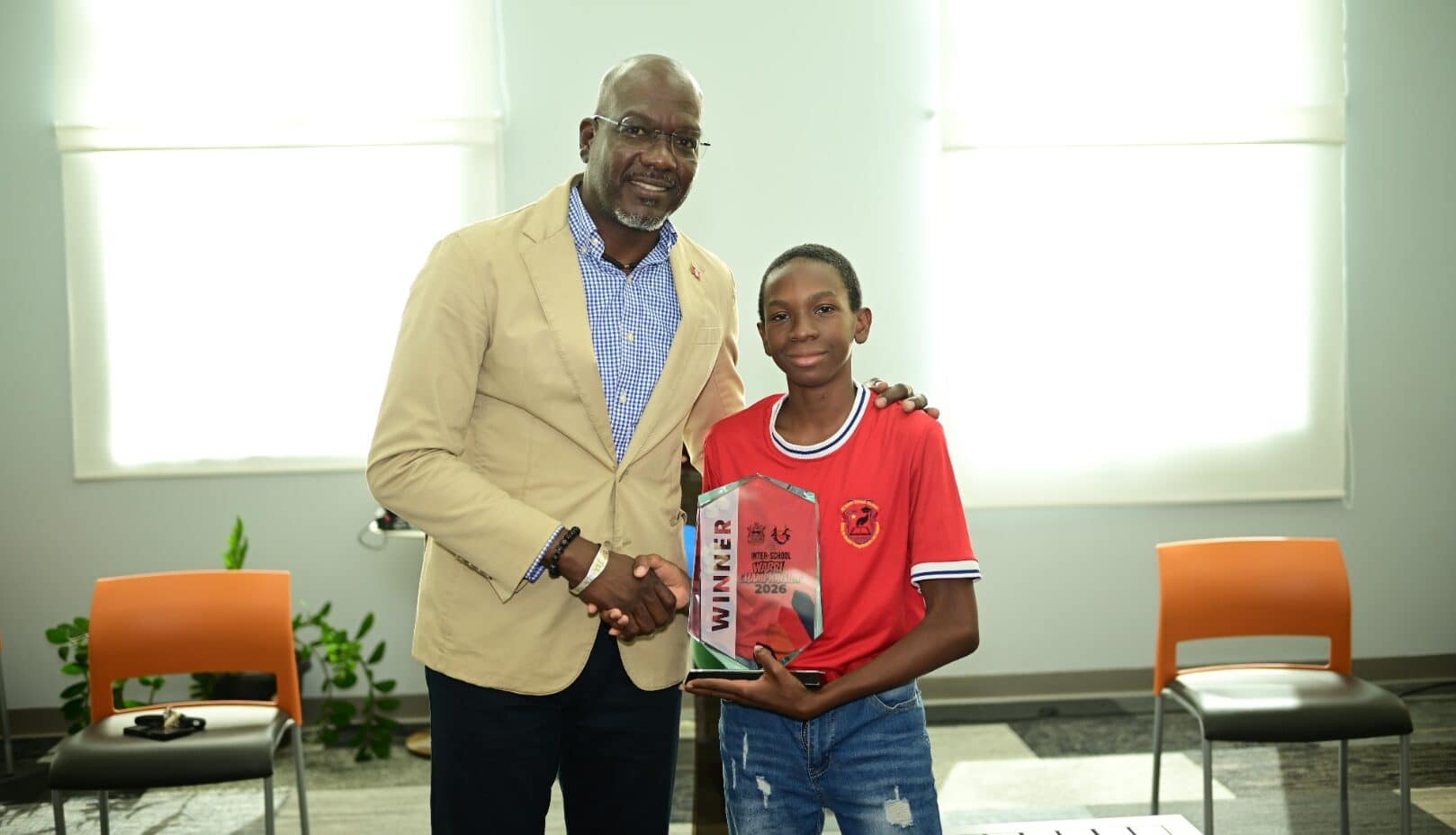
Inter-School Warri Championship Concluded Successfully
Antigua and Barbuda witnessed a vibrant celebration of cultural heritage on February 28, 2026, as the J.E. St. Luce Building in St. John’s hosted the first-ever Interschool Warri Championship. This landmark event, organized by the Department of Culture in partnership with the Ministry of Education, successfully engaged primary and secondary students from across the nation in the traditional African board game of Warri.
The championship served as both a competitive platform and a cultural revival initiative, designed to reconnect younger generations with ancestral traditions through strategic gameplay. Participants demonstrated remarkable strategic thinking and profound cultural appreciation throughout the tournament, highlighting the game’s significance beyond mere entertainment.
Dimitri Riley from Sir Novelle Richards Academy emerged as the inaugural champion, securing first place with impressive strategic prowess. Genesis Daniel of Pares Primary School claimed second position, while Owen Williams from Antigua Grammar School rounded out the top three finishers in third place.
Officials from both organizing institutions emphasized the event’s dual purpose: promoting cultural preservation and fostering youth development through traditional games. The Warri championship represented a meaningful step in decolonizing education and reinforcing cultural identity among Antigua and Barbuda’s youth population. The overwhelming positive response from participants and educators suggests strong potential for the event to become an annual tradition in the nation’s cultural calendar.
-
Wereldwijde reacties op dood van Iran’s Khamenei: verdeeldheid en onrust
The assassination of Iran’s Supreme Leader Ayatollah Ali Khamenei in a joint U.S.-Israeli airstrike has triggered seismic geopolitical repercussions across the Middle East and beyond, unleashing both mourning and celebration while threatening regional stability.
International responses reflect deep ideological divisions. European Union foreign policy chief Kaja Kallas characterized the event as a historic turning point that could potentially open pathways toward greater Iranian freedoms, while simultaneously warning of persistent uncertainties. Russian President Vladimir Putin conveyed profound condolences to Khamenei’s family, condemning the operation as a cynical violation of international law and moral principles.
Middle Eastern powers demonstrated remarkable unity as Qatar, UAE, Bahrain, Kuwait and Saudi Arabia unanimously condemned Iranian missile attacks following the assassination, emphasizing their sovereign right to self-defense. Bahrain specifically denounced the assault on the U.S. Fifth Fleet as ‘treacherous.’
France’s President Emmanuel Macron urgently convened a UN Security Council meeting, highlighting escalation dangers and calling for renewed negotiations on Iran’s nuclear and ballistic programs. Sweden’s Foreign Minister Maria Stenergard cautiously acknowledged potential opportunities while warning against descending into violence spirals.
In Southeast Asia, Indonesia’s Ulema Council expressed deep sympathy and criticized U.S. involvement, urging withdrawal from the Board of Peace organization which they claim promotes unequal security policies. Pakistan’s Foreign Minister Ishaq Dar condemned the attacks while advocating immediate diplomatic de-escalation.
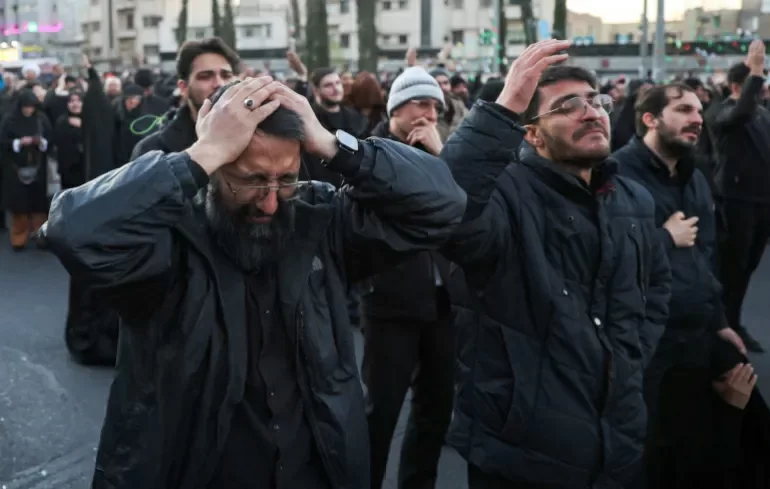
Domestically, Iran presented contrasting narratives. State television broadcast images of black-clad mourners gathering in Tehran’s Enghelab Square, while simultaneous celebrations erupted in Dehloran, Karaj and Izeh. In Galleh Dar, protesters toppled a monument of Islamic Republic founder Ayatollah Khomeini, with one celebrator exclaiming, ‘Hello new world!’ Educational professionals expressed concerns about potential Iraqi-style chaos engulfing the nation.
The assassination ignited violence across Shiite communities worldwide. Karachi witnessed deadly riots at the U.S. consulate claiming at least nine lives, while protesters set fire to a UN office in Skardu. Baghdad police deployed tear gas against pro-Iranian demonstrators near the U.S. embassy, where crowds chanted ‘Death to America’ and ‘Death to Israel.’ Western diplomatic missions and multinational corporations across Pakistan have significantly enhanced security protocols.
This watershed moment underscores profound global divisions, with the coming days likely determining not only Iran’s future trajectory but regional stability throughout the Middle East.
-

Ramadhin: De dubbele moraal van Silvana Afonsoewa
A significant political controversy has emerged in Suriname involving parliamentarian Silvana Afonsoewa, who serves as chair of the Standing Committee on Public Health. Former Health Minister Amar Ramadhin has publicly accused Afonsoewa of improperly receiving government salary without performing work between June 2020 and February 2023 while she was a civil servant at the Ministry of Health.
The case originated when Afonsoewa, having lost her parliamentary seat in the May 2020 elections, applied for a position at the Health Ministry. She was appointed to a non-existent position by then-Minister Antoine Elias and placed on the ministry’s payroll without a fixed workplace or formal documentation of her employment terms. According to ministry records, she received regular salary payments despite never reporting for work during this nearly three-year period.
In early 2023, ministry leadership discovered Afonsoewa’s continued presence on payroll despite her absence from work since June 2020. Her salary was suspended in March 2023, and she was instructed to defend her position. Her defense failed to convince officials that ministry leadership should have been aware of arrangements made with the previous minister.
Afonsoewa subsequently filed an emergency lawsuit against the State of Suriname, demanding payment of back wages from March to November 2023, continuation of salary, and reimbursement of legal costs. The state argued she had no right to compensation since she performed no work, never reported to perform duties, and no written records existed documenting any special arrangements.
The court ruled that while employees generally retain salary rights when unable to work due to employer-related circumstances, they must demonstrate willingness to work. The judge determined Afonsoewa failed to prove she actively and systematically offered to work, thus preventing the conclusion that her inactivity was solely attributable to the state.
The court rejected all of Afonsoewa’s claims and ordered her to pay the state’s legal costs. Despite these judicial findings, Afonsoewa has publicly denied the allegations and presented what Ramadhin characterizes as a complete distortion of facts regarding her ministry tenure.
-
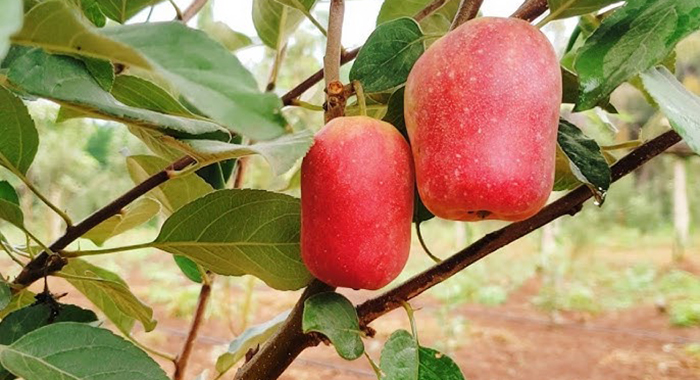
Nutritious Wambugu apple takes root in SVG
A transformative agricultural initiative is unfolding across the Caribbean as St. Vincent and the Grenadines becomes the latest nation to adopt Kenya’s innovative Wambugu apple variety. This development marks a significant shift in intercontinental agricultural cooperation, moving beyond historical paradigms to embrace knowledge exchange and technological transfer between African and Caribbean nations.
The Wambugu apple, developed by Kenyan farmer Peter Wambugu twenty-five years ago, represents a breakthrough in fruit cultivation. Unlike traditional apples requiring cold climates, this variety thrives in tropical conditions, making it ideally suited for Caribbean agriculture. Cherio Farms, a forward-thinking agricultural enterprise in SVG, is spearheading the distribution of Wambugu saplings to experienced local farmers, signaling a new era of food sovereignty initiatives.
Prominent agricultural experts including Kemston Cato, holder of a master’s degree in food science, and Hubert “Shaka” Williams, a seasoned farmer with decades of experience, are among the first to implement this innovative cultivation. The project also involves Roosevelt John, a pineapple specialist in Mesopotamia Valley, and Marlon da Silva, whose twenty-five years of citrus farming experience provides valuable comparative insight.
The economic implications are substantial. SVG currently imports approximately 165,000 kilograms of apples annually at a cost exceeding EC$1 million. This initiative aims to significantly reduce that import bill while creating local agricultural value. The Wambugu apple’s nutritional profile—low-calorie, fat-free, and rich in vitamin C, dietary fiber, and antioxidants—positions it as a health-conscious alternative to imported fruits.
Beyond economic benefits, this collaboration represents a philosophical shift in North-South relations. As Che Connell of Cherio Farms notes, this exchange emphasizes “the brains, not the bodies, the tech, not the toil” of African agricultural innovation. The project has already demonstrated success in Jamaica and Trinidad, suggesting broader regional potential.
Looking forward, Cherio Farms envisions expanded partnerships with Taiwan’s agricultural sector and further African collaborations, potentially including apricots, strawberries, citrus, and grapes. This neo-agricultural revolution aims to achieve food sovereignty for SVG by 2030, transforming both agricultural practices and international relationships through sustainable, knowledge-based development.