
博客

  • Sarteneja Village Gets $2.2 Million Water System Upgrade

    Sarteneja Village Gets $2.2 Million Water System Upgrade

    The coastal community of Sarteneja in Belize has inaugurated a comprehensively upgraded water system following the completion of a $2.2 million infrastructure project. This transformative initiative represents a collaborative effort between the Government of Belize and multiple international partners, including the Protected Areas Conservation Trust (PACT), UNICEF, and the South Korean Fund.

    The comprehensive rehabilitation project addresses both immediate water access challenges and long-term sustainability needs. Engineering improvements feature the installation of a reverse osmosis purification system to ensure drinking water meets highest quality standards. The infrastructure now includes a backup generator to maintain uninterrupted water supply during power outages, alongside significant repairs to the reservoir and water board administrative facilities.

    Modernization efforts extend to the implementation of 250 individual household meters and an additional bulk meter to accurately monitor community water usage patterns. The water management system has been enhanced with contemporary office equipment to streamline billing procedures and digitalize record-keeping processes.

    The official inauguration ceremony witnessed the participation of key stakeholders including Oscar Requena, Minister of Rural Transformation, and Area Representative Florencio Marin Jr. The event also gathered officials from UNICEF, PACT, Belize Water Services, and the Sarteneja Village Council, symbolizing the collective commitment to community development.

    Government representatives emphasized that this substantial investment directly contributes to improved public health outcomes while simultaneously fostering economic development opportunities for one of Belize’s largest coastal communities.

  • Families of Trinidadian men killed at sea file lawsuit against US government

    Families of Trinidadian men killed at sea file lawsuit against US government

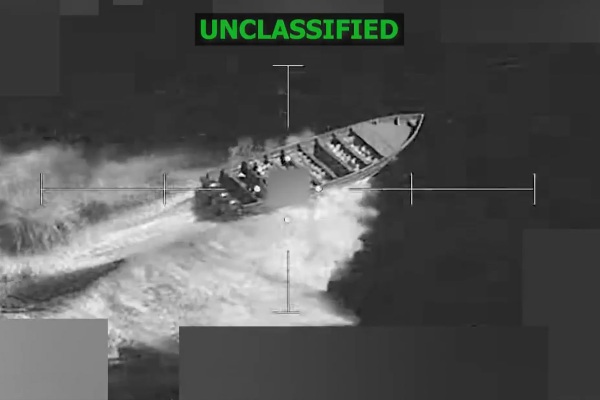
    In a landmark legal challenge, the families of two Trinidadian nationals killed in a US military operation have filed a wrongful death lawsuit against the United States government. The case, lodged in a Massachusetts federal court, centers on the October 14th missile strike that killed six individuals aboard a vessel in the Caribbean.

    The plaintiffs, represented by the American Civil Liberties Union (ACLU) and the Center for Constitutional Rights (CCR), allege that the US government unlawfully targeted and killed Chad Joseph (26) and Rishi Samaroo (41) without justification. The lawsuit invokes both the Death on the High Seas Act and the Alien Tort Statute, seeking to establish legal accountability for what they characterize as extrajudicial killings.

    This legal action directly challenges the Trump administration’s justification that such military operations fall within the scope of an armed conflict against designated narcoterrorist organizations. The administration has previously asserted that drug cartels represent a non-international armed conflict scenario, thereby legitimizing the use of lethal force.

    However, the lawsuit contends there exists no such armed conflict, rendering the laws of war inapplicable. It further argues that the victims were not affiliated with drug cartels but were merely returning to Trinidad from Venezuela where they had been engaged in fishing and agricultural work.

    The case has drawn attention to the broader US military campaign in the Caribbean and eastern Pacific, which has reportedly resulted in at least 125 fatalities since September. Notably, the Trinidad and Tobago government has expressed support for these operations, with Prime Minister Kamla Persad-Bissessar previously endorsing violent measures against those involved in illegal drug trafficking.

    The plaintiffs seek punitive damages while emphasizing their primary goal of establishing legal accountability for what they describe as ‘lawless killings in cold blood.’

  • Parliamentary Elections Office staff to participate in retreat

    Parliamentary Elections Office staff to participate in retreat

    Grenada’s electoral authorities are proactively enhancing their operational readiness amid the constitutional possibility of early general elections. The Parliamentary Elections Office (PEO) has organized a comprehensive staff retreat designed to deepen understanding of electoral legislation and improve voter service delivery.

    Supervisor of Elections Arthur Pierre emphasized the dual purpose of the retreat, which will bring together registration officers and assistant registration officers nationwide. The gathering aims to provide thorough education on the Representation of the People Act, the foundational legislation governing electoral processes, voter registration procedures, and House of Representatives elections in Grenada.

    The timing of this retreat coincides with a critical electoral calendar milestone. The sessions are scheduled for January 29, 2026, which marks the final day for submitting claims and objections to the 2025 consolidated voter list published on January 22. According to an official notice in the January 16 Government Gazette, citizens have a seven-day window from January 22-29 to request corrections regarding any errors in names, addresses, or polling divisions through their Constituency Registration Officers.

    Electoral officials are urging particular attention from citizens who registered during the October-December 2025 quarter to verify their inclusion on the published list. The notice additionally encourages public scrutiny to identify any improperly included names, ensuring list integrity.

    While Grenada’s constitution mandates general elections by October 2027 at the latest, the Prime Minister retains authority to dissolve parliament unexpectedly and call elections with just 21 days’ notice. This constitutional provision underscores the importance of maintaining continuous electoral preparedness throughout the election cycle.

  • BTL Says Protestors Were Trespassers

    BTL Says Protestors Were Trespassers

    Belize Telemedia Limited (BTL) has issued a strong condemnation against protestors who allegedly engaged in unauthorized entry at its corporate headquarters in Belize City on January 27, 2026. The telecommunications company characterized the incident as unlawful trespassing that disrupted normal business operations.

    The demonstration, organized primarily by the United Democratic Party (UDP) with participation from the National Trade Union Congress of Belize (NTCUB) and its members, was staged in opposition to BTL’s proposed acquisition of Speednet Communications Limited (SMART). According to the company’s official statement, while BTL acknowledges the right to lawful protest, certain individuals crossed boundaries by entering the secured compound without authorization and resisting police intervention.

    The timing of the protest coincided with a scheduled Board of Directors meeting that BTL claims was significantly disrupted. The company revealed that the board was convening to address critical human resources matters, including implementation of a severance decision previously issued by the Caribbean Court of Justice on November 5, 2025. BTL described the protestors’ actions as not only regrettable but counterproductive to legitimate business proceedings.

    In its statement, BTL emphasized zero tolerance for intimidation tactics or unlawful entry, affirming that board meetings would proceed as planned regardless of external pressure. The company asserted that directors yielding to intimidation would constitute a breach of their fiduciary duties to exercise independent judgment, ultimately acting against the interests of BTL and its shareholders.

    The incident highlights growing tensions surrounding BTL’s expansion strategy through the SMART acquisition, demonstrating the intersection of corporate governance, labor concerns, and political activism in Belize’s telecommunications sector.

  • U-17 World Cup 2026 Qualifier : Haiti humiliates Saint Lucia [5-0] (video)

    U-17 World Cup 2026 Qualifier : Haiti humiliates Saint Lucia [5-0] (video)

    In a spectacular display of skill and coordination, Haiti’s U-17 women’s national soccer team delivered a commanding 5-0 victory against Saint Lucia during their FIFA U-17 Women’s World Cup qualifier match. The game, held on January 27, 2026, at the FFK Stadium in Willemstad, Curaçao, marked Haiti’s second consecutive win in the Group C qualifying stage.

    Under the strategic guidance of French coach Frenoy Baptiste, the Haitian squad, affectionately known as ‘Les Grenadières,’ implemented several tactical changes to their starting lineup. Key inclusions were goalkeeper Abeegayel D. Favilus, alongside forwards Nia J. Etienne and Adjani Kamanzi-Mondestin, reflecting the team’s diverse international composition with players based in Canada, the United States, Scotland, and Puerto Rico.

    The match commenced with immediate intensity as Kyrah Lormil netted two early goals in the 4th and 17th minutes, establishing a formidable lead. The situation worsened for Saint Lucia when they were reduced to ten players following a red card issued to Ivana Marshall. Despite a 2-0 scoreline at halftime, Haiti’s offensive momentum continued unabated in the second half.

    Substitutions proved effective as Krystel Châtelain scored in the 61st minute, followed by a powerful long-range strike from Keisha Gue in the 73rd minute. Rosalie St. Louis concluded the scoring spree in the 86th minute, securing the decisive 5-0 triumph. This victory reinforces Haiti’s dominant position in their group, having scored an impressive 11 goals while conceding only once across two matches.

    Haiti currently leads Group C with a perfect record of six points, closely trailed by Guatemala. The team’s performance not only highlights their potential to advance to the 2026 FIFA U-17 Women’s World Cup in Morocco but also showcases the growing prowess of Caribbean women’s soccer on the international stage.

  • Unions: ‘Do the Right Thing and We Will Hold Peace’

    Unions: ‘Do the Right Thing and We Will Hold Peace’

    BELIZE CITY, BELIZE – January 27, 2026: A coalition of labor unions mobilized outside Belize Telemedia Limited’s St. Thomas Street compound today in a dramatic demonstration against the telecommunications company’s proposed acquisition of Speednet/SMART. The National Trade Union Congress of Belize (NTUCB) led the protest, joined by the Belize Energy Workers Union (BEWU) and the Christian Workers Union (CWU), creating a sea of yellow as they voiced strong opposition to what they characterize as the transfer of public assets into private hands.

    Despite earlier indications from Opposition Leader Tracy Panton that BTL’s board meeting had been postponed, NTUCB President Ella Waight stated she had received no official confirmation, prompting the union presence. ‘What’s on the agenda? We don’t know. That is why we are out here,’ Waight declared, emphasizing their intent to prevent any rushed decision regarding the acquisition.

    The protest intensified around 10 a.m. when demonstrators entered the BTL compound, fulfilling their publicly stated commitment to directly confront the proceedings. CWU President Leonora Flowers framed the demonstration as being ‘for the future of Belize… our children and grandchildren,’ asserting that ‘there’s too much at stake here for Belizeans to just sit back and watch it go through.’

    Waight addressed potential concerns about escalation, noting the substantial turnout and stating, ‘I would not want to see any kind of riots or anything like that going on. I’m not saying that would happen, but let’s avoid anything like that happening.’ She revealed that the mobilization occurred with less than 24 hours’ notice, suggesting this protest represents ‘just the beginning’ of union action.

    The Public Service Union (PSU) joined as an affiliate of NTUCB, with PSU President Dean Flowers criticizing the Briceño Administration’s handling of public assets. In particularly strong language, Flowers issued a direct warning to political leadership: ‘I want to remind John Briceño, while he was in opposition, he said we need to change because one of us will get hurt. I want to remind you of that sir, one ah unu wah get hurt if unu continue to exploit Belizeans.’

    BTL subsequently released a statement characterizing the meeting inside their boardroom as focused on ‘human resources-related issues, including the severance decision of the CCJ of November 5, 2025, which will have a positive impact on our former and present employees.’ The company condemned the disruption of what they described as routine employee-focused discussions.

  • Nipah Virus Cases in India Trigger Airport Screenings Across Asia

    Nipah Virus Cases in India Trigger Airport Screenings Across Asia

    Health authorities across Asia have activated enhanced surveillance protocols following the confirmation of two Nipah virus cases in India’s West Bengal state. The detection has triggered a coordinated response to prevent potential international spread of the high-mortality pathogen.

    India’s Health Ministry confirmed the cases, which originated in December and involved healthcare professionals. Through comprehensive contact tracing, 196 individuals were identified, tested, and all were confirmed asymptomatic. No infections have been reported beyond India’s borders to date.

    The Thai government has implemented mandatory health screenings for passengers arriving from West Bengal at Bangkok and Phuket international airports, supplemented by health declaration requirements. Additional monitoring has been established at natural tourist sites. Department of Disease Control representatives expressed confidence in existing containment capabilities.

    Nepal has instituted parallel measures at Tribhuvan International Airport in Kathmandu and terrestrial border crossings with India. Meanwhile, Taiwanese health officials are considering designating Nipah as a ‘Category 5 disease’—a classification reserved for emerging infections with significant public health implications that mandate immediate reporting and specialized control protocols.

    The Nipah virus, recognized by the World Health Organization as a priority pathogen with epidemic potential, maintains a fatality rate between 40-75%. Transmission occurs through zoonotic transfer from fruit bats and pigs, contaminated food sources, and human-to-human contact. No approved vaccines or treatments currently exist.

    Clinical manifestations typically emerge within 4-14 days post-exposure, presenting as fever, cephalalgia, myalgia, emesis, and pharyngitis. Severe cases may progress to pneumonia and encephalitis—a frequently fatal cerebral inflammation.

    First identified during a 1998 Malaysian outbreak that claimed over 100 lives and prompted the culling of more than one million pigs, Nipah has caused periodic outbreaks across South Asia. Bangladesh has recorded over 100 fatalities since 2001, while India has experienced outbreaks in West Bengal and Kerala, including lethal episodes in 2018 and 2023.

  • T&T families of men slain during strikes on Venezuelan boat file unprecedented lawsuit against US gov’t

    T&T families of men slain during strikes on Venezuelan boat file unprecedented lawsuit against US gov’t

    In an unprecedented legal challenge, two families from Trinidad and Tobago have initiated federal litigation against the United States government following the fatal military strikes that claimed the lives of their relatives off the coast of Venezuela. The lawsuit, filed in a Massachusetts district court, centers on the deaths of 26-year-old Chad Joseph and 41-year-old Rishi Samaroo from Las Cuevas, Trinidad, who were killed alongside four others during an October 14th maritime operation conducted by U.S. forces.

    The plaintiffs, represented by prominent civil liberties organizations including the ACLU, Seton Hall University Law School, and the Center for Constitutional Rights, allege that the strikes form part of a systematic and legally unjustifiable campaign targeting vessels in international waters. According to court documents, this operational pattern has resulted in approximately 125 fatalities across 36 separate incidents since September 2nd, all executed without congressional authorization.

    The 23-page complaint presents a damning indictment of the administration’s conduct, characterizing the killings as ‘premeditated and intentional’ acts lacking plausible legal justification. The document specifically names President Trump and Defense Secretary Pete Hegseth, accusing them of publicly celebrating the operations through online video dissemination.

    Administration officials have defended the strikes as necessary interventions against narcotics trafficking, asserting that congressional approval was not required for such military actions. The victims’ families counter that their relatives were engaged in legitimate agricultural work—Joseph had traveled for fishing and farming purposes, while Samaroo was employed on a Venezuelan agricultural farm specializing in dairy production.

    The legal action invokes two distinct statutory frameworks: the Death on the High Seas Act, which provides recourse for wrongful maritime fatalities, and the Alien Tort Statute, enabling foreign nationals to seek redress for human rights violations in U.S. courts. Legal representatives emphasize the historic nature of the case, noting that never before has the U.S. government asserted such extensive lethal authority in international waters. The White House has declined commentary, citing the ongoing judicial proceedings.

  • Geweld tegen kinderen blijft hardnekkig probleem in Latijns-Amerika en Caribisch gebied

    Geweld tegen kinderen blijft hardnekkig probleem in Latijns-Amerika en Caribisch gebied

    A disturbing new report from the Pan American Health Organization (PAHO) and UNICEF reveals that violence continues to pose a severe threat to millions of children and adolescents across Latin America and the Caribbean. The comprehensive study, titled ‘Violence against children and adolescents in Latin America and the Caribbean: New data and solutions,’ documents alarming patterns of physical, emotional, and structural violence affecting young populations throughout the region.

    Between 2015 and 2022, a staggering 53,318 children and adolescents fell victim to lethal violence, with homicide representing the most extreme manifestation of a broader pattern of aggression that begins early in childhood. While recent data shows some improvement for boys aged 15-17—with homicide rates decreasing from 17.63 to 10.68 per 100,000 between 2021-2022—the situation remains critically concerning. Conversely, homicide rates among girls in the same age group doubled during this period, rising from 2.13 to 5.1 per 100,000.

    The report highlights particularly troubling findings from Suriname, where nearly half of primary school students experience physical violence and over 80% have encountered at least one form of domestic violence. Further research indicates approximately 87% of adolescents and nearly 96% of young adults reported experiencing at least one form of childhood maltreatment during their lifetimes.

    According to the organizations, this violence epidemic stems from multiple interconnected factors, including increased armed violence linked to organized crime, widespread firearm availability, social inequality, and harmful gender norms. The research emphasizes how different forms of violence reinforce one another: six out of ten children under 14 experience violent disciplinary methods at home, one in four adolescents aged 13-17 face school bullying, and nearly one in five women in the region report experiencing sexual violence before turning 18.

    UNICEF Regional Director Roberto Benes stressed that children are exposed to violence daily—in homes, schools, and gang-controlled communities. ‘We know how to stop this violence,’ Benes stated. ‘This requires strong, consistent public policies so every child can grow up in a safe environment.’

    PAHO Director Jarbas Barbosa highlighted the lasting impact of violence on children’s physical and mental health, noting that ‘health services play a crucial role in prevention and care. Early detection and timely, quality care can make all the difference for victims and their environments.’

    The report concludes with evidence-based solutions, urging governments to strengthen child protection laws, improve firearm oversight, enhance training for education and law enforcement professionals, support non-violent parenting programs, and invest in safe learning environments and accessible support services. These recommendations were validated during a regional ministerial consultation in October 2025 attended by over 300 representatives from health, education, justice, and child protection sectors.

  • Uber officially launches in Saint Lucia

    Uber officially launches in Saint Lucia

    Saint Lucia has officially joined Uber’s global network with the launch of its app-based taxi service on January 27th. The ride-hailing giant has introduced Uber Taxi, a specialized service utilizing exclusively licensed local taxi drivers rather than private vehicles, marking a significant development in the island’s transportation landscape.

    The service enables both tourists and residents to request rides through Uber’s platform, providing transparency through upfront fare estimates, real-time route tracking, and detailed driver information. This strategic approach represents Uber’s effort to integrate with rather than disrupt Saint Lucia’s existing taxi ecosystem.

    Jorge Cordero, Uber’s General Manager for Saint Lucia, emphasized the service’s potential to enhance visitor experiences: “Saint Lucia welcomes visitors from around the world, and this launch brings a familiar, app-based way to get around the island. Uber Taxi connects tourists with licensed local taxi drivers, with upfront trip details designed to make exploring Saint Lucia more seamless.”

    The rollout follows months of preparation, with Uber beginning to onboard local taxi drivers in late 2023. Cordero reported strong initial market response, noting that taxis are already active and completing trips through the platform. The company continues discussions with transportation companies and taxi organizations to facilitate additional onboarding.

    However, the launch occurs amidst ongoing regulatory discussions. Deputy Prime Minister and Tourism Minister Ernest Hilaire revealed last week that while Uber had formally expressed interest in operating in Saint Lucia, no direct meetings had occurred between the company and government officials. Hilaire indicated openness to dialogue with all stakeholders and suggested existing laws might not prevent Uber’s operation if it functions primarily as a technology platform.

    The service introduction has generated mixed reactions among local operators. The National Taxi Union and other taxi representatives have previously expressed reservations about Uber’s market entry, characterizing it as potentially detrimental to existing services.