博客

  • FLASH : Transitional advisors seek to remove Laurent Saint-Cyr

    FLASH : Transitional advisors seek to remove Laurent Saint-Cyr

    Haiti’s fragile political transition has plunged deeper into crisis as dissenting members of the Presidential Transitional Council attempt to oust their coordinator, Laurent Saint-Cyr, with less than ten days remaining in their mandate. This move comes as a direct response to the failed effort to remove Prime Minister Alix Didier Fils-Aimé from office, which collapsed when Saint-Cyr refused to publish the dismissal resolution in Haiti’s official journal, Le Moniteur.

    The removal initiative has exposed significant fractures within the council’s dissenting faction. Councilor Smith Augustin, one of the original five signatories of the prime ministerial removal resolution, has publicly broken ranks with his colleagues. In a meticulously reasoned letter addressed to fellow advisors, Augustin declared he would not endorse any resolution targeting Saint-Cyr’s position, effectively rendering the removal effort mathematically impossible due to the resulting minority status of its proponents.

    Augustin’s correspondence reveals deep concerns about the legal and institutional implications of pursuing such aggressive measures during the transition’s final days. He argues that attempting to force through an unpublished resolution to override previously published decrees establishes a dangerous precedent that could trigger an “uncontrollable institutional spiral.” The councilor further notes that the initial removal attempt has already exacerbated political tensions and created diplomatic friction with international partners, particularly the United States government, which has expressed unusual public support for Prime Minister Fils-Aimé.

    This internal crisis emerges against the backdrop of Haiti’s extreme institutional fragility, with the transitional council’s mandate scheduled to conclude on February 7, 2026. Augustin’s withdrawal from the removal campaign represents a significant setback for those seeking last-minute political changes, potentially preserving the current leadership structure through the transition’s completion.

  • U.S. grants presidential permit for Puerto Rico–Dominican Republic submarine power cable

    U.S. grants presidential permit for Puerto Rico–Dominican Republic submarine power cable

    The Trump administration has granted crucial authorization for a landmark energy project that will establish the Caribbean’s first submarine power interconnection between Puerto Rico and the Dominican Republic. This presidential permit approval represents a significant milestone for one of the region’s most ambitious infrastructure initiatives.

    While the U.S. Department of Energy has yet to issue formal notification, the Caribbean Transmission Development Company (CTDC) has confirmed receiving essential ‘no objection’ clearances from both the State and Defense Departments. An official public announcement is scheduled for February 17 in the Dominican Republic, with anticipated attendance from Dominican President Luis Abinader, Puerto Rico Governor Jenniffer González, and U.S. government representatives.

    The proposed submarine cable will enable bidirectional electricity transmission of up to 700 megawatts, substantially enhancing energy security for both territories. In the Dominican Republic, the connection will integrate with a newly developed natural gas power plant specifically designed for this project, while in Puerto Rico, it will interface with the electrical grid via the Mayagüez substation.

    Despite the regulatory progress, CTDC faces several implementation challenges including finalizing power purchase agreements with the Puerto Rico Electric Power Authority, securing fuel supply contracts, obtaining environmental approvals in both jurisdictions, and raising approximately US$2.5 billion in project financing.

    The company targets January 2031 for operational status. Initially, the interconnection will address Puerto Rico’s energy demands, with long-term potential to facilitate solar energy exports from Puerto Rico to the Dominican Republic. Upon completion, this project will join over 160 similar cross-border power connections currently operating between the United States, Canada, and Mexico, marking a transformative development in Caribbean energy infrastructure.

  • FCD’s Macaw Research Permit Renewed

    FCD’s Macaw Research Permit Renewed

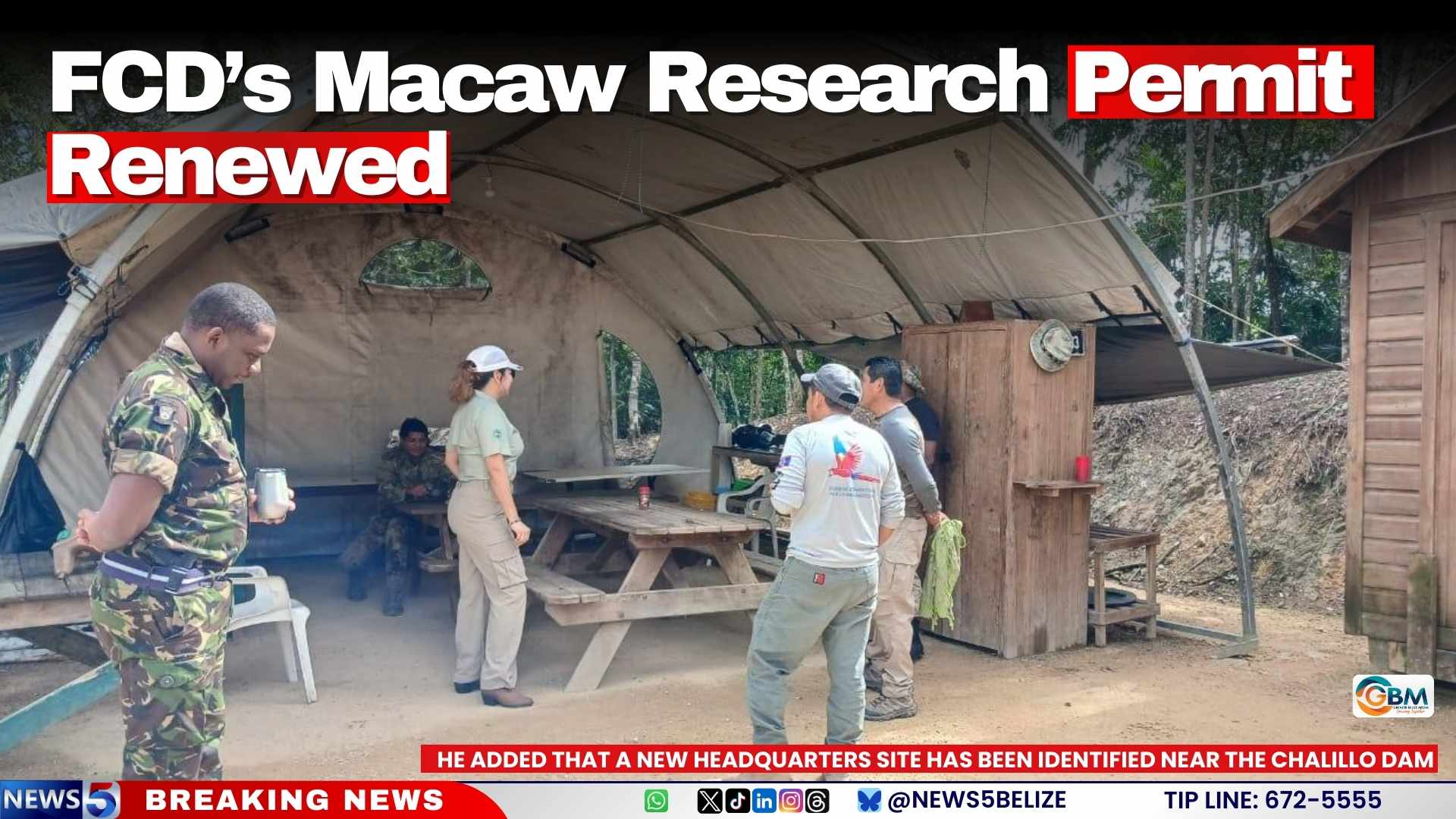
    The Belizean government has officially renewed the research permit for Friends for Conservation and Development (FCD) following successful resolution of concerns raised by logging operations in protected areas. Prime Minister John Briceño confirmed the two-year extension, emphasizing FCD’s role as “a very good partner in development” that deserves full governmental cooperation.

    The permit uncertainty emerged when logging companies operating under sustainable forestry practices reported conflicts with researchers accessing active logging zones. According to Briceño, the situation required careful negotiation to balance conservation research with commercial interests. “But we worked it out, and that’s important,” the Prime Minister stated, highlighting the successful resolution.

    With the renewed permit, the government and FCD are expanding their collaborative efforts. Significant developments include enhanced operations at the Las Cuevas Research Station, where plans are advancing for long-term agreements and the introduction of “educational tourism” programs. These initiatives will enable students and professors to reside on-site while conducting field research.

    Additionally, a new headquarters location has been identified near the Chalillo Dam with consent from the Belize Defence Force. The facility will incorporate a visitor center to support expanded conservation education efforts. Prime Minister Briceño expressed personal commitment to FCD’s mission, noting his historical involvement dating back to his ministerial tenure: “I feel very strongly about the work that they do… I do feel I have a vested interest in seeing that they continue the fantastic work that they do.”

  • Cuba, the irreverent “threat”

    Cuba, the irreverent “threat”

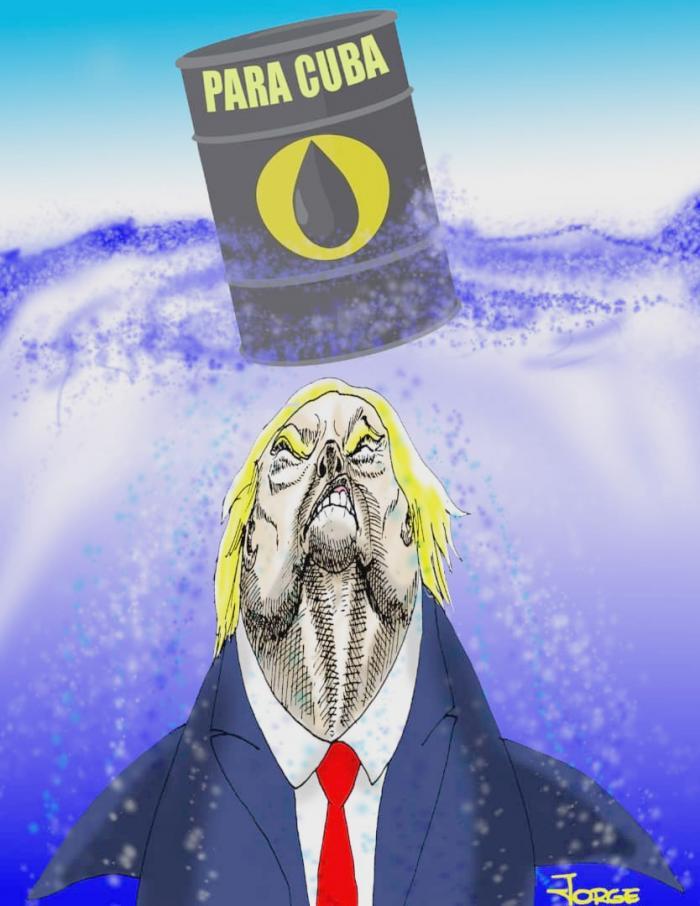
    President Donald Trump has declared a national emergency targeting Cuba, characterizing the island nation as an “unusual and extraordinary threat to the national security and foreign policy of the United States.” The declaration, made from the White House on January 29, 2026, initiates a new phase in the six-decade-long economic blockade against Cuba.

    The executive order justifies the measures by alleging that Cuba maintains “sophisticated military and intelligence capabilities” that threaten U.S. security and maintains relationships with “hostile countries, transnational terrorist groups, and malign adversaries” of the United States. These claims directly contradict Cuba’s documented history of combating terrorism and drug trafficking in the region, including past cooperation with U.S. authorities.

    Central to the new policy is the imposition of tariffs on imports from any country that “sells or supplies, directly or indirectly, oil to Cuba.” This measure specifically targets energy supplies to the island, which would have cascading effects across Cuba’s entire economy. The Trump administration frames these actions as fulfilling an “imperative duty to protect” the United States.

    Cuban officials have denounced the measures as “economic genocide disguised as national security” and reject the characterization of Cuba as a security threat. They note that despite Cuba’s geographical position along major drug trafficking routes, the country maintains a zero-tolerance drug policy and has consistently cooperated in regional anti-drug efforts.

    The executive order also accuses Cuba of human rights violations and regional destabilization, while Cuban authorities counter that the U.S. measures themselves constitute human rights violations by causing “human suffering and affecting the lives of millions of people.”

    This escalation represents the latest chapter in the long-standing tensions between the two nations, with Cuban officials vowing continued resistance to what they characterize as imperial aggression and economic warfare.

  • For Fidel, his legacy, and future, the First International Colloquium is convened on the centenary of his birth

    For Fidel, his legacy, and future, the First International Colloquium is convened on the centenary of his birth

    Havana’s Convention Center will serve as the host venue for the inaugural International Colloquium on Fidel’s Legacy and Future from August 10-13, 2026. The event, organized by the Fidel Castro Ruz Center in collaboration with Cuban academic and cultural institutions, coincides with the centennial anniversary of the historic leader’s birth.

    The comprehensive forum aims to facilitate multidisciplinary examination of Castro’s multifaceted impact across political, social, and international dimensions. Scheduled programming includes analytical sessions addressing his influence on national liberation movements, Global South dynamics, and twentieth-century geopolitics. Contemporary relevance of Castro’s ideological framework will be evaluated regarding ongoing struggles against imperialism, economic disparities, climate challenges, and sovereignty preservation efforts.

    René González Barrios, director of the Fidel Castro Ruz Center, has issued a global invitation to scholars, policymakers, and cultural figures through social media channels. The colloquium seeks participation from historians, political scientists, economists, sociologists, journalists, and specialists in information sciences, alongside educators, artists, and international solidarity committee representatives.

    The event structure will incorporate diverse formats including keynote addresses, thematic lectures, roundtable discussions, and panel presentations. Additional programming features the convergence of Fidel Castro Ruz Chairs, a dedicated Cuban Revolution symposium, and specialized forums examining youth engagement, women’s roles, and parliamentary developments. Cultural components will include documentary screenings, literary presentations, and related artistic projects.

    Organizers emphasize the objective of stimulating critical, pluralistic dialogue regarding Castro’s contributions to contemporary political thought and practice, creating an academic environment for rigorous multidisciplinary assessment of his enduring ideological influence.

  • Jones uit zorgen over mishandeling verdachte; politie start intern onderzoek

    Jones uit zorgen over mishandeling verdachte; politie start intern onderzoek

    A disturbing video circulating on social media has triggered official investigations and parliamentary scrutiny in Suriname after showing police officers forcibly loading a detained suspect into a pickup truck bed while bystanders watched. The footage prompted DNA Assembly Member Ebu Jones, who chairs the Standing Committee on Human Rights, to address the National Assembly with grave concerns about what he described as “disproportionate and inhuman” police conduct.

    While emphasizing his full support for law enforcement efforts against crime, Jones asserted that all police actions must remain within legal boundaries. “Strong intervention is permissible, but not outside the rules,” he stated during the assembly session. The parliamentarian referenced not only the recent incident but also previous allegations of serious misconduct within detention facilities.

    “The objective should be to correct suspects and maintain order, not to kill them,” Jones argued, calling on the government to clarify its policies regarding police conduct. He further questioned how the legislative body could exercise its oversight role to improve current practices, acknowledging the important work of police while insisting it must be performed with respect for rule of law and human dignity.

    In response to the viral video, the Suriname Police Force (KPS) confirmed it has launched an internal investigation. Police leadership issued a statement acknowledging awareness of the footage, which multiple citizens had brought to their attention. The investigation will examine the entire sequence of police actions, including circumstances preceding the filmed incident and the manner of suspect transportation.

    The KPS statement recognized that officers frequently operate in dynamic and potentially dangerous situations where public and colleague safety takes priority. However, the force simultaneously emphasized that all operations must comply with established guidelines and constitutional norms. Should the investigation reveal procedural shortcomings or areas requiring improvement, the police committed to incorporating these findings into further professionalization measures and behavior-guiding protocols.

    Results will be presented to competent authorities according to standard procedures, the KPS stated, reaffirming its dedication to maintaining a safe society while respecting legal frameworks, human dignity, and community trust.

  • What Deal Is Briceño Eyeing Ahead of Guyana President’s Visit?

    What Deal Is Briceño Eyeing Ahead of Guyana President’s Visit?

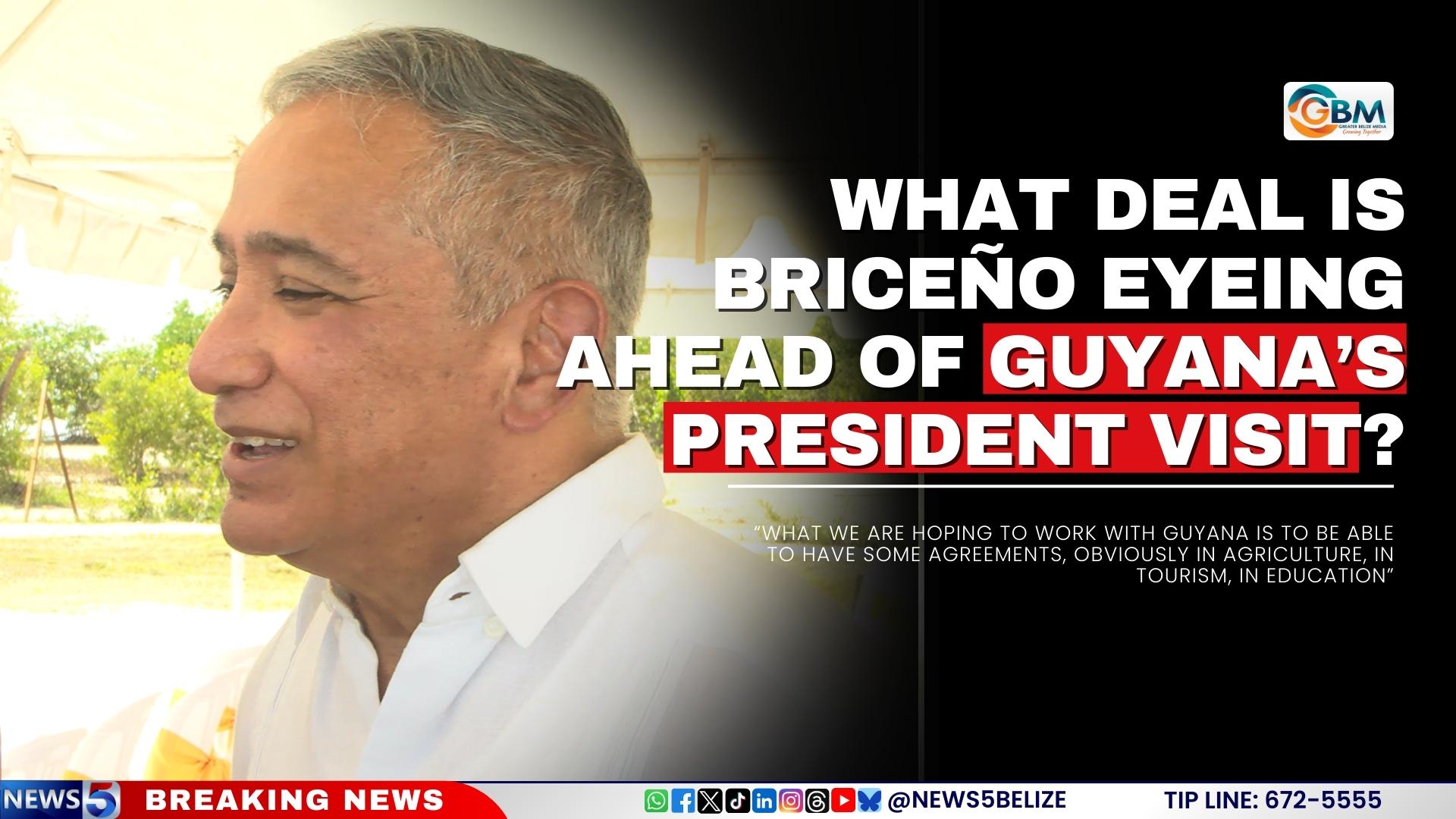
    Belizean Prime Minister John Briceño has outlined ambitious plans to strengthen bilateral ties with Guyana across multiple sectors as Guyanese President Dr. Irfaan Ali prepares for an official visit to Belize commencing Sunday. The upcoming diplomatic engagement signals a strategic pivot toward enhanced regional cooperation within the CARICOM framework.

    Prime Minister Briceño characterized Guyana as an increasingly influential regional partner, acknowledging its remarkable economic transformation driven by substantial oil discoveries. “There’s a certain irony in how perceptions have evolved,” Briceño observed. “Where Guyana was once overlooked, it now commands significant attention across the hemisphere. The nation is undergoing profound development and possesses tremendous natural beauty.”

    While energy security remains a regional concern, Briceño indicated that petroleum negotiations would likely require multilateral rather than bilateral discussions. The Prime Minister expressed nostalgia for previously established regional energy initiatives but acknowledged contemporary geopolitical realities make such arrangements improbable. “A revival of Petro-Caribbean style arrangements appears unlikely under current circumstances,” Briceño stated, emphasizing instead Belize’s focus on sustainable development partnerships.

    The administration’s priority lies in establishing concrete cooperation frameworks across agriculture, tourism, and educational exchange. “Our objective is to formulate substantive agreements that facilitate mutual growth and knowledge transfer,” Briceño explained. “We envision collaborative ventures that leverage respective national strengths while addressing shared developmental challenges.”

    This diplomatic overture represents Belize’s strategic alignment with one of the Caribbean’s fastest-growing economies, potentially establishing new paradigms for South-South cooperation within the region. The upcoming talks may establish foundational agreements that could reshape economic relationships among Caribbean Community member states.

  • How Uber’s pricing ranks against its competitors

    How Uber’s pricing ranks against its competitors

    The recent introduction of Uber’s ride-hailing services in Saint Lucia has ignited a polarized public discourse, pitting convenience advocates against supporters of local transportation providers. This controversy has prompted an empirical investigation into how the global platform’s fare structure measures against established domestic alternatives.

    St. Lucia Times conducted a comparative analysis of Uber and two prominent local services—Allez and Tropicab—assessing pricing across distinct travel corridors. The evaluation examined both a short-distance journey from Castries’ Derek Walcott Square to Baywalk Shopping Mall and an extended route spanning from Vieux Fort Plaza to Pigeon Island Causeway. All comparisons utilized standard multi-passenger vehicle options across platforms, with quoted prices reflecting pre-confirmation estimates.

    Notably, Uber currently displays fares exclusively in US dollars rather than the Eastern Caribbean currency used by local operators. Using a conversion rate of EC$2.7 to US$1, the short route analysis revealed Uber’s price of US$27.16 (approximately EC$73) positioned it between competitors—exceeding Tropicab’s EC$54.17 while nearly matching Allez’s EC$72.

    The long-distance assessment demonstrated similar competitive alignment: Uber’s quoted US$121.47 (roughly EC$328.28) slightly surpassed Allez’s EC$317 while exceeding Tropicab’s EC$275. These figures represent base estimates subject to potential adjustment per company policies regarding route variations and dynamic pricing factors.

    From user experience perspectives, all three applications provided streamlined interfaces with transparent pre-ride pricing and minimal registration requirements. Despite Uber’s newcomer status in the Saint Lucian market, its pricing strategy demonstrates deliberate calibration to existing market conditions rather than disruptive undercutting.

  • Economy faces pivotal test after year of stability, economist warns

    Economy faces pivotal test after year of stability, economist warns

    While Barbados has achieved remarkable macroeconomic stability, a leading economist cautions that these gains have not yet translated into broad-based improvements for workers and households. Professor Troy Lorde, Dean and Acting Director of the University of the West Indies’ Shridath Ramphal Centre, analyzed the 2025 Economic Review, revealing both significant achievements and underlying vulnerabilities.

    The review demonstrates substantial progress with real GDP growth of 2.7%, inflation slowing to 0.7% on a 12-month moving average, a primary surplus of 3.3% of GDP, and international reserves holding at approximately $3 billion—equivalent to 27.4 weeks of import cover. These indicators reflect sustained fiscal discipline and favorable external conditions that have supported economic recovery.

    However, Professor Lorde emphasized that statistical improvements don’t necessarily equate to shared prosperity. The decline in unemployment to 6.6% partially reflects demographic shifts including increased retirements and higher school enrollment rather than robust job creation alone. This distinction matters for understanding true labor market conditions.

    Similarly, while inflation control appears impressive, Lorde noted this achievement stemmed primarily from external factors like lower international oil prices and falling freight costs rather than domestic productivity gains or increased competition. Recent point-to-point inflation rose to 1.7% by November, with essential categories like housing, utilities, insurance, and food experiencing heightened price pressures that disproportionately affect lower-income families.

    Tourism continues driving growth but reveals concerning market concentration. Arrivals from the United Kingdom declined nearly 6%, while recovery patterns show increasing reliance on US markets, heightening exposure to American economic conditions and policy decisions.

    Debt reduction presents another complex picture. The debt-to-GDP ratio declined to 94.6%, but this improvement reflected GDP rebasing—which mechanically lowers ratios by updating economic measurement—alongside strong nominal growth and maintained fiscal surpluses. Meanwhile, gross financing needs rose sharply as the government undertook early repayments of Eurobonds and IMF obligations, with debt service increasing to 12.9% of GDP.

    Professor Lorde clarified that GDP rebasing represents improved measurement rather than sudden economic expansion, warning against misinterpretations that might overstate actual performance. External risks including geopolitical uncertainty, trade policy shifts, and weather-related shocks remain significant threats to stability.

    The central challenge, according to Lorde, has evolved from achieving stabilization to converting this stability into higher productivity, rising wages, and greater economic resilience—a more demanding phase that now confronts policymakers, businesses, and households alike.

  • PM Says BPO Paid Out Over $150 Million in Annual Salaries

    PM Says BPO Paid Out Over $150 Million in Annual Salaries

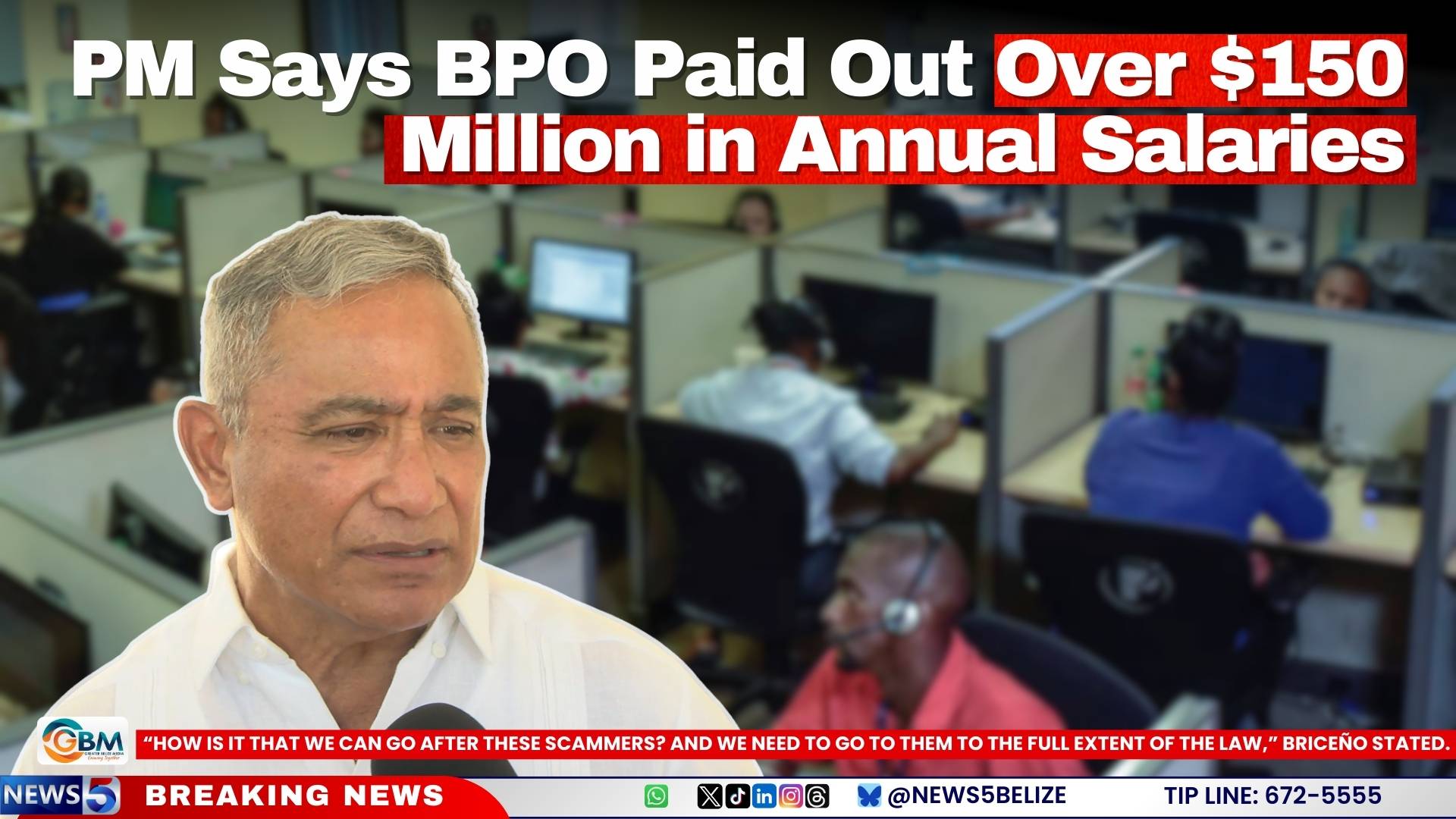
    Prime Minister John Briceño has announced a dual-focused approach to Belize’s burgeoning Business Process Outsourcing (BPO) sector, pledging aggressive action against fraudulent operations while defending the industry’s substantial economic contributions. The government’s renewed vigilance follows investigative reports by News Five revealing sophisticated credit card scams originating from within call center operations.

    Briceño emphasized the necessity of pursuing scammers targeting both domestic and international victims with equal determination. “I agree with you 100% that we need to go after anyone that’s scamming, not only our citizens, but people outside of Belize from these BPOs,” the Prime Minister stated during his interview with News Five.

    The crackdown initiative gains urgency amid concerns about legislative adequacy. Businessman Lee Mark Chang previously received police confirmation that existing laws, including the 2021 Electronic Funds Transfer Act, lack sufficient enforcement mechanisms despite victims retaining the right to file formal complaints.

    While acknowledging he hadn’t received direct complaints from Chang, Briceño confirmed awareness of concerns raised with law enforcement agencies. He called for strengthened measures to ensure successful prosecution of fraudulent operators, questioning “How is it that we can go after these scammers? And we need to go to them to the full extent of the law.”

    Concurrently, the Prime Minister highlighted the BPO sector’s critical economic role, revealing it employs over 20,000 Belizeans and distributes more than $150 million in annual salaries. Briceño expressed gratitude for the industry’s contributions, emphasizing the government’s commitment to ensuring legitimate companies “can feel safe to operate here” through enhanced regulatory oversight and enforcement protocols.