博客

  • Grieving Mother Demands Answers After Baby Dies at KHMH

    Grieving Mother Demands Answers After Baby Dies at KHMH

    A third tragic infant mortality has emerged from Belize’s Karl Heusner Memorial Hospital (KHMH), prompting serious concerns about neonatal care standards. Alicia Kuylen, a grieving mother, has publicly detailed the catastrophic final hours of her two-month-old son Damani, who passed away under distressing circumstances in the hospital’s Neonatal Intensive Care Unit earlier this January.

    According to Kuylen’s account, the tragedy began when she brought her infant to KHMH on January 8th following a referral from a public clinic after the child stopped feeding. What followed was an agonizing multi-hour wait without medical attention, despite the visibly distressed infant’s condition. Kuylen reports that only after other mothers in the facility demanded intervention did medical staff finally attend to her son.

    The treatment provided included a blood transfusion using donation material that was nearly a month old—29 days according to hospital staff. When Kuylen expressed concern about the safety of using blood of this age for her infant, she was assured that medical professionals had consulted and would administer injections to prevent adverse reactions to the transfusion.

    Kuylen maintained a heartbreaking vigil throughout the procedure, documenting portions on video. She describes witnessing her son become unresponsive following the transfusion and multiple injections, including five sedatives. Despite attempts at resuscitation, the infant ceased breathing and died.

    This case represents the third infant death reported from KHMH within a single week, all occurring during the same time period. Minister of Health and Wellness Kevin Bernard has acknowledged the situation and states he is investigating the matter. Neither hospital officials nor the Ministry of Health have provided formal comments despite repeated requests from news organizations.

  • PM Pushes Stronger Laws After BPO Scam Exposé

    PM Pushes Stronger Laws After BPO Scam Exposé

    In response to a groundbreaking investigative report by News Five, Belizean Prime Minister John Briceño has declared current legislation insufficient to combat sophisticated financial crimes emerging from the country’s Business Process Outsourcing (BPO) sector. The January 29th exposé revealed a widespread credit card scam operation involving former BPO employees who confessed to stealing sensitive financial information from international clients.

    The Prime Minister emphasized the critical importance of protecting the BPO industry, which currently provides employment for over 20,000 Belizeans and contributes more than $150 million annually to the national economy through salaries alone. “We need to ensure they can feel safe operating here,” Briceño stated, acknowledging the vulnerability of both domestic and international victims.

    Despite the industry’s significant economic impact, the investigation uncovered multiple business victims and featured rare testimony from a former BPO employee who admitted to systematically stealing dozens of credit card details. This revelation has created urgent pressure for legislative reform.

    The Prime Minister’s proposed solution involves implementing targeted, tougher laws specifically designed to pursue scammers “to the full extent of the law.” He emphasized the need for comprehensive measures that would empower authorities to more effectively investigate and prosecute those exploiting the BPO infrastructure for fraudulent activities.

    This development occurs alongside other national policy discussions, including Belize’s eight-year offshore oil ban, highlighting the government’s balancing act between economic development and regulatory oversight in key industries.

  • Politic : Career Development Plan at the ONA

    Politic : Career Development Plan at the ONA

    Amidst severe socioeconomic challenges characterized by widespread business closures, escalating job insecurity, and mounting social tensions, Haiti’s National Old-Age Insurance Office (ONA) has embarked on a comprehensive modernization initiative to revitalize its operational framework and enhance institutional innovation capabilities.

    Under the leadership of Director General Ronald Bazile, who assumed office in February 2025, ONA has implemented multiple significant reforms targeting governance restructuring and workplace condition improvements. The centerpiece of this transformation is the newly established Career Development Plan (CDP), designed to elevate employee competencies through merit-based advancement, professional training, and productivity incentives.

    The CDP specifically addresses historical inequities by identifying and rectifying cases of institutional oversight, systematically eliminating favoritism practices, and ensuring optimal personnel placement according to demonstrated capabilities. Implementation is already underway with the creation of a dedicated Career Management and Training Unit responsible for monitoring professional trajectories, administering continuing education programs, and facilitating promotions based exclusively on objective criteria.

    Operational procedures involve clear phases: identification of previously overlooked employees, application processing, and formal promotion notifications. The initial cohort has already received advancement letters, with a second group scheduled to receive confirmations by month’s end. Simultaneously, scholarship applications are being processed, with several employees already experiencing status improvements correlated with academic achievements. All personnel are encouraged to utilize online tracking systems to monitor application progress.

    The reform initiative extends nationwide through awareness campaigns launched by the Training and Career Planning Unit, beginning in the Port-au-Prince metropolitan area before expanding to Northern and Southern regions starting January 27. These outreach efforts aim to familiarize staff with the program’s mechanics ahead of scheduled training sessions.

    This operational shift demonstrates ONA’s transition from theoretical planning to concrete action in recognizing merit, promoting demonstrated competence, and institutionalizing equitable treatment—a transformative project poised to significantly impact thousands of employees across Haiti’s public pension system.

  • Government Renews FCD Macaw Research Permit

    Government Renews FCD Macaw Research Permit

    In a significant development for wildlife conservation, the Belizean government has officially renewed the research permit for Friends for Conservation and Development (FCD) after weeks of negotiation. The resolution ends considerable uncertainty surrounding the organization’s critical macaw conservation programs.

    Prime Minister John Briceño addressed the previous delays, explaining that tensions between FCD and a private logging company operating in the same region had necessitated additional discussions. The primary concern involved safety protocols regarding research activities in areas with active logging operations.

    “We successfully mediated the situation,” stated Briceño. “FCD represents an invaluable developmental partner, and ensuring their continued operation remains a government priority. The safety concerns regarding research personnel working near logging vehicles have been satisfactorily addressed through collaborative dialogue.”

    The resolution has paved the way for an expanded government partnership with the conservation organization. Current initiatives include developing the Las Cuevas Research Station with enhanced facilities for long-term research and educational tourism. This will enable students to reside onsite while conducting field studies.

    Additionally, plans are advancing for establishing new FCD headquarters near Chalillo Dam with Belize Defence Force consent, including a visitor center to promote public engagement with conservation efforts.

    Briceño, who previously supported FCD during his tenure as minister, expressed strong personal commitment to the organization’s mission: “I maintain a vested interest in ensuring they continue their exceptional environmental stewardship. Their work aligns perfectly with our national conservation priorities.”

    The renewed partnership signals strengthened governmental support for biodiversity research and sustainable environmental management practices in Belize.

  • Minister Mira Unsure Why Media Missed CompStat

    Minister Mira Unsure Why Media Missed CompStat

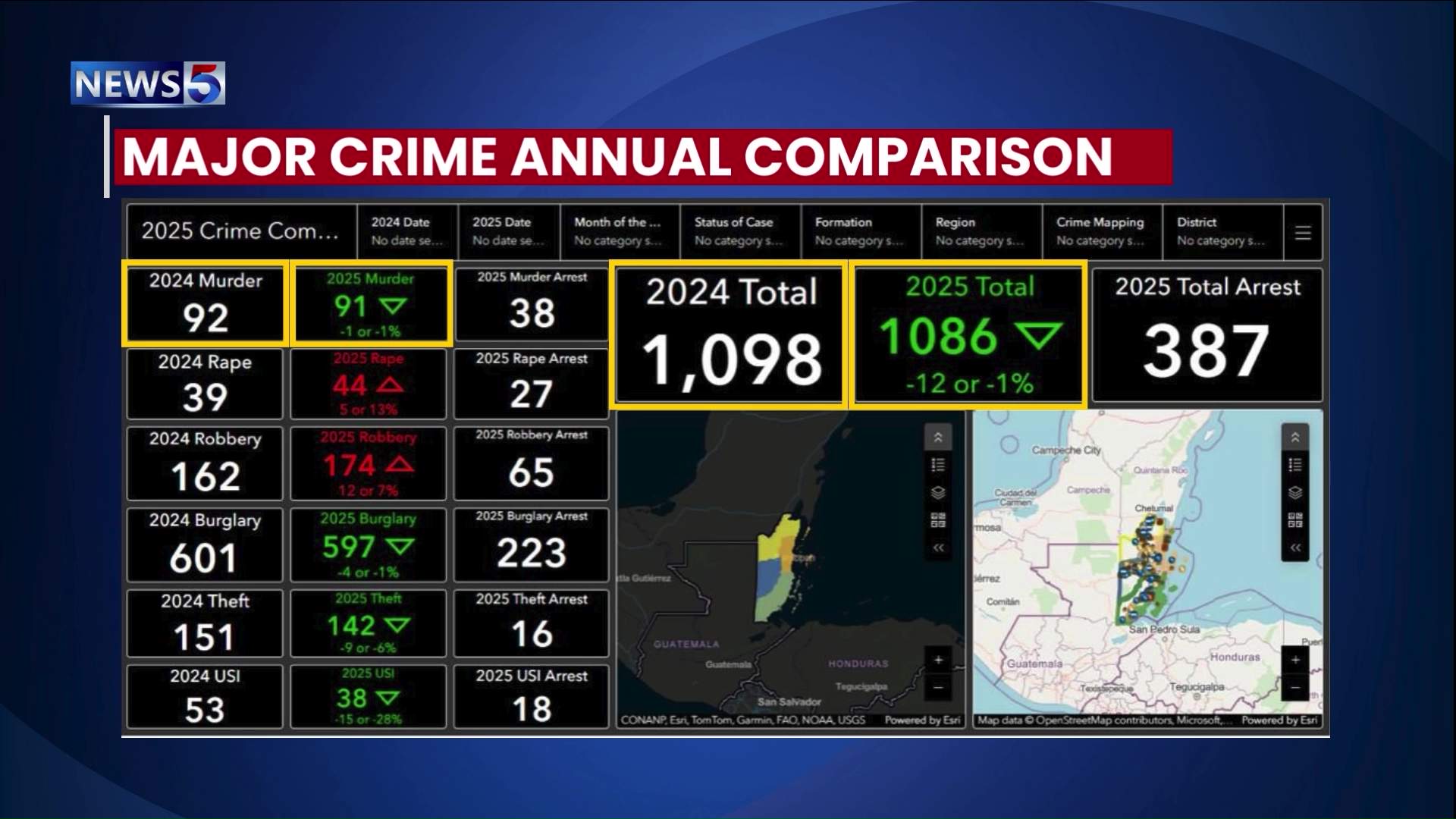
    In an unusual departure from established protocol, the Belize Police Department conducted its inaugural CompStat presentation for 2026 without extending invitations to media representatives. The statistical briefing, which traditionally provides comprehensive crime data comparisons between years, occurred as a closed-door session absent journalistic oversight.

    Home Affairs Minister Oscar Mira, attending his first CompStat meeting since assuming office approximately two months prior, expressed surprise when questioned about the media’s absence. “I do not know. That was my first compstat that I was invited as well by the commissioner of police,” Minister Mira stated during a press interaction. “I didn’t know that they were not invited. I will ask the commissioner of police why? I think it’s important that the media is invited.”

    The Minister acknowledged the significance of transparent crime statistics while defending police efforts beyond quantifiable metrics. He emphasized that while the department recorded one fewer homicide compared to the previous year and demonstrated reductions in major crime categories, statistical analysis fails to capture crimes prevented through proactive police operations and patrols.

    Minister Mira committed to prioritizing thorough murder investigations, emphasizing his administration’s focus on achieving arrests, charges, and convictions. This incident marks the first instance in several years where media organizations were systematically excluded from the nationally significant crime statistics briefing, raising questions about governmental transparency and accountability mechanisms.

  • Missing Cocaine Evidence Recovered in Orange Walk

    Missing Cocaine Evidence Recovered in Orange Walk

    The Belize Police Department has initiated an internal investigation following a significant procedural violation at the Orange Walk Police Station involving mishandled narcotics evidence. The incident centered on approximately one gram of cocaine seized during a law enforcement operation that was never formally logged or transferred to designated exhibit custodians.

    According to official reports, the controlled substance was improperly stored in an officer’s personal locker instead of following mandated evidence protocols. Another officer subsequently accessed the locker and removed the material, creating a chain of custody breach.

    Police Commissioner Dr. Richard Rosado confirmed the ongoing internal investigation into the evidence handling failure. Minister of Home Affairs Oscar Mira provided clarification to News Five, stating the missing cocaine had been successfully recovered and accounted for.

    Minister Mira attributed the incident to an officer’s failure to adhere to established evidence protocols, emphasizing that drugs should never be left unsecured. He explained that proper procedure requires all evidence to follow a strict chain of custody, ultimately being signed over to exhibit keepers for secure storage.

    The internal investigation will focus on ensuring compliance with evidence handling procedures and preventing similar incidents in the future. The case has highlighted the importance of strict protocol adherence within law evidence management systems, even for relatively small quantities of controlled substances.

  • Politic : The Security Council renews the mandate of BINUH

    Politic : The Security Council renews the mandate of BINUH

    In a decisive move to address Haiti’s ongoing political and security crisis, the United Nations Security Council unanimously adopted Resolution 2814 (2026) on January 29, 2026, extending the mandate of the UN Integrated Office in Haiti (BINUH) for an additional year through January 31, 2027.

    The revised mandate significantly expands BINUH’s responsibilities across six critical areas, with particular emphasis on facilitating inter-Haitian national dialogue to support constitutional and political processes. The mission will provide crucial assistance to Haitian authorities in organizing and conducting municipal, parliamentary, and presidential elections throughout 2026, aiming to achieve a peaceful transfer of power to democratically elected officials.

    A substantial enhancement to BINUH’s operational framework involves direct collaboration with the newly established Gang Suppression Force (GSF). This partnership will focus on implementing community violence reduction strategies, including the development of a Haitian-led disarmament, demobilization, and reintegration program. The mission will additionally support safe exit pathways and rehabilitation services for individuals formerly associated with gangs, with special attention to vulnerable children.

    The resolution mandates BINUH to assist Haitian judicial institutions in addressing prolonged pretrial detention cases while providing advisory support for handling high-risk individuals. Furthermore, the office will maintain dedicated monitoring capacity to document and report on gang violence, criminal activities, and human rights abuses—including sexual violence affecting all demographics.

    During the Security Council deliberations, the United States representative characterized the resolution as “a decisive step toward the stabilization of Haiti,” emphasizing the need for efficient utilization of member states’ funds. Panama’s delegate noted the resolution’s balanced approach between electoral process assistance and judicial system support, reaffirming commitment to Haiti during this critical historical phase.

    China’s representative expressed serious concerns regarding the continued influx of illegal weapons into Haiti, urging source countries to implement concrete border control measures and strengthen arms regulation in coordination with UNODC and other relevant agencies.

  • Unions Urge Halt to BTL–SMART Deal

    Unions Urge Halt to BTL–SMART Deal

    The National Trade Union Congress of Belize (NTUCB) has issued a formal demand for the immediate suspension of Belize Telemedia Limited’s proposed acquisition of Speednet Communications, operating as SMART. This development follows organized protests by opposition politicians and labor unions outside BTL’s Belize City headquarters this week, signaling growing resistance to the telecommunications consolidation.

    The NTUCB’s January 26th position statement frames the proposed transaction as a matter of significant public interest rather than merely a commercial arrangement. The labor organization has raised multiple substantive concerns regarding valuation methodology, competitive impacts, employment consequences, and corporate governance standards.

    Valuation integrity represents a primary concern, with the NTUCB asserting that the current assessment lacks proper independence. According to their analysis, the evaluating firm maintains established ties to BTL and received compensation from the acquiring entity, potentially compromising objective assessment. The Congress consequently demands a new valuation conducted by an accredited independent technical entity that would comprehensively evaluate assets, financial performance, and customer base value.

    Competition considerations form another critical aspect of the opposition. The NTUCB references Section 42 of Belize’s Telecommunications Act, which expressly prohibits arrangements that substantially reduce market competition. The organization warns that merging the dominant industry incumbent with its largest competitor risks creating a telecommunications monopoly that would undermine market discipline and regulatory effectiveness once alternative providers disappear from the marketplace.

    Regarding employment impacts, the NTUCB anticipates potential job losses at both organizations and expresses concern about jeopardizing redundancy services essential for business continuity. Notably, no independent socio-economic impact study has been made publicly available to assess effects on workers, consumers, or broader national interests.

    The labor body further questions corporate governance standards at BTL, suggesting the board permitted a conflicted valuation process to advance without adequate independent scrutiny. The NTUCB has called for the chairman’s recusal from acquisition proceedings and demanded enhanced fiduciary oversight mechanisms.

    Significantly, the NTUCB highlights public stewardship implications, noting that worker contributions held through the Social Security Board are invested in BTL. This connection raises concerns about exposing public funds to undue risk through the proposed transaction.

    As immediate remedial measures, the organization demands suspension of the acquisition pending prior written approval from the Public Utilities Commission—a step they assert is legally mandated. Additionally, the NTUCB advocates for national consultations and legislative reviews to strengthen worker protections, consumer safeguards, corporate stability, and constitutional freedoms within a consolidated telecommunications environment.

    The Congress has committed to continued engagement with social partners and pursuit of lawful avenues to challenge the transaction in its current form, noting that the Telecommunications Act provides mechanisms for the public to seek court orders preventing unlawful mergers and compelling regulatory compliance.

    This stance aligns with political opposition recently voiced by the United Democratic Party. Opposition Leader Tracy Panton has previously raised transparency, financing, and accountability concerns, particularly given BTL’s status as a public institution. Earlier this week, UDP representatives joined union members in protests outside BTL’s headquarters, demanding full disclosure and enhanced safeguards before any transaction proceeds.


  • Santo Domingo Este expands with major housing project

    Santo Domingo Este expands with major housing project

    Santo Domingo witnessed a significant milestone in urban development as Grupo GHR inaugurated its Brisas de las Colinas 6 residential complex during a ceremonial groundbreaking event attended by President Luis Abinader. The ambitious project, representing a substantial investment exceeding RD$5.5 billion, is poised to catalyze urban transformation and economic advancement in Santo Domingo Este—one of the nation’s most rapidly expanding regions.

    Comprising 806 contemporary apartments distributed across 11 residential towers, the development addresses the growing need for secure, modern, and practical housing solutions. Its strategic positioning along Avenida Ecológica highlights the area’s emergence as a focal point for structured and sustainable urban growth. Beyond housing, the initiative is anticipated to create more than 1,600 employment opportunities, both directly and indirectly, thereby injecting vitality into the local economy.

    The project distinguishes itself with over 7,000 square meters dedicated to communal and leisure facilities, featuring sports courts, a fully-equipped gymnasium, an Olympic-sized pool, a water park, event venues, and scenic walking paths. In a innovative approach to market diversification, one tower is specifically designed for short-term rental investments, catering to both local entrepreneurs and members of the Dominican diaspora interested in the Airbnb market. Future plans include the establishment of a Sirena Market, augmenting the zone’s commercial appeal and residential convenience.

    Grupo GHR emphasized that Brisas de las Colinas 6 embodies the company’s enduring dedication to sustainable development, improved housing accessibility, and the enhancement of social welfare throughout the Dominican Republic.

  • Exports Plunge 68% as Sugar Shipments Vanish

    Exports Plunge 68% as Sugar Shipments Vanish

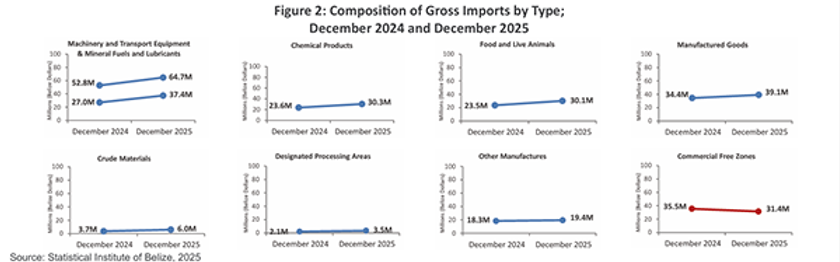
    Belize’s export economy experienced a severe contraction in December 2025, with official data revealing a dramatic 68.2% decline in domestic export earnings compared to the same period in 2024. The Statistical Institute of Belize reported total exports plummeted to $24.5 million from $77.0 million the previous year, marking the most significant monthly downturn of the year.

    The collapse was predominantly driven by the absence of bulk sugar shipments, which accounted for a staggering $49.9 million reduction in earnings. While December 2024 had seen substantial sugar exports totaling $52.4 million, the same month in 2025 recorded merely $2.5 million in sugar revenue. This timing discrepancy in major shipments was identified as the primary factor behind the drastic year-over-year comparison.

    Multiple export sectors faced parallel declines. Molasses exports deteriorated by $2.7 million, alcoholic beverages decreased by $1.4 million, and citrus products fell by $1.1 million due to reduced orange concentrate sales. Animal feed and marine products also registered declines of $1.0 million and $0.3 million respectively, with the latter attributed to weaker lobster tail sales.

    Amid the widespread downturn, banana exports emerged as a notable bright spot, increasing by $2.4 million to reach $9.0 million. Smaller gains were observed in cattle and pineapple concentrate exports, which rose by $0.5 million and $0.4 million respectively.

    The export contraction manifested across key international markets. United Kingdom revenues collapsed by $49.8 million, directly mirroring the sugar shipment absence. The United States market declined by $4.7 million, while CARICOM countries saw a $1.9 million reduction. Conversely, exports to the European Union increased by $3.6 million supported by banana sales, and Mexico recorded a $0.7 million gain from stronger cattle exports.

    For the full year 2025, Belize’s total domestic exports reached $390.0 million, representing a $74.0 million (16.0%) decrease from 2024. The annual decline was again led by sugar, which dropped $68.6 million due to both reduced quantities and less favorable pricing. Several traditional export commodities including molasses, citrus products, and alcoholic beverages contributed to the annual downturn.

    Partially offsetting these losses, marine products rose by $9.2 million, bananas increased by $6.9 million, cattle exports climbed by $4.3 million, and crude soybean oil gained $3.0 million. The data indicates that while December’s extreme contraction resulted primarily from shipment scheduling anomalies, the broader annual decline reflects more fundamental challenges including reduced export volumes and weaker global prices across multiple commodity sectors.