博客

  • APUA to Coordinate Pipe Replacement Before Roads And Drains Project In St. John’s

    APUA to Coordinate Pipe Replacement Before Roads And Drains Project In St. John’s

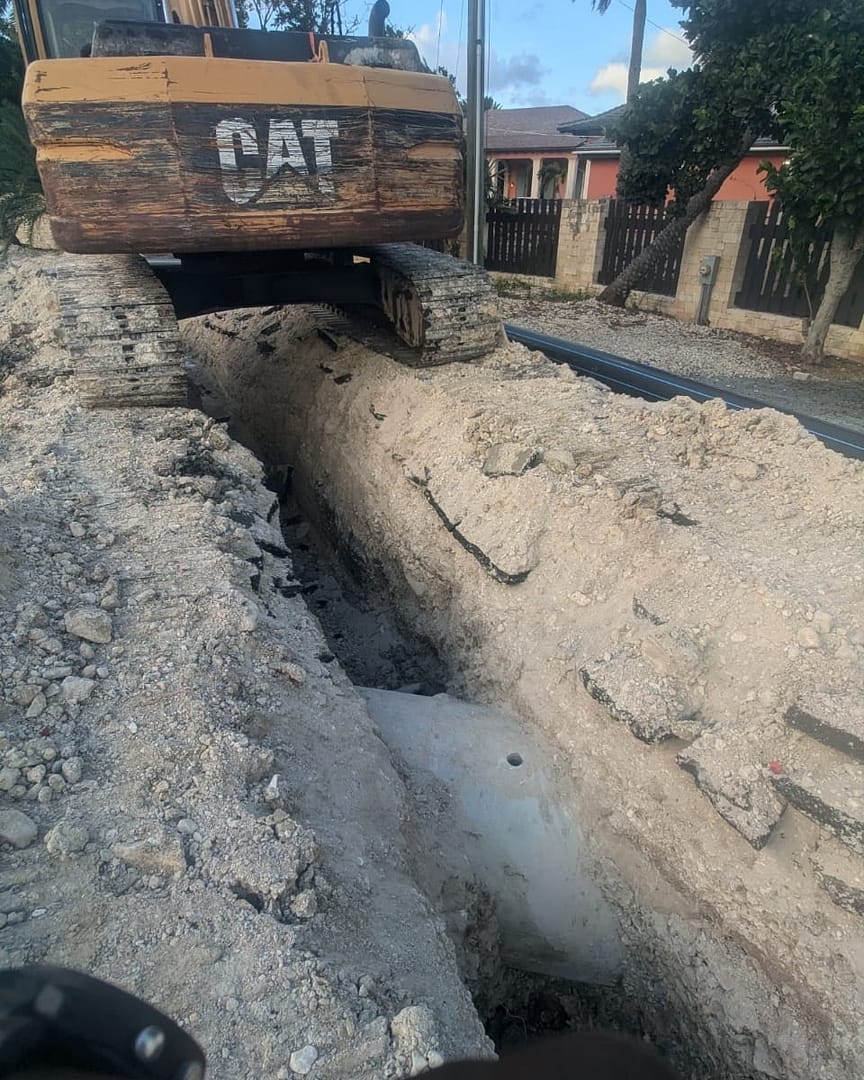
    The Antiguan government has announced a strategic overhaul of infrastructure planning in the capital city, prioritizing coordination between utility and public works agencies to prevent the recurrent problem of newly paved roads being excavated shortly after completion.

    Works Minister Maria Browne revealed during a public consultation on capital redevelopment that the Antigua Public Utilities Authority (APUA) will complete comprehensive pipe replacement operations before any road resurfacing commences in St. John’s. This sequenced approach addresses the longstanding issue where recently reconstructed streets suffered damage from subsequent underground utility work.

    Minister Browne emphasized the critical nature of this coordination, noting that much of the city’s subterranean water infrastructure has deteriorated with age and requires urgent replacement. The minister articulated that conducting these essential upgrades prior to road rehabilitation represents a fiscally responsible strategy that will minimize public inconvenience, optimize resource allocation, and significantly extend the operational lifespan of new road surfaces.

    This initiative signals a transformative shift in how government agencies approach major infrastructure projects. According to Browne, the new methodology reflects an evolving paradigm of interdepartmental cooperation as Antigua embarks on substantial urban renewal efforts throughout St. John’s. The coordinated planning framework aims to establish a new standard for municipal development projects across the island nation.

  • PM Proposes Decorative Lighting and Walkable Streets in St. John’s City Core

    PM Proposes Decorative Lighting and Walkable Streets in St. John’s City Core

    In a significant move toward urban transformation, Antigua and Barbuda’s Prime Minister Gaston Browne has presented a comprehensive vision for revitalizing St. John’s city center through strategic aesthetic and safety enhancements. During a recent public consultation addressing the capital’s redevelopment, Browne emphasized that decorative lighting systems and pedestrian-oriented street designs would serve as foundational elements in creating a more secure, visually appealing, and habitable urban environment.

    The Prime Minister articulated that these initiatives would fundamentally improve the daily experience of diverse city users—including residents, workforce members, and tourists—while simultaneously stimulating economic and social activity in the urban core. Browne positioned these measures within a broader framework of quality-of-life improvements, explaining that optimized lighting solutions would simultaneously address safety concerns and aesthetic values, while walkable urban spaces would promote extended hours of community engagement beyond traditional business operations.

    This urban design proposal emerged from ongoing discussions among government officials regarding long-term modernization strategies for the capital. The approach signals a paradigm shift from conventional infrastructure and regulatory focus toward human-centered urban planning that prioritizes how citizens interact with and experience public spaces. The administration’s renewed emphasis on experiential urban design reflects growing global trends in creating vibrant, people-friendly cities that balance functionality with aesthetic excellence.

  • Government to Renovate Its Own Buildings in St. John’s, Works Minister Says

    Government to Renovate Its Own Buildings in St. John’s, Works Minister Says

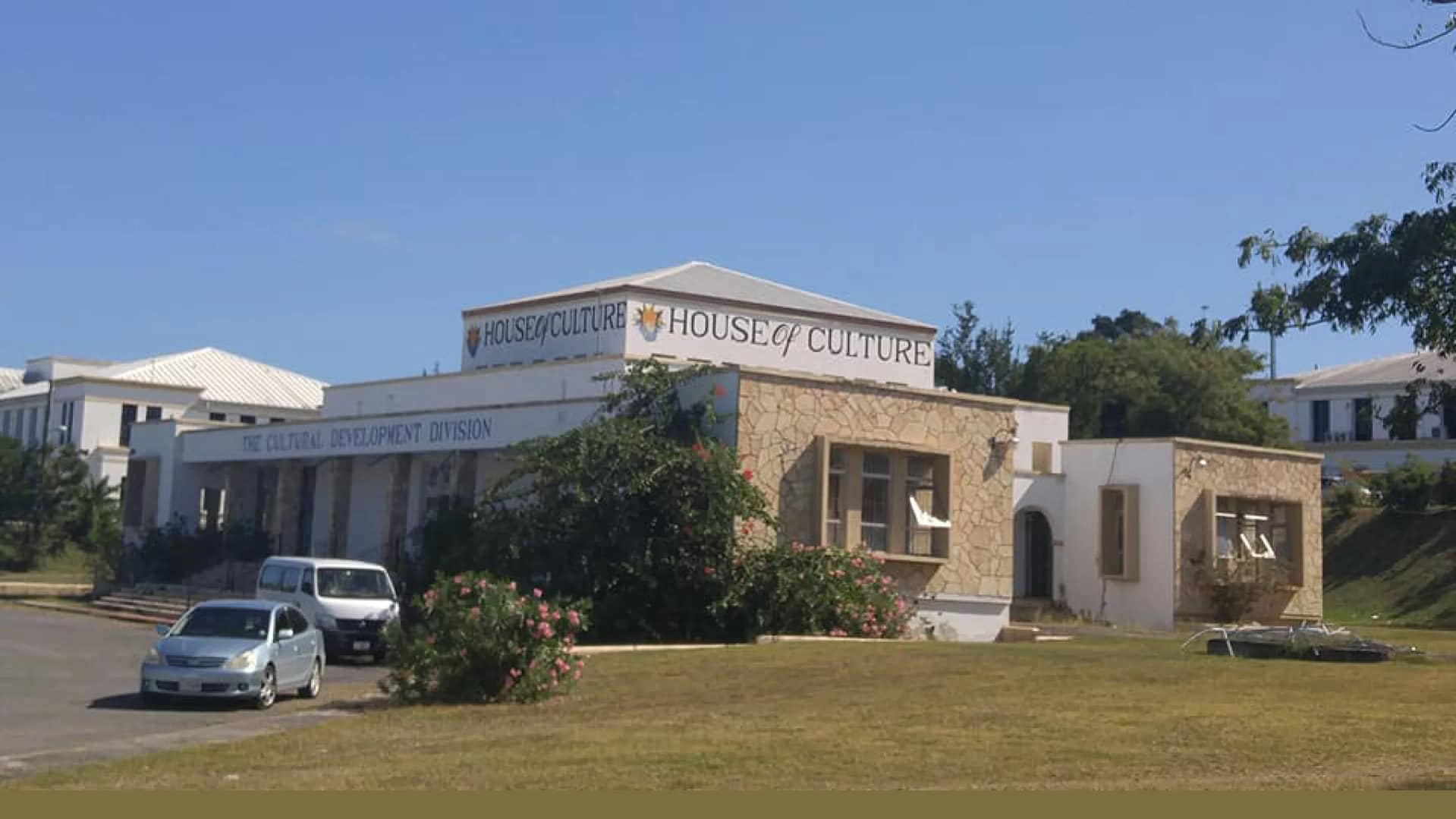
    The Antiguan government has announced it will commence comprehensive renovations of its administrative buildings in St. John’s as part of a broader urban renewal strategy. Works Minister Maria Browne revealed the plan during a public consultation on the capital’s redevelopment, emphasizing that the state must demonstrate leadership in the revitalization effort.

    Minister Browne identified multiple government-owned properties requiring significant upgrades and repairs. These improvements will serve as a visible commitment to enhancing both the aesthetic appeal and functional capacity of the nation’s capital. The initiative positions public infrastructure as a model for the private sector, showcasing the standards that the government encourages all property owners to adopt.

    The announcement occurs within the context of ongoing dialogues addressing urban deterioration, infrastructure modernization, and the collective responsibility shared between public institutions and private stakeholders. Browne’s statements underscore a philosophical approach to urban renewal where governmental action precedes private sector participation, creating a tangible benchmark for quality and investment in the built environment.

    This coordinated approach signals a new chapter in St. John’s development strategy, combining public sector initiative with calls for complementary private investment to achieve comprehensive urban transformation.

  • Property Owner Says Boundary Dispute Has Blocked Renovation on Her Newgate Street Property

    Property Owner Says Boundary Dispute Has Blocked Renovation on Her Newgate Street Property

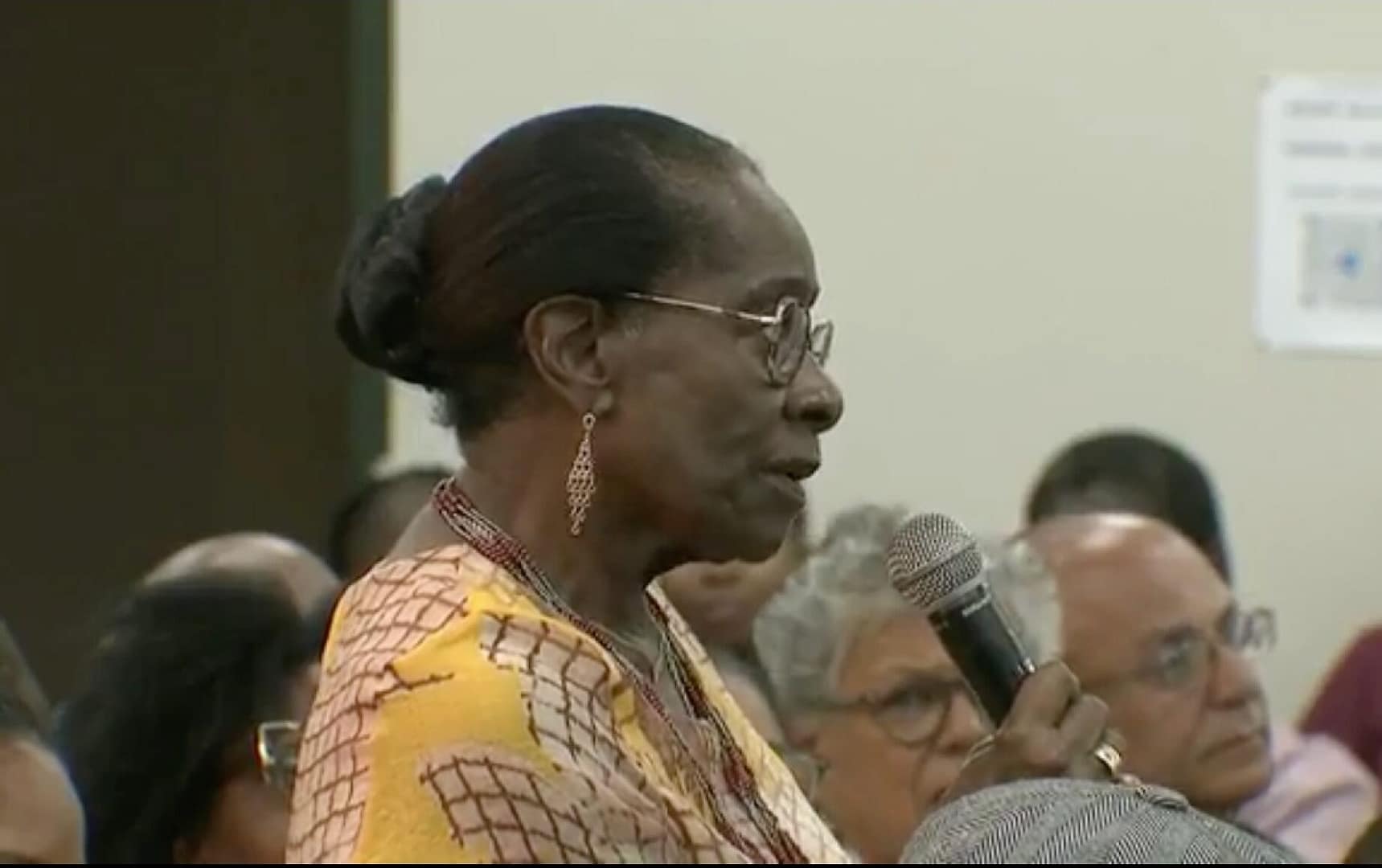
    A prominent urban renewal initiative in St. John’s faces significant challenges as administrative delays and unresolved regulatory disputes hinder private investment. During a recent public consultation on the capital’s redevelopment, a Newgate Street property owner revealed that their renovation plans have been immobilized for years due to a protracted boundary line controversy and procedural bottlenecks within the Development Control Authority (DCA).

    The property owner detailed extensive but fruitless efforts to navigate the planning approval process, with the boundary issue creating an insurmountable barrier to obtaining necessary permits. This stagnation persists despite government appeals for private owners to upgrade and maintain their buildings as part of a broader urban revitalization campaign.

    The case emerged during wider discussions concerning derelict structures and stalled development projects throughout the city. Participants in the consultation unanimously warned that the city’s renewal objectives would remain unachievable unless systemic administrative obstacles are addressed. They emphasized that compliant property owners are becoming discouraged by the sluggish pace of bureaucratic resolution.

    Public officials acknowledged the validity of these concerns during the dialogue, recognizing the critical need for more transparent processes and expedited dispute resolution mechanisms. The discussion concluded with a consensus on prioritizing reform to streamline planning approvals and boundary verification procedures, aiming to foster a more conducive environment for urban redevelopment and private sector participation in St. John’s transformation.

  • Opposition Leader says NDP gov’t looking for CBI ‘mirage’

    Opposition Leader says NDP gov’t looking for CBI ‘mirage’

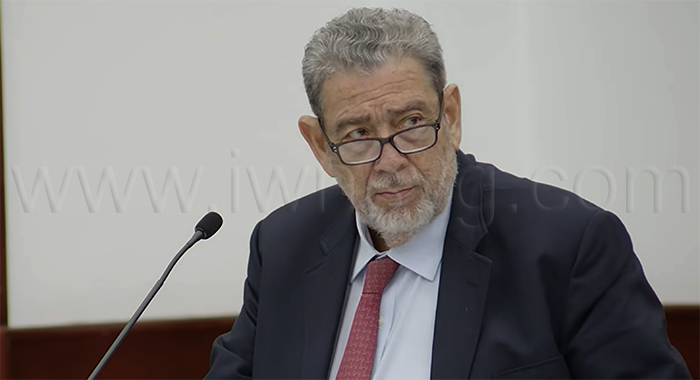
    In a heated parliamentary session debating the EC$1.89 billion revenue and expenditure estimates, Opposition Leader Ralph Gonsalves launched a scathing critique against the New Democratic Party (NDP) administration’s Citizenship by Investment (CBI) program ambitions. The former Prime Minister characterized the initiative as fundamentally unworkable, declaring “the end of CBI is nigh” and accusing the government of pursuing “a mirage.”

    Gonsalves highlighted structural deficiencies in the program’s implementation, noting the allocated budget of merely $10 and the absence of dedicated staff or operational framework within the Prime Minister’s Office. He speculated that outsourcing might be the government’s only viable option, while expressing skepticism about revenue projections reaching EC$200 million.

    The opposition leader extended his criticism to broader economic concerns, predicting imminent difficulties in meeting public sector salary obligations and funding essential programs. He specifically noted the EC$270 million capital program—EC$4 million less than revised 2025 estimates—as insufficient for driving meaningful economic growth.

    Prime Minister Godwin Friday countered these assertions, affirming the program’s realism and operational readiness. Having secured plans during their 24-year opposition period, the NDP administration emphasized leveraging regional experiences and established best practices. Friday referenced the Eastern Caribbean Central Bank’s newly assumed regulatory role and ongoing consultations with EU representatives as evidence of program legitimacy.

    The Prime Minister positioned CBI as a global phenomenon rather than a Caribbean-specific initiative, acknowledging potential adjustments to address international security concerns while maintaining the program’s fundamental viability. This exchange occurs against the backdrop of recent OECS-wide reforms establishing standardized regulatory frameworks across five member states, with implementation deadlines set for October 2025.

  • Cabinet Pledges Support for Injured Drag Racer Jason Marsh

    Cabinet Pledges Support for Injured Drag Racer Jason Marsh

    The government of Antigua and Barbuda has formally committed to providing assistance to nationally acclaimed drag racer Jason Marsh, who sustained severe injuries during a competitive event in the Virgin Islands. The Cabinet addressed Marsh’s critical condition during its weekly session, according to official statements from the Prime Minister’s Office.

    Maurice Merchant, Director General of Communications, revealed that ministers were thoroughly briefed on the gravity of the incident that left the celebrated athlete hospitalized. While specific details regarding the nature of Marsh’s injuries or the precise form of governmental support remain undisclosed, the Cabinet unanimously expressed its commitment to facilitating his recovery process.

    The administration extended heartfelt condolences and solidarity not only to Marsh himself but also to his immediate family and extensive network of supporters within the racing community. Merchant emphasized Marsh’s esteemed status as one of the nation’s most distinguished motorsports figures, highlighting the broader significance of his contributions to the sporting world.

    This demonstration of institutional support underscores the government’s recognition of athletic excellence and its dedication to citizen welfare during times of crisis. The incident has drawn attention to the inherent risks associated with high-speed motorsports while simultaneously showcasing national unity in supporting injured athletes.

  • SNRA & PMS Students Benefit from IHO’s GBV Awareness Workshops Ahead of GBV Walk 2026

    SNRA & PMS Students Benefit from IHO’s GBV Awareness Workshops Ahead of GBV Walk 2026

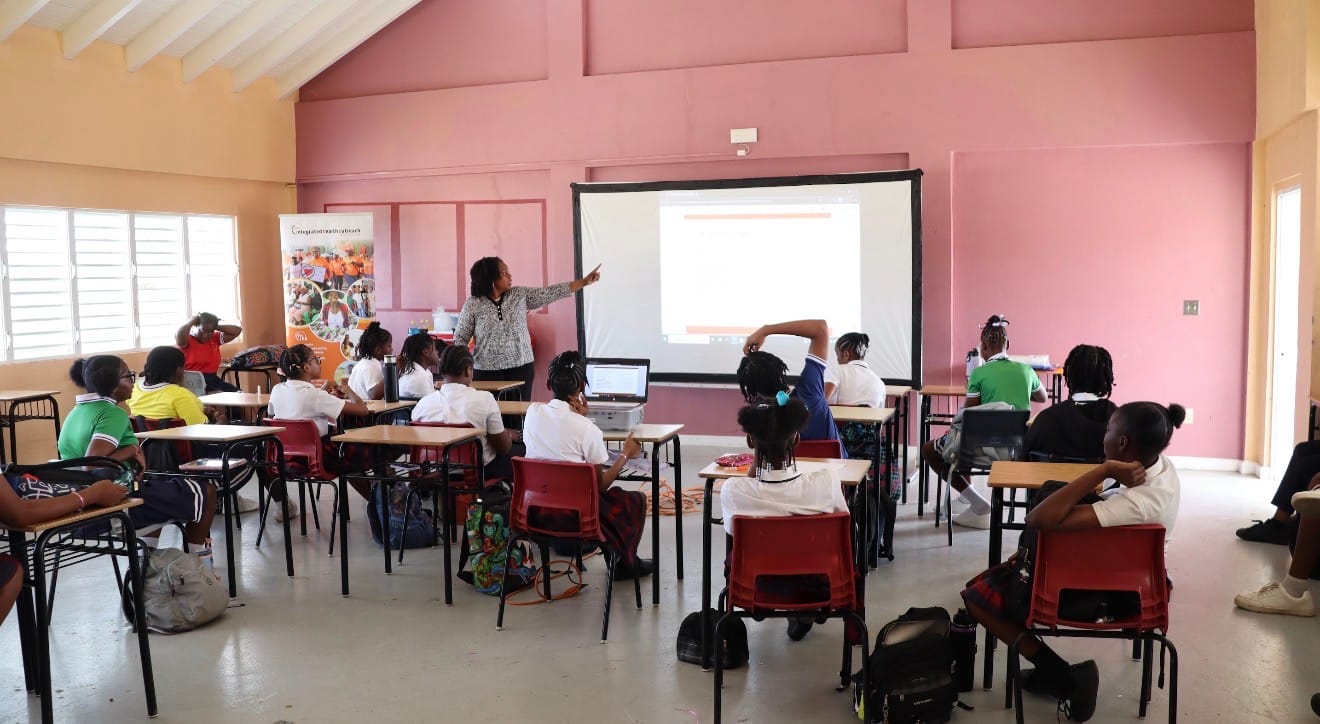
    In a significant initiative to combat gender-based violence (GBV), the International Humanitarian Organization (IHO) has successfully conducted a series of educational workshops for students at SNRA and PMS institutions. These preparatory sessions are strategically designed to build momentum and deepen understanding ahead of the planned GBV Walk awareness campaign in 2026.

    The comprehensive workshops provided students with crucial knowledge about the various forms of GBV, including physical, psychological, and economic abuse. Facilitators employed interactive methodologies, including case studies, role-playing exercises, and open forums, to engage participants in critical discussions about prevention, support mechanisms, and legal frameworks.

    This educational initiative represents a proactive approach to addressing GBV by empowering youth with the tools to become advocates for change within their communities. The program emphasized the importance of bystander intervention, consent education, and the creation of safe reporting environments for survivors.

    Organizers highlighted that the 2026 GBV Walk will serve as a major public demonstration against violence, with these prepared students forming the core of informed participants who can effectively communicate the campaign’s message to broader audiences. The IHO’s long-term strategy focuses on creating sustainable educational models that can be replicated across other academic institutions globally.

  • Preschoolers among students in ‘Early Pages Programme’

    Preschoolers among students in ‘Early Pages Programme’

    In a significant boost to early childhood education, St. Vincent and the Grenadines has launched the Early Pages Programme through a collaborative partnership between Hands Across the Sea and the Mustique Charitable Foundation. This groundbreaking initiative specifically targets preschool education by delivering over 5,000 brand-new books and educational materials to 20 preschool centers across the nation.

    The comprehensive donation, valued at approximately US$40,000, reaches 17 government-operated and three private early childhood centers. The program represents a strategic expansion beyond the organization’s traditional focus on primary and secondary education, marking a deliberate shift toward foundational literacy development.

    During a formal handover ceremony at the National Public Library in Kingstown on Friday, education officials emphasized the transformative potential of early literary exposure. Literacy Link representative Enna Bullock articulated the program’s core mission: “We want preschoolers to receive the treasures found in libraries and literacy initiatives in preparation for kindergarten.” She highlighted how the program seamlessly integrates with the ministry’s existing early childhood curriculum by making literacy an explicit component of the preschool environment.

    Chief Education Officer Kay Martin Jack acknowledged Hands Across the Sea’s enduring impact on educational development, noting that literacy development begins long before primary education and establishes the foundation for lifelong learning. The initiative also provided additional resources to 14 schools (12 primary and 2 secondary) to support recovery from Hurricane Beryl’s impact on educational infrastructure.

    Education Officer Jane Farrell from the Ministry’s Early Childhood Department expressed enthusiasm about the program’s timing and potential to cultivate authentic reading engagement among the nation’s youngest learners. Beneficiary representatives including Rochelle Tannis of Bequia Anglican Early Childhood Centre and Joy Haynes of Barrouallie Government School conveyed appreciation for the resources that will create literacy-rich environments for exploration and development.

    This donation extends Hands Across the Sea’s 18-year partnership with St. Vincent and the Grenadines, which has now distributed over 145,000 books throughout the Eastern Caribbean nation.

  • 3.7 Magnitude Earthquake Recorded North-Northeast of Antigua

    3.7 Magnitude Earthquake Recorded North-Northeast of Antigua

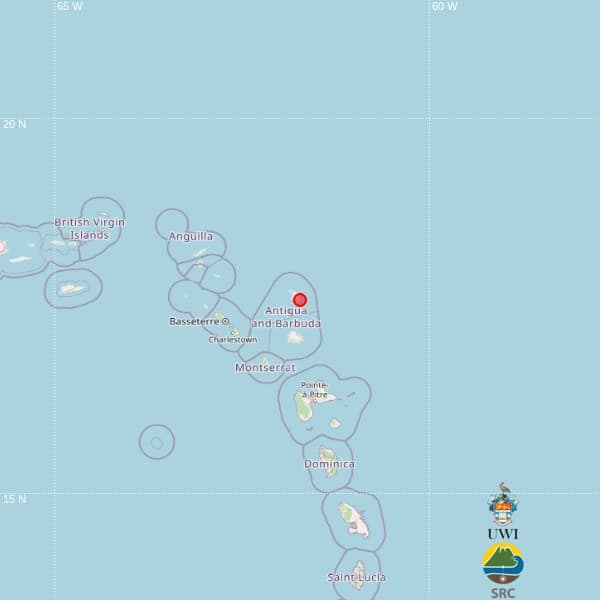
    A minor seismic event registering a preliminary magnitude of 3.7 struck the northeastern Caribbean region in the early hours of Friday, January 31st. According to automated monitoring systems operated by the University of the West Indies Seismic Research Centre, the tremor occurred at 4:46 a.m. local time (08:46 UTC) with an estimated focal depth of 12 kilometers.

    The epicenter was precisely geolocated at coordinates 17.58 degrees north latitude and 61.73 degrees west longitude, placing it approximately 53 kilometers north-northeast of St. John’s, Antigua and Barbuda. The seismic activity was also detected 102 kilometers northeast of Brades, Montserrat, and approximately 115 kilometers east-northeast of Basseterre, Saint Kitts and Nevis.

    Initial assessments from regional monitoring authorities indicate no immediate reports of structural damage, injuries, or significant impact on local communities. The Seismic Research Centre emphasized that preliminary magnitude and location data are automatically generated by sophisticated computer algorithms and remain subject to potential revision following comprehensive scientific analysis by their expert seismologists. Such minor tremors are considered common occurrences within the seismically active Caribbean region, where tectonic plate interactions frequently generate detectable but typically harmless seismic activity.

  • Magnitude 3.7 Earthquake Recorded Near Antigua Early Saturday Morning

    Magnitude 3.7 Earthquake Recorded Near Antigua Early Saturday Morning

    A minor seismic event measuring 3.7 on the Richter scale occurred in proximity to the Caribbean nation of Antigua and Barbuda during the early hours of Saturday morning. The earthquake’s epicenter was located near the islands, though precise geographical coordinates remain unspecified in initial reports.

    The tremor, while measurable by seismic instruments, appears to have caused minimal disruption to the twin-island nation. Early indications suggest no significant structural damage or injuries resulting from the geological activity. Earthquakes of this magnitude typically produce noticeable shaking of indoor items and rattling noises but rarely cause substantial damage to well-constructed buildings.

    The Eastern Caribbean region, where Antigua and Barbuda are situated, experiences frequent seismic activity due to its position along the boundary of the Caribbean and North American tectonic plates. This geological setting makes minor tremors a relatively common occurrence throughout the region.

    Local authorities and disaster preparedness agencies routinely monitor such seismic events, though no tsunami warnings were issued following this particular incident. Residents reported feeling mild vibrations but otherwise described the event as passing without major concern.

    The timing of the earthquake—during early morning hours—likely contributed to the limited public reaction, as many residents were asleep when the tremor occurred. Seismologists continue to monitor the region for potential aftershocks, though none have been reported thus far.