博客

  • Security : An American warship in the bay of Port-au-Prince

    Security : An American warship in the bay of Port-au-Prince

    PORT-AU-PRINCE, Haiti – In a significant military deployment, the United States has positioned advanced naval assets in Haitian waters as the Caribbean nation approaches a critical political deadline. On February 3, 2026, the Arleigh Burke-class guided missile destroyer USS Stockdale (DDG-106) entered the bay of Port-au-Prince accompanied by two Coast Guard patrol vessels, CG Stone and CG Diligence.

    This strategic movement forms part of Operation Southern Spear, a comprehensive initiative targeting drug trafficking networks in the region, authorized by Secretary of State for War Pete Hegseth. The deployment occurs against a backdrop of escalating tensions as Haiti’s Presidential Transitional Council (CPT) approaches the February 7 conclusion of its mandated term.

    Despite the Council’s prior commitment to respect the constitutional timeline, reports indicate certain members continue pursuing transition extensions, directly contradicting warnings from U.S. authorities about adhering to democratic processes.

    The USS Stockdale represents cutting-edge naval capability with formidable specifications: measuring 160 meters in length with an operational range of 8,100 kilometers. Its arsenal includes 96 vertical missile silos capable of deploying surface-to-air, anti-ballistic, cruise, and anti-submarine missiles, complemented by six torpedo launch tubes. The vessel’s defensive systems feature a 127mm cannon, a Phalanx close-in weapon system with a firing rate of 3,000-4,500 rounds per minute, a laser dazzler system, and four 12.7mm machine guns.

    As one of several warships deployed to the Caribbean under the Trump administration’s security strategy, the USS Stockdale’s sophisticated design and multi-mission capability enable simultaneous warfare operations across air, surface, and submarine domains. This deployment signals Washington’s sustained commitment to regional security and counter-narcotics operations while potentially serving as a stabilizing presence during Haiti’s delicate political transition.

  • Belize Business Bureau Says “Competition Destroys Profits”

    Belize Business Bureau Says “Competition Destroys Profits”

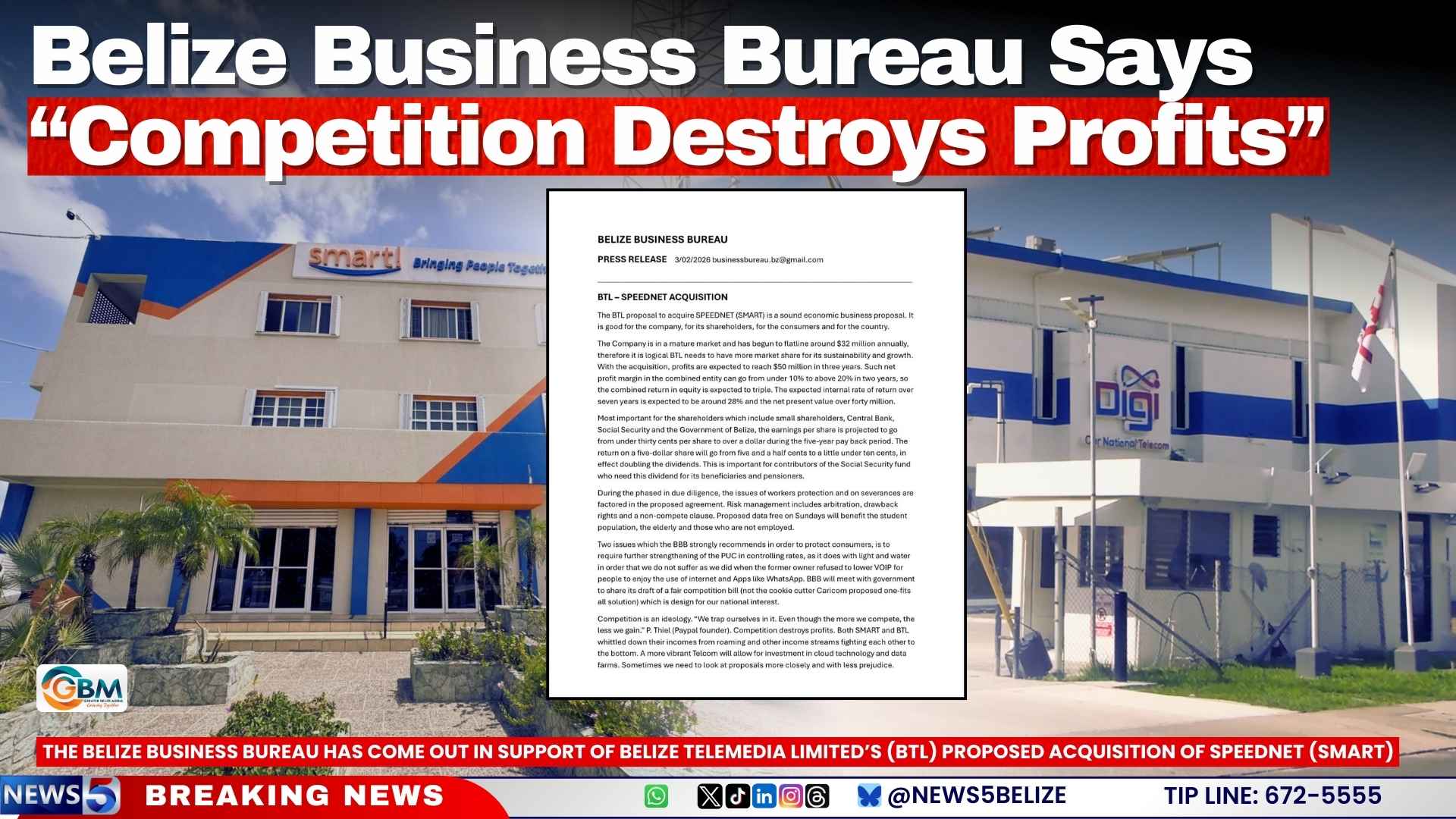
    BELIZE CITY – In a significant endorsement of market consolidation, the Belize Business Bureau has publicly championed Belize Telemedia Limited’s (BTL) planned acquisition of competitor Speednet (SMART). The Bureau characterized the proposed merger, announced February 3, as “a sound economic business proposal” poised to deliver substantial national and shareholder benefits.

    The Bureau’s analysis indicates BTL’s annual revenues have plateaued at approximately $32 million. The acquisition is framed as the essential catalyst for breaking this stagnation and securing the company’s long-term viability. Projections suggest the consolidated entity could achieve profits soaring to $50 million within a three-year horizon, with profit margins dramatically expanding from below 10% to over 20% in just two years.

    Shareholders are positioned for considerable gains, with earnings per share forecast to surge from under thirty cents to more than one dollar over a five-year payback period. This would effectively double dividends, a critical development for institutional investors like the Social Security fund.

    Addressing potential labor concerns, the Bureau emphasized that the acquisition’s due diligence must incorporate robust worker protections, including severance agreements, arbitration mechanisms, drawback rights, and non-compete clauses. An ancillary proposal for a ‘data-free Sunday’ was highlighted as a measure to aid vulnerable demographics, including the elderly, unemployed, and students.

    The Bureau’s position hinges on a stark economic rationale, concluding that “competition destroys profits.” It argued that the existing rivalry between BTL and SMART has mutually diminished both companies’ incomes. The statement ended with an appeal for objective analysis, urging stakeholders to examine the proposal “more closely and with less prejudice.”

  • Afro  Caraïbische Educatie Academie reikt eerste certificaten uit

    Afro Caraïbische Educatie Academie reikt eerste certificaten uit

    PARAMARIBO – In a significant milestone for community-based education, the Afro-Caribbean Education Academy (ACEA) has successfully graduated its inaugural class of 18 students aged 11-18. The ceremony, held recently, marked the completion of an intensive extracurricular program designed to empower Surinamese youth through cultural awareness and practical life skills.

    Established by the National Reparation Platform Suriname Foundation (NRPS), ACEA represents an innovative educational initiative focusing on identity development, social consciousness, and community strengthening through an inclusive framework. The academy’s curriculum encompasses six core modules: historical studies, social competencies, cultural philosophy, creative expression, entrepreneurship fundamentals, and financial budgeting.

    Although the program commenced with 30 enrolled participants, 18 students successfully completed the comprehensive requirements. Instruction was delivered by experienced educators possessing both professional teaching credentials and demonstrated affinity with the target demographic. Program administrators noted the cohort’s exceptional engagement and knowledge acquisition throughout the curriculum, characterizing the learning environment as mutually inspiring for both students and instructors.

    The culminating ceremony featured addresses from NRPS leadership alongside demonstrative presentations by participating youth, showcasing their acquired knowledge and skills. The foundation’s board oversaw program execution, emphasizing the institution’s commitment to addressing educational gaps through culturally relevant pedagogy that extends beyond conventional school settings.

  • Guyana’s President Concludes Visit in Belize

    Guyana’s President Concludes Visit in Belize

    Belize City, February 3, 2026 – Guyana’s President Dr. Mohamed Irfaan Ali concluded a significant three-day state visit to Belize, marking a new chapter in bilateral relations between the two nations. The diplomatic engagement resulted in the establishment of multifaceted cooperation agreements spanning critical sectors including national security, education, tourism, technology, and investment.

    The two governments emphasized practical implementation over ceremonial commitments, with a focus on tangible outcomes including enhanced joint crime prevention initiatives, expanded scholarship programs and vocational training opportunities, tourism development strategies, and digital government service modernization through technological innovation.

    Security cooperation forms a cornerstone of the new partnership, with both nations committing to collaborative efforts against transnational criminal networks and emerging security threats. The framework includes provisions for strengthening defense capabilities and intelligence sharing mechanisms to address regional security challenges.

    Belize Prime Minister John Briceño characterized the agreements as “laying a substantive foundation for deepened collaboration in mutually beneficial areas,” though noted the arrangements represent political commitments rather than legally binding treaties.

    Beyond formal negotiations, President Ali’s itinerary included strategic visits to key economic facilities in the Cayo District, including Santander Sugar Limited and Quality Poultry Products, highlighting agricultural and industrial development opportunities.

    The state visit concluded with a ceremonial farewell by the Belize Defence Force Honour Guard, underscoring the military diplomacy dimension of the renewed bilateral relationship.

  • “Belize” Appears Multiple Times in Epstein Files

    “Belize” Appears Multiple Times in Epstein Files

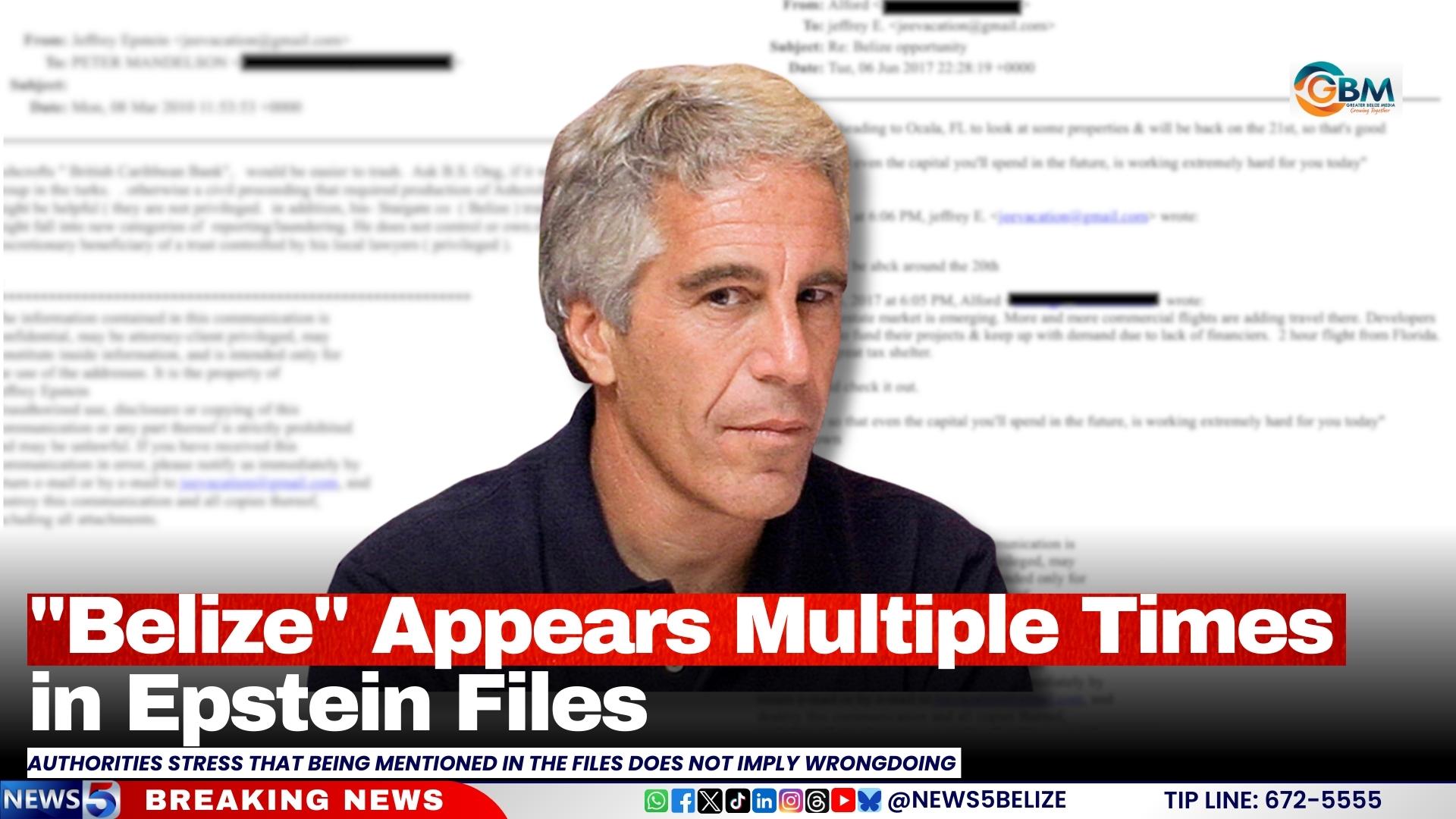
    Recent scrutiny of the fully released Epstein Library from the U.S. Department of Justice has uncovered multiple references to Belize within the extensive document trove. While an initial keyword search yields 156 results, a deeper examination reveals that the vast majority represent duplicate documents, tangential market research, or incidental mentions rather than substantive connections to Jeffrey Epstein himself.

    Upon filtering out these peripheral references, the number of meaningful Belize-related entries diminishes considerably. However, several notable exchanges remain that connect the Central American nation to Epstein’s network of financial and political associates.

    One particularly significant communication dates to 2017, when an individual identified as ‘Alford’ emailed Epstein regarding Belize’s emerging real estate market, explicitly describing the country as a ‘great tax shelter.’ Epstein responded with apparent interest, noting: ‘Thx, I will; I’ll be back around the 20th.’

    Additional Belize mentions within the archive involve Epstein’s business partners and his final girlfriend, who exchanged messages about vacation plans to the country. These communications consistently maintained a positive tone regarding Belize.

    The document release, which occurred on January 30th under the Epstein Files Transparency Act, comprises millions of pages, images, and videos that name numerous prominent figures including Richard Branson, Bill Gates, and Elon Musk. Authorities have emphasized that appearance in the files does not indicate wrongdoing, and many named individuals have denied any involvement. Some lawmakers continue to argue that the administration has not fully complied with document disclosure requirements.

  • ‘Not fair’: Fmr. Dominican UN Ambassador on U.S. demands to end Cuban medical training

    ‘Not fair’: Fmr. Dominican UN Ambassador on U.S. demands to end Cuban medical training

    Caribbean leaders are mounting a vigorous defense of their long-standing medical education partnerships with Cuba following recent U.S. demands to terminate these programs. The escalating diplomatic tension emerges as Washington intensifies pressure on CARICOM nations ahead of their February summit in St. Kitts.

    Former Dominican UN Ambassador Crispin Gregoire has emerged as a vocal critic, characterizing the American directive as “deeply unfair” and potentially devastating to regional healthcare systems. “If the Americans prohibit our medical training in Cuba, will they provide alternative scholarships to U.S. universities? The unequivocal answer is negative,” Gregoire stated. “The United States lacks sufficient capacity to educate its own physicians, let alone accommodate ours.”

    The medical education ultimatum forms part of a comprehensive U.S. policy shift that includes termination of USAID programs throughout the Caribbean, restrictive visa policies targeting Dominica, Antigua and Barbuda, and St. Vincent, requirements to accept U.S. deportees, and requests to host American military radar installations.

    St. Lucian Prime Minister Philip Pierre confirmed receiving Washington’s demand to cease Cuban medical education exchanges, noting this creates a “major issue” for his nation’s healthcare infrastructure. “Numerous our physicians received training in Cuba, and now the eminent United States dictates we must discontinue this practice,” Pierre remarked.

    The geopolitical dimensions extend beyond educational concerns. With Venezuela ceasing oil shipments to Cuba and Mexico facing pressure to halt energy supplies, Cuba confronts a severe energy crisis. Russian and Iranian assistance offers might be obstructed by heightened U.S. naval presence in Caribbean waters.

    Gregoire contextualized the confrontation within broader global power competition: “The entire international architecture is transforming. America is focusing on its backyard because Chinese and Russian engagement intensifies here. They seek to counter that influence. Cuba currently stands in the crosshairs.”

    CARICOM leaders, including summit chair and Cuban-trained physician Terrance Drew of St. Kitts, prepare for crucial February 24 discussions that may determine the future of regional healthcare cooperation and Caribbean sovereignty in an increasingly multipolar world.

  • French Hospital Evacuated After Live WWI Shell Found in Patient

    French Hospital Evacuated After Live WWI Shell Found in Patient

    A major security operation unfolded at a medical facility in Toulouse, France, following the extraordinary discovery of a live artillery shell from the First World War inside a patient. The incident occurred on the night of Saturday, February 3, 2026, when a 24-year-old male French national was admitted to the Rangueil Accident and Emergency unit reporting intense pain.

    During an urgent surgical procedure, medical staff made the alarming find: an active eight-inch munition, later identified as dating back to 1918, embedded within the patient’s anal canal. Recognizing the immediate danger, hospital authorities initiated emergency protocols, contacting specialized bomb disposal units and the local fire brigade without delay.

    A substantial security perimeter was rapidly established around the affected area, necessitating the partial evacuation of the hospital wing to ensure staff and patient safety. Expert bomb disposal technicians were dispatched to the scene to evaluate and neutralize the potentially lethal object. Following a careful assessment, the century-old ordnance was successfully extracted from the patient and transported for secure destruction.

    The individual at the center of this unusual case remained hospitalized, recovering from the surgical intervention. Meanwhile, judicial authorities have initiated proceedings, with prosecutors reportedly considering charges related to the illegal possession of category A munitions, a serious offense under French law.

    This event marks the second such occurrence in recent years. In 2022, a hospital in the southern city of Toulon faced a nearly identical situation when an elderly patient arrived with a similar WWI-era shell, likewise prompting a partial evacuation and bomb squad response.

  • COMMENTARY: From vulnerability to agency – Building Caribbean power in a post-rules world

    COMMENTARY: From vulnerability to agency – Building Caribbean power in a post-rules world

    The Caribbean region faces an unprecedented historical inflection point as the post-war international order fractures rather than reforms. Canadian Prime Minister Mark Carney’s recent Davos declaration that ‘We are in the midst of a rupture, not a transition’ underscores the urgent challenge confronting CARICOM and OECS nations. This rupture demands fundamental adaptation as traditional diplomatic approaches become increasingly obsolete in an era of weaponized trade, securitized migration, and eroded multilateralism.

    Professor C. Justin Robinson articulates the stark new reality: the international system that once protected small states has become unreliable, and ‘no one is coming to save us.’ This diagnosis gains traction across Caribbean leadership, with Assistant Secretary-General Wayne McCook acknowledging that weakening multilateral norms and ‘America First’ policies necessitate deeper regional integration through food security, industrial policy, and free movement as essential shock-absorption mechanisms.

    The limitations of compliance-based diplomacy emerge clearly in recent Citizenship by Investment (CBI) controversies. While Caribbean governments implemented substantial legislative reforms, Washington now evaluates risk through enforcement consistency and information-sharing reliability rather than statutory language. Recent U.S. actions represent not moral condemnation but leverage signals demanding demonstrable, sustained enforcement.

    Human capital strategy requires equal transformation. The region must abandon outdated brain drain narratives and instead mobilize its diaspora as strategic assets through circular engagement models and regional talent platforms. Cultural icon Gordon Henderson emphasizes that contribution transcends geography, while Hon. Mark Brantley notes tightening migration regimes may paradoxically benefit Caribbean development.

    The proposed solution centers on asymmetric engagement—intervening where power actually forms within Congressional committees, regulatory agencies, and risk-management units before positions harden. This necessitates reimagining the Institute for Caribbean Studies (ICS) in Washington as a permanent idea-translation platform focused on narrative formation, comparative policy analysis, and diaspora intellectual coordination rather than traditional lobbying.

    External influence must be powered by domestic competence through human-centered governance integrating AI and behavioral psychology to build institutional credibility. This comprehensive approach—combining narrative reclamation, diaspora mobilization, institutional presence, and governance innovation—offers the Caribbean pathway from vulnerability to agency in a post-rules world.

  • Early preparations begin for Festival of the Arts

    Early preparations begin for Festival of the Arts

    The Grenadian Ministry of Tourism, Creative Economy and Culture has initiated preliminary arrangements for its prestigious cultural showcase, the Festival of the Arts, slated for September through December 2026. This early mobilization demonstrates the government’s commitment to advancing cultural development through structured preparatory activities.

    A specialized choir development workshop represents the first concrete step in this multi-year preparation cycle. Scheduled for February 20, 2026, the session will convene at the Public Workers Union Building on Port Highway in St. George’s from 8:30 AM to 3:00 PM. Esteemed facilitator Valerie Daniel-Burkhardt will lead comprehensive training for choir instructors, covering critical performance methodologies including vocal projection techniques, breath control, diction refinement, artistic interpretation, creative expression, vocal anatomy, posture alignment, rhythmic precision, pitch accuracy, and fundamental conducting skills.

    This preparatory initiative follows a thorough 2024 evaluation commissioned by the Division of Culture to assess the festival’s societal impact and identify enhancement opportunities. The assessment aimed to transform the event into a more dynamic, culturally relevant, and captivating experience for both performers and audiences while preserving its competitive spirit.

    Established in the 1960s as a biennial celebration, the Festival of the Arts has historically served as a premier platform for showcasing artistic talents among students throughout Grenada, Carriacou, and Petite Martinique. The event continues to fulfill its foundational mission of fostering cultural expression and artistic excellence across multiple disciplines including dance, musical performance, and theatrical presentation among the nation’s youth population.

  • NTUCB Denied Protest Permit to Demonstrate at SSB Office

    NTUCB Denied Protest Permit to Demonstrate at SSB Office

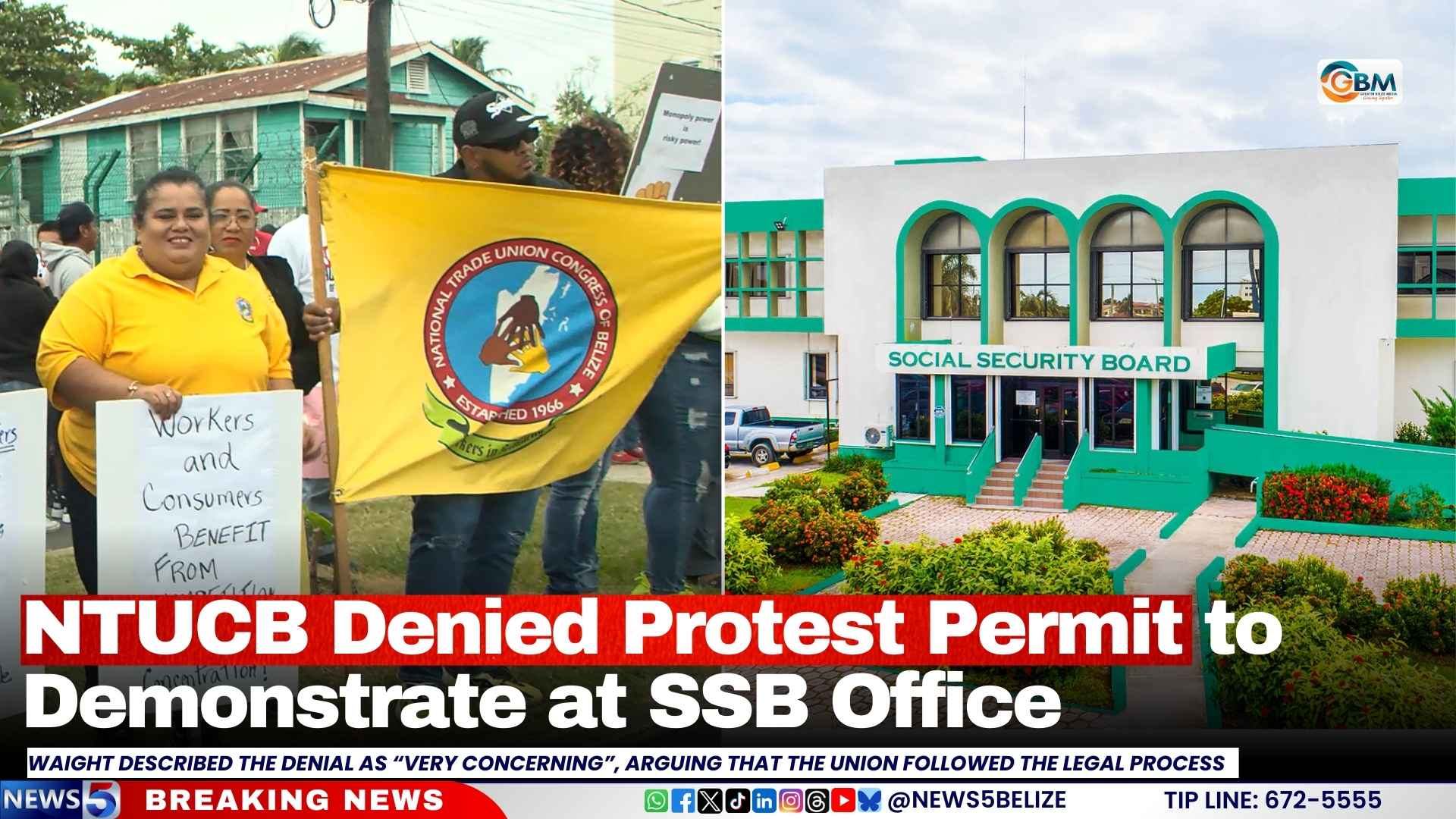
    The National Trade Union Congress of Belize (NTUCB) has encountered significant obstacles in organizing a planned demonstration after being denied official permission by authorities. Union President Ella Waight confirmed that police rejected their application to protest outside the Social Security Board (SSB) headquarters in Belize City this Wednesday.

    The union had strategically scheduled their demonstration between 10:00 AM and 2:00 PM to accommodate working members during their lunch breaks. According to Waight, the denial stemmed from a prior permit application submitted by the United Democratic Party (UDP) for the same location and timeframe.

    Waight characterized the rejection as deeply troubling, emphasizing that the union had meticulously followed all legal protocols. She further expressed concerns about constitutional rights being undermined, noting that workers’ fundamental right to peaceful assembly appeared to be compromised by administrative technicalities.

    The union leader recounted experiencing dismissive treatment during her interactions with law enforcement officials. She reported that one officer suggested the NTUCB either join the UDP’s scheduled protest or select an alternative date for their demonstration—a proposal Waight found unsatisfactory given the distinct nature of their agenda.

    While both organizations oppose the current SSB acquisition framework, Waight clarified that the union’s primary focus remains protecting workers’ financial contributions to the social security system. The SSB currently maintains a 34.2% shareholding in Belize Telecommunications Limited (BTL), making transparent governance crucial for national workforce security.

    Waight extended an invitation to all Belizeans to participate in whatever capacity they could manage, even if only briefly, emphasizing that the issue transcended political affiliations. She stressed the demonstration’s core objectives centered on demanding transparency, accountability, and comprehensive information disclosure regarding significant financial decisions affecting national contributors.