博客

  • Chasing sunshine and freedom

    Chasing sunshine and freedom

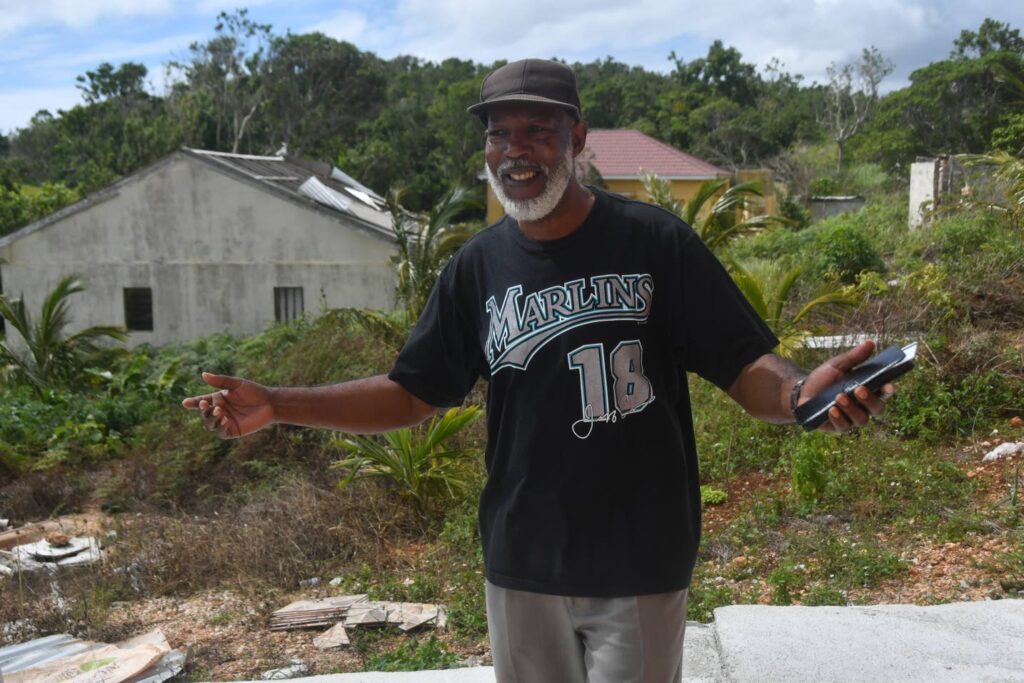
    At the age of 72, Errol McCarthy has finally realized his lifelong aspiration of returning to his Jamaican homeland after spending six decades in England. His journey began at just 12 years old when he left Jamaica’s rural Trelawny parish with his sister for Birmingham, initiated by his mother’s petition for their relocation in 1965.

    The transition from Jamaica’s warm, sun-drenched landscapes to England’s industrial chill proved profoundly challenging for McCarthy. He recalls experiencing significant culture shock, mourning the loss of carefree childhood activities like swimming in rivers, playing ball, and freely enjoying tropical fruits. “Everything in England you have to pay for,” McCarthy reflected during an interview with the Jamaica Observer. “You go to the park—there’s no free fruit, no apples, no beer, no nothing.”

    Despite the initial difficulties with England’s cold, foggy environment and industrial pollution, McCarthy adapted through determination. He progressed through factory and hospital work before qualifying as a home care organizer in social services, eventually specializing in elderly residential care. It was in England that he met his Jamaican wife, with whom he shared the dream of eventual retirement in their homeland.

    The couple strategically planned their return for years, purchasing property in St. Elizabeth and constructing a home. They finalized their move in September 2025, though their homecoming coincided with catastrophic Hurricane Melissa just one month later. The Category 5 storm devastated western Jamaica, testing their resilience immediately upon return.

    McCarthy described the hurricane experience as terrifyingly different from watching disaster coverage abroad. Despite hours spent battling water intrusion and nearly four months without electricity or internet, the couple demonstrated remarkable community spirit by sharing their stored supplies with affected neighbors.

    Now settled, McCarthy expresses absolute contentment with his decision, emphasizing the cultural connection, culinary pleasures, and social freedoms he’s rediscovered. “If I don’t have to go back for any reason, I don’t want to go back,” he stated with evident joy, acknowledging the rarity of successfully executing such long-term retirement plans among diaspora Jamaicans.

  • ‘We will remember The Boogieman’

    ‘We will remember The Boogieman’

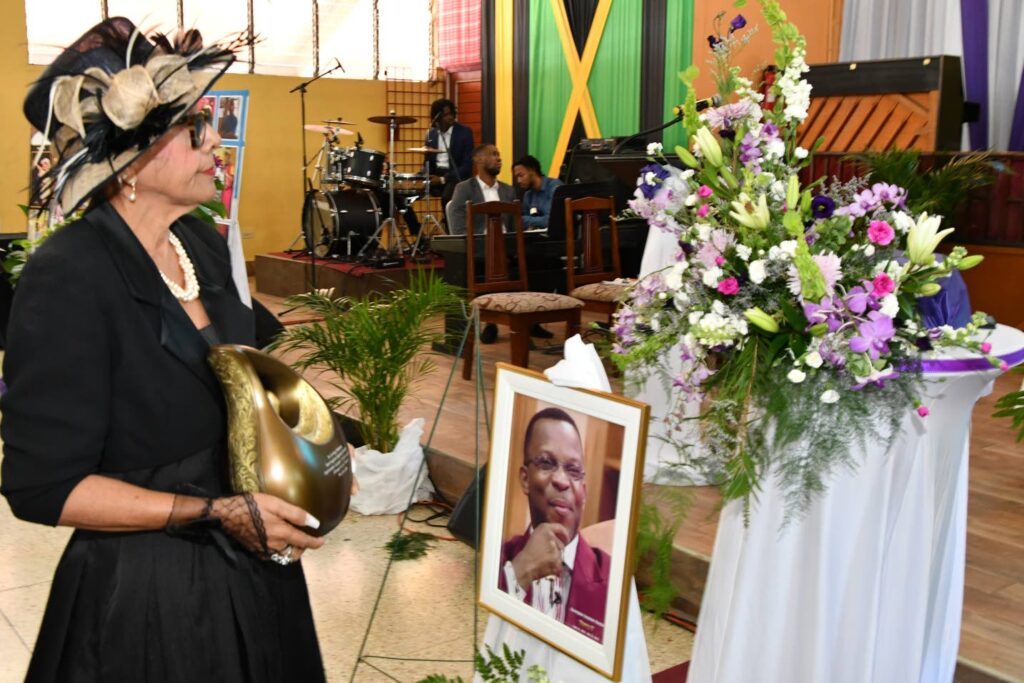
    Jamaica’s cultural community gathered in solemn tribute this weekend to honor the monumental legacy of veteran broadcaster Barrington “Barry G” Gordon, whose voice became synonymous with the nation’s musical identity. At a heartfelt thanksgiving service held at Boulevard Baptist Church in St Andrew, Minister of Culture and Entertainment Olivia Grange led the nation in mourning the radio icon, celebrating his profound impact on Jamaican culture through his five-decade broadcasting career.

    Minister Grange eulogized Gordon as far more than a broadcaster—characterizing him as a master storyteller who chronicled Jamaica’s cultural evolution through carefully curated music selections. “The music you played bridged gaps, brought people together, and spoke to the heart of Jamaica,” she reflected. “You left an indelible mark on our culture, and we’ll never forget it.” The service, adorned in purple and white decorations, extended for three-and-a-half hours as musical tributes from artists like Nadine Sutherland, Carlene Davis, and Peter Lloyd filled the sanctuary, each acknowledging Gordon’s pivotal role in advancing their careers and promoting Jamaican music globally.

    The origin of Gordon’s legendary “The Boogieman” persona was detailed by former Jamaica Broadcasting Corporation colleague Tony Patel. He recounted how a young, ambitious Gordon seized an opportunity to host the Saturday night programme when the regular host became unavailable, revolutionizing radio engagement through innovative listener interaction techniques. “Barry brought a different approach to the programme,” Patel remembered, “communicating with his audience in a different way, having them calling, having them request music, and just doing things that hadn’t been tried before.”

    International tributes poured in from across the music world, with renowned disc jockey David Rodigan highlighting Gordon’s “razor-sharp wit and his great sense of humour” as endearing qualities that complemented his exceptional talent. Colleague Heather Cummings poetically defined Gordon’s essence through the eleven letters of his name: “brilliant, authentic, radiant, rhythmic, youthful, genuine, original, resilient, dynamic, outstanding, and nimble.”

    The most poignant moments came from Gordon’s personal circle. His widow, Josett Gordon, traced their relationship from their first meeting at a 1987 stage show to his final days, describing him as “a firm foundation through all the storms of my life.” His goddaughter, Jaden Vegas, emotionally credited Gordon for believing in her “when I did not even believe in myself,” highlighting his mentorship that prepared her for the broadcasting industry.

    Gordon passed away on October 29, 2025, at Savanna-la-Mar Hospital in Westmoreland after an extended illness. His remains rested in a golden urn during the service as Jamaica celebrated the life of a man whose voice became the soundtrack of a nation, ensuring that while the broadcaster may be gone, his cultural legacy will resonate through generations.

  • Adoption bottleneck

    Adoption bottleneck

    A stark disconnect exists within Jamaica’s child welfare system where approximately 4,500 state wards await permanent homes while over 150 approved adoptive parents remain waiting, with fewer than 20 adoptions finalized annually. This alarming discrepancy emerges from a comprehensive study by the Caribbean Policy Research Institute (CaPRI) titled ‘Home Advantage: Reforming Jamaica’s Adoption System,’ which identifies systemic institutional failures rather than cultural resistance as the primary barrier.

    The research, spearheaded by Saramaria Virri, reveals that newborns typically wait two years for placement while older children face even longer delays—often spending their entire childhood in residential care despite clear evidence supporting early permanency. The study dismantles the common assertion that these children are legally unavailable for adoption, demonstrating through Adoption Board cases that many wards meet adoption criteria yet never progress to that stage.

    CaPRI’s analysis pinpointed a deeply entrenched institutional philosophy prioritizing prolonged family reunification efforts—even when unrealistic or potentially unsafe—over timely adoptive placement. This process-oriented approach systematically subordinates children’s developmental needs to bureaucratic considerations, resulting in eroded cognitive, emotional, and social capacities that critically impact future educational achievement and social integration.

    Compounding these issues is Jamaica’s outdated Adoption Act, modeled on the UK’s 1958 legislation but never updated despite three subsequent revisions in Britain. A 2013 review yielded no legislative changes, creating operational contradictions where the legally empowered Adoption Board lacks budget, staff, and offices while the Child Protection and Family Services Agency (CPFSA) handles practical administration without corresponding legal authority.

    Recommendations include urgent legislative modernization, increased staffing to achieve international casework ratios of 25-30 per social worker, digitized case management systems, and dedicated permanency tracking functions. Education Minister Senator Dr. Dana Morris Dixon recently acknowledged the need for framework improvements, signaling potential political willingness to address what CaPRI identifies as primarily administrative rather than legal barriers to giving children permanent homes.

  • Light at last!

    Light at last!

    The Potsdam district in St. Elizabeth, Jamaica, has emerged from a 97-day electrical blackout that began when Hurricane Melissa devastated the island last October. The prolonged outage finally ended last Tuesday when Jamaica Public Service Company (JPS) restored power to the relieved community.

    Residents expressed overwhelming joy at returning to normalcy after months of darkness and financial strain from generator dependence. The restoration enables simple comforts previously taken for granted—refrigerated food storage, reliable lighting, and resumed daily routines.

    Damian Keane encapsulated the collective relief: “We’re happy and grateful because to be in the dark at night, we couldn’t manage.” Like many residents, he initially hesitated to trust the restoration, waiting days before plugging in appliances amid concerns about stability.

    The hurricane initially left 77% of JPS customers without electricity, with western parishes including Westmoreland, St. James, Hanover, and Trelawny suffering most severely. As of February 5th, approximately 4% of customers remain without power as restoration efforts continue.

    Beyond household inconveniences, the outage created significant economic hardships. Businessman Gregory Bloomfield reported spending $6,000 daily on generator fuel for his shopping complex, severely eroding profits. Telecommunications provider Everoy Foster lost numerous customers during the outage and questioned why repairs took months when most utility poles remained standing after Melissa, unlike during Hurricane Beryl when infrastructure was completely destroyed.

    Foster provided temporary relief by distributing free Starlink satellite internet service throughout the community, enabling vital communications during the blackout. Despite his concerns about business recovery, he remains hopeful as customers gradually return.

    Residents now advocate for improved infrastructure, including additional street lighting to enhance community safety. The experience has highlighted both the vulnerability of rural communities to natural disasters and the profound social and economic impacts of prolonged utility disruptions.

  • STONEWALLED

    STONEWALLED

    Prominent international football attorney Andrew Werners has publicly criticized the Jamaica Football Federation (JFF) for excessive delays in processing player registrations for the Jamaica Premier League (JPL), alleging violations of FIFA regulations. The Canadian-Dutch Caribbean lawyer, who previously served as legal counsel to the World Leagues Association, represents several affected international players including St Lucian Vino Barclett and Haitian Melvin Doxilly.

    According to Werners, both players properly terminated their contracts with previous clubs—Cavalier SC and Mount Pleasant FA respectively—and became free agents months ago. Despite this, the JFF has failed to submit their registration documents through FIFA’s mandatory Transfer Matching System (TMS), preventing them from joining league leaders Montego Bay United.

    Werners cited specific breaches of Article 14 of the FIFA Regulations on the Status and Transfer of Players, which permits contract termination with ‘just cause’ without penalties. He emphasized that players followed proper procedures by providing default notices to their previous clubs before seeking new affiliations.

    The registration impasse extends beyond these two cases, affecting multiple national federations. Notably, a Surinamese player’s registration delay is compromising his preparation for crucial FIFA Inter-Continental play-offs in March, where Suriname faces Bolivia for a chance to compete against Iraq for World Cup qualification.

    Despite attempts to contact both FIFA TMS management and JFF competitions head Ian Kemble, no responses have been received regarding these allegations. Werners has subsequently filed an official protest with FIFA, insisting the JFF must honor its contractual obligations under international football governance standards.

  • Romae Gordon for Chanel Couture S/S 2026 in Look 31

    Romae Gordon for Chanel Couture S/S 2026 in Look 31

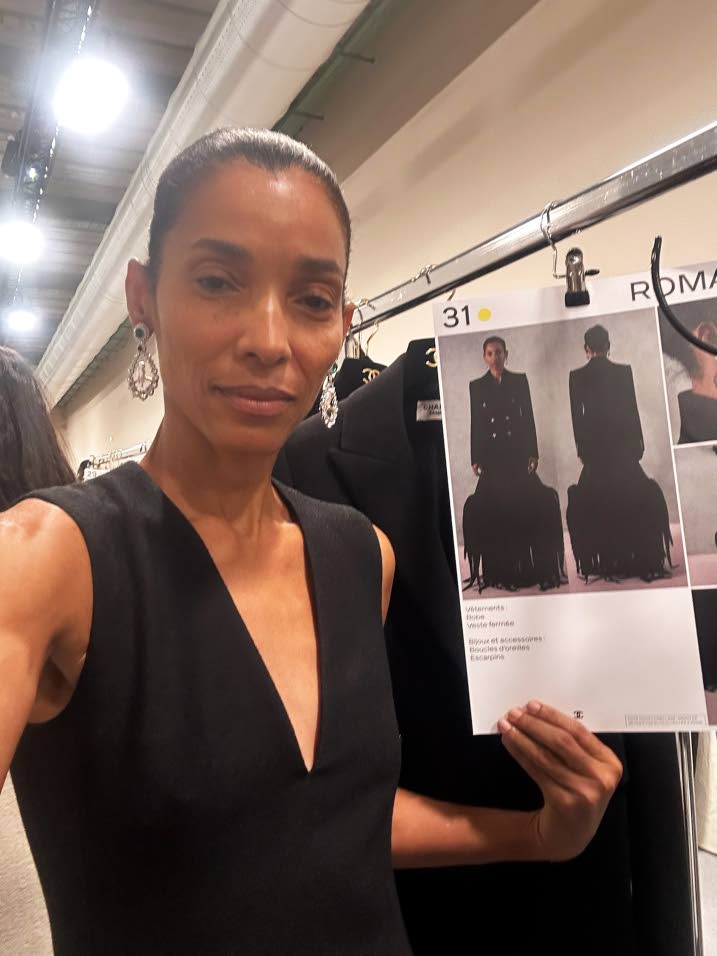
    The air in the Chanel atelier crackles with creative energy as Creative Director Mathieu Blazy makes a decisive gesture. “We’ll cut right here,” he declares, tracing a line down the center front of the dress with surgical precision. This moment captures the meticulous craftsmanship behind Look 31 for Chanel’s Spring-Summer 2026 Haute Couture collection—a garment that would become a profound personal and sartorial journey for Jamaican model Romae Gordon.

    The creation process unfolds as a ballet of expertise, where seasoned craftswomen with decades of experience transform wool and silk into high art. Scissors glide through fabric with instinctive accuracy while pins magically arrange themselves into geometric patterns under skilled hands. This is where fantasy meets technical perfection in the hallowed halls of French fashion.

    For Gordon, the experience became deeply personal. Between fittings where Sam Cooke’s ‘A Change Is Gonna Come’ provided the soundtrack, she found herself reflecting on recent personal tragedies—the loss of six loved ones throughout 2024-2025. The creative process mirrored her own journey of transformation, with the garment’s evolution representing her personal metamorphosis.

    The final creation embodies both strength and delicacy: a groundbreaking little black dress cut mid-thigh, molded to the body beneath a double-breasted crêpe de laine jacket. The only hint of color comes from distinctive green bird buttons that complement the feather-like pleats of organza de soie at the hem, creating an illusion of flight and movement throughout the garment.

    Backstage, moments of levity emerged as Jamaican and French sensibilities collided. When head workshop manager Christine Mendy and her colleague Paula Braz offered deadpan French humor about language barriers, the resulting laughter provided necessary relief from the intense pressure of Blazy’s couture debut preparation.

    The philosophical dimensions of fashion revealed themselves through conversations with Pierre Olivier Agostini, Chanel’s senior research designer, who discussed the anthropology of clothing—why women choose certain garments and what narratives they convey through their sartorial selections.

    On show day at the Grand Palais, the ethereal set featured soft blush-colored weeping willows and mushrooms (declared ‘Champignons de l’amour’ by the French), creating a dreamscape where Mary Costa’s ‘I Wonder’ blended with Nelly Furtado’s ‘Flames to Dust’ and mashups of The Verve and Oasis. The music echoed themes of fantasy, love, tragedy, and redemption that mirrored both the collection and Gordon’s personal journey.

    As Gordon made her first international runway appearance in over thirty years, Look 31 represented more than fashion—it embodied transformation, resilience, and the magical convergence of personal history with artistic creation. The garment, accessible and wearable for women of any age, carried layers of meaning that transcended its impeccable craftsmanship, marking both a career milestone and personal redemption for the model who brought it to life.

  • Disabled worker waits five years for NIS injury benefit

    Disabled worker waits five years for NIS injury benefit

    A protracted five-year ordeal involving Jamaica’s National Insurance Scheme (NIS) has finally reached resolution after systemic administrative failures prevented a permanently disabled worker from receiving entitled benefits.

    The case originated from a workplace accident on October 16, 2019, that left the individual permanently disabled. Despite submitting a formal application for Employment Injury Benefits in April 2020, the claimant encountered what they described as ‘gross negligence’ and institutional incompetence that stretched across half a decade.

    Throughout the extensive delay, the NIS office maintained that certain medical documentation was missing from the claimant’s file. However, in a September 2025 communication, officials refused to specify which exact sick notes were allegedly absent. This critical lack of transparency created a circular bureaucratic impasse, as the claimant could not remedy undefined deficiencies.

    The situation revealed deeper systemic issues when investigation showed the NIS had failed to properly communicate requirements to both the employer and medical providers. Contrary to the agency’s assertions, the employer confirmed all documentation had been properly submitted, and medical professionals had certified the necessary 180-day medical verification.

    The breakthrough came when the case was escalated to a senior NIS officer who initiated proper communication channels with both the employer and medical provider. This intervention confirmed that all documentation had been complete throughout the process, exposing the earlier claims of missing documents as institutional error.

    The resolution, facilitated through the ‘Tell Claudienne’ public assistance column, highlights ongoing challenges within Jamaica’s social security administration and the human cost of bureaucratic failure.

  • Alexander Crooks: From student leader to practice-bound architect

    Alexander Crooks: From student leader to practice-bound architect

    The architectural journey of Alexander Crooks began not in a classroom, but with childhood curiosity about a simple wooden T-square. This early fascination with drawing tools evolved into a profound passion for technical drawing, setting the stage for an exceptional career in architecture that would blend cultural narrative with technical precision.

    Crooks’ academic prowess became evident at Campion College, where technical drawing emerged as his strongest subject. His trajectory shifted decisively in 2019 when he achieved seventh place in the Caribbean CSEC examinations for Technical Drawing. This accomplishment transformed architecture from mere interest into professional ambition, leading him to establish an architecture club at his school and pursue internships to understand the discipline beyond theoretical boundaries.

    His educational path advanced significantly through the GraceKennedy UTech Scholarship, which enabled his enrollment at the University of Technology’s Caribbean School of Architecture by alleviating financial barriers that often hinder talented students. The transition to architecture school introduced Crooks to the intensive studio culture characterized by conceptual design projects, relentless deadlines, and collaborative overnight sessions where students supported each other through critique and motivation.

    Crooks developed a distinctive methodology prioritizing strong conceptual foundations early in the design process, allowing for refined execution in later stages. This approach yielded impressive results in upper-level studios where projects incorporated real-world conditions. Two undergraduate works defined his development: El Centro Cultural de Renacentista, a cultural center for the Dominican Republic, and Cántaro, a ten-story vertical culinary museum in Panama. Both projects demonstrated his commitment to Latin American and Spanish Caribbean culture through immersive spatial experiences.

    His research-driven methodology earned him the Caribbean School of Architecture Head of School Drawing Award twice—a rare distinction achieved by only two students—recognizing his successful integration of storytelling, architectural quality, and presentation clarity. Beyond academics, Crooks demonstrated exceptional leadership as president of the Caribbean Architecture Students’ Association (CASA), where he connected students with professional architects, hosted design competitions, and organized developmental workshops.

    These accomplishments culminated in his nomination as university valedictorian for the Class of 2025, reflecting both academic excellence and sustained community contribution. Parallel to his studies, Crooks gained practical experience through internships that developed his skills in drafting, measured surveys, and eventually independent design work meeting professional standards.

    Now working as an architectural designer at Mosaic Architects, Crooks focuses on tropical architecture within contemporary residential, commercial, and hospitality projects. His work involves design development, construction documentation, and site engagement, particularly excelling in hospitality projects where spatial sequencing and materiality create immersive user experiences.

    Crooks’ design philosophy, deeply influenced by his education, emphasizes responding intelligently to tropical conditions through passive cooling, hurricane resistance, and cultural authenticity. He advocates for architecture that reflects the Caribbean’s cultural complexity while creating spaces that communities identify with and celebrate. Through disciplined practice, cultural sensitivity, and meaningful spatial experiences, Crooks aspires to advance Caribbean architecture and strengthen the region’s built environment identity.

  • Bryce-Davis delivers magical moments in music

    Bryce-Davis delivers magical moments in music

    International mezzo-soprano Raehann Bryce-Davis delivered a transcendent performance at Kingston’s Vera Moody Concert Hall on February 1st, marking both Reggae Month celebrations and a triumphant homecoming to Jamaican stages. The event, presented by Music Unites Jamaica Foundation under the leadership of Rosina Moder and Janine “Jkuhl” Coombs, showcased an unprecedented fusion of operatic excellence and Caribbean musical heritage.

    Bryce-Davis commenced with classical staples from her repertoire, including Verdi’s “O Don Fatale” and Bizet’s “Carmen” excerpts, accompanied by Dr. Roger N. Williams on piano. Her performance then evolved into a cultural dialogue through selections from her album “Evolution,” featuring Jamaican-Canadian composer Maria Thompson Corley’s “The Beauty In My Blackness” and Tim Amukele’s a cappella arrangement “Stand the Storm.”

    The concert’s first half culminated in a heartfelt collaboration with her mother, Hortensia Bryce, who performed traditional Jamaican folk songs “Run Mongoose” and “Liza” a cappella, followed by a duet rendition of Peter Ashbourne’s “Nobody’s Business.”

    Post-intermission, the production expanded into a multidisciplinary spectacle featuring the BEAM Dancers and live band. The program progressed through art songs like “We Wear the Mask” and Andrew Marshall’s Jamaican Patois composition “This Is My Word,” concluding with Rodgers and Hammerstein’s “You’ll Never Walk Alone.”

    The finale assembled a chamber orchestra for “Black Riders Freedom Song,” followed by an innovative dancehall-opera fusion performance of “End of Days” with Timmoya Lowe, incorporating Afrobeats and house music elements. The event was patronized by Ambassador Audrey Marks and expertly narrated by storyteller Amina Blackwood Meeks, attracting distinguished attendees including musicologist Marjorie Whylie.

  • Jamaica’s offshore oil question

    Jamaica’s offshore oil question

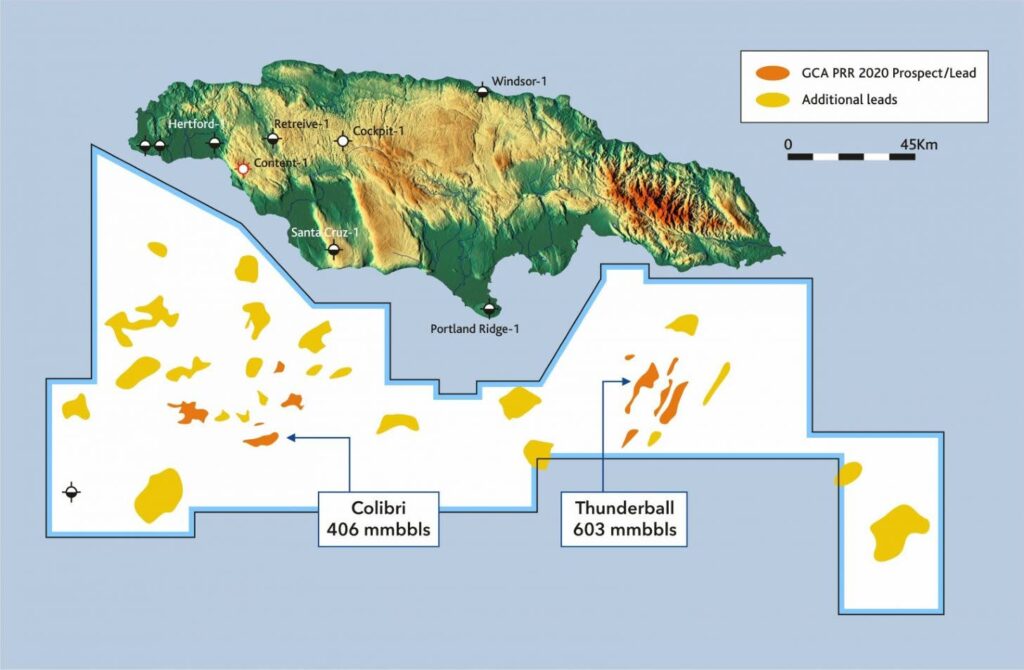
    Jamaica’s long-dormant offshore petroleum prospects are experiencing a significant revival as modern exploration techniques seek to validate four decades of geological indicators pointing toward potential hydrocarbon reserves. United Oil & Gas, holding exclusive rights to the 22,400-square-kilometre Walton Morant offshore license, has initiated a groundbreaking seabed coring program that could fundamentally reshape investor perception of Jamaica’s energy potential.

    The geological narrative supporting this endeavor combines historical data with contemporary analysis. Previous drilling operations—eleven wells drilled between onshore and offshore locations, the most recent in 1982—all documented hydrocarbon shows. More compelling evidence emerges from confirmed thermogenic oil seeps at multiple onshore locations and one documented offshore slick at Blower Rock, indicating hydrocarbons generated through natural geological processes rather than surface contamination.

    United’s integrated approach merges this historical evidence with modern datasets, including $40 million worth of seismic surveys and satellite imagery analysis conducted since 2014. Advanced satellite monitoring has identified persistent surface slick anomalies coinciding with subsurface seismic features suggesting vertical hydrocarbon migration. This convergence of data points toward specific source locations beneath Jamaica’s coastal waters.

    The current exploration phase employs piston coring technology to extract 40-60 shallow seabed samples, providing direct evidence for thermogenic hydrocarbons without permanent environmental impact. According to independent assessment by Iapetus Geoscience, successful coring results could elevate the geological chance of success for United’s primary Calibri prospect from 19% to 32%—a substantial improvement in frontier exploration terms.

    Commercial implications extend beyond technical validation. The Walton Morant license contains over twenty identified prospects with estimated unrisked resources approaching seven billion barrels. Positive results would strengthen United’s ongoing farm-out negotiations and potentially attract partners for future drilling operations. The company faces strategic imperatives, with license expiration looming in 2028 and current financial constraints requiring external investment for advanced exploration phases.

    Despite the promising indicators, United maintains measured expectations, emphasizing this phase represents risk reduction rather than discovery confirmation. For Jamaica, validation of an active offshore petroleum system could transform energy independence and investment landscapes. For global energy markets, it represents another frontier region where methodical science gradually replaces speculation with evidence-based assessment.