博客

  • Defendant accuses C-TOC cops of humiliating, threatening him

    Defendant accuses C-TOC cops of humiliating, threatening him

    A high-profile Jamaican gang trial took a dramatic turn this week as a defendant accused of being a driver for the Tesha Miller faction of the Klansman Gang made explosive allegations against police officers. BJourn Thomas testified before the Home Circuit Division of the Supreme Court in downtown Kingston that members of the now-disbanded Counter-Terrorism and Organised Crime Investigation Branch (C-TOC) subjected him to brutal treatment during his arrest in March 2023.

    Thomas claimed that officers forced him to kneel beside the body of his fatally shot friend while issuing death threats and homophobic slurs. According to his statement, read into court record by an investigator from the Independent Commission of Investigations (Indecom), the incident occurred during a police operation in North Avenue, Spanish Town, on March 5, 2023.

    The defendant described being physically assaulted at the scene, sustaining a head injury from being struck with a water bottle and his foot being hit with a firearm. In a particularly unusual detail, Thomas alleged that the entire police team temporarily abandoned the scene to purchase ice cream from a passing truck before transporting him to custody.

    These allegations directly contradict earlier testimony from a detective corporal who stated he shot Thomas’s acquaintance during a confrontation after the man raised a firearm. The defense team has aggressively challenged this narrative, accusing the detective—a skilled marksman with over 10 fatal shootings to his record—of executing the man in cold blood and then using intimidation tactics to coerce a star witness into fabricating evidence.

    The Indecom investigator’s testimony inadvertently undermined Thomas’s account regarding surveillance cameras preventing his execution, as she confirmed no cameras were present on the premises and no video evidence was reviewed. However, she did corroborate that the prosecution’s star witness appeared “very distraught” and fearful during interviews, though she provided no specific details due to prosecution objections.

    The trial, involving 25 alleged gang members facing 16 offenses allegedly committed between 2017 and 2022, continues before Supreme Court Justice Dale Palmer. This case represents the second faction of the Klansman Gang to be prosecuted through Jamaica’s judicial system.


  • Address gambling problems before casinos open, Crawford urges

    Address gambling problems before casinos open, Crawford urges

    Jamaica’s parliamentary opposition has launched a vigorous critique of the nation’s proposed casino regulatory framework, expressing profound concerns about inadequate protective measures for citizens as the country moves closer to authorizing casino gaming operations.

    During a heated House of Representatives debate on Tuesday regarding the Casino Gaming General Regulations 2025, St Catherine North Western MP Damion Crawford emerged as the most vocal critic. The regulations, which implement the longstanding Casino Gaming Act of 2010, received approval following opening remarks from Finance Minister Fayval Williams despite opposition objections.

    Crawford identified multiple critical deficiencies in the proposed safeguards, emphasizing the absence of a national self-exclusion registry that would allow problem gamblers to ban themselves across all gaming establishments. ‘The current system only permits self-reporting to individual casinos without any centralized tracking mechanism,’ Crawford noted. ‘This means an individual could simply move to another gambling venue like Caymanas Park without restriction.’

    The opposition parliamentarian advocated for comprehensive protective measures including third-party reporting channels that would enable family members, employers, and community organizations to intervene when individuals demonstrate gambling addiction behaviors. He further recommended mandatory staff training to identify problem gambling, established intervention protocols, and documented behavior triggers.

    Crawford raised particular alarm about ‘debt gambling’ practices, describing casino credit facilities as potentially devastating for vulnerable populations. ‘Debt gambling represents the most significant harm, especially for low-income earners who may approach casinos with financial desperation rather than entertainment purposes,’ he cautioned. This dynamic could trigger household collapse, multiple loan cycles, workplace misconduct, and even suicide risks.

    The MP proposed prohibiting casino credit and credit card gambling transactions for Jamaican residents while allowing tourists greater flexibility. He additionally called for implementing daily, weekly, and monthly gambling limits aligned with practices in the United Kingdom, Australia, and Canada.

    Beyond consumer protection issues, Crawford highlighted workforce development concerns, noting the regulations lack provisions for knowledge transfer and skills development that would prevent casinos from depending exclusively on imported labor. He recommended establishing casino-specific training academies through existing institutions like HEART/NSTA Trust and implementing employment quotas for Jamaican workers.

    Another significant economic concern involved the potential for integrated resorts to become self-contained spending enclaves that might undermine broader tourism businesses. Crawford warned that comprehensive resort amenities could discourage visitors from exploring external establishments, potentially creating competitive rather than complementary relationships with existing tour operators and hospitality services.

    In response, government officials indicated that many raised concerns were already addressed in the principal legislation or would be managed through licensing agreements governing casino operations.

  • Difficult choices in the upcoming budget

    Difficult choices in the upcoming budget

    Jamaica’s Finance Minister Fayval Williams has articulated a bold vision for economic management, advocating for increased private sector control over national assets where efficiency gains can benefit citizens. Speaking at the 2026 Jamaica Stock Exchange 21st Regional Investments and Capital Markets Conference, Minister Williams faced internal resistance to her position that government should relinquish control of assets when private enterprise can manage them more effectively.

    The minister pointed to successful privatization initiatives including TransJamaica Highway Limited and Wigton Windfarm Limited through initial public offerings, along with revenue securitization from Kingston and Montego Bay airports. These examples build upon Jamaica’s historical precedent of hotel privatizations in the 1980s that ultimately catalyzed the country’s tourism boom.

    Williams identified significant untapped potential within Jamaica’s capital markets, noting that approximately $60 billion could be mobilized from the existing $1.2 trillion in pension and life insurance assets through a modest 5 percent reallocation. This private equity could powerfully complement the $2.4 billion international financial institution support package designated for private sector investments.

    The finance minister outlined plans for developing public-private partnership pipelines potentially encompassing hospitals and schools, while emphasizing the importance of operationalizing a micro stock market initiative by the second quarter of 2026 to complement the existing Junior Market.

    These developments occur against the challenging backdrop of Hurricane Melissa’s aftermath, which has prompted the government to suspend its Fiscal Responsibility Framework for two years. The original debt target of 60 percent debt-to-GDP ratio by FY 2027/28 has been postponed to FY 2029/30, with current projections showing debt rising to 68.2 percent in FY 2025/26 before declining slightly to 67 percent by FY 2028/29.

    A critical challenge emerges in wage expenditure management, with salaries and wages now projected to consume 56 percent of tax revenues in FY 2025/26—a dramatic increase from 36.1 percent in 2021/2022. The Independent Fiscal Commission warns this trend risks crowding out other essential spending and complicates budget planning through protracted wage negotiations.

    Despite these challenges, Jamaica’s credit ratings have improved following the hurricane, reflecting international confidence in the country’s commitment to fiscal discipline. However, maintaining this discipline requires containing a wage bill that has more than doubled over four years while addressing potential revenue shortfalls. The National Reconstruction and Resilience Authority assumes critical importance given the high probability of further economic shocks in the coming years.

  • High-stakes gamble

    High-stakes gamble

    A significant legislative debate unfolded in Jamaica’s House of Representatives on Tuesday as lawmakers examined the final component of the nation’s casino gaming framework. The Casino Gaming Regulations, spearheaded by Finance and Public Service Minister Fayval Williams, represent the culmination of over a decade of legal development aimed at establishing integrated resort developments (IRDs) combining luxury accommodations, entertainment venues, and gaming facilities.

    Minister Williams articulated that the comprehensive regulations were meticulously designed to safeguard Jamaica’s international standing while simultaneously creating substantial investment opportunities and employment pathways. The regulatory architecture encompasses detailed provisions governing casino organizational structures, staffing qualifications, internal control mechanisms, advanced surveillance systems, and standardized accounting practices aligned with international financial reporting standards.

    Despite governmental assurances, Opposition members voiced profound concerns regarding the social implications of expanded gambling accessibility. Dr. Dayton Campbell, Member of Parliament for Westmoreland Eastern, delivered a clinically-informed intervention characterizing gambling disorder as a legitimate mental health condition comparable to substance addiction. He particularly criticized provisions permitting credit extension to casino patrons, warning this could precipitate household financial devastation and potentially increase suicide rates among vulnerable populations.

    Prime Minister Andrew Holness countered these concerns by highlighting built-in safeguards within the regulatory framework, including mandatory patron registration systems and behavioral monitoring protocols designed to identify problematic gambling patterns. The Prime Minister emphasized that casino operators bear direct responsibility for implementing early intervention strategies when detecting signs of addictive behavior.

    The debate concluded with Minister Williams reaffirming the Casino Gaming Commission’s existing responsible gaming initiatives and commitment to evolving protective measures as Jamaica’s gaming industry develops, while acknowledging ongoing parliamentary concerns regarding familial intervention protocols and independent oversight mechanisms.

  • Van der San: Synchronisatie leidt tot forse inkomensstijging rechterlijke macht

    Van der San: Synchronisatie leidt tot forse inkomensstijging rechterlijke macht

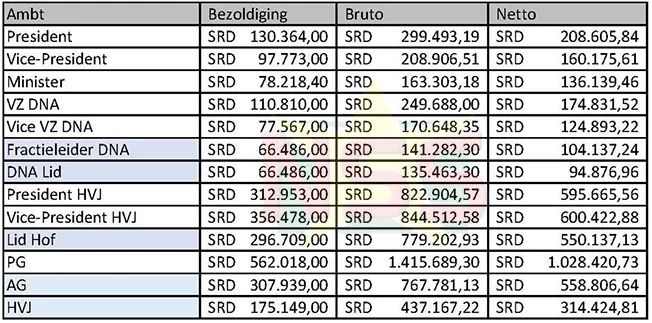
    A controversial judicial compensation law in Suriname has triggered alarm over its substantial fiscal implications, according to administrative expert Eugène van der San. The Judicial Position Act, intended to regulate the financial status of the judiciary as mandated by the Constitution since 1975, has instead created unprecedented salary structures that threaten state finances.

    Van der San’s detailed analysis reveals that the legislation has effectively merged both sitting magistrates (judges) and standing magistrates (prosecutors) under a single compensation regime with exceptionally high income percentages. Most notably, the Prosecutor General now receives approximately SRD 1 million net monthly income – a figure that far exceeds previous compensation norms.

    The critical shift occurred when the new law abandoned the traditional practice of linking judicial salaries to percentages of presidential compensation (typically 70-80%) and implemented a system allowing incomes to reach 95% of presidential salary, excluding allowances. The most concerning aspect, according to Van der San, is the allowance regime that permits supplementary payments reaching 150-170% of base salary, all tax-free.

    This creates an anomalous situation where tax-free allowances exceed taxable base salaries, violating fundamental principles of sound governance. The arrangement establishes long-term budgetary obligations without consideration for the country’s economic capacity, as the law automatically applies to both judicial branches including prosecutors and the Prosecutor General.

    Van der San emphasizes that the timing of implementation – after elections – obscured the financial impact during legislative consideration. He characterizes the situation as a ‘financial time bomb’ beneath the national budget and calls for immediate correction by President Jennifer Simons. His proposed solution involves repealing the current law and creating separate regulatory frameworks: one constitutional arrangement for sitting magistrates and a more modest, separate system for standing magistrates.

  • Defence Force honors non-commissioned officers at annual promotion ceremony

    Defence Force honors non-commissioned officers at annual promotion ceremony

    The national Defense Force has formally recognized the exceptional service and leadership capabilities of its non-commissioned officers during its annual promotion ceremony. The prestigious event, held at a military base, highlighted the critical role these professionals play in maintaining operational effectiveness and mentoring junior personnel.

    Military leadership presided over the ceremony, emphasizing that promotions within the NCO corps represent more than just rank advancement. Each elevation signifies demonstrated expertise, proven leadership under pressure, and unwavering commitment to military values. The ceremony incorporated traditional military customs, including the pinning of new insignia and ceremonial first salutes, honoring both the individuals and the institution they serve.

    This year’s promotion cohort included specialists from diverse operational domains including infantry, logistics, communications, and engineering. Defense officials noted that the selection process involved rigorous evaluation of technical proficiency, decision-making capabilities, and leadership potential in challenging environments.

    The annual ceremony serves multiple strategic purposes: rewarding merit, reinforcing institutional values, and showcasing career advancement opportunities within the military structure. Defense analysts observe that strong NCO corps development directly correlates with enhanced unit cohesion and operational readiness, making these ceremonies significant for both morale and military effectiveness.

  • Three Antiguans Chosen for U.S. Embassy-Sponsored Leadership Programme

    Three Antiguans Chosen for U.S. Embassy-Sponsored Leadership Programme

    Three distinguished young entrepreneurs from Antigua and Barbuda have been selected to join the 2026 cohort of the Young Leaders of the Americas Initiative (YLAI) Fellowship Program, as officially announced by the U.S. Embassy Bridgetown. The selected representatives include Raena Bird of Chattabox Co., Joshuanette Francis of Good Humans 268 Inc., and Canice James of Cyber Hawk Solutions.

    This competitive program assembles over 250 emerging leaders from across the Western Hemisphere, creating transformative opportunities through professional placements with U.S. host organizations and businesses. The fellowship is strategically designed to enhance entrepreneurial capabilities, cultivate advanced leadership competencies, and amplify community impact through practical experience and mentorship.

    According to the U.S. Embassy, the YLAI Fellowship provides participants with critical tools, expansive professional networks, and hands-on experience necessary to drive meaningful socioeconomic change in their home communities. A core objective of the initiative is to establish enduring people-to-people connections and sustainable business relationships throughout the Americas.

    The inclusion of Antigua and Barbuda in this year’s cohort positions the nation’s representatives within a diverse regional network focused on innovation, social impact, and economic development. This selection recognizes the growing entrepreneurial talent within the Caribbean nation and provides a platform for cross-border collaboration and knowledge exchange that extends beyond the program’s duration.

  • Elkhorn Marine Conservancy Announces Rebrand to AnuBlue

    Elkhorn Marine Conservancy Announces Rebrand to AnuBlue

    The Caribbean marine conservation landscape has witnessed a significant transformation as Elkhorn Marine Conservation (EMC) officially rebrands itself as AnuBlue, signaling a strategic expansion of its environmental mission. This nomenclature evolution embodies both geographical significance and aspirational purpose—’Anu’ pays homage to Antiguan heritage while ‘Blue’ represents the marine ecosystems central to their work. The phonetic interpretation as ‘a new blue’ poetically captures the organization’s revitalization vision for Antigua and Barbuda’s seas.

    Since its 2021 inception with a single coral nursery near Green Island, the organization has matured into a comprehensive ocean restoration initiative. The newly christened AnuBlue now operates through three synergistic pillars: restoration, research, and community engagement, creating a holistic approach to marine conservation.

    The restoration program demonstrates scientific sophistication by propagating 13 endangered coral species across four nurseries strategically located at Jumby Bay, Cades Reef, and dual sites around Green Island. The organization selectively cultivates coral fragments from parent colonies exhibiting proven heat and disease resistance. These fragments undergo careful cultivation before being transplanted to degraded reef systems. The strategic placement of genetically diverse corals in proximate locations encourages natural gamete exchange during spawning events, fostering genetic diversity that enhances climate resilience and disease resistance.

    AnuBlue’s scientific methodology incorporates cutting-edge research specifically designed for Antigua and Barbuda’s unique marine conditions. The organization conducts rigorous water quality monitoring, investigates the ecological impact of sponges and herbivorous species like crabs and sea urchins on reef restoration, and implements advanced tracking systems including whale acoustic monitoring and shark tagging. Their research contributions have gained international recognition through recent publication in peer-reviewed scientific journals.

    Community integration forms the third crucial component of AnuBlue’s mission. The organization maintains strong local partnerships, employing fisherfolk and scuba divers to ensure nursery sustainability. Recognizing the complex cultural relationship between island residents and the ocean, AnuBlue implements educational initiatives including swimming lessons, summer camps, and coastal awareness programs designed to build marine confidence and foster environmental stewardship.

    Christal Clashing, Director of Advancement and Community Engagement, emphasized: ‘Our new identity reflects both our evolution and ambition. AnuBlue represents our conviction that meaningful restoration requires integrating education, research, and community collaboration to achieve lasting impact.’ This rebranding signifies a deepened commitment to not only rejuvenating coral ecosystems but also strengthening the human-ocean connection, ensuring the long-term vitality of Antigua and Barbuda’s marine heritage for future generations.

  • COMMENTARY: How Dominica’s small businesses are—or aren’t—harnessing renewable energy

    COMMENTARY: How Dominica’s small businesses are—or aren’t—harnessing renewable energy

    Nestled in the heart of the Lesser Antilles, the Commonwealth of Dominica lives up to its ‘Nature Island’ moniker. This volcanic territory, blessed with near-year-round sunshine, abundant rainfall, and powerful rivers, possesses a natural profile almost perfectly suited for renewable energy generation. For decades, this potential simmered quietly, with early adoption seen in household solar water heaters—objects of childhood curiosity for many Dominicans that symbolized a nascent green consciousness.

    The narrative of energy in Dominica is now rapidly evolving, moving from individual households to the core of its small business sector. A cohort of local manufacturers, celebrated for their regional award-winning products, is grappling with the dual pressures of expansion and escalating energy costs. These enterprises, including producers of tropical snacks, pepper sauce, rum, and natural cosmetics, form the backbone of a local economy formalized by the 2018 Small and Micro Business Act.

    Despite operating on a modest scale with fluctuating energy demands, growth is driving a critical reassessment of power sources. Interviews with business owners reveal a common trajectory: as production capacity expands with the addition of mixers, blenders, and refrigeration units, electricity consumption and costs rise in lockstep. This is not a sign of inefficiency but a direct correlation to increased output and operational frequency.

    Currently, most rely on the national grid, operated by the Dominica Electricity Services (DOMLEC), which has harnessed hydro power since 1952. However, one standout example points to a viable alternative. Sea Cliff Eco Cottages and its on-site gin distillery operate entirely on solar energy, supported by battery storage. The distillery recently invested in a larger solar array to accommodate its growing energy needs, demonstrating a proactive commitment to energy independence.

    The high initial investment for renewable technology remains a significant barrier for many. Yet, the long-term calculus is shifting. Businesses like Big G’s Pepper Pot view solar adoption as an essential cost-saving measure for future growth, stating, ‘Where there is growth, there is going to be expenses, and so the move towards renewable solar energy is to save even if it is a dollar.’ Others, like Bonnit Enterprises, are looking beyond solar to future opportunities in biogas, utilizing by-products from their food manufacturing.

    The island’s looming energy solution casts a long shadow over these decisions: geothermal power. With a plant in the volcanic community of Laudat expected to be commissioned in 2026, a cautious optimism prevails. Business owners express hope that geothermal energy will deliver not only cleaner power but also the reliability and lower costs needed for competitiveness. For manufacturers like Jaydees Naturals, this promises an end to the disruptive outages and diesel shortages that crippled operations in 2022-2023, allowing for smoother production and reduced operational stress.

    The journey from the solar water heater on a neighbor’s roof to a future-powered geothermal grid encapsulates Dominica’s energy transition. The ambition and innovation of its small business owners are clear. The extent to which the nation’s renewable energy infrastructure can keep pace with their growing demands will ultimately determine the sustainability and resilience of this vital economic sector.

  • Miami-bound AA flight makes safe landing at GAIA

    Miami-bound AA flight makes safe landing at GAIA

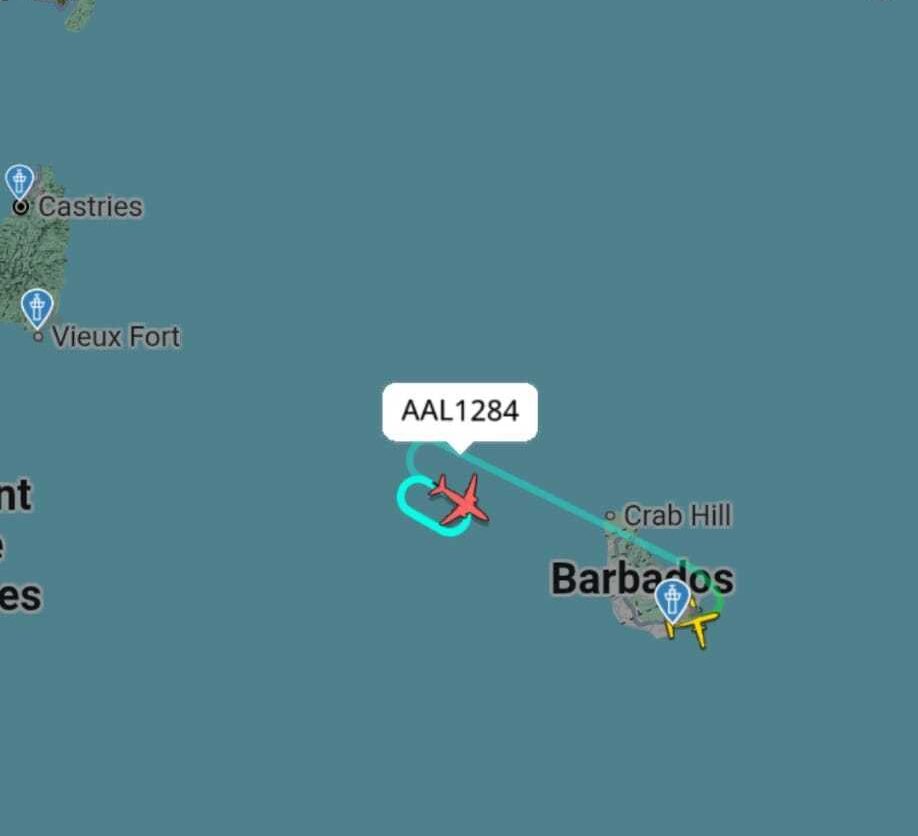
    An American Airlines aircraft operating as Flight AA497 executed an unplanned return to Grantley Adams International Airport in Barbados on Tuesday morning after pilots identified a potential landing gear malfunction shortly after takeoff. The Boeing 737-800, en route to Miami, initiated a precautionary protocol and performed a series of holding patterns over the Caribbean Sea to assess the situation and burn fuel before making its return approach. Aviation authorities confirmed the jet touched down safely on the runway with no injuries reported among passengers or crew. Emergency services were deployed as a standard safety measure, though their assistance was not required. The incident has prompted an internal investigation by the airline, with maintenance crews conducting thorough inspections of the aircraft’s landing system. American Airlines has begun reaccommodating affected travelers on alternative flights while expressing regret for the travel disruption. The event highlights the aviation industry’s stringent safety-first procedures when addressing potential mechanical irregularities during flight operations.