博客

  • RACE DAY REVIEW FOR SATURDAY, MARCH 28, 2026

    RACE DAY REVIEW FOR SATURDAY, MARCH 28, 2026

    A dynamic display of horsemanship unfolded across a ten-race card, highlighted by multiple riding triumphs and a dominant stable performance. Champion jockey Dane Dawkins and top rider Tevin Foster each secured a riding triple, while conditioner Peter-John Parsard saddled a stable triple in a showcase of racing excellence.

    The day’s action commenced with US-bred Olivia D’Oro (7-5), expertly piloted by Dawkins, securing a hard-fought victory in the seven-furlong maiden event. The three-year-old filly repelled a sustained challenge from the heavily favored Unbelievable Power to win by one and a half lengths, initiating a successful day for both jockey and trainer.

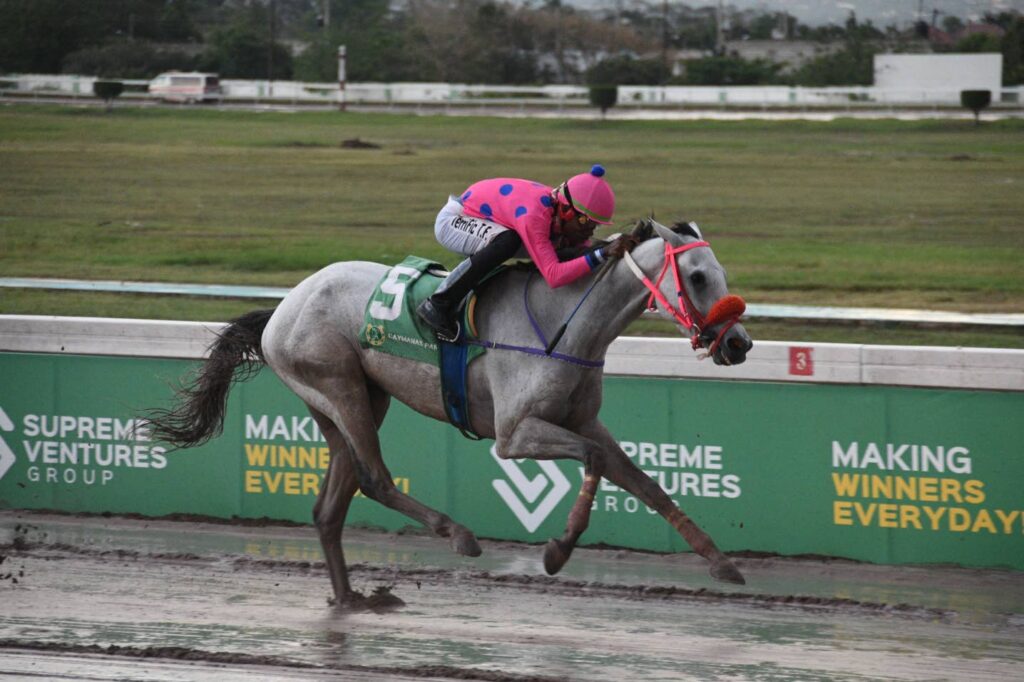
    Dawkins’ prowess was further demonstrated aboard Emperorofthecats (5-1), who triumphed under challenging conditions of torrential rain and limited visibility in the seventh event. The veteran campaigner’s victory marked his 19th career win from 41 appearances. The jockey sealed his impressive four-timer in the featured Gregory Park Sprint, guiding Money Market (9-2) to a near three-length victory over speedy front-runner She’s That Girl.

    Tevin Foster, narrowly missing the 2024 championship by just one winner, answered with a triple of his own. He opened his account with certainty Sudden Flight (3-5), an eight-year-old gelding who dominated the five-furlong straight gallop by over five lengths. Foster continued his success with Princess Fianie (9-5), securing a nose victory in race five, and closed his triple with maiden colt Greyt Magnum (7-1), who won comfortably by four lengths.

    The training accolades were distributed among several conditioners. Ray Phillips earned the Training Feat Award for Greyt Magnum’s impressive development, while the Best Winning Gallop was executed by Adira, with Foster receiving the Jockeyship Award for his guidance of the five-year-old mare to her second career victory.


  • Frazsiers Whip hammer Mile Gully in JWPL

    Frazsiers Whip hammer Mile Gully in JWPL

    The Jamaica Women’s Premier League witnessed a display of sheer dominance as three-time defending champions Frazsiers Whip maintained their flawless start to the season with an emphatic 11-0 victory over Mile Gully FC at Anthony Spaulding Complex on Saturday.

    The champions demonstrated offensive brilliance with three players achieving hat-tricks, extending their remarkable shutout streak against the Manchester club to three consecutive matches dating back to last season. Shanel Spence completed her triple by halftime, while Christina Salmon and Nevillegail Able secured their trifectas during second-half stoppage time. Carlletia Savizon contributed a brace after the interval.

    In the day’s second fixture, Arnett Gardens saw their perfect record vanish as Cavalier FC secured a 1-1 draw. Shikira Douglas put Arnett ahead within two minutes of kickoff, but Brooklyn Harmony Grant’s 85th-minute equalizer earned Cavalier a hard-fought point.

    Meanwhile, Carder Park hosted a thrilling six-goal spectacle as WiFi United and Real Mona battled to a 3-3 stalemate. Olivia Ashbourne’s double performance highlighted the back-and-forth encounter that saw multiple lead changes before Jelissa Coke’s late intervention ensured shared points.

    Elsewhere, Venicia Reid’s hat-trick propelled Los Perfectos to their third consecutive victory with a 3-0 clean sheet against struggling Real MoBay AFC at Jarrett Park. Federal United edged Springers United 3-2 in a closely contested match at Irwin High School, where a decisive own goal proved the difference maker.

    The scheduled fixture between UWI Women’s and Proven Girls was postponed due to severe weather conditions affecting Kingston and St. Andrew.

  • The $1.6-b match

    The $1.6-b match

    Jamaica’s national football team, the Reggae Boyz, approach a watershed moment in their sporting history as they prepare to face DR Congo in a decisive World Cup qualifying playoff on March 31. The match represents more than just athletic competition—it carries profound financial implications that could transform Jamaican football for years to come.

    Victory would secure Jamaica’s first World Cup appearance since 1998 while triggering a minimum guaranteed payout of US$10.5 million (approximately J$1.6 billion) from FIFA. This substantial financial injection comes through participation fees, preparation funding, and prize money allocated to all teams qualifying for the expanded 2026 World Cup tournament.

    The financial windfall would provide critical relief to the Jamaica Football Federation (JFF), which has historically operated under significant funding constraints. The federation has faced challenges including delayed payments to staff and players, limited infrastructure investment, and constrained resources for development programs. The World Cup qualification funds could stabilize operations, settle outstanding obligations, and create opportunities for reinvestment in player development, grassroots initiatives, and facility upgrades.

    Beyond immediate financial benefits, qualification would elevate Jamaica’s standing in global football, potentially attracting increased commercial sponsorship and broadcasting revenue. The heightened profile could also boost tourism and national pride while inspiring a new generation of Jamaican football talent.

    The match itself presents a compelling contrast in football narratives. Jamaica advanced through a tense semi-final victory against New Caledonia, secured by an early goal and resilient defensive performance. DR Congo arrived via Africa’s notoriously competitive qualifying circuit, navigating multiple high-pressure matches against established football nations.

    Both teams seek to end decades-long World Cup absences, creating an emotional backdrop to what promises to be a fiercely contested playoff. For Jamaica, the opportunity represents both sporting achievement and financial transformation—a chance to rewrite their football future in ninety minutes of play.

  • COMMENTARY: Renewal, a new Caribbean tourism concept

    COMMENTARY: Renewal, a new Caribbean tourism concept

    The Caribbean is positioning itself to establish a groundbreaking tourism classification centered on ‘Renewal’—a concept that transcends conventional luxury travel by offering restorative experiences grounded in indigenous wisdom and scientific validation. This innovative approach aims to transform the region from a mere vacation destination into a global hub for holistic healing and cultural authenticity.

    At the core of this initiative lies the strategic selection of a pilot location that must embody medical credibility, cultural resonance, logistical feasibility, and symbolic significance. This prototype will serve as a replicable model for other islands, creating an entirely new wellness category that leverages the Caribbean’s unique heritage rather than imitating existing spa concepts.

    The conceptual framework draws deeply from Taíno civilization principles, particularly the complementary philosophies of Bohío (representing rootedness and community) and Cohoba (symbolizing transformation and ancestral connection). This indigenous foundation integrates with Afro-Caribbean herbal knowledge and modern integrative medicine, creating a distinctive ecosystem that bridges ancient traditions with evidence-based wellness practices.

    Unlike manufactured tourism experiences, this Renewal model builds upon the Caribbean’s millennia-old history of healing traditions, offering what industry analysts describe as ‘public luxury’—a rare combination of medical credibility and nature-rooted healing that could function as a GDP multiplier for small island economies. The approach positions the region not as an escape destination but as a transformative healing environment where restoration becomes the new status symbol.

    The development requires careful cultural stewardship, ensuring that Taíno practices are incorporated respectfully while creating authentic experiences based on holistic worldviews that connect physical, emotional, and spiritual wellbeing. This cultural elevation provides a powerful narrative differentiation from the standardized wellness offerings found in other global destinations.

    Industry observers note that successful implementation could establish the Caribbean as the world’s undisputed capital of human renewal—offering value through confident authenticity rather than promotional exaggeration, and creating a tourism classification that other regions cannot easily replicate.

  • Antigua Targets  Reduction In $175M Meat Import Bill with New Abattoirs

    Antigua Targets Reduction In $175M Meat Import Bill with New Abattoirs

    In a strategic move to curb its substantial meat import expenditures, the Antiguan government has launched an ambitious initiative to construct two new state-of-the-art abattoirs. Agriculture Minister Anthony Smith Jr. confirmed that land preparation is already underway at a 12-acre site in Betty’s Hope, marking the first phase of this transformative agricultural project.

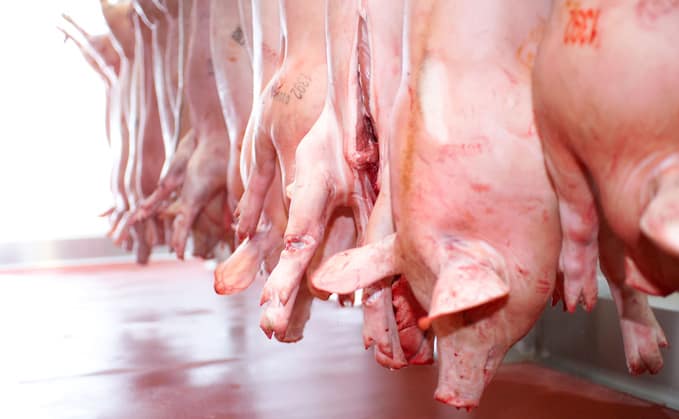
    The comprehensive plan involves developing separate processing facilities—one dedicated exclusively to poultry and another designed for pork and small ruminants. This infrastructure development directly addresses the nation’s critical processing bottleneck. While Antigua maintains a solid foundation in livestock production, its inability to process meats at commercial scale has historically forced heavy reliance on foreign imports, currently totaling approximately $175 million annually.

    Minister Smith identified chicken and pork as the primary contributors to this significant import bill. “Our fundamental challenge lies in lacking large-scale processing capabilities for pork and other meats,” Smith stated, emphasizing how this constraint has limited sectoral growth despite existing production potential.

    The new facilities will empower local farmers to expand operations by providing essential processing infrastructure. Smith highlighted the project’s broader economic impact: “With these abattoirs operational, we’ll achieve significant scaling capacity and substantially increase our large-scale domestic meat processing capabilities.”

    Current progress includes complete site clearance and procurement of specialized equipment already en route to Antigua. However, officials acknowledge that foundation work remains ongoing, with Minister Smith indicating that operational abattoirs are still “several months away” from completion. This project represents a crucial step toward agricultural self-sufficiency and reduced import dependency for the nation.

  • DLP unveils new shadow ministry as part of revival strategy

    DLP unveils new shadow ministry as part of revival strategy

    Following three successive electoral defeats, Barbados’ Democratic Labour Party (DLP) has initiated a comprehensive organizational overhaul aimed at restoring public confidence and political relevance. Interim President Stephen Lashley, addressing media representatives at the party’s headquarters, outlined a strategic roadmap centered on internal restructuring and enhanced public engagement.

    Lashley emphasized the party’s commitment to fundamental reassessment, stating, ‘The Democratic Labour Party has been intensely focused on re-examining its foundational principles, core purpose, and contemporary relevance. We recognize the necessity of attentively listening to Barbadian citizens to understand their expectations for the party’s transformation.’

    The acting president acknowledged the electorate’s clear message, noting, ‘Barbadians have unequivocally expressed their desire for a focused, united, and purpose-driven opposition. We intend to respond to this mandate by undertaking extensive grassroots reconnection and organizational strengthening across all constituency branches.’

    Concurrent with this renewal initiative, the party announced its newly constituted shadow ministry following executive council deliberations on March 24. Senator Ryan Walters, appointed as chairman of spokespersons, revealed the portfolio allocations: Corey Greenidge (Legal Affairs and Criminal Justice), Pedro Greaves (Sports and Culture), Rasheed Belgrave (Tourism and International Transport), Ian Griffith (Housing and Works), Amoy Gilding-Bourne (Agriculture and Fisheries), Quincy Jones (Education and Trade), Jason Phillips (Small Business and Entrepreneurship), Felicia Dujon (Health and Elder Affairs), Janine Butcher (Youth and Community Empowerment), with Walters assuming responsibility for Finance and Economic Affairs.

    Walters characterized the appointments as preliminary, indicating plans for expanded representation: ‘Additional voices will be incorporated to enhance our communicative effectiveness. Our fundamental responsibility involves rigorous scrutiny, policy solution development, and maintaining governance accountability while ensuring continuous public representation.’

    The party’s reconfigured leadership structure features Stephen Lashley as Acting President, supported by four vice presidents—Donville Inniss, Quincy Jones, Felicia Dujon, and Paul Gibson—with Pedro Shepherd as General Secretary and Gary Graham as Deputy General Secretary-Treasurer.

    Lashley concluded by emphasizing the opposition’s renewed dedication to transparent stewardship: ‘Our commitment involves demonstrating not only operational capability but also unwavering unity in internal management. We will prioritize Barbadian voices in policy reformulation while maintaining honest self-assessment essential for effective governance oversight.’

  • LVV werkt aan regulering zaaizaad voor rijstproductie

    LVV werkt aan regulering zaaizaad voor rijstproductie

    The Surinamese Ministry of Agriculture, Animal Husbandry and Fisheries (LVV) has initiated a comprehensive program to regulate rice seed production and combat illegal seed imports that have plagued the country’s agricultural sector. Minister Mike Noersalim announced the government’s plan to strengthen the Anne van Dijk Rice Research Center Nickerie (Adron) and potentially amend existing seed legislation this year.

    The developments emerged during high-level consultations between LVV officials and the Association of Interest Groups of Nickerie Rice Growers (VBPN). Minister Noersalim recalled that rice mill operators had previously indicated they would offer premium prices for paddy rice of Adron quality. “If the market pays more for paddy derived from Adron seeds, shouldn’t farmers prioritize planting Adron-certified seeds? While yields might be slightly lower compared to non-Adron seeds, we must evaluate whether the higher market price compensates for this difference,” the minister stated.

    Farmers raised significant concerns during the meeting, revealing that Adron currently lacks adequate seed supplies and suitable rice varieties for cultivation. The research institute has suffered from chronic underinvestment in recent years, severely hampering its capacity to develop new seed varieties. Rice expert Nicholaas Pinas proposed sending specialists abroad for advanced training if domestic expertise remains insufficient.

    VBPN President Hansraj Jagmohansingh requested that Adron organize informational sessions to keep rice farmers updated on current developments. He further recommended that the research center conduct more extensive studies and provide growers with essential information about optimal rice varieties for cultivation. Notably, it was revealed that during the previous administration, Adron received government funding to produce seeds for only three rice mill operators.

    The seed regulation initiative and Adron revitalization form part of a broader package of measures designed to create structural solutions for the rice sector’s challenges. “We need a fundamental approach. While short-term solutions are necessary, we must also consider medium and long-term strategies. This represents one of the fundamental long-term solutions,” emphasized Minister Noersalim.

  • Saint Lucia coach takes heart after FIFA Series loss to Azerbaijan

    Saint Lucia coach takes heart after FIFA Series loss to Azerbaijan

    Despite suffering a 6-1 defeat against Azerbaijan in Friday’s FIFA Series 2026 match, Saint Lucia’s national football team head coach Stern John maintains an optimistic perspective on his young squad’s developmental journey. The encounter at Mehdi Huseynzade Stadium in Sumqayit marked Azerbaijan’s largest-ever victory while providing crucial international exposure for Saint Lucia’s emerging talents.

    The Piton Boyz fielded an exceptionally youthful starting lineup featuring six players under 23 years old, including three making their senior international debuts. Colorado Rapids forward Donavan ‘Gusto’ Phillip capitalized on a second-half penalty opportunity, preventing a complete shutout against the more experienced European side that typically competes against nations like France and Ukraine.

    Coach John emphasized the educational value of competing against superior opposition: ‘Azerbaijan demonstrated their quality across the full 90 minutes, but these challenging matches are essential for our growth as a team and program.’ He particularly highlighted Phillip’s composure in converting the penalty under pressure as indicative of the player’s developing character.

    The squad composition underscored Saint Lucia’s commitment to youth development, with eight starters originating from domestic leagues in Saint Lucia or Jamaica. The team further integrated five additional semi-professional league players as substitutes, including 17-year-old Shevon Byron and 21-year-old Shaquan ‘Ants’ Nelson, who both received their first international caps.

    John praised the newcomers’ mentality: ‘The desire shown by Byron and Ants, who embraced the challenge against this level of opposition, exemplifies the attitude we want to see as we build for the future.’ The coach confirmed the team would analyze the performance, extract valuable lessons, and continue their developmental process ahead of future competitions.

  • CDB welcomes GCF approval of  major climate resilience investment for  the Bahamas’ water sector

    CDB welcomes GCF approval of  major climate resilience investment for  the Bahamas’ water sector

    BRIDGETOWN, Barbados – The Bahamas has received landmark approval for a comprehensive water security initiative that will transform the nation’s climate resilience capabilities. The Green Climate Fund (GCF) has sanctioned the Climate Resilience of the Water Sector in The Bahamas project, representing a strategic partnership between the Caribbean Development Bank (CDB), the Bahamian government, and the Water and Sewerage Corporation (WSC).

    With total funding of $65.2 million, the project combines a GCF grant of $37.506 million, a GCF concessional loan of $12.546 million, a CDB loan of $12.546 million, and a $2.602 million in-kind contribution from WSC. This financial package will address the archipelago’s escalating vulnerability to climate-related water challenges through infrastructure modernization and governance strengthening.

    As one of the world’s most climate-sensitive Small Island Developing States, The Bahamas faces existential threats to its freshwater resources. With 83% of its landmass lying less than five meters above sea level, the nation contends with hurricane damage, seven-meter storm surges, prolonged droughts, and saltwater intrusion into its limited groundwater reserves. The country’s heavy reliance on expensive desalination has further strained utility operations amid frequent service disruptions.

    The initiative will deploy comprehensive interventions across six islands: New Providence, South Andros, Mangrove Cay, North and Central Andros, Abaco, and Acklins. Key components include climate-resilient wellfields, storm-proof pumping stations, expanded water storage capacity, enhanced system connectivity, and targeted water loss reduction measures.

    L. O’Reilly Lewis, CDB’s Director of Projects, described the investment as “a transformational opportunity for The Bahamas that combines robust climate-resilient infrastructure with strengthened governance and data-driven management to safeguard water security for generations to come.”

    Kristin Lang, Director of GCF’s Latin America and Caribbean Department, emphasized that this marks GCF’s first single-country project in The Bahamas, demonstrating commitment to “strengthening country-owned solutions where climate risks are highest.” The project aligns directly with CDB’s Strategic Plan 2026-2035, prioritizing climate action and resilient infrastructure as central to regional transformation.

    Upon completion, the initiative will directly benefit over 215,000 residents while bolstering national climate resilience for an additional 199,000 people, creating a more sustainable water future for the vulnerable island nation.

  • Subsidised Irrigation Programme to Cut Farmers’ Costs

    Subsidised Irrigation Programme to Cut Farmers’ Costs

    The government of Antigua and Barbuda has announced a major agricultural initiative designed to enhance water efficiency and alleviate financial pressures on local farmers. Agriculture Minister Anthony Smith Jr. revealed plans for a subsidized drip irrigation program developed in collaboration with the Ministry of Environment.

    This program will facilitate the importation of advanced irrigation systems at significantly reduced costs. These systems will then be distributed to farmers through the CMC (Central Marketing Corporation) at heavily subsidized prices. Minister Smith emphasized the affordability, stating the equipment would be available to farmers ‘for a very, very, very reduced cost.’

    The initiative is a direct response to persistent challenges facing the nation’s agricultural sector, particularly prolonged dry conditions and the exorbitant expense associated with traditional water management. Minister Smith articulated that this intervention is crucial for ‘reducing the cost of the irrigation system going forward’ and helping farmers adapt to environmental pressures.

    Operational rollout is imminent, with the first supplies anticipated to arrive within the coming weeks. Minister Smith projected that the program should commence ‘within the next month or so.’

    This irrigation push is a key component of a broader governmental strategy to bolster national food security. The overarching goals are to increase agricultural productivity, reduce operational input costs for farmers, and build resilience against increasingly unpredictable and harsh weather patterns.