博客

  • President: Laat het Jaar van het Vuurpaard ons inspireren tot krachtig leiderschap

    President: Laat het Jaar van het Vuurpaard ons inspireren tot krachtig leiderschap

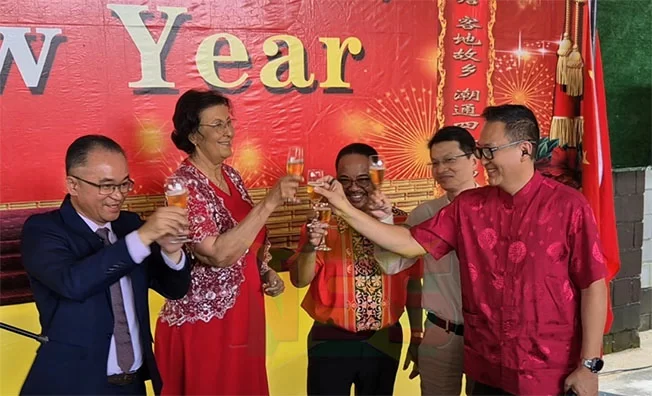
    Surinamese President Jennifer Simons delivered an inspirational address during the Chinese New Year celebrations, emphasizing how the symbolic attributes of the Fire Horse should guide national development efforts. Speaking at the Chung Fa Foei Kon socio-cultural center, where she was accompanied by Vice President Gregory Rusland, President Simons articulated how the Fire Horse’s characteristics of strength, courage, perseverance, and progressiveness could inspire Suriname’s continued nation-building.

    The presidential attendance marked a significant honor for the Chinese community, as noted by association chairman Liu Jianming, who interpreted their presence as demonstrating the high value placed on Chinese-Surinamese relations and underscoring the profound friendship between both peoples.

    Chinese Ambassador Lin Ji highlighted the historical contributions of Chinese Surinamese, noting their 170-year legacy of fundamental contributions to socioeconomic progress and nation-building. Ambassador Ji emphasized that Chinese Surinamese have become ‘integral and indispensable’ to society while looking forward to the 50th anniversary of diplomatic relations between Suriname and China on May 28th this year.

    Rudie Chin Jen Sem, vice-chairman of Chung Fa Foei Kon, expressed the community’s high expectations for the Fire Horse year and their commitment to realizing these aspirations. He simultaneously called for governmental vigor in addressing security and economic challenges.

    President Simons drew powerful parallels between the Fire Horse’s symbolism and Suriname’s national journey: ‘A horse doesn’t stand still—it moves, pulls, and carries. Even in difficult circumstances. So too is Suriname: a country that despite challenges continues striving for development, justice, and prosperity.’

    The president concluded with a rallying cry for collective effort: ‘Let the Year of the Fire Horse inspire us to face the future with courage, to work harder, share more fairly, and coexist with greater confidence. Let us harness the fire’s energy and the horse’s strength to fortify our economy, provide perspective for youth, and create a more just society.’
  • WATCH: Shock and Uncertainty in St. Lucia After Deadly U.S. Strike in Caribbean Waters

    WATCH: Shock and Uncertainty in St. Lucia After Deadly U.S. Strike in Caribbean Waters

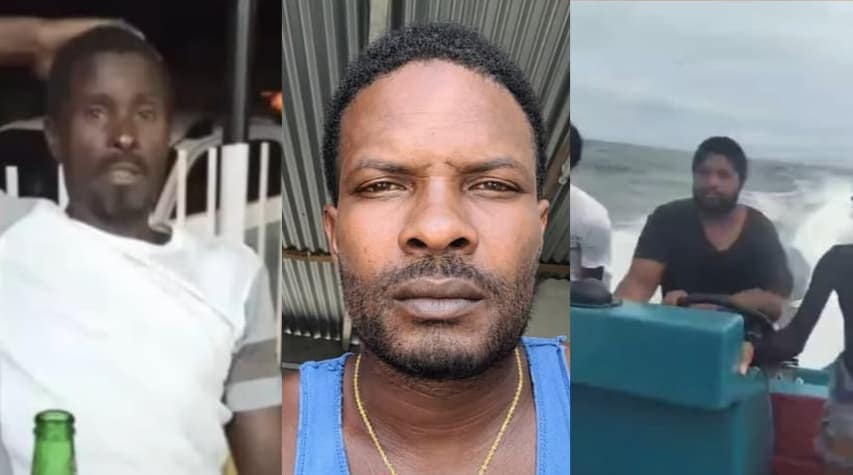
    A deadly maritime incident in the Eastern Caribbean has triggered diplomatic concerns and regional security alerts following a U.S. military operation that reportedly resulted in multiple fatalities. The explosion occurred approximately several miles offshore from Canouan Island in St. Vincent and the Grenadines territory at approximately 2:00 PM local time, with eyewitness fishermen reporting both visual and auditory confirmation of the detonation.

    Emerging reports from St. Lucia suggest potential tragic misinterpretation, as three St. Lucian nationals who had departed earlier this week for fishing operations remain unaccounted for. While photographic evidence published by the St. Vincent Times depicts the charred remnants of a vessel with its bow section partially submerged, no human remains were visibly documented at the scene.

    St. Lucian Prime Minister Philip J. Pierre has initiated formal inquiries through diplomatic and security channels, confirming the loss of lives while emphasizing the absence of official identification regarding the victims. “I can confirm that people lost their lives,” Pierre stated during his weekly pre-Cabinet briefing, “But I received no official notification on anything else. The issue is being investigated by the powers responsible for investigations.”

    The incident has raised substantive questions regarding maritime jurisdiction, operational protocols, and the legal justification for lethal force in international waters. According to U.S. officials, this event represents one of at least 36 vessels targeted in Caribbean and Eastern Pacific operations since September, resulting in over 120 fatalities as part of counter-narcotics initiatives aimed at disrupting drug trafficking routes to the United States.

    Prime Pierre has urged public restraint against speculation, emphasizing that “in matters affecting national security and regional stability, speculation has no place. Our approach is disciplined, fact-based, and guided by the singular priority of protecting the people and interests of St. Lucia.” The government of St. Vincent and the Grenadines has maintained official silence regarding the incident as bilateral investigations continue.

  • Disabled voters ‘dismayed’ by barriers at polls

    Disabled voters ‘dismayed’ by barriers at polls

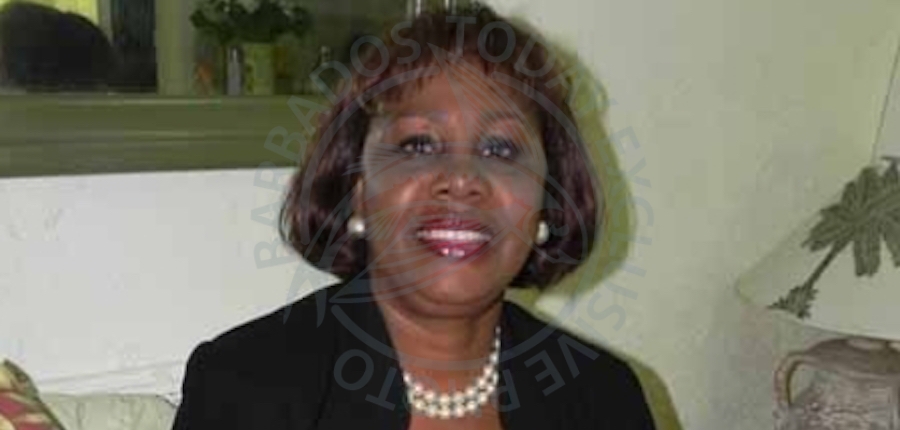
    The Barbados Council for the Disabled (BCD) has declared last week’s general election a missed opportunity for electoral accessibility, revealing that systemic voting barriers for disabled citizens remain fundamentally unaddressed despite repeated government assurances. According to BCD Operations Manager Roseanna Tudor, while no formal complaints were registered, the election perpetuated longstanding structural deficiencies that particularly disadvantage visually impaired voters and individuals with mobility challenges.

    The core issue, Tudor explained, revolves around the violation of ballot secrecy. Visually impaired voters must currently rely on companions to mark their ballots, fundamentally compromising their democratic right to a confidential vote. This arrangement creates a trust dilemma that may deter participation among those who cannot verify their vote was cast as intended.

    Tudor emphasized that accessibility solutions cannot be implemented reactively but must be integrated during initial election planning stages. The council has subsequently presented a comprehensive proposal to the Human Rights Commissioner containing four critical recommendations: establishing a formal post-election accessibility review involving disability stakeholders; creating clear accessibility guidelines with measurable standards for polling stations; implementing early consultation protocols with disability organizations before elections; and developing a national mechanism to systematically collect data on disabled voters’ experiences.

    Notably, the BCD questioned why early voting facilities currently available to essential services workers aren’t extended to disabled citizens, suggesting this would alleviate election day congestion and accessibility challenges. Tudor stressed the importance of centralized national data collection to properly assess participation barriers rather than relying on fragmented private surveys.

    The council expressed appreciation for former minister Kirk Humphrey’s collaborative approach to disability policy development while affirming their commitment to working with new minister Adrian Forde to translate policy advancements into tangible improvements. Additionally, the BCD urged parliamentarians to ensure year-round accessibility of constituency offices, having previously distributed guidance documents on interacting with persons with various disabilities.

  • Natural gas development offshore Guyana depends on “pace” of govt’s systems, rules- ExxonMobil

    Natural gas development offshore Guyana depends on “pace” of govt’s systems, rules- ExxonMobil

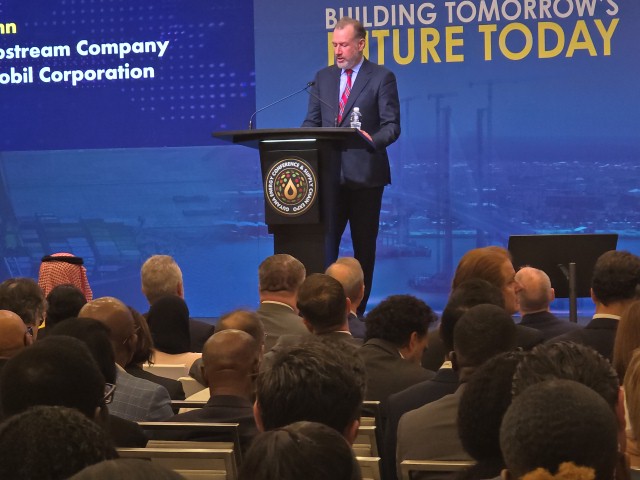
    ExxonMobil has articulated that the timeline for developing Guyana’s substantial offshore natural gas reserves is contingent upon the efficiency of the nation’s regulatory frameworks and bureaucratic processes. Dan Ammann, President of ExxonMobil Upstream Company and Vice President of ExxonMobil Corporation, delivered this message as a keynote at the 2026 Guyana Energy Conference.

    Ammann emphasized that the successful model employed for Guyana’s rapid oil development—characterized by transparent roles, shared standards, and disciplined execution—must be replicated and intensified for the more complex gas sector. He outlined that gas development necessitates an integrated value chain, including specialized infrastructure for processing, compression, pipelines, and power systems, which requires synchronization across upstream, midstream, and downstream sectors.

    The energy giant’s commitment is to move in ‘lockstep’ with the government. Ammann stated that ExxonMobil’s investment and project advancement are directly tied to the pace of governmental permitting, environmental reviews, market framework establishment, and final investment decisions. The readiness of the entire system, not just one company, dictates the development speed.

    As a specific example, Ammann highlighted the planned $6.8 billion Hammerhead project. Designed to produce up to 95 billion cubic feet of gas daily, it is conceived as an integrated project from inception, with a pipeline to shore. The gas allocation strategy is flexible: a portion will power the operational FPSO vessel, while the remainder will fuel the national gas-to-energy project, support future domestic industry, or be re-injected to optimize oil recovery, thereby maximizing overall resource value.

    Concurrently, Guyanese President Irfaan Ali announced progress on a separate, collaborative venture. He revealed that discussions with neighboring Suriname are ‘on target’ for a joint development of cross-border gas resources. This partnership aims to amalgamate gas supplies to transform a potential medium-scale project into a larger-scale initiative, enhancing economic benefits for both nations and the wider region. President Ali noted that investors are poised, awaiting these critical bilateral decisions.

  • Man shot dead in daylight attack at Chapman Lane

    Man shot dead in daylight attack at Chapman Lane

    A shocking daylight homicide unfolded near St Mary’s Primary School on Tuesday afternoon, marking a brazen act of violence that has rattled the inner-city community of St Michael, Barbados. According to official reports from the Barbados Police Service, law enforcement units were dispatched to Chapman Lane following emergency calls reporting gunfire at approximately 1:42 p.m.

    Acting Public Affairs and Communications Officer Inspector Ryan Brathwaite disclosed that police operators received initial alerts about the shooting, prompting an immediate multi-unit response. Subsequent communications directed officers to 3rd Avenue, Chapman Lane, where witnesses reported discovering a motionless body.

    Preliminary investigative findings indicate the victim was seated in a local gathering spot known as ‘the canal’ when two assailants approached him from both sides. The perpetrators opened fire with multiple rounds, causing the victim to flee before collapsing fatally on 3rd Avenue. Despite urgent medical response, a attending physician confirmed the victim’s death at the scene.

    Inspector Brathwaite has issued a public appeal for information regarding the shooting, emphasizing that ‘no information is too small’ for investigative purposes. Authorities have directed potential witnesses to contact Crime Stoppers Barbados at 1-800-8477, Police Emergency at 211, or the Criminal Investigations Department directly.

    The incident has provoked profound community distress, particularly given its proximity to school grounds during afternoon hours. A longtime resident who knew the victim described him as non-confrontational and expressed deep sorrow over the tragic nature of his death. ‘Any person that dies that way is very bad, especially for the family and friends,’ she stated, noting the widespread emotional impact on neighborhood residents and children.

  • CARICOM urged to aid Cuba amid deepening crisis

    CARICOM urged to aid Cuba amid deepening crisis

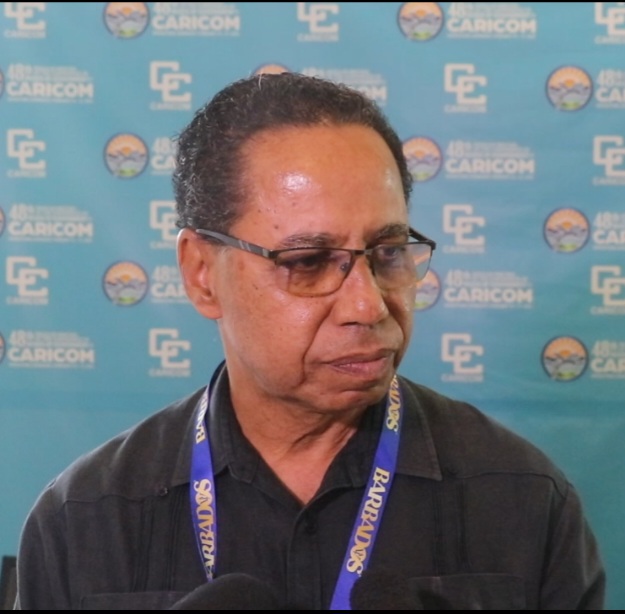
    Cuba’s escalating humanitarian crisis, characterized by severe fuel shortages, prolonged electricity blackouts, and critical shortages of food and medical supplies, has prompted a senior Caribbean diplomat to call for urgent regional action against the longstanding US embargo. Ambassador David Comissiong, Cuba’s envoy to the Caribbean Community (CARICOM), has issued a compelling appeal for collective response ahead of next week’s CARICOM summit in St Kitts and Nevis.

    The current crisis has intensified following recent US measures strengthening enforcement of the 64-year embargo, including an executive order imposing punitive tariffs on nations supplying oil to Cuba. These restrictions have exacerbated existing economic challenges including rampant inflation, limited foreign exchange reserves, and persistent pandemic-related disruptions.

    Social media has circulated disturbing images of extensive queues for basic necessities, shuttered essential services, and darkened neighborhoods across the island. International organizations including the United Nations have expressed grave concern about the mounting hardship, particularly affecting vulnerable populations such as elderly citizens and children.

    In his published letter to Barbados TODAY, Ambassador Comissiong highlighted emotional testimony from a Cuban woman describing the human toll: elderly patients dying prematurely due to blocked medication access, newborn infants endangered by non-functional incubators resulting from fuel shortages, and what she termed ‘terrorism through hunger.’

    The ambassador grounded his appeal in historical context, recalling how four CARICOM founding members—Barbados, Jamaica, Guyana, and Trinidad and Tobago—established diplomatic relations with Cuba in 1972 despite external pressure. This established what he described as a ‘special relationship’ evidenced by Cuba’s longstanding support in medicine, education, sports, arts, agriculture, and disaster response throughout the region.

    Dr. Ronnie Yearwood, international law lecturer at the University of the West Indies, analyzed the situation as part of broader geopolitical patterns, drawing parallels with US policy toward Venezuela. He warned that the combination of hyperinflation, fuel shortages, and electricity deficits indicates an escalating crisis potentially aimed at regime change. Dr. Yearwood criticized what he characterized as insufficient regional response while emphasizing CARICOM’s collective economic leverage as a significant trading partner with the United States.

    The diplomatic appeal calls for concrete contributions of food supplies, medical resources, and renewable energy equipment to alleviate Cuba’s critical situation, framing the response as both a humanitarian imperative and a test of regional sovereignty.

  • CARICOM leaders to tackle CSME, reparations, Haiti in Basseterre

    CARICOM leaders to tackle CSME, reparations, Haiti in Basseterre

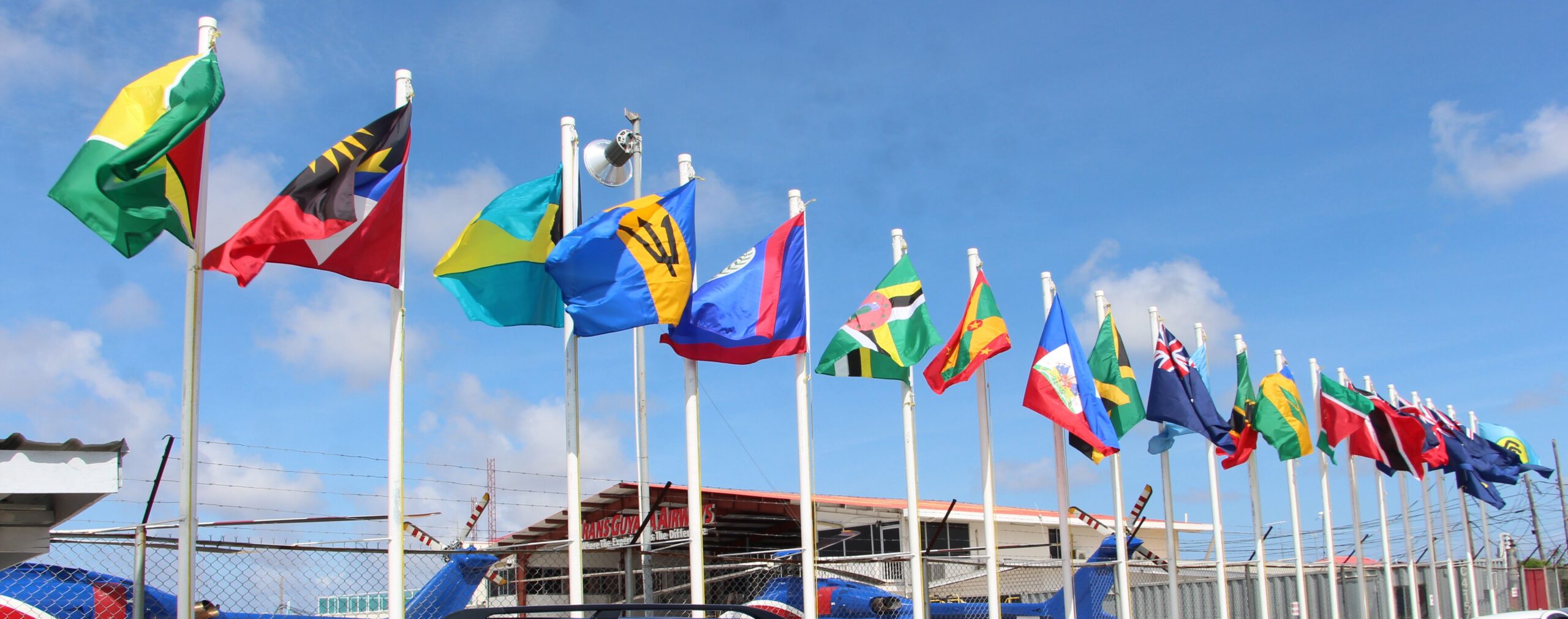
    Caribbean Community (CARICOM) leaders are gathering in Basseterre, St Kitts and Nevis for the bloc’s historic 50th regular summit, marking a pivotal moment for regional diplomacy. The high-level assembly will confront an ambitious agenda featuring critical discussions on economic integration, regional security challenges, and strategic international partnerships.

    The summit’s provisional agenda, released by the CARICOM Secretariat, highlights several transformative initiatives. Delegates will deliberate on expanding the CARICOM Single Market and Economy (CSME) by incorporating aviation personnel into the list of skilled professionals granted free movement rights. Proposed amendments to the Revised Treaty of Chaguaramas will also be examined, particularly concerning rules of origin that determine duty-free eligibility for regional products.

    International diplomacy takes center stage with scheduled high-profile engagements. Saudi Arabia’s Foreign Minister Prince Faisal bin Farhan Al Saud and Dr. George Elombi, President of the African Export-Import Bank (Afreximbank), will participate in strategic dialogues. The recently established CARICOM-Afreximbank office in Barbados signals deepening economic cooperation between the regions.

    Regional security concerns will be addressed behind closed doors, with particular focus on Haiti’s escalating crisis and transnational crime. The meeting will receive crucial updates from the High-Level Representative on Law and Criminal Justice while analyzing geopolitical shifts in international relations.

    Border disputes feature prominently on the agenda, including Belize’s ongoing tensions with Guatemala and Honduras, plus Guyana’s territorial confrontation with Venezuela. The summit will also consider Bermuda’s application for associate membership status within the bloc.

    Additional key discussions encompass CARICOM’s budgetary allocations and governance structures, progress on indigenizing the University of the West Indies, and implementation updates regarding freedom of movement between Barbados and three member states. The agenda further addresses regional transportation, industrial policy development, WTO trade negotiations, climate finance mechanisms, and food security initiatives through enhanced agri-food systems.

    The summit will finalize CARICOM’s participation in forthcoming international gatherings, including joint summits with Cuba, the Tenth Summit of the Americas, and the 28th Commonwealth Heads of Government Meeting scheduled for November in Antigua and Barbuda.

  • ‘Blue insurance’: Community-crafted climate insurance plan unveiled

    ‘Blue insurance’: Community-crafted climate insurance plan unveiled

    A groundbreaking initiative to provide affordable, customized climate disaster insurance for Barbados’s most vulnerable populations has reached a critical development phase. The Barbados Association of Non-Governmental Organisations (BANGO) has unveiled an insurer-backed prototype following years of extensive consultations across the Caribbean region.

    Funded by the German Federal Ministry for Economic Cooperation and Development (BMZ), this regional program has engaged five nations—Antigua and Barbuda, Barbados, Grenada, Jamaica, and Dominica—with Barbados now leading the final development of a ‘fit for purpose’ insurance product ready for local pilot testing.

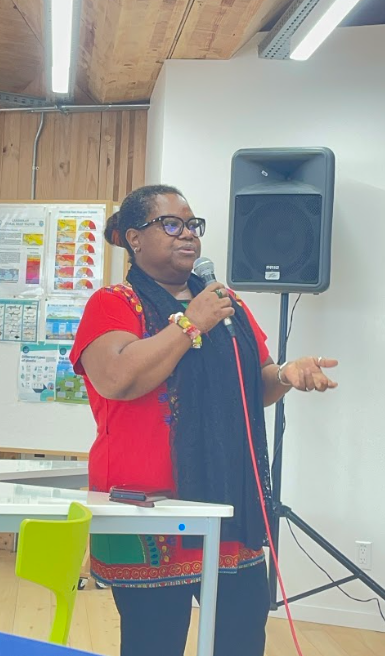
    Dr. Marcia Brandon, former BANGO Secretary-General and director at the Caribbean Centre of Excellence for Sustainable Livelihoods, emphasized the program’s focus on protecting those in the blue-green economy. ‘People living in vulnerable situations regarding climate disaster—those on coastlines, farmers, fisherfolk, and maritime workers—need instruments that help them recover quickly after disasters,’ she stated.

    The development process has been uniquely participatory, with target communities actively designing insurance concepts through iterative feedback cycles. ‘They have actually created these insurance products which would be fit for purpose to help them if a disaster came,’ Dr. Brandon explained, noting how different groups refined proposals based on their specific needs.

    The current prototype represents a significant milestone—an actual insurance company proposal that is both affordable and accessible. However, Dr. Brandon stressed this remains an evolving process: ‘When I say final product, I’m sure there will be further iterations because we want to meet people’s needs, not just make money for insurance companies.’

    Dr. Christopher Walton, current BANGO secretary-general, highlighted the importance of customizing coverage for Barbados-specific risks. ‘Insurance is needed by everyone, but this isn’t one-size-fits-all,’ he noted, explaining how risks vary dramatically even within small geographic areas—from flooding in St. James to wind damage in St. Joseph.

    The initiative faces significant cultural challenges, particularly overcoming complacency about climate threats. ‘It was years before Barbados saw a hurricane, so people got complacent,’ Dr. Walton observed. ‘Now that it’s really starting to pick up, we’re changing that mindset.’

    Accessibility remains another critical concern. Noting that Barbados ‘is paper-heavy,’ Dr. Walton emphasized the need for digital processes to accommodate busy workers like fisherfolk for whom ‘any time off their boat is less money they make.’

    The proposed solution features an innovative hybrid parametric insurance model explained by Olivia Chase, Senior Development Specialist at the Caribbean Policy Development Centre. This model would trigger payouts based on measurable parameters like wind speed or excess rainfall, verified by official bodies like the Barbados Met Services. Consultants have recommended a three-layer approach: parametric triggers for rapid payouts, an indemnity layer for operational expenses, and a savings component potentially managed through credit unions.

    The final consultation at the Oceana Innovation Hub underscored the connection between climate education and community resilience. Director Ché Greenidge noted the facility’s focus on climate education and ocean literacy, while emphasizing the importance of involving community organizations and fisherfolk in insurance discussions.

    This micro-level approach contrasts with macro tools like the Caribbean Catastrophe Risk Insurance Facility by focusing specifically on individual and community needs. The initiative aims to build resilience beyond physical infrastructure, providing liquidity to avoid debt or asset sales post-disaster while promoting awareness and equitable access.

    With the final engagement session complete, gathered feedback will now inform revisions before the pilot insurance product is officially launched, marking a significant step toward climate resilience for Barbados’s most vulnerable workers.

  • Where Does Belize Rank on the World’s Corruption List?

    Where Does Belize Rank on the World’s Corruption List?

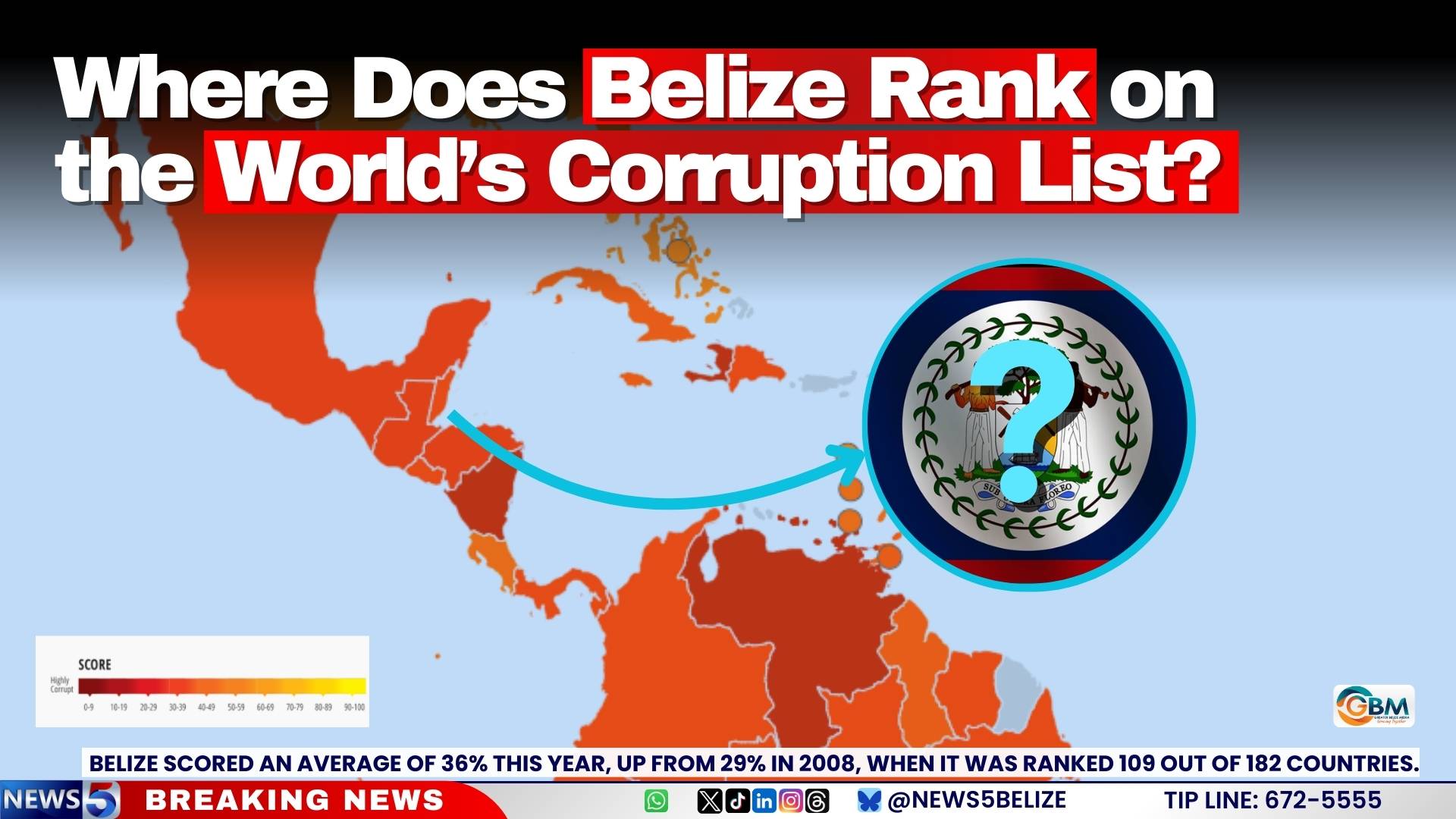
    After an 18-year absence from international corruption monitoring, Belize has regained its position on Transparency International’s influential Corruption Perceptions Index (CPI). The Central American nation’s reappearance on the 2026 index marks a significant development in global governance tracking, providing both encouraging signals and sobering realities about the country’s anti-corruption efforts.

    According to Cesar Ross, Director of Belize’s Good Governance Unit, the country’s return to the index followed concerted efforts to meet Transparency International’s stringent data requirements. “The absence since 2008 resulted from insufficient international analysis,” Ross explained. “Only two agencies had been producing data assessments for Belize, while the CPI mandate requires at least three independent evaluations.”

    The newly published index reveals Belize achieved a score of 36%, representing a seven-point improvement over its last recorded assessment in 2008. This advancement moved the country from position 109 to 104 among the 182 nations evaluated. However, Ross emphasized that while numerically positive, this progress must be contextualized within global anti-corruption developments. “We must consider why we haven’t been advancing more rapidly compared to international standards,” he noted.

    Ross characterized the CPI not as an endorsement but as a diagnostic tool offering external perspective on governance quality. The ranking provides comparative analysis against global counterparts and illuminates international perceptions regarding corruption levels within Belize’s public institutions.

    The director highlighted that Belize’s reinstatement creates new accountability pressures, particularly regarding recently enacted legislation. Laws including the 2023 Civil Asset Recovery and Unexplained Wealth Act now face heightened scrutiny to demonstrate tangible impacts rather than merely existing as statutory accomplishments.

    This development positions Belize within a framework of measurable international standards, offering benchmarks for future governance reforms and anti-corruption initiatives. The country’s return to the index establishes a foundation for tracking progress and identifying areas requiring intensified anti-corruption focus in coming years.

  • Churches pivot to win back youth as attendance lags post-Covid

    Churches pivot to win back youth as attendance lags post-Covid

    Religious institutions across Barbados are implementing innovative strategies to address a concerning trend of dwindling congregation attendance, particularly among younger demographics, as the Christian community observes the commencement of Lent. This decline, which church leaders characterize as a persistent ‘new normal’ following the pandemic, extends beyond mere statistical reductions to reflect deeper shifts in engagement patterns and spiritual practices.

    Reverend Dr. Cicely Athill-Horseford, Head of the Barbados Christian Council, confirmed that congregational numbers have failed to return to pre-pandemic levels. She observed that streaming services have inadvertently created a permanent alternative to physical attendance, affecting not only youth but older parishioners as well. ‘People choose to come when they want,’ noted Rev. Athill-Horseford, highlighting a broader apathy toward institutional church participation that has manifested even during significant liturgical periods like Ash Wednesday services.

    In response to these challenges, religious leaders are deploying targeted approaches. Rev. Athill-Horseford has implemented a personalized outreach program where church officers individually reconnect with absent members—a strategy already showing promising results, especially with younger congregants. Meanwhile, at Calvary Moravian Church, Pastor Adrian Smith reported maintaining consistent engagement through intergenerational programming that combines traditional ministries with culturally relevant activities like steelpan groups and youth fellowship initiatives.

    Reverend Lucille Baird of Mount Zion’s Missions Barbados Foursquare Church revealed proactive measures to address the engagement gap, including sending senior leaders overseas for specialized training in next-generation ministry approaches. ‘We have to adjust our programs to accommodate the next change because they are very much different in how they do business and what their expectations are,’ explained Rev. Baird, while emphasizing that such adaptations would not compromise core theological standards.

    As the Lenten season progresses, church leaders unanimously agree that revitalizing youth participation requires strategic innovation in engagement methodologies rather than doctrinal modifications. This collective recognition underscores a significant transformation in how religious institutions conceptualize community building and spiritual development in a post-pandemic reality characterized by digital alternatives and changing attendance patterns.