博客

  • The digital exchange hub built by Google in the Dominican Republic will cost US$500 million

    The digital exchange hub built by Google in the Dominican Republic will cost US$500 million

    In a landmark technological advancement for the Caribbean region, Google has unveiled plans to invest $500 million in establishing a state-of-the-art digital exchange hub in the Dominican Republic. This strategic infrastructure project represents the first such facility in the Americas outside the United States and marks Google’s eighth global digital exchange location.

    The comprehensive initiative extends beyond terrestrial infrastructure to include the development of an advanced international submarine cable network. This underwater fiber optic system will create a robust digital ring connecting the Dominican Republic directly to Google Cloud’s strategic regions in South Carolina and Virginia, significantly enhancing the nation’s connectivity backbone.

    The project’s significance was underscored by the personal participation of President Luis Abinader during the official presentation ceremony. The President formally designated the undertaking as a high national priority through a special decree, with construction scheduled to commence in March. “This investment represents a fundamental transformation of our national infrastructure landscape,” Abinader declared during his address.

    This technological enhancement promises substantial improvements in the country’s digital capabilities. The new infrastructure will dramatically increase data transmission capacity while simultaneously reducing latency for digital services throughout the nation. Currently, the Dominican Republic maintains connectivity through six submarine cables, with América Móvil’s AMX-1 serving as the primary existing infrastructure.

    The Google-led initiative positions the Dominican Republic as an emerging digital gateway for the Caribbean region, potentially attracting further technological investments and establishing the country as a strategic hub for digital services and cloud computing in the Western Hemisphere.
  • Bostic urges action on voter apathy, civic duty

    Bostic urges action on voter apathy, civic duty

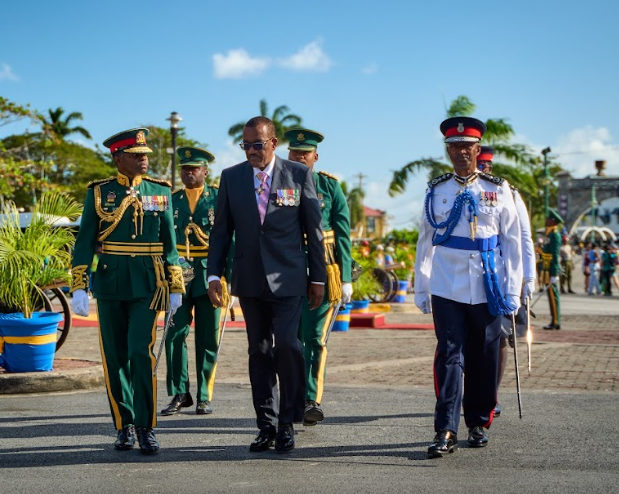
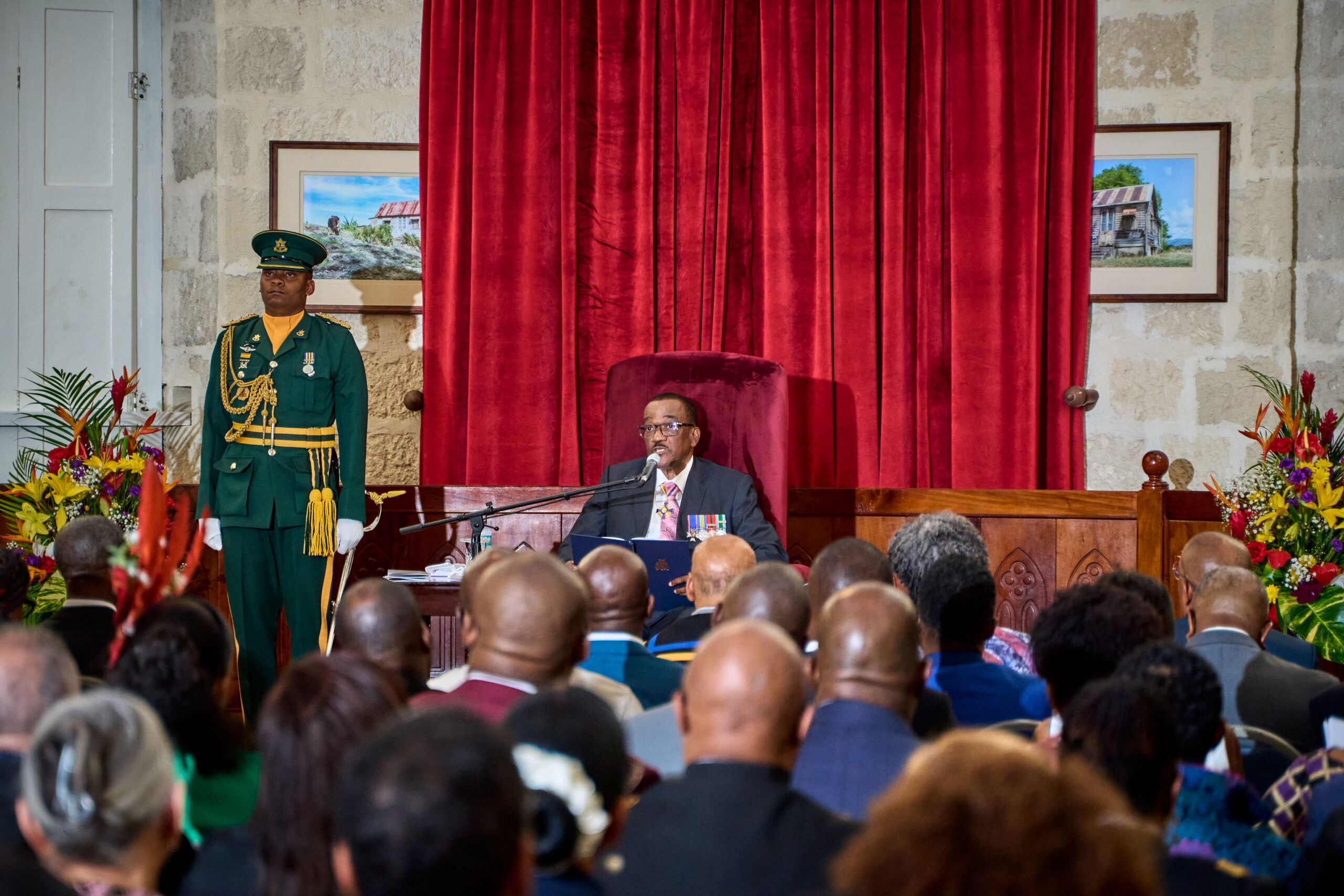
    In a powerful address marking the ceremonial opening of Barbados’ Parliament, President Jeffrey Bostic delivered a stark warning to the nation’s lawmakers, characterizing gun crime and violence as the most severe threat to national security and societal well-being. The President’s 25-minute speech before a joint session of Parliament framed the crisis in catastrophic terms, comparing its destructive potential to a ‘category five hurricane’ poised to devastate all sectors of society.

    President Bostic emphasized that the escalating violence transcends political divisions and demands collective action rather than partisan debate. ‘There is nothing else in my view that threatens all sectors of our society and economy in the way that the continuous wave of gun-related activities,’ he declared before newly elected members of the House of Assembly and appointed Senators.

    The human cost of this crisis extends beyond physical casualties to include profound psychological trauma affecting families, communities, and the national psyche. The President noted specific systemic impacts, including the overwhelming of Queen Elizabeth Hospital’s Emergency Department, reduced participation in school and church activities, and the paralysis of community centers and sports facilities due to widespread fear.

    ‘This crisis affects the economic prospects of village and community establishments that provide a living for many of our people,’ Bostic stated, urging Parliament to maintain sustained focus on the issue throughout its term. He advocated for a multidimensional approach targeting root causes rather than superficial solutions, emphasizing early intervention through engagement with youth from primary through secondary education.

    Beyond criminal violence, the President addressed additional national priorities including traffic congestion’s impact on productivity and family life, healthcare system improvements for vulnerable populations, and concerning democratic participation trends. He expressed particular alarm over voter apathy evidenced in recent elections and declining viewership of parliamentary proceedings, warning that these trends ‘threaten the very spirit and culture of our democracy.’

    President Bostic challenged legislators to transform Parliament into ‘theatres of ideas rather than cages,’ calling for debates that ‘illuminate rather than oppose’ and urging innovative approaches to governance that restore public trust and engagement.

  • Na terugroeping Faucher: VS-zaakgelastigde bespreekt nieuwe fase in relatie

    Na terugroeping Faucher: VS-zaakgelastigde bespreekt nieuwe fase in relatie

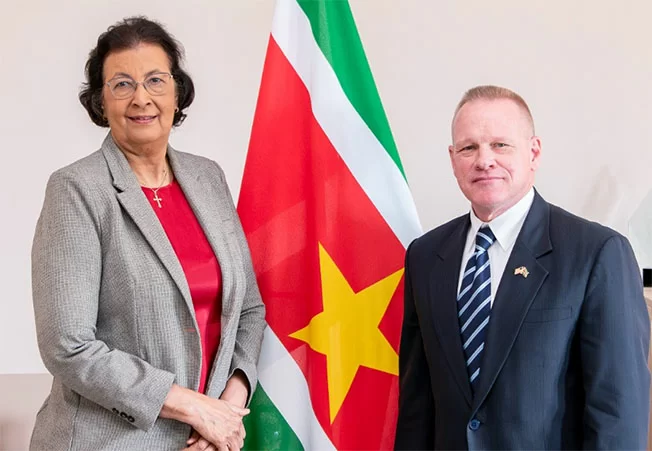
    In a significant diplomatic engagement, Paul Watzlavick, the United States Chargé d’Affaires ad interim to Suriname, conducted a introductory meeting with President Jennifer Simons on Friday. This high-level discussion occurs against the backdrop of recent diplomatic recalibrations following President Donald Trump’s recall of Ambassador Robert Faucher.

    The presidential meeting, attended by Minister of Foreign Affairs Melvin Bouva, focused on substantially deepening and broadening the bilateral relationship between the two nations. While acknowledging existing defense and security cooperation, the dialogue prominently emphasized economic opportunities and socio-economic development initiatives.

    Key sectors discussed during the comprehensive talks included education, public health, tourism, telecommunications, and particularly the oil and gas industry. The conversation extended to economic spin-offs encompassing hospitality services and the restoration of flight connections between the two countries.

    President Simons articulated Suriname’s commitment to transparent business practices, stating that foreign companies seeking to operate in Suriname must participate in bidding processes through competitive and transparent procedures.

    Watzlavick, who arrived in Suriname on Wednesday, characterized the meeting as highly positive and expressed admiration for the country’s developmental potential. He confirmed that existing security cooperation and commercial partnerships would serve as foundation for further developing economic sectors.

    Minister Bouva emphasized the principle of mutual benefit in international relations, asserting that any cooperation must respect Surinamese sovereignty. ‘The interests of Suriname remain paramount, and we will safeguard them diligently,’ the minister declared. He indicated expectations for concrete American initiatives and projects in the near term that would further strengthen bilateral ties.

    With Ambassador Faucher’s departure and the interim appointment of a Chargé d’Affaires, the diplomatic relationship appears to be entering a transitional phase where maintaining continuity in cooperation remains the central objective.

  • President’s Senate choices reshape political balance, spark debate on DLP strategy

    President’s Senate choices reshape political balance, spark debate on DLP strategy

    Barbados has been thrust into a constitutional and political discourse following President Jeffrey Bostic’s unexpected appointment of opposition senators, a move that has significantly altered the island’s parliamentary landscape. In a decisive Friday announcement, the President selected Ryan Walters of the Democratic Labour Party (DLP) and Karina Goodridge, leader of the Friends of Democracy movement, despite the DLP’s submission of only two nominees for consideration.

    The development concludes a week of intense speculation after the DLP, which secured the second-highest vote count in the last general election, presented just two names to the President despite reportedly being asked to provide at least four nominees. The party’s strategic decision to limit its submission has backfired spectacularly, according to political observers, handing an unexpected victory to smaller political entities.

    Political scientist Deveron Bruce analyzed that ‘had the Democratic Labour Party done what the President would have asked them to do, I would not have expected Karina’s name to be on that listing.’ He characterized Goodridge as ‘a silent winner in the DLP’s debacle,’ noting that the party’s attempt to influence the outcome through limited nominations ultimately weakened their position.

    Constitutional experts including pollster Peter Wickham have defended the President’s decision as firmly within his legal authority. ‘The Constitution is clear that the choice is his, his own deliberate judgement,’ Wickham stated, adding that the DLP’s attempt to ‘tie his hand’ by providing only two names placed the Head of State ‘in a most unfortunate position.’

    The appointments have triggered broader implications for Barbados’s political hierarchy. Wickham suggested the move effectively establishes Ryan Walters as the DLP’s political leader overnight while questioning party president Ralph Thorne’s future leadership viability. More significantly, analysts identify this episode as indicative of a fundamental transformation in Barbadian politics, where emerging movements are increasingly challenging traditional parties’ historical dominance, regardless of electoral vote shares.

    The controversy highlights evolving democratic dynamics in Barbados, where constitutional discretion appears to be taking precedence over conventional political expectations, potentially signaling a new era of multiparty influence in the nation’s governance.

  • Family Mourns After Deadly Big Creek Crash

    Family Mourns After Deadly Big Creek Crash

    A southern Belize community is enveloped in sorrow following a catastrophic traffic collision that resulted in the death of 38-year-old motorcyclist Brandon Alex Coleman. The incident occurred on Big Creek Road this past Thursday when a Ford Explorer SUV, operated by 65-year-old Jes Christian Bech, executed a sudden left turn into a parking lot, directly intersecting Coleman’s path. Law enforcement officials report that the impact was instantaneous and unavoidable, leaving Coleman with critical injuries from which he subsequently succumbed.

    Beyond the immediate tragedy, the Coleman family is confronting compounded anguish stemming from two secondary issues. First, they express profound distress regarding the emergency response, alleging that police personnel left their fatally injured brother unattended on the pavement for approximately fifteen to twenty minutes before administering aid. Second, and perhaps more devastatingly, closed-circuit television footage capturing the graphic moment of impact has been widely disseminated across social media platforms, subjecting the family to additional psychological trauma during their period of mourning.

    Family members, including sisters Angelina and Lisa Coleman, have voiced their outrage publicly. They remember Brandon as a devoted father who cherished his young daughter and describe him as a peaceful individual who avoided conflict. The circulation of the accident video, they argue, constitutes a profound violation of their right to preserve dignified memories of their loved one. Meanwhile, Belizean authorities have taken the SUV driver into custody as investigations continue to establish the precise circumstances leading to the fatal encounter. The case has ignited conversations regarding road safety protocols, emergency response standards, and ethical boundaries in digital media sharing.

  • Dashay Williams Acquitted of Teen Murder

    Dashay Williams Acquitted of Teen Murder

    In a significant judicial ruling, twenty-nine-year-old Dashay Williams has been acquitted of the 2021 murder of fourteen-year-old Kwami Williams in Dangriga, Belize. The High Court’s decision came after Justice Nigel Pilgrim deemed the prosecution’s key evidence—a hearsay statement from the now-deceased Charles Bradley—inadmissible. The statement had allegedly contained an admission of guilt from Williams regarding the shooting incident that occurred in August 2021.

    Justice Pilgrim emphasized that the Crown failed to satisfy all five essential elements required for a murder conviction beyond reasonable doubt. The case further unraveled due to inconsistent testimonies from prosecution witnesses, none of whom could provide definitive identification of Williams as the perpetrator.

    Williams maintained his innocence throughout the proceedings, presenting an alibi that placed him with his girlfriend at the time of the shooting. Her testimony corroborated his account during the defense’s presentation.

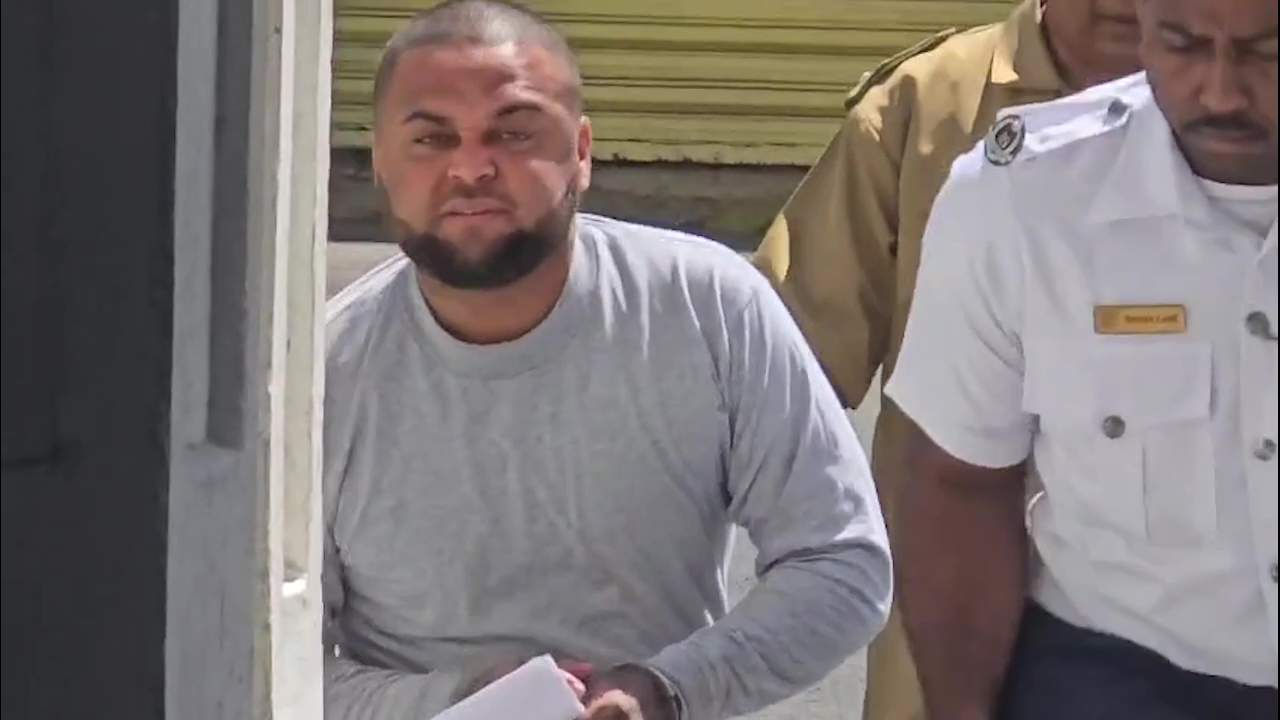
    The verdict was delivered under extraordinary security measures at the High Court following reported threats against Williams. Transported from Kolbe Foundation prison under heavy police guard, he was returned to custody after the ruling due to other pending charges. Williams expressed gratitude for the court’s decision while requesting continued protection amid ongoing security concerns.

  • Perez Tells UDP to “Wheel Again” in Núñez Row

    Perez Tells UDP to “Wheel Again” in Núñez Row

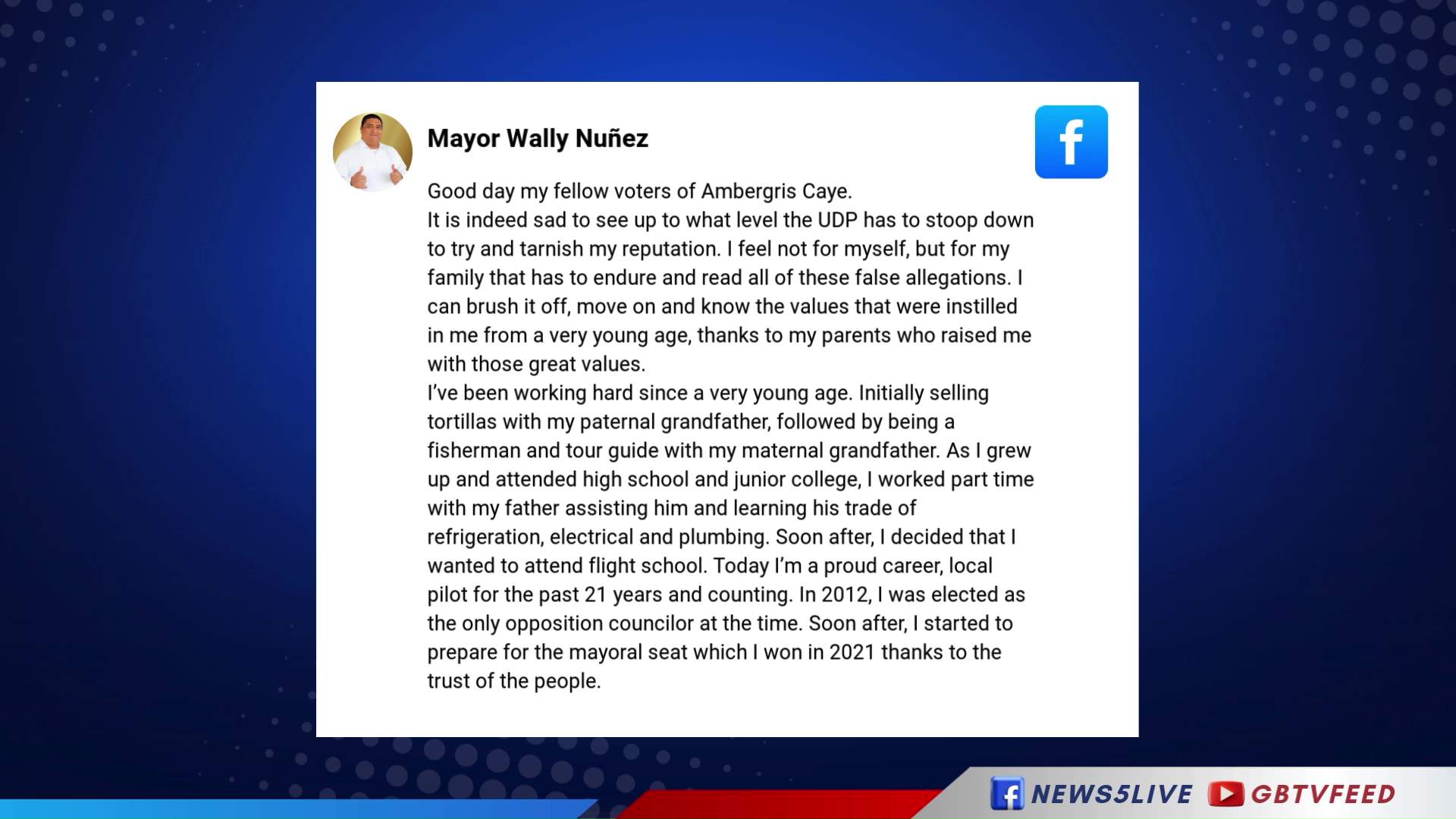
    A significant political confrontation has emerged in Belize’s San Pedro community, sparking intense debate across La Isla Bonita. The conflict centers on San Pedro Mayor Wally Núñez and his public response to allegations circulated through social media platforms. Núñez has vehemently denied accusations of questionable transactions and insufficient transparency published on The Wave Radio and TV’s Facebook channel, characterizing these claims as entirely unfounded.

    The situation escalated when Area Representative Andre Perez entered the fray, delivering a robust defense of the embattled mayor. Perez challenged the opposition United Democratic Party (UDP) to substantiate their allegations or withdraw them entirely, employing the local expression “wheel and come again” to emphasize his position. He further recommended that Mayor Núñez pursue legal counsel to address what he described as baseless insinuations.

    Perez criticized the UDP’s approach as representative of a “shush” culture—a term denoting unverified gossip and unsubstantiated claims. He questioned the opposition’s preparedness for governance, highlighting their apparent lack of concrete policy proposals while engaging in character-focused political maneuvers. The representative specifically referenced previous unfounded claims about his own absence from Caye Caulker, reinforcing his argument about the opposition’s reliance on misinformation.

    This digital dispute has transcended social media boundaries, evolving into a substantive political standoff with potential legal ramifications. The conflict underscores growing tensions between established political figures and emerging opposition forces in Belize’s regional governance landscape.

  • Perez Responds as UDP Highlights Cost Crunch

    Perez Responds as UDP Highlights Cost Crunch

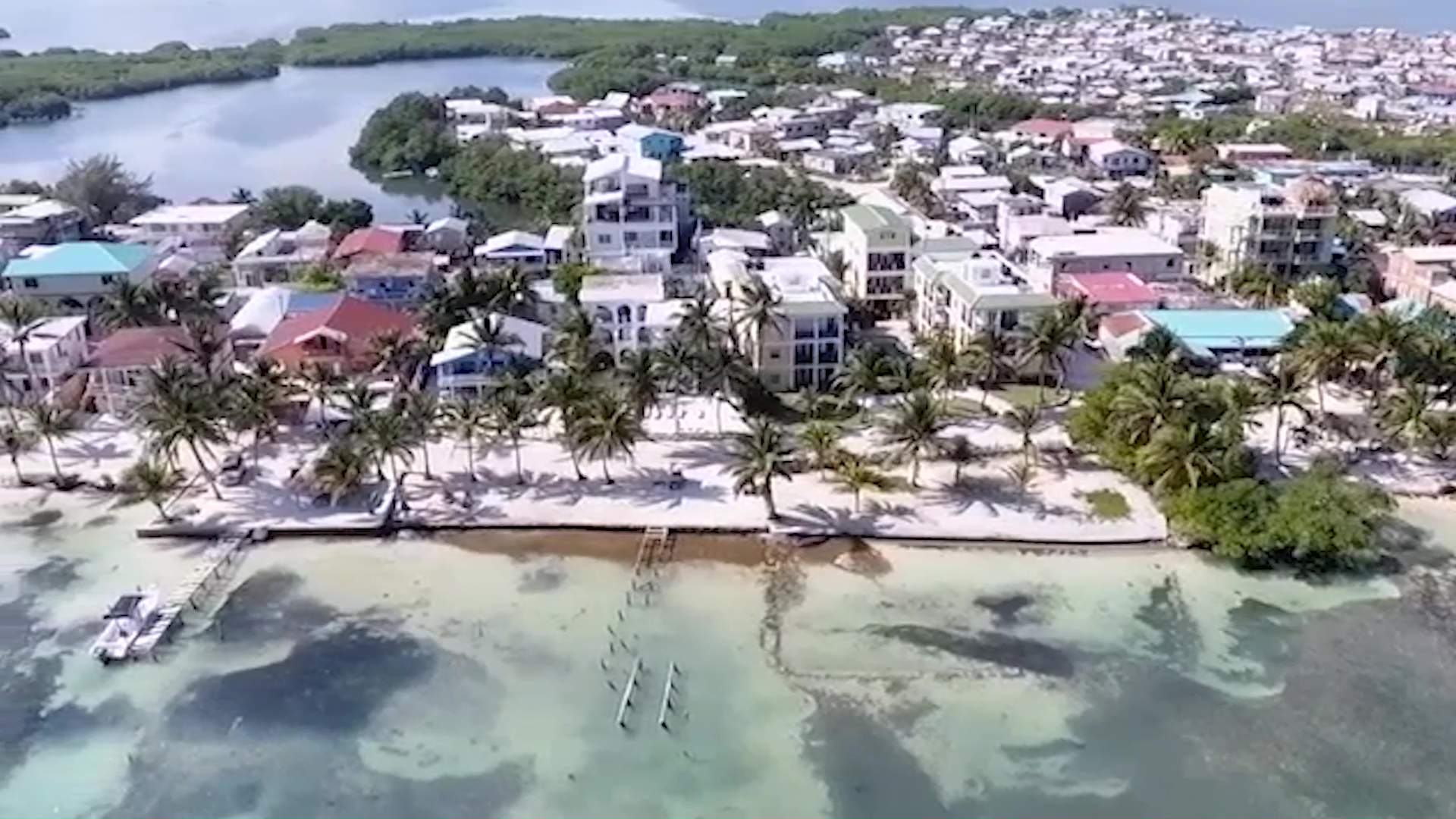
    SAN PEDRO TOWN, BELIZE – Political tensions on Ambergris Caye escalated this week as opposition leaders intensified their criticism of local government officials over the island’s affordability crisis. United Democratic Party (UDP) caretaker Gabriel Zetina confronted Area Representative Andre Perez during a press conference, highlighting the severe economic pressures facing residents, particularly the exorbitant costs of housing rentals in the region known as La Isla Bonita.

    In response to these allegations, Representative Perez acknowledged the gravity of the situation, stating, “I recognize the cost of living that is very high. This is happening at a global level, but I’m not detracting from the concerns specifically affecting San Pedro.” The official outlined his comprehensive strategy to address the housing affordability crisis through an ambitious land distribution initiative aimed at providing permanent housing solutions for island residents.

    Perez identified real estate agencies as significant contributors to the problem, emphasizing the urgent need for regulatory reform. “There needs to be stronger regulations for those real estate agencies,” he asserted. “They are getting away with inflating land values and displacing our local population.” The representative revealed that the Ministry of Natural Resources is currently developing new legislation to impose stricter controls on real estate practices.

    When confronted with allegations that land distribution favors politically connected individuals, Perez vehemently denied these claims, characterizing them as “a pile of hogwash.” He provided evidence demonstrating that program beneficiaries primarily include younger generations, single mothers, and long-term community members seeking homeownership for the first time.

    The ongoing political debate reflects broader concerns about economic inequality and housing accessibility in Belize’s coastal communities, where tourism development has created both economic opportunities and affordability challenges for local residents.

  • Perez Accuses Zetina of “Blue Koncas” Politics

    Perez Accuses Zetina of “Blue Koncas” Politics

    BELIZE RURAL SOUTH – Political tensions have intensified in Belize’s coastal constituencies following sharp exchanges between Area Representative Andre Perez and UDP caretaker Gabriel Zetina. The conflict centers on the newly inaugurated San Pedro Artisan Market, which Perez champions as a vital economic development project while accusing Zetina of undermining it for political gain.

    Perez vehemently defended the market initiative during recent remarks, characterizing Zetina’s criticism as exhibiting a ‘blue Koncas’ mentality – a local political term suggesting destructive opposition tactics. ‘We are uplifting these vendors to go to a better place,’ Perez stated, highlighting the market’s potential to enhance local livelihoods through improved facilities compared to previous substandard vending conditions.

    The representative further addressed separate allegations regarding his engagement with Caye Caulker constituents, dismissing claims of insufficient presence as ‘a pile of hogwash.’ Perez detailed multiple visits to the island since January, emphasizing his involvement in educational planning and infrastructure projects.

    Concurrently, Perez advanced educational developments on Caye Caulker, meeting with Ministry of Education officials at Ocean Academy High School to coordinate construction timelines for new primary and secondary school facilities. The project, expected to span the upcoming academic year, includes plans to formally rename the institution as Caye Caulker Government High School upon completion, signaling institutional maturation and governmental commitment to island education.

    Perez confirmed ongoing discussions regarding temporary structures to minimize educational disruption during construction, with potential solutions including auxiliary facilities at the existing Catholic school property. Community response to these developments has been broadly positive according to the representative, who anticipates the new campus will be operational by the next school year.

  • Libraries must become digital empowerment hubs, says minister

    Libraries must become digital empowerment hubs, says minister

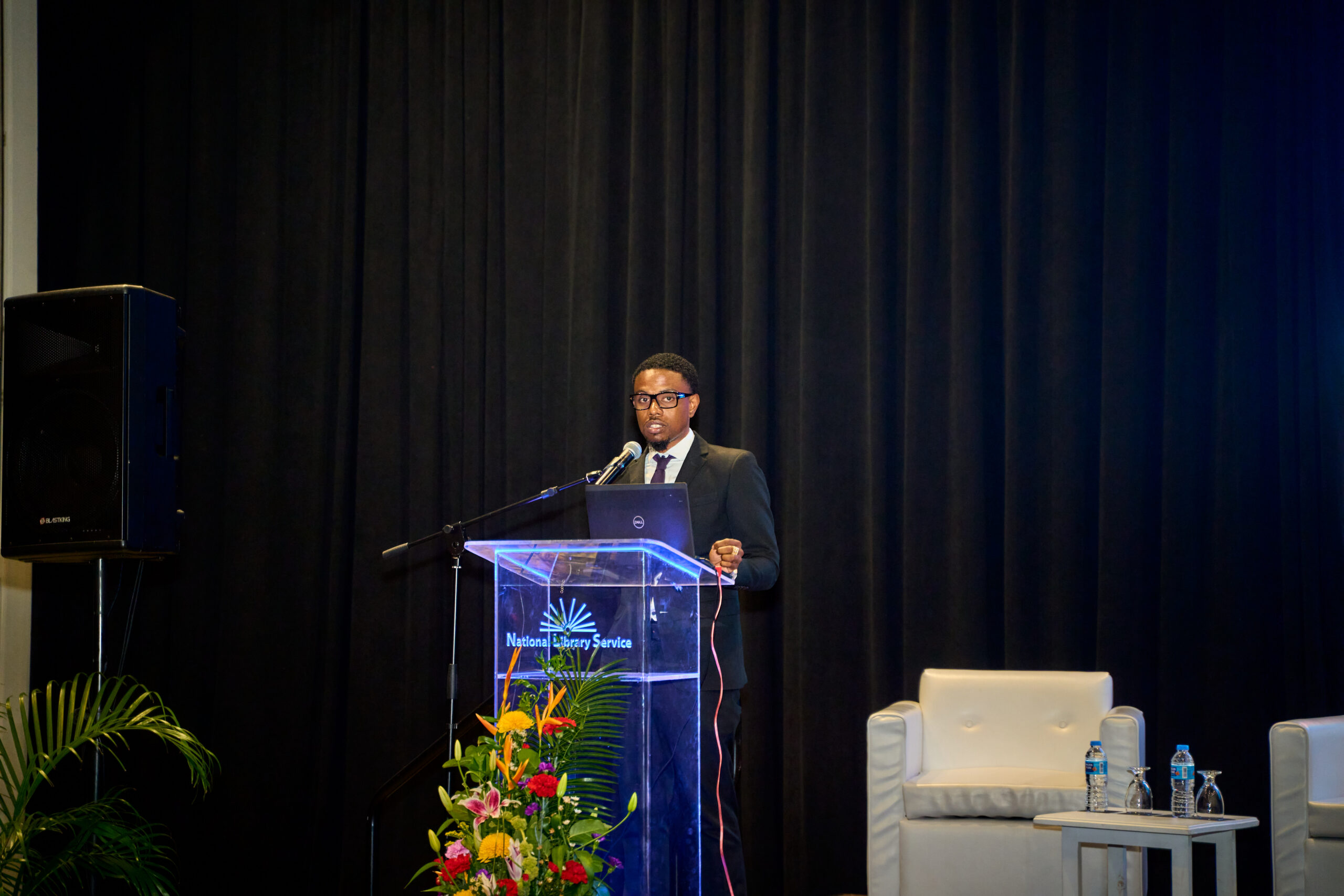
    Barbados is spearheading a radical transformation of its library system to meet the demands of the digital age, with government officials calling for libraries to evolve into dynamic centers of technological empowerment. The compelling vision was unveiled by Senator Shane Archer, Minister of State for Youth and Culture, during his keynote address at the National Library Service’s inaugural symposium, “The Future of Libraries: Embracing Technology, Strengthening Community Engagement and Sustaining Development in a Digital Era,” held at the Hilton Barbados Resort.

    Senator Archer presented robust usage statistics from 2025 to demonstrate the enduring relevance of libraries, revealing over 47,000 visits, more than 16,000 users accessing computer and internet services, and over 44,000 loans processed. “These figures are proof of trust, proof of relevance, proof that Barbados still sees libraries as gateways to advancement,” he declared.

    However, the Minister emphasized that maintaining this relevance necessitates bold repositioning. He articulated a forward-thinking blueprint where libraries transcend their traditional role as quiet reading spaces to become comprehensive digital empowerment hubs. This transformation includes deploying AI-powered research tools, implementing digital literacy and coding workshops, and establishing innovation labs equipped with cutting-edge design software and data analytics tools.

    A critical component of this vision involves AI literacy programs designed to empower youth to not merely use artificial intelligence but to actively build and regulate it. Senator Archer issued a crucial warning about the societal implications of AI, stating that equitable access to these emerging technologies is fundamental to preventing deepened inequality. “If we use our library network strategically, we can ensure that a young person in St Lucy has the same digital access as the one in Bridgetown,” he asserted, framing digital transformation as fundamentally about inclusion rather than just infrastructure.

    Echoing this transformative agenda, Jennifer Yarde, Director of the National Library Service, explained that the symposium’s theme was deliberately chosen to reflect both contemporary challenges and future opportunities. She emphasized that modern libraries are “no longer defined by shelves” but function as vital centers for digital literacy, cultural preservation, and innovation support.

    Yarde further highlighted the service’s commitment to inclusivity, detailing intentional design features that ensure accessibility for visually impaired individuals and those with other disabilities through assistive technologies and dignified, independent access to information.