博客

  • Jumby Bay Island vacancy: Assistant Director of Engineering, Island Services

    Jumby Bay Island vacancy: Assistant Director of Engineering, Island Services

    Jumby Bay Island Company, Ltd., the developer and operator of an exclusive private residential island community and luxury resort in Antigua and Barbuda, has announced an opening for a senior leadership position: Assistant Director of Engineering for Island Services (Infrastructure & Operations). Built on a foundation of thoughtful long-term stewardship and detail-focused daily management, the company prioritizes preserving the island’s high-end living standards and elite guest experience, with a service-driven culture centered on meeting the needs of homeowners, visitors, and internal team members alike.

    The newly opened role operates as a senior strategic position, tasking the successful candidate with supporting the Director of Engineering in overseeing all island-wide infrastructure, mechanical systems, and marine operations. The company is seeking a demonstrated leader capable of building high-performing teams, driving measurable improvements in productivity and operational efficiency, and upholding rigorous financial management standards. As the principal deputy to the Director, the Assistant Director will own the development and execution of preventive maintenance strategies for the island’s residential properties, collaborate cross-functionally with other department leads, and step in to lead the department during the Director’s absences to maintain uninterrupted operations.

    Key responsibilities for the position include serving as the core liaison between executive engineering leadership and frontline operational teams to ensure strategic directives are carried out seamlessly. The role also requires developing and implementing departmental budgets, capital expenditure plans, and maintenance frameworks aligned with the company’s long-term cost efficiency and operational goals. Additional core duties include leading team-building initiatives focused on employee development, succession planning, and performance management that balance operational targets with team productivity and morale; overseeing the mechanical engineering, maintenance, and marine teams to ensure on-time delivery, quality control, and full adherence to global health and safety standards; managing all property maintenance services for contracted residences, including direct liaison with homeowners, daily supervision, and both preventive and reactive maintenance work; delivering in-house maintenance for company-owned assets and standing by for 24/7 emergency response; and leading hurricane preparedness and response planning for all island residential properties and service departments.

    Candidates applying for the role must meet a set of strict competency and experience requirements. Essential competencies include a proven track record of measurable improvements in team performance, such as higher preventive maintenance compliance, reduced equipment downtime, and lower overall maintenance costs; a history of successfully developing internal technical leaders and building actionable succession plans; strong commercial acumen including experience with budgeting, cost reduction initiatives, procurement optimization, and labor efficiency; hands-on leadership experience with computerized maintenance management systems (CMMS) and consistent delivery against key performance indicators including preventive maintenance completion rates, mean time to repair, and backlog reduction; sound practical technical judgment for assessing risk and evaluating contractor work on remote island infrastructure; a consistent record of delivering maintenance projects on scope, on schedule, and on budget; and effective stakeholder and crisis management skills paired with a clean record of health and safety compliance.

    Mandatory experience requirements include prior work experience in remote private island operations or similarly isolated settings, with previous assignments in the Caribbean required for all candidates. Applicants must have a minimum of 8 years of progressive engineering leadership experience overseeing teams of 20 or more employees, either directly or indirectly. They also need at least 5 years of hands-on experience working with electrical systems and water/wastewater treatment plant operations, 5 years of experience managing construction projects and capital programs, and 5 years of facilities management experience in high-end residential or luxury resort environments leading medium-sized teams. Preferred qualifications include proficiency with maintenance and remote operations systems such as CMMS, condition monitoring tools, and PLC/SCADA systems, strong technical software skills including advanced Excel and Word proficiency, experience collaborating with procurement, finance teams and external vendors on contract management and project delivery, a technical diploma or degree in an engineering-related field (or equivalent professional experience), relevant industry certifications, and existing familiarity with Antigua & Barbuda’s local laws and regulatory frameworks.

    The opportunity offers the rare chance to build a meaningful impact in a one-of-a-kind remote island environment for professionals committed to excellence and collaborative teamwork. Applications for the position must be submitted by April 30, 2026. Interested candidates must send application materials via email to [email protected] with “Assistant Director of Engineering, IS” included in the subject line of the message. The company notes that only shortlisted candidates meeting the role requirements will receive acknowledgment and further consideration. This posting carries a standard disclaimer that NOW Grenada is not liable for any opinions, statements or content shared by third-party contributors, and invites users to report any abusive content via official channels.

  • China en Rusland vetoën VN-resolutie ter bescherming van scheepvaart in Straat van Hormuz

    China en Rusland vetoën VN-resolutie ter bescherming van scheepvaart in Straat van Hormuz

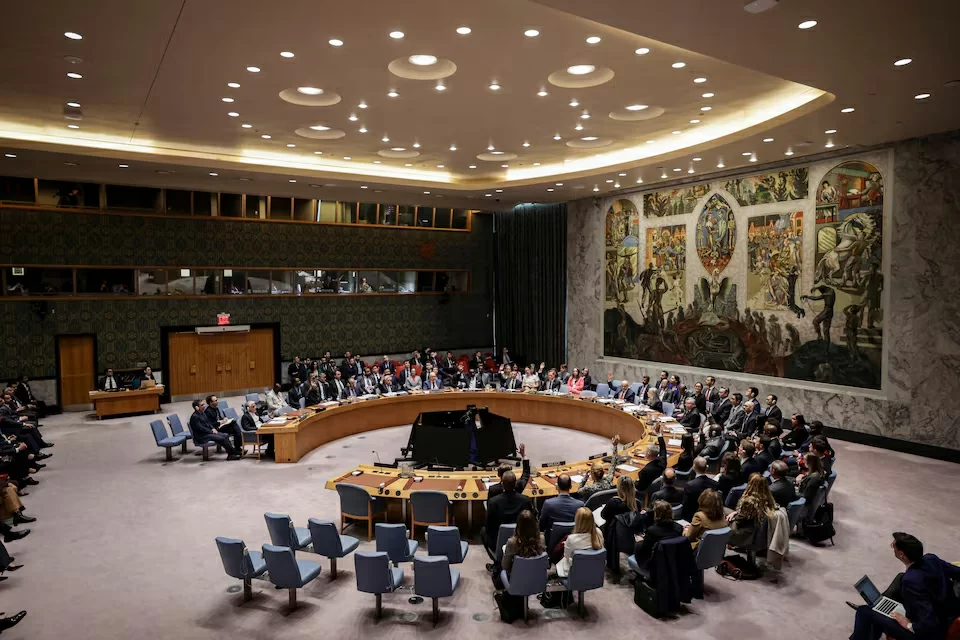
    On Tuesday, a United Nations Security Council resolution aimed at promoting international cooperation to safeguard commercial shipping in the strategically vital Strait of Hormuz, proposed by Bahrain, was blocked by vetoes from China and Russia. Both permanent Council members argued that the draft resolution carried an unfair bias against Iran.

    The 15-nation council’s vote split clearly: 11 members backed the resolution, while two cast opposing votes (China and Russia), and two abstained from the decision. Following the veto, U.S. Ambassador to the UN Mike Waltz issued a sharp condemnation, framing the outcome as a “new low” for the Security Council. Waltz claimed that Iranian actions to threaten closure of the Strait have already disrupted deliveries of medical supplies and humanitarian goods to crisis zones including the Democratic Republic of Congo, Sudan and Gaza, saying “No nation should accept this reality.” He added that “Russia and China today chose to back a regime that terrorizes the Gulf region,” and called on “responsible nations” to join the U.S. in keeping the Strait open and secure to ensure unimpeded movement of free trade and humanitarian aid.

    France also expressed regret over the veto. French UN Ambassador Jerome Bonnafont emphasized that the resolution only sought defensive, de-escalatory measures to prevent regional tensions from spiraling further.

    In defending their veto, China and Russia said the draft unfairly criticized Iran. China’s UN envoy Fu Cong noted that adopting the resolution while the U.S. issues inflammatory threats targeting Iran would send the wrong signal to the region. Russia has announced it will put forward its own alternative draft resolution covering broader Middle East issues, including maritime security in the Strait of Hormuz.

    Iran’s UN Ambassador Amir Saeid Iravani welcomed the vetoes, stating they prevented the Security Council from being “misused to legitimize aggression.” He also revealed that the personal envoy of the UN Secretary-General is currently en route to Tehran for diplomatic consultations on the situation.

    The final draft of the Bahrain-proposed resolution was revised after China raised objections to a provision that could have authorized use of force. The amended text explicitly ruled out coercive measures, instead calling on UN member states to coordinate defensive, proportionate actions to protect navigation security in the Strait, including escorting commercial vessels and countering attempts to blockade the waterway, which handles roughly a fifth of global oil trade and is one of the world’s most critical maritime chokepoints.

  • PRESS RELEASE: CARPHA celebrates World Health Day and calls for stronger integrated surveillance and One Health action

    PRESS RELEASE: CARPHA celebrates World Health Day and calls for stronger integrated surveillance and One Health action

    PORT OF SPAIN, TRINIDAD AND TOBAGO – April 7, 2026 – As the world marks World Health Day, public health leaders in the Caribbean are sounding the alarm over the disproportionate burden of foodborne diseases (FBDs) across the region and calling for urgent, coordinated cross-sector action under the One Health framework to address growing global health risks.

    Global public health data paints a stark picture of the scale of foodborne illness: the World Health Organization (WHO) estimates that 600 million people around the world fall ill from contaminated food every year, leading to roughly 420,000 preventable deaths annually. Broader systemic trends, from accelerating climate change to rising antimicrobial resistance (AMR) and widespread environmental degradation, have amplified global health risks, with 75% of all new emerging infectious diseases recorded in 2024 traced to zoonotic origins – pathogens that jump from animals to humans.

    For the Caribbean region, these risks are particularly acute. Data from the Caribbean Public Health Agency (CARPHA) collected in 2019 shows that FBDs rank among the most commonly reported illnesses for both local residents and international tourists. Regional burden-of-illness research finds that roughly one in every 49 Caribbean people contracts a foodborne disease annually, a rate that jumps to one in 11 during large-scale mass gatherings. Children between the ages of 1 and 4 are the most affected, accounting for nearly 43% of all recorded FBD cases across the region.

    Beyond the direct public health toll, FBD outbreaks pose a existential threat to the Caribbean’s tourism-dependent economies. An outbreak can trigger lasting reputational damage for destination countries, lead to sharp drops in tourism revenue, and even result in harmful trade restrictions that further strain local economies. Because of this, sustained FBD surveillance is a core pillar of CARPHA’s integrated regional disease monitoring system. Strong surveillance not only helps CARPHA’s 20+ member states meet their binding obligations under the World Health Organization’s International Health Regulations (IHR 2005) but also improves national performance on the Joint External Evaluation (JEE) and the State Party Annual Reporting (SPAR) processes that track global health security capacity.

    This year’s World Health Day, held annually on April 7, carries the theme “Together for health. Stand with science”, which spotlights the critical role of scientific collaboration and collective action in protecting global public health. In recent years, a string of global and regional health emergencies has underscored how critical resilient surveillance infrastructure, timely cross-border data sharing, and coordinated multi-stakeholder action are to detecting, preventing, and responding to new and emerging health threats before they spiral into larger outbreaks. Public health experts increasingly agree that cross-sector, cross-discipline collaboration through the One Health approach is one of the most effective tools to address the interconnected, complex health challenges facing the world today.

    The One Health framework is built on the core recognition that human health, animal health, plant health and the health of the natural environment are deeply interconnected. Addressing modern disease risks requires coordinated, cross-sector action rather than the siloed, single-discipline approaches that have long dominated public health. To combat rising FBD and zoonotic disease risks in the Caribbean, CARPHA is doubling down on its call for a more integrated, coordinated regional public health surveillance system, centered on cross-sector collaboration under the One Health model.

    CARPHA’s work on FBD and zoonotic disease surveillance stretches back more than two decades: the program originated at the Caribbean Epidemiology Centre (CAREC) in 2003, and was expanded regionally after the formation of CARPHA in 2013. Today, the agency’s FBD and Zoonoses (One Health) programme is fully aligned with WHO’s recommended farm-to-table, multisectoral surveillance model that tracks risks from agricultural production through to food service and consumption.

    Speaking on World Health Day, CARPHA’s Executive Director Dr. Joy St. John (referred to as Dr. Indar in internal agency comments) emphasized that a unified, multisectoral approach is non-negotiable to protecting the health of populations across all CARPHA member states. “CARPHA has advanced a regional One Health approach to strengthen integrated surveillance for foodborne diseases and zoonoses, which includes the development of a Regional One Health FBD Action Plan, support to Member States in updating National Action Plans, and establishment of the One Health Multisectoral Steering Committee (OHMSC) to improve inter-agency coordination,” Dr. Indar explained.

    Beyond planning and coordination, CARPHA is building out new regional infrastructure to strengthen early threat detection. The agency is currently developing the Regional Integrated Early Warning and Surveillance System (RIEWSS), a cutting-edge platform that integrates health data from human, animal, and environmental sectors alongside laboratory data to speed up early detection and response to outbreaks. The agency has also expanded regional laboratory capacity through strategic cross-agency partnerships, deployed new rapid diagnostic tools across member states, and deepened collaboration with key global and regional partners including the Food and Agriculture Organization (FAO), the Pan American Health Organization (PAHO), the World Organisation for Animal Health (WOAH), the Caribbean Agriculture Health Food and Safety Agency (CAHFSA), and the Caribbean Animal Health Network (CaribVET), among others.

    To build a more resilient regional public health system, CARPHA is calling on member states and regional partners to advance six key strategic priorities:
    First, strengthen integrated surveillance systems across human, animal, and environmental health sectors to improve early detection and rapid response to emerging health threats. Second, enhance real-time data sharing and interoperability, including expanded use of digital public health platforms such as DHIS2, to support timely, evidence-based decision-making at all levels. Third, expand laboratory capacity and diagnostic capabilities across all member states to ensure accurate and rapid identification of public health risks. Fourth, formalize multisectoral coordination mechanisms and governance structures to enable cohesive, effective responses at both national and regional levels. Fifth, invest in sustained workforce development and One Health training to build a skilled, agile public health workforce equipped to tackle 21st century complex health challenges. Sixth, advance evidence-based decision-making and sustained regional collaboration to strengthen health system resilience and improve health outcomes across the entire Caribbean.

    Dr. Indar noted that the interconnected nature of modern health threats – which do not respect national borders or sectoral divides – means the region can no longer rely on siloed, fragmented approaches to public health. “By strengthening integrated surveillance systems and embracing the One Health model, we can better protect our Region, improve preparedness, and ensure a more coordinated and effective response to public health emergencies,” he said. “CARPHA remains committed to working closely with Member States, regional partners, and international organisations to advance these priorities and build a more resilient, responsive, and collaborative public health system for the Caribbean.”

  • 10 Days Missing: Search Intensifies for “Bree” Arthurs

    10 Days Missing: Search Intensifies for “Bree” Arthurs

    Ten days after 28-year-old Deborah ‘Bree’ Arthurs vanished without a trace in Belize City, desperate family members and civilian volunteers have returned to the field to expand their search effort, marking the second coordinated organized search for the missing call center worker and single mother.

    Arthurs was last seen publicly on Friday, March 27, near La Popular Bakery in central Belize City, where witnesses reported she entered a silver-colored Chevy Equinox. No contact from her has been recorded or received by her loved ones since that sighting.

    Over the first 10 days of the disappearance, search teams have combed through multiple regions across the country, including the Hattieville area, the Coastal Road corridor, and Old Well Road in Ladyville. As the days pass without answers, anxiety and urgency among Arthurs’ inner circle have grown, even as the family holds onto cautious optimism.

    In a public statement released online this week, a relative of the missing woman shared the heavy toll the uncertainty has placed on the entire family. ‘This ordeal has taken a significant toll on our family, yet we remain hopeful,’ the statement read. The family has doubled down on their appeal for public assistance, raising the reward for information leading to Arthurs’ location to 10,000 Belize dollars.

    ‘Lead us to her physical being, alive or unalive… Help us bring her home; she has a kid whom she loves dearly. We just need closure,’ the relative added, emphasizing that the reward will be issued for any actionable details that help the family resolve the disappearance.

    Local law enforcement and official authorities have not released any new updates on the case during their most recent press briefing, leaving the family and public without new official information about the investigation into Arthurs’ disappearance.

  • Chamber survey highlights business concerns over rising costs

    Chamber survey highlights business concerns over rising costs

    Against a backdrop of ongoing global economic volatility, the Grenada Chamber of Industry & Commerce (GCIC) has recently released findings from a member survey designed to measure how shifting international conditions are rippling through the Caribbean nation’s local business ecosystem. The survey specifically focused on three key pressure points: international shipping expenses, prices for imported goods, and the general operating climate for domestic enterprises.

    The results paint a clear picture of mounting strain across Grenada’s business community. A large share of responding firms reported that they are already facing sharp increases in the cost of imported inputs and finished goods, which has compressed profit margins across multiple sectors. Beyond immediate financial pressure, businesses have also voiced deepening anxiety about further price hikes in the months ahead. Top concerns raised by participants include spiraling fuel and energy costs, broad-based inflation, persistent global supply chain disruptions, and an expected pullback in consumer discretionary spending as household budgets tighten.

    Following the survey’s identification of shipping costs as a primary pain point, GCIC leadership initiated direct discussions with shipping companies that service Grenada. Those conversations confirmed that carriers already implemented an approximate 8.5% rate increase in March, and a second additional hike is scheduled for April. Chamber analysts note, however, that some of the overall cost increases reported by local businesses may stem from other intermediate points along the supply chain, not just carrier rate hikes. These additional contributing factors include price increases from overseas suppliers, elevated fuel and logistics fees, higher insurance premiums, and other international operational charges.

    GCIC has emphasized that the survey accurately captures the on-the-ground perceptions and lived experiences of local businesses, as well as the projected shipping rate increases that have been confirmed for the coming month. Crucially, the Chamber stresses that the concerns raised by the business community are not abstract: they directly tie to the rising overall cost of doing business in Grenada, which in turn drives upward pressure on the country’s cost of living for ordinary households.

    Moving forward, GCIC says it will maintain close monitoring of the evolving situation, maintaining ongoing dialogue with member businesses, shipping agents, and other key industry stakeholders. The organization also plans to engage the Government of Grenada to discuss potential policy interventions that could mitigate cost pressures for both businesses and consumers. GCIC reaffirmed its longstanding commitment to collaborating across the public and private sectors to address emerging economic challenges in a timely, constructive manner that protects the interests of local enterprises and households alike.

  • Medical Association Responds To Allegations in Letter

    Medical Association Responds To Allegations in Letter

    In an official public statement addressing circulating misinformation and unsubstantiated claims reported in regional media, the 2026–2028 Executive Board of the Medical Association of Antigua and Barbuda (MAAB) has moved to set the record straight, reframing the national conversation around collective support for fire-impacted medical professionals and community healthcare continuity.

    The organization’s top priority right now, leaders emphasize, is supporting local physician colleagues and their practices upended by a recent destructive blaze. The tragedy has displaced committed healthcare providers and disrupted access to care for vulnerable patients across the community, making cross-profession solidarity far more critical than internal infighting. ‘This is a moment that demands we stand together to help colleagues rebuild their livelihoods and ensure no gap in care leaves local residents without the medical support they need,’ the statement reads.

    Turning to recent public allegations of widespread internal dissatisfaction among MAAB members, the current Executive issued a clear formal clarification: as of March 2026, no physician has submitted documented complaints or official verbal grievances regarding the issues cited in recent media reports. The association has held weekly open meetings paired with mandatory Continuing Medical Education (CME) sessions since the start of the term, and all practicing physicians in the country are welcome to attend and raise concerns through these established forums. While the Executive affirms its full commitment to protecting freedom of speech for all members, it notes that public narratives must align with the actual state of internal association operations.

    To guide constructive engagement, the board reminded all members that MAAB maintains formal, accessible channels for submitting grievances, and leadership remains committed to full transparency and member advocacy—though it can only resolve concerns brought forward directly through proper processes. Any physician with concerns is encouraged to reach out through these official pathways to have their needs addressed.

    In a demonstration of the association’s ongoing work to build cohesion, the Executive highlighted a successful series of International Doctors’ Day events hosted across March 2026, aligned with the 2026 organizational theme of ‘Unity’. The lineup, which included a community Sunset Social, inter-profession Church Service, and friendly Sports Day, was intentionally designed to foster connection between rank-and-file physicians and the Executive Board. The events created open, low-pressure spaces for networking and collaborative conversation about the future of the local medical profession, with ample opportunity for members to share feedback directly with leadership.

    The statement also emphasized the Executive’s ongoing behind-the-scenes work to advance the interests of the entire local medical fraternity. While the board acknowledges that constructive criticism is a healthy part of any democratic professional organization, it urged members to avoid personal ad hominem attacks that erode the association’s collective bargaining power and damage its public standing. Leaders called on colleagues to refocus attention on systemic challenges impacting medical practice across Antigua and Barbuda, rather than engaging in divisive personal conflict.

    Closing out the statement, the board emphasized that meaningful progress for the local medical community depends on active, collaborative participation from all practicing physicians. The organization encouraged all local doctors to formalize their membership by paying annual dues, noting that lasting change requires more than just public commentary—it requires active contribution from the entire profession. ‘Instead of leaving all the work to volunteer leaders who have dedicated their time to governing and protecting this association, we invite every physician to be part of the change they want to see,’ the statement concludes.

    The official release was signed and submitted by the full 2026–2028 MAAB Executive Team.

  • Gun Bust on Holy Saturday in Caye Caulker

    Gun Bust on Holy Saturday in Caye Caulker

    On April 7, 2026, a 25-year-old Belize City resident has been slapped with illegal firearms charges following a law enforcement operation that recovered a loaded 9-millimeter pistol on Holy Saturday in the popular island community of Caye Caulker.

    The incident unfolded shortly after 10:30 p.m. local time, when uniformed police officers were dispatched to a disturbance call at the intersection of Avenida Mangle and Estrella Street. Upon arriving at the scene, law enforcement personnel noticed a man later identified as Herman Ciego attempting to flee the area. Officers immediately initiated a foot pursuit and took Ciego into custody within minutes.

    A systematic search of the terrain Ciego covered during his escape turned up a hidden loaded handgun, which police confirmed contained 10 live rounds of ammunition. In a statement following the arrest, Assistant Superintendent of Police Smith outlined the details of the ongoing investigation, noting that security video evidence has already been collected to support the charges laid against the suspect. Smith added that the collected footage captures Ciego engaging in behavior that directly corroborates the grounds for his detention and charges.

    Ciego now faces two formal offenses: unlawful possession of a firearm and unauthorized possession of ammunition, both charges stemming from Belize’s strict firearms control legislation. The arrest comes amid ongoing community safety efforts in Caye Caulker, a destination that draws thousands of tourists annually to its Caribbean beaches and laid-back island culture. Law enforcement officials have emphasized that they will continue prioritizing the removal of illegal weapons from community spaces to protect both residents and visitors.

  • Two Charged For Drugs and Firearms in Hattieville

    Two Charged For Drugs and Firearms in Hattieville

    Law enforcement authorities in Belize have filed joint criminal charges against two local men following a court-authorized search of their Hattieville Village residence that uncovered a sizable cache of illicit drugs and unregistered firearms, district police confirmed this week.

    The accused, identified as 21-year-old Tajah Robateau and 25-year-old Kevan Joshua Franklyn, both residents of the village, were taken into formal custody after the search operation carried out on April 1 this year. Assistant Superintendent of Police Stacy Smith, the department’s official spokesperson, outlined the details of the raid in a public briefing.

    “These charges come after our team executed a legally obtained search warrant at the property, which led to the recovery of seven separately wrapped parcels of suspected cannabis, with a combined total weight of 739 grams — equal to approximately 1.6 pounds,” Smith explained.

    Beyond the cannabis seizure, investigators also found an unregistered Glock 9-millimeter handgun already loaded with a 13-round ammunition magazine. Two additional extended-capacity magazines were also seized during the search, holding 13 and 17 live 9-millimeter rounds respectively.

    Smith noted that the packaging method used for the suspected cannabis points to a likelihood the drugs were being prepared for street-level distribution rather than personal use, making the seizure a significant win for local anti-narcotics efforts. As of April 7, both men remain in custody awaiting their first court appearance to answer the combined drug and weapons charges.

  • 2026 CWI Rising Stars Under-15 Boys’ Tournament: Windward Islands, Trinidad & Tobago and Guyana each victorious in bilateral series

    2026 CWI Rising Stars Under-15 Boys’ Tournament: Windward Islands, Trinidad & Tobago and Guyana each victorious in bilateral series

    One week of intense, skill-filled youth cricket across the Caribbean has drawn to a close, with the Cricket West Indies (CWI) Rising Stars Under-15 tournament concluding on Monday, marking a successful showcase of emerging regional cricket talent.

    Under the competition’s newly revised bilateral series format, three teams walked away with title wins: Windward Islands, Trinidad and Tobago, and Guyana. The results, outlined in an official CWI media statement, paint a clear picture of the deep pool of growing cricketing potential across Caribbean nations.

    Of the three winning sides, Windward Islands turned in the most dominant tournament run, completing a clean 5-0 sweep over the Leeward Islands hosted in Antigua. The team got off to a strong start with a 51-run opening win, followed by a hard-fought 30-run victory in the second fixture at Coolidge Cricket Ground.

    The standout batting performance of the entire tournament came from Windward Islands’ Derwin Lewis, who notched a brilliant century, scoring 102 runs off 128 deliveries to push his side to a convincing 61-run win that locked in an unassailable series lead. The tall left-handed batsman hit eight boundaries and four sixes during his match-winning knock, helping Windward Islands post the highest team total of the entire tournament at 217 all out. Lewis’ teammate Dylan John also turned heads with his leading bowling performance, finishing the series with 10 total wickets.

    In the second series hosted in Jamaica, Trinidad and Tobago claimed a 3-1 win, after one match was called off without a single ball bowled due to persistent rain. The opening clash at Melbourne Oval delivered a tight, dramatic finish, with Trinidad and Tobago scraping to a two-wicket win via the Duckworth-Lewis Method after rain cut the match short. After restricting Jamaica to 96 for 9 in a shortened 34-over game, Trinidad and Tobago successfully reached their target of 102 for 8 in the 29th over.

    Trinidad and Tobago notched a commanding 39-run win in the third fixture, powered by an extraordinary bowling spell from Arnaldo Premchand. The young seamer took seven wickets while conceding just six runs, bowling Jamaica out for only 47 as they chased a target of 86. The visiting side secured the series win with a second consecutive 39-run victory in the fourth match at Boys Town Playing Field. After posting 183 for 9, Trinidad and Tobago bowled Jamaica out for 144 within 47 overs, with Premchand and Samir Boodoo each taking three wickets to cement their side’s control of the contest. Jamaica avoided a full sweep by taking the final match at Melbourne Oval, securing a five-wicket win. Hugh Turner led Jamaica’s effort with a five-wicket haul that bowled Trinidad and Tobago out for 74, allowing the hosts to chase down the 75-run target for the loss of five wickets with 142 overs to spare. By the end of the series, Premchand held the title of the tournament’s leading wicket-taker with 13 total wickets, while Turner finished with nine wickets across just three matches.

    The third and final series, hosted in Guyana, saw the home side claim a 2-0 clean sweep over Barbados, despite the tournament being heavily disrupted by severe wet weather. The second match, relocated to Police Cricket Ground after weather issues, saw Guyana post 137 for 8 in a shortened 31-over-per-side contest. Barbados were bowled out for just 61 in 21 overs, handing Guyana a 76-run win, with Leon Reddy taking four wickets for only eight runs.

    In Monday’s closing fixture of the entire tournament, Lomar Seecharan delivered another masterful bowling performance, taking four wickets for just five runs to restrict Barbados to 79 for 9 in 20 overs as they chased a target of 116, securing the series sweep for Guyana.

    Cricket fans seeking full scorecards and detailed match recaps can find all content on the Match Centre page of the official Windies Cricket website, and live ball-by-ball commentary archives are available to view in the “Live” section of the CWI YouTube channel.

  • Did Belize Become “The Spot” for Easter?

    Did Belize Become “The Spot” for Easter?

    As travelers across the globe plan their Easter getaways, Belize has emerged as a fast-growing destination, official new data from 2026 confirms. The Central American nation has recorded a notable uptick in holiday visitor arrivals, with figures released by the Ministry of Immigration, Governance and Labour revealing shifting patterns in how tourists enter the country.

    Total inbound arrivals for the 2026 Easter period hit 24,520, marking a 5.5% increase compared to the 23,240 visitors recorded in 2025, according to the ministry’s official report. Among all entry routes, air travel posted the most dramatic growth, signaling a broader shift in Belize’s tourism landscape. Philip Goldson International Airport, the country’s main air gateway, welcomed 8,735 arrivals this year, up from 6,366 in the same holiday period last year – a 37% year-over-year surge. The ministry noted that this sharp jump reflects broader strengthening of tourism inflows to Belize, alongside a growing reliance on air access for international and regional visitors.

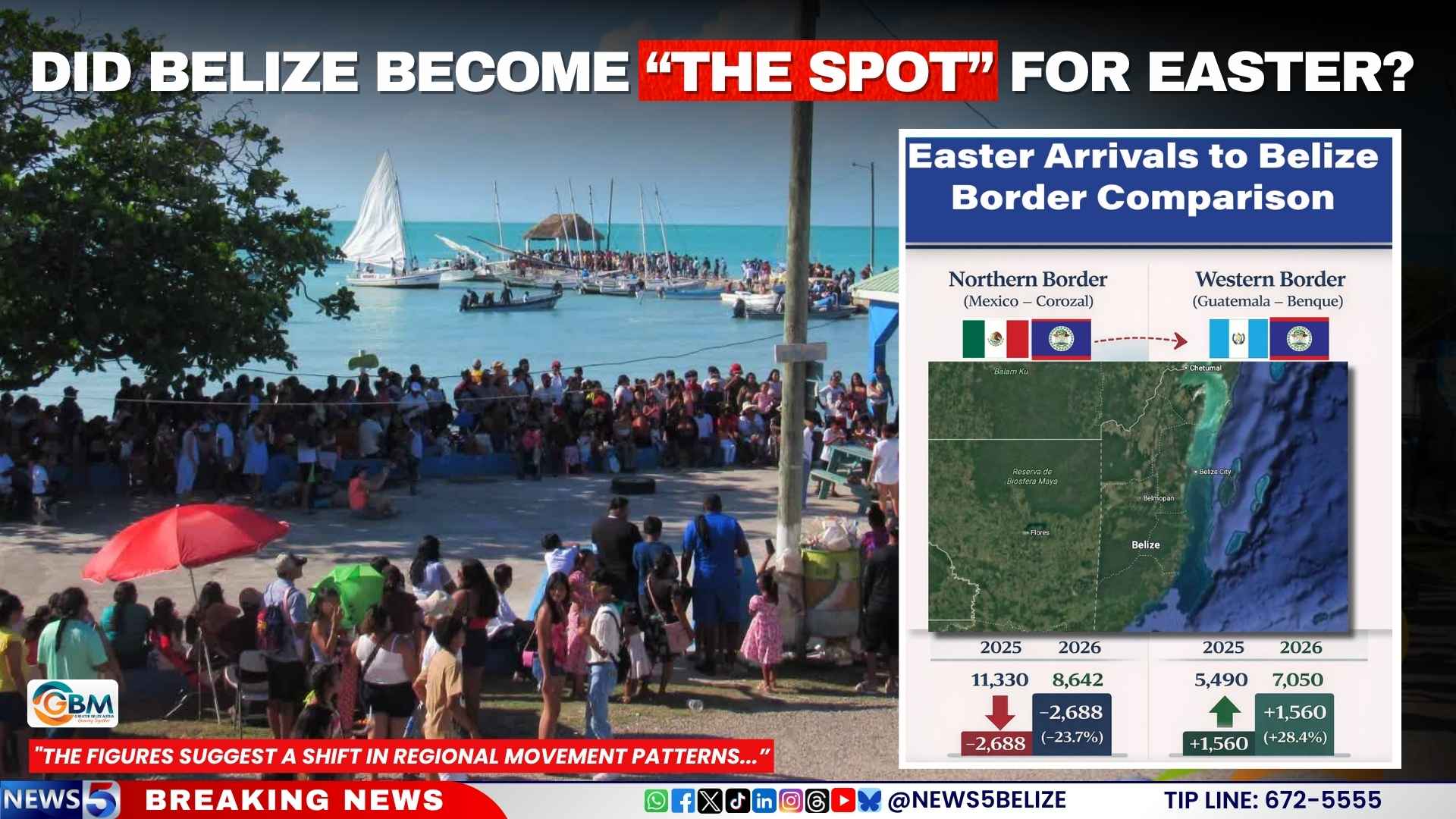
    Trends at Belize’s land border crossings, however, showed mixed outcomes across different checkpoints. Crossings at the western Benque Viejo del Carmen checkpoint, which connects Belize to Guatemala, saw a robust 28.4% increase in arrivals over the Easter holiday. In contrast, entries through the northern Corozal checkpoint bordering Mexico dropped sharply by 23.7%. When combining all land border entry points, the overall volume of arrivals dipped only slightly compared to 2025.

    Beyond the overall arrival numbers, tourist-specific arrivals climbed by 24.6% year-over-year, underscoring Belize’s growing appeal as a top Easter holiday destination. The ministry’s analysis tied the shifting land border trends to changing regional travel patterns. It explained that the data points to a clear shift, with fewer northern crossings from Mexico and increased visitor traffic crossing over from Guatemala during this year’s Easter holiday period. Industry analysts expect this growing momentum for Belize’s Easter tourism to drive further investment in air infrastructure and hospitality services in the coming years.