博客

  • Centenarian Storytelling series targets students in St Ann

    Centenarian Storytelling series targets students in St Ann

    A groundbreaking intergenerational program launches Thursday in St. Ann, Jamaica, creating meaningful connections between students and centenarians through the power of storytelling. The Centenarian Storytelling Initiative, hosted at Bamboo Blu in Mammee Bay, represents a innovative approach to preserving living history while fostering cross-generational understanding.

    Under the broader Custos Commando community development program led by Joseph Issa, Custos of St. Ann, this project strategically pairs students with individuals aged 100 years and older. Participants will engage directly with these remarkable elders through both in-person and virtual interactions, capturing their life experiences through various documentation methods including essays, multimedia presentations, video recordings, and creative storytelling formats.

    The initiative serves multiple purposes: preserving invaluable oral histories that might otherwise be lost, developing students’ communication and documentation abilities, promoting empathy across generations, and recognizing the contributions of senior community members. Custos Issa emphasizes that the program highlights “the many legends within the parish or linked with the parish of St. Ann, to learn from their experience and to award them.”

    A dedicated team including Cieanna Smith, Courtney McIntosh, LeVar Allen, Jodi-Ann Pryce, and Antonia Armstrong leads the project implementation. The program welcomes invited guests, educators, students, and community members to participate in this unique cultural preservation effort.

    This storytelling initiative forms part of a comprehensive community development strategy that includes additional programs such as Jacob’s Ladder, Mammee Bay Fish Sanctuary, Squatter Regularisation, and a Justice of the Peace Mentorship Initiative. According to Issa, these collaborative efforts aim to “effectively enhance the parish and its development, adding value to the lives of the citizens” while demonstrating “amazing progress” in improving living standards throughout St. Ann.
  • Cuba coastguard kills four on Florida-registered boat

    Cuba coastguard kills four on Florida-registered boat

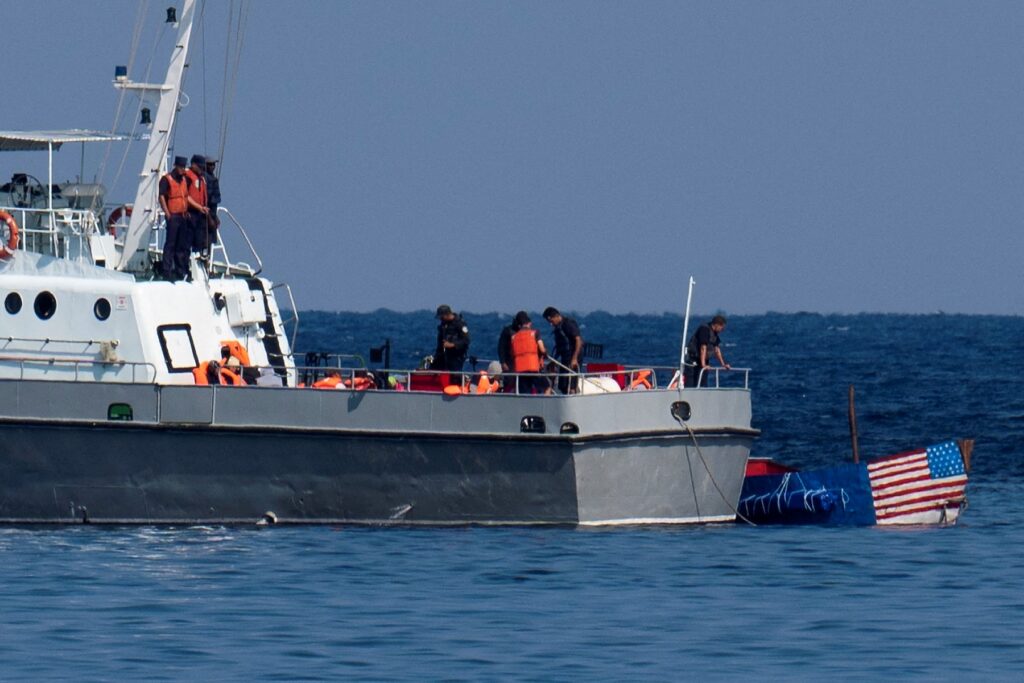
    A deadly maritime confrontation has intensified the strained relations between the United States and Cuba. Cuban authorities reported that their coastguard personnel engaged in a firefight with a US-registered speedboat on Wednesday, resulting in four fatalities and six injuries.

    According to an official statement from Havana’s Interior Ministry, the incident occurred approximately one nautical mile from Falcones Cay in Villa Clara province. The ministry identified the vessel as an ‘illegal’ Florida-registered boat that had entered Cuban territorial waters.

    The confrontation escalated when Cuban coastguard vessels approached the speedboat for identification purposes. ‘Shots were fired from the boat,’ the ministry stated, resulting in injuries to the commander of the Cuban vessel. The coastguard returned fire in what the ministry described as a defensive response.

    Preliminary reports indicate four individuals aboard the speedboat were killed during the exchange, with six others sustaining injuries. Cuban authorities confirmed that the wounded received immediate medical evacuation and assistance. The Interior Ministry reaffirmed Cuba’s commitment to ‘protecting its territorial waters’ against unauthorized incursions.

    This maritime incident occurs against a backdrop of significantly heightened tensions between the two nations, separated by just 100 miles of ocean. The clash coincides with recent developments in US policy toward Cuba’s energy supplies. The Biden administration has recently softened the stringent oil embargo imposed by former President Donald Trump in January, which had targeted Cuba’s primary energy relationship with Venezuela.

    Prior to the US-led capture of Venezuelan leader Nicolas Maduro on January 3rd, Cuba had depended on Venezuela for approximately half of its fuel requirements. The Trump administration’s restrictions had drawn criticism from Caribbean leaders who expressed concern about potential economic collapse in Cuba. In response to these concerns, Washington has now permitted limited Venezuelan oil shipments to Cuba for ‘commercial and humanitarian purposes.’

    The circumstances surrounding the speedboat’s mission and the events leading to the exchange of fire remain under investigation by Cuban authorities.

  • Ex-US Treasury chief Larry Summers quits Harvard over Epstein ties

    Ex-US Treasury chief Larry Summers quits Harvard over Epstein ties

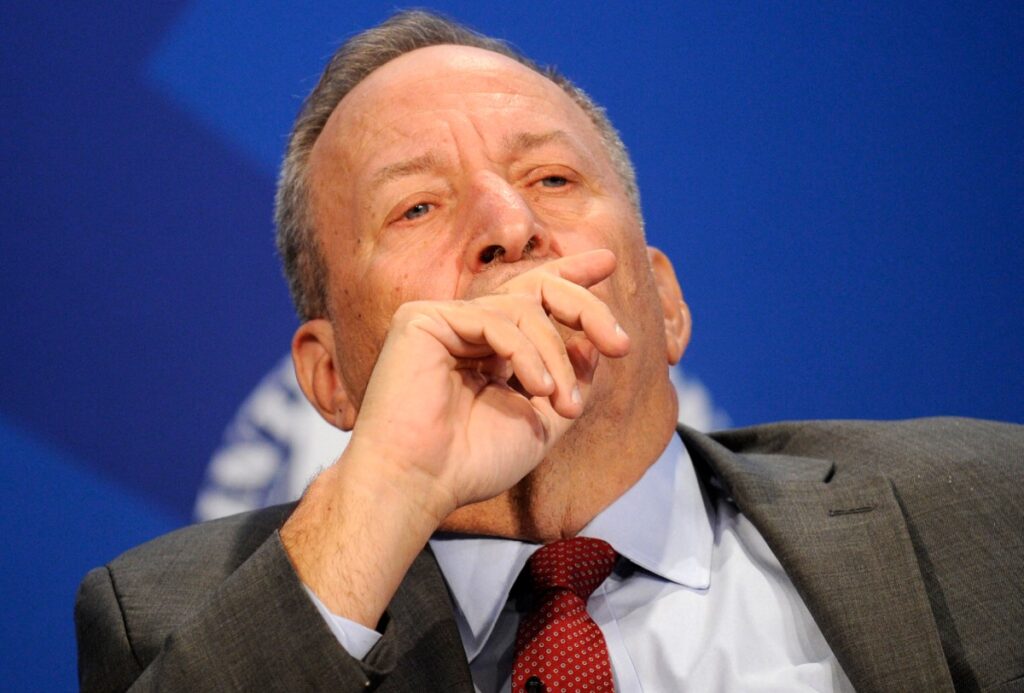
    Harvard University has formally accepted the resignation of former U.S. Treasury Secretary Lawrence Summers from his academic positions following revelations about his extensive communications with convicted sex offender Jeffrey Epstein. The Ivy League institution announced on Wednesday that Summers would step down from his role as co-director of the Mossavar-Rahmani Center for Business and Government and retire from all faculty appointments at the conclusion of the current academic year.

    The development comes amid ongoing scrutiny of prominent figures connected to Epstein, with former President Bill Clinton scheduled to testify before a congressional committee on Friday regarding the financier, while former Secretary of State Hillary Clinton is set to appear on Thursday.

    University officials confirmed Summers’ departure was directly linked to the Epstein case, noting the economist had been on leave since the revelations emerged. In a previously circulated video statement, Summers expressed profound regret to his students, stating: “You will have seen my statement of regret expressing my shame with respect to what I did in communication with Mr. Epstein.”

    The former Treasury secretary had initially stepped back from public commitments in November 2025 following congressional release of emails demonstrating his close communication with Epstein. At that time, Summers acknowledged his “misguided decision to continue communicating with Mr. Epstein” and accepted full responsibility for the association. This scandal previously led to his resignation from the board of the OpenAI foundation.

    While mere mention in the Epstein files does not automatically imply wrongdoing, the disclosed documents reveal numerous connections between Epstein’s circle and public figures who frequently minimized or denied such relationships. Epstein cultivated an extensive network of influential politicians, business leaders, academics, and celebrities, many of whom have faced reputational damage through their associations with him.

    Harvard University disclosed that Epstein had donated $9.1 million to the institution between 1998 and 2008. The case continues to reverberate through elite circles, with numerous prominent Americans—including the Clintons and Microsoft co-founder Bill Gates—experiencing reputational harm from their Epstein connections. To date, only Epstein’s former girlfriend Ghislaine Maxwell has faced legal consequences in the United States related to the case.

  • Regional leaders encouraged by first round of engagement with Rubio

    Regional leaders encouraged by first round of engagement with Rubio

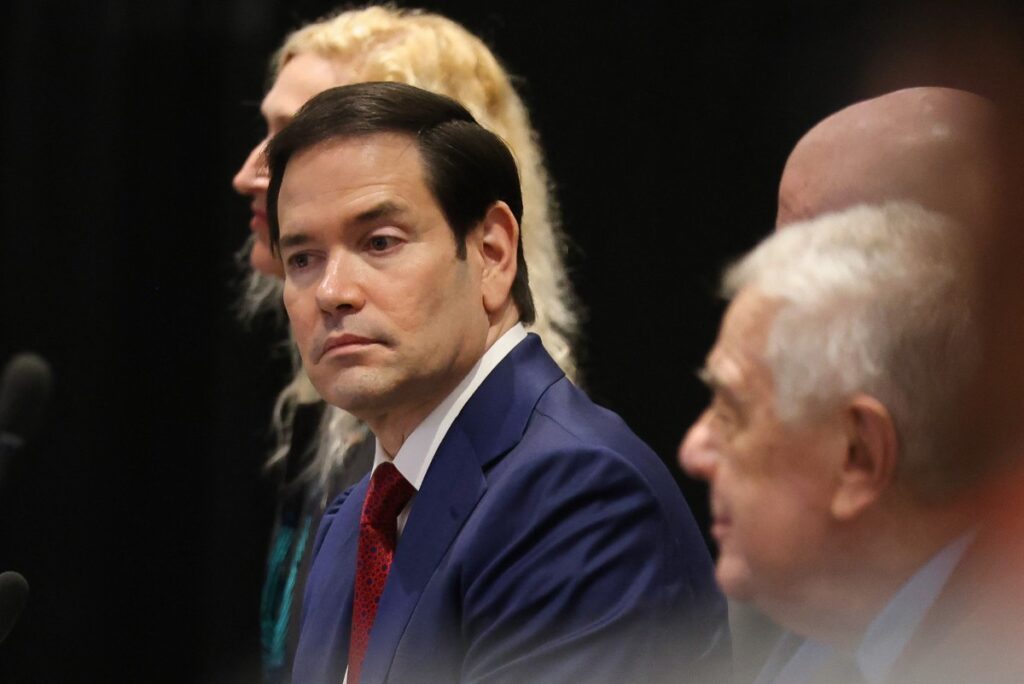
    BASSETERRE, St Kitts – Caribbean Community (CARICOM) leaders expressed optimism following a diplomatic engagement with United States Secretary of State Marco Rubio during the 50th regular CARICOM summit on Wednesday. The high-level meeting, which included both group deliberations and bilateral discussions, marked a significant step in strengthening ties between the North American superpower and its Caribbean neighbors.

    Regional leaders described Rubio’s address as unexpectedly positive, with Antigua and Barbuda Prime Minister Gaston Browne characterizing the message as ‘very encouraging’ despite initial concerns about the tone it might take. The Secretary of State’s brief but impactful statement emphasized geographical proximity, shared populations, and common humanity as foundational elements for enhanced cooperation.

    Prime Minister Browne highlighted the strategic importance of the Caribbean diaspora in the United States as a natural bridge between the regions, noting that Rubio’s comments signaled a renewed commitment to partnership. The discussions, expected to extend beyond an hour, were anticipated to address specific areas of mutual interest and collaboration.

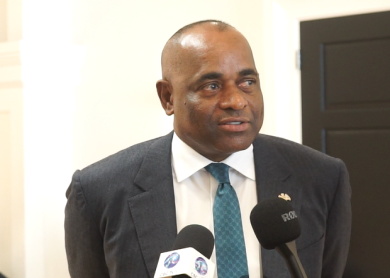
    Dominica’s Prime Minister Roosevelt Skerrit similarly welcomed the diplomatic exchange, emphasizing the importance of continued dialogue on pressing regional issues. While withholding specific details of the closed-door discussions, Skerrit confirmed that both Caribbean and American concerns would be thoroughly addressed, describing the Secretary’s presence as a positive development in itself.

    The summit represents a recalibration of US-Caribbean relations, with leaders expressing confidence that the engagement would lead to more structured cooperation on economic, security, and developmental matters affecting the region.

  • ‘I feel loved’: Irish MP overwhelmed by Jamaican response to viral speech

    ‘I feel loved’: Irish MP overwhelmed by Jamaican response to viral speech

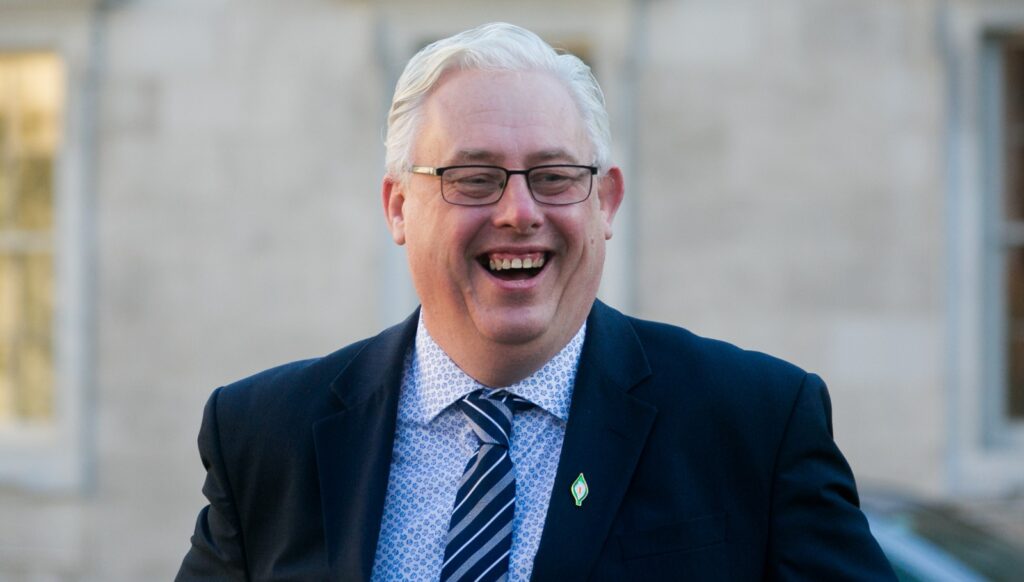
    Sinn Féin politician Thomas Gould has become an unexpected global sensation after a parliamentary speech revealed striking phonetic parallels between his native Cork accent and Jamaican patois. The viral moment has triggered an unprecedented wave of international engagement, particularly from Caribbean audiences, while simultaneously illuminating centuries-old historical connections between Ireland and Jamaica.

    The Cork North-Central representative expressed astonishment at the overwhelming social media response, acknowledging he had never previously recognized the vocal similarities himself. “I know I have a very strong accent and speak rapidly,” Gould noted. “When I listen to Jamaicans speak, some demonstrate remarkably similar speech patterns.”

    Linguistic experts suggest the phenomenon stems from Cork’s distinctive northside dialect, which differs significantly from the more refined accents typically heard in Ireland’s political chambers. Gould observed that parliamentary discourse has historically been dominated by “posher and more affluent” regional accents, making his working-class Cork inflection particularly noticeable.

    The convergence of accents reveals deeper historical threads dating to the 17th century, when thousands of Irish migrants arrived in the Caribbean under indentured servitude. Most Jamaican-bound Irish originated from Cork and Munster, bringing their linguistic traditions to the island. While their conditions were brutally harsh, Gould clarified these indentured workers faced marginally better treatment than African slaves.

    Despite minimal Jamaican residency in modern Cork, Gould highlighted Dublin’s vibrant Jamaican community that annually celebrates Independence Day. The politician characterized the unexpected viral attention as a positive unifying force amid global tensions, stating: “We are all friends. There are larger world problems, and shared laughter creates connection. The supportive messages have been unbelievable.”

  • Brazil politicians convicted for ordering murder of black activist councilor

    Brazil politicians convicted for ordering murder of black activist councilor

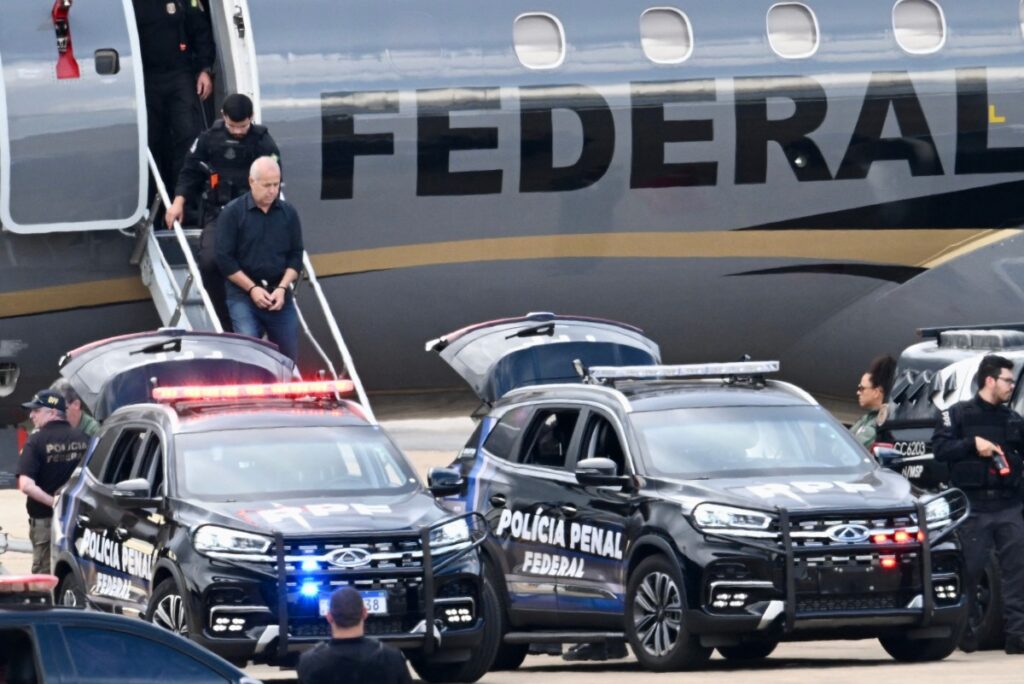
    BRASÍLIA, Brazil—In a landmark ruling with profound implications for Brazil’s political landscape, the nation’s Supreme Court unanimously convicted two former legislators on Wednesday for orchestrating the 2018 assassination of Rio de Janeiro councilwoman Marielle Franco, a case that exposed alarming collusion between political elites and paramilitary organizations.

    The court’s four-justice panel sentenced former federal deputy Chiquinho Brazao, 62, and his brother Domingos Brazao, 60, a former state assemblyman, to 76 years and three months imprisonment each. Their convictions encompass charges of double aggravated homicide, leading an armed criminal enterprise, and the attempted murder of one of Franco’s aides who survived the attack.

    Justice Alexandre de Moraes delivered a powerful indictment during proceedings, stating the Brazao brothers were not merely connected to militia groups but constituted “the militia itself.” The court established that Franco—a 38-year-old Black, lesbian activist raised in Rio’s favelas—was targeted specifically because her advocacy threatened the brothers’ financial interests in illegal real estate expansion within impoverished communities.

    Franco’s murder, which also claimed the life of her driver Anderson Gomes, triggered national outrage and international condemnation, revealing how Rio’s militias—originally formed as community protection forces—have evolved into sophisticated criminal syndicates controlling territory through extortion and land grabbing while enjoying political patronage.

    Three additional defendants received substantial sentences: former police commissioner Rivaldo Barbosa (18 years for obstruction), militia member Ronald Paulo de Alves (56 years for surveillance), and Domingos Brazao’s ex-advisor Robson Calixto Fonseca (9 years for intermediary role). Two triggermen were previously sentenced in 2024, with one providing crucial plea testimony.

    Justice Carmen Lucia, the court’s sole female member, voiced profound distress during deliberations, questioning how many more activists Brazil would allow to be silenced through violence. The verdict marks a watershed moment in a nation grappling with political violence and institutional corruption.

  • US eases Venezuela oil ban to Cuba as crisis alarms Caribbean

    US eases Venezuela oil ban to Cuba as crisis alarms Caribbean

    BASSETERRE, Saint Kitts and Nevis – In a significant policy shift, the United States Treasury Department has relaxed its stringent sanctions on Venezuelan oil exports to Cuba during the Caribbean Community (CARICOM) summit. This decision comes as Caribbean leaders express mounting concerns about Cuba’s deepening economic crisis and its potential to destabilize the entire region.

    The policy adjustment permits “transactions that support the Cuban people” involving Venezuelan petroleum for both commercial and humanitarian purposes. A crucial stipulation requires these exports to be channeled through private enterprises rather than Cuba’s government or military infrastructure.

    Secretary of State Marco Rubio, addressing closed-door sessions at the summit, explained the revised U.S. approach toward Cuba. The Cuban-American diplomat, historically known for his hardline stance against Havana’s government, has recently moderated his rhetoric regarding regime change.

    The sanctions relief responds to urgent warnings from Caribbean leaders about Cuba’s precarious situation. Jamaican Prime Minister Andrew Holness cautioned that further deterioration in Cuba would inevitably affect regional stability and potentially trigger migration waves – a primary concern for the U.S. administration.

    “Humanitarian suffering serves no one,” Holness stated. “A prolonged crisis in Cuba will not remain confined to Cuba.” He advocated for constructive dialogue between Washington and Havana aimed at “de-escalation, reform and stability.”

    The summit’s host, Prime Minister Terrance Drew of Saint Kitts and Nevis, reinforced these concerns while requesting humanitarian support for Cuba. Drawing from his seven years of medical education in Cuba, Drew described receiving firsthand accounts of food shortages, power outages, and deteriorating public services.

    Not all leaders expressed uniform perspectives. Kamla Persad-Bissessar, Prime Minister of Trinidad and Tobago, diverged from her counterparts by questioning support for communist governance while simultaneously endorsing U.S. intervention in Venezuela. She credited U.S. anti-narcotics operations with reducing her nation’s homicide rate by intercepting firearms from Venezuela.

    The geopolitical maneuvering occurs against the backdrop of longstanding U.S. sanctions against Cuba, maintained with brief interruptions since Fidel Castro’s 1959 revolution. The current administration has notably resisted implementing additional hardline measures advocated by some Cuban-American critics, including restrictions on remittance transfers.

  • Tomorrow.io AI satellites alongside BACSWN’s WxSenseNet™ to power the nation’s Aviation Weather Centre

    Tomorrow.io AI satellites alongside BACSWN’s WxSenseNet™ to power the nation’s Aviation Weather Centre

    Space technology company Tomorrow.io has unveiled DeepSky, an advanced satellite constellation set to transform global weather data collection and analysis. This announcement comes merely weeks after the successful deployment of their initial satellite network, marking a significant acceleration in their space-based meteorological ambitions.

    The groundbreaking system addresses critical limitations in traditional weather forecasting methodologies. For decades, meteorological services worldwide have depended on a sparse network of government-operated satellites characterized by high development costs and limited observational capabilities. This infrastructure has constrained both the frequency and resolution of atmospheric data available to forecasters.

    DeepSky represents a paradigm shift in weather observation technology. Operating in low Earth orbit, the new constellation promises enhanced atmospheric data quality, improved revisit rates, and comprehensive global coverage. Rather than supplanting existing government systems, the network is designed to complement them by providing unprecedented temporal density and expanded monitoring capabilities, particularly benefiting regions like The Bahamas and the Caribbean.

    Company leadership emphasizes the transformative potential of this development. “Historically, atmospheric radar deployment in space has been exclusively government-led, with only a handful of such systems ever launched,” noted Shimon Elkabetz, CEO and Co-Founder. “With each successful launch, we approach a new era of space-based weather intelligence.”

    The timing coincides with the meteorological industry’s rapid transition toward AI-driven forecasting models, which require continuous, high-density data streams for optimal performance. Technological advancements have simultaneously reduced both development timelines and costs for high-performance spacecraft, making commercial satellite constellations increasingly viable.

    According to Itai Zlotnik, Co-Founder and Chief Customer Officer, these innovations will enable “unprecedented sub-hourly global weather insights,” significantly improving prediction accuracy during increasingly volatile weather patterns. This enhanced capability could prove crucial for aviation safety, climate monitoring, and severe weather preparedness worldwide.

  • Jamaican man answers to drug trafficking charges in Florida

    Jamaican man answers to drug trafficking charges in Florida

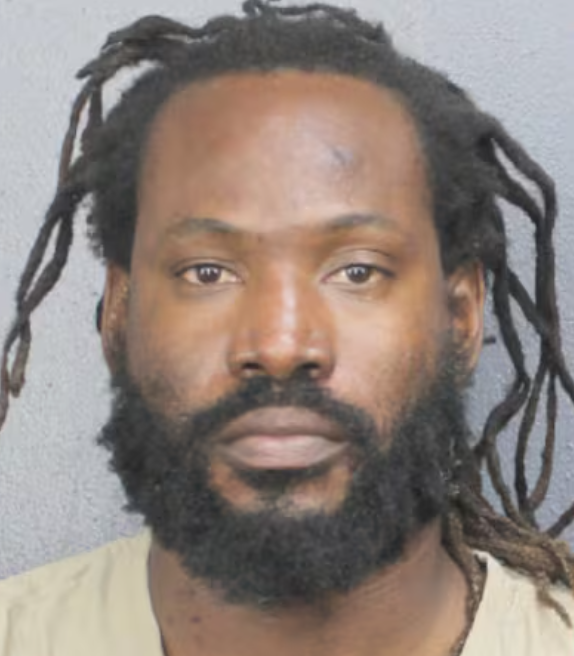
    A significant international drug trafficking operation was disrupted by the United States Coast Guard, leading to federal charges against a Jamaican national. Rudalph Hylton, 33, appeared in a Florida federal court on Monday following the interception of a vessel carrying narcotics with an estimated street value in the millions.

  • Jackson chides Chang over comment that JFJ ‘living off blood money’

    Jackson chides Chang over comment that JFJ ‘living off blood money’

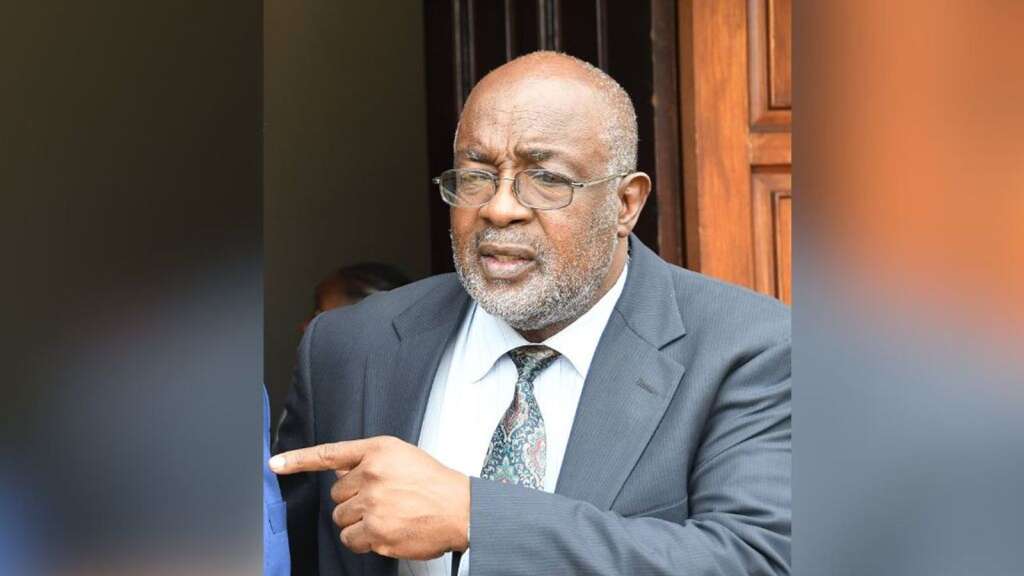
    KINGSTON, Jamaica—A significant political confrontation has emerged following controversial statements by Jamaica’s National Security Minister Dr. Horace Chang regarding prominent human rights organization Jamaicans for Justice (JFJ). Opposition National Security Spokesperson Fitz Jackson has issued a stern rebuke, characterizing Chang’s allegation that JFJ was “living off blood money” as profoundly irresponsible and unbecoming of a government official overseeing the nation’s security apparatus.

    In an official media release circulated Wednesday, Jackson demanded the immediate retraction of what he described as a troubling assault against an established civil society organization. He emphasized that JFJ has maintained a longstanding commitment to advocating for justice, accountability, and human rights protections within Jamaica’s democratic framework.

    Jackson articulated grave concerns that such inflammatory rhetoric directly undermines essential security priorities during a period of severe crime challenges. He asserted that the minister should instead concentrate on developing evidence-based policies, enhancing investigative capabilities, and fostering trust between citizens and security forces rather than targeting respected advocacy groups.

    The opposition spokesperson warned that these remarks risk eroding public confidence in national security leadership and divert attention from critical anti-crime initiatives. Jackson emphasized that responsible governance necessitates measured language, particularly concerning human rights issues, police accountability, and fundamental protections of life.

    He further stressed that policy disagreements should never degenerate into personal attacks or attempts to discredit organizations operating legally within Jamaica’s democratic system. Jackson highlighted the essential role civil society plays in strengthening institutions, promoting transparency, and building confidence in the rule of law, describing these functions as vital components of a healthy democracy.

    Concluding his statement, Jackson called for mature leadership that encourages constructive engagement with all stakeholders, including civil society organizations, in the collective endeavor to enhance national safety and security for all Jamaican citizens.