博客

  • Cuban Ambassador Denounces US Blockade Pressure

    Cuban Ambassador Denounces US Blockade Pressure

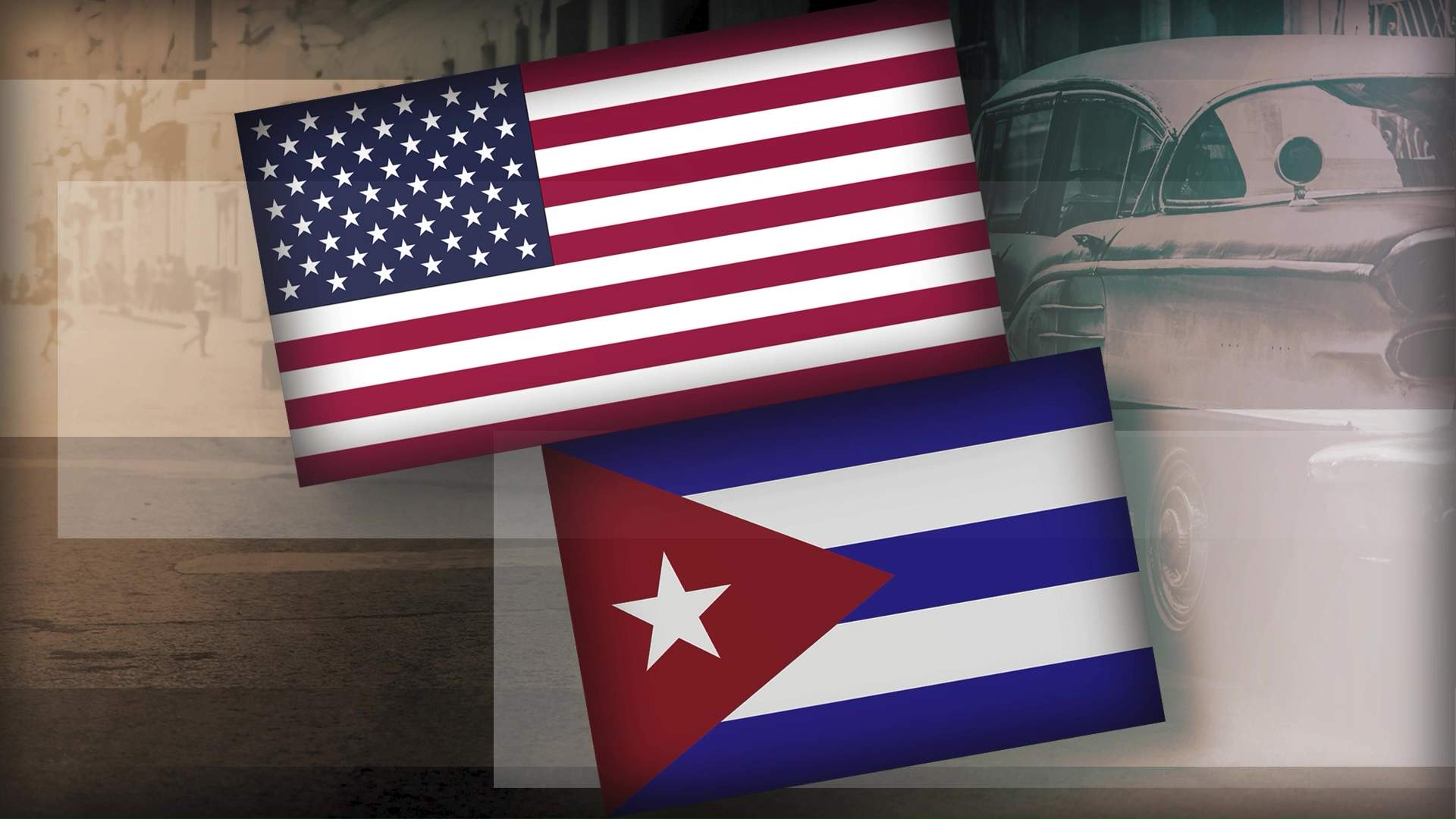
    Cuba is confronting severe economic pressures as the United States intensifies its longstanding embargo, creating critical fuel shortages and triggering widespread power outages across the island nation. The situation has escalated to the point where the United Nations has issued warnings about a potential humanitarian crisis if energy needs remain unmet.

    In an exclusive interview, Cuban Ambassador to Belize Yahima Martinez Millán denounced what she characterized as Washington’s deliberate campaign of ‘economic suffocation.’ Despite these extreme pressures, Ambassador Millán emphatically stated that Cuba has not been paralyzed. ‘As the world is seeing, Cuba is facing a very complex period caused by the intensification of the US blockade. However, the country is not paralyzed,’ she declared.

    The Cuban government has implemented emergency measures to prioritize essential services, with particular focus on maintaining healthcare and education systems despite severe resource constraints. An energy-saving protocol has been adopted nationwide to ensure these critical services continue functioning.

    Ambassador Millán articulated Cuba’s unwavering position: ‘Our response remains the same during more than sixty years. Our response is independence, dignity and sovereignty.’ She emphasized that Cuba refuses to negotiate under pressure and threats, maintaining instead a diplomacy of ‘peace and cooperation.’

    International response is emerging, with both Canada and Mexico announcing plans to provide humanitarian aid. This development follows calls from regional leaders, including Belize’s former Foreign Affairs Minister Assad Shoman, for broader international support to counter the effects of the US blockade.

    When confronted with assessments that US policies could lead to Cuban deaths, Ambassador Millán rejected characterizations of political fragility, attributing the crisis exclusively to ‘external threat’ rather than internal causes. She reaffirmed Cuba’s commitment to distributing resources equitably and protecting the most vulnerable populations throughout the crisis.
  • 311: Saint Lucia’s hotline for health alerts

    311: Saint Lucia’s hotline for health alerts

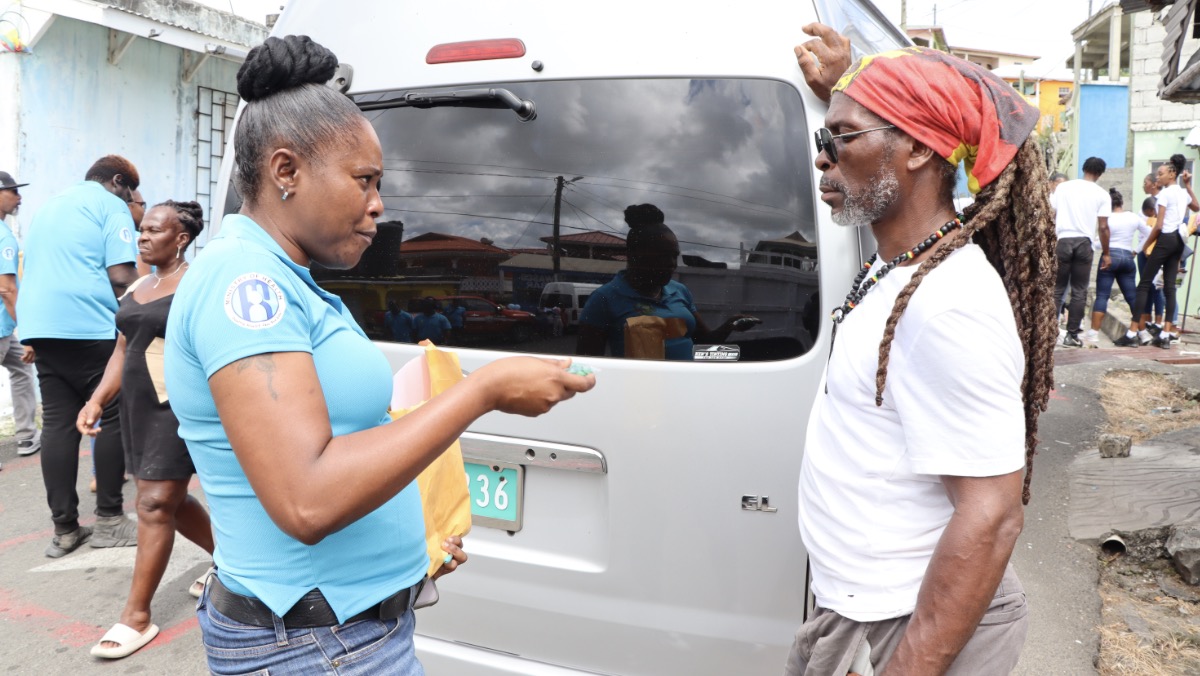
    The Ministry of Health, Wellness and Nutrition has established a formalized channel for citizens to report potential public health threats through a confidential hotline service. Operational on weekdays from 7 a.m. to 7 p.m., the system allows residents to contact 311 to voice concerns about unusual health occurrences in their communities.

    National Epidemiologist Dr. Michelle Francois unveiled the initiative on February 2nd as a cornerstone of the newly implemented Event-Based Surveillance (EBS) framework. This structured system represents a significant advancement in national health security by creating standardized protocols for capturing and examining anomalous health events nationwide.

    Dr. Francois acknowledged that while community members previously expressed concerns through informal channels, the absence of a dedicated reporting mechanism posed substantial risks. Critical information often circulated through unofficial networks without reaching health authorities in a timely manner, potentially delaying crucial interventions.

    “We’ve established a confidential reporting architecture enabling direct communication between the public and health officials,” Dr. Francois stated. “This structured mechanism ensures we can promptly evaluate and respond to reported concerns.”

    The epidemiologist stressed that civic participation forms the foundation of the system’s effectiveness. Residents are encouraged to report patterns such as unusual illness clusters, increased school absenteeism, or discoveries of deceased animals in public areas—potential indicators of emerging health threats.

    These citizen reports may initiate formal investigations and, when warranted, trigger coordinated responses across multiple government ministries to ensure comprehensive threat mitigation. The system enhances national preparedness against potential outbreaks by leveraging community-level observations that might otherwise go unnoticed.

  • AGHS Graduation Ban Over Hairstyles Withdrawn After Ministry Intervention

    AGHS Graduation Ban Over Hairstyles Withdrawn After Ministry Intervention

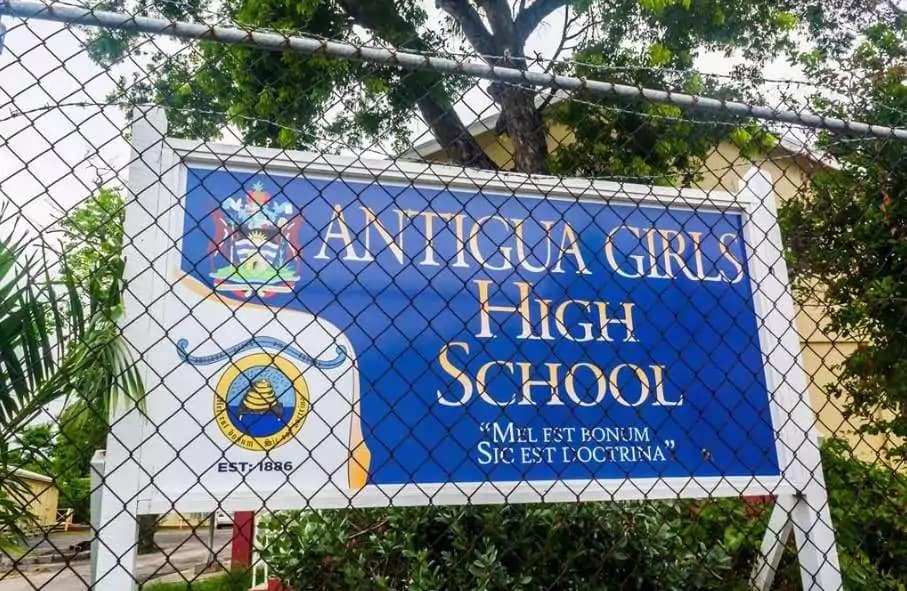
    A contentious policy that threatened to bar several fifth-form students from their graduation ceremony at Antigua Girls’ High School has been officially revoked after the Ministry of Education intervened in the dispute. The controversy originated when Principal Rosalind Beazer issued a directive prohibiting hair extensions, braids, weaves, and artificial hair coloring, warning that violations would result in exclusion from the graduation proceedings. The situation escalated when multiple students were sent home during a yearbook photo session for non-compliant hairstyles, sparking widespread public debate across the community.

    The proposed punishment drew significant criticism from residents who characterized the measure as excessively harsh for a minor infraction. Director of Education Clare Browne addressed the matter on national television, stating that denying students their graduation rights over hairstyle violations would constitute a disproportionate response. This perspective prompted the Ministry to facilitate a resolution meeting involving school administrators, parents, and the affected students.

    During the convened meeting, school officials formally withdrew the graduation ban, though they required the students to compose letters of apology to be presented before school administrators and their peer group. The gathering also addressed separate allegations concerning a senior educator who allegedly conducted physical inspections by running hands through students’ hair to check for extensions. While a deputy principal refuted these claims, two students reportedly identified the educator in question. Additional concerns emerged as one parent claimed a student was stripped of her prefect badge and another removed from the graduation planning committee in relation to the incident.

    Parents have expressed considerable relief that their daughters will now participate in the graduation ceremonies without further restrictions. The fifth-form students are scheduled to begin study leave on April 16 in preparation for the forthcoming Caribbean Secondary Education Certificate (CSEC) examinations in May and June.

  • Will CARICOM Help Cuba?

    Will CARICOM Help Cuba?

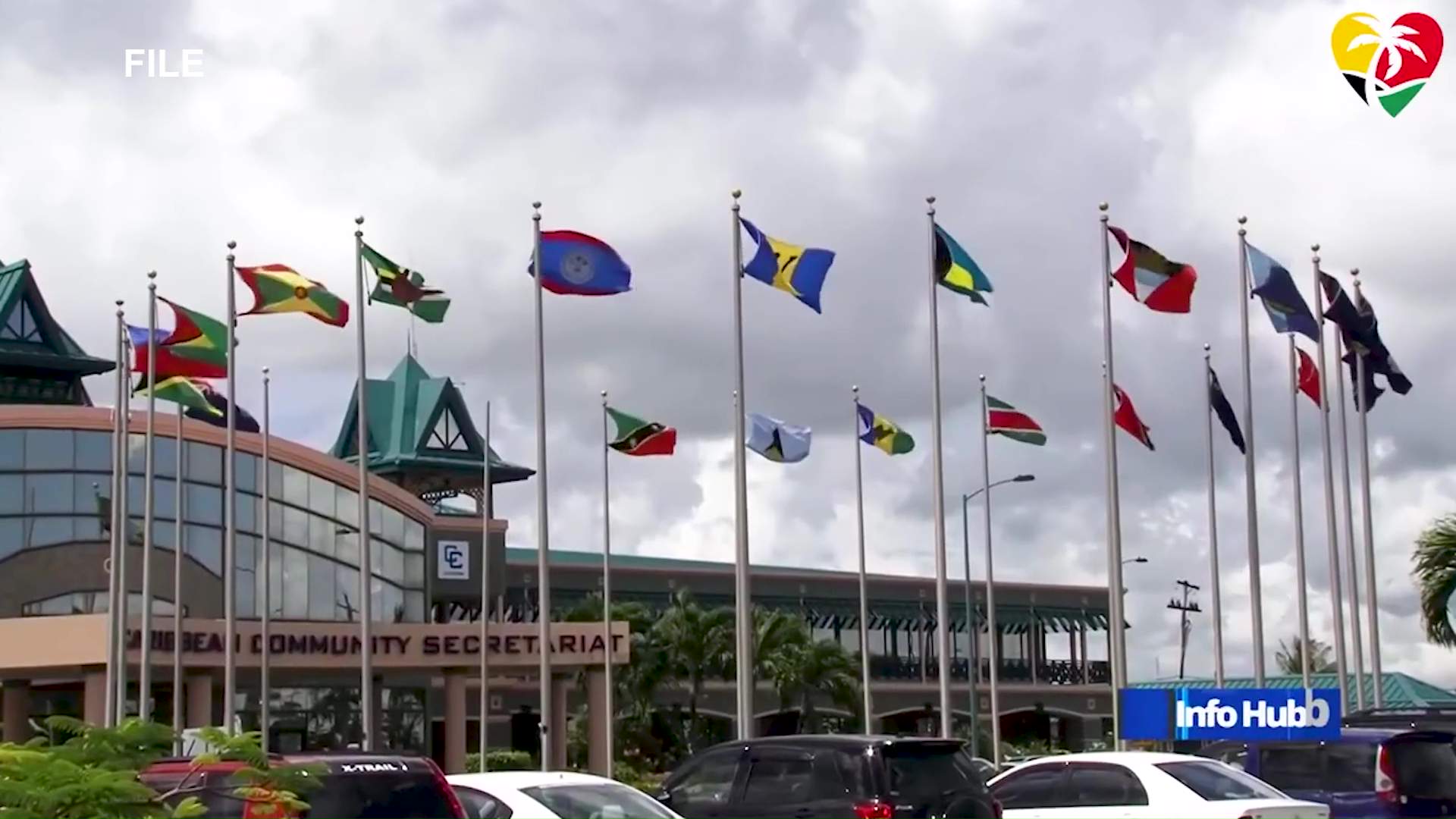
    At the CARICOM leadership summit in St. Kitts and Nevis, Cuban Ambassador to Belize Yahima Martínez Millán emphasized Cuba’s deepening regional partnerships despite ongoing US economic pressure. The diplomat characterized Cuba’s relationship with CARICOM nations as historically significant, describing the Caribbean region as “home” rather than merely a political sphere.

    Ambassador Martínez Millán acknowledged CARICOM’s consistent support in condemning and seeking elimination of the US embargo, which she described as critically important for Cuba’s development. The bilateral relationship with Belize specifically was highlighted as exemplary, particularly in areas of healthcare cooperation and technical training programs that have spanned decades.

    Regarding Cuba’s strategic response to external economic pressures, the ambassador identified energy sovereignty as the nation’s top priority. “We are accelerating all proposals to transition to renewable energy sources,” Martínez Millán stated, while acknowledging the technological and financial challenges exacerbated by the embargo.

    The Cuban government is simultaneously pursuing diversified international partnerships, strengthening ties with the BRICS bloc and developing relationships across Asia, Europe, and Latin America. Additionally, Cuba is updating its economic model to include greater participation from non-state actors to enhance trade capabilities amid ongoing challenges.

  • Saint Kitts and Nevis: Rubio meets Caribbean leaders as US raises pressure on Cuba

    Saint Kitts and Nevis: Rubio meets Caribbean leaders as US raises pressure on Cuba

    In a historic diplomatic engagement, U.S. Secretary of State Marco Rubio convened with Caribbean Community (CARICOM) leaders in Saint Kitts and Nevis amid escalating regional tensions. The high-level summit marked the first visit by a U.S. Cabinet official to the dual-island nation, notable as the birthplace of American founding father Alexander Hamilton.

    The discussions centered on mounting apprehensions regarding Cuba’s deteriorating economic situation, exacerbated by recent disruptions in Venezuelan oil shipments following President Nicolás Maduro’s removal. Jamaican Prime Minister Andrew Holness articulated collective concerns, warning that “a prolonged crisis in Cuba will not remain confined to Cuba” and emphasizing potential regional destabilization and migration consequences.

    Despite historical tensions, Secretary Rubio adopted a measured diplomatic approach, seeking sustained cooperation on multiple fronts including Venezuela’s political transition and Haiti’s ongoing crisis. The Cuban-American diplomat, who has historically advocated for regime change in Havana, notably moderated his rhetoric while maintaining pressure through threatened sanctions against nations supplying oil to Cuba.

    The summit revealed divergent regional perspectives. Prime Minister Terrance Drew of host nation Saint Kitts and Nevis, himself a Cuba-educated physician, appealed for humanitarian assistance while acknowledging Cuba’s worsening conditions including food scarcity and power outages. Conversely, Trinidad and Tobago’s Prime Minister Kamla Persad-Bissessar criticized communist governance while praising U.S. intervention in Venezuela and its positive impact on reducing regional arms trafficking.

    The diplomatic gathering occurred against the backdrop of the Trump administration’s “Donroe Doctrine,” which emphasizes unilateral intervention to advance U.S. interests in the Western Hemisphere. Recent U.S. military actions against alleged drug trafficking operations in Caribbean waters have drawn international scrutiny regarding their legal and ethical foundations.

  • Labour Dept Moves to Clarify CCJ Severance Ruling

    Labour Dept Moves to Clarify CCJ Severance Ruling

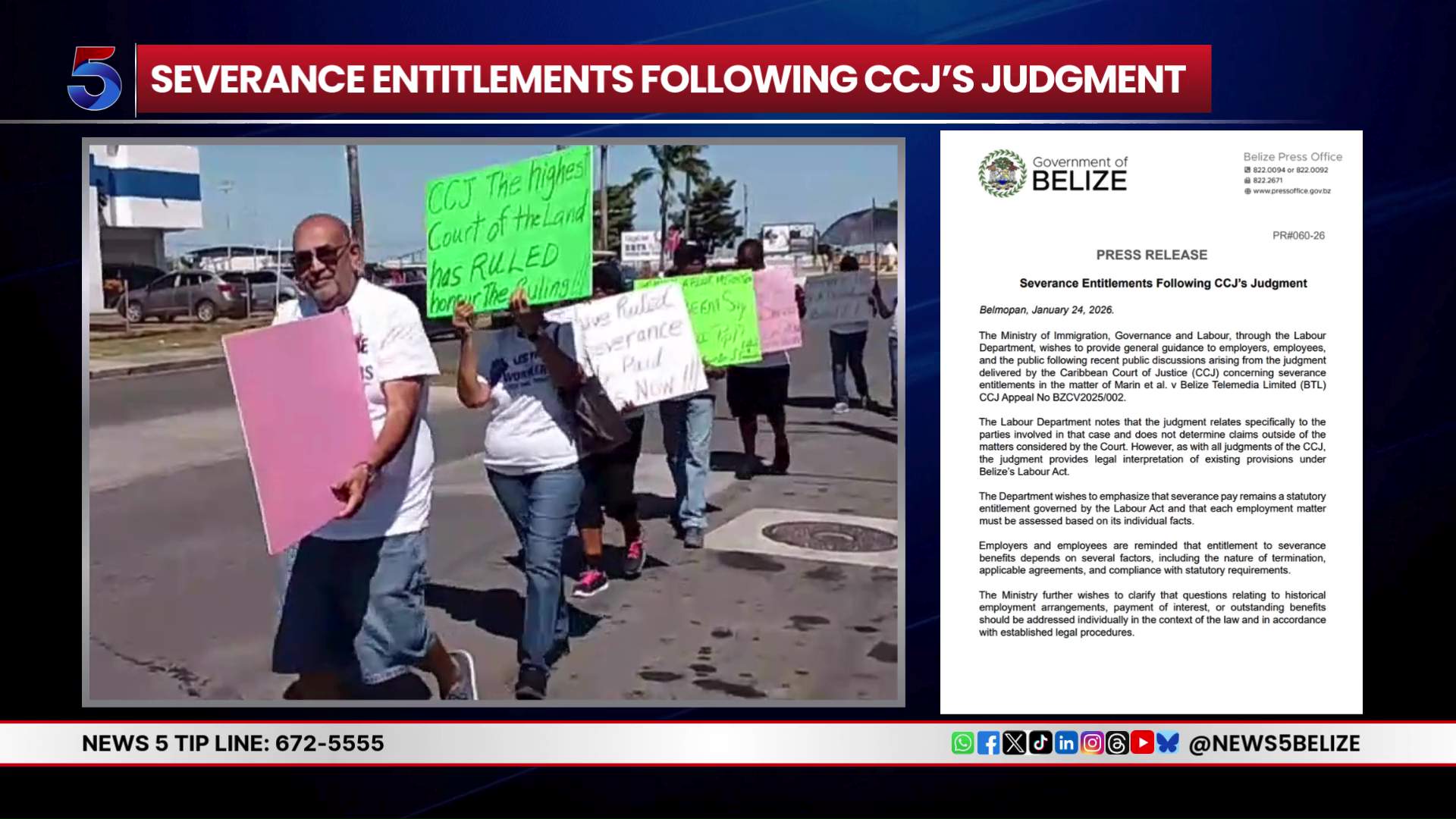
    The Belizean labor landscape faces mounting tension as conflicting interpretations of a landmark Caribbean Court of Justice ruling trigger both governmental intervention and worker mobilization. The Ministry of Immigration, Governance and Labour has moved urgently to address widespread public confusion stemming from the CCJ’s decision in Marin v. BTL, emphasizing that the ruling establishes precedent solely for the specific parties involved rather than creating universal entitlement to severance payments nationwide.

    Despite governmental assurances that existing severance regulations remain unchanged, the Belize Communication Workers for Justice (BCWJ) has intensified its campaign for compensation, alleging systematic non-compliance by Belize Telemedia leadership. The dispute has taken a decidedly personal turn as workers announced plans to demonstrate Friday at Southside Meat Shop on Albert Street West—a business owned by BTL board chairman Markhelm Lizarraga.

    BCWJ organizer Emily Turner articulated the strategic shift toward personal confrontation, stating: “We believe the chairman is behaving personally with us about paying our severance, and we must make it personal right back at him.” The decision follows collapsed negotiations that initially appeared promising when BTL indicated board approval for severance payments, only to subsequently maintain that many workers remained ineligible according to their interpretation of the CCJ ruling.

    Turner detailed the breakdown in negotiations, explaining that despite presenting good faith offers, company representatives reiterated their non-compliance stance regarding workers with over six years of service. The Labor Department continues urging both employers and employees to seek individualized legal guidance rather than presuming blanket application of the court decision, emphasizing that each case depends on specific contractual agreements and factual circumstances.

  • Teacher Denied Invalidity Benefits After Decades of Service

    Teacher Denied Invalidity Benefits After Decades of Service

    A veteran educator’s prolonged struggle for disability benefits has raised fundamental questions about social protection systems for long-serving public servants. Gerardo Aldana, who dedicated 28 years to teaching at Santa Elena Primary School, finds himself in financial distress despite decades of Social Security contributions after a career-ending spinal injury left him with five herniated disks.

    The former teacher’s ordeal began nearly ten years ago when he was compelled to resign following extended medical leave. Despite meeting contribution requirements and providing extensive medical documentation, Aldana’s application for invalidity benefits remains unresolved. His case highlights systemic challenges facing workers who develop severe health conditions after long careers.

    Social Security Board authorities have now initiated a formal investigation into the delayed processing of Aldana’s claim. Vanessa Vellos, SSB’s Public Relations Manager, acknowledged the seriousness of the matter while emphasizing the need for comprehensive review before reaching conclusions. “This matter is currently under review,” Vellos stated. “It has been my experience that when these cases emerge, there is always another perspective to consider.”

    The situation underscores broader concerns about social safety nets for aging educators and public servants. Aldana’s case represents numerous workers who transition from being contributors to claimants within systems they supported throughout their professional lives. His statement about being advised to undergo risky spinal surgery before reapplying for benefits has sparked debate about appropriate qualification criteria for disability claims.

    As the investigation proceeds, education advocates and workers’ rights organizations are monitoring developments closely, seeing Aldana’s experience as indicative of larger structural issues within social security administration for long-term contributors facing health crises.

  • Estimates of Expenditure and Revenue for the financial year 2026-2027 laid in Parliament

    Estimates of Expenditure and Revenue for the financial year 2026-2027 laid in Parliament

    The Government of Barbados has formally presented its comprehensive budget for the 2026-2027 fiscal year to Parliament, initiating the legislative process for national expenditure and revenue allocation. This financial blueprint, which also includes a revised forecast for the ongoing 2025-2026 period, will undergo detailed parliamentary scrutiny starting March 2, 2026, through debates on the Appropriation Bill.

    For the current 2025-2026 financial year, the revised fiscal outlook indicates an expected cash revenue of $3,856.0 million, predominantly from tax contributions ($3,663.4 million), with the remainder from non-tax and grant sources. Total expenditure is projected at $3,939.8 million, leading to a modest deficit of $83.8 million, representing -0.5% of the estimated GDP of $16,242.8 million. A robust primary surplus of $658.4 million (4.1% of GDP) underscores a stable fiscal foundation.

    Looking ahead to 2026-2027, the government anticipates a significant revenue expansion. On a cash basis, current revenue is projected to reach $5,179.0 million, marking a substantial 34.3% increase from the revised 2025-2026 figures. Total expenditure on an accrual basis, inclusive of amortization, is set at $6,138.6 million. Converted to a cash basis (excluding amortization), this translates to $5,075.5 million, allocated between current ($4,185.7 million) and capital ($889.8 million) expenditures. This reflects a notable $766.7 million increase in current spending compared to the previous year.

    Key expenditure drivers include a significant rise in goods and services funding, set to increase by $376.2 million to $966.7 million, and a 32% jump in current transfers to $1,520.1 million. Debt servicing remains a major outlay at $1,495.9 million. Despite this, the primary balance is forecast to be a strong surplus of $817.5 million, equating to 4.8% of a projected GDP of $17,064.7 million.

    The budget allocates strategic investments across critical sectors, including:
    * $182.2 million subvention for the Queen Elizabeth Hospital.
    * $121.5 million for the Social Empowerment Agency.
    * $242.0 million for the Barbados Water Authority’s capital projects.
    * $116.0 million for the Barbados Defence Force.
    * $78.4 million for Special Needs grants, Pensioners, and Welfare.
    Additional provisions target long-term economic resilience, including $75.0 million for the Economic Diversification Growth Fund, $56.0 million for the Resilience and Regeneration Fund, $52.2 million for the Barbados Republic Child Wealth Fund, $23.0 million for the Smart Energy Fund, and $20.0 million to capitalize the Blue Green Bank, signaling a strong commitment to sustainable and diversified economic growth.

  • MP Nicholls, blasts “selfish” floor-crossing

    MP Nicholls, blasts “selfish” floor-crossing

    In his inaugural parliamentary address, Barbados’ newly appointed Minister of Home Affairs and Information Gregory Nicholls delivered a robust defense of proposed anti-defection legislation, characterizing the measure as essential protection for democratic integrity. The St. Thomas representative and seasoned Barbados Labour Party member asserted that elected officials who abandon their party affiliation commit fundamental betrayal against constituents who endorsed specific manifestos and ideologies.

    Addressing concerns about freedom of expression, Minister Nicholls contended that the collective electoral mandate supersedes individual representatives’ personal preferences. “We do not stand here in our own names,” he declared, distinguishing between independent candidates who run on personal merit and party-affiliated representatives who carry their party’s platform as a “badge of honor.”

    The legislator invoked regional political history, referencing governmental collapses in Guyana and historical party splits within Barbados—including the 1989 DLP backbench division and more recent defections—as cautionary examples. He characterized many instances of party switching as motivated by “naked, selfish, personal reasons” including ministerial aspirations or financial incentives, though he abstained from providing specific contemporary examples.

    Nicholls criticized recent political maneuvers, suggesting current defection patterns represent “dishonest solutions” to address opposition leadership voids rather than genuine ideological evolution. He dismissed constitutional arguments against the bill as “ramshackle” reasoning, maintaining that governmental structures—from prime ministerial appointments to opposition leadership recognition—inherently acknowledge political parties’ operational reality.

    The attorney-politician concluded by clarifying that the legislation wouldn’t prohibit representatives from leaving parties but would necessitate seeking renewed electoral mandates. “This law requires you to go back and get your mandate from the people who have put you here,” he stated. “What can be undemocratic about giving the people the final say?”

  • CONCACAF U-20 World Cup Qualifiers : «D-1», Player List

    CONCACAF U-20 World Cup Qualifiers : «D-1», Player List

    WILLEMSTAD, CURAÇAO – Haiti’s under-20 national football team, known as the Grenadiers, has officially commenced their campaign in the CONCACAF U-20 World Cup qualifiers after arriving in the capital city of Willemstad on February 24, 2026. The squad, under the strategic guidance of Cuban head coach Raul Gonzalez Triana, is poised to compete in the regional championship scheduled from February 26 through March 4, 2026.

    The Grenadiers will initiate their tournament journey with an opening match against the Anguilla Rainbow Warriors on February 26. The selection features a 21-player roster demonstrating a blend of domestic talent and international experience. Fourteen athletes currently represent clubs within Haiti’s national league system, with thirteen hailing from first-division teams. Notably, the roster includes three players—Clifford Gene, Miguel Joseph, and Emerson Laisse—who have already secured qualification for the U-17 World Cup finals later in 2026, highlighting their exceptional development trajectory.

    The team composition showcases significant geographic diversity in player development. While the majority compete within Haiti’s academy and club system, several key players are gaining experience abroad. Four athletes are currently registered with clubs in Jamaica and the United States, including Mount Pleasant in Jamaica and Orlando City SC in the United States, providing international competitive exposure.

    Goalkeeping duties will be shared between Carlos Albertos Bre (Real Hope Academy), Guivenson Jean Philippe (Racing des Gonaïves), and Clifford Gene (Mount Pleasant, Jamaica). The defensive line features Leston Stanley Volcin, Oracio Marckidens Tanis (both ASC Haiti), along with Dieuvens Kenson Resil (Mount Pleasant, Jamaica), and Xavier Jose Belot (Miami Rush, USA).

    The midfield will be orchestrated by Ramy Fabilus (Real Hope Academy), Josue Stevenson Anglade (ASC Haiti), and John Peter Charles (Real Hope Academy). The offensive contingent includes promising talents Franco Celestin, Emerson Laisse (both Mount Pleasant, Jamaica), and Nikolai Oliver Pierre (Orlando City SC, USA).

    This tournament serves as a critical developmental platform for emerging Caribbean football talent, with teams competing for qualification to the global U-20 World Cup stage.