博客

  • Blood on their hands

    Blood on their hands

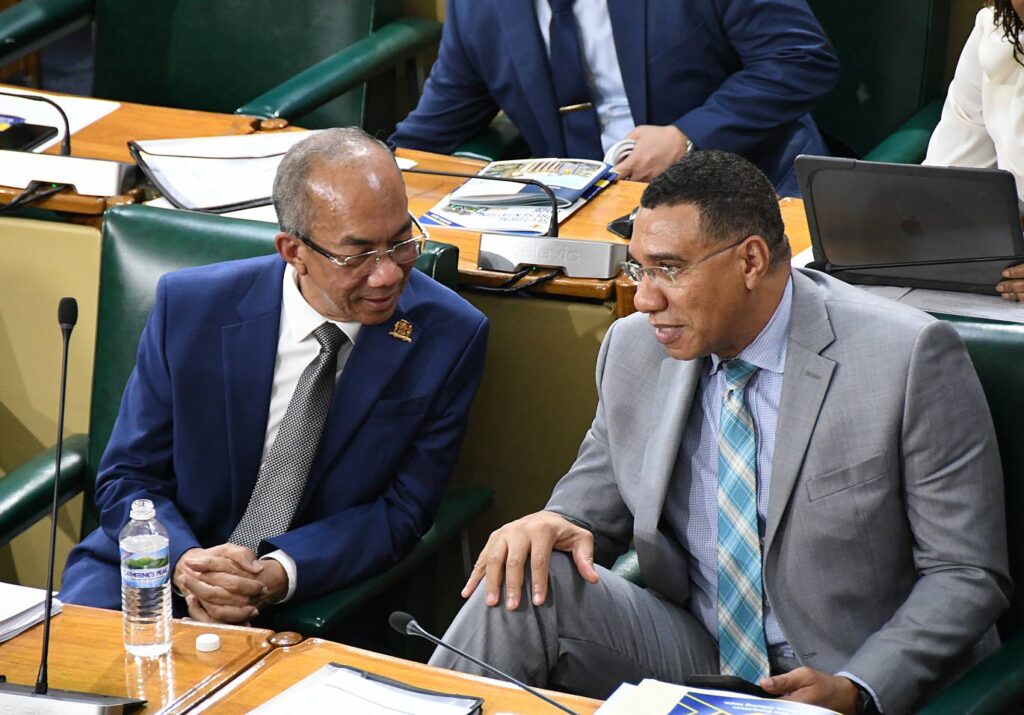
    During Tuesday’s 2026/27 Sectoral Debate in Jamaica’s House of Representatives, National Security and Peace Minister Dr. Horace Chang, who also serves as deputy prime minister, delivered a charged address holding civil society organizations directly responsible for the recent fatal shootings of two retired police officers from his constituency. The minister, who has a long history of tense clashes with advocacy groups – most notably Jamaicans for Justice (JFJ), which he has previously accused of accepting “blood money” – doubled down on his scathing criticism, arguing that unfounded public claims of unjustified police killings created a culture of retaliation that led to the officers’ deaths.

    Dr. Chang detailed the circumstances of one killing to the chamber, identifying the victim as Mr. Brown, an elderly retired officer described as a quiet, unassuming man. Brown was shot dead by gunmen while driving his aged Toyota Corolla, after slowing down to navigate a pothole. The minister emphasized that just one week before the attack, public claims had circulated that police had killed an unarmed civilian without justification, creating a hostile narrative that criminals exploited to target vulnerable retired officers. “These were retired, so they [gunmen] found the soft targets,” Dr. Chang told lawmakers.

    While maintaining that Jamaica remains a robust democracy rooted in the rule of law, and asserting he welcomes legitimate criticism of Jamaica’s security forces, Dr. Chang pushed back against repeated calls from civil society for independent investigations into police-related fatalities. He noted that multiple domestic oversight bodies already monitor, evaluate and regulate the conduct of police officers and public servants, dismissing repeated demands for extra independent reviews as “foolishness.”

    Citing official data from the July 2024 report from Jamaica’s Independent Commission of Investigations (Indecom), Dr. Chang backed his argument with empirical evidence. Between 2011 and 2023, Indecom investigated 1,936 fatal shootings involving security forces, and only 66 of those cases proceeded to criminal prosecution – a prosecution rate of just 3.4%. Since the start of 2024, 11 police officers have been charged in connection with fatal shootings; of those, 8 were off-duty at the time of the incident, with only 3 facing charges for events that occurred while on active duty.

    In a sharp rebuke of JFJ and other advocacy groups that push for increased police accountability measures including mandatory body cameras, Dr. Chang challenged activists to experience the intensity of armed policing first-hand: “Sometimes some of these people who are calling for the police to always have cameras, they should go out there and go to Twickenham Park [training school] and let the JCF fire some rounds and let them hear what the M16 bullets really sound like.”

    Dr. Chang remained unapologetic for his stance, stressing that law enforcement officers should not be placed in unnecessary danger because of unfounded “verandah talk” – a colloquial term for unsubstantiated public gossip. He argued that civil society groups and public opinion should not interfere with the work of established oversight bodies, noting that when false narratives portray police as routinely killing civilians without cause, criminals become emboldened to retaliate against easy targets like retired officers. “If criminals come to believe that police officers are killing persons wantonly they will retaliate and attack other officers whom they perceive as soft targets. These groups must adhere to the evidence reflected in the data. It is wrong to do otherwise. It is dangerous, and it is immoral,” Dr. Chang insisted.
  • OVERREACH!

    OVERREACH!

    A routine ethics hearing at Jamaica’s Parliament descended into fractious internal debate on Tuesday, as the Ethics Committee found itself in uncharted procedural waters, unable to resolve a fundamental dispute over its authority to recall sitting Member of Parliament Dennis Gordon of St Andrew East Central. What had been billed as a session where the media would hear testimony from Gordon instead devolved into a tense, wide-ranging debate over whether the committee has the legal standing to revisit a matter already finalized by the full House of Representatives.

    At the core of the standoff is the committee’s earlier recommendation on Gordon’s exemption application, which was already approved by Parliament. Newly surfaced public information has cast doubt on the accuracy of disclosures Gordon submitted as part of that original application, prompting some committee members to push for a second invitation for Gordon to appear to answer questions.

    Committee chair Marlene Malahoo Forte defended the effort to reconvene Gordon, framing the request as a matter of core procedural fairness. She argued that Gordon deserves a formal opportunity to respond to the new allegations before the committee draws any final conclusions. But after Gordon rejected the invitation to attend, the debate quickly shifted to the unresolved question of whether the committee retains any jurisdiction over the case once the House has acted on its original recommendation.

    Opposition MP Anthony Hylton, an attorney representing St Andrew Western, was among the most prominent voices calling for the jurisdictional question to be settled before any further action. Hylton emphasized that the committee cannot overstep the boundaries laid out in parliamentary rules, warning that the body’s authority is not unlimited. He pointedly raised the legal doctrine of functus officio, which holds that an official body has exhausted its mandate once it has completed its assigned task on a matter. “The fundamental issue for any committee has first to rest on its jurisdiction to address the matter,” Hylton said. “Our committees are not all-powerful; they are specific, they are limited to the mandates that are given to them, and we can’t do things ‘because it’s nice’.”

    While acknowledging the unprecedented complexity of the situation, Malahoo Forte pushed back against the argument that the committee must drop the matter. She stressed that the body cannot simply ignore new concerns about the integrity of the information that formed the basis of its original recommendation to the House. She also expressed deep discomfort with Gordon’s outright refusal to appear, arguing that the committee has an ethical obligation to examine whether a sitting MP’s rejection of its invitation is appropriate under parliamentary rules.

    “The ethical issue is not so much about what is happening in accounts, but is in relation to the truthfulness of answers provided to the committee which then grounded the recommendation of the committee to the House,” Malahoo Forte said. “So, again, it requires sensitivity, it requires fairness, it requires some reflection.” She added that the tone of Gordon’s rejection letter sat poorly with her, noting that the inquiry is not an attempt at political retaliation: “This is not about witch-hunting anyone, it’s not about pointing fingers at anyone, but it just does not sit well with me.”

    Gordon’s rejection of the invitation left little room for compromise. In his formal note to the committee, he wrote: “Good day, be advised that I will not attend any such sitting. This is overreaching the committee’s mandate. It has no jurisdiction or authority to summon me without an express referral from the full Parliament.”

    Committee member Natalie Neita Garvey, MP for St Catherine North Central, echoed calls for caution, highlighting the need to balance the committee’s mandate to uphold good governance with protections for the individual rights of the MP under scrutiny. Garvey argued that the committee should have clarified its procedural standing before extending a summons to Gordon, and that the body must respect Gordon’s decision to assert his rights under existing rules. “There could have been, from this committee, a clear request as to how we should proceed prior to summoning the member back here in an effort to make sure that we are protecting him as well as this House and this committee,” Garvey said.

    As the debate wrapped up without agreement, Malahoo Forte acknowledged that the impasse exposes deeper procedural challenges the committee will likely face in future ethics inquiries. With no immediate path to resolution, members voted unanimously to refer the entire question to the full House of Representatives for formal guidance before moving forward.

    The jurisdictional dispute has already been backed by formal legal advice from the Parliament’s own senior legislative team. In an April 21, 2026 memorandum, senior legislative counsel Tiffany Stewart laid out that under Jamaica’s Standing Orders, select committees like the Ethics Committee have strictly limited authority, confined only to matters formally referred to them by the full House.

    Stewart noted that the committee’s original mandate was limited exclusively to reviewing and reporting on Gordon’s exemption motion, a process that concluded when the motion was approved by both the House of Representatives and the Senate earlier this year. Once the House adopted the committee’s final report, Stewart wrote, the committee exhausted its authority on the matter, falling under the functus officio doctrine. Without a new formal referral from the full House, the committee has no standing to reopen the case, even when new information emerges.

    Citing longstanding parliamentary principles laid out in the authoritative guide Erskine May: Parliamentary Practice, Stewart’s legal opinion stressed that any effort to reconsider the matter, regardless of new evidence, requires a fresh substantive motion from the House of Representatives. “Committees are creatures of the House and possess no independent authority to amend or revisit decisions already sanctioned by Parliament,” the memorandum clarified. Stewart added that the proper procedural path, when new concerns arise after a report is approved, is for the House to either issue a new referral sending the matter back to the committee, or to rescind its original decision before any further review can proceed.

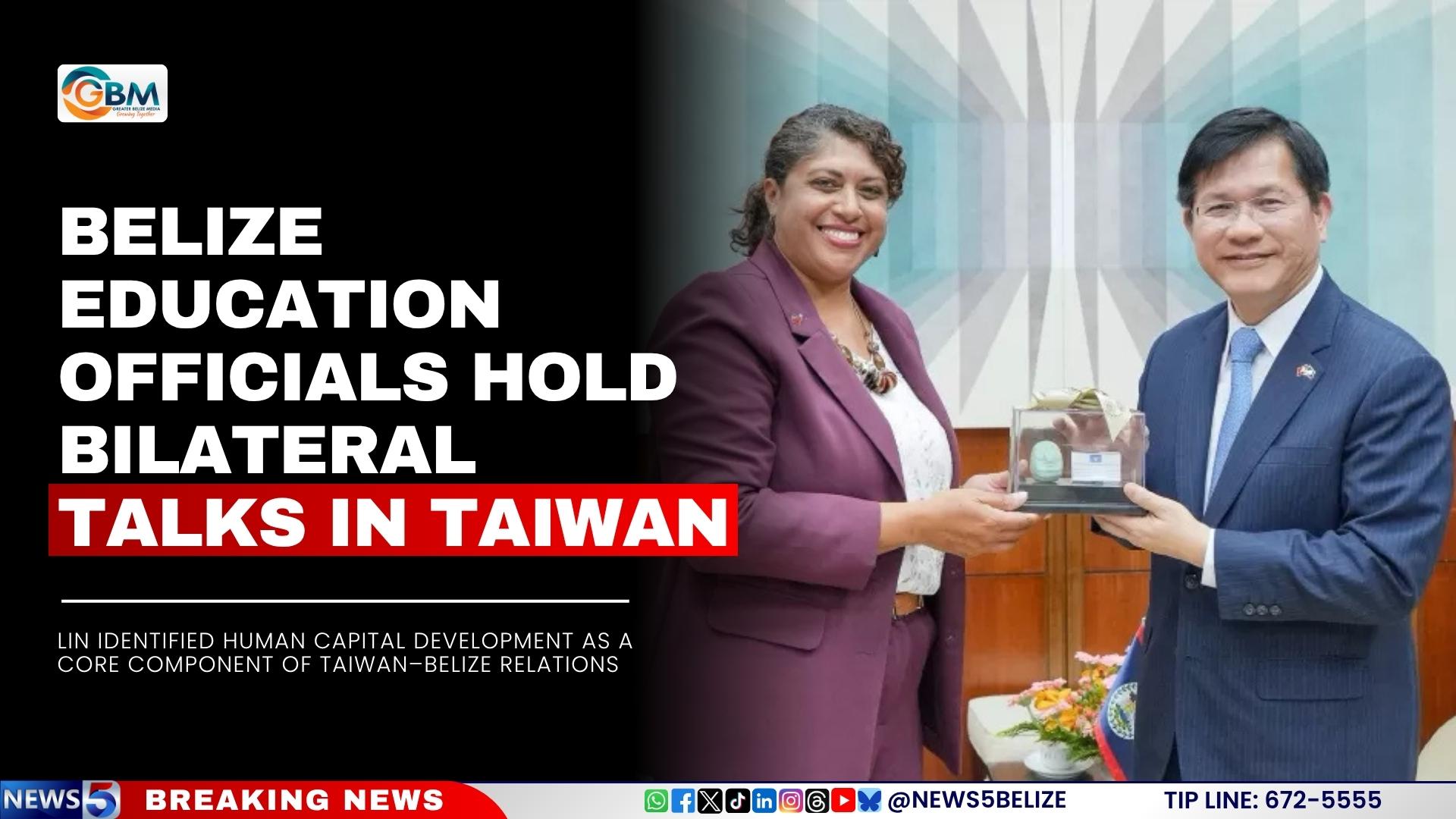
  • Belize Education Officials Hold Bilateral Talks in Taiwan

    Belize Education Officials Hold Bilateral Talks in Taiwan

    In a recent diplomatic engagement focused on deepening cross-national ties, a high-level education delegation from Belize traveled to Taipei for bilateral discussions with Taiwan’s top foreign policy official, marking another step forward in the long-standing partnership between the two regions.

    The meeting, held last week, brought together Taiwan’s Foreign Minister Lin Chia-lung with two senior Belizean representatives: Dian Maheia, Chief Executive Officer of Belize’s Ministry of Education, Culture, Science and Technology, and Vincent Palacio, President of the University of Belize. According to official statements released by Taiwan’s Ministry of Foreign Affairs following the talks, the dialogue was centered on expanding collaborative initiatives across two core areas: formal education programs and targeted talent development initiatives.

    During the discussions, Lin framed human capital investment as a central pillar of the relationship between Taiwan and Belize. He specifically highlighted Taiwan’s decades-long scholarship program that opens academic opportunities for Belizean students as a foundational example of successful existing cooperation, noting that the program has consistently delivered tangible benefits for both sides over the years.

    Maheia offered formal recognition of Taiwan’s ongoing, consistent support for Belize’s education sector, and shared the Belizean delegation’s strong interest in growing person-to-person and institutional exchanges between universities and research bodies across both regions. Echoing this forward-looking perspective, Palacio emphasized his support for building out stronger, more structured partnerships between post-secondary and vocational education institutions in Belize and Taiwan, a move that would open new training and career pathways for students in both regions.

  • Nationale gebedsdag moet bijdragen aan herstel van normen en waarden

    Nationale gebedsdag moet bijdragen aan herstel van normen en waarden

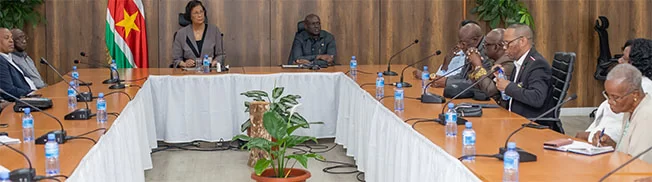
    PARAMARIBO, Suriname – April 21 – A new national moment of collective reflection and spiritual unity is set to launch this week in Suriname, as President Jennifer Simons has formally backed a national prayer day focused on rebuilding core societal norms and values amid ongoing national development shifts. The initiative, originally organized by Suriname’s collective body of Catholic bishops, will take place on Friday, April 24, after being elevated to a national event by the country’s presidency. President Simons first outlined the goals of the observance during a working consultation with national Christian faith leaders at the President’s Cabinet this Monday, government communications body Communicatiedienst Suriname confirmed.

    The event centers on a clear mission: to root broad societal renewal in the restoration of strong family relationships, which organizers frame as the foundational bedrock for broader respect and institutional authority across Surinamese public life. The prayer day’s theme draws from Malachi 4:6, a scripture passage that emphasizes intergenerational connection and family cohesion. During the closed-door consultation, leaders and the president held wide-ranging discussions covering the current spiritual climate of the nation, long-term social planning, and the rapid changes shaping the country’s fast-growing oil and gas sector, a key driver of recent economic transformation in Suriname.

    Pastor Steven Reyme, a senior leader of Logos International who participated in the talks, explained that the core objective of the national gathering is to spiritually strengthen the nation and commit Suriname’s future to collective faith. He stressed that the prayer day is not merely a ceremonial event: it calls for leaders across all sectors of public life to embrace a heightened sense of accountability to the broader population, particularly to the country’s youth and most vulnerable community groups. A top priority topic in the consultation was the growing challenge of youth crime, with leaders and the president agreeing that early character formation through family-based education and upbringing is the most critical intervention to keep young people on positive life trajectories. Faith-based organizations, attendees agreed, are uniquely positioned to complement government efforts by providing targeted mentorship and moral formation for at-risk youth.

    President Simons wrapped up the consultation by issuing a formal call to attending faith leaders to document their policy recommendations and actionable proposals in writing. These submissions will form the foundation for a new ongoing partnership between the Surinamese government and the national religious sector, with the first National Prayer Day serving as the official starting point for this collaborative work. Simons reaffirmed that religious and community organizations have an indispensable role to play in national post-crisis recovery and ongoing social stability, offering moral guidance and social support that government alone cannot provide.

  • Orian Carr and Djarie Sheppard Remanded on Firearm and Ammunition Charges

    Orian Carr and Djarie Sheppard Remanded on Firearm and Ammunition Charges

    In an official operation targeting unauthorized weapons possession, law enforcement authorities in Antigua and Barbuda have taken two local men into pretrial custody on multiple charges linked to illegal firearms and fraudulent vehicle documentation. The Royal Police Force of Antigua and Barbuda’s Office of Strategic Communications confirmed the development in a public media release issued Tuesday, April 21, 2026, from the nation’s capital St. John’s.

    The two defendants, identified as 26-year-old Orian Carr from Pares Village and 25-year-old Djarie Sheppard from Willikies, appeared before Chief Magistrate Ngaio Emanuel earlier this week. Following the court hearing, the pair were ordered to be held at His Majesty’s Prison until their next scheduled court appearance on April 28, 2026.

    Carr and Sheppard face three total criminal counts each: unlawful possession of a Hi-Point C9 9mm Luger pistol, unlawful possession of seven matching 9mm rounds of ammunition, and fraudulent use of a motor vehicle license plate. The charges trace back to a routine patrol operation conducted in the early hours of Saturday, April 18.

    According to police reports, at approximately 12:50 a.m. that day, officers assigned to the Willikies Police Station were conducting mobile patrols along Willikies Main Road when they spotted a blue Honda Fit traveling without a visible front license plate. Acting on this observation, the officers pulled the vehicle over for inspection. A search of the vehicle, conducted with both occupants present, turned up the loaded 9mm handgun and seven rounds of ammunition hidden inside the car.

    Law enforcement immediately seized the illegal weapons and ammunition, placed both men under arrest, and moved forward with formal criminal charges after completing initial processing. This operation is part of the local police force’s ongoing efforts to crack down on illegal firearms trafficking and unauthorized weapons possession across the twin-island nation, working to reduce violent crime and maintain public safety for residents and visitors alike.

  • Antigua and Barbuda HR Professional Selected to Lead Diversity Session at LOUD26

    Antigua and Barbuda HR Professional Selected to Lead Diversity Session at LOUD26

    The Caribbean region’s most influential annual gathering for human resources practitioners, senior business leaders, and cross-industry decision-makers is set to return this spring. LOUD, the premier regional HR conference hosted by the Caribbean Society of Human Resources Professionals (CSHRP), will kick off its 26th iteration at the St. Kitts Marriott Beach Resort, running from May 28 to 30 under the central theme of ‘Harvest of Inspiration’.

    Leading one of the conference’s most anticipated keynote sessions is Marlene Bailey, a veteran strategic HR executive and transformative people leadership specialist hailing from Antigua and Barbuda. With more than 18 years of experience driving organizational growth and performance across the Caribbean, Bailey currently serves as Chief Human Resources Officer at WIOC. Throughout her career, she has designed and rolled out enterprise-level people strategies for sectors spanning energy, professional services and hospitality, building deep specialized expertise in core HR areas including workforce planning, talent optimization, leadership development, and industrial relations. Widely recognized for her track record of building high-performing teams and cultivating inclusive organizational cultures, Bailey continues to redefine the future of work across the region through innovative, results-focused people management approaches.

    Bailey’s featured session, titled ‘Turning Differences into Dynamism’, aims to challenge outdated conventional narratives around multigenerational workforces. Moving beyond oversimplified generational stereotypes, the session will zero in on the practical, actionable factors that truly build high-performing, resilient teams in today’s fast-changing business landscape. In an era marked by constant market disruption and evolving workplace expectations, the ability to reframe workforce diversity as a competitive strength is no longer a niche priority for organizations—it has become a core strategic advantage.

    Over the course of the session, attendees will work through evidence-based strategies to build organizational and workforce resilience. The session will walk participants through practical approaches to strengthen cross-team collaboration, improve intergenerational communication, and leverage the distinct strengths that each generation brings to the workplace. From Baby Boomers to the newly emerging Gen Alpha, every generation contributes unique skills and perspectives—what the session frames as generational ‘superpowers’—and Bailey will guide leaders through proven frameworks to harness this diversity to boost organizational adaptability, employee engagement, and overall bottom-line performance.

    Unlike many theoretical or purely motivational industry sessions, this event is designed to deliver tangible, battle-tested guidance that attendees can implement immediately in their own Caribbean workplaces. For organizations across the region grappling with ongoing transformation, high employee retention challenges, or complex multigenerational team management, Bailey’s session is positioned as an unmissable opportunity for actionable professional development.

    As the host of the LOUD Conference, CSHRP is a leading regional professional body dedicated to advancing the human resources profession across the Caribbean through three core pillars: targeted professional education, industry advocacy, and cross-organizational collaboration. Through signature initiatives like the annual LOUD Conference, the organization continues to raise professional HR standards and build leadership capacity across every sector in the region.

  • PM meets security chiefs

    PM meets security chiefs

    A deadly weekend shooting in the parish of St. James has shaken Barbados, leaving three men dead and a fourth person hospitalized with injuries. Within hours of the Sunday night attack, Prime Minister Mia Mottley convened an urgent, high-stakes gathering with the island nation’s most senior security and law enforcement leaders to coordinate a response.

    Mottley confirmed the meeting via a public post on her social media channels, which included an accompanying photograph of the session. Attendees at the emergency talks included Richard Boyce, Commissioner of the Barbados Police Service, the force’s Deputy Commissioner, and the Chief of Staff of the Barbados Defence Force. The gathering comes as the country confronts the shock of this latest violent incident.

    In her statement, Mottley emphasized the government’s unwavering priority in the wake of the tragedy, noting that “In moments like these, nothing matters more than the safety of our people.”

    Shortly after the emergency meeting, Police Commissioner Boyce publicly characterized the shooting as a deliberate, targeted act of retaliation between criminal groups. He issued a clear warning to those responsible for the attack: law enforcement will spare no effort to track down and hold every person involved accountable for the violence.

  • Edward to captain Windward U19s

    Edward to captain Windward U19s

    The regional youth cricket landscape is gearing up for one of the Caribbean’s most prestigious age-group competitions, with five young Saint Lucian cricketers securing places on the Windward Islands Under-19 men’s squad. The 14-player roster was finalized by the Windward Islands Cricket Board’s selection panel immediately following the conclusion of the sub-regional age-group knockout tournament held Saturday in Dominica’s capital, Roseau.

    In the sub-regional tournament that served as the main selection trial, host nation Dominica claimed the top title, with Saint Lucia finishing as runners-up. This strong performance from Saint Lucian youth players translated into five spots in the final squad bound for the Cricket West Indies Rising Stars Men’s Under-19 Tournament.

    Heading up the selected squad as captain is Theo Edward, a batting all-rounder from Saint Lucia who turned in an impressive all-around performance throughout the selection tournament. Across four innings, Edward accumulated 84 runs with the bat, picked up two wickets with the ball, contributed six catches in the field and completed one run-out. Joining Edward from Saint Lucia are top-order batsman Johnathan Daniel, leg-spin bowler Cody Fontenelle, pace bowler Nathaniel Joseph and off-break bowler Tyler Venner.

    The vice-captain role goes to Earsinho Fontaine, an all-rounder from host nation Dominica. Fontaine is joined by two other Dominican players: Derin Lewis, an opening batsman who also fills the wicketkeeper role, and all-rounder Aiden Burton. Grenada is represented by batsman Khavaughn Bartholomew and left-arm unorthodox spin (chinaman) bowler Aravinda Bishop. Four players round out the squad from St Vincent and the Grenadines: left-arm fast bowler Kazado Henry, who led all competitors in wicket tallies at the selection tournament, along with Zach Thomas, Kevin Joseph and Elran Glasgow.

    The squad announcement was made official during the closing ceremony of the Windward Islands sub-regional series. John Eugene, a Saint Lucian cricket coach, has been appointed to lead the team as head coach. Two additional players, Bjorn Fanis and Neil Poyotte, have been named as official reserves for the upcoming regional tournament.

  • First phase of rehabilitation complete on Dumfries cistern

    First phase of rehabilitation complete on Dumfries cistern

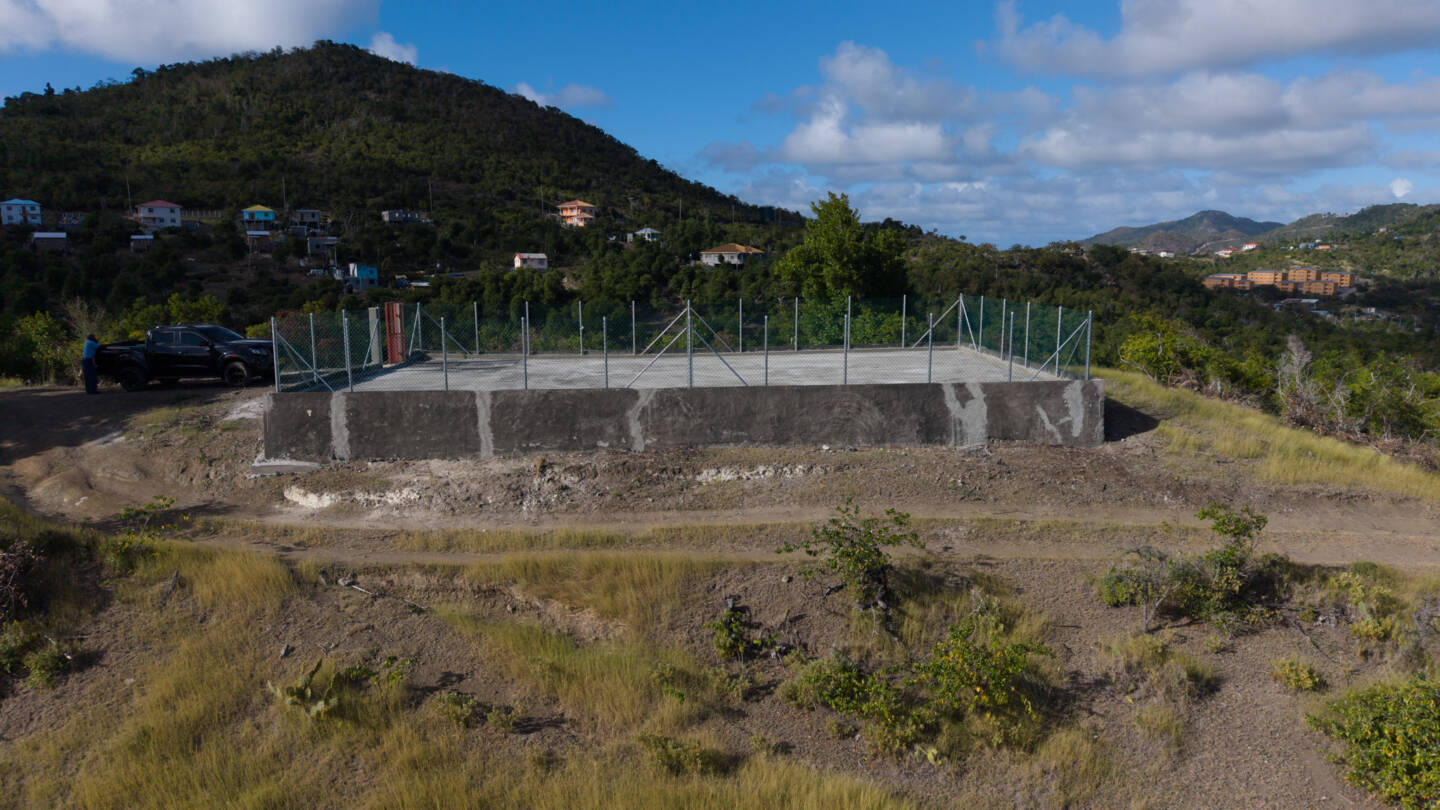
    On the small island of Carriacou, where water scarcity has long been a persistent barrier to agricultural prosperity, a major international development project is delivering tangible progress toward building climate-resilient food systems and lifting rural livelihoods. The Enhancing Land Management and Strengthening Ecosystem Resilience for Integrated Landscape Restoration and Climate-Resilient Food Systems in Carriacou, widely referred to as the Carriacou ILM Project, has completed a critical milestone: the full restoration of the decades-old Dumfries cistern, a community water storage infrastructure that had fallen into disrepair and lost nearly all of its functional capacity.

    Led by the local Partnership Initiative for Sustainable Land Management (PISLM), the initiative draws core funding from the Global Environment Facility (GEF) and receives technical and operational support from the United Nations Environment Programme (UNEP). Beyond its broader goals of reversing land degradation, scaling ecosystem-based landscape restoration, and expanding sustainable livelihood opportunities for local communities, the project has prioritized expanding reliable water access for smallholder farmers — a foundational change that will strengthen irrigation capabilities, increase staple food output, support larger livestock herds, and raise household incomes across the region.

    Project manager Bernard McIntosh outlined the scope of the restoration work completed on the cistern, explaining, “The project intervention was to fence the perimeter, repair all the cracks and crevices on the catchment area, consequently maximising the catchment’s potential.” After the rehabilitation, the structure once again holds its full design capacity of more than 14,000 gallons of rainwater, a vital reserve in Carriacou’s climate where water resources are extremely limited.

    Agriculture is the backbone of Carriacou’s social fabric and local way of life, with smallholders growing a diverse range of staple and cash crops including pigeon peas, corn, sweet potato, yam, dasheen, watermelon, sorrel, cucumber, and butternut squash. For these producers, consistent access to water is the single biggest limiting factor to production, especially as climate change increases the frequency and severity of droughts across the Caribbean.

    The project’s next phase of work is already planned, with McIntosh confirming that teams will soon install a solar-powered pump system and a supplementary black storage tank. This additional infrastructure will allow farmers to easily access the stored cistern water for irrigation and livestock needs, turning the restored storage capacity into active, usable resources for the community.

    At its core, the Carriacou ILM Project aims to tackle long-standing land degradation across the island through a community-centered approach. By combining evidence-based ecosystem restoration, sustainable land management practices, and climate-smart agricultural techniques, the initiative works to diversify local livelihood options and build long-term resilience to climate shocks. The restoration of the Dumfries cistern represents more than just infrastructure improvement: it is a concrete step toward the project’s broader vision of a sustainable, food-secure future for Carriacou.

  • CYEN Grenada supports World Earth Day 2026 initiative

    CYEN Grenada supports World Earth Day 2026 initiative

    As the 2026 World Earth Day approaches, the Caribbean small island nation of Grenada is gearing up for a nationwide collective push for environmental action, anchored by this year’s global theme: “Our Planet, Our Power.”

    The youth-led Caribbean Youth Environment Network (CYEN) Grenada Chapter has officially announced its full partnership with the Ministry of Climate Resilience, the Environment and Renewable Energy, calling on every segment of Grenadian society to step forward with intentional, purpose-driven action when Earth Day is marked on Wednesday, April 22, 2026.

    For a low-lying Caribbean island extremely vulnerable to climate impacts like sea-level rise and coastal erosion, protecting the nation’s rich natural resources is far more than a policy priority—it is a responsibility that spans generations. CYEN Grenada, which centers youth leadership in climate and environmental work, emphasized this intergenerational stakes in its statement, aligning fully with the national 2026 Earth Day initiative led by the government ministry. To turn growing public awareness of climate issues into tangible progress, the organization is urging all citizens, local businesses, community groups, and national institutions to commit to measurable, actionable changes this Earth Day.

    To make participation accessible for every Grenadian, CYEN Grenada has outlined five simple but impactful actions people can take: First, wear green or blue—colors symbolizing the Earth’s forests and oceans—on April 22 to show visible public solidarity for climate action. Second, join national and local reforestation drives by planting native trees and supporting ongoing reforestation projects. Third, organize or join local clean-up events in neighborhoods, schools, or workplaces to remove litter from shared public spaces and coastal areas. Fourth, cut down on unnecessary waste by shifting to more conscious consumption habits and adopting long-term sustainable daily practices. Fifth, educate friends, family, and social media followers about environmental protection to spread awareness across the entire island.

    “Real change comes through collaboration. This Earth Day, we call on every Grenadian in their household, their workplace, and their community to demonstrate that our power as a people lies in our unity of purpose,” the organization said in its official statement.

    Beyond individual action, CYEN Grenada is also reaching out to government agencies, private sector businesses, educational institutions, and civil society groups to formalize their long-term environmental commitments and partner with the youth-led climate movement. The organization encourages all participants to document their Earth Day activities and share their work publicly, not only to inspire more action across the Caribbean region but also to highlight Grenada’s collective commitment to climate resilience.

    This Earth Day call is part of CYEN Grenada’s ongoing core mission: empowering young Grenadians to take leadership roles in environmental advocacy, climate education, and sustainable development. The group remains dedicated to deepening youth engagement in climate resilience work and nurturing the next generation of environmental stewards across Grenada and the broader Caribbean.

    (Disclaimer: This content is a contributed announcement, with NOW Grenada not taking responsibility for contributor opinions, statements, or shared media. Abuse can be reported via official channels.)