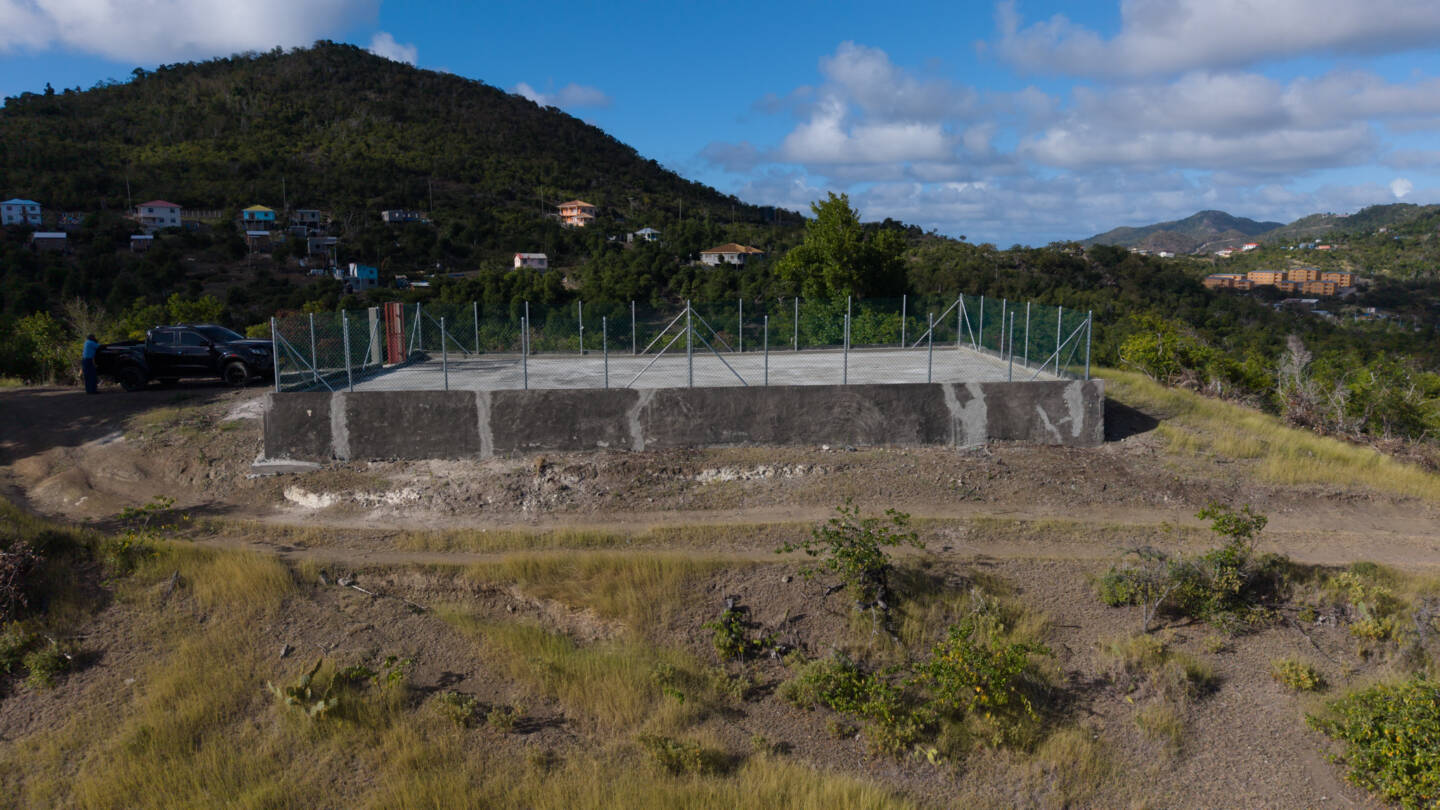
On the small island of Carriacou, where water scarcity has long been a persistent barrier to agricultural prosperity, a major international development project is delivering tangible progress toward building climate-resilient food systems and lifting rural livelihoods. The Enhancing Land Management and Strengthening Ecosystem Resilience for Integrated Landscape Restoration and Climate-Resilient Food Systems in Carriacou, widely referred to as the Carriacou ILM Project, has completed a critical milestone: the full restoration of the decades-old Dumfries cistern, a community water storage infrastructure that had fallen into disrepair and lost nearly all of its functional capacity.
Led by the local Partnership Initiative for Sustainable Land Management (PISLM), the initiative draws core funding from the Global Environment Facility (GEF) and receives technical and operational support from the United Nations Environment Programme (UNEP). Beyond its broader goals of reversing land degradation, scaling ecosystem-based landscape restoration, and expanding sustainable livelihood opportunities for local communities, the project has prioritized expanding reliable water access for smallholder farmers — a foundational change that will strengthen irrigation capabilities, increase staple food output, support larger livestock herds, and raise household incomes across the region.
Project manager Bernard McIntosh outlined the scope of the restoration work completed on the cistern, explaining, “The project intervention was to fence the perimeter, repair all the cracks and crevices on the catchment area, consequently maximising the catchment’s potential.” After the rehabilitation, the structure once again holds its full design capacity of more than 14,000 gallons of rainwater, a vital reserve in Carriacou’s climate where water resources are extremely limited.
Agriculture is the backbone of Carriacou’s social fabric and local way of life, with smallholders growing a diverse range of staple and cash crops including pigeon peas, corn, sweet potato, yam, dasheen, watermelon, sorrel, cucumber, and butternut squash. For these producers, consistent access to water is the single biggest limiting factor to production, especially as climate change increases the frequency and severity of droughts across the Caribbean.
The project’s next phase of work is already planned, with McIntosh confirming that teams will soon install a solar-powered pump system and a supplementary black storage tank. This additional infrastructure will allow farmers to easily access the stored cistern water for irrigation and livestock needs, turning the restored storage capacity into active, usable resources for the community.
At its core, the Carriacou ILM Project aims to tackle long-standing land degradation across the island through a community-centered approach. By combining evidence-based ecosystem restoration, sustainable land management practices, and climate-smart agricultural techniques, the initiative works to diversify local livelihood options and build long-term resilience to climate shocks. The restoration of the Dumfries cistern represents more than just infrastructure improvement: it is a concrete step toward the project’s broader vision of a sustainable, food-secure future for Carriacou.