博客

  • ACP Bailey urges balanced approach to school violence

    ACP Bailey urges balanced approach to school violence

    St. Vincent and the Grenadines’ senior law enforcement official has issued a stark warning about the infiltration of gang culture within the nation’s educational institutions, calling for coordinated national action to address the escalating crisis. Assistant Commissioner of Police Trevor ‘Buju’ Bailey, speaking at the National Consultation on School Violence in Kingstown, emphasized that recent disturbing incidents require moving beyond reactive measures to proactive intervention.

    The experienced detective articulated a critical distinction between typical student misconduct and organized violent behavior that signals deeper security concerns. While ordinary rule-breaking remains a standard educational challenge, Bailey identified alarming patterns including coordinated retaliation, weapon carrying, public displays of violence, and fear-based group loyalties that transcend school boundaries.

    ‘When we examine these situations, we’re not looking at isolated acts of defiance,’ Bailey stated. ‘We look at escalation, repetition, and whether behavior is becoming more organized, more public, and more resistant to ordinary correction. That is where the concern deepens.’

    The police commander specifically cited behaviors resembling gang culture: group intimidation, status pursuit through violence, retaliation protocols, and the normalization of fear as a control mechanism. He stressed that early intervention is crucial before these patterns become fully established, warning that ‘if we wait until every sign is fully matured, we have already surrendered valuable ground.’

    Bailey advocated for a balanced approach that avoids criminalizing troubled youth while acknowledging reality. ‘We cannot afford to brand every troubled child as a criminal—that would be careless and unjust. But there is equal danger in minimizing uncomfortable truths.’ He noted that many students act out due to immaturity, trauma, poor guidance, or social pressures requiring varied interventions ranging from counseling to stronger boundaries.

    The senior officer emphasized that schools cannot combat this alone, citing external pressures from social media, community disputes, and weak supervision that students bring into classrooms. While committing police resources to investigation, prevention, and intelligence-based intervention, Bailey acknowledged that law enforcement alone cannot solve the problem: ‘A uniform cannot replace parenting. An arrest cannot substitute for moral guidance.’

    Calling for a collective national response, Bailey outlined necessary measures including earlier reporting systems, improved information sharing, clearer intervention pathways, and consistent messaging against normalizing violence. He urged courage rather than panic—the courage to identify risks early, correct behavior pre-criminality, and support schools and engaged parents.

    Concluding with urgency, Bailey stated: ‘The window for denial is closing. If we fail to act with seriousness now, consequences later will be heavier for every institution involved. Our children deserve safe schools, our teachers deserve orderly environments, and parents deserve confidence that schools are places of development, not fear.’

  • Steeds meer landen zien hoogste benzineprijzen sinds VS-Iran oorlog

    Steeds meer landen zien hoogste benzineprijzen sinds VS-Iran oorlog

    A widespread fuel crisis has emerged across global markets, with at least 85 countries reporting significant gasoline price increases since the commencement of US-Israel military operations against Iran on February 28. The conflict has triggered substantial disruptions in global energy supplies, particularly affecting nations dependent on the Strait of Hormuz for oil imports.

    In the United States, average gasoline prices have surged by 20 percent according to AAA Fuel Prices data, climbing from $2.94 per gallon in February to $3.58 currently. Several states have exceeded the $4 per gallon threshold, with California reaching prices above $5 per gallon—the highest recorded level in over two years.

    Asian economies have experienced the most dramatic price escalations. Vietnam recorded the most severe increase at nearly 50 percent, followed by Laos (33%), Cambodia (19%), Australia (18%), and the United States (17%). The region’s particular vulnerability stems from its heavy reliance on the Strait of Hormuz, which has remained virtually closed since conflict initiation. This critical maritime passage serves as the primary route for Persian Gulf oil exporters to access international waters.

    Japan and South Korea face exceptional exposure, importing 95% and 70% of their oil respectively from the Gulf region. Both nations have implemented emergency measures: Japan has prepared strategic oil reserves for potential release, while South Korea has instituted maximum price controls on gasoline and diesel for the first time in three decades.

    The situation proves even more critical in South Asia, where nations like Pakistan and Bangladesh possess limited financial buffers and smaller strategic reserves. Bangladesh has closed all universities to conserve energy, while Pakistan has implemented a four-day workweek for government offices, shuttered educational institutions, and mandated 50% work-from-home arrangements.

    G7 finance ministers convened an emergency meeting to address the escalating energy crisis. French President Emmanuel Macron proposed releasing 20-30% of strategic emergency reserves to alleviate consumer pressure. Economists warn that rising oil prices directly increase shipping and transportation costs, creating logistical and supply chain challenges that affect every sector of the global economy.

    Concerns are mounting regarding potential stagflation—a combination of rising inflation and increasing unemployment historically associated with major oil shocks. Each significant oil price surge throughout modern history (1973, 1978, 2008) has preceded global recessions.

    The crisis extends beyond transportation fuels, as petroleum products form the foundation of countless everyday items including plastics, synthetic fabrics, cosmetics, and household detergents. Furthermore, the global food supply chain heavily depends on natural gas for fertilizer production, threatening agricultural yields and food security worldwide.

    Crude oil prices have increased approximately 50% since the initial attacks, with analysts anticipating further price hikes as more countries report monthly adjustments in April.

  • Traffic delay: Scott Street, St George’s

    Traffic delay: Scott Street, St George’s

    The Royal Grenada Police Force Traffic Department has issued an official public advisory regarding planned nighttime disruptions to vehicular movement along Scott Street in St. George’s. Beginning Wednesday, March 11, 2026, from 9:00 PM through 2:00 AM the following morning, motorists should anticipate significant traffic delays in the affected area. These partial road closures will recur nightly until further official notice.

    This essential infrastructure project is being conducted by the National Water and Sewerage Authority (NAWASA) to facilitate critical pipe-laying operations and subsequent road rehabilitation work. The nighttime schedule has been strategically implemented to minimize impact on daytime traffic patterns and local business activities.

    Police authorities have extended apologies for any inconvenience resulting from these necessary improvements and have commended the public for their continued understanding and cooperation during this period. The RGPF emphasizes that these temporary measures are vital for long-term water system enhancements and urban development.

    All notices and updates regarding the project’s duration will be communicated through official channels. Motorists are strongly advised to seek alternative routes during the specified hours and exercise heightened caution when navigating near construction zones.

  • ‘Unite on skills training’ to meet global challenges

    ‘Unite on skills training’ to meet global challenges

    Regional leaders are issuing an urgent call for enhanced collaboration on workforce development, asserting that the Caribbean’s future competitiveness hinges on its ability to adapt to rapid global changes. The imperative for coordinated action dominated discussions at the 37th general meeting of the Caribbean Association of National Training Authorities (CANTA), where technical and vocational education specialists convened at Accra Beach Hotel and Resort to address pressing challenges in skills development.

    Under the theme “Collaboration Through TVET: Empowering the Caribbean Workforce, Strengthening Our Future,” Minister of Training and Tertiary Education Sandra Husbands challenged stakeholders to fundamentally reimagine how the region prepares its population for emerging economic realities. “Working together is no longer optional, it is absolutely essential,” Husbands emphasized, noting that the Caribbean currently navigates multiple transitions including economic shifts, technological acceleration, labor mobility, and climate-related pressures.

    While acknowledging that CARICOM leaders have already established necessary policy frameworks, Husbands stressed that implementation remains the critical challenge. “The beauty of CARICOM is that the heads of government already agree about what we need to do,” she observed. “What is critical is that the CARICOM organs now give life to those decisions.”

    The minister identified the Caribbean’s human capital as its most valuable asset, noting that despite limited material wealth, the region possesses well-educated, intelligent populations that must be leveraged through reskilling and upskilling initiatives. With global workforce training models undergoing restructuring, Husbands sees an opportunity for the Caribbean to reposition itself at the forefront of this transformation.

    CANTA Chair Dr. Kertney Thompson reinforced these sentiments, highlighting how geopolitical realignments, supply chain reconfigurations, and climate threats amplify the need for cooperative approaches. Referencing recent hurricane devastation, Thompson warned that climate change continues to threaten regional sustainability, making collaboration an essential survival strategy rather than an optional approach.

    Both leaders emphasized that addressing shared challenges—including skill gaps, youth unemployment, and technological disruption—requires breaking down institutional silos and developing joint implementation plans that maximize limited resources across the region.

  • Barbados seeks cleaner, smarter transport solutions amid rising vehicle numbers

    Barbados seeks cleaner, smarter transport solutions amid rising vehicle numbers

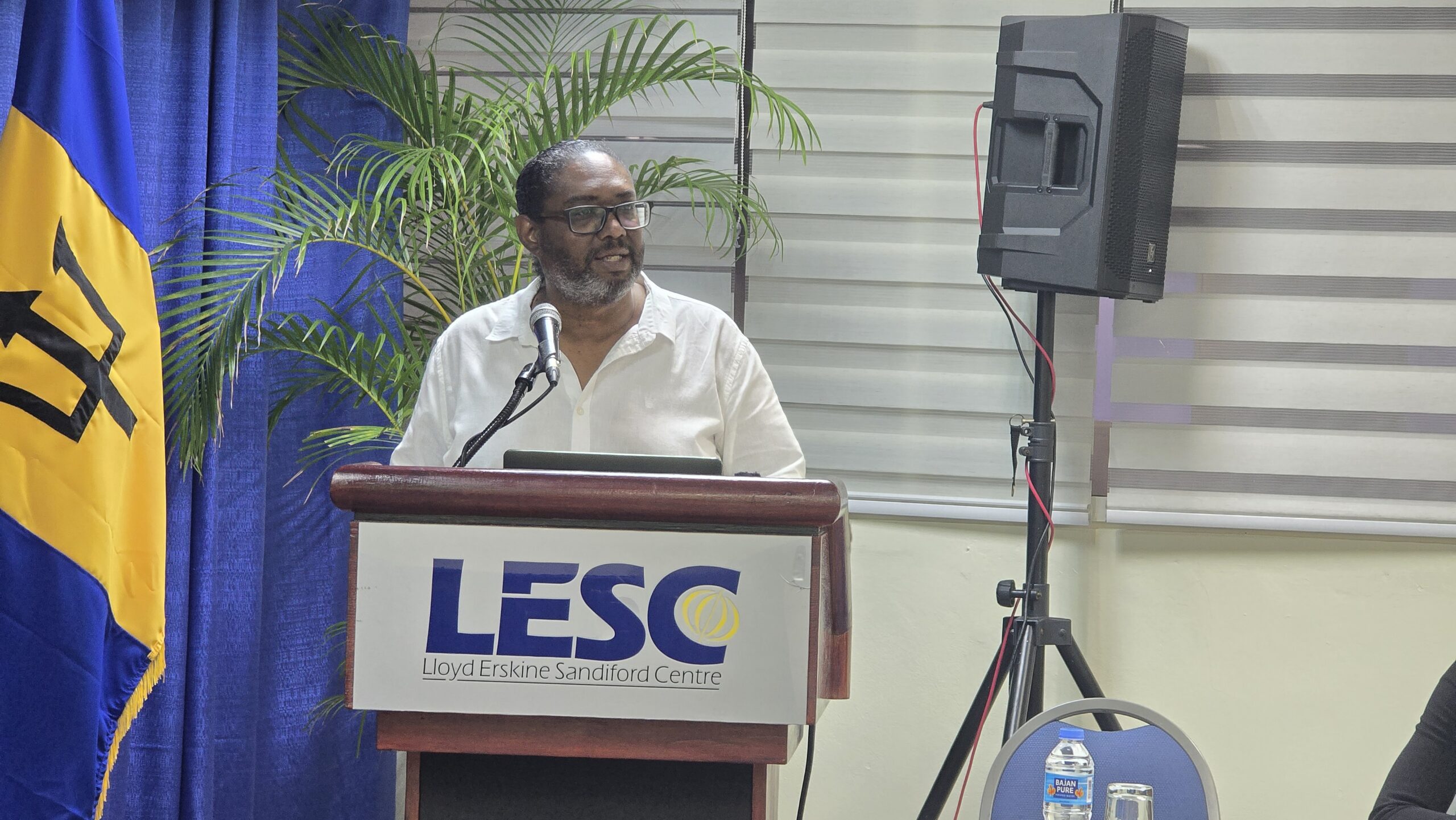
    Barbados is accelerating its transition toward a comprehensive sustainable mobility framework as government and private sector leaders converge to address the island’s escalating traffic congestion and emissions concerns. The Lloyd Erskine Sandiford Centre hosted a pivotal workshop titled ‘Mobilising Climate Finance: Sector Prioritisation and Validation,’ bringing together energy experts, transportation officials, disability advocates, and business representatives to forge coordinated solutions.

    This gathering represents the fourth installment in a series of climate finance workshops conducted under the groundbreaking Roofs to Reefs programme. Ricardo Marshall, Director of the programme within the Prime Minister’s Office, emphasized that sustainable mobility extends far beyond mere vehicle electrification. He characterized it as “an interconnected, complex system that requires coordinated, multi-sectoral action across infrastructure, technology, behaviour and policy.”

    The vision encompasses intelligent transportation networks designed to optimize traffic flow, urban planning prioritizing pedestrian safety and accessibility, reliable integrated public networks, and cultural shifts toward shared mobility options. Marshall stressed that the ultimate objective involves creating “safe, efficient, low-carbon, equitable transport systems which serve all members of the public regardless of age, gender, ability, income or location.”

    Dr. Danielle Evanson, Programme Coordinator of Roofs to Reefs, revealed that decarbonizing Barbados’ transportation sector may require approximately $17 billion in investments to achieve the nation’s ambitious net-zero emissions target by 2035. The workshop focused on identifying key industry drivers, articulating a clear sustainability vision, and exploring potential financing mechanisms aligned with the Mission Barbados roadmap released in December 2023.

    The transformation strategy employs a three-pronged approach: reducing travel demand through improved urban design, shifting transportation toward more efficient modes including buses and active transport like cycling, and improving vehicle technology through electric adoption and cleaner energy sources. This comprehensive framework is supported by multiple national policies including the National Energy Policy (2019), Physical Development Plan (2023), and Plan for Investment in Prosperity and Resilience (2024), which collectively advocate for increased electric vehicle infrastructure, reduced per capita vehicle ownership, and enhanced multimodal transportation networks.

    Despite these coordinated efforts, Dr. Evanson acknowledged persistent policy conflicts that must be resolved, particularly regarding integrated transport systems and multimodality implementation that still face implementation challenges.

  • DOMLEC, CARILEC to host Caribbean lineworkers in Dominica for regional symposium and rodeo

    DOMLEC, CARILEC to host Caribbean lineworkers in Dominica for regional symposium and rodeo

    Dominica is poised to become the epicenter of Caribbean energy sector collaboration as it prepares to host the CARILEC Lineworkers Symposium and Rodeo from April 24-26, 2026. This significant regional gathering will assemble more than 100 utility professionals from across the Caribbean basin for an event that uniquely blends educational advancement with competitive demonstration.

    The Caribbean Electric Utility Services Corporation (CARILEC), in coordination with Dominica Electricity Services Limited (DOMLEC), has designed the symposium to serve multiple purposes: enhancing professional capabilities, facilitating cross-border knowledge transfer, and strengthening regional cooperation among power infrastructure specialists. The event underscores the critical importance of safety protocols, technical proficiency, and collaborative teamwork in maintaining reliable electricity services throughout the Caribbean region.

    The program commences with comprehensive technical training sessions where participants will engage with cutting-edge industry tools, advanced safety methodologies, and emerging technological innovations. This educational component transitions into the dynamic Rodeo competition at Benjamin’s Park, where crews will face simulated real-world scenarios that test their operational precision, emergency response capabilities, and teamwork under constrained conditions.

    Organizers are actively encouraging public attendance at the competitive segment, offering Caribbean residents unprecedented insight into the sophisticated skill sets required to maintain continuous power delivery across island nations. The event highlights both the technical excellence of lineworkers and the vital role of utility organizations in regional development.

    Dr. Cletus Bertin, Executive Director of CARILEC, emphasized the symposium’s significance: ‘This gathering embodies the highest standards of regional cooperation, uniting skilled professionals to enhance safety practices, share expertise, and elevate industry benchmarks. Hosting in Dominica provides local communities with visible demonstration of the expertise necessary to maintain safe, reliable electricity systems while acknowledging DOMLEC’s crucial role in powering regional progress.’

    CARILEC, as the region’s primary energy sector association, continues to support member utilities through specialized training programs, technical collaboration, and coordinated disaster response mechanisms—all focused on improving the reliability, safety, and resilience of Caribbean power infrastructure.

  • High Car Import Duties Fuel Border Corruption, Says UDP Area Rep.

    High Car Import Duties Fuel Border Corruption, Says UDP Area Rep.

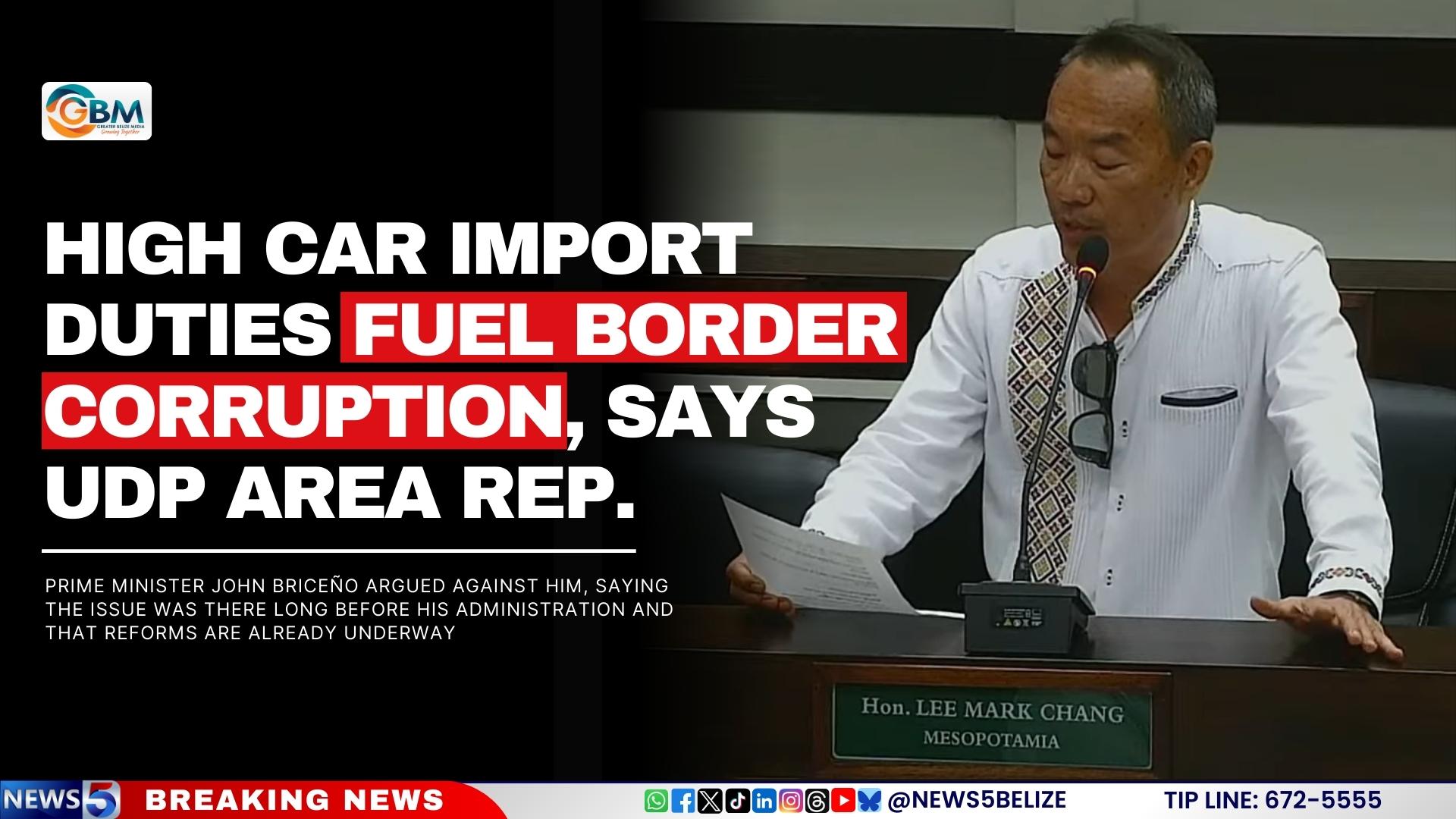
    BELIZE CITY – A contentious debate erupted in Belize’s House of Representatives on March 11, 2026, as allegations of systemic corruption at border customs checkpoints took center stage. Mesopotamia area representative Lee Mark Chang of the opposition UDP party presented claims that customs officers are accepting illicit payments from vehicle importers seeking reduced duty rates.

    Chang asserted that prohibitively high import taxes, particularly on vehicles older than five years, have created an environment conducive to corruption. “The fundamental solution lies in eliminating the incentive for corruption through substantial duty reductions,” Chang argued during the adjournment debate. “These older vehicles represent the primary transportation option for working and middle-class citizens, yet current policies push importers toward illegal arrangements.”

    Prime Minister John Briceño countered that the corruption predates his administration and highlighted ongoing reforms within the customs valuation system. “We’ve implemented adjustments that eliminate residual value calculations and empower customs officers to authorize legitimate discounts,” Briceño stated.

    The Prime Minister acknowledged rising compliance costs under the tightened system but emphasized collaborative efforts between the Finance Ministry, Customs Department, and importers to establish equitable solutions. Briceño presented a compelling economic argument that reducing official tax rates could potentially increase government revenue by diverting payments from illegal channels to legitimate tax collection.

    The exchange underscores ongoing tensions between revenue protection and corruption prevention in Belize’s import regulation framework, with significant implications for both governance integrity and consumer affordability.

  • Autism Awareness Month to feature community outreach, carnival band

    Autism Awareness Month to feature community outreach, carnival band

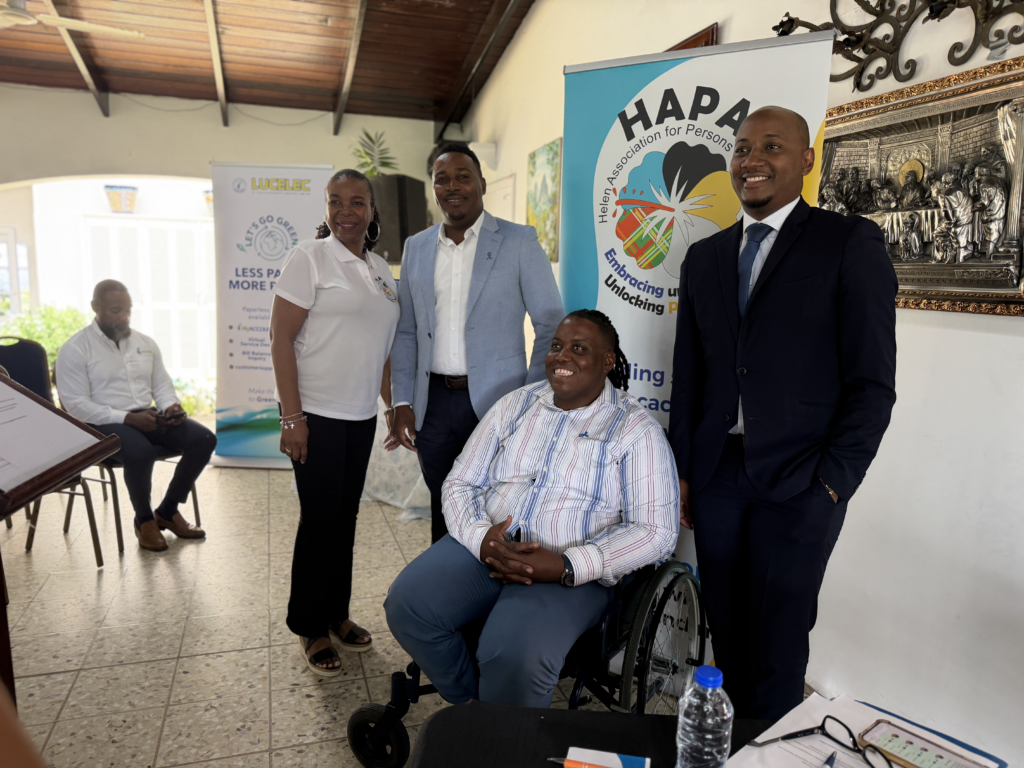
    As Autism Awareness and Acceptance Month approaches this April, Dr. Delia Samuel, President of the Helen Association for Persons with Autism (HAPA), is calling upon Saint Lucian society to foster greater understanding, acceptance, and inclusion of autistic individuals. During a Wednesday news conference, Dr. Samuel connected the nation’s upcoming awareness activities to her profound personal experience as both an autism advocate and an autistic mother raising two autistic sons.

    “I address you today as an autistic mother of two remarkable autistic young men. I share this identity not with sorrow, but with immense pride, joy, and boundless love,” Samuel declared, reframing the conventional narrative surrounding neurodiversity.

    Samuel described her unexpected journey into autism advocacy as simultaneously challenging and transformative. “This path was never one I anticipated walking. While it represents one of life’s most difficult challenges, it has also proven to be profoundly meaningful and rewarding,” she reflected.

    Like countless parents, Samuel initially struggled with her children’s diagnosis. “When my sons received their autism diagnoses, I felt my dreams for them had been shattered,” she confessed, acknowledging periods of doubt, shame, and guilt before ultimately recognizing the strengths and unique qualities of the autistic experience.

    Her emotional progression moved through stages of grief, confusion, denial, fear, and significant anger. “I repeatedly questioned why I had been placed in this situation,” Samuel recalled. However, her perspective underwent a radical transformation over time: “I evolved from believing ‘I cannot do this’ to realizing ‘this is possible.’ I shifted from asking ‘why me?’ to embracing ‘why not me?’”

    This personal evolution culminated in advocacy work. In 2014, Samuel documented her experiences in a book designed to encourage parents and caregivers, conveying the message that “even when odds appear overwhelming, triumph remains possible.” This foundational work inspired Saint Lucia’s first Autism Awareness Conference in October 2015, which attracted over 300 participants and marked the beginning of a larger movement.

    From these efforts emerged the Helen Association for Persons with Autism (HAPA), officially registered as a non-profit in 2023. The organization’s mission focuses on advocacy, providing support and education for autistic children and families, training educators and community members, and transforming societal understanding of autism.

    The association’s logo—a hibiscus flower displayed in colors inspired by Saint Lucian flag and culture—symbolizes the uniqueness of each autistic individual. This philosophy is encapsulated in HAPA’s slogan: “Embracing Uniqueness, Unlocking Potential.”

    Samuel characterized autism as a complex neurodevelopmental condition affecting communication, behavior, and sensory processing, often described as an “invisible disability” because many autistic individuals appear physically typical while experiencing the world differently. She emphasized that autism exists on a spectrum with varying support needs, noting that many autistic Saint Lucians still face bullying, ridicule, and misunderstanding.

    Families frequently struggle with isolation, limited support, and exhaustion while navigating a world not designed for their children. These challenges are exacerbated by stretched educational resources, scarce therapeutic services, and the invisibility of adults on the spectrum.

    HAPA has implemented several initiatives over the past two years, including the Sponsor Parents Programme launched in January 2025, which connects sponsors with parents of autistic individuals to alleviate financial burdens. Five families have already benefited from this program. The organization has also conducted workshops for parents and educators covering speech and language support and caregiver self-care strategies, delivered school presentations, and produced awareness videos in both English and Kwéyòl.

    April’s awareness activities, under the theme “Light it up blue for persons with autism,” include:
    – April 2: World Autism Awareness Day with blue-wearing solidarity campaign
    – April 18: Sensory-Friendly Health Fair offering free preventive screenings
    – April 23: Educators’ Panel Discussion on inclusive classrooms
    – April 25: Sports Day providing safe physical activity space
    – April 30: Public Transport Panel with drivers to promote understanding

    A groundbreaking cultural initiative will feature the first autistic Kiddies Carnival band with sensory-friendly accommodations, enabling autistic children to participate in one of Saint Lucia’s most celebrated cultural events.

    Samuel fundamentally rejects the notion that autism requires curing: “Autism is not a disease. It is not something that needs to be cured.” Instead, she urges society to eliminate barriers preventing autistic individuals from thriving: “Autistic people do not need fixing. There’s nothing wrong with us.” She calls for addressing systemic obstacles that limit opportunities and standing with parents who advocate daily for their children.

    During the news conference at Mount of Prayer in Coubaril, Sol Cares demonstrated support for HAPA’s mission with a $5,000 donation to enhance inclusion efforts for autistic children in Saint Lucia.

  • $57 Million Dollar Expansion Coming to NHI

    $57 Million Dollar Expansion Coming to NHI

    The Belizean government has committed to a substantial healthcare investment with Prime Minister John Briceño announcing a $57 million expansion of the National Health Insurance (NHI) program during Tuesday’s parliamentary session in Belmopan. This strategic initiative marks a significant shift from stabilization to expansion phase for the 2026-2027 fiscal year.

    The comprehensive expansion plan will extend NHI coverage to the entire Cayo District, potentially increasing nationwide enrollment beyond 325,000 beneficiaries. Prime Minister Briceño emphasized the administration’s commitment to strengthening healthcare infrastructure, stating that “significant resources will be allocated to also strengthen the supply side.”

    The funding will facilitate substantial upgrades to polyclinics, enhance staffing capabilities, and establish strengthened partnerships with the Ministry of Health and Wellness. These measures are designed to ensure that healthcare services can adequately meet the anticipated surge in demand resulting from the expanded coverage.

    This development follows extensive national debate regarding NHI’s effectiveness since its inception 25 years ago as a pilot program in south Belize City. Originally conceived to establish healthcare as a fundamental right, the program has historically improved accessibility and reduced out-of-pocket medical expenses for citizens. However, questions have persisted regarding the system’s capacity to deliver consistent, reliable care across the nation’s diverse regions.

    The announcement represents the most substantial investment in the NHI program in recent years and signals the government’s renewed commitment to universal healthcare coverage.

  • Portsmouth Bombers unveil new website

    Portsmouth Bombers unveil new website

    Portsmouth Bombers Football Club, a prominent Dominican Premier League organization founded by Prime Minister Roosevelt Skerrit, has officially unveiled its innovative digital headquarters at www.bombersfootballclub.com. This strategic digital transformation represents a pivotal advancement in the club’s modernization initiatives, fundamentally reshaping how the organization interacts with its global supporter network.

    The newly launched platform serves as the central digital nerve center for the Bombers ecosystem, providing stakeholders including fans, athletes, corporate partners, and football enthusiasts with unprecedented access to club resources. The comprehensive portal features real-time match statistics, exclusive player profiles, historical archives, and detailed information about the club’s community outreach programs.

    Based in Portsmouth, Dominica, the Bombers have established themselves as a dominant force in national football, consistently competing at the elite level of the Dominican Premier League. The organization has gained renown for its exceptional player development system and significant contributions to football advancement throughout the island’s northern region.

    A club representative emphasized the platform’s significance: “This digital initiative enables us to authentically narrate our journey, showcase our talented athletes, and maintain transparent communication with our dedicated supporters worldwide. It’s more than a website—it’s our virtual home.”

    The platform offers multifaceted functionality including live match updates, youth program registration, exclusive event information for tournaments like the Possie Cup Invitational, high-definition match footage, community engagement calendars, and detailed partnership opportunity portals. The club actively encourages its global fanbase to explore the digital infrastructure and participate in the Bombers’ ongoing evolution through this interactive medium.