博客

  • Devon Biscuits cuts prices despite sugar tax rollout

    Devon Biscuits cuts prices despite sugar tax rollout

    KINGSTON, Jamaica — In an unexpected move that sets it apart from many other food producers across the country, iconic Jamaican biscuit manufacturer Devon Biscuits has rolled out permanent price cuts to its full product line, even as the nation’s recently implemented sugar tax threatens to push up production costs across the food and beverage industry. The company framed the decision as a targeted effort to relieve financial strain on households already grappling with skyrocketing living costs across Jamaica.

    The new lower pricing went into effect on May 4, the company confirmed in an official media statement released earlier this week. Brand Manager Sherene Bryan explained that the choice to reduce prices grows directly out of the company’s longstanding promise to stand with Jamaican consumers, especially through the uncertain economic conditions the nation currently faces.

    What’s more, Devon Biscuits emphasized that this price adjustment is not a short-term promotional gimmick, but a core component of the company’s wider long-term strategy. The strategy is designed to keep the brand’s popular baked goods accessible to working and middle-class Jamaican families, while cementing the company’s reputation as a committed community partner that prioritizes national welfare over short-term profit gains.

    “We recognize the importance of delivering value beyond the products themselves,” the company’s statement noted. “These price adjustments are intended to make our offerings more accessible to Jamaican families while reinforcing our responsibility as a brand to support national well-being.”

    The announcement arrives at a moment when many other food and beverage manufacturers across the country are updating their price lists to account for the new government-imposed sugar tax, which industry analysts broadly expect to drive cost increases across large segments of the sector. Unlike many of its competitors, however, Devon Biscuits has chosen to absorb the additional tax costs rather than pass them on to everyday consumers.

    Devon Biscuits is a leading manufacturer and distributor of baked goods across Jamaica, with a popular product range that includes fan favorites such as Chocolate Digestive, Bourbon Creams, Coconut Shortcake, and its signature original Digestives.

  • Hurricane Melissa spurs rethink of corporate disaster readiness

    Hurricane Melissa spurs rethink of corporate disaster readiness

    Nearly two months after Hurricane Melissa tore through Jamaica, leaving a trail of destroyed infrastructure, upended communities and an estimated $12.2 billion in total economic damage, the Caribbean nation is still navigating the long, uneven process of recovery. Against this backdrop of ongoing reconstruction, leaders from Jamaica’s private sector, national disaster management agencies and leading media outlets came together last week at Kingston’s AC Marriott Hotel for the IMPACT Marketing Conference, where they pulled back the curtain on their post-storm response efforts and unpacked key lessons for building national and organizational resilience.

    The high-profile panel discussion brought together four experienced stakeholders: Dianne Ashton-Smith, head of corporate affairs at leading Jamaican brewer Red Stripe; Chloleen Daley-Muschett, assistant vice president for public relations and corporate affairs at gaming and entertainment group Supreme Ventures; Arthur Hall, editor-at-large for the Jamaica Observer; and Commander Alvin Gayle, director general of Jamaica’s Office of Disaster Preparedness and Emergency Management (ODPEM). Over the course of the conversation, the group explored what makes for effective disaster response, how private sector action can deliver tangible, meaningful support to affected communities, and why cross-sector collaboration is non-negotiable for long-term resilience.

    Ashton-Smith outlined Red Stripe’s people-first response framework, explaining that the company’s immediate priority in the chaotic 72 hours after the storm passed was confirming the safety of all its employees and its key distribution partner, Celebration Brands. With critical communication infrastructure damaged and cellular networks down across large swathes of the country, the full safety check took multiple days to complete. She emphasized that while every organization should have pre-built crisis frameworks, no plan can ever be a step-by-step script for an unprecedented disaster. When systems fail and situations shift by the hour, decision-making has to be rooted in core organizational values and real-time on-the-ground judgment.

    Only once every team member was accounted for and safe did Red Stripe shift its focus to external relief efforts, working in lockstep with ODPEM and local community partners to identify the hardest-hit regions and deliver the support that was actually needed, rather than deploying pre-planned assistance that might not match on-the-ground needs. For Ashton-Smith, corporate crisis responsibility is measured solely by the impact of action, not media visibility or brand recognition. “Responsibility and visibility are not mutually exclusive; people expect us to step up. But the real focus has to be on impact, what reaches people and makes a difference,” she said. She added that the company’s response was guided by its long-held values: a commitment to caring for all people, the courage to act quickly amid uncertainty, and a focus on addressing the real needs of local communities, rather than centering the company’s brand in relief messaging. She also stressed that meaningful crisis response is not a one-time effort: consistent, long-term support for recovery matters far more than a single high-profile donation immediately after the storm.

    Daley-Muschett echoed the focus on internal prioritization and intentional action, sharing that Supreme Ventures’ first step after Hurricane Melissa was also checking in with its own staff and its network of more than 1,300 retail partners across the country. To avoid stretching resources too thin and ensure support reached vulnerable communities quickly, the company focused its relief efforts on distributing high-priority essentials – clean drinking water and non-perishable food – through its already existing retail network, cutting down on logistics delays that often slow disaster aid. She echoed the panel’s focus on authentic action over performative giving, noting that every donation and relief initiative was aligned with the company foundation’s core mission to serve Jamaican communities. “It’s important to be authentic, not performative. When you highlight the good you do, good follows,” she said.

    Commander Gayle, the head of Jamaica’s national disaster preparedness agency, praised the widespread private sector support delivered after Hurricane Melissa but pushed for more intentional, long-term collaboration between the private sector and government disaster management bodies. He emphasized that building national resilience requires moving beyond immediate life-saving relief to strategic long-term recovery planning, a process that is greatly strengthened by private sector participation. He urged all Jamaican companies to coordinate their response efforts through the national Emergency Operations Centre (EOC), where centralized information sharing allows for faster, more coordinated policy-level decisions that can speed up recovery across the country. “Private sector participation can greatly enhance national recovery efforts,” he noted.

    By the end of the discussion, all panelists reached a clear consensus: effective crisis response requires authentic action, long-term commitment to recovery, proactive pre-disaster planning, and sustained cross-sector partnership. As Jamaica continues to rebuild from Hurricane Melissa’s devastation and prepares for the more intense, frequent storms that climate change is projected to bring to the Caribbean, the core message from the IMPACT Conference resonated: crisis management is not a one-off activity, it is an ongoing process of preparation, collaboration and adaptation. Only through coordinated action across the public, private and media sectors can Jamaica build a more resilient future for all its citizens.

  • Real Madrid’s Valverde treated in hospital after Tchouameni clash – reports

    Real Madrid’s Valverde treated in hospital after Tchouameni clash – reports

    In a sudden off-pitch incident that has sent ripples through Spanish football, Real Madrid midfielder Federico Valverde required hospital treatment and facial stitches following an altercation with teammate Aurélien Tchouaméni after a team training session this Thursday, multiple Spanish media outlets have confirmed. The incident comes amid already simmering tension at the Santiago Bernabéu, just 72 hours before the club’s crucial La Liga Clasico away to title-leading Barcelona.

    The conflict between the two first-team stars did not emerge out of nowhere. According to local reporting, the pair first clashed in a heated argument during training on Wednesday, and the disagreement failed to cool off, continuing through Thursday’s on-pitch session and into the post-training period. Multiple Spanish outlets, including leading sports daily Marca which broke the story initially, have clarified that Valverde’s facial injury was accidental, not the result of a deliberate punch from the French international midfielder.

    After the final whistle of Thursday’s training session, reports indicate that tensions boiled over into the dressing room. Valverde had previously rejected Tchouaméni’s attempt to offer a handshake to smooth over the earlier disagreement, and the Uruguayan later committed a hard foul on his teammate during the session. That foul reignited the argument, which ultimately led to the accidental collision that left Valverde with a cut needing medical intervention. Valverde was escorted to a local hospital near Real Madrid’s Valdebebas training complex by first-team coach Álvaro Arbeloa, where he underwent stitching to treat the facial wound.

    As of Friday, neither Real Madrid’s club communications team nor the player agents representing Valverde and Tchouaméni have issued any official comment on the incident when contacted by AFP. The off-field trouble arrives at a particularly difficult moment for the 14-time European champions. Los Blancos are currently at risk of finishing a second consecutive season without winning a major senior trophy, a rare drought for one of the world’s most successful football clubs.

    To compound the tense atmosphere at the club, Real Madrid now faces a high-stakes trip to the Camp Nou to take on Catalan rivals Barcelona this Sunday. Xavi’s side currently hold an 11-point lead at the top of the La Liga table, and a positive result for Barcelona on Sunday will see them secure back-to-back Spanish top-flight titles, putting an exclamation point on a disappointing domestic season for Real Madrid.

  • Black Ink Marketing launches conference connecting diaspora to Jamaica’s real estate sector

    Black Ink Marketing launches conference connecting diaspora to Jamaica’s real estate sector

    A specialized investment conference connecting the global Jamaican diaspora to local property and investment opportunities in Jamaica is scheduled to take place on June 5, 2026, at the DoubleTree by Hilton Sunrise – Sawgrass Mills in South Florida, organized by Black Ink Marketing Event Solutions Limited.

    Billed as the “From Deed to Key Investment Housing Conference” and themed “Invest in Your Piece of Di Rock”, the gathering comes amid a growing, unmet demand from Jamaicans living overseas for credible, actionable guidance on property-related activities back home. In recent years, more diaspora members have pursued projects ranging from purchasing residential property to developing inherited land and securing financing for real estate ventures, but many have faced gaps in trusted information and access to legitimate industry partners. This conference was developed specifically to address that gap.

    The full-day event will combine educational sessions, collaborative panel discussions and structured networking opportunities, with leading industry experts covering a wide spectrum of critical topics for diaspora investors. Attendees will gain insights into the step-by-step process of securing official land titles, common real estate fraud schemes and how to avoid falling victim to them, the full pipeline of real estate investment from capital raising to project completion, strategies for building long-term wealth that extends beyond physical land and housing, structuring assets to protect generational legacies, public-private partnership initiatives in the Jamaican housing sector, and modern construction techniques that build climate-resilient, future-proof structures.

    Headlining the event as keynote speaker is David Mullings, a prominent Jamaican entrepreneur and investor who serves as chairman and chief executive officer of Blue Mahoe Capital. Other key participants will include representatives from real estate development firms, financial lending institutions, legal practices, realty agencies, and Jamaican government bodies, all of which will have the opportunity to connect directly with attendees who are actively seeking to invest or purchase property.

    Maxine Miller, the lead organizer of the conference, explained that the core mission of the initiative is to close the persistent information gap that has prevented many diaspora members from pursuing their property goals, while creating a vetted, trusted platform for engagement between overseas Jamaicans and local industry and government stakeholders in Jamaica.

    Miller emphasized that the event is far more than a one-time industry gathering: “This is more than just a conference; it is a movement focused on empowering Jamaicans abroad to confidently invest, build wealth and secure their legacy through property ownership and development back home.”

    The South Florida launch was strategically chosen to serve the large Jamaican diaspora community based in the region, and organizers intend for this to be the first in a series of international events designed to increase diaspora participation in Jamaica’s housing and broader investment ecosystem. As Miller put it, “We believe the South Florida staging will serve as the first of several international engagements aimed at strengthening diaspora participation in Jamaica’s housing and investment landscape. We are taking Jamaica…to Jamaicans.”

    Registration for the 2026 conference is open now, with tickets available for purchase through the official event website at spurropen.com.

  • Multiple fights spark suspension of classes at STETHS

    Multiple fights spark suspension of classes at STETHS

    In the parish of St Elizabeth, Jamaica, a local secondary school has halted all on-campus learning for a day following a string of violent clashes that left one student injured and prompted a major police response. St Elizabeth Technical High School (STETHS), based in the town of Santa Cruz, announced the suspension of in-person classes for Thursday after multiple violent altercations unfolded on campus Wednesday, one of which reportedly involved a bladed weapon.

    In an official circular sent out to all parents and guardians of enrolled students, STETHS Principal Keith Wellington outlined exceptions to the campus closure: only students sitting for external standardized examinations and those helping to coordinate an upcoming regional sports championship will be permitted to enter school grounds on the suspended day. All other enrollees have been ordered to remain at home and complete remote coursework assigned by their subject instructors.

    The principal’s statement emphasized that the sudden suspension was a precautionary measure designed to safeguard every member of the school community, while giving administration time to implement new disciplinary protocols to prevent further unrest. “Please be advised that following a series of incidents on campus today (Wednesday) the administration has taken the decision to suspend physical classes for Thursday, May 7, 2026. As a result, all students must stay at home and complete any assignment given by their subject teachers. This action has been taken to protect the safety of all members of the school community and ensure that provisions are made to maintain discipline,” the advisory read in part.

    According to initial law enforcement and school reports, the first violent confrontation broke out around mid-morning on Wednesday. A student sustained non-life-threatening injuries during the clash, and school officials ultimately called on local police to intervene and de-escalate the situation. What makes the incident more alarming for school leadership is that multiple additional fights erupted across campus after the initial confrontation, even unfolding directly in front of senior STETHS administrators, according to anonymous sources familiar with the day’s events.

    The disruption has sparked fresh discussion among local education stakeholders about rising student violence in Jamaican secondary schools, with many calling for increased investment in on-campus conflict resolution programming and security resources. As of Thursday morning, school administration has not announced any further extensions to the class suspension, and says it plans to resume a full regular schedule of in-person classes on Friday.

  • Five confirmed hantavirus cases from cruise ship, three suspected — WHO

    Five confirmed hantavirus cases from cruise ship, three suspected — WHO

    GENEVA, Switzerland – In an official briefing held Thursday, the World Health Organization (WHO) has updated the public on an emerging hantavirus outbreak linked to the Atlantic cruise vessel MV Hondius, confirming five positive cases of the disease, with three additional suspected infections still under investigation. Three deaths have already been connected to the incident, and global health officials have cautioned that further cases may emerge as the outbreak continues to unfold.

    The Dutch-flagged exploration ship departed Ushuaia, Argentina on April 1 for a northbound Atlantic voyage that was scheduled to end in Cape Verde. After wrapping up its stop in Cape Verde, the vessel set a new course for Tenerife, Spain this Wednesday, carrying its remaining passengers and crew after multiple passengers disembarked earlier in the journey.

    WHO Director-General Tedros Adhanom Ghebreyesus confirmed to journalists in Geneva that the specific strain involved in the outbreak is the Andes hantavirus, a variant endemic to parts of South America. This particular strain is unique among hantaviruses because it is the only variant with confirmed evidence of person-to-person transmission. Most hantaviruses spread to humans exclusively from infected rodents, typically through contact with contaminated urine, fecal matter, or saliva.

    “Andes virus has an incubation period that can extend up to six full weeks, which means we cannot rule out additional cases being detected in the coming weeks,” Tedros explained. He added that he has maintained consistent communication with the captain of the MV Hondius, who reported that passenger and crew morale has improved dramatically since the vessel resumed its journey. “I want to recognize the captain and the entire ship crew for their ongoing efforts to protect everyone on board,” he said.

    Tedros confirmed that during a stop at the British overseas territory of Saint Helena between April 22 and 24, 30 passengers disembarked the vessel. The first recorded fatality from the outbreak, a Dutch national, died on April 11 before the stop. To date, 12 countries have been notified by WHO that their citizens were among those who left the ship at Saint Helena: the United Kingdom, Canada, Denmark, Germany, the Netherlands, New Zealand, Saint Kitts and Nevis, Singapore, Sweden, Switzerland, Turkey, and the United States.

    In a promising update, global health leaders expressed cautious confidence that the outbreak can be contained. Abdi Rahman Mahamud, Director of WHO’s Emergency Alert and Response, stated that the outbreak will remain limited if appropriate public health protocols are implemented consistently across all affected countries and regions. To support ongoing testing efforts, Argentina is preparing to ship 2,500 diagnostic testing kits to laboratories across five countries that are handling contact tracing and case confirmation for the incident.

  • Darville pledges to pass laws for families abandoning patients

    Darville pledges to pass laws for families abandoning patients

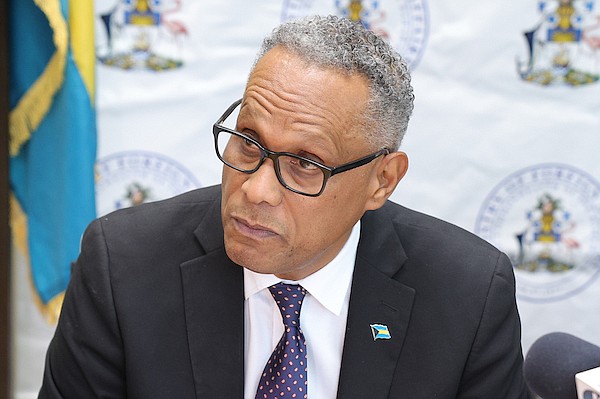
    The persistent crisis of family members abandoning elderly and long-term care patients in Bahamian public hospitals has spurred the incumbent Davis administration to announce plans for targeted accountability legislation if voters return the party to power for a second term, Health and Wellness Minister Dr. Michael Darville confirmed in a press briefing this week.

    Dr. Darville, who has repeatedly highlighted the growing problem of so-called “hospital boarders” — patients who no longer require acute medical intervention but remain occupying hospital beds — told reporters the vast majority of these boarders are elderly patients whose families have refused to remove them from public care facilities. The issue is most acute at two of the nation’s leading public hospitals, Princess Margaret Hospital and Rand Memorial Hospital, where constrained bed capacity has already created widespread care delays.

    According to Dr. Darville, the ongoing occupation of acute care beds by non-acute patients creates cascading disruptions across the entire public health system. It directly slows patient turnover in accident and emergency departments, and blocks timely transfers of stable patients from admission and assessment units to inpatient wards, leaving patients with urgent medical needs waiting longer for critical care. To mitigate existing strain, health officials have already partnered with private sector organizations to source alternative care placements and supportive housing for abandoned patients, but the burden on the public system remains unacceptably high.

    While the Ministry of Health maintains a compassionate approach to the vulnerable elderly patients caught in this situation, Dr. Darville emphasized that the systemic cost of inaction is too great to ignore. If re-elected, the proposed legislation will explicitly codify legal responsibility for family caregivers, with swift enforcement action targeted at households that collect National Insurance benefits to cover their relative’s care but still abandon them in public hospitals.

    This is not the administration’s first step to address the crisis. Back in October 2024, Dr. Darville announced the government was advancing serious regulatory and coordination reforms to improve long-term elderly care, amid a steady rise in the number of patients being left in public hospitals. At that time, officials confirmed cross-agency collaborations with the Department of Social Services and Sandilands Geriatric Facility to develop long-term strategies that both reduce pressure on acute care facilities and uphold the safety and dignity of abandoned elderly patients.

    Notably, the issue is not unique to The Bahamas. Neighboring Jamaica has grappled with the same problem for years, with local outlet The Jamaica Observer previously reporting that patient abandonment continues to restrict bed access and strain public health resources across Jamaican facilities, mirroring the challenges now facing Bahamian health officials.

  • Ingraham targets Sebas Bastian’s potential to rise to prime minister

    Ingraham targets Sebas Bastian’s potential to rise to prime minister

    One of the Bahamas’ most iconic political figures, former Prime Minister Hubert Ingraham, has reversed a long-held personal decision to stay out of the upcoming general election’s campaign trail, emerging at a recent Free National Movement (FNM) rally to publicly oppose incumbent Prime Minister Philip Davis’ bid for a second term. His change of heart stems from deep concerns over the future trajectory of the ruling Progressive Liberal Party (PLP) and the potential ascent of PLP Fort Charlotte candidate Sebas Bastian to the nation’s highest office.

    In his remarks to energized FNM supporters on Wednesday night, Ingraham acknowledged that he had no initial plans to campaign against Davis, noting a personal friendship with the incumbent that transcends partisan divides. “Brave is my friend. We are on different teams, so we never vote for each other,” Ingraham explained, emphasizing that his original plan was to remain on the sidelines during Davis’ re-election race. That neutral stance shifted entirely when he considered what a second Davis administration could mean for Bastian’s political career, he added.

    Ingraham warned voters that a win for Bastian in the hotly contested Fort Charlotte constituency would put the PLP candidate on a clear path to the prime minister’s office. To block that outcome, he urged local voters to throw their support behind FNM candidate Travis Robinson in the key race. “If you want to make sure Sebas doesn’t become your prime minister, stop him in Fort Charlotte,” Ingraham argued.

    The former prime minister also hit Bastian over his partisan political history, pointing out that Bastian was once a member of the FNM before defecting to the PLP. He told Fort Charlotte voters that any candidate claiming ongoing ties to the FNM should be rejected at the polls, going on to question Davis’ decision to nominate Bastian in the first place. Ingraham claimed Bastian’s political rise was due to patronage from former PLP Prime Minister Perry Christie, whom Bastian has referred to as a father figure. “Perry went against the will of the people in the Bahamas and made Sebas the man he is today,” Ingraham claimed.

    Drawing on a historic electoral example from the 1997 Fort Charlotte race, Ingraham pushed back against the idea that personal wealth should translate to electoral success. He recalled that FNM candidate Zhivargo Laing entered that race with just $14,000 in net worth, facing off against a millionaire opponent who reported $14 million in assets. Despite the massive financial gap, Ingraham noted, Fort Charlotte voters elected Laing and sent the wealthy challenger home, a precedent he argued should hold in 2024.

    Beyond the partisan race for Fort Charlotte, Ingraham used his speech to highlight broader flaws he sees in the Bahamas’ current electoral system. He described last week’s advanced polling as “chaotic”, repeating his longstanding call for elections to be taken out of government hands and overseen by an independent, adequately funded electoral commission — a model already adopted by many other nations across the Caribbean region.

    Ingraham acknowledged that some of the blame for disorganized advanced polling stemmed from poor appointment of election officials, but he framed the issue as a systemic problem of democratic governance rather than just an isolated mistake. He noted that public trust in election outcomes depends on a neutral, transparent process that all parties can believe in, a prerequisite for losers to accept results after ballots are counted. Even with his criticism of the advanced poll, Ingraham said he was heartened to see voters waiting patiently in disorganized lines to cast their ballots, calling the turnout a powerful display of democratic commitment in the Bahamas. He urged all FNM supporters to turn out on official election day, May 12, and remain in line to vote no matter how long the wait.

    Ingraham also called for sweeping modernization of the country’s voting infrastructure, saying he hoped the 2024 election would be the last time Bahamian voters are required to carry paper voter cards. He noted that even many developing countries — including fellow Caribbean nation Haiti — have already transitioned to more secure biometric voting identification, and that the Bahamas’ reliance on paper cards puts it far behind global standards. Ingraham recalled that his own administration first attempted to pass electoral reform and introduce biometric identification more than 23 years ago, with bipartisan support from the PLP at the time. The reform failed only after his government opted to put the question to a public referendum, where voters rejected the change.

    The former prime minister added that he also hopes the Bahamas will eventually eliminate the outdated practice of marking voters’ fingers with ink after they cast ballots. On the topic of ballot security, he instructed FNM poll workers to closely monitor presiding officers at every polling location to ensure only one ballot is issued to each registered voter. He closed by reiterating his criticism of electoral mismanagement, pointing to alleged irregularities at an advanced polling site that included improper ballot counting and unauthorized movement of ballot boxes without notification of all participating political parties.

  • Advertising stakeholders call for upgrades to KSAMC signage regulations

    Advertising stakeholders call for upgrades to KSAMC signage regulations

    KINGSTON, Jamaica — Leaders of Jamaica’s outdoor advertising and print industries are calling for critical updates to outdated municipal signage regulations, arguing that the 48-year-old rules have failed to keep pace with the island’s rapid urban development and modern advertising innovation. Following a collaborative stakeholder gathering with the Kingston and St Andrew Municipal Corporation (KSAMC) focused on regulating outdoor signage across the capital, IPrint Group of Companies Chairman Steven Steele laid out the case for amending the KSAMC’s 1978 signage regulatory framework. “We are now in 2026, so many decades have passed since these rules were drafted, and nearly every facet of life here has grown: our road networks, our total population, our urban centers, our overall national economy,” Steele explained. “That means these regulations are long overdue for a comprehensive upgrade.”

    In attendance alongside Steele was Raul Duany, Managing Director of leading local signage firm Signtex and current President of the Outdoor Signage Association of Jamaica, who opened by affirming the core value of outdoor signage for Jamaican businesses and private individuals seeking to connect with their target audiences. But Duany also acknowledged longstanding gaps in current regulatory enforcement, noting that “Some operators blatantly erect unapproved signage across the city, while other areas that once permitted promotional signs have become strangely barren over time.”

    Duany echoed widespread industry agreement that what was originally intended to be low-impact, unobtrusive advertising has now created problematic visual and physical clutter along many of Kingston’s public roadways. Even so, he welcomed the recent stakeholder meeting as a rare productive space for collaborative problem-solving, framing the dialogue as a potential catalyst for long-overdue legislative reform.

    Steele echoed that positive assessment, praising the quarterly meeting format as a strong foundation for future collaboration between industry and municipal leaders. He also expressed public support for KSAMC’s ongoing enforcement efforts, which aim to protect legitimate, rule-abiding players in the signage industry. “Maintaining a fair, well-regulated industry is critically important, and that is clearly the mayor’s top priority,” Steele said. “My only core concern is the risk of uneven enforcement, but at this point, that does not appear to be the direction the initiative is taking.”

    For his part, Kingston Mayor Andrew Swaby confirmed that the recent gathering marks the first in a planned series of quarterly stakeholder meetings. Swaby added that the industry representatives in attendance showed clear, genuine commitment to addressing the longstanding challenges facing Jamaica’s outdoor signage sector.

  • Heidi Lalor appointed to FEI Solidarity Committee, strengthening Caribbean voice in equestrian

    Heidi Lalor appointed to FEI Solidarity Committee, strengthening Caribbean voice in equestrian

    A historic milestone for Caribbean equestrian sports has been reached, with Heidi Lalor, President of the Equestrian Federation of Jamaica (EFJ), earning a coveted seat on the prestigious FEI Solidarity Committee — the first appointment of a Jamaican representative to the high-level global body. The confirmation of Lalor’s appointment came during the FEI General Assembly held in Hong Kong, where she secured the seat representing Group IV, a regional bloc encompassing Canada, the United States, and all Caribbean nations. She takes her place on a diverse international panel that includes delegates from Qatar, Bolivia, Cambodia, Kenya, Uzbekistan, Finland, and Guatemala.

    Prior to this breakthrough, the Caribbean has seen limited representation on the committee from nations including Haiti, the Cayman Islands, and The Bahamas, making Lalor’s appointment a new chapter for regional representation in global equestrian governance. The appointment follows five years of transformative strategic leadership from Lalor at the helm of the EFJ, a period marked by effective stewardship of international development grants, expanded investment in athlete training and coach education, and growing participation in FEI World Challenge competitions across Jamaica.

    Reflecting on her selection, Lalor attributed the historic appointment to two key factors: aligned priorities with FEI’s global development initiatives, and a proven track record of growing equestrian sports across the Caribbean region. “My selection came from alignment with global programs that boost awareness and participation, like the Racehorse Retraining Programme and the Eventing World Challenge, paired with my track record of delivering results and promoting the sport across the Caribbean,” Lalor noted. She added that her five years of leading Jamaica’s national federation have delivered measurable progress: “We have seen rising motivation, growing volunteer engagement, new sponsorship opportunities, higher competitive standards, and the development of a new generation of certified officials under the Jamaican flag.”

    Lalor emphasized that her appointment is part of a broader trend of growing Caribbean influence in global equestrian circles, pointing to tangible progress across the region. Barbados now holds a seat on the FEI Board, while Trinidad and Tobago has built a consistent record of competitive success across Olympic disciplines using exclusively locally trained horses. Other regional nations, including the Cayman Islands, Bermuda, and The Bahamas, are also advancing their own FEI Solidarity-backed development projects.

    For Lalor, the appointment is also deeply personal, rooted in decades of support from FEI development programs. Since 2003, she has benefited from FEI-funded coaching initiatives across the Caribbean, training in Trinidad and Tobago, the Cayman Islands, and her home country of Jamaica. “I am a direct product of these development initiatives,” she explained. “They provided coaching education for local federations that lifted up athletes, and built the professional governance frameworks that allow national federations to effectively manage and grow the sport.”

    Now working directly alongside FEI President Ingmar De Vos — who also serves as Solidarity Chair and a newly appointed International Olympic Committee Board member — Lalor says her role will extend far beyond formal representation. She plans to actively drive inclusive global development of the sport. “This appointment proves that doors are opening for small island nations,” she said. “It gives me the opportunity to support multiple regional countries, assist with equitable funding allocation, and help shape the future of equestrian sport on a global scale.”

    Looking ahead, Lalor’s core priorities are clear: unify the Caribbean region to raise its global profile, and expand access to equestrian sports by creating more development opportunities on local islands. “My central goal is to continue lifting regional standards and creating more on-island access through professional courses delivered by FEI Solidarity,” she said, noting that expanded certification for local coaches and officials will be the foundation of long-term sustainable growth. She also highlighted the critical role of strong governance, noting that robust administrative frameworks build trust with international bodies and unlock sustained investment. “With solid governance in place, you gain greater confidence and more effective productive management, which paves the way for long-term development,” Lalor explained. “I am eager to elevate the Caribbean’s presence on the global stage with energy, inspiration, and a deep commitment to sustainable growth.”

    Despite the progress, Lalor acknowledges persistent challenges, most notably the gap between grassroots participation and elite international competition for small island nations. “Bridging that divide is always a unique challenge for island communities,” she admitted, “but with clear vision, a strong foundational framework, and intentional advocacy, programs like the FEI World Challenge Series can help close that gap.”

    Beyond infrastructure and funding, Lalor says her appointment carries an important message for young aspiring equestrians across the Caribbean and the globe. “It is critical for young people to see this level of international representation from our region,” she shared. “One of my first core goals when I became EFJ President in 2022 was to show young people that this pathway exists — that broader global opportunities come from active engagement with your national federation.”

    Her advice to emerging equestrian leaders is simple but impactful: “Whether you are an Olympian, a recreational rider, or a coach, show up for your National Federation. Stay committed, stay positive, put in the work, and the support will follow.”

    Founded in 2012, the FEI Solidarity program remains focused on core global missions: expanding access to equestrian sports, growing global participation rates, raising competitive and governance standards, and strengthening the interconnected global equestrian community.