博客

  • I will respond as I see fit

    I will respond as I see fit

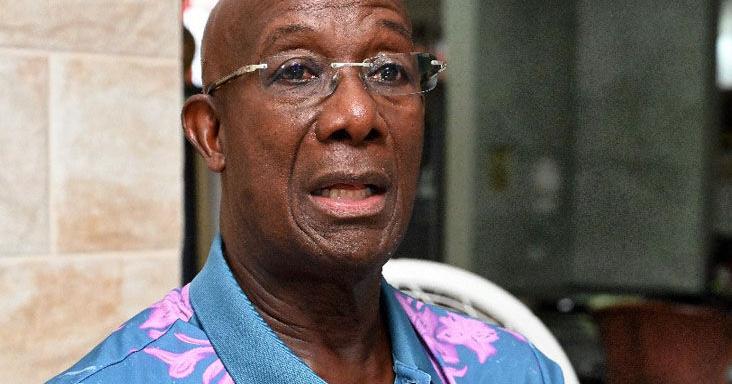
    In a significant escalation of Trinidad and Tobago’s political tensions, former Prime Minister Dr. Keith Rowley has declared he will publicly respond to any perceived slander from current Prime Minister Kamla Persad-Bissessar made within Parliament’s chambers. The opposition leader’s statement comes amid a brewing controversy surrounding media regulation and freedom of expression.

    The political clash intensified when the Telecommunications Authority of Trinidad and Tobago (TATT) issued a formal warning to CNC3 television on March 20th, citing potential violations of broadcast content regulations. TATT’s letter specifically referenced Section D9 of licensing agreements, which prohibits content that discriminates or portrays individuals negatively based on race, origin, class, religion, or sex.

    This regulatory intervention follows Rowley’s controversial reference to Persad-Bissessar as a ‘jamette’ during a news conference at his Glencoe residence. The remark came in response to the Prime Minister’s allegations that the People’s National Movement (PNM) utilized criminal funds for Balisier House renovations. Both television broadcasts and print media coverage disseminated these exchanges nationwide.

    Rowley, communicating via WhatsApp and later Facebook, expressed profound concerns regarding TATT’s timing and motives. He questioned whether the authority represented a novel establishment in Trinidad and Tobago, suggesting possible political influence behind its recent actions. The former PM drew parallels to international patterns of media suppression, asking rhetorically if this constituted ‘threatening of the media part of what is happening abroad.’

    Highlighting perceived inconsistencies, Rowley referenced former United National Congress minister Jack Warner’s past allegations during election campaigns, demanding to know TATT’s whereabouts during those controversies. He specifically mentioned Warner’s claims about a former prime minister allegedly using taxpayer money to benefit associates with state positions.

    Rowley maintained that Persad-Bissessar ‘is only a victim when she is challenged,’ while defending his right to respond to parliamentary allegations externally. He concluded with defiance, stating critics ‘could take a hike’ and reaffirming his commitment to answer any slanderous statements made within Parliament through appropriate public channels.
  • Look down, not up

    Look down, not up

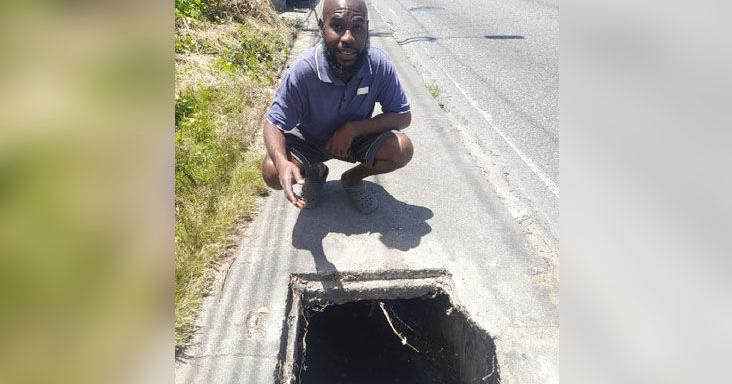
    Across Trinidad, from the capital Port of Spain to communities in Central, South, and East regions, a silent infrastructure crisis is endangering citizens’ daily lives. Pedestrians navigate a hazardous landscape of broken pavements, gaping manholes, and non-existent walkways, creating what residents describe as an ongoing public safety emergency.

    The human toll is both visible and painful. Farida Khan, 62, recounted her terrifying plunge into an uncovered manhole near her Enterprise home. “I just fell right in,” she said, describing how she stood crying for help in contaminated water filled with garbage. Her diabetic condition made the injuries particularly concerning. Adding to the danger, non-functional street lights have left the area in perpetual darkness despite repeated reports to authorities.

    This pattern repeats nationwide. Months after Khan’s accident, her 67-year-old brother suffered severe injuries from a fall on the same degraded pavement, requiring multiple stitches for deep cuts to his head and legs. Richard Gokool, a vendor from Longdenville, narrowly avoided catastrophe when his bicycle pitched into an open manhole on Old Southern Main Road. “What if I had pitched in front of a vehicle?” he questioned, highlighting the absence of compensation mechanisms for infrastructure-related injuries.

    The crisis disproportionately affects vulnerable populations. Elderly residents, children, and persons with disabilities face heightened risks when accessing essential services. Kerwyn Holder, who gained new perspective after a biking accident left him on crutches, emphasized that “pavements are life for the ordinary people” and directly impact living standards.

    Business owners like Chantelle Edward from Montrose acknowledge their role in pavement damage but stress that solutions remain elusive despite years of complaints. “They are unsightly and dangerous,” she stated, describing how some communities have begged for basic pavements for decades.

    In urban centers, the situation similarly deteriorates. Bank employees abandon high heels to avoid tripping on broken surfaces, while fast food workers describe walking in Port of Spain as “a miserable experience.” Beyond physical safety concerns, dark spaces created by faulty lighting increase opportunities for criminal activity.

    From Las Lomas to Cunupia, residents emphasize this transcends political blame games. Security officer Sherry Francis leaves for work at 3:30 a.m. in dangerous darkness, while her young children cannot walk to school safely due to missing infrastructure. As one resident summarized, functional pavements represent more than concrete—they “connect us to civilization” through safe access to transportation, education, and essential services.

  • Trump dreigt met aanval op Iraanse energie-infrastructuur

    Trump dreigt met aanval op Iraanse energie-infrastructuur

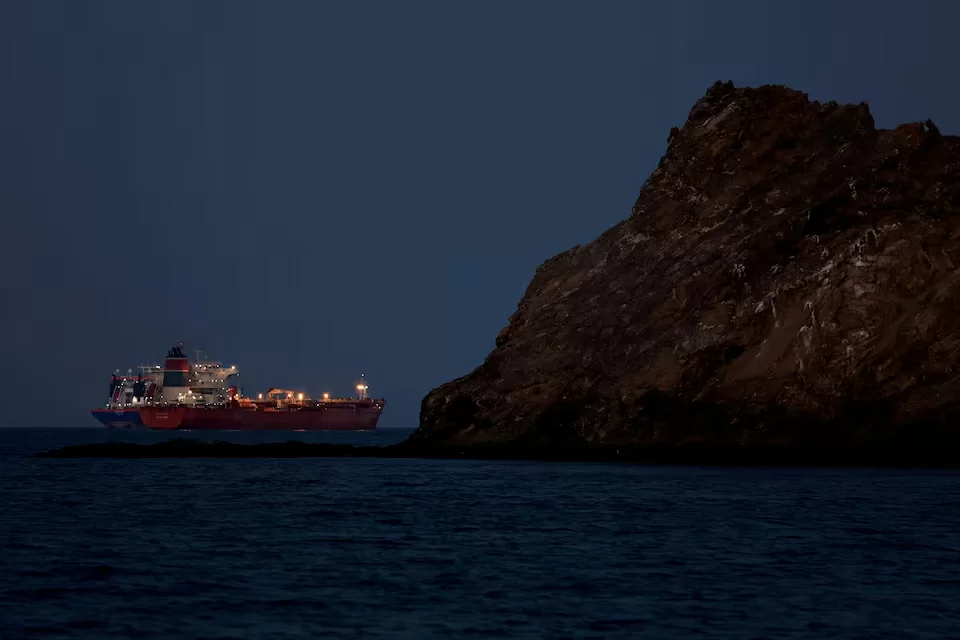
    The strategic Strait of Hormuz has become the epicenter of a rapidly escalating military confrontation between the United States and Iran, triggering global economic concerns and fears of regional warfare. President Donald Trump issued a stark 48-hour ultimatum via social media, threatening to “obliterate” Iranian power plants if Tehran fails to fully reopen the critical waterway without conditions.

    The crisis intensified as Iran launched ballistic missiles with unprecedented 4,000-kilometer range capabilities, targeting the Diego Garcia military base in the Indian Ocean and Israeli cities Dimona and Arad. Israeli military authorities confirmed these represent Iran’s first long-range missile deployments since hostilities began in late February, noting their potential reach extends to European capitals including Berlin, Paris, and Rome.

    Iran’s Revolutionary Guard Corps claimed targeting military installations and security centers, while Prime Minister Benjamin Netanyahu characterized the assault as “extremely difficult” while reaffirming Israel’s determination to counter threats on all fronts.

    The economic ramifications are already materializing globally, with European gas prices surging 35% due to disrupted oil and gas shipments through the Strait, which facilitates approximately one-fifth of global energy exports. The conflict has claimed over 2,000 lives since its inception, creating mounting political pressure on the Trump administration ahead of midterm elections.

    Iran issued counter-threats through spokesman Ebrahim Zolfaghari, warning that any attacks on Iranian energy infrastructure would trigger retaliatory strikes against US and Israeli-linked facilities across the Middle East, including desalination plants and information technology infrastructure. Former Iranian National Security Council head Ali Larijani amplified these warnings, suggesting the entire region could experience power outages within thirty minutes if Iran’s electrical grid is compromised.

    G7 nations issued a joint statement condemning Iran’s “reckless attacks and proxy operations” while expressing support for regional partners and emphasizing the need to protect global energy supplies and secure maritime routes. Meanwhile, analysts observe Trump appears to be losing control of the conflict dynamics, facing criticism for inconsistent messaging after recently discussing winding down military operations before issuing the current ultimatum.

    The violence has expanded to neighboring countries, with Iran’s Natanz nuclear facility suffering attacks (though without radioactive leakage) and other strategic targets being struck across the region, increasing risks of broader regional warfare.

  • Bramble wrongly denies NDP promised VAT reduction in 60 days

    Bramble wrongly denies NDP promised VAT reduction in 60 days

    In a striking political development, East Kingstown MP Dwight Fitzgerald Bramble has publicly contradicted his party’s campaign promises regarding Value-Added Tax (VAT) reduction. Despite the New Democratic Party’s (NDP) explicit pre-election commitment to lower VAT from 16% to 13% within 60 days of assuming power, Minister Bramble now asserts this timeline was never part of their official agenda.

    During a contentious radio interview on Hot 97.1, the Foreign Affairs Minister and economist acknowledged the VAT reduction was indeed an election platform promise but vehemently denied it was ever designated for implementation within the first 60 days of governance. This position directly conflicts with documented campaign materials and public statements made by NDP leadership prior to November’s general election.

    Bramble instead identified three specific 60-day commitments: payment of salary bonuses, implementation of a VAT-free day, and doubling of Public Assistance benefits. When confronted with digital evidence contradicting his claims, the second-term MP dismissed the findings as artificial intelligence errors, stating, “AI is wrong with that one.

    The controversy deepens with Prime Minister Friday’s recent budget address indicating VAT reduction would now occur by October 2026, following comprehensive assessments by the Ministry of Finance and Inland Revenue Department. The government cites fiscal responsibility and sustainable implementation as reasons for the delayed timeline, emphasizing the need for evidence-based policy rather than impulsive action.

    This policy reversal occurs against the backdrop of St. Vincent’s ongoing cost-of-living crisis, with the Friday administration promising targeted relief measures while maintaining fiscal stability. The VAT system, initially introduced at 15% in 2007 by the previous Gonsalves administration, was increased to 16% in 2017 to fund natural disaster recovery efforts.

  • Dayron is still waiting for high-cost medication; Family calls for protest for approval

    Dayron is still waiting for high-cost medication; Family calls for protest for approval

    In Santo Domingo, a desperate plea for medical justice unfolds as one-year-old Dayron Almonte Socias battles Spinal Muscular Atrophy (SMA), a severe genetic disorder causing progressive muscle deterioration. His parents, Inmanol Almonte and Genesis Socias, face an agonizing reality: despite constitutional guarantees to healthcare, the Ministry of Public Health and the High Cost Drugs Program have delayed approval of Evrysdi—the critical medication sustaining their son’s life—for over a year.

    The drug, priced at approximately 620,000 Dominican pesos per bottle (required every two months), remains financially unattainable for the family. With existing supplies dwindling, Dayron’s survival hinges on institutional intervention. In response, his parents will lead a peaceful demonstration on March 25 at 10:00 a.m. outside the National Palace, urging authorities to honor legal obligations under the Dominican Constitution and General Health Law 42-01.

    Article 61 of the Constitution explicitly mandates the state to ensure access to essential medicines and comprehensive healthcare for all citizens. The protest extends beyond Dayron’s case, symbolizing a broader struggle for countless individuals awaiting approval of vital treatments. Community solidarity is urged to amplify calls for systemic accountability and the protection of fundamental health rights.

  • OECS throws support behind SKN connection with Nigeria

    OECS throws support behind SKN connection with Nigeria

    In a significant move for South-South cooperation, the Organisation of Eastern Caribbean States (OECS) has formally endorsed an unprecedented diplomatic initiative spearheaded by St. Kitts and Nevis Prime Minister Terrance Drew. The groundbreaking mission involves a chartered flight carrying a multi-sector delegation from eight Caribbean nations to Nigeria, marking the first large-scale commercial charter flight directly connecting the Caribbean region to the African continent.

    The diverse delegation, organized by Aquarian Consult Limited, comprises entertainment figures, business leaders, government representatives, and cultural ambassadors embarking on a historic 10-hour transatlantic journey. The OECS Secretariat characterized the undertaking as “a landmark achievement for South-South cooperation and regional integration” in an official statement released Sunday.

    Prime Minister Drew recently elaborated on the strategic rationale behind this diplomatic outreach during an appearance on Freedom FM. He emphasized Africa’s emerging global significance, noting that developed nations are increasingly focusing on the continent due to its abundant natural resources, vast arable land, and growing population. “Africa is gearing up for the African Renaissance. It’s about to take off, so everybody’s trying to get in there,” Drew stated. “We, who are descendants of Africans, we must get in there as well.”

    The Nigeria trip represents the initial phase of a broader five-continent bridge-building effort designed to create cultural and business opportunities for Caribbean citizens. Drew’s personal diplomatic engagements have already established preliminary connections that this delegation aims to expand upon, particularly strengthening ties between the Caribbean and its African heritage nations.

    This initiative occurs against the backdrop of shifting global geopolitical dynamics, with Caribbean nations increasingly pursuing South-South cooperation as a strategic foreign policy approach. The mission signifies a proactive effort to position Caribbean countries at the forefront of emerging economic and cultural partnerships with African nations.

  • IHS holds cultural celebration as part of centenary

    IHS holds cultural celebration as part of centenary

    Intermediate High School marks a monumental educational milestone this year, commemorating a century of academic service and transformative impact under the unifying theme “Educating Generations, Enriching Lives for the Future.”

    The institution’s Modern Languages and Arts Department, in collaboration with the Social Sciences Department, orchestrated a distinctive cultural celebration on March 12th. The event, titled “Echoes of Hope: A Century in Song, Story and Spirit,” masterfully intertwined the school’s hundred-year heritage with the vibrant cultural legacy of the Garifuna community.

    This historic centennial pays homage to the visionary foundation laid by Dr. J.P. Eustace, whose pioneering dream centered on delivering quality education to underprivileged youth and creating sustainable pathways toward brighter futures. Throughout its existence, the school has maintained an unwavering commitment to intellectual development, character formation, and student empowerment through knowledge, discipline, and community service.

    The celebration unfolded through three immersive segments. “A Century in Story” transported attendees through the institution’s evolutionary journey, featuring dance performances and original poetic compositions by faculty members Arlane Sutherland and Rohan Bellingy that artistically captured the school’s struggles, victories, and aspirations.

    The second segment honored Dr. Eustace’s Christian educational philosophy through hymns of gratitude and worship, marking the triumphant return of the school band after years of inactivity. Music students from Fourth and Fifth Forms demonstrated their refined skills through recorder ensemble performances, showcasing the institution’s ongoing musical development.

    The finale celebrated the resilience and unity defining the school’s legacy, paying tribute to foundational figures including “Timmy” Richards, whose 48-year dedication significantly shaped the institution’s trajectory. The event culminated in vibrant cultural displays featuring traditional Garifuna attire, historical garments, and innovative futuristic uniform concepts modeled by students Phobe and Tishawn.

    School representatives emphasized that the celebration transcended historical reflection, serving as profound recognition of educators and pioneers who championed education’s transformative power. Their enduring legacy continues to inspire the institution’s commitment to its foundational mission of educational empowerment and community service.

  • VIDS op Wereld Waterdag: Inheemse dorpen kampen met ernstige waterproblemen

    VIDS op Wereld Waterdag: Inheemse dorpen kampen met ernstige waterproblemen

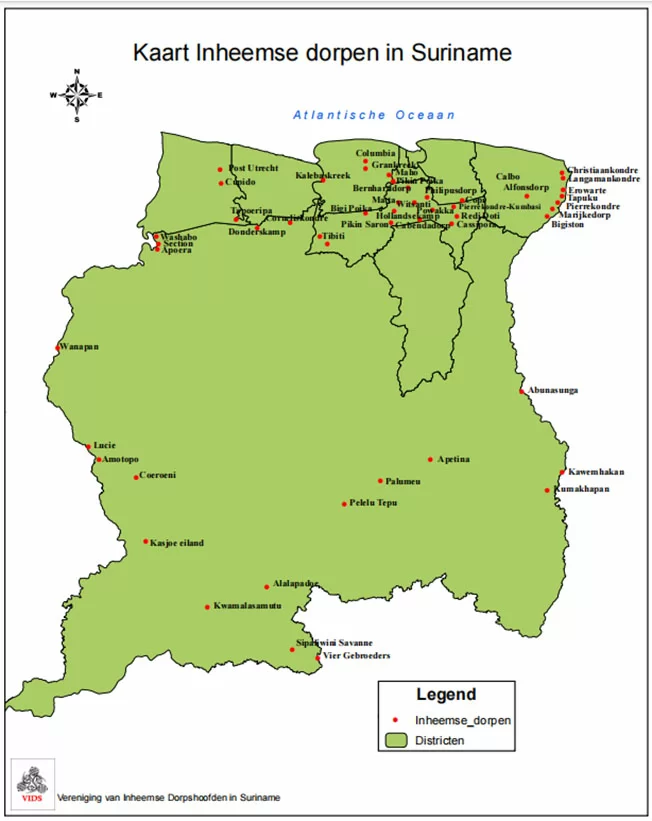
    On World Water Day, the Association of Indigenous Village Chiefs in Suriname (VIDS) has issued an urgent appeal addressing the severe water infrastructure deficits plaguing indigenous communities throughout the country. Despite international development agendas—including the Sustainable Development Goals (SDGs)—promising to ‘leave no one behind,’ indigenous and tribal populations in Suriname continue to experience systemic neglect regarding access to clean drinking water, sanitation, and reliable infrastructure.

    Recent analyses confirm that numerous interior communities remain dependent on rainwater, creeks, or rivers due to a near-total absence of basic water systems. Village leaders from multiple regions reported alarming conditions:

    In Marowijne, villages such as Langamankondre and Christiaankondre face acute water shortages, requiring emergency shipments from Paramaribo to supply schoolchildren. These communities also lack consistent electricity, relying on outdated generators despite proximity to urban centers. Similarly, in Alfonsdorp, a water source managed by the Surinamese Water Company exists but fails to provide 24/7 supply, forcing residents to rely on irregular and often contaminated water from neighboring villages.

    In Para, growing settlements like Wit Santi struggle with water accessibility, with households compelled to carry water long distances or collect rainfall. High connection fees further exacerbate inequities. Meanwhile, in Hollandse Kamp, taps have run dry for four years, and trucked-in water frequently fails to meet SDG 6 safety standards.

    Water quality remains another critical concern. In Donderskamp, recently rehabilitated water installations still produce dark, undrinkable water, compelling residents to seek alternative—and often unsafe—sources. In western regions such as Apoera, Section, and Washabo, arbitrary flat fees and alleged payment arrears—sometimes exceeding SRD 10,000—have sparked outrage, especially as meter installation costs remain unaffordable for most families.

    Southern Suriname suffers near-total absence of water infrastructure, with communities depending on river and creek water increasingly contaminated by mining pollutants, erosion, and climate-induced droughts and floods.

    Water pollution poses a severe threat to traditional sources. Rivers once considered safe, like the Marowijne, are now tainted by mercury and chemicals from gold mining—activities often licensed without adequate protection for indigenous territories.

    Women and girls bear the heaviest burden, as water collection and management traditionally fall to them. Water scarcity heightens their workload, curbing educational and economic opportunities and compounding discrimination based on gender, ethnicity, and socioeconomic status.

    VIDS emphasizes that these issues stem from structural marginalization, insufficient inclusion in policy processes, and the lack of full legal recognition of indigenous collective rights. Although indigenous organizations are occasionally invited to policy dialogues, their input rarely influences outcomes.

    The association urges the government and relevant agencies to:
    – Invest urgently in sustainable interior water infrastructure;
    – Ensure fair and affordable water pricing;
    – Strictly regulate mining-related water pollution;
    – Involve indigenous communities in decision-making through Free, Prior, and Informed Consent (FPIC);
    – Center gender equality in water policy.

    Without structural solutions and genuine community participation, VIDS warns, the SDG pledge to ‘leave no one behind’ will remain an empty promise for Suriname’s indigenous peoples.

  • Leacock’s comments in Taiwan suggest end of foreign policy controversy

    Leacock’s comments in Taiwan suggest end of foreign policy controversy

    In a significant diplomatic development, St. Vincent and the Grenadines’ Deputy Prime Minister St. Clair Leacock has declared that his nation’s relationship with Taiwan should transcend friendship to become “family,” signaling a major foreign policy shift by the ruling New Democratic Party (NDP).

    The remarks came during Leacock’s arrival in Taipei as head of a four-member delegation on a six-day official visit—the first since the NDP assumed power in November 2023. This statement effectively abandons the party’s previously announced 2016 policy of seeking diplomatic relations with China, which Leacock himself characterized as a misstep that “hurt us” in April 2024.

    Addressing Taiwanese officials, Leacock expressed profound appreciation for the “tremendous assistance and brotherly relationships” developed over 45 years of diplomatic relations between the nations. He emphasized the NDP administration’s commitment to “build on the strong bridges of friendship” with “open minds and hearts,” noting that both sides have “hit the ground running” since the NDP’s electoral victory.

    The Deputy Prime Minister specifically referenced the legacy of former Prime Minister Sir James Mitchell, who established relations with Taiwan in 1981, stating the current government aims to build on “those bridges” to advance St. Vincent’s development toward first-world status.

    This position contrasts with pre-election concerns raised by the opposition Unity Labour Party (ULP), which had warned that an NDP victory might jeopardize Vincentian students’ scholarships in Taiwan. Prime Minister Godwin Friday had previously assured continuity in foreign relations, stating diplomatic ties would remain unchanged for the “foreseeable future.

    The evolution of the NDP’s position reveals the complex calculations in Caribbean diplomacy. Sir James Mitchell, the party’s elder statesman, had previously emphasized that both Taiwan and St. Vincent must act in their best interests, noting the NDP’s historical popularity was “very much historically dependent on the help we got from Taiwan.” He had advocated for obtaining “bankable assurances” from Taiwan while maintaining relations.

    Leacock’s familial characterization of the relationship and commitment to enhanced cooperation suggests a consolidation of the Taiwan-St. Vincent partnership, with the Deputy Prime Minister expressing optimism that Taiwan’s generosity “will grow even faster, and bear fruits that will be long-lasting for the life and people of St. Vincent and the Grenadines.”

  • SVJ benadrukt: zelfregulering moet persvrijheid beschermen

    SVJ benadrukt: zelfregulering moet persvrijheid beschermen

    The Suriname Association of Journalists (SVJ) has initiated a comprehensive accreditation program aimed at organizing and professionalizing the country’s media landscape. This move comes in response to what the association describes as “wild growth” within the journalistic profession and confusion about legitimate news sources.

    During an information session held Saturday at the Asewa Otono building, SVJ leadership emphasized that the accreditation system represents a form of self-regulation rather than government-imposed control. The association explicitly stated that the program will not compromise journalistic freedom or facilitate government restrictions on press liberties.

    SVJ President Naomi Hoever clarified that the accreditation badge system, introduced on February 9 during the association’s 35th anniversary celebrations, requires journalists to commit to established professional ethics. The program applies to both SVJ members and non-members alike.

    “Accreditation is not designed to exclude individuals but rather to promote clarity, recognition, and quality within the journalistic profession,” Hoever stated during the well-attended session that drew significant interest from media professionals across Suriname.

    The association presented multiple arguments demonstrating why professional organization has become essential. Current challenges include uncertainty about what constitutes legitimate news, confusion about which media companies qualify as recognized news organizations, and questions about who practices journalism responsibly according to professional codes.

    Self-regulation through accreditation is presented as an internationally proven model that provides guarantees to both government and society that journalism is being practiced responsibly. The SVJ maintains that journalistic regulation cannot be entrusted solely to the central government, as press freedom doesn’t lend itself to purely legal ordering through legislation.

    The initiative aims to protect the journalistic profession, promote responsibility, counter uncontrolled growth in media, and advance professionalization standards that align with existing national and international benchmarks.