博客

  • Van Pakistan tot Egypte: oorlog met Iran drijft prijzen op in het mondiale Zuiden

    Van Pakistan tot Egypte: oorlog met Iran drijft prijzen op in het mondiale Zuiden

    The escalating military conflict between the United States, Israel, and Iran has triggered a global energy crisis that disproportionately impacts the world’s most vulnerable economies across Asia, Africa, and the Middle East. As supply disruptions from the Strait of Hormuz closure and attacks on Gulf energy facilities drive oil prices upward, developing nations with high import dependency and limited fiscal capacity face unprecedented economic challenges.

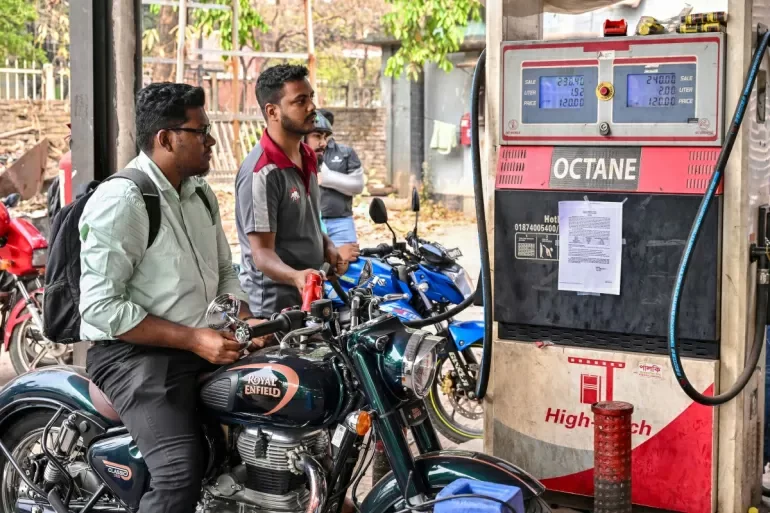
    Pakistan exemplifies the crisis, importing approximately 80% of its energy from the Gulf region while battling persistent economic instability. With fuel reserves projected to deplete within weeks, authorities have implemented emergency measures including school closures, a four-day government workweek, and drastic reductions in official travel allowances. Prime Minister Shehbaz Sharif has temporarily absorbed price increases ahead of Eid al-Fitr celebrations, though economists warn this reprieve may be short-lived.

    Neighboring Bangladesh, which imports 95% of its oil, has already exhausted fuel supplies in several districts despite implementing rationing systems. Similarly, Sri Lanka—still recovering from its 2019 economic collapse—has declared weekly holidays and introduced mandatory fuel passes for vehicle owners as reserves dwindle dangerously low.

    In Egypt, among the Middle East’s most indebted economies, the government has ordered commercial establishments to close early and reduced public lighting. Officials announced 15-22% price hikes for gasoline, diesel, and cooking gas in March, with President Abdel Fattah el-Sisi acknowledging public hardship while insisting these measures prevent “more serious and dangerous consequences.”

    The crisis compounds existing vulnerabilities through currency depreciation against the US dollar, with currencies like Indonesia’s rupiah and the Philippine peso hitting near-record lows even before the conflict. This depreciation makes oil imports substantially more expensive, creating what economist Yeah Kim Leng describes as “a powerful combination of inflation, currency pressure, and budgetary pressure” for nations already struggling with debt and high import dependency.

    According to the Washington-based Centre for Global Development, Pakistan, Bangladesh, Sri Lanka, Jordan, Senegal, Egypt, Angola, Ethiopia, and Zambia face the highest risk due to their fuel import reliance, debt levels, and foreign exchange reserve ratios.

    The human impact remains severe across less developed economies, where households spend significantly larger portions of income on fuel and food. Governments possess limited capacity to provide safety nets, creating conditions ripe for social unrest when subsidy programs become unsustainable amid depleted budgetary reserves.

    As analyst Khalid Waleed notes from Islamabad, rising diesel costs—the backbone of freight and agricultural economies—will soon translate to higher food prices. With Pakistan’s wheat harvest commencing in April, equipment running on diesel will operate at peak costs, potentially driving food inflation to levels that households cannot absorb.

  • Global community celebrates passage of UN resolution on Transatlantic slavery

    Global community celebrates passage of UN resolution on Transatlantic slavery

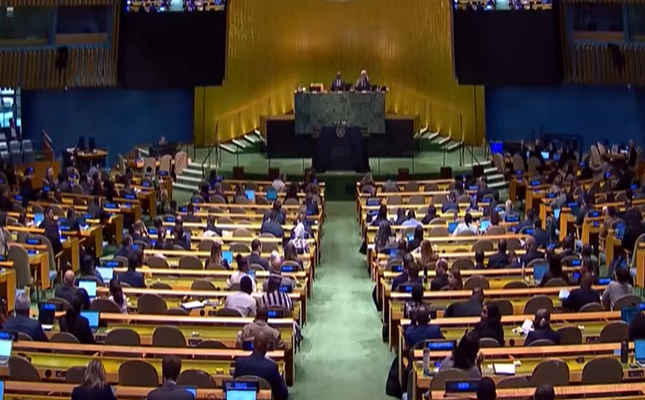
    In a historic move with profound global implications, the United Nations General Assembly has formally recognized the transatlantic trafficking of enslaved Africans and racialized chattel enslavement as humanity’s most severe crime. The groundbreaking resolution, championed by Ghana and supported overwhelmingly by 123 member states, establishes an unprecedented international framework for addressing slavery’s enduring legacy.

    The declaration, formally titled ‘Declaration of the Trafficking of Enslaved Africans and Racialised Chattel Enslavement of Africans as the Gravest Crime Against Humanity,’ received mixed international response. While CARICOM nations unanimously endorsed the measure and numerous African diaspora communities celebrated its passage, significant geopolitical divisions emerged. Fifty-two countries abstained from voting, including all European Union members, while Argentina, Israel, and the United States constituted the three opposing votes.

    UN Secretary-General António Guterres characterized the transatlantic slave trade as ‘a profound betrayal of human dignity’ that established exploitative global systems whose repercussions continue to shape modern societies. ‘Remembrance alone is not enough,’ Guterres emphasized, calling for concrete actions to address systemic racism, implement reparatory justice, and accelerate inclusive development for communities of African descent.

    The resolution mandates comprehensive measures including establishment of reparations frameworks, enhanced historical research initiatives, educational reforms, and healing programs. CARICOM, which has long advocated for reparatory justice, welcomed the declaration as a pivotal step toward addressing slavery’s harmful legacies through international cooperation and decisive action.

    This diplomatic achievement occurs alongside global initiatives including the UN’s Second International Decade for People of African Descent and the African Union’s Decade of Reparations, creating unprecedented momentum for addressing historical injustices through policy reform and developmental equity.

  • Noelia Castillo: young woman’s legal battle for euthanasia in Spain

    Noelia Castillo: young woman’s legal battle for euthanasia in Spain

    After a two-year high-profile legal fight that forced Spain to confront the deepest ethical and legal boundaries of its 2021 euthanasia legislation, 25-year-old Noelia Castillo Ramos is scheduled to undergo her approved euthanasia procedure this Thursday, bringing one of the most controversial test cases of the country’s right-to-die law to its final resolution.

    Noelia’s journey to this moment is rooted in decades of unrelenting trauma and declining health. A survivor of repeated abuse throughout a difficult childhood, her life was upended irreversibly in 2022, when a suicide attempt following a traumatic gang rape left her permanently paralyzed from the fall and living with constant, unmanageable chronic pain. She first formally submitted her request for euthanasia when she was just 23 years old, and by April 2024, her application received unanimous approval from Catalonia’s regional Guarantee and Evaluation Commission, the body tasked with reviewing end-of-life requests under Spanish law.

    The process, however, came to an abrupt halt when Noelia’s father, backed by an ultra-conservative Catholic advocacy group, launched a legal challenge opposing the procedure, citing unsubstantiated concerns about his daughter’s mental capacity to make the decision. What followed was a protracted legal battle that climbed through every tier of the Spanish judicial system: from regional courts to the Catalonia High Court of Justice, the national Supreme Court, the Constitutional Court, and ultimately the European Court of Human Rights. Every judicial body that reviewed the case ruled consistently in Noelia’s favor, upholding her legal right to access a dignified death under the 2021 law.

    Throughout the entire drawn-out process, Noelia never wavered in her stated choice. She spoke publicly on multiple occasions, emphasizing that she could no longer endure the combination of unremitting physical pain and the lingering psychological trauma of her past abuse and assault. Repeated psychological evaluations confirmed that her emotional distress had only worsened as the legal battle dragged on, with the extended uncertainty amplifying her suffering.

    Noelia’s case has become one of the most emblematic and widely debated examples of Spain’s euthanasia framework in practice, in large part because of her status as a young person living with disabling chronic pain and trauma, rather than a terminal illness. The dispute has reignited national and international conversations about core ethical questions: what does personal bodily autonomy really mean for end-of-life decision-making, what responsibility do public health and judicial systems have to honor a mentally competent person’s choice, and where should the line be drawn between family objection and individual right to a dignified death.

    With all legal challenges now fully exhausted and every court having upheld Noelia’s request, the procedure is set to move forward this Thursday, closing a chapter that has tested the foundational principles of Spain’s landmark euthanasia legislation three years after it became law.

  • EGEHID begins bat relocation ahead of dam reactivation

    EGEHID begins bat relocation ahead of dam reactivation

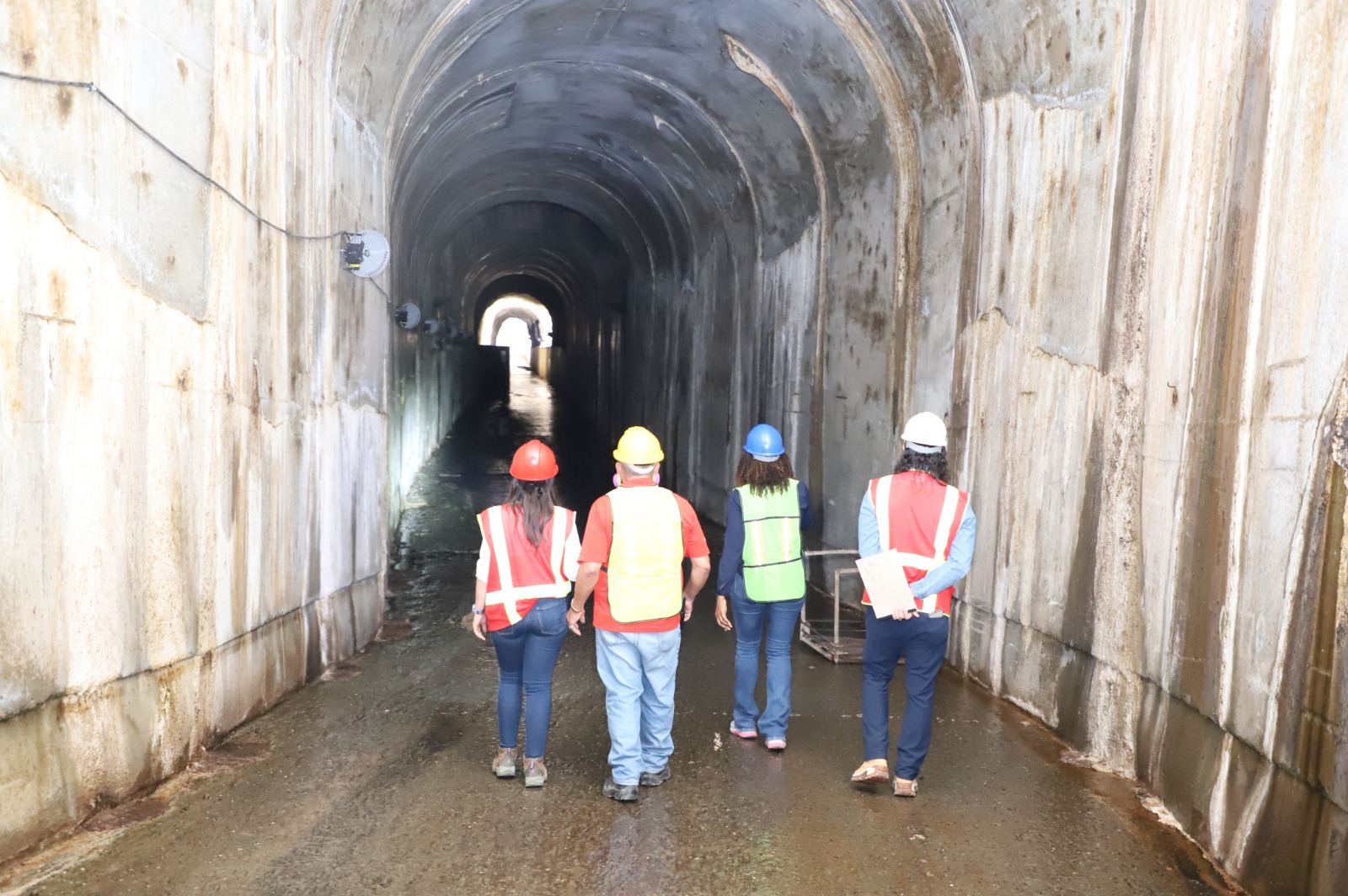
    LA VEGA, Dominican Republic – In an unprecedented environmental operation, the Dominican Hydroelectric Generation Company has initiated a large-scale effort to relocate massive bat colonies from abandoned tunnels within the Guaigüí dam project site. These bats have inhabited the dormant infrastructure for more than twenty years, creating one of the region’s most significant bat habitats.

    The relocation strategy employs non-invasive techniques designed to encourage natural migration patterns without causing harm to the protected species. Authorities have implemented a phased approach including weeks of behavioral observation, strategic sealing of tunnel entrances, and installation of specialized lighting systems to gently discourage the bats from returning to their former habitat.

    Project coordinators report that the tunnels contain an estimated one million bats representing multiple species, creating substantial logistical challenges. Specialized environmental teams are working under strict safety and ecological protocols to clean and prepare the area for dam reactivation while ensuring minimal disruption to the local ecosystem.

    The reactivation project includes comprehensive infrastructure updates including road rehabilitation, tunnel maintenance, and updated technical studies. Despite initial dramatic sightings of massive bat swarms exiting the tunnels, officials express confidence that the highly adaptable species will successfully transition to nearby forested areas where they can continue their vital ecological roles in seed dispersal and insect population control.

    This operation represents a significant case study in balancing infrastructure development with environmental conservation priorities, demonstrating how industrial projects can incorporate sophisticated wildlife protection measures.

  • Dominican Republic joins global effort to protect high seas

    Dominican Republic joins global effort to protect high seas

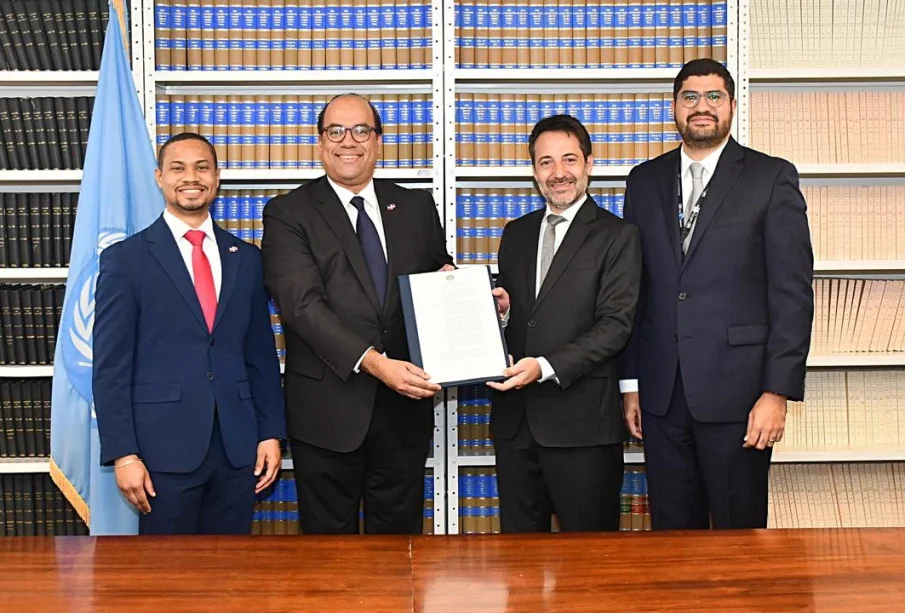
    In a significant move for international marine conservation, the Dominican Republic has formally ratified the groundbreaking Agreement on the Conservation and Sustainable Use of Marine Biodiversity in Areas Beyond National Jurisdiction (BBNJ). Ambassador Wellington Bencosme, the nation’s Permanent Representative to the United Nations, executed the official deposition of the ratification instrument at the UN headquarters, accompanied by senior officials from the Ministry of Foreign Affairs.

    This ratification positions the Caribbean nation as the 87th country to endorse this pivotal international framework. The Dominican government articulated that this action reinforces its dedication to multilateral cooperation, the preservation of oceanic environments, and the adherence to international legal standards. As an island state whose economy and food security are intrinsically linked to marine resources, the country emphasized the critical importance of unified global efforts to safeguard marine ecosystems for sustainable development.

    The administration further detailed that the BBNJ Treaty will enhance global ocean governance through several key mechanisms: advancing marine scientific research, facilitating the establishment of marine protected areas in international waters, and promoting the transfer of marine technology and capacity-building initiatives. These provisions are deemed particularly crucial for supporting developing nations and Small Island Developing States (SIDS).

    Widely recognized as the first legally binding international instrument dedicated to protecting biodiversity in the high seas—which constitute approximately two-thirds of the world’s oceans—the BBNJ Agreement introduces comprehensive measures. These include mandatory environmental impact assessments for activities with potential effects on the marine environment and frameworks for the fair and equitable sharing of benefits arising from marine genetic resources. The overarching goal is to combat the escalating crises of ocean degradation and biodiversity loss.

    By completing this ratification, the Dominican Republic now stands among the vanguard of nations championing the treaty’s implementation. The country is set to actively participate in the preparatory proceedings for the inaugural Conference of the Parties (COP), where the operational details and future trajectory of the agreement will be established.

  • Solutions Cuba: A Space for Perseverance

    Solutions Cuba: A Space for Perseverance

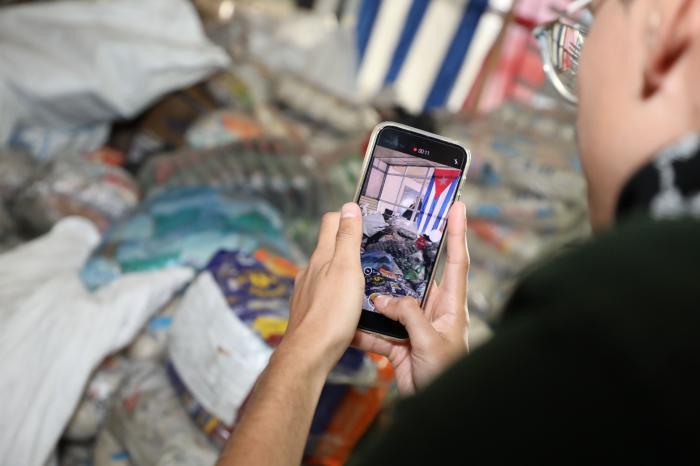
    In the face of mounting economic constraints and resource limitations, Cuban communities are demonstrating remarkable resilience through grassroots innovation. The province of Sancti Spíritus has launched a decentralized series of 22 local exhibitions under the Expo Soluciones Cuba initiative, showcasing homegrown solutions to pressing production and service challenges.

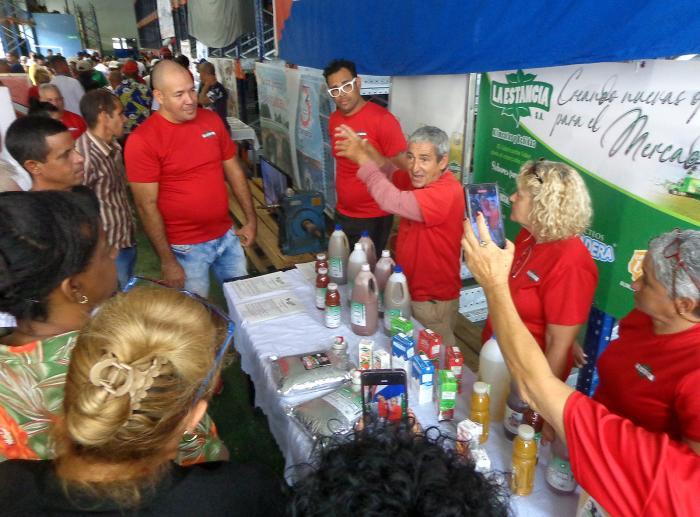
    The program commenced at La Estancia Foods and Beverages, a facility renowned for processing fruits and vegetables into jams and juices. Unlike previous centralized formats, this year’s fourth edition will unfold across multiple municipalities including Cabaiguán, Yaguajay, and Jatibonico—a strategic response to fuel shortages and energy constraints.

    Ana Isa González Farfán, provincial head of the National Association of Innovators and Rationalizers (ANIR), emphasized the participatory nature of these events. “We’re creating spaces for collective learning where women, retirees, farmers, and various social segments can contribute and exchange practical experiences,” she noted.

    Notable innovations include a manually-operated mixer fabricated from repurposed metal sheets at La Estancia, enabling continued production of popular desserts despite equipment shortages. Similarly, the Matisha company has developed product lines utilizing previously discarded waste materials.

    Upcoming sector-specific gatherings will address challenges in healthcare (April 9 at Camilo Cienfuegos Hospital) and communications. The exhibitions reveal a pattern of adaptive creativity emerging precisely where material resources are most scarce—evidence that necessity remains the mother of invention even under severe economic pressure.

  • Inclusive and Global Artificial Intelligence

    Inclusive and Global Artificial Intelligence

    New Delhi recently hosted the landmark AI Impact Summit India 2026, convening from February 16-20 as a pivotal international forum addressing artificial intelligence’s global implications. The summit assembled government officials, technology experts, and multilateral organization representatives to critically examine how AI is reshaping technological and economic paradigms worldwide.

    Central to the discussions was the urgent need to ensure AI’s transformative potential benefits all humanity rather than concentrating advantages in traditionally dominant regions. The gathering specifically amplified perspectives from Global South nations, highlighting concerns about the widening technological divide between developed and developing economies.

    Cuba’s Communications Minister Mayra Arevich Marín emerged as a prominent voice, articulating the challenges facing developing nations. While acknowledging AI’s enormous potential for innovation and social progress, Minister Arevich highlighted profound disparities in investment, adoption, and implementation capabilities. She emphasized that many Southern nations lack adequate computational infrastructure and energy resources while simultaneously contending with AI models trained on data that fails to reflect their socioeconomic, cultural, and environmental realities.

    The Cuban minister advocated for establishing open, compatible, and non-discriminatory international standards alongside strengthened South-South cooperation. She specifically cited Cuba’s collaboration with India as exemplary of the partnerships needed to build shared technological capabilities and reduce existing asymmetries.

    Minister Arevich also reiterated Cuba’s firm rejection of AI applications for criminal or terrorist purposes, including their use for interfering in sovereign states’ internal affairs through historical manipulation or other means.

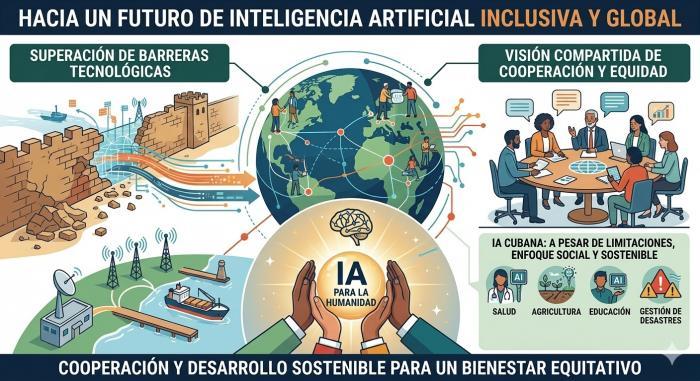
    Despite significant constraints, Cuba has pursued structured AI development through its 2024-approved National Artificial Intelligence Strategy. This framework promotes AI applications across strategic economic and service sectors, with current projects spanning healthcare, agriculture, education, and disaster management—all prioritizing social benefit and sustainable development.

    Minister Arevich notably highlighted how the United States’ economic embargo creates substantial obstacles to Cuba’s digital advancement, restricting access to essential technologies, platforms, and energy resources required for robust AI infrastructure.

    The summit concluded with a collective commitment to ensuring AI development translates into universal well-being, with technological opportunities equitably distributed across all global regions.

  • When solidarity finds a home in Cuba

    When solidarity finds a home in Cuba

    In a powerful demonstration of global solidarity, the humanitarian vessel Granma 2.0 has successfully delivered 14 tons of medical supplies to Havana’s William Soler Pediatric Cardiology Center. The mission, organized by international activists, represents a significant effort to counter the devastating impacts of the U.S. economic blockade on Cuba’s healthcare system.

    Among the organizers was Nicole León Avilés, an Ecuadorian communist activist who previously participated in the blocked Gaza-bound Global Sumud Flotilla. For León, this successful delivery to Cuba transformed previous humanitarian frustration into what she described as “an act of justice and a breath of fresh air.”

    Dr. Eugenio Selman Housein-Sosa, director of the cardiology center, emphasized the critical nature of the donation, explaining how the U.S. blockade creates daily obstacles in obtaining essential medical equipment and supplies for treating children with heart conditions. “When it comes to purchasing any equipment needed to care for critically ill patients,” he stated, “the Cuban healthcare system faces a dilemma, a tragedy.”

    The international crew, which included activists from Australia and Latin America, personally funded their journey and collected the donations through grassroots efforts. Dr. Selman highlighted the special significance of aid originating from “the sweat, care, and hearts of people who want to help” rather than institutional sources.

    Australian activist Daniel Herbert articulated the mission’s philosophical foundation: “We have always known Cuba as a country that has defended the right to health for all. The rights to health, to medicine, to the basics, to life—these should never be used by politicians.”

    The ship’s name, Granma 2.0, deliberately echoes the historical vessel that carried Fidel Castro’s revolutionary forces in 1956, symbolizing continued resistance against adversity. The delivered supplies, now stored in the hospital’s warehouses, will enable life-saving surgeries and provide crucial medical support for Cuban children, while the mission itself stands as testament to the reciprocity of international solidarity.

  • Díaz-Canel Receives Panama’s Foreign Minister

    Díaz-Canel Receives Panama’s Foreign Minister

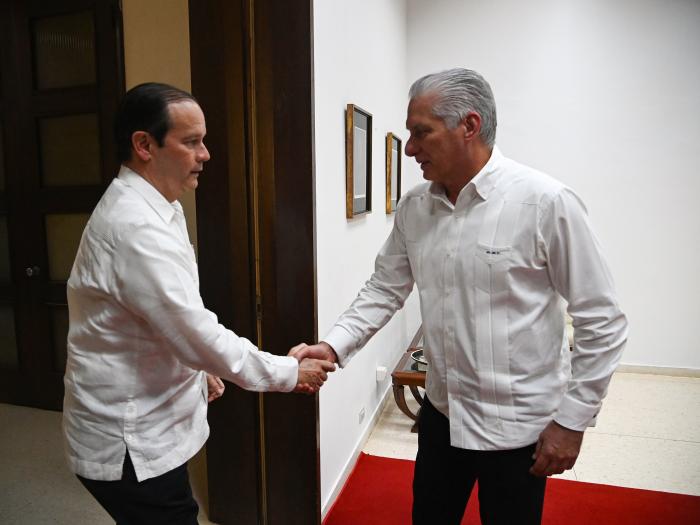
    In a significant diplomatic engagement at Havana’s Palace of the Revolution, Cuban President Miguel Díaz-Canel Bermúdez hosted Panama’s Foreign Minister Javier Eduardo Martínez-Acha Vásquez this Wednesday, marking a pivotal moment in bilateral relations between the two Latin American nations.

    The high-level meeting, attended by Cuban Foreign Minister Bruno Rodríguez Parrilla, centered on strengthening economic cooperation and addressing regional political matters. President Díaz-Canel expressed profound gratitude for Panama’s consistent support of the annual United Nations resolution condemning the U.S. economic, commercial, and financial embargo against Cuba—a longstanding point of contention in international diplomacy.

    During the cordial exchange, the Cuban leader emphasized the untapped potential for enhanced trade relations, acknowledging that while current economic exchanges remain modest, both nations possess substantial opportunities for expanded commercial engagement. The discussions reflected mutual interest in developing more robust economic partnerships across various sectors.

    Foreign Minister Martínez-Acha, currently on an official working visit to Cuba, conveyed appreciation for the warm reception and logistical support extended by Cuban authorities. The Panamanian delegation included Ambassador Edwin Abel Pitty Madrid, presidential advisor Marcos Caisuutti, and foreign ministry advisor Adolfo Ahumada.

    The bilateral talks extended beyond economic matters to address pressing regional and international issues, with both parties characterizing the development of Cuba-Panama relations as progressing positively. Notably, the Panamanian diplomat’s itinerary included meetings with detained Panamanian citizens accused of crimes against Cuba’s constitutional order—a sensitive matter highlighting the complex nature of international legal and diplomatic relations.

    This diplomatic engagement represents continuing efforts by Caribbean and Latin American nations to foster regional solidarity despite external political pressures and economic challenges.

  • Column: Aftellen

    Column: Aftellen

    Football enthusiasts worldwide are marking their calendars for the planet’s most anticipated sporting spectacle—the 2026 FIFA World Cup. With precisely 76 days remaining until the tournament’s June 11th kickoff, anticipation builds for what promises to be the most inclusive and commercially significant edition in football history.

    This edition breaks records with 16 additional teams compared to previous tournaments, dramatically expanding regional representation and creating unprecedented opportunities for smaller footballing nations. While most participants are confirmed, several countries continue battling through intercontinental playoffs for the final coveted spots. Host nations from the Caribbean region received automatic qualification, further diversifying the participant pool.

    Suriname narrowly missed direct qualification and now faces a decisive playoff against Bolivia, with Iraq awaiting the winner for a chance at historic participation. The expanded format has intensified global engagement, particularly among nations celebrating their inaugural World Cup appearance, such as Curaçao.

    The commercial landscape anticipates unprecedented returns, with FIFA securing lucrative sponsorship deals from global corporations eager to capitalize on worldwide viewership. Local entrepreneurs likewise prepare for economic benefits through artisanal souvenir production and hospitality sector growth.

    Beyond commercial implications, the tournament serves as a global showcase for emerging talents seeking professional advancement through international exposure. Players recognize the World Cup’s unique platform for demonstrating their value to elite clubs worldwide.

    The convergence of sporting excellence, commercial opportunity, and cultural celebration establishes the 2026 World Cup as a multifaceted global phenomenon with far-reaching impacts across sports, business, and international relations.