
博客

  • Local Bus Operators Seek Relief as Fuel Costs Surge

    Local Bus Operators Seek Relief as Fuel Costs Surge

    Belize’s transportation sector faces mounting pressure as escalating fuel prices threaten operational viability for local bus services. The Belize Bus Association has formally petitioned Transport Minister Dr. Louis Zabaneh for immediate economic relief measures in response to unsustainable cost increases.

    In a March 30th communiqué, the industry representative body highlighted critical financial challenges stemming from a 20% surge in diesel prices alongside rising expenses for tires and mechanical components. The association presented three potential solutions: implementing tax exemptions on essential operational supplies, reinstating pandemic-style government subsidies, or authorizing regulated fare increases.

    However, the fare adjustment proposal faces significant regulatory obstacles. Minister Zabaneh recently reaffirmed the government’s position that bus rates remain strictly controlled under national legislation. The minister explicitly warned that any unauthorized fare increases constitute unlawful activity, emphasizing that officially posted rates represent the absolute legal maximum nationwide.

    This regulatory stance coincides with reported passenger dissatisfaction regarding attempted fare hikes, creating a complex situation where operational costs continue rising while revenue remains fixed. The developing situation presents policymakers with a challenging decision: provide alternative financial relief through tax structures or subsidies, or risk potential transportation disruptions as operators struggle with unsustainable operating margins.

    The outcome of these negotiations carries significant implications for Belize’s public transportation infrastructure and commuter accessibility across the nation.

  • Panton Claims Senator Pitts Silenced in Budget Debate

    Panton Claims Senator Pitts Silenced in Budget Debate

    A procedural dispute in Belize’s National Assembly escalated into a dramatic confrontation on Friday, with Opposition Leader Tracy Panton accusing the government of deliberately silencing UDP Senator Sheena Pitts during critical budget deliberations. The controversy erupted when Lead Government Senator Eamon Courtenay moved to conclude the debate while Senator Pitts awaited her turn to speak, prompting immediate objections from opposition members.

    The tension unfolded as Senate President Carolyn Trench Sandiford recognized Courtenay’s motion to close discussions, effectively preventing Pitts from delivering her planned remarks. Opposition senators protested vigorously, with Lead Opposition Senator Patrick Faber condemning the action as ‘unkind’ and alleging procedural unfairness. Despite repeated attempts to gain recognition, Senator Pitts was unable to secure the floor before the vote proceeded.

    In a subsequent exchange, President Sandiford defended her actions by stating she followed established protocol, noting that no opposition senators were standing to claim speaking time when she called for contributions. Senator Pitts countered that the President had been aware of her intention to speak prior to the debate, characterizing the incident as a deliberate exclusion that undermined democratic principles and women’s representation in leadership.

    The confrontation culminated in an opposition walkout before the session’s official adjournment, transforming a procedural disagreement into a symbolic protest. Panton has characterized the event as a ‘direct assault on democracy’ that contradicts national efforts to amplify female voices in political discourse. The incident has sparked broader discussions about representation, procedural fairness, and gender dynamics within Belize’s highest legislative chambers.

  • Former BEL Workers Join Growing Severance Movement

    Former BEL Workers Join Growing Severance Movement

    A transformative labor rights movement is gaining momentum across Belize following a groundbreaking judicial decision by the Caribbean Court of Justice (CCJ). The November 2025 ruling, which originated from a case involving former Belize Telemedia Limited employees, established that severance pay constitutes an irreducible legal entitlement under the nation’s Labour Act, fundamentally distinct from pension benefits.

    This judicial precedent has catalyzed widespread action among worker collectives who assert longstanding claims to compensation for years of service. The Belize Communications Workers for Justice emerged as pioneering advocates, aggressively pursuing full severance payments with accrued interest in the ruling’s aftermath.

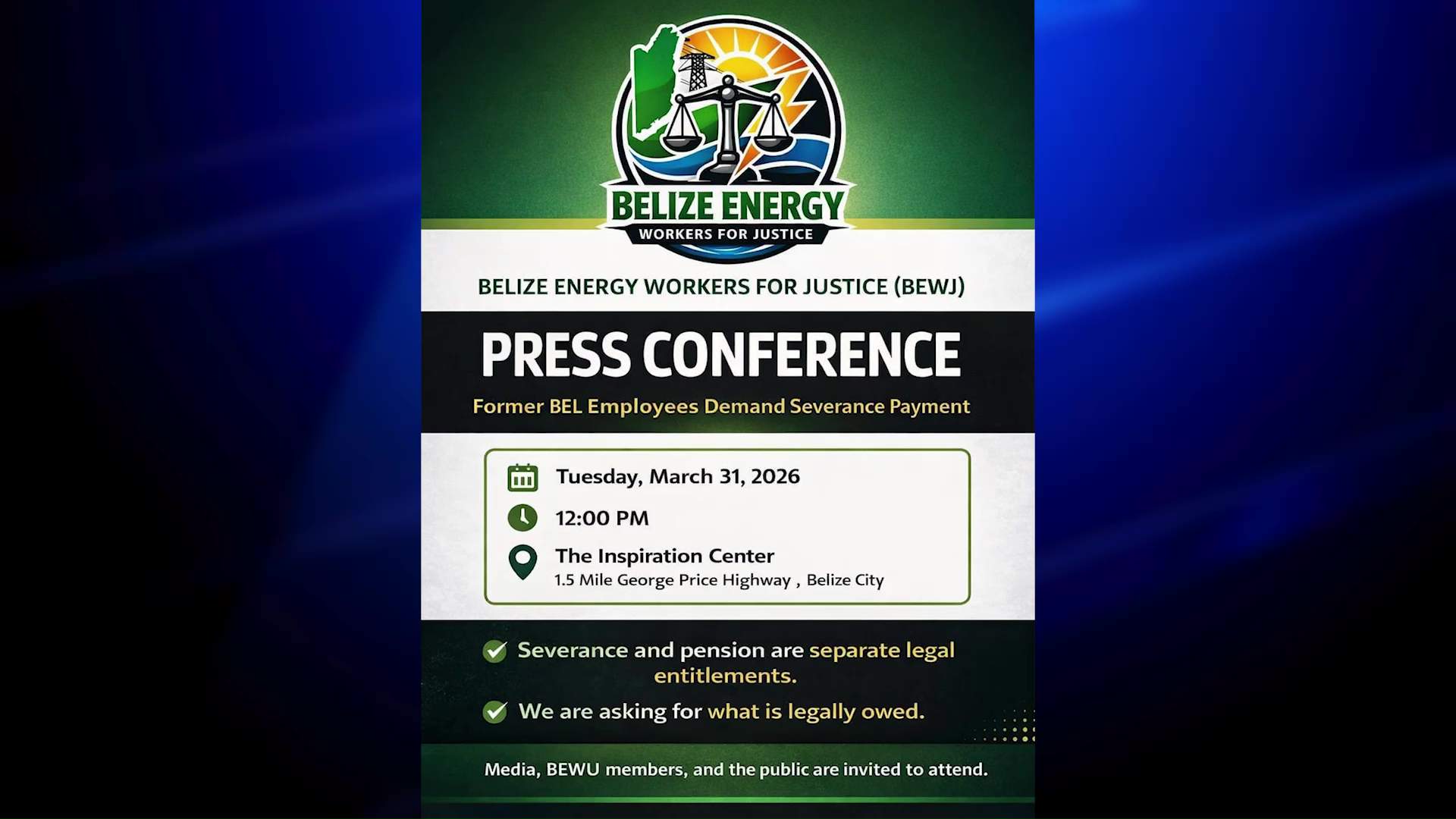
    Most recently, former employees of Belize Electricity Limited have mobilized under the newly formed banner of Belize Energy Workers for Justice. The group has announced plans for a Tuesday press conference where they intend to formally demand what they characterize as legally mandated compensation.

    Legal experts indicate the CCJ’s interpretation has fundamentally recalibrated Belize’s employment landscape, creating compelling jurisprudence that strengthens worker protections. The emerging pattern of organized labor actions suggests a significant shift toward enhanced corporate accountability and workers’ rights enforcement throughout the nation.

  • Russische olietanker arriveert in Cuba temidden van Amerikaanse blokkade

    Russische olietanker arriveert in Cuba temidden van Amerikaanse blokkade

    A Russian oil tanker carrying 730,000 barrels of crude oil successfully docked in Cuba on Monday, marking the first fuel shipment to reach the island nation since January amid severe energy shortages. The Anatoly Kolodkin, described by Russian transport authorities as delivering “humanitarian cargo,” arrived at Matanzas port despite an effective U.S. fuel blockade against the Caribbean island.

    The Kremlin welcomed the tanker’s arrival, with spokesperson Dmitry Peskov confirming Russia’s commitment to maintaining oil supplies to Cuba—a topic reportedly discussed during negotiations with the United States. Remarkably, President Donald Trump stated he had no objections to the Russian shipment, though he simultaneously criticized Cuba’s leadership, predicting the regime’s imminent collapse.

    Cuba’s current energy crisis stems from January, when the U.S. effectively neutralized Venezuelan leader Nicolás Maduro, Cuba’s primary regional ally and oil supplier. This triggered Washington’s de facto blockade on oil sales to Cuba, resulting in severe fuel shortages that have crippled transportation, caused seven nationwide blackouts in 2024 alone, and sparked rare public protests.

    President Miguel Diaz-Canel has implemented emergency measures including strict gasoline rationing to address the crisis. Soaring fuel prices, reduced public transportation, and suspended airline flights have further strained Cuba’s fragile economy.

    The Russian tanker, which departed from Primorsk port on March 8, traveled under escort by a Russian naval vessel through the English Channel before proceeding independently. According to unnamed U.S. officials, the Coast Guard permitted the sanctioned vessel to reach Cuban waters.

    Energy experts estimate the Russian crude will require 15-20 days for refining and an additional 5-10 days for distribution. The shipment could yield approximately 250,000 barrels of diesel—enough to meet 12.5 days of current demand. This presents Cuban authorities with a difficult decision: whether to allocate the diesel to power generators reducing blackouts or to transportation networks keeping the economy functional.

    Meanwhile, another Russian fuel tanker originally bound for Cuba with diesel supplies redirected to Venezuela this week, highlighting the complex geopolitical dynamics affecting Cuba’s energy security.

  • Taiwan Reinforces Belize Ties with Return of Ambassador Amino Chi

    Taiwan Reinforces Belize Ties with Return of Ambassador Amino Chi

    In a strategic move to fortify its diplomatic network, Taiwan has reassigned seasoned diplomat Amino C.Y. Chi to Belize for his third ambassadorial term in the Central American nation. The ambassador’s arrival on March 26, 2026, marked a significant moment in bilateral relations, with representatives from the Taiwanese expatriate community, embassy personnel, and technical mission delegates extending a warm welcome at the Philip S.W. Goldson International Airport.

    Ambassador Chi promptly initiated diplomatic engagements by hosting an exclusive dinner for community leaders and key Belizean partners shortly after his arrival. This gathering established the foundation for enhanced cooperation across multiple sectors in the coming months.

    The diplomatic transition follows the conclusion of Ambassador Lily Li-Wen Hsu’s productive tenure, which spanned from 2023 through February 2026. During her service, Ambassador Hsu achieved substantial progress in strengthening the Taiwan-Belize partnership through various bilateral initiatives.

    The Taiwanese Embassy has characterized this leadership change as the commencement of a new chapter in the countries’ relationship. With Ambassador Chi’s extensive experience and existing regional connections, officials anticipate deepened collaboration in areas of mutual interest, reflecting Taiwan’s ongoing commitment to maintaining robust international partnerships despite increasing geopolitical pressures.

  • Behind the Catch: How Belize’s Seafood Reaches Your Plate

    Behind the Catch: How Belize’s Seafood Reaches Your Plate

    In the coastal waters of Belize, a comprehensive sustainability initiative is transforming how seafood reaches consumers’ plates. The Belize Fund for a Sustainable Future is spearheading efforts to maintain the delicate balance between fishing traditions and marine conservation, ensuring future generations can enjoy the nation’s culinary treasures.

    The intricate system involves multiple stakeholders working in coordination—from generational fisherfolk households to enforcement officers and restaurant owners. Through revised regulations, the Fisheries Department now requires vendors and middlemen to register, closing critical data collection gaps in the supply chain. This enhanced tracking system helps monitor seafood from harvest to consumption.

    Conservation measures include specific fishing zones, size limitations, and seasonal closures designed to protect vulnerable species. The Nassau Grouper, classified as critically endangered, receives particular attention through protection parameters that safeguard juvenile specimens and mature ‘mega spawners’ that contribute significantly to population replenishment.

    Enforcement teams from organizations like TASA conduct rigorous inspections using specialized equipment including scales, measuring tapes, and detailed fish boards. They monitor catches for compliance, issuing warnings or infractions for undersized conch or other regulated species.

    The sustainability chain extends to restaurants like Smokeez Seaside Restaurant & Bar, where owner Ramon Salgado emphasizes responsible sourcing practices. By refusing to purchase undersized conch or out-of-season species, restaurants play a crucial role in market-driven conservation.

    This integrated approach demonstrates how proper fisheries management supports both marine ecosystems and coastal communities’ livelihoods. The system represents a model for sustainable fishing that preserves both seafood resources and cultural traditions for future generations.

  • Fifty‑One Thousand Dollars Raised, No Hilux Raffle Drawn

    Fifty‑One Thousand Dollars Raised, No Hilux Raffle Drawn

    A major philanthropic scandal has erupted within Belize’s Sub Umbra Floreo Lions Club, where a highly publicized raffle for a Toyota Hilux pickup truck collapsed despite raising over $51,000 from community members. The promised draw never occurred, triggering widespread demands for accountability and refunds from disappointed ticket buyers who paid $100 each.

    Internal investigation reveals alarming financial discrepancies within the organization’s accounts. Bank statements obtained by journalists show the club’s combined service and administrative accounts contain significantly less money than the amount collected through ticket sales. Anonymous club members confirm these discrepancies, stating the service account reflects only approximately $32,000 despite recorded ticket sales of $51,300.

    Multiple Lions Club members have come forward anonymously expressing grave concerns about unexplained withdrawals and missing funds. One member stated: “The money is not in the account – that is the truth. It is missing and we can’t explain where it is.” Another member revealed the club had been locked out of account access since last year, unable to view statements or make withdrawals, yet mysterious transactions continued throughout February and March 2026.

    The Belize Zone Lion’s Club has launched a formal investigation to determine the whereabouts of the raffle funds and establish accountability. The controversy has escalated beyond internal club matters, drawing intense public scrutiny and threatening the organization’s reputation as a community service institution. Club members acknowledge that refunding ticket buyers would effectively bankrupt the organization given the current account balances.

    As the investigation continues, hundreds of ticket purchasers face uncertainty regarding their funds, while club members struggle with damaged reputations and questions about their identity as public servants. The situation represents a significant challenge for the Lions Club organization’s credibility and its community standing in Belize.

  • Pricing methods for petroleum products in Haiti

    Pricing methods for petroleum products in Haiti

    The Haitian government has established a comprehensive regulatory framework for petroleum product pricing through an official decree published in the national gazette “Le Moniteur” on March 27, 2026. This new system introduces a standardized monthly calculation methodology that will determine fuel prices across the nation.

    Under the directive from the Ministry of Economy and Finance (MEF) and the Ministry of Commerce and Industry (MCI), pump prices will be recalculated monthly based on a transparent cost structure. The finalized prices will be announced through joint ministerial notices on the first day of each month and will maintain nationwide consistency.

    The pricing formula incorporates multiple components including the CIF (Cost, Insurance, and Freight) value of the most recent monthly shipment, complemented by various operational and regulatory expenses. These encompass customs inspection fees, import duties, port charges, specific excise taxes, royalty payments, and calculated margins for both oil companies and distributors. Additional factors include transportation and storage costs, variable excise duties, and a stabilization margin.

    A three-tier adjustment mechanism has been implemented to govern price changes:

    1. Price stability will be maintained when monthly calculated price variations remain at or below 3%, with no adjustment required.

    2. Automatic pump price adjustments will trigger when calculated price fluctuations exceed 3% in either direction, though these adjustments will be capped at a maximum of 10% of the previously published price.

    3. Significant calculated price variations exceeding 3% that would necessitate pump price adjustments beyond 10% will require government determination following consultation with the Advisory Council.

    This structured approach aims to balance market responsiveness with consumer protection against volatile price swings.

  • Schools to enforce grooming, discipline policy ‘next term’

    Schools to enforce grooming, discipline policy ‘next term’

    The Barbadian education system is entering a new phase of strict enforcement regarding student appearance and conduct. Education Minister Chad Blackman has declared an end to the grace period for the National Grooming Policy, mandating all schools to implement a zero-tolerance approach starting Term 3 and continuing into the new academic year.

    During his address at the Lester Vaughan School’s annual ceremony, Minister Blackman emphasized that this policy is a cornerstone of the broader education transformation agenda, fundamentally rooted in developing personal character. The policy explicitly empowers school principals with the authority to maintain high standards of presentation, moving beyond mere aesthetics to prepare students for professional life.

    While public discourse has frequently centered on hairstyles, the minister clarified that the policy’s scope is far more comprehensive. It establishes clear prohibitions against makeup, artificial eyelashes, long acrylic nails, sagging trousers, and excessively tight or short skirts. All tattoos must be concealed, and general hygiene, including clean fingernails and polished shoes, is emphasized. The use of vibrant, unnatural hair colours is also expressly forbidden, as the ministry seeks to eliminate distractions within the learning environment.

    Introduced in January 2023 by the Mia Mottley administration, this framework attempts to navigate a delicate balance. It aims to respect a child’s right to self-expression, particularly regarding natural hairstyles, while simultaneously curbing trends deemed inappropriate for school. The government positions these standards as a necessary synthesis of 21st-century individuality and traditional order.

    The announcement has sparked a mixed response. The Barbados Union of Teachers (BUT) has called for even greater clarity in the guidelines to prevent inconsistent application across various institutions. Social commentators remain divided, with some viewing the strict measures as a crucial step to curb declining discipline, while others see it as an excessive measure.

    Minister Blackman issued a direct warning to parents nationwide, urging them to inspect their children before they leave home to ensure compliance. He framed discipline as the ultimate key to future success, arguing that academic certifications and creativity alone are insufficient. “But that one thing called discipline will unlock doors that money and qualifications cannot,” he stated, cautioning students that failure to master self-discipline in school would lead to difficulties in the demanding global job market.

    This renewed focus on discipline aligns with significant government investments in vocational training, exemplified by the new cosmetology laboratory unveiled at the same event, signaling a holistic approach to education reform.

  • Na Luum Ca Connects To New Digital Opportunities

    Na Luum Ca Connects To New Digital Opportunities

    The remote village of Na Luum Ca in Belize’s Toledo District has dramatically advanced its technological capabilities with the inauguration of a state-of-the-art Community Digital Hub. This transformative initiative resulted from a strategic partnership between Belize’s Ministry of Rural Transformation and Community Development and the United Nations Development Programme.

    Minister Oscar Requena presided over the official ribbon-cutting ceremony on Friday, March 30, 2026, emphasizing the facility’s role in bridging the digital divide for rural communities. The hub is equipped with six desktop computers, printers, and forthcoming internet connectivity designed to serve both educational and practical community needs.

    Beyond providing students with essential resources for academic assignments and digital literacy, the facility will empower adult residents to navigate government services electronically. Villagers can now process vital documentation—including birth certificates and marriage licenses—directly from their community without traveling to Belize City.

    This infrastructure development represents a significant milestone in Belize’s national digital inclusion strategy, demonstrating how targeted technological investment can create tangible opportunities in traditionally underserved regions. The initiative reflects growing recognition that digital access is fundamental to socioeconomic development in the 21st century.