博客

  • End of IMF Mission to Haiti (3rd Review Staff-Monitored Program)

    End of IMF Mission to Haiti (3rd Review Staff-Monitored Program)

    Between March 23 and April 1, 2026, an International Monetary Fund (IMF) team led by Camilo E. Tovar completed a virtual assessment of progress under Haiti’s third review of the Staff-Monitored Program (SMP), holding productive discussions with senior Haitian officials including Minister of Economy and Finance Serge Gabriel Collin and Central Bank of Haiti Governor Ronald Gabriel. The IMF delegation thanked Haitian authorities for their transparent cooperation throughout the mission.

    In his closing statement, Tovar outlined the cascading crises weighing on Haiti’s macroeconomic outlook, noting the country is grappling with a worsening security landscape, overlapping domestic and external shocks, and a fragile political transition that paves the way for the first national elections in a decade later this year. The most acute recent pressure has come from a global oil price shock tied to Middle East conflict, which has sharply inflated Haiti’s fuel import costs and implicit subsidy burdens, further eroding an already precarious fiscal position. This shock compounds the damage from Hurricane Melissa, which struck in October 2025, disrupting economic output and worsening already critical humanitarian needs.

    Economic data confirms the depth of Haiti’s ongoing contraction: real GDP shrank for the seventh consecutive year in fiscal year 2025. While headline inflation has pulled back rapidly from its 32% peak at the end of FY2025 to 22.1% year-on-year in recent months, price growth is expected to remain elevated through the coming year. Amid weak economic activity and widespread policy uncertainty, financial intermediation has continued to contract. While this pullback in bank lending has driven a modest improvement in non-performing loan ratios, and capital adequacy levels remain comfortably above regulatory minimums, the contraction has restricted access to credit for households and businesses across the country.

    Against a deteriorating global backdrop, Haiti’s external reserve position has held up better than expected. Spiking oil prices have placed heavy pressure on the country’s external balance, but strong remittance inflows have partially offset these pressures, even amid uncertainty over the future of Haiti’s Temporary Protected Status (TPS) in the United States. The current account is projected to remain near balance in FY2026, while gross international reserves are expected to hit $3.4 billion by the end of the fiscal year – enough to cover more than seven months of projected goods and service imports. The nominal exchange rate has also stayed broadly stable, though high inflation has driven an appreciation of the real exchange rate.

    Fiscal policy remains severely constrained by persistent insecurity, long-standing institutional weaknesses, and limited policy space. Revenue collection in FY2026 has underperformed, reflecting security-related disruptions to economic activity, administrative fragility, and institutional paralysis triggered by the expiration of the Transitional Presidential Council’s mandate. Rising global oil prices are expected to add further pressure via growing implicit subsidy costs, while budget implementation has been uneven due to capacity constraints and pervasive uncertainty. These challenges have sharpened trade-offs for policymakers, underscoring the urgent need to prioritize spending while protecting support for low-income and vulnerable households.

    Overall, risks to Haiti’s economic outlook are firmly tilted to the downside, Tovar emphasized. A further deterioration in security, combined with sustained high global oil prices, could suppress economic activity, push up food prices to worsen humanitarian conditions, and intensify fiscal strain. A shift in U.S. immigration policy that cuts remittance inflows would also weaken Haiti’s external position. That said, there are limited upside risks: the planned deployment of a UN-backed Gang Suppression Force could restore security, boost business confidence, and support a nascent economic recovery.

    Encouragingly, all quantitative and structural program targets set for the end of December 2025 were met. Net international reserve accumulation hit $1.76 billion by the end of 2025, while targets for revenue collection, the primary fiscal balance, and social spending all remained on track. The monetary financing target was also achieved despite shrinking fiscal space, and the broader reform agenda covering governance, public financial management, and data transparency continues to advance, albeit with delays in some priority areas.

    Moving forward, the SMP will prioritize six core policy pillars to support macroeconomic stability and institutional rebuilding. First, the program will focus on strengthening governance to address systemic fragility and rebuild public trust in state institutions. Reforms centered on the IMF’s Governance Diagnostic Report aim to improve public financial management transparency, strengthen revenue administration safeguards, and expand anti-corruption and anti-organized crime frameworks. Critical progress on anti-money laundering and counter-terrorism financing (AML/CFT) rules, including publication of a new national risk assessment, will also support Haiti’s efforts to exit the Financial Action Task Force (FATF) grey list.

    Second, the program will step up support for revenue mobilization to address Haiti’s chronically low revenue base and growing security and development needs. Spiking oil prices have squeezed fiscal space, making accelerated tax and customs reforms – including full implementation of the new tax code, expanded digital infrastructure, and improved tax compliance among large taxpayers – all the more urgent. The IMF welcomed Haitian authorities’ recent decision to raise domestic fuel pump prices, which will reduce revenue lost to implicit subsidies, alongside a new decree establishing a more predictable fuel price adjustment framework. The IMF also stressed the need for a robust public communication strategy to build broad support for the reform, and reiterated the importance of protecting vulnerable households through remaining resources from the 2023 IMF Food Shock Window.

    Third, reforms will prioritize improving budget execution to ensure limited public resources are directed to high-priority social, humanitarian, and security spending. Following recent IMF technical assistance recommendations, this will require stronger cash management, tighter spending commitment controls, and improved project prioritization for public investment. These changes will enable more timely delivery of public assistance, strengthen social spending implementation, and improve overall spending efficiency to support reconstruction amid constrained resources.

    Fourth, the program will support efforts to consolidate the Central Bank of Haiti (BRH)’s policy framework and strengthen its institutional credibility. The BRH remains committed to preserving price and exchange rate stability, a commitment that has anchored macroeconomic performance under the SMP. Stable exchange rates have provided a critical nominal anchor for the economy, supported by sustained prudent reserve accumulation. Governance at the central bank has already improved via adoption of a new reserve management framework, updated investment policies aligned with core safety and liquidity objectives.

    Fifth, the program will advance reforms to strengthen financial system regulation and supervision. Haitian authorities are making progress rolling out risk-based banking supervision, expanding on-site inspections and upgrading off-site monitoring of bank risk profiles. Work is ongoing to operationalize the new supervisory framework, integrate modern risk assessment tools into the BRH’s governance structure, and finalize a standardized chart of accounts for all financial institutions. These changes will boost financial stability and strengthen banking sector resilience amid a challenging operating environment.

    Sixth, the program will continue efforts to improve the quality and timeliness of economic data. Following the successful audit and publication of the BRH’s FY2023 financial statements, work is now underway to audit FY2024 statements. Continued implementation of IMF safeguards assessment recommendations will further strengthen central bank governance and risk management, while progress is also being made to align data reporting with international standards, including the IMF’s International Reserves and Foreign Currency Liquidity template and external sector statistics frameworks. Further alignment of government finance and financial soundness indicator reporting with international standards will improve fiscal transparency and financial oversight.

    Finally, the IMF will continue to collaborate closely with international development partners to help Haiti manage fiscal risks and preserve macroeconomic stability. Amid rising oil price pressures, growing financing gaps could lead to unsustainable domestic debt accumulation that damages public sector balance sheets. The IMF recommends that external support be provided primarily as grants rather than non-concessional borrowing to preserve debt sustainability, paired with rigorous appraisal and transparency requirements for donor-funded projects. Aligned with the IMF’s strategy for fragile and conflict-affected states, the Fund will continue working alongside partners to support governance building and institutional capacity development in Haiti.

    For context, a Staff-Monitored Program is an informal agreement between national authorities and the IMF that allows the Fund to monitor the implementation of the country’s home-grown economic reform agenda. Successful implementation under an SMP helps authorities build a track record of policy delivery that can open the door to future IMF financial assistance through upper credit tranche arrangements.

  • Border patrol units engaging civilians do not diminish army role – Ali

    Border patrol units engaging civilians do not diminish army role – Ali

    On Monday, April 6, 2026, Guyanese President Irfaan Ali addressed public speculation surrounding the newly launched Border Patrol Unit (BPU), emphasizing that the community-centered initiative is designed to complement—not undercut—the Guyana Defence Force (GDF), the country’s primary military body tasked with defending national borders and airspace against external threats.

    Ali, who also serves as Guyana’s Minister of Defence and Commander-in-Chief of the Armed Forces, made clear that core national defence and security responsibilities will remain firmly with the GDF, which continues to receive sustained investment and capability upgrades. “This is not an either-or situation,” the President told Demerara Waves Online News in an interview. “The BPU works in support of the GDF, drawing on local knowledge and existing community infrastructure that the military cannot easily replicate.”

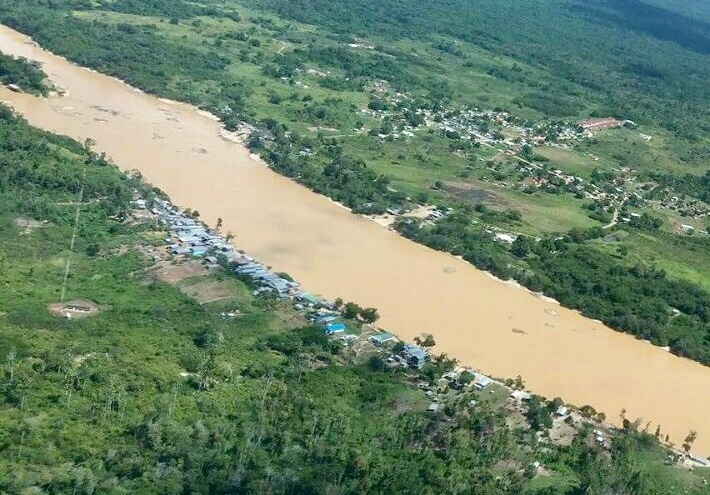
    The core advantage of the new unit, Ali explained, is its reliance on hyper-local human intelligence gathered from residents living directly along Guyana’s lengthy border regions. By centering community participation in border protection, the administration aims to create a more responsive, visible security presence that leverages indigenous residents’ intimate knowledge of remote terrain.

    Leading the new BPU is Daniel Seeram, a retired GDF captain with prior experience as Chairman of the Region Four (Demerara-Mahaica) Council. Ali first publicly announced Seeram’s appointment as BPU Coordinator during a community gathering in Kurutuka, Rupununi last week, noting that Seeram’s professional security background made him the ideal candidate for the role. Seeram will report directly to the President in his new position.

    The rollout of the BPU will begin in three priority border communities, which will each receive an all-terrain vehicle to support patrol operations. The administration is building the initiative on the existing foundation of Guyana’s Community Policing Groups, particularly in remote Indigenous communities that make up much of the country’s borderlands. Over time, the unit will be expanded to additional high-priority border regions.

    Integrated fully into Guyana’s broader national security architecture, the BPU will work in close coordination with local police, GDF personnel, and the National Intelligence Security Agency (NISA) to collect and share intelligence. Ali noted that the new structure will speed up information flow, increase on-the-ground presence, and expand situational awareness across both Guyana’s land borders and its Exclusive Economic Zone, with planned investments in surveillance technology to boost these capabilities.

    When asked whether BPU members would be armed, Ali declined to comment, but confirmed that all personnel will receive training in technology use and standardized reporting protocols, and the unit will be fully outfitted with necessary transportation assets.

    The appointment of Seeram has drawn quiet attention due to his recent political trajectory: he was elected to the Region Four chairmanship on a ticket from the opposition A Partnership for National Unity+Alliance For Change (APNU) coalition, backed by coalition lead the People’s National Congress Reform, before later aligning with the incumbent People’s Progressive Party Civic (PPPC) administration while refusing to step down from his regional post. Ali pushed back against any implicit criticism of the pick, reiterating that the appointment was based solely on Seeram’s relevant security training and professional skill set, not political affiliation.

  • World Cup Brazil 2027 Qualifiers : D-2 List of senior Grenadières convened

    World Cup Brazil 2027 Qualifiers : D-2 List of senior Grenadières convened

    With just two matches remaining in the first round of CONCACAF qualifying for the 2027 FIFA Women’s World Cup set to be hosted in Brazil, Haiti’s senior women’s national team, the Grenadières, has officially announced its full roster under newly appointed, world-renowned head coach Pia Sundhage. The two upcoming fixtures, both set to kick off at 2:00 p.m. local time at Guadeloupe’s Stade Roger Zami, will see Haiti face off against Anguilla on April 9, 2026, followed by a decisive clash against the Dominican Republic on April 17, 2026. Currently sitting atop Group D, with the Dominican Republic trailing behind them, the Grenadières enter these final matches in a strong position to secure progression to the next qualifying phase, and Sundhage has opted to mix fresh talent and returning experience to bolster the squad’s chances.

    Among the new call-ups to the senior roster are young prospects Raphino Cyrenie and Océane Toussaint, who will get their first chance to compete at this critical qualifying stage alongside several familiar faces who have earned their way back into the national setup. Veterans Kethna Louis and Roselord Borgella mark their return to the Grenadières squad, while Alyssa Manassé Somer retains her spot in the roster after receiving her first call-up during the team’s most recent training camp.

    The full 25-player roster spans top club leagues across North America, Europe, and Mexico, highlighting the global spread of Haitian women’s football talent. In goal, the squad features Kaina César V. Pietrus (Lipscomb University, USA), Océane Toussaint (Paris Saint-Germain, France), and Naila Louissaint (Concordia Stingers, Canada). The defensive line includes Kethna Louis (Montpellier Hérault SC, France), Jennyfer Limage (RC Lens, France), Betina Petit Frère (En Avant Guingamp, France), Amandine Pierre-Louis (AS Saint-Étienne, France), Tabita Dougenie Joseph (Olympique de Marseille, France), Claire Constant (DC Power FC, USA), and Alyssa S. Manasse (Blue/Somerset, USA).

    In midfield, Sundhage has called up Deborah Bien-Aime (AS Saint-Étienne, France), Sherly Jeudy (RC Lens, France), Melchie D. Dumornay (OL Lyonnes, France), Maudeline Moryl (Olympique de Marseille, France), Anyssa Ibrahim (Le Mans FC, France), Dayana Pierre-Louis (Utah Royals FC, USA), and Josephine Vanuxeem (LOSC Lille, France). The attacking corps is made up of Chelsea A. Domond (En Avant Guingamp, France), Darlina Florsie L. Joseph (Toulouse FC, France), Cyrenie Raphino Brittany (Sporting CP, Portugal), Roseline Eloissaint (FC Nantes, France), Roselord Borgella (Club Tijuana, Mexico), Nerilia Mondesir (Seattle Reign FC, USA), and Lourdjina Etienne (FC Fleury, France).

    For the Grenadières, these two matches are far more than routine qualifying fixtures: the team’s overarching goal is to secure a spot in the 2027 Women’s World Cup and mark a return to the global tournament after previous appearances. The current campaign has already seen positive results, including a 2-0 win over Suriname and a dominant 9-0 victory against Belize in earlier qualifying rounds, building momentum for the squad as they enter these final first-round matches under new leadership.

  • Mónika Infante to lead Manzanillo Gas & Power: a new chapter for Dominican energy infrastructure

    Mónika Infante to lead Manzanillo Gas & Power: a new chapter for Dominican energy infrastructure

    In a move that signals more than just routine leadership change, the appointment of Mónika Infante Henríquez as General Manager of Manzanillo Gas & Power has launched a new strategic chapter for the Dominican Republic’s evolving energy sector. This hire is far from a standard administrative reshuffle: it brings a decorated, high-stakes executive to a critical project at the exact moment it shifts from years of preliminary planning to the high-pressure work of scaling large-scale energy operations.

    Infante’s arrival aligns perfectly with a defining turning point in the Dominican Republic’s efforts to diversify its national energy matrix. The sprawling Manzanillo energy complex, which integrates a new natural gas import terminal and a state-of-the-art combined-cycle power plant, was developed to deliver long-term reliability and stability to the country’s national power grid. For a major infrastructure project of this scope, Infante’s unique combination of legal expertise and decades of experience delivering public-private partnership projects positions her uniquely to navigate the tangled regulatory and technical challenges that are common across the global energy industry.

    A Career Built on Delivering Large-Scale Infrastructure Success
    Before stepping into this new energy leadership role, Infante spent years leading Aeropuertos Dominicanos Siglo XXI, better known as AERODOM, a subsidiary of VINCI Airports. Her tenure at the helm of the Dominican airport operator was marked by a string of transformative achievements: she successfully negotiated extended infrastructure concessions, structured complex, bankable financial frameworks to fund nationwide airport modernization, and delivered upgraded public assets that drove tourism and economic growth across the country. This proven track record of managing critical public infrastructure through a model that combines public accountability with private sector efficiency is exactly what the Manzanillo Gas & Power consortium aims to replicate with the energy project.

    Beyond the immediate impact on the Manzanillo complex, Infante’s appointment highlights a growing, encouraging trend across the Latin American and Caribbean region: the increasing advancement of women into top leadership roles in heavy industrial sectors that have long been male-dominated. By tapping a professional with Infante’s established reputation for results, Manzanillo Gas & Power has gained a leader with a proven ability to build alignment and consensus across a diverse range of stakeholders, from government regulators to private investors and local community groups. Her management approach, which centers on radical transparency and continuous process optimization, is widely expected to establish a new benchmark for corporate governance across the Dominican energy sector.

    The strategic value of this appointment stems from Infante’s proven ability to deliver projects on strict technical timelines without sacrificing fiscal responsibility or operational integrity. Her deep mastery of large-scale logistics and complex contract management gives the Manzanillo consortium an immediate competitive advantage as it moves into operations. The end goal of the project is clear: to turn the Manzanillo complex into a regional benchmark for responsible energy infrastructure development that will drive inclusive economic growth across the entire northwestern region of the Dominican Republic.

    Ultimately, placing a seasoned, results-driven executive at the head of such a critical national energy hub reflects the growing institutional maturity of the Dominican Republic’s energy sector. As Manzanillo Gas & Power enters its full operational phase, market analysts and industry stakeholders broadly view Infante’s leadership as a strong guarantee of long-term project stability. Her career track record makes clear that the Manzanillo complex will benefit from the same analytical precision, uncompromising professional rigor and commitment to delivery that have defined Infante’s decades-long career in infrastructure leadership.

  • Rekenkamer onderzoekt sociale bijstand: tekortkomingen in rechtmatigheid vastgesteld

    Rekenkamer onderzoekt sociale bijstand: tekortkomingen in rechtmatigheid vastgesteld

    On April 6, the Netherlands Court of Audit (NCA) released its 2025 annual report, flagging significant deficiencies in the legal compliance of national social assistance payments, with a specific focus on programs managed by the country’s Ministry of Social Affairs and Housing (SoZaVo). The NCA’s audit found that the approval and delivery of targeted financial support to vulnerable populations did not always meet established regulatory requirements and procedural standards in a substantial share of cases. These shortcomings raise pressing questions about the oversight, transparency, and cost-effectiveness of public funds allocated to support the most disadvantaged groups in Dutch society. In the report, the NCA emphasized that careful, rule-abiding management of social welfare systems is foundational to maintaining public trust in government institutions. Irregularities in benefit allocation do not only lead to wasteful, inefficient use of taxpayer money, the agency notes, but can also create unfair disparities in access to life-sustaining support, leaving some eligible vulnerable groups without assistance while potentially granting benefits to ineligible recipients. This audit of social assistance forms part of a broader series of compliance reviews completed by the NCA in 2025, which also covered land allocation, public pension administration, and government subsidy programs. Across all these policy areas, the audit body found persistent gaps in adherence to national laws and formal procedures, indicating that system-wide improvements are needed across multiple sectors of government. To address the identified issues in social welfare delivery, the NCA is calling for urgent strengthening of internal oversight mechanisms and more consistent enforcement of existing regulatory frameworks. The agency stresses that these reforms are critical to ensuring public social programs actually reach the intended communities that depend on this support, repairing transparency, and upholding public confidence in government welfare provision.

  • Internal probe of “confrontation” between police rank and civilian

    Internal probe of “confrontation” between police rank and civilian

    On Monday, April 6, 2026, Guyana’s top law enforcement leadership launched an immediate internal investigation into a reported altercation involving an off-duty senior police officer, following the circulation of a viral video on social media platforms that captured the incident. Police Commissioner Clifton Hicken has ordered the force’s Office of Professional Responsibility to launch a full review into the details and context surrounding the confrontation, according to an official statement released by the Guyana Police Force (GPF).

    The viral footage, which the GPF confirmed in its public announcement, shows an unidentified man alleged to be the off-duty assistant superintendent threatening another individual with a deadly threat, stating clearly “I would kill you”. Two uniformed on-duty police officers were also recorded on camera intervening to de-escalate the conflict and calm both parties involved. While the GPF has formally acknowledged the incident and the video’s authenticity, the agency has not released the name or any additional personal details of the off-duty officer under investigation at this stage of the probe.

    In its statement, the GPF emphasized that every member of the force, regardless of rank or duty status, is required to adhere to strict standards of professional conduct, emotional restraint, and public accountability. “Any behaviour found to be inconsistent with the standards of the Force will be addressed in accordance with the law and established disciplinary procedures,” the statement read. The agency also committed to updating the public with new details as the investigation progresses, and reassured citizens that it remains dedicated to upholding the highest levels of professional practice and maintaining public trust. All allegations of officer misconduct, the GPF noted, are treated with the full level of seriousness they deserve.

    Alongside the announcement of the new investigation, the GPF also indirectly addressed an ongoing high-profile case involving another senior officer. Senior Superintendent Himnauth Sawh, who was sanctioned by the United States Treasury Department’s Office of Foreign Assets Control (OFAC) in June 2025 over allegations of involvement in international narcotics trafficking, remains on administrative leave from the force. Sawh was serving as the Commander for Region One (Barima-Waini) in September 2024 when a joint operation conducted by the Customs Anti-Narcotics Unit (CANU) and the Guyana Defence Force (GDF) discovered 4.4 tonnes of cocaine buried underground near an unapproved airstrip on the outskirts of Mabaruma. No additional updates on Sawh’s status or the related investigation were provided alongside the announcement of the new probe.

  • Swiss man, French woman arrested with cocaine at AILA

    Swiss man, French woman arrested with cocaine at AILA

    Authorities at the Dominican Republic’s Las Américas International Airport have foiled an attempted international drug smuggling operation, taking a 61-year-old Swiss man and a 19-year-old French woman into custody, officials from the country’s National Drug Control Directorate confirmed this week. The pair was preparing to board an outbound flight bound for Frankfurt, Germany when security screeners detected the contraband during routine safety checks. The incident marks one of the recent high-profile drug interdictions at the Caribbean nation’s busiest international air hub, which serves as a key transit point for travel between the Americas and Europe.

  • Olmberg: Zonder bundeling mist private sector kansen in olie-economie

    Olmberg: Zonder bundeling mist private sector kansen in olie-economie

    As Suriname stands on the cusp of an unprecedented economic boom driven by new upstream oil and gas projects, the head of the country’s leading energy industry body is issuing a urgent call for domestic private sector players to unite and organize, warning that fragmentation could leave the vast majority of potential economic benefits off the table for local businesses.

    Orlando Olmberg, president of the Suriname Energy Chamber (SEC), laid out his stark warning in a recent address, arguing that coordinated collective action from private domestic enterprises is the only way to ensure the country maximizes gains from the rapidly emerging sector. While international oil companies operating in the country have confirmed that the capabilities and quality of local Surinamese entrepreneurs meet global industry standards, Olmberg says the critical gap lies in the sector’s ability to organize at scale to match the size and pace of coming development.

    Major projects including the Blok 58 development, followed by the future Blok 52 project, are set to unlock billions in new economic activity for the small South American nation. For Olmberg, the core question facing the country is not whether transformative economic opportunity exists, but whether local stakeholders are positioned to capture that opportunity for businesses of all sizes, from small local suppliers to large domestic enterprises.

    A key point of emphasis from Olmberg is reframing the widespread conversation around local content requirements. Too often, local content rules are treated as merely a regulatory compliance obligation for international operators, he argues, when the concept’s real impact depends on local organizational capacity, cross-sector collaboration, and proactive preparation. Without this foundational strength, he says, local content policies will remain nothing more than empty ambitions written into policy documents.

    While the Surinamese government carries an important role in enabling the sector’s growth through establishing clear legislation, structuring development contracts, and managing public revenue from resource extraction, Olmberg stressed that policy alone cannot guarantee inclusive economic growth. Without a robust, well-organized domestic private sector prepared to participate in large-scale project supply chains and operations, the bulk of new value created by the oil and gas boom will flow to foreign firms rather than circulating through the Surinamese economy, he warned.

    Fragmentation among domestic private enterprises stands as the single largest bottleneck to capturing this value, according to Olmberg. When businesses operate independently in siloed individual strategies, they lack the collective market and negotiating power to shape the sector’s development to prioritize local participation. That means the responsibility to drive change rests squarely on the private sector itself, he argued.

    Olmberg closed with a urgent call to action for Surinamese entrepreneurs: the time for waiting on others or pursuing disconnected individual strategies is over. Local businesses must organize now, align around a shared long-term strategic vision, and take collective ownership of the sustainable development of Suriname’s new oil and gas industry – and this action cannot wait, he emphasized.

  • Easter Sunday Shootout in Caye Caulker

    Easter Sunday Shootout in Caye Caulker

    It was meant to be a landmark step toward stronger public safety for the popular island destination of Caye Caulker, Belize. Just days after the Belize Coast Guard launched a new forward operating base on the island, designed to bolster regional security and crack down on criminal activity, a bold pre-dawn shootout on Easter Sunday has thrown those efforts into doubt, leaving law enforcement still searching for the armed suspects who escaped by sea.

    The incident unfolded when members of the Belize Police Department’s Quick Response Team moved to intercept a suspicious three-wheeled vehicle moving through the island. As officers closed in, at least one individual inside the vehicle opened fire on the pursuing officers, triggering an exchange of gunfire that stretched across the island toward its coastal shoreline.

    The chase ended when the suspect vehicle veered into the Caribbean waters off the RCD Wharf. Forced to abandon their disabled transport, the gunmen quickly moved to a pre-positioned waiting vessel offshore and fled the scene before officers could establish a lockdown of the area.

    In the aftermath of the confrontation, investigating officers have combed the area surrounding the RCD Wharf, where they recovered multiple pieces of evidence: a cache of burglary tools linked to the suspects, and numerous spent shell casings from the shootout. Law enforcement teams are currently reviewing all available local surveillance footage from nearby businesses and public areas to identify the suspects and map their movements before and after the incident. As of the latest updates, no arrests have been made, and the investigation remains active and ongoing.

    The brazen nature of the attack — an armed confrontation with police in a public area of the popular tourist island, followed by an organized escape at sea — has cast a shadow over the Belizean government’s recent push to improve security on Caye Caulker. The new Coast Guard forward operating base was positioned to respond more quickly to maritime criminal activity and enhance safety for both local residents and the island’s thriving tourism industry, but the incident has raised new questions about the scale of organized criminal activity operating in the region.

  • QUESTION OF THE DAY: Are drivers doing enough to prevent the growing number of serious road accidents?

    QUESTION OF THE DAY: Are drivers doing enough to prevent the growing number of serious road accidents?

    Across the country, a disturbing trend has emerged on public roads: the frequency and intensity of serious traffic collisions are climbing steadily, fueling mounting public and official anxiety over how motorists behave behind the wheel and whether they are taking adequate responsibility for road safety.

    In recent weeks, a string of high-profile crashes has underscored the deadly risks linked to reckless driving habits. Multiple incidents, which have left people injured and included several cases where vehicles flipped entirely, have traced directly back to two common dangerous behaviors: driving at excessive speeds and distracted operation of a motor vehicle. In one recent collision reported by local law enforcement, a driver speeding through a residential neighborhood ran a stop sign, striking another car and causing it to overturn, sending both drivers to a local hospital with non-life-threatening injuries.

    Public safety officials have repeatedly issued urgent calls for motorists to practice greater caution every time they enter a vehicle. But as crash counts continue to rise, a pressing question hangs over ongoing safety efforts: are individual drivers stepping up to meet their responsibility to cut down on preventable risks, or is cultural change around safe driving moving too slow to reverse the current trend?