博客

  • FOD president wants proactive approach in tackling gun violence

    FOD president wants proactive approach in tackling gun violence

    Two deadly shootings that unfolded over Barbados’ Easter weekend have amplified already growing fears over the nation’s accelerating gun violence crisis, prompting senior lawmaker and attorney Karina Goodridge to push for sweeping policy changes: a nationwide zero-tolerance mandate for homicide and the immediate launch of a proactive early warning system to stop attacks before they occur. In a firm, clear statement released to the public Wednesday, Goodridge — who also serves as president of the civic organization Friends of Democracy — argued that the small island nation can no longer afford to downplay the threat or treat it as an abstract concern, as brutal killings increasingly take place in crowded public spaces, carried out by perpetrators acting in open defiance of the law.

    Goodridge emphasized that Barbados is confronting a shifted, dangerous landscape that demands urgent action: as of the Easter weekend, the country had already logged at least 18 homicides for the year, a sharp upward trajectory that she called alarming. Many of these killings have happened in broad daylight, in areas packed with bystanders, and in contexts that offer no logical explanation for the violence. “Each life lost is a tragedy… [and] a stark reminder that complacency is no longer an option,” she said.

    Her call to action follows three separate shooting incidents that took place on Easter Monday alone, which left two men dead and multiple other people injured, pushing community anxiety over the growing violence to new heights. Goodridge pushed back against the common framing of these killings as isolated, disconnected events, arguing that what Barbados needs instead is a unified, preventive national strategy that addresses violence at its roots.

    “The time has come to adopt a zero-tolerance approach to homicide. Violence, especially gun violence, has ripple effects that permeate society,” she explained, noting that the damage of a single attack extends far beyond the immediate victims and their families, tearing at the fabric of entire communities. Drawing on lessons from neighboring Caribbean nations, Goodridge pointed to successful interventions in Trinidad and Tobago, where law enforcement has leveraged data-driven policing and rapid response frameworks to anticipate criminal plots and break them up before violence can occur. She argued that Barbados can adapt these proven models to fit its own context, building systems that can detect, prevent, and disrupt violent acts before they lead to tragedy.

    At the center of Goodridge’s proposal is the creation of a holistic early warning system that integrates three key pillars: active community engagement, intelligence-led policing, and targeted enforcement. Key measures she outlined include boosting sustained police presence in areas identified as high-risk for violence, using data-driven crime mapping to spot emerging patterns of criminal activity, and running coordinated, multi-agency operations to remove illegal firearms from communities across the country.

    The senator stressed that enforcement measures alone cannot reverse the trend of rising violence. She called for complementary social programs that address the root causes that drive violent crime, including unaddressed mental health challenges, widespread substance abuse, and a lack of positive mentorship for at-risk young people. Highlighting one of the most recent Easter weekend attacks — the fatal shooting of 22-year-old Raul Clarke in Oistins — Goodridge said the tragedy serves as a stark warning of the immediate danger that unregulated illegal firearms pose to public safety, adding that “Barbados cannot wait for tragedy to strike again.”

    “Removing illegal guns, combined with community vigilance and social interventions, is a proven formula for reducing violent crime and safeguarding lives. Every confiscated weapon is a potential life saved,” she argued. Digging into the deeper drivers of the current violence epidemic, Goodridge noted that core social and familial breakdowns — including inadequate parenting support, unaddressed mental illness, and rampant substance misuse — are at the root of the crisis. To tackle these issues, she called for closer collaboration between families, schools, and local community organizations to instill core values of respect and personal accountability in children from a young age.

    Goodridge also emphasized that supporting frontline law enforcement officers is a non-negotiable part of any effective strategy, noting that officers need timely compensation, ongoing specialized training, and dedicated mental health resources to carry out their work effectively. “Supporting our police with timely payments, adequate training, and mental health resources is not optional – it is essential for effective enforcement and deterrence,” she said. In addition to supporting law enforcement, she urged national and local authorities to prioritize transparency and ongoing public engagement, proposing regular town hall meetings and deeper formal partnerships between police and community groups as core components of a national crime prevention strategy.

    Goodridge concluded that Barbados must build a national culture where violence of any kind is never accepted, and where citizens feel both safe from harm and empowered to report potential threats to authorities before violence occurs. Warning that continued inaction will only allow the crisis to escalate further, she noted that the country has the resources and capacity to address the problem decisively — but collective political, social, and community will is required to make meaningful change. “What is required now is resolve: political, social, and communal,” she said.


  • Dominica hosts Inter-American Telecommunications Commission’s 47th annual meeting

    Dominica hosts Inter-American Telecommunications Commission’s 47th annual meeting

    In a historic milestone for the small Caribbean island nation, Dominica is playing host to the 47th plenary Meeting of the Inter-American Telecommunications Commission (CITEL) for the first time in the commission’s history. The five-day gathering, which kicked off on April 6 and will run through April 10 at Portsmouth’s Intercontinental Hotel, has drawn official representatives from 32 member countries across the Americas, bringing regional connectivity and digital policy leaders to Dominica’s shores.

    In her opening address to assembled delegates, Chekira Lockhart-Hypolite, Dominica’s Minister of State with responsibility for Telecommunications and Broadcasting, laid out the island nation’s dual framework of macro and micro technological priorities aligned with both regional collective goals and local national needs. A core pillar of Dominica’s macro agenda, she explained, is integrating advanced technology into disaster preparedness and national resilience efforts—an objective that directly ties to Prime Minister Roosevelt Skerrit’s groundbreaking vision to position Dominica as the world’s first climate-resilient nation.

    “To build a scalable, rapidly responsive disaster communication strategy, we recognize that every innovative technology has a critical role to play in strengthening our disaster response capabilities,” Lockhart-Hypolite told attendees. Beyond climate resilience, the minister outlined targeted goals tailored to Dominica’s status as a small island developing state, chief among them supporting the ongoing Caribbean digital transformation initiative by cultivating a regulatory and economic environment that accelerates inclusive digital growth across the region.

    Cybersecurity and citizen protection in digital spaces also top the nation’s priority list, Lockhart-Hypolite confirmed. The government is moving forward with plans to establish a dedicated national Cybersecurity Incident Response Team, she said, to detect and mitigate a wide range of threats—from extreme weather-related communication disruptions to malicious cyberattacks. The initiative will also be supported by updated national legal frameworks to safeguard digital user rights and data, paired with expanded international cooperation to enable cross-border information sharing and collective security enhancement with regional partner nations.

    Looking ahead, the Dominican government is focused on creating a welcoming regulatory ecosystem to position the country as an early adopter and regional test bed for cutting-edge telecommunications innovations. Lockhart-Hypolite highlighted next-generation technologies including 5G network deployment, near-earth orbit satellite (NEOS) systems, direct device-to-device (D2D) communication, and the upcoming Wi-Fi 8 standard as key areas of interest for the nation.

    These ambitious development goals require consistent, collaborative engagement with regional regulatory bodies and international partners, the minister noted, emphasizing that ongoing dialogue allows Dominica to learn from global best practices while ensuring the unique needs of small island states are centered in regional telecommunications policy. She closed her address by encouraging all participating delegates to engage in open, constructive, forward-looking discussions throughout the week, with the aim of strengthening collective regional capacity and advancing shared goals for more connected, resilient, and innovative telecommunications infrastructure across the Americas.

  • US, Israel, Iran Agree to Ceasefire Before Trump’s Deadline

    US, Israel, Iran Agree to Ceasefire Before Trump’s Deadline

    A fragile ceasefire agreement has been struck between the United States, Israel, and Iran, coming together just ahead of a self-imposed deadline set by former President Donald Trump, set to take effect across the volatile Middle East region. The deal, announced publicly in April 2026, hinges on a critical condition laid out by the White House: the two-week truce will only remain in place if the Strait of Hormuz stays open to unimpeded passage for commercial oil tankers.

    According to Iranian state media reports, Iran had temporarily blocked all tanker traffic through the strategic waterway in retaliation for Israeli air strikes targeting positions in Lebanon. In the initial period following the ceasefire’s implementation, only two commercial oil tankers have successfully transited the strait, a key indicator that restrictions are only just beginning to lift.

    Widely regarded as one of the most critical global energy chokepoints, the Strait of Hormuz facilitates the passage of nearly 20% of all global crude oil supplies, making even minor disruptions to traffic capable of sending shockwaves through international energy markets and driving up fuel prices worldwide. Any prolonged closure would risk widespread economic fallout across net energy importing nations in Europe, Asia, and North America.

    White House Press Secretary Karoline Leavitt credited aggressive rhetoric from President Trump for pushing Iran to the negotiating table, saying his repeated strong warnings of severe consequences for Tehran if it refused to return to dialogue created the conditions for the truce to be finalized.

    Despite the ceasefire agreement, Israeli Prime Minister Benjamin Netanyahu struck a cautious tone during a Wednesday address, confirming that Israel retains core military objectives targeting Iran and remains fully prepared to resume offensive operations if the terms of the truce are violated. Netanyahu also emphasized that Israel’s ongoing strikes against Hezbollah militant positions in Lebanon are not covered by the US-Iran ceasefire, leaving open the possibility of continued escalation in that theater.

    In a follow-up announcement, the White House confirmed that Vice President JD Vance will lead a high-level US diplomatic delegation to Islamabad to hold direct negotiations with Iranian representatives, with the first formal round of talks scheduled to kick off this weekend. US officials also confirmed that American diplomatic teams held high-level consultations with the Chinese government during the ceasefire negotiation process, signaling broad global engagement to de-escalate regional tensions.

  • Police Investigate Rape of Minor

    Police Investigate Rape of Minor

    Law enforcement officials in Belize’s Stann Creek District have opened a formal criminal investigation into a reported rape of a underage female, after the victim and her family filed an official complaint with local police. The case, which dates back to late March 2026, marks a disturbing incident of sexual violence against a minor that has prompted active investigative work from regional authorities.

    According to official police records, the formal report was registered on the morning of Tuesday, April 7, 2026. At around 9:45 a.m. that day, the 16-year-old victim arrived at a local police station accompanied by her father to detail the alleged assault and file her official statement. Police spokespersons confirmed that the teen told investigators the non-consensual sexual encounter took place on March 25, 2026, at approximately 2:30 p.m. at a location within Stann Creek District. The accused perpetrator is described only as an adult male at this early stage of the probe.

    As of April 8, 2026, investigators have not released further details about the identity of the suspect, potential motives for the attack, or any updates on leads developed since the report was filed. Police have confirmed that the investigation remains ongoing, with detectives working to collect evidence, interview witnesses, and build a case against the perpetrator. Local law enforcement has not announced any arrests in connection with the allegation at this time.

  • BRA advises early filers to refile 2025 Tax Returns following PIT update

    BRA advises early filers to refile 2025 Tax Returns following PIT update

    Barbados’ top tax regulatory body has announced a mandatory refiling requirement for more than 3,000 individuals who submitted their 2025 Personal Income Tax (PIT) returns ahead of the rollout of an updated official form.

    The Barbados Revenue Authority (BRA) confirmed that all returns submitted prior to March 27, 2026, were completed using an outdated version of the form. The previous iteration failed to incorporate key adjustments rolled out as part of the 2026 national budget: expanded tax credits and revised income thresholds, which were formally unveiled by the Minister of Finance in a March 16, 2026 address. To guarantee that eligible taxpayers can access the full benefits granted by these new budget provisions, all prematurely filed returns will be removed from the system.

    BRA Revenue Commissioner Jason King stressed that precision during the tax filing process is non-negotiable for both the agency and taxpayers. “This update is specifically designed to make sure taxpayers get every benefit they are entitled to from the enhanced credits and expanded income thresholds we introduced last month,” King explained. “That said, it is critical that people set aside a few minutes to go over their personal information carefully before they resubmit. Getting the details right at this early stage avoids processing delays and ensures you walk away with all the eligible benefits.”

    Beyond the refiling mandate, the BRA has also flagged a separate issue impacting a subset of taxpayers who already filed using the updated form: incomplete or erroneous third-party submitted data.

    By legal requirement, all third-party entities including employers, pension providers, labor unions and unemployment agencies were required to submit relevant statutory data, including PAYE schedules, pension income records, union dues documentation, unemployment benefit statements, and other third-party issued payment records, by February 28, 2026. However, the BRA reports that in a number of cases, this critical data has not yet been uploaded to taxpayer accounts, or contains inaccuracies that could throw off the final calculation of a filer’s tax liability or benefits.

    King urged individual taxpayers to take personal responsibility for verifying the information tied to their accounts, rather than relying on third-party submissions to be automatically correct. “Taxpayers should never just assume that their pre-filled records are complete and accurate,” King noted. “It is absolutely essential that every person check that all relevant information has been uploaded to their account and that all entries are correct before they finalize their filing. A quick 10-minute review can mean the difference between a seamless filing process and unnecessary, time-consuming complications down the line.”

    The BRA clarified that only the original third-party submitting entity, such as an employer or pension administrator, has the authority to correct errors or missing information in their submitted data. In line with this, the agency is encouraging all taxpayers, regardless of whether they are affected by the refiling mandate, to carefully review their BRA accounts, confirm all required data is present and accurate, and ensure their final submission is completed using the most up-to-date version of the 2025 PIT form.

  • Belize City Man in Critical Condition After Shooting

    Belize City Man in Critical Condition After Shooting

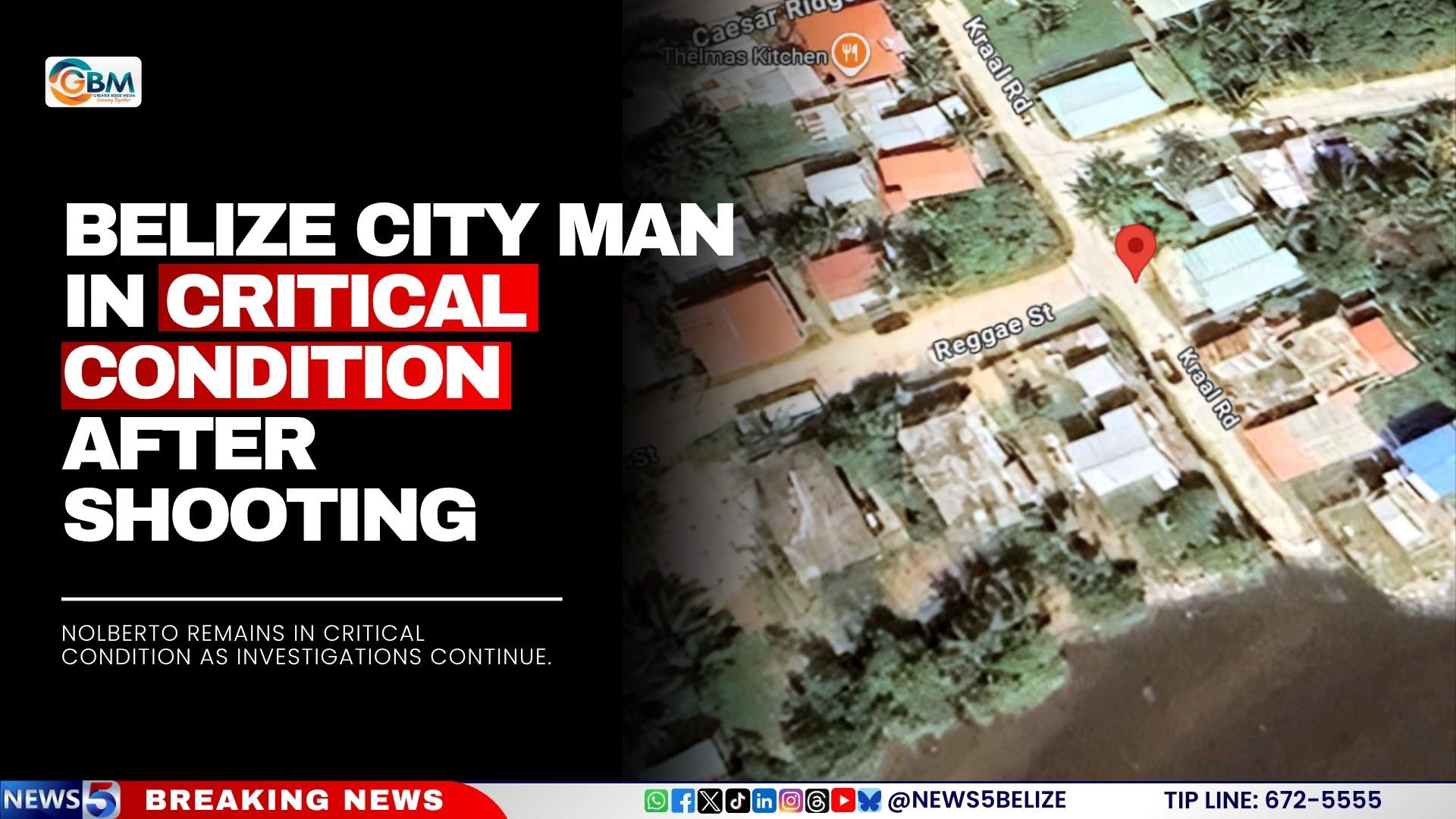
    A brazen public shooting in the heart of Belize City has left a local mechanic fighting for his life, with law enforcement launching a full investigation into what is being treated as an attempted murder. The violent incident unfolded on the afternoon of April 7, 2026, at the busy intersection of Kraal Road and Reggae Street, according to official police briefings.

    When patrol officers received emergency calls reporting gunfire in the area, they rushed to the scene to secure the location. Upon their arrival, first responders learned that the wounded man had already been carried to Karl Heusner Memorial Hospital by bystanders. Initial investigative findings confirm that the victim is 25-year-old Shawn Nolberto, a resident of Belize City who works as a professional mechanic.

    Witness accounts and preliminary evidence show that Nolberto was sitting in the driver’s seat of a parked Ford F-150 pickup truck when the attack began. He was not alone at the time: 25-year-old Arnel Copious, a gas pump attendant who was with Nolberto, occupied the passenger seat and was unharmed in the attack. As the pair spoke inside the vehicle, an unidentified male suspect walked up to the truck and opened fire, aiming multiple shots directly at Nolberto. The attacker immediately fled the area on foot before anyone could intervene or detain them.

    Nolberto arrived at the hospital with multiple gunshot wounds, and as of the latest update from medical authorities, he remains in critical condition. Police have not yet released any detailed descriptions of the suspect or announced a clear motive for the shooting. Investigations are still ongoing, with law enforcement asking any members of the public who were in the area at the time of the incident or have information about the attacker to come forward to assist with the case.

  • Laatste kans op legitieme portie nadert: termijn vervalt per 1 mei

    Laatste kans op legitieme portie nadert: termijn vervalt per 1 mei

    A critical time-sensitive reminder has been issued by the Surinamese Notarial Professional Organization (SNB) for eligible heirs across the country: individuals seeking to claim the long-standing legitimate portion inheritance right must submit their claims no later than May 1, 2026, and this deadline is final and non-extendable. After the cutoff date, any unclaimed rights will be revoked permanently, with no avenue for legal reversal.

    First established to protect children’s inheritance claims, the legitimate portion was a legal provision guaranteeing offspring a mandatory minimum share of a parent’s estate, even if the parent explicitly disinherited them in a will. This regulation was officially abolished on May 1, 2025, as part of the rollout of Suriname’s updated New Civil Code. Under the country’s new inheritance framework, the principle of testator autonomy takes precedence, granting individuals full freedom to distribute their assets according to their own wishes via last wills and testaments. No legitimate portion claims are accepted for deaths occurring on or after the May 1, 2025 abolition date.

    To ease the transition between the old and new legal frameworks, the national legislature implemented a phased transitional arrangement for different groups of heirs. The May 1, 2026 hard deadline applies specifically to children whose parent passed away before May 1, 2021, whose right to claim a legitimate portion predates the adoption of the new civil code. Lawmakers ruled that this legacy right could not remain open indefinitely, so a firm expiration date was written into the transitional legislation.

    A separate timeline applies to deaths occurring between May 1, 2021 and April 30, 2025: for these cases, the window to file a legitimate portion claim remains open for five full years after the date of the parent’s death. Once that five-year window closes, no claims can be accepted. Heirs who already formally submitted their legitimate portion claims before May 1, 2025 will see their rights remain unaffected and fully enforceable.

    To successfully file a valid claim, eligible individuals must submit a clear, formal notice of their intent within the required timeframe. This can be completed through a licensed notary, or via a written statement submitted to the estate’s executor, co-heirs, or other relevant parties involved in the estate distribution process.

    SNB officials emphasized that widespread public unawareness of the approaching deadline puts many eligible heirs at risk of losing their legal rights unnecessarily. The organization is issuing an urgent appeal to all individuals who may qualify for a claim to seek professional guidance and complete their filings as soon as possible, before the irreversible deadline arrives.

  • Government launches programme to assist most vulnerable

    Government launches programme to assist most vulnerable

    Facing persistent global economic turbulence driven by volatile energy markets and stubbornly high inflation, the government of Barbados is rolling out a targeted Cost of Living Cash Credit program, a core policy included in the latest national budget, designed to ease financial strain on the country’s most vulnerable residents. First disbursements are scheduled to begin April 20, with senior pensioners and recipients of special needs grants prioritized in the program’s opening phase.

    During a formal press briefing hosted at the National Insurance and Social Security (NISS) headquarters on Culloden Road, Finance Minister Ryan Straughn and NISS Chief Executive Officer Kim Tudor walked reporters through the administrative structure of the relief package, clarifying eligibility rules and disbursement processes for the public. Straughn framed the initiative as a proactive, forward-thinking intervention to provide much-needed financial certainty for households amid ongoing global market uncertainty.

    Straughn noted that while global oil prices have experienced temporary dips in recent months, the underlying volatility of energy markets remains an outsized risk for small island developing states like Barbados, which rely heavily on energy imports. “Given all the uncertainty that’s taking place within the energy space, we wanted to make sure that we give Barbadians the opportunity to be able to plan their budgets over the course of the next 12 months,” he explained. He added that the cash credit complements broader government actions, including a completed fuel price hedge that has stabilized domestic fuel costs for consumers, to insulate the country from international market swings.

    One key clarification the minister emphasized during the briefing is that the cash credit is a one-off targeted relief measure, not a permanent increase to standard national insurance pensions. He addressed widespread confusion among residents, many of whom had expected an adjustment to their regular April pension checks: “The cash grant is separate and distinct from the pensions that are paid by the National Insurance. The reason that they did not see an increase on the pension check is because the cash credit is not tied to your pension. Eligibility follows the framework laid out in the national Budget.”

    NISS, which has been tapped to administer the bulk of payments, will draw on lessons and logistics infrastructure developed during previous large-scale government relief disbursements to streamline the process. Tudor confirmed that for the vast majority of pre-registered eligible beneficiaries, no additional action is required to receive funds. Payments will be issued on the 20th of each month, or the immediately preceding business day if the 20th falls on a weekend or public holiday.

    “For existing NIS and public sector pensioners, as well as current special needs grant recipients, we already have your contact information and payment details on file. If you are accustomed to receiving a cheque, you will receive a cheque. If you receive your pension via direct bank lodgement, it will come via lodgement. You don’t have to do anything,” Tudor advised. That said, two specific groups of potential beneficiaries are required to complete an in-person registration process to access the benefit: people over the age of 65 who are unemployed and do not receive any local or international pension, and new welfare recipients who did not participate in 2023’s Solidarity Allowance program.

    Registration opened this week at the Steel Shed in Queen’s Park, and will remain open for the next two weeks. Applicants must bring valid government-issued photo identification, and those requesting direct bank deposit must also bring recent bank statements to confirm account details. Tudor also reminded the public of a strict eligibility cap: any pensioner with an annual income exceeding BBD $50,000 does not qualify for the credit, which is reserved exclusively for Barbadian residents facing tangible cost-of-living hardships.

    Beyond the core cost-of-living credit for low-income vulnerable groups, the government is also activating a new multiple births support benefit. Families with multiple children under the age of five born from a single pregnancy are invited to submit birth certificates and banking details to the newly formed Social Empowerment Agency, an amalgamation of the former Child Care Board, Welfare Department, and National Assistance Board.

    Straughn framed the rollout of these two programs as a key step in the government’s broader mission to modernize public service delivery and streamline inter-agency data sharing. He pointed to the upcoming June launch of the BiMPay digital payment platform as a transformative milestone that will revolutionize how the government disburses funds to citizens. “As we seek to harmonise our systems, it is going to be important that persons are confident that once they share the information with a specific agency, we can process that information very quickly,” he said. “It is really my desire that the government and the country will be able to move to a different stage of being able to deliver all types of government payments in a much more seamless way.”

    While monthly disbursement is the default option to support ongoing household budget planning, the government has added flexible payment scheduling to accommodate different needs. Beneficiaries who prefer to receive their credit on a quarterly or annual basis can opt into these alternative schedules during the April-to-June opt-in window, with the new payment frequency taking effect in the third quarter starting September. With the first payments set to reach accounts on April 20, government officials project that approximately 60,000 Barbadians will benefit from the program over the coming 12 months, and express confidence that the targeted, focused strategy will provide meaningful relief amid ongoing global economic uncertainty.

  • BREAKING: ABST Cut to Zero on Food and School Supplies on April 10th and 11th in Antigua and Barbuda

    BREAKING: ABST Cut to Zero on Food and School Supplies on April 10th and 11th in Antigua and Barbuda

    In a formal announcement released by the Inland Revenue Department under Antigua and Barbuda’s Ministry of Finance, a new cabinet-approved policy will bring temporary tax relief to consumers across the twin-island nation early next month. Following Cabinet Decision Item No. 112, dated March 18, 2026, the Antigua and Barbuda Sales Tax (ABST) will be cut to 0% for two days – April 10 and 11, 2026 – on a pre-defined range of essential goods including most food products and a full suite of school supplies.

    The tax break covers all food items categorized under tariff codes 1000 through 2501, plus biscuits falling under tariff code 20089011. For school-related goods, the zero-tax policy applies to a wide list of items: writing utensils including pencils, pens, markers, highlighters, crayons and coloured pencils; classroom essentials such as erasers, sharpeners, rulers, glue, glue sticks, scissors, construction paper, graph paper, index cards, notebooks, folders, binders, binder sheets, pencil cases, and geometry sets; plus larger necessities including calculators, school uniforms, school bags, art supplies, information technology supplies, home economics supplies, and even student shoes.

    Not all goods qualify for the temporary rate reduction, the department clarified. Excluded products that will remain subject to standard ABST rates include beer and all other alcoholic beverages (tariff codes 2203 to 2208), tobacco products (tariff code 2400), manufacturing extracts (tariff codes 1300 to 1400), animal feed (tariff code 2300), and live plants (tariff code 0600).

    The Inland Revenue Commissioner has instructed registered retailers to record all qualifying zero-rated sales using the dedicated zero-rated supplies line on the standard ABST 03 tax form to ensure compliance with the new temporary policy. The two-day tax holiday is widely expected to ease financial pressure on households as they prepare for the return to school, cutting costs for families stocking up on essential supplies and groceries ahead of the new academic term.

  • In-person meeting at Fort Young Hotel 16th April 2026 from 6pm Edinburgh Napier University

    In-person meeting at Fort Young Hotel 16th April 2026 from 6pm Edinburgh Napier University

    Prospective students and higher education seekers in the region have a new opportunity to explore study pathways at one of the United Kingdom’s dynamic modern universities, with an in-person information session scheduled for April 16 at the Fort Young Hotel. Hosted by Southpoint Education International, the event will kick off at 6:00 PM local time, and is designed to give attendees clear, first-hand insight into the diverse range of undergraduate, postgraduate, and professional study programs offered by Edinburgh Napier University.

    Unlike virtual information sessions that often leave questions unanswered, this face-to-face gathering will allow prospective students to connect with education representatives directly, ask personalized questions about program curricula, admission requirements, scholarship opportunities, and student life on Edinburgh Napier’s campuses. Edinburgh Napier University, based in Scotland, is widely recognized for its industry-aligned programs, strong graduate employment outcomes, and inclusive campus community that welcomes hundreds of international students from across the globe each year.

    Organizers note that space for the session is limited to ensure attendees receive dedicated attention, so pre-registration is required for all those planning to attend. Interested individuals can secure their spot at the event by completing the RSVP form through Southpoint Education International’s official registration portal.