
The concept of modesty continues to spark debate among Christians, with varying interpretations of Biblical standards. Pastor Chris Morgan of the Go For God Family Church in St Andrew emphasizes the need for a balanced approach, viewing modesty as both a physical and spiritual expression of humility. ‘Modesty has two aspects: one is being covered, not showing too much, and the other is an attitude of humility,’ Morgan explained. He clarified that modesty is not about suppressing personal style but ensuring appropriateness in attire. ‘It’s not about being overly glamorous or revealing,’ he added, citing tight clothing, ripped jeans, and see-through fabrics as examples of immodest fashion. Morgan also addressed the gender bias in modesty guidelines, arguing that rules should not disproportionately burden women. ‘Men share the responsibility to dress appropriately too,’ he noted, urging both genders to avoid clothing that is overly tight or revealing. Drawing from 1 Peter 3:3, Morgan emphasized that true beauty stems from within, advocating for a focus on inner character rather than outward appearance. For those passionate about fashion, Morgan encouraged creativity within the bounds of modesty, stating, ‘God desires His people to be new and not to look old.’ Supporting this vision is Nateisha Williams, founder of FHL Designs, a local brand specializing in modest and elegant clothing. Williams, who began her business in 2014, defines modesty as ‘starting in the heart.’ ‘Modest style is simple, elegant, and not elaborate,’ she said, expressing concern over revealing clothing among young women. Williams, who embraced modest dressing after becoming a Christian, believes both men and women should dress appropriately to avoid distraction. She also highlighted a growing demand for modest fashion, even among non-Christians, attributing this shift to a broader cultural movement toward elegance and simplicity. Williams expressed optimism about this trend, encouraging more people to be mindful of their attire.
博客
-

Our six-country tour ends
Traveling through South America offers a fascinating glimpse into the region’s diverse cultures, landscapes, and bureaucratic systems. A recent journey through Guyana, Suriname, Argentina, Uruguay, and French Guiana highlighted stark contrasts in border efficiency, cultural heritage, and natural beauty. While crossing borders in Guyana and Suriname was marred by cumbersome paperwork and inadequate ferry services, the experience in Argentina and Uruguay was seamless, thanks to modern infrastructure and streamlined processes. The Buquebus ferry in the Southern Cone exemplified efficiency, while the Canawaima ferry between Guyana and Suriname struggled with capacity and service issues. In Suriname, travelers explored Paramaribo, a UNESCO World Heritage site, and learned about its rich history, including the impact of mining on indigenous communities. French Guiana offered a different perspective, with well-maintained roads, colonial architecture, and a visit to the European Space Centre, where a rocket launch was witnessed. The journey concluded in Argentina with a tango show in Buenos Aires and a day on the pampas with gauchos. These varied experiences underscored the unique charm and challenges of traveling through South America.
-

Sabrina Mowlah-Baksh: A life of activism
Sabrina Mowlah-Baksh, a lifelong advocate for women’s rights and gender equality, was awarded the Medal for the Development of Women (Silver) on Republic Day 2025. This prestigious recognition highlights her over four decades of dedication to empowering women and combating gender-based violence (GBV) in Trinidad and Tobago. However, Mowlah-Baksh’s response to the honor was unexpectedly introspective. Rather than feeling elated, she expressed mixed emotions, questioning whether her efforts had been sufficient given the persistent challenges women face today.
-

Tobago Festivals Commission gets new leader: Rayshawn Pierre ready for life’s challenges
Rayshawn Pierre, the newly appointed operations manager of the Tobago Festivals Commission Ltd (TFCL), has long been a driving force in Tobago’s cultural landscape. At 33, Pierre’s journey has been marked by relentless passion, determination, and a commitment to excellence. Her tenure as the artistic director of the Tobago Performing Arts Company (TPAC) saw the organization evolve into a regional powerhouse, with productions like *Bitter Cassava* and *Queen of the Road* earning critical acclaim and solidifying TPAC’s reputation in the performing arts scene. Pierre’s philosophy of embracing challenges and fostering growth has been a cornerstone of her success. She transitioned to TFCL in July, drawn by the opportunity to contribute to Tobago’s cultural space through festivals, production, and events. Her role involves overseeing major events like the Tobago Carnival, Blue Food Festival, and Tobago Heritage Festival, while also innovating strategies to enhance stakeholder engagement and event execution. Pierre emphasizes the importance of community involvement in the success of these festivals, urging Tobagonians to actively participate and breathe life into the events. Her vision for Tobago’s cultural future is optimistic, particularly with the younger generation’s enthusiasm and creativity. Pierre believes that with the right guidance and support, Tobago’s cultural heritage can shine on the global stage, as evidenced by the island’s impactful presence at the recent Carifesta in Barbados. Her leadership continues to inspire, blending creativity, management, and a deep love for Tobago’s culture.
-

Cavalier seek third straight win in clash against Portmore
The Jamaica Premier League heats up this Sunday as defending champions Cavalier aim to solidify their playoff position in a crucial encounter against Portmore United at Stadium East. After a slow start to the season, Cavalier have found their rhythm with back-to-back victories, while Portmore United are struggling to break their streak of consecutive goalless draws. This match could prove pivotal for both teams as they vie for a spot in the top six.
In the first game of the double-header, league leaders Montego Bay United will look to extend their dominance against Molynes United, who are yet to secure a win this season. Montego Bay’s impressive form, highlighted by their 13-0 aggregate score against Molynes in their last four meetings, makes them strong favorites. Meanwhile, Racing United will seek to end their three-game winless run when they host Spanish Town Police FC, who are languishing at the bottom of the table.
Other key fixtures include Waterhouse FC’s visit to Treasure Beach FC, where both teams are unbeaten in their last two games, and Mt Pleasant FA’s clash with Chapelton Maroons, who have struggled after a promising start to the season. Harbour View FC, unbeaten in their last three matches, will face Tivoli Gardens FC, who are desperate to turn their fortunes around after a disappointing run.
Christopher Ainsworth has emerged as Cavalier’s top scorer this season, stepping up in the absence of key players from last year’s championship-winning squad. His four goals so far tie him with Montego Bay’s Dwight Merrick for the league lead. Portmore United’s defense, however, has been a bright spot, conceding just three goals in seven games.
With the playoff race intensifying, Sunday’s matches promise to deliver high drama and pivotal moments that could shape the remainder of the season.
-

Tobago’s failure: not enough whites
The remnants of an old sugar mill near Golden Grove Road in Buccoo, Tobago, stand as a stark reminder of the island’s colonial past. The establishment of sugar plantations in the British Caribbean colonies was driven by the lucrative global demand for sugar, which spurred heavy investments in the industry. However, this economic boom came at a devastating human cost: the transatlantic trafficking of enslaved Africans to meet the insatiable demand for labor. Despite the fervor of plantation owners, the imbalance between the white and black populations posed significant challenges, leading to the enactment of the Deficiency Laws in an attempt to mitigate the risks of rebellion. These laws, however, failed to achieve their intended balance. By the early 19th century, Tobago’s sugar industry was in decline, and the island faced economic turmoil. The abolition of the British slave trade in 1807 further exacerbated the situation, reducing trade and increasing operational costs. In response, Tobago’s administrators implemented strategies to increase the white population, including fines for non-compliance and bounties for exceeding quotas. They also sought to co-opt the ‘coloured’ population, leveraging their social ambitions to maintain control. Despite these efforts, the population ratio remained unchanged, leaving a legacy of racial inequality and economic decline.
-

Endangered olfactory pleasures
During a visit to Trinidad in late September, a casual shopping trip in Valpark turned into a heartfelt conversation about the changing scents of tradition and nature. The shop owners, a warm and welcoming couple, shared their excitement for the upcoming Divali celebrations, revealing their innovative plan to use deyas with wicks in water instead of the traditional coconut oil. While this modern twist is fascinating, the nostalgic aroma of coconut oil-soaked deyas remains unmatched, evoking cherished memories of past Divali celebrations spent with friends like the Sharmas, lighting deyas at dusk and savoring the homely scent that preceded Mrs. Sharma’s lavish vegetarian feast. The couple also reminisced about the once-special sight and smell of grapes and apples on Trinidad’s streets during Christmas, a seasonal treat that has now become commonplace, losing its unique charm. This conversation sparked a deeper reflection on how many natural and traditional scents seem to be fading from our lives. The scent of rain, sea spray, freshly-mown grass, and even the aroma of old book pages are becoming less noticeable, likely due to environmental degradation, urbanization, and shifting cultural habits. The impact of human activity on nature, including atmospheric heating and pollution, has altered the way life smells. Even the simple pleasure of smelling books, known as bibliosmia, may become a relic of the past as e-books dominate. The conversation also touched on the profound connection between scent, memory, and emotion, suggesting the idea of ‘scratch and sniff’ hubs to revive these endangered aromas and evoke nostalgic emotions. As one friend lamented, her sense of smell has been drastically diminished after multiple bouts of COVID-19, highlighting the fragility of this sensory experience. This reflection serves as a poignant reminder of the importance of preserving the scents that shape our memories and emotions.
-

Goatober fires up in Trinidad and Tobago
After a four-year hiatus due to the pandemic, GoatoberTT, the Trinidad and Tobago edition of the international goat celebration, is set to make a triumphant return on October 19 with its signature event, Feasts of Fire. Founded by journalist and media entrepreneur Franka Philip in 2018, GoatoberTT aims to highlight the versatility of goat meat and the richness of Caribbean cuisine. The event will feature two distinct dining experiences: a family-style lunch from 12 pm to 4 pm and a formal Caribbean chic dinner from 6 pm to 10 pm, both curated by a stellar team of chefs, including Nina Compton, Debra Sardinha, and Brigette Joseph. Philip, who has been a vocal advocate for local goat farming, expressed her excitement about the event, emphasizing the importance of supporting local agriculture and showcasing the creativity of Caribbean chefs. The inspiration for Feasts of Fire comes from the global resurgence of Caribbean food and the traditional practice of live-fire cooking, which Philip has long admired. The event will be held at Veronique’s in St Clair, with tickets available on Island eTickets.
-
Divali activities brightens up Felicity Hindu School
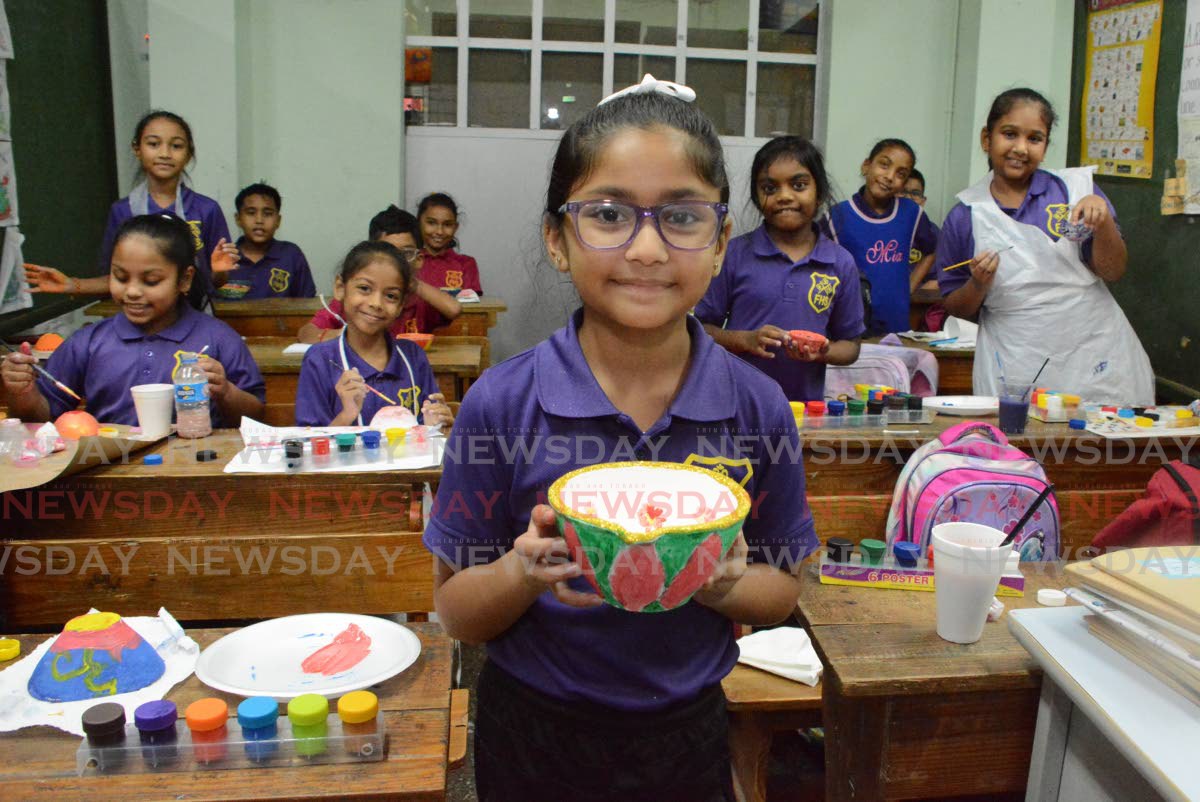
Felicity Hindu School in Trinidad and Tobago recently hosted its annual inter-school decorating competition in preparation for Divali, the Hindu festival of lights, celebrated on October 20. The event, held on October 9, showcased the creativity and cultural pride of its 455 students, predominantly Hindu, who participated in various age-appropriate activities. From infants to Standard Five, students engaged in tasks ranging from coloring deyas (traditional oil lamps) to crafting intricate kalsa sets and Divali wreaths. The competition not only highlighted artistic talent but also reinforced cultural traditions, with some students planning to use their creations in home puja ceremonies. Principal Denesh Bhagwandeen emphasized the importance of such events in fostering cultural awareness and providing a break from academic routines. The best designs from each class will be displayed during the school’s Divali program on October 16, followed by a puja ceremony on October 17. The event underscored the beauty of Trinidad and Tobago’s multicultural heritage, offering students a platform to express their creativity while celebrating their traditions.
-
Monday – can’t trust that day
As the world braces for pivotal moments, millions await outcomes with a blend of hope and trepidation. In Trinidad and Tobago (TT), the impending budget presentation looms large, poised to determine whether the government has the fortitude to steer the nation out of economic turmoil or consign it to a bleak future. The stakes are high, as the budget could either mark a turning point toward recovery or a descent into chaos.