博客

  • Fonseca Sidesteps CEO Question, Says PM Has Final Say

    Fonseca Sidesteps CEO Question, Says PM Has Final Say

    As of April 9, 2026, unconfirmed speculation about an impending leadership shakeup at Belize’s Ministry of Foreign Affairs (MOFA) has been circulating among government insiders, with most of the chatter centered on whether long-serving Chief Executive Officer Amalia Mai will be ousted from her position. When pressed by reporters for a clear answer on Tuesday, Foreign Minister Francis Fonseca refused to confirm or deny the reports of an impending leadership change.

    In response to direct questions asking if MOFA was preparing for a CEO transition and whether Mai would be stepping down imminently, Fonseca avoided committing to any statement, confirming only that the ultimate decision rests with the office of the Prime Minister. He also noted that any formal public announcement regarding a change in leadership would come directly from the Prime Minister’s office, rather than his own ministry.

    This report is a transcribed excerpt from an evening television newscast, with all non-English statements translated and transliterated using official Kriol spelling conventions for accuracy. As of press time, the Prime Minister’s office has not issued any comment or official statement regarding the potential leadership change at the Ministry of Foreign Affairs, leaving the status of Amalia Mai’s position unconfirmed.

  • Digital traffic offender registry to speed up driver licence revocation

    Digital traffic offender registry to speed up driver licence revocation

    On Thursday, April 9, 2026, Guyana’s Attorney General and Minister of Legal Affairs Anil Nandlall announced a sweeping set of government-led reforms aimed at boosting public safety, improving road traffic regulation, and addressing widespread quality-of-life complaints across the South American nation. The centerpiece of the initiative is the creation of a first-of-its-kind digital national registry that will log data on both accused and convicted road traffic offenders, a tool designed to streamline the process of suspending or revoking dangerous drivers’ licenses.

    Nandlall explained in an official statement that the centralized digital database will remove long-standing barriers to enforcing existing road safety legislation, particularly the country’s Demerit Point System. That system currently allows authorities to suspend or revoke driving privileges for repeat or severe offenses, including drunk driving and motor vehicle manslaughter, but a lack of accessible, centralized criminal traffic records has hampered consistent enforcement. Currently, magistrate courts often lack immediate access to a defendant’s prior traffic charges or convictions, a gap that Nandlall says has undermined the effectiveness of existing penalties. “That stultifies the enforcement of these important measures,” he noted.

    Per a directive from President Irfaan Ali, Nandlall will lead the cross-agency project to develop and populate the new registry. Partner stakeholders include the Ministries of Home Affairs, Public Service and Government Efficiency, the Guyana Police Force, the National Data Management Authority, and other relevant government bodies. The database will store critical information on road users, including full licensing details, records of past charges, and any convictions for traffic-related offenses. Multiple state institutions will be granted secure digital access to the registry, including the courts and judiciary, the Office of the Director of Public Prosecutions, the Guyana Prison Service, the Probation Department, and the Guyana Revenue Authority, enabling cross-agency coordination on enforcement.

    Beyond the digital registry, the government is also moving forward with a package of amendments to Guyana’s Motor Vehicle and Road Traffic Act and connected legislation to address persistent public nuisances that have disrupted communities nationwide. Top among these concerns is excessive noise pollution from motor vehicles, particularly the widespread practice of operating motorcycles without properly functioning mufflers. “Guyanese are bombarded with obnoxious emissions of noises at unbearable decibels, emanating, in particular, from motor vehicles,” Nandlall said, adding “We can’t continue with this system of uncivilised behaviour.”

    The legislative updates will also introduce new legal frameworks to crack down on unauthorized littering and illegal dumping of waste, a practice that has clogged critical main drainage canals across Guyana, increasing flood risk in vulnerable communities. While existing provisions targeting both noise pollution and littering are already on the books under the Environmental Protection Act, Nandlall indicated that updating the Motor Vehicle and Road Traffic Act will give law enforcement more targeted tools to address these vehicle-related and public space violations.

    Nandlall emphasized that both the digital registry and the legislative amendments are part of the administration’s ongoing commitment to upgrading public safety across Guyana’s roadways and shared public spaces, delivering tangible improvements to daily life for all citizens.

  • Cabinet Moves to Keep Cuban Doctors, Eyes Foreign Nurses

    Cabinet Moves to Keep Cuban Doctors, Eyes Foreign Nurses

    As Belize grapples with a strained public healthcare system facing persistent staffing gaps, the country’s Cabinet has launched targeted efforts to retain a cohort of Cuban medical professionals whose bilateral work agreement recently expired. Faced with dual pressures of growing international pressure from the United States and deepening domestic alarm over healthcare workforce shortages, the Briceño administration has instructed the Ministry of Foreign Affairs and the Ministry of Health and Wellness to collaborate on negotiating a new framework to keep 92 Cuban medical workers – 45 of whom are practicing doctors – in the country. These professionals, many of whom fill critical care roles in underserved rural communities that struggle to attract local physicians, remain central to Belize’s ability to deliver consistent primary care to its population, according to senior government officials.

    In a public press briefing, Foreign Minister Francis Fonseca clarified the government’s priorities, confirming that interagency teams are currently drafting new proposed arrangements and holding active talks with Cuban authorities to reach a mutually acceptable deal. “Our clear objective is to maintain the presence of these Cuban doctors in Belize,” Fonseca explained. “They play an irreplaceable role in our health system, with many serving remote rural areas that would otherwise face extended gaps in care. We are working urgently to map out all possible pathways to keep them here under a new agreement.”

    Beyond efforts to retain the existing Cuban medical team, the administration is simultaneously pursuing parallel plans to expand Belize’s healthcare workforce by recruiting foreign nursing staff from new source countries. When asked by reporters whether the government was actively pursuing recruitment of nurses from the Philippines, Fonseca confirmed that the option is under active consideration. “Even with the Cuban doctors already on the ground, we face an ongoing, unmet need for qualified nursing staff across all levels of our healthcare system,” he noted. In addition to the Philippines, the government is also exploring recruitment deals to bring nurses from Nicaragua to address persistent staffing shortfalls.

    This development comes as Belize navigates complex diplomatic crosscurrents, as Washington has ramped up pressure on Caribbean and Latin American governments to end medical cooperation agreements with Cuba in recent years. For Belize, however, the practical reality of healthcare access has taken policy priority, as the country continues to struggle to train and retain enough domestic medical staff to meet population health needs, particularly in low-population rural regions.

  • Belize Backs Barnett Amid CARICOM Reappointment Questions

    Belize Backs Barnett Amid CARICOM Reappointment Questions

    Amid growing regional diplomatic tension over the leadership of the Caribbean Community (CARICOM), the Central American nation of Belize has issued an unambiguous endorsement of Dr. Carla Barnett’s bid to retain her post as the bloc’s secretary general. Questions surrounding Barnett’s reappointment emerged this week after Trinidad and Tobago raised formal procedural objections to her renomination for a second term, kicking off a public debate that has exposed subtle divisions within the 15-member regional integration body.

    In a public statement laying out Belize’s official position, Foreign Affairs Minister Francis Fonseca confirmed that the Belizean government stands firmly behind Barnett, emphasizing that broad regional support for her continued leadership far outweighs the procedural concerns raised by a single member state. Fonseca argued that institutional continuity is a critical priority for CARICOM right now, as the bloc navigates overlapping shared challenges ranging from uneven post-pandemic economic recovery to shifting global geopolitical dynamics that disproportionately impact small island and coastal developing states in the Caribbean.

    Fonseca’s remarks clarified a common misperception that has muddled early public discussion of the reappointment process: Barnett’s current five-year term is not set to expire until August 2026, meaning no final vote on her reappointment was scheduled for the recent CARICOM leaders’ retreat. Instead, the retreat served as an informal space for heads of government to signal their positions on the nomination, and the vast majority of participating leaders already expressed clear backing for Barnett to stay on.

    “The procedural concerns Trinidad and Tobago has raised deserve to be addressed properly through CARICOM’s established internal processes, we do not dispute that,” Fonseca stated. “But that does not change Belize’s unwavering support for Dr. Barnett’s reappointment. We are confident that the great majority of CARICOM member states stand with us on this.”

    Formal action on the reappointment will be delayed until the bloc’s next scheduled full meeting in July, where members will complete the official confirmation process. Fonseca acknowledged that the issue remains unresolved as of this stage, with closed-door high-level negotiations expected to continue in the months leading up to the July gathering to align member positions before the formal vote.

  • Education Loses Ground as Energy Gains in MCC Deal

    Education Loses Ground as Energy Gains in MCC Deal

    After months of uncertain stagnation, Belize’s long-debated Millennium Challenge Compact (MCC) with the United States has received the green light to move forward — but not without significant changes to its funding allocation. The $125 million development deal survived intensive negotiations with the new U.S. administration, but the compromise has reshaped its core priorities: education programs will see a sharp funding cut, while investment in the energy sector will see a near-doubling.

    Originally, the compact allocated $74 million of the total budget to education initiatives, with just $21 million earmarked for energy projects. Under the revised terms, education funding will drop to $54 million, while energy investment will rise to $42 million, shifting the split from an 80-20 education-energy breakdown to a 60-40 split.

    Belize’s Foreign Affairs Minister Francis Fonseca confirmed in an official statement that the reallocation was a non-negotiable compromise required to save the entire agreement. After the new U.S. administration took office, it launched a full review of all existing MCC compacts, leaving Belize’s deal in limbo for months with no clarity on whether the program would move forward at all.

    “As someone who also worked closely with the original education-focused framework, I was very supportive of the original structure that directed the vast majority of funds to education,” Fonseca explained. “But after the U.S. leadership transition, a full review was inevitable, and we faced a choice: accept targeted adjustments to keep the compact alive, or lose the entire $125 million development package entirely. We are pleased that we reached a mutually agreeable outcome through diplomatic dialogue that allows the program to proceed.”

    Fonseca emphasized that despite the funding shift, Belize will still derive substantial net benefits from the compact. With the deal now back on solid footing, attention has turned to the next critical phase: implementing the revised framework and delivering tangible, on-the-ground results for Belizean communities. The revised compact’s larger energy focus is expected to expand access to reliable power across the country, while the reduced education allocation will still support ongoing workforce and learning improvements, albeit at a smaller scale than initially planned.

  • Belize–Taiwan Relations Gain New Energy Under Ambassador Amino Chi

    Belize–Taiwan Relations Gain New Energy Under Ambassador Amino Chi

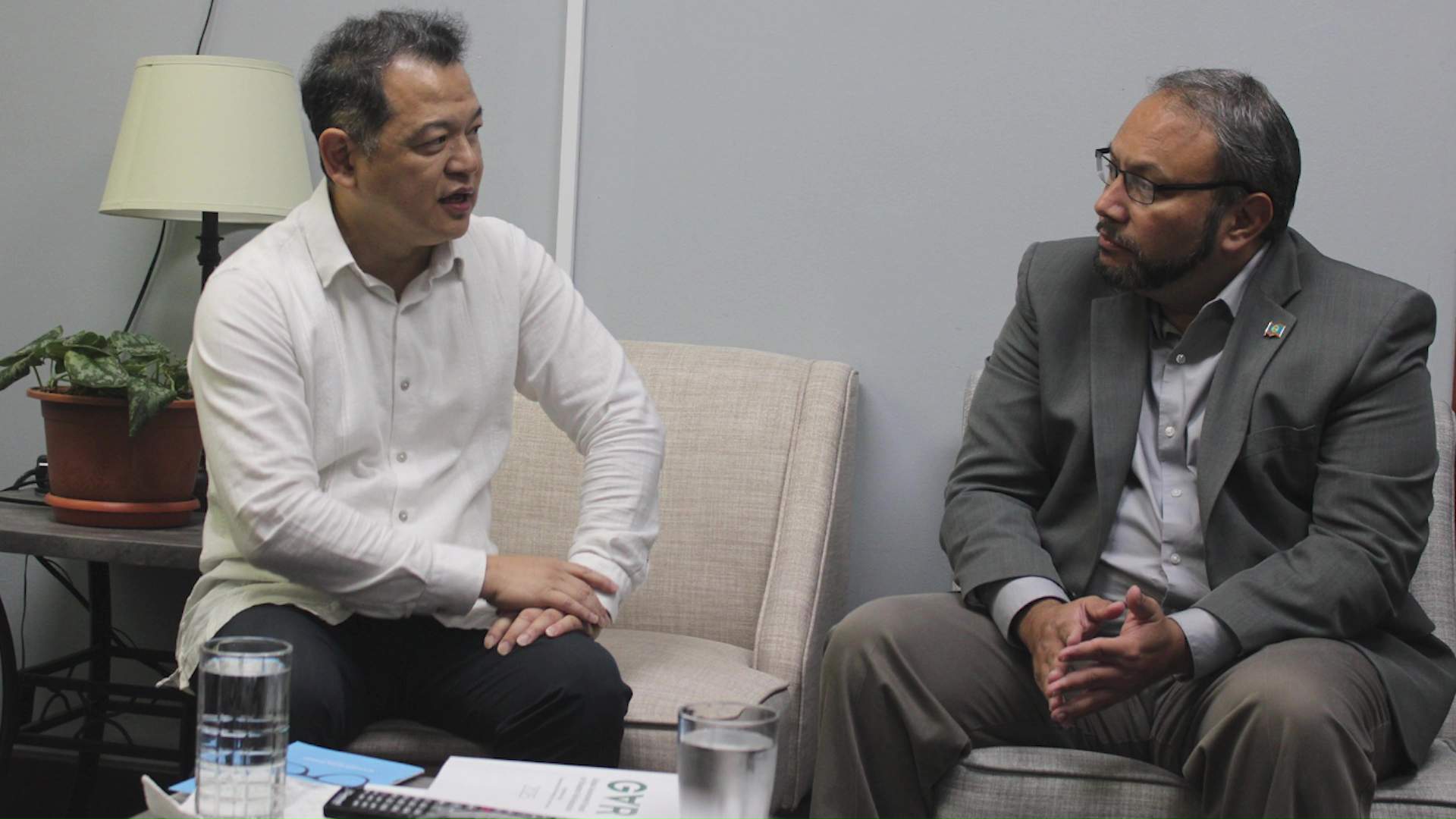
    Nearly two weeks after formally presenting his diplomatic credentials to Belizean authorities in late March 2026, Taiwan’s new ambassador to Belize, Amino Chi, has already begun advancing bilateral cooperation through introductory meetings with senior Belizean government leaders, breathing new energy into the decades-long diplomatic partnership between the two sides.

    Belize’s Minister of Foreign Affairs Francis Fonseca highlighted in a recent statement that Chi is far from an unfamiliar figure to the Central American nation, bringing both deep professional experience and personal ties to the role. Chi has previously held multiple postings in Belize throughout his diplomatic career, and his children even completed their schooling in the country. Fonseca noted that Chi has built a profound understanding of Belize’s national context, alongside a genuine affection for the country, putting him in an ideal position to expand the already robust bilateral partnership.

    For Belize, Taiwan has long held status as a critical development partner, with bilateral collaboration centered on advancing Belize’s national development priorities. With Chi now at the helm of Taiwan’s diplomatic mission in Belize, Belizean officials expect the renewed leadership will open new doors for deeper bilateral cooperation and sustained development support from Taiwan in the coming years.

  • New National Plan Aims to Level the Learning Field

    New National Plan Aims to Level the Learning Field

    Set to roll out over the next five years from 2026 to 2030, a landmark $300 million education transformation initiative is putting Belize’s future generations front and center, aimed at dismantling long-standing systemic barriers that have held back thousands of the country’s students from achieving their full potential. Titled the Belize Education Sector Plan 2.0, the ambitious strategy prioritizes three core pillars: greater institutional accountability, expanded cross-sector partnerships, and accelerated integration of digital learning tools and competency-based curricula that align student outcomes with the demands of an increasingly fast-changing global economy.

    At the official launch of the plan, Francis Fonseca, Belize’s Minister of Education, emphasized that the initiative marks far more than just the release of a new policy framework. For the Ministry of Education, he explained, the plan represents a foundational commitment to embedding accountability, transparency, and collaborative partnership across every level of the country’s education system to deliver tangible, sustainable improvements for learners.

    Ricardo Gideon, Director of Policy at the Ministry of Education, Culture, Science and Technology (MOECST), outlined the persistent challenges the plan seeks to address. For many Belizean households, whether in remote rural regions or underserved urban neighborhoods, accessing quality education extends far beyond the initial step of enrolling a child in school. Too many students face unaddressed barriers that prevent them from staying enrolled, receiving the targeted support they need, and progressing to successful outcomes after graduation. This plan, Gideon noted, was built specifically to remove these hurdles and unlock equitable opportunity for every Belizean student and their family, regardless of background.

    A central pillar of the new strategy is expanding digital connectivity through the ministry’s Connect Ed initiative, which has already connected 70% of Belize’s primary and secondary schools to reliable internet access, bringing digital learning resources directly into classrooms across the country. Complementing this infrastructure investment is the 501 Academy program, which centers competency-based learning that prioritizes skill mastery and curiosity-driven exploration over traditional rote memorization. Namrita Balani, Director of Science and Technology at MOECST, explained that this approach gives students the freedom to explore their interests, nurture innovation, and build practical skills that grow with them long after they leave the classroom.

    Education leaders stress that the plan’s ultimate mission goes beyond bureaucratic policy change: it is designed to keep Belizean children enrolled in school, connected to critical learning resources, and equipped with the tools they need to turn their personal and professional dreams into tangible, life-changing opportunity.

  • Market Makeover Raises Fears for Dangriga’s Streetside Vendors

    Market Makeover Raises Fears for Dangriga’s Streetside Vendors

    A planned revitalization initiative for Dangriga’s central town market, designed to modernize the coastal district’s commercial landscape and improve urban mobility, has left hundreds of informal streetside vendors uncertain about their livelihoods, just as the local community navigates a post-pandemic recovery for small business. The proposal, unveiled by the Dangriga Town Council, would relocate vendors currently operating in high-foot-traffic zones near the municipal bus terminal and along Ecumenical Drive into the underused central market square. Council leaders frame the move as a long-overdue upgrade that will bring the town in line with other major population centers across Belize that operate structured, successful public markets.

    In an interview following a public consultation held Wednesday to address vendor concerns, Market Councilor Hilberto Bernardez outlined the multiple public benefits the council expects the overhaul to deliver. He noted that the current scattered layout of street vendors has created persistent traffic congestion along Ecumenical Drive, one of the town’s busiest arterial roads, and blocked critical access routes for emergency responders including police and fire services. Relocating all vendors to a centralized market will clear these roadways, easing through traffic and improving public safety for all residents.

    Beyond infrastructure and safety gains, Bernardez emphasized that a centralized, organized market will also support Dangriga’s growing tourism sector. Visitors to the town frequently search for a dedicated market space to purchase local handicrafts, souvenirs, and traditional Belizean food, and a revitalized central market will meet that demand, boosting local economic activity in the process. He added that the current unregulated system, which allows out-of-town vendors to set up unapproved stalls anywhere in high-traffic areas, has created disorganization that holds the town back from reaching its commercial potential. Right now, the central market square is largely underutilized, lagging far behind the well-run, thriving markets found in Belize City, Cayo, Belmopan, Punta Gorda, Orange Walk and Corozal.

    For the streetside vendors who would be affected by the move, however, the plan carries significant personal and financial risk. Many vendors rely on the constant foot and vehicle traffic near the bus terminal and Ecumenical Drive to attract the repeat and passing customers that make up their steady income. Moving to the central market square would cut them off from this reliable customer flow, vendors argue, and many fear their small businesses will not survive the shift.

    As the proposal moves forward, the core challenge for Dangriga officials and vendors alike remains striking a fair balance between the town’s goal of creating a more organized, tourist-friendly commercial hub and protecting the livelihoods of the low-income small vendors who have built their businesses on the town’s busiest streets. The public consultation Wednesday marked the first formal step in addressing vendor concerns as the council refines its plan ahead of a final vote.

  • Caye Caulker Awaits Answers on Stalled Police Project

    Caye Caulker Awaits Answers on Stalled Police Project

    On the popular island community of Caye Caulker, growing optimism for boosted public safety has shifted to widespread frustration after construction of a much-needed new police substation came to an unexpected halt. The project, launched earlier in 2026 as a core component of a national initiative to update and improve law enforcement infrastructure across the country, has ground to a standstill over unresolved questions regarding the land allocated for the facility.

    Unconfirmed reports circulating across the island this evening point to a looming ownership dispute over the property, with some locals claiming the parcel has already been sold to a private buyer. For an island experiencing rapid population and tourism growth, the sudden pause in development is deeply alarming. Local leaders and residents have spent months calling for an expanded police presence to match the community’s expanding needs, both for permanent residents and the thousands of tourists that visit the island each year.

    Prior to the halt, Minister of Home Affairs Oscar Mira emphasized the transformative impact the new substation would deliver, noting in an earlier statement that the upgraded facility would dramatically improve both operational capabilities and working conditions for officers assigned to the island. The current police outpost is widely recognized as inadequate to meet the community’s demands, and the new construction was meant to fix that gap, ensuring officers could deliver consistent, reliable security to all who live and travel to Caye Caulker.

    Clarity on the future of the project is expected as soon as tomorrow, when the Caye Caulker Village Council has scheduled the issue for discussion at its next public meeting. This report is a transcript of an evening television newscast, with any Kriol-language commentary transcribed using an official standardized spelling system.

  • Olympic Sports Scholarships Yielding Record Results

    Olympic Sports Scholarships Yielding Record Results

    For small Central American nation Belize, a targeted investment in homegrown athletic talent is already surpassing early expectations, with an Olympic-backed scholarship program delivering a string of unprecedented podium finishes and personal bests that signal a growing competitive shift for the country’s sports community.

    Launched by the Belize Olympic and Commonwealth Games Association, the four-year scholarship program was designed to solve a longstanding barrier holding Belizean athletes back: the inability to train full-time without financial strain. Under the initiative, six carefully selected elite athletes receive $1,500 in monthly stipends to cover all training-related costs, from coaching and facility rentals to sports psychology services, massage therapy, and even overlapping school expenses. The program’s core goal is far more ambitious than just securing occasional wins: it aims to help Belizean athletes qualify directly for major international competitions like the Pan American Games and Olympic Games, moving beyond the invitational slots that have long been the only route for Belizean representation at the world’s largest sporting events.

    “The idea is to have them peak when you have qualifiers for Pan-American games, Olympic games because we don’t want to have athletes just representing Belize and receiving an invitational slot, right? We want to see athletes qualify,” explained Giovanni Alamilla, Secretary General of the Belize Olympic and Commonwealth Games Association, in an interview following the recent string of successful outcomes.

    Already, just a short period into the multi-year initiative, the results have exceeded the organizing body’s early projections. In recent regional competitions, athletes supported by the scholarship have turned in dominant performances: cyclists Jyven Gonzalez and Justin Chavarria delivered standout finishes at the prestigious Holy Saturday Cross Country Cycling Classic, earning fourth and fifth place respectively. Sprinter Brooklyn Little claimed a gold medal at the CARIFTA Games, one of the Caribbean’s top youth track and field competitions. Swimmer Davia Richardson closed out her competitive season with new personal best times across multiple events, enabled by stipends that covered critical costs including private pool rental and sessions with a sports psychologist.

    Alamilla noted that while the program is still in its early stages, and the Belize Olympic Committee has not had decades to build sustained investment in elite athletic development, the initiative is already lifting competitors to their peak competitive form. Beyond competitive results, the program also eases significant financial pressure on athletes and their families, removing the need for athletes to balance part-time work with rigorous training schedules. “This kind of alleviates a lot of the pressure on them and their family,” Alamilla said. “We’re very excited because now we’re seeing the results.”

    The early success of the scholarship program offers a preview of what Belizean athletes can achieve when targeted investment meets opportunity, laying the groundwork for future breakthroughs on the global Olympic stage.