
A groundbreaking global study on work-life balance in journalism has unveiled a profession in turmoil, with half of journalists confessing they have contemplated leaving their jobs in the past year due to exhaustion and burnout. The 2025 State of Work-Life Balance in Journalism Report, conducted by Muck Rack, surveyed over 400 journalists worldwide, revealing a distressing scenario of stress, overwork, and declining mental health in the media industry. According to the findings, 38% of journalists reported a deterioration in their mental health over the past year, attributing this to uncertainty about the future, financial pressures, and overwhelming workloads. Additionally, 42% have previously resigned from a position due to burnout, highlighting how persistent stress continues to drive talent away from newsrooms. Sleep deprivation is another significant issue, with 58% of journalists getting six hours or less of sleep each night, and 85% stating that their inability to disconnect from work adversely affects their sleep quality. The study also found that 67% of full-time journalists work more than 40 hours a week, and 83% frequently work nights or weekends. Despite these challenges, 56% of journalists plan to remain in the field for at least two more years, even though over a third are uncertain about their long-term future in journalism. When it comes to coping mechanisms, respondents identified exercise, counseling, and supportive colleagues as their primary sources of relief. However, only 19% reported that their workplace provides mental health services. The report also sheds light on shifting attitudes toward work flexibility, with 60% of journalists currently working remotely and nearly half expressing a preference for a hybrid work model. Nonetheless, issues related to workload and rest persist. Although many journalists are entitled to vacation, the study indicates that most do not utilize all their paid time off, primarily due to staff shortages, tight deadlines, and the fear of falling behind.
博客
-
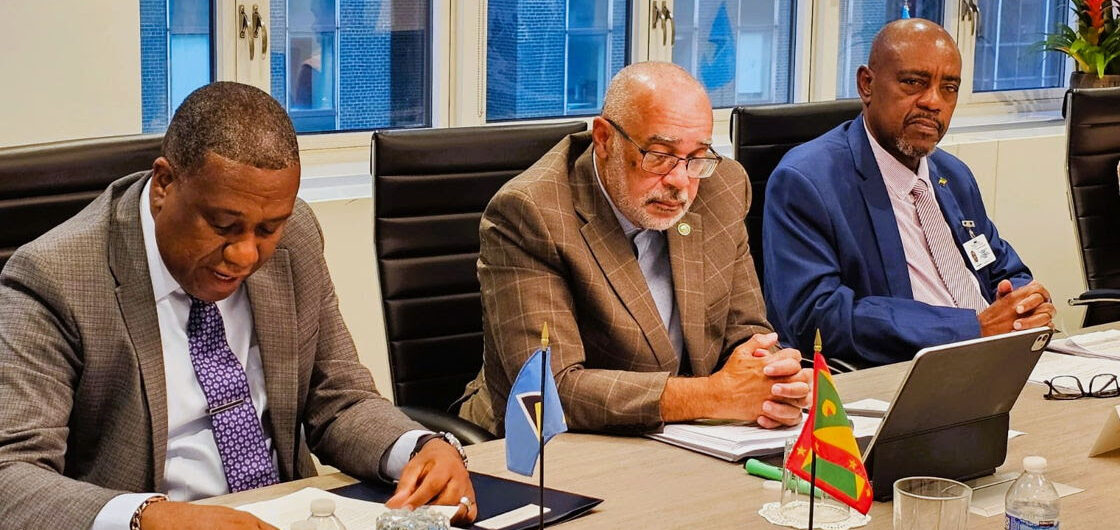
OECS Council of Ministers for Foreign Affairs: United strategy to protect livelihoods, enhance regional resilience, and promote collective prosperity
The Organisation of Eastern Caribbean States (OECS) convened its eighth Meeting of the Council of Ministers of Foreign Affairs (COM:FA) alongside the 80th Session of the United Nations General Assembly. This high-level gathering, held against a backdrop of global geopolitical instability, economic uncertainties, and intensifying climate crises, brought together Foreign Ministers from OECS member states to craft a unified strategy aimed at enhancing the resilience and sustainability of small island developing states. Dr. Didacus Jules, Director General of the OECS, underscored the Council’s pivotal role in addressing the region’s challenges through prompt, coordinated, and sustained actions. He emphasized that the discussions were not merely procedural but instrumental in shaping policies that directly impact the prosperity and sustainability of OECS nations. Dr. Jules remarked, ‘In these turbulent times, our mandate is clear: to safeguard resilience, defend sovereignty, and chart a sustainable future. Our strength lies in solidarity and strategy.’ Hon. Frederick Stephenson, Minister of Foreign Affairs of Saint Vincent and the Grenadines and incoming Chair of COM:FA, highlighted the critical role of small states in the global arena. He stated, ‘Though modest in size, our voices are indispensable. The seas are rising, but so too is our resolve. Our unity is our greatest asset.’ The meeting officially commenced with the transfer of the Chairmanship from Saint Lucia’s Hon. Alva Baptiste to Hon. Frederick Stephenson. Ministers addressed a wide range of pressing issues, including reforms to Citizenship by Investment programs, financial stability, and climate advocacy ahead of COP30 in Brazil. Progress was noted on the Free Movement of Persons initiative, with calls for policy harmonization and retraining of border officials. The ongoing crisis in Haiti was also discussed, with a focus on humanitarian aid and Haitian-led solutions. Updates on U.S. trade measures affecting OECS economies were provided, alongside commitments to boost diplomatic efforts to prevent fisheries bans. The expansion of the Canadian Seasonal Agricultural Workers Programme was endorsed, with Saint Vincent and the Grenadines confirmed as the host for the Eastern Caribbean Liaison Service (ECLS) office in Canada. Support was also expressed for the OECS Joint Embassies in Rabat, seen as a cost-effective platform to strengthen ties with Morocco and Africa. Antigua and Barbuda shared updates on the SIDS Centre of Excellence, the Island Investment Forum, and plans to host the Commonwealth Heads of Government Meeting (CHOGM) in 2026. The meeting concluded with a renewed sense of purpose, as ministers reaffirmed their commitment to safeguarding livelihoods, enhancing regional unity, and amplifying the Caribbean’s global voice. A virtual special session is scheduled before November 2025 to accelerate joint mission restructuring and solidify progress on the Council’s commitments.
-

PAAWS battles to home final eight dogs
PAAWS, the nation’s longest-running rescue shelter for dogs and cats, has issued an urgent appeal to find loving homes for its final eight dogs as it prepares to close its doors permanently. The Parham-based facility, which has been operational for nearly three decades, announced in August that it would suspend operations due to financial constraints. Despite rehoming over 30 animals in the past two months, the shelter still has eight dogs awaiting adoption. Gemma Handy, the organization’s Public Relations Officer, expressed deep sorrow over the closure, stating, ‘It’s with a heavy heart that we confirm we will be closing our doors for good in a month’s time. We had very much hoped to continue, but it is financially impossible.’ PAAWS has relied entirely on donations and volunteers since its inception in 1996. Handy emphasized the importance of finding homes for the remaining dogs, noting that they have received exceptional one-on-one care and training from dog trainer Amy Zukowski. ‘Every single one would make an amazing pet,’ she added. Potential adopters are encouraged to visit the shelter between 10am and 2pm or schedule an appointment by calling 784-5151. Handy also highlighted the possibility of trial adoptions and offered assistance with transportation. While acknowledging the disappointment of supporters, she expressed gratitude for the community’s unwavering support and pledged to assist other local animal charities, including the Antigua Spay & Neuter Clinic. Over the years, PAAWS has successfully rehomed more than 4,000 abandoned, abused, sick, and injured dogs in Antigua, providing them with a second chance at life. For more information, contact [email protected] or call/WhatsApp 784-5151.
-
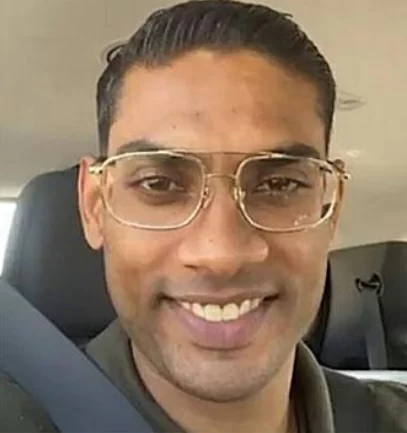
Santokhi reageert op aanhouding zoon in VS: Vertrouw op rechtvaardige afhandeling
Former President Chan Santokhi has publicly responded to reports regarding the detention of his son, Richano Santokhi, in the United States due to issues surrounding his immigration status. In his statement, Santokhi emphasized that his son’s residency application is currently under review by the relevant authorities and that he is receiving legal assistance from an attorney.
Santokhi expressed confidence in a fair and thorough resolution of the matter, stating, ‘As a father, I trust in a careful and just handling of this case, in accordance with the applicable laws and regulations.’ He lamented that some individuals are exploiting his son’s personal situation for political or publicity purposes.
‘It is unfortunate that there are those who misuse this issue to inflict political and public damage,’ Santokhi remarked. He called for respect for his family’s privacy and urged society and the media to exercise restraint in addressing this private matter. ‘In the interest of my family’s privacy and protection, I will limit myself to this explanation,’ he concluded.
-

President: Heb gratieverzoek niet gezien; Kanhai toont bewijs van ontvangst
In a surprising turn of events, President Jennifer Simons has claimed she has neither received nor reviewed a pardon request for the four individuals convicted in the December 8 case. This statement was made in response to questions posed by journalist Jerrel Harderwijk of DTV Express during a public event on Monday evening. When asked how she would address the pardon request, Simons replied, ‘I don’t know; I haven’t seen it yet,’ suggesting the request had not been presented to her for consideration. However, Irvin Kanhai, the attorney representing the convicts, countered this claim by presenting evidence that the request had indeed been received by the President’s Cabinet. Kanhai displayed a document dated September 17, 2025, bearing a signature confirming receipt. The pardon request pertains to Ernst Gefferie, Stephanus Dendoe, Benny Brondenstein, who are currently serving their 15-year sentences in Santo Boma, and Iwan Dijksteel, who remains at large. Kanhai expressed his expectation that the President would act appropriately, stating, ‘These individuals deserve clemency. That is what I expect.’ The reason for the delay in the request reaching the President, despite its receipt by her Cabinet, remains unclear. The President’s Office has yet to issue further comments on the matter.
-

Parham fire victim moves into rebuilt home
Claudette Willock, a resident of Parham, has finally moved into her newly reconstructed home, marking a significant milestone nearly two years after a devastating fire destroyed her residence in January 2023. The reconstruction was made possible through the HAPI Programme, a collaborative effort between the Social Protection Board and the Ministry of Social and Urban Development. St Peter MP Rawdon Turner, who had pledged support following the tragedy, expressed his satisfaction with the project’s completion, highlighting it as a testament to effective government partnership and community representation. Willock, overwhelmed with gratitude, described the moment as ‘a blessing and a promise kept.’ To commemorate the occasion, a breadfruit tree was planted in her yard, symbolizing renewal and the strength of the community. This heartwarming story underscores the power of collective action and resilience in the face of adversity.
-

Belize’s “Manatee Man” To Receive International Wildlife Award
Jamal Galves, Belize’s renowned marine conservationist, is set to receive the Wildlife Rescue Award from the International Fund for Animal Welfare (IFAW) at the Animal Action Awards ceremony in London on October 16, 2025. Known affectionately as the ‘Manatee Man,’ Galves has dedicated his life to protecting endangered manatees and marine ecosystems, earning global acclaim for his unwavering commitment. His journey began at the age of 11 when he met Dr. James ‘Buddy’ Powell, a prominent conservationist who became his mentor and inspired his lifelong mission. Reflecting on his early days, Galves shared, ‘I had no shoes, no degree – just questions and a desire to help. Dr. Powell invested his time, energy, and belief in me, and never treated my questions as a burden.’ Azzedine Downes, President and CEO of IFAW, praised Galves, stating, ‘Jamal’s dedication to manatee conservation is extraordinary. From a young volunteer to Belize’s foremost marine rescuer and educator, his work embodies selfless dedication and an unrelenting spirit.’ Galves currently serves as Belize Programme Coordinator for the Clearwater Marine Aquarium Research Institute and leads the national marine stranding network. His contributions include training thousands of boat captains and tour guides, as well as establishing Belize’s first marine life rescue and education center. Notably, Dr. Powell nominated Galves for the award before his passing. Galves expressed, ‘Knowing he thought I was deserving of this accolade means more than any recognition I could ever receive. My greatest achievement will always be knowing he was proud of me.’
-

Belize Inks US$12.5 Million Deal with Kuwait to Upgrade George Price Highway
Belize has taken a significant step toward enhancing its transportation infrastructure with a new $12.5 million loan agreement signed with the Kuwait Fund for Arab Economic Development. The funds will be allocated to upgrade an 18-mile stretch of the George Price Highway, a critical roadway connecting Belmopan and La Democracia. The project encompasses the construction of new service lanes, improvements to existing bridges, and the addition of 16 bus stop lanes to enhance public transit accessibility. The agreement was formalized by Joseph Waight, Belize’s Financial Secretary, and Waleed Sh. Al-Bahar, Acting Director General of the Kuwait Fund. This collaboration marks another milestone in the longstanding partnership between Belize and Kuwait, which has previously supported major infrastructure initiatives, including upgrades to the Southern Highway, Hummingbird Highway, and Caracol Road. The project is expected to bolster economic growth, improve road safety, and facilitate smoother transportation for residents and businesses alike.
-

Appeal Underway for Woman Serving 27-Year Sentence for 2021 Killing
Brittany Jno-Baptiste, a 24-year-old woman currently serving a 27-year prison sentence for the 2021 murder of 66-year-old Jane Finch, has initiated an appeal against her conviction. Her legal team contends that the sentence is disproportionately severe and points to alleged inconsistencies in the case, particularly concerning the application of diminished responsibility—a legal principle that considers whether the defendant fully understood the nature of their actions at the time of the crime. Jno-Baptiste admitted to killing Finch at her Piccadilly residence while experiencing hallucinations. Forensic evidence revealed that Finch was discovered with a pair of pliers lodged in her ear, a detail that underscored the brutality of the incident. A defense psychiatrist testified that Jno-Baptiste suffers from Cannabis-Induced Psychotic Disorder, alongside lifelong mental health conditions such as dyslexia and ADHD, which reportedly impaired her cognitive functions during the event. Her family has voiced concerns that her mental health issues were inadequately addressed during the sentencing process. Even if the appeal results in a reduced sentence, Jno-Baptiste is expected to remain incarcerated for several years. The case has reignited discussions about the intersection of mental health and criminal justice, raising questions about the adequacy of legal frameworks to address such complex scenarios.
-

Obika: Budget heavy in rhyme but hollow economically
Economist and former senator Taharqa Obika has delivered a scathing assessment of the United National Congress (UNC) administration’s inaugural $59.2 billion national budget, labeling it as “heavy in rhyme but hollow in economic reason.” Obika, who once served as a UNC senator before defecting to the People’s National Movement (PNM), criticized Finance Minister Davendranath Tancoo’s budget presentation for its lack of substantive economic direction despite its rhetorical flair. Speaking to Newsday via WhatsApp, Obika remarked that while Tancoo’s delivery was energetic and even poetic, it failed to address critical economic challenges. He argued that the budget missed the opportunity to establish a robust foundation for the country’s recovery over the next five years, leaving “gaping holes” in areas such as revenue generation, pension reform, and taxation policy. Obika, who holds an MBA in Finance and a BSc in Economics, highlighted the absence of concrete strategies to meet expenditure targets, particularly in revenue collection. He warned that the lack of detail could indicate the government’s inability to balance the books without resorting to devaluing the TT dollar. Obika also criticized the proposed replacement of the Value Added Tax (VAT) system with a sales tax, calling it “a mere statement rather than a well-developed policy intervention.” He cautioned that tampering with VAT, which accounts for over 10% of government spending, without a clear replacement plan is “fiscally reckless.” Additionally, he condemned the decision to raise the National Insurance System (NIS) pension age from 60 to 65, phased between 2028 and 2036, which he said would place undue strain on workers. Obika also predicted that the new landlord tax would lead to rent increases of at least 3.6%, further burdening citizens. He concluded that the budget, rather than inspiring confidence and guiding investment, “reads more like a poem than a plan.”