博客

  • Morris eyes PNM  ‘rebirth’ in Tobago

    Morris eyes PNM ‘rebirth’ in Tobago

    The race for leadership of the People’s National Movement (PNM) Tobago Council kicked into its final nomination phase on Friday, with two high-profile candidates launching distinctly different campaigns that have set the tone for the upcoming internal vote on April 26.

    Kelvon Morris, a former minority leader of the Tobago House of Assembly, arrived to file his nomination papers accompanied by fanfare, drumming performances and cultural dancing, marking the official launch of his leadership bid under the unified “Team Unity” banner. Morris has put forward a full slate of 16 candidates contesting all available positions on the council executive, drawing a diverse group of participants that balances young and experienced politicians, male and female candidates, and representatives from both the Tobago East and Tobago West regions.

    In comments after submitting his nomination, Morris framed his campaign as a push for long-overdue renewal and reunification of the PNM’s Tobago branch. “This is a moment for rebirth and renewal for our great party,” he said. “What we have built here is a coalition that reflects every corner of our political community, and our goal is to reunify the PNM and re-energize our movement ahead of upcoming elections.”

    Morris enters the race with notable institutional backing: he has secured public endorsements from two former PNM Tobago Council leaders, Tracy Davidson-Celestine and Kelvin Charles, who previously served as Chief Secretary of Tobago. His slate includes other established political figures: Clarence Jacob, a former Settlements Secretary, is running for treasurer, while Petal Daniel-Benoit, a former minority councillor, has joined the ticket as a candidate for vice chairman.

    Outlining his first policy priorities if elected, Morris identified unresolved financial obligations to party members from the last election cycle as his top issue. “Finances were extremely tight following the last election, and we owe outstanding payments to many of our members who stepped forward to run,” he explained. “That will be my number one priority if I take office, and we already have plans in place to resolve that issue. Beyond that, my core mission is unifying the party: every member has value, and every candidate who runs in this election has a place in our movement moving forward.”

    Morris’s long-term vision is anchored in a strategic plan called the “People’s Roadmap to Victory,” a six-pillar framework designed to prepare the PNM for the 2030 Tobago House of Assembly and national general elections.

    In a stark contrast to Morris’s high-energy campaign launch, former Tobago West Member of Parliament Shamfa Cudjoe-Lewis filed her nomination for the leadership post without a full slate, fanfare, or public celebration, positioning her candidacy as a humble, member-focused alternative. Cudjoe-Lewis, who is running in her first internal election for a seat on the PNM Tobago Council executive, submitted her paperwork at the council’s uptown Scarborough office, emphasizing that unnecessary campaign spending would be irresponsible given the party’s current financial strain.

    “I don’t see any need for extravagant fanfare right now. We owe money to a lot of people, and if I had campaign funds to spare, the first thing I would do is pay those outstanding debts,” she said. “This internal election is about having quiet, honest conversations with our members. You don’t need songs and dances to do that work.”

    Cudjoe-Lewis chose to run for leader without a pre-assembled full slate, noting that some of her supporters are also backing Morris’s Team Unity. She framed this overlapping support as a strength of the process, arguing that the contest will ultimately produce stronger ideas for rebuilding the party regardless of who wins.

    “After the votes are counted on April 26, we will all still be members of the PNM,” she said. “There are people in my camp who are also working with Kelvon, and that’s okay. This process is about bringing different ideas together to figure out how we rebuild our party.”

    Cudjoe-Lewis pledged to run a clean, positive campaign with no personal attacks or mudslinging, focused on offering party members a credible, independent option for leadership. “I’m here to give PNMites a competent choice, and then it’s up to them to decide what direction they want to go,” she said. “I’m not someone who can be controlled or pushed around. To get the PNM back into office, we need to make hard decisions and take bold action, and I’m ready to do that work with every member of this party, no matter who they supported in this election.”

    Following the close of nominations on Friday, the PNM released the final list of 17 candidates contesting executive positions on the Tobago Council on Saturday night.


  • Beaten and  tortured for  seven months

    Beaten and tortured for seven months

    After enduring more than seven months of captivity, brutal abuse and false imprisonment at a private residence in Penal, a 42-year-old domestic worker named Sabita Basdeo has finally escaped her captors, leading to the arrest of a local woman and her teenage son, Trinidad and Tobago law enforcement confirmed.

    Basdeo told investigators she was held against her will from September of last year through early this month at the Penal property, where she was forced to perform unpaid domestic labor without any permission to leave or contact her family. Her account of the abuse details unthinkable violence: repeated beatings, having her head slammed repeatedly against a solid wall, burns across her body, and even pepper rubbed into her skin as a form of torture. When she was finally rescued, medical personnel documented visible bruising across her face and torso, along with abnormal discoloration on her hands that matched her claims of prolonged mistreatment.

    In an emotional interview with reporters at the family’s Penal Rock Road home on Sunday, Sabita’s husband Krishendeo Basdeo, 55, shared that his family had been separated from Sabita for far longer than the seven months she was formally held at the Penal property. He described the devastating scene when he saw her after her escape: her face swollen and disfigured by bruises, her complexion unnaturally pale, and she was dressed in filthy, tattered clothing. He added that the captors threatened to kill Sabita if she dared to speak out about her treatment, and forced her to perform humiliating acts against her will.

    Krishendeo, a casual laborer who lives with a chronic kidney condition, told reporters he made multiple efforts to secure his wife’s release long before her escape. He attempted to visit her at the Penal residence twice, and was beaten both times when he tried to see her. He also filed multiple missing person reports with local police, but his complaints were never acted on prior to the recent public outcry.

    Sabita was finally brought out of captivity on Saturday, when the 38-year-old suspect and her 17-year-old son took her to the Barrackpore Police Station. She immediately identified the pair as her captors, and law enforcement moved quickly to place both under arrest. Following her identification, she was transferred to a local hospital for a full medical evaluation and treatment for the injuries she sustained during her months of captivity. She was reunited with her two teenage sons shortly after her release, in an emotional meeting that saw the family hug for the first time in months.

    In a public statement confirming the arrests, the Trinidad and Tobago Police Service said that officers from the Barrackpore Police Station and the Southern Division Task Force launched a coordinated response after receiving an official report of false imprisonment in the Barrackpore jurisdiction. The agency confirmed that the two suspects – a 38-year-old woman and her 17-year-old son, both residents of Penal – were taken into custody at the scene, and are expected to face formal charges including false imprisonment and aggravated assault. The police’s Victim and Witness Support Unit has also been assigned to the case to support Basdeo through the legal process.

    The case drew public attention after social media videos of the abuse circulated online, prompting social activist and Trinidad and Tobago Red Cross Society Vice President Edward Moodie to intervene. Moodie condemned the abuse in the strongest possible terms, saying that the mistreatment Basdeo endured went beyond modern slavery, and amounted to some of the worst abuse he had ever encountered.

    “These acts are unconscionable, they must be condemned at the highest level, and as a society we cannot stand by – we must demand full justice for Sabita,” Moodie said in a statement Sunday. After seeing the online content, Moodie reached out directly to Minister of Homeland Security Roger Alexander, Commissioner of Police Allister Gvearro, and the area’s senior superintendent to push for urgent action. He thanked Commissioner Guevarro for his rapid response once the case was brought to his attention, and noted that while the family credits divine intervention for Sabita’s safe return, they still need significant long-term support from government social services to recover from the trauma they have endured.

  • Woman released in fatal shooting of businessman

    Woman released in fatal shooting of businessman

    A woman who had been in police custody following the fatal shooting of local construction businessman Steve Ghany was released from detention early yesterday, after the office of the Director of Public Prosecutions (DPP) ordered her release to allow for continuation of the ongoing investigation.

    The fatal confrontation between Ghany and the woman unfolded at the 37-year-old’s Vistabella residence around 8:30 a.m. on the day of the incident. What began as a verbal argument escalated quickly into a physical altercation, during which Ghany — a married father of two who had worked in his family’s long-running construction business for years — allegedly fired shots at the woman from his licensed firearm. None of the rounds struck her, leaving her unharmed.

    In the course of the struggle, the woman gained access to a second licensed weapon and fired multiple shots at Ghany, killing him at the scene. When law enforcement arrived, investigators recovered both firearms alongside 11 rounds of ammunition from the property. For four full days following the shooting, the woman remained in custody and cooperated fully with police interviews and investigative procedures.

    After senior police officials consulted with the DPP on the case, the top prosecutorial body issued formal guidance that the woman should be released from custody while detectives continue building their case. Her attorney, Prakash Ramadhar, confirmed the release in comments to media this week.

    Ramadhar expressed appreciation for the cooperation extended by both investigating officers and the DPP’s office throughout the initial phase of the process. He also noted that the defendant is eager to see the full investigation unfold, with the hope that key lessons can be drawn from the tragic incident as the case moves forward.

    According to Ramadhar, his client felt profound relief after regaining her freedom, allowing her to return home to her children and immediate family. “She has thanked the wide community of people who have reached out to offer support to her and her loved ones over the past four days,” Ramadhar said. “She will be pursuing the necessary mental health and support services to help her work through the deep trauma of this entire ordeal moving forward.”

  • Weather update: COE places Santo Domingo and National District on Red Alert

    Weather update: COE places Santo Domingo and National District on Red Alert

    The Caribbean nation of the Dominican Republic has activated a tiered national weather alert system as ongoing rainy conditions raise flood and landslide risks across large swathes of the country, according to joint updates from the nation’s top meteorological and water resource agencies.

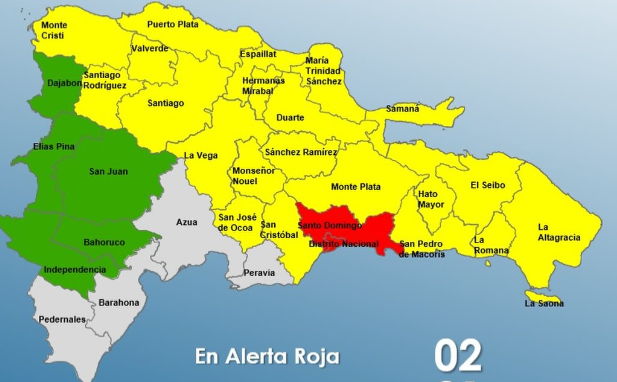
    The country’s Emergency Operations Center upgraded Santo Domingo province and the National District, which encompasses the capital’s core urban area, to the highest-level red alert, marking these regions as facing the most immediate danger from the unstable weather. In addition to the red alert zones, 21 Dominican provinces remain under mid-level yellow alert, a designation that signals elevated but less immediate risk. Prominent among the yellow-alert provinces are popular coastal and inland hubs including Puerto Plata, a top tourist destination, Santiago, the nation’s second-largest city, San Cristóbal, La Vega, La Altagracia, home to the major resort region of Punta Cana, San Pedro de Macorís, Samaná, and Duarte, with particular warning issued for low-lying Bajo Yuna communities. Five southwestern provinces — San Juan, Dajabón, Elías Piña, Independencia, and Bahoruco — have been placed on the lowest alert level, green, indicating milder potential risk compared to other parts of the country.

    The alert framework comes after multiple days of rainfall that have left soil across most of the country heavily saturated, increasing the likelihood of flash floods and mudslides as new precipitation continues to move through the region. Local emergency management authorities have issued clear public guidance to reduce avoidable risk: residents across all affected provinces are strongly urged to avoid attempting to cross swollen rivers, creeks, and steep ravines with fast-moving high water, and to stay far away from unsecure recreational swimming areas that have become dangerous due to the weather.

    Beyond inland flood risks, the Dominican Institute of Meteorology (INDOMET) has issued a separate warning for maritime activities. Operators of small and medium-sized watercraft have been told to exercise extreme caution when operating near the national coastline, and advised against all travel into open offshore waters. The warning cites multiple hazardous ocean and atmospheric conditions, including strong gusting winds, abnormally high swells, reduced visibility from ongoing rain and cloud cover, frequent thunderstorms, and the potential for waterspouts to form over coastal waters.

  • INTEC’s Apollo 27 wins three awards at NASA Rover Challenge 2026

    INTEC’s Apollo 27 wins three awards at NASA Rover Challenge 2026

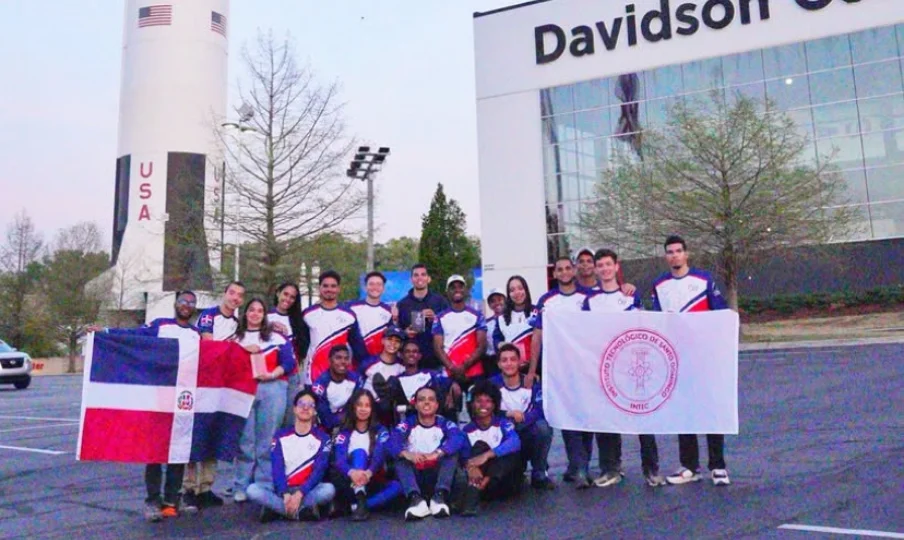
    A student engineering team from the Technological Institute of Santo Domingo (Intec) has cemented its status as a global standout in aerospace innovation, claiming three additional awards at the 2026 NASA Human Exploration Rover Challenge and pushing its cumulative haul of recognitions in the prestigious event to 15.

    The annual NASA competition, which invites collegiate and high school teams from around the world to design, build, and test human-powered rovers capable of navigating harsh, extraterrestrial-like terrain, serves as a launching pad for the next generation of space exploration engineers. For Apollo 27, this year’s results extend a remarkable streak of success that has already made the Dominican team one of the most decorated in the event’s history.

    Among the 2026 honors, the team secured the Team Spirit Award for the fourth consecutive year, a testament to its consistent commitment to collaboration, sportsmanship, and community among participating groups. The two additional prizes—the Industry STEM Engagement Award and the Social Media Award—extend recognition beyond pure engineering performance, highlighting Apollo 27’s far-reaching work to inspire public interest in science, technology, engineering, and mathematics across the Dominican Republic and beyond.

    In a new milestone for the program, the team also unveiled a cutting-edge lightweight rover that tipped the scales at only 126 pounds. The design breaks Apollo 27’s own previous record for the lightest functional rover the team has built, underscoring the group’s relentless focus on efficiency and innovative engineering. The achievement puts the advanced technical skills of young Dominican STEM talent on full display to a global audience of space industry leaders and engineering peers.

  • Gonsalves to represent teen girl charged with attempted murder

    Gonsalves to represent teen girl charged with attempted murder

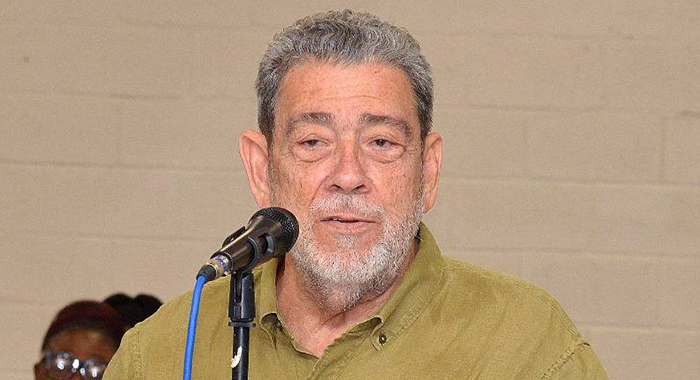
    Almost a quarter century after stepping away from his legal career to lead the country as Prime Minister, former St. Vincent and the Grenadines Prime Minister and current Opposition Leader Ralph Gonsalves is set to make a notable return to the courtroom this Monday. The 80-year-old, who will celebrate his birthday in August, will step into the role of defense counsel for a 16-year-old constituent facing a serious criminal charge.

    The minor, Antonia Thomas of Colonarie, has been formally charged with attempted murder in connection with a violent public altercation that unfolded last Thursday. Prosecutors from the police service allege that Thomas attacked 65-year-old Winston McMillan during the confrontation, striking him repeatedly in the head. McMillan was immediately rushed to a local hospital for emergency care, where his condition has since been updated to brain dead.

    Medical experts define brain death as the complete and irreversible cessation of all brain function, with any residual life signs such as breathing or a sustained heartbeat only maintained through mechanical life support. Individuals confirmed to be brain dead cannot regain consciousness or breathe independently, and most legal jurisdictions recognize brain death as official legal death. Gonsalves is scheduled to present his defense during the preliminary hearing at the Serious Offences Court, the jurisdiction that handles initial proceedings for attempted murder cases in the country.

    Gonsalves’ return to legal practice comes on the heels of a devastating electoral defeat for his long-ruling Unity Labour Party (ULP) in the November 27 general election. The ULP, which held power for nearly 25 years, was ousted by the New Democratic Party, which secured a landslide victory, winning 14 out of the 15 available parliamentary seats. Gonsalves was the sole ULP candidate to retain his parliamentary seat, leaving him as the formal leader of the opposition. Shortly after the election results were finalized, Gonsalves confirmed he had paid all required regulatory fees to reinstate his license to practice law, a career he put on hold at the turn of the 21st century to focus exclusively on his prime ministerial duties.

    A notable detail of the upcoming hearing is that Gonsalves will appear before Chief Magistrate Colin John, who previously served as one of the country’s police commissioners during Gonsalves’ time in office. This is not Gonsalves’ first experience handling high-profile criminal cases across the Caribbean region. Before his entry into national leadership, he built a decades-long legal career representing clients throughout the Caribbean bloc. One of his most famous cases came in 1997, when he successfully defended Jim and Penny Fletcher, an American couple charged with the 1996 murder of 30-year-old Vincentian water taxi operator Jerome “Jolly” Joseph, who was fatally shot in Bequia. The Fletchers were ultimately found not guilty by the court.

  • Telemicro demands government action over Channel 3 conflict

    Telemicro demands government action over Channel 3 conflict

    In the capital city of Santo Domingo, a major media organization has escalated a long-running frequency dispute to the highest level of Dominican government, calling on executive intervention to defend its legally recognized operating rights. Telemicro Media Group has publicly asked President Luis Abinader to step into the conflict surrounding the use of television Channel 3, pressing authorities to implement long-standing judicial rulings and secure the company’s legal claim to the broadcast frequency.

    In its official public statement, the media group delivered sharp criticism of the Dominican Telecommunications Institute (INDOTEL) and its governing board, which is headed by Guido Gómez Mazara. Telemicro accuses the national telecom regulator of unlawful inaction, claiming the body has refused to enforce binding court orders and has permitted unapproved third-party companies to occupy the Channel 3 frequency even amid explicit judicial restrictions barring such use.

    According to Telemicro’s position, multiple successive court decisions—including landmark rulings from both the Superior Administrative Court and the Supreme Court of Justice of the Dominican Republic—have formally recognized the company’s full ownership rights to Channel 3, a status that dates back to 1994. Despite this decades-long legal recognition, INDOTEL’s 2025 Resolution 027-25 has left the status of the frequency unresolved, keeping the dispute open pending a final ruling even as outside firms including Fransyl SRL have laid claims to control of the channel.

    Beyond its criticism of the regulator’s inaction, Telemicro has publicly denounced repeated violations of court orders by external parties seeking to seize control of the frequency. The company has also raised questions about the root of INDOTEL’s failure to act, asking whether the regulator’s lack of enforcement stems from institutional negligence or deliberate bias favoring the competing claimants. Echoing President Abinader’s own public commitment to the principle that “no one is above the law,” Telemicro has called on national authorities to uphold legal certainty and enforce existing regulatory and judicial frameworks to bring an end to the ongoing dispute.

  • ABLP Candidate Anthony Smith Jr. Rejects Claims Over Poster Removal in All Saints West

    ABLP Candidate Anthony Smith Jr. Rejects Claims Over Poster Removal in All Saints West

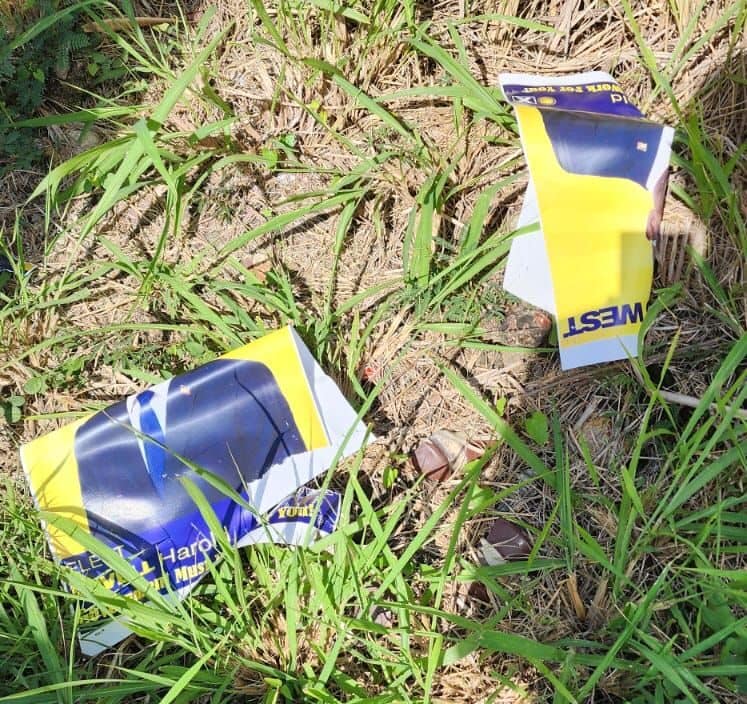
    As campaigning for Antigua and Barbuda’s upcoming April 30 general election gains momentum and political friction builds across multiple electoral districts, Anthony Smith Jr., the candidate of the Antigua Barbuda Labour Party (ABLP) for the All Saints West constituency, has publicly pushed back against damaging claims that tie him to the unauthorized removal of opposing political campaign posters. In his first public response to the circulating allegations, Smith made clear that the accusations are entirely fabricated and rooted in partisan political maneuvering rather than factual evidence.

    Smith emphasized that the deliberate tearing down of political campaign material is an unethical tactic that no democratic candidate should endorse, stating that he stands firmly against this kind of petty political behavior and has never encouraged any member of his campaign team or affiliated supporters to engage in such actions. The ABLP candidate also specifically addressed accusations attributed to Harold Lovell, a key opposition figure, calling on Lovell to immediately cease spreading misleading, false claims that are designed to damage Smith’s credibility and gain unfair public sympathy for the opposition.

    Dismissing outright the assertion that he personally issued orders to supporters to tear down opposing candidates’ posters, Smith underlined that his entire campaign has stayed focused on delivering concrete, tangible improvements for the residents of All Saints West, rather than engaging in dirty political tricks. Reaffirming his campaign’s core priorities, Smith noted that his platform centers on advancing constituency-level development across critical infrastructure and public service sectors.

    These priorities, he said, include upgrading local road networks, improving storm drainage systems, expanding access to reliable potable water, strengthening local healthcare services, boosting educational opportunities for constituents, and upgrading public recreational facilities for community use. Smith stressed that his mission throughout the campaign has been to empower the people of All Saints West, not to engage in the dishonest, divisive political games that his opponents have attempted to provoke. This public back-and-forth between the ABLP campaign and opposition figures is part of a broader trend of rising political polarization as the country approaches the general election polling date.

  • Candidates to Be Nominated Today as Antigua and Barbuda’s 2026 General Election Process Moves Forward

    Candidates to Be Nominated Today as Antigua and Barbuda’s 2026 General Election Process Moves Forward

    The Caribbean nation of Antigua and Barbuda is entering a critical phase of its 2026 general election cycle on Monday, as political parties and independent candidates gather across the country to complete formal nomination proceedings for the upcoming vote.

    Multiple political blocs are fielding contenders for the nation’s 17 parliamentary constituencies, including the incumbent ruling party, the Antigua and Barbuda Labour Party (ABLP), the nation’s largest opposition bloc the United Progressive Party (UPP), and the Barbuda People’s Movement (BPM), a regionally focused party representing interests on the island of Barbuda. A slate of unaffiliated independent candidates is also standing for election, and all contenders are required to complete their formal registration on this official Nomination Day to secure a spot on the April 30 ballot.

    Nomination activities are being hosted at 17 designated, secure venues spread across both main islands of the nation. These venues are primarily public educational institutions, chosen for their accessibility and existing infrastructure to accommodate candidate delegations and assembled supporters. Key sites include Villa Government School in the St. John’s City West constituency, Clare Hall Secondary School in St. John’s Rural East, and Sir McChesney George Secondary School on the island of Barbuda.

    Framed rules released by the Antigua and Barbuda Electoral Commission lay out a strict 10-hour window for nominations, running from 8 a.m. local time through 6 p.m. During this period, all aspiring candidates must submit fully completed nomination documentation and confirm they meet every statutory eligibility requirement to appear on the general election ballot.

    The commission outlines clear, non-negotiable eligibility criteria for all candidates. To qualify, a person must be at least 21 years of age, hold full citizenship of Antigua and Barbuda, and have maintained permanent residence in the nation for no less than 12 months immediately preceding the election. Beyond basic personal eligibility, candidates must secure nomination signatures from a registered proposer, a registered seconder, and eight additional registered voters who are residents of the same constituency the candidate seeks to represent.

    Additional administrative requirements include a non-refundable 500 Eastern Caribbean dollar deposit, and a formal signed document confirming the candidate’s consent to be named on the ballot. Every constituency’s nomination process is overseen by an official returning officer appointed by the Electoral Commission, who is responsible for verifying all documentation and confirming eligibility on site.

    As a foundational milestone in the national electoral calendar, Nomination Day serves to formally lock in the full slate of candidates that will campaign for voter support ahead of the general election. Once all nomination proceedings conclude at 6 p.m., the Antigua and Barbuda Electoral Commission is expected to release the final, official list of confirmed candidates to the public.

    Political analysts and local observers expect large gatherings of party supporters at nomination venues across the country, as all competing political organizations wrap up their preliminary mobilization efforts ahead of the April 30 polling date. The day’s events set the stage for the final five weeks of public campaigning, as parties and candidates work to win over undecided voters ahead of the general election.

  • César Iglesias achieves historic sales growth in first quarter

    César Iglesias achieves historic sales growth in first quarter

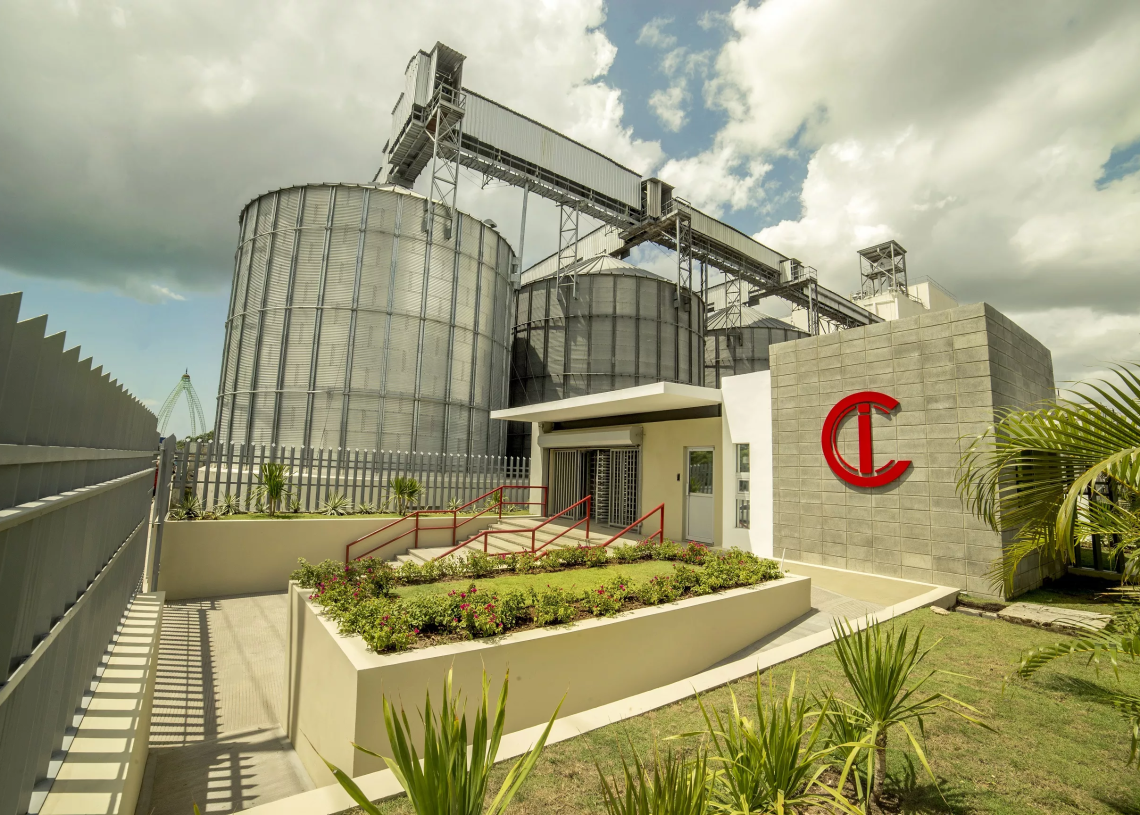
    Santo Domingo, Dominican Republic – Leading Dominican consumer goods conglomerate César Iglesias has kicked off 2026 with a landmark performance, posting all-time record sales in the first quarter of the year alongside expanded profit margins and enhanced operational efficiency. The strong results stand as a testament to the firm’s robust strategic execution, even as the broader global consumer goods sector navigates widespread economic and supply chain challenges.

    Across its entire diversified product portfolio, the company recorded broad-based growth that lifted its top and bottom lines. Core staple brands – including El Gallo cooking oil, Trigo de Oro wheat flour, and Domino paper goods – delivered consistent double-digit sales expansion, while two of its major standalone brands, Mazeite and Hispano, posted particularly significant double-digit growth. Additional upward momentum came from fast-growing lines including El Rey cereals and Kinsú instant soups.

    The conglomerate’s longstanding strategic distribution partnership with global consumer goods giant Unilever also contributed to the quarter’s strong performance. Popular Unilever brands distributed by César Iglesias, including personal care lines Dove, Rexona, Pond’s, and hair care brand Sedal, saw steady consumer demand that reinforced the value of the firm’s diversified brand mix and collaborative strategic relationships.

    Beyond core domestic retail sales, two other key segments drove the quarter’s outperformance: wholesale and business-to-business (B2B) channels, and expanding international operations. International sales now account for more than 15% of the company’s total annual revenue, marking a steady upward trend in global market penetration for the Dominican firm. During the first quarter, César Iglesias also expanded its footprint by adding seven new brands to its portfolio and extended its reach into the hospitality sector, a move that positions the company to capitalize on the Dominican Republic’s fast-growing tourism industry.

    With more than 100 years of operation in the Dominican Republic, company leadership framed the 2026 strong start as an outcome of three longstanding core priorities: maintaining the trust of domestic consumers, prioritizing profitability across all portfolio lines, and upholding disciplined operational execution. In a statement accompanying the quarterly results, the firm reaffirmed its long-term commitment to driving inclusive economic development across the Dominican Republic.