博客

  • US ex-cop reunites with Doctor’s Hospital surgeon who saved his life

    US ex-cop reunites with Doctor’s Hospital surgeon who saved his life

    Five years after a catastrophic stroke nearly claimed his life during a romantic anniversary trip to The Bahamas, former 28-year police veteran Ray Wood, 54, has finally fulfilled a year-long mission: meeting the neurosurgeon who pulled him through the most critical weeks of his medical battle to say thank you in person.

    The fateful event unfolded in July 2019 (corrected from original date misstatement) when Wood and his wife Raemie, also a police officer, traveled from their home in Southern California to celebrate their 10th wedding anniversary. Frequent Caribbean travelers, the couple was four days into their trip when Wood developed a sudden, severe headache and breathing trouble ahead of a planned scuba dive. Though he initially rested on the boat, he joined the dive roughly 45 minutes later; by the time the group returned to shore, his condition deteriorated rapidly.

    After returning to their hotel, Wood lost consciousness and all memory of the hours that followed. Raemie quickly recognized the signs of a life-threatening event: her husband’s speech was slurred, he could not walk steadily, he had been vomiting, and he could barely navigate their hotel room. She immediately called for emergency services, packed essential items for a hospital stay, and reached out to a doctor acquaintance for guidance while waiting in the emergency department hallway as her husband underwent emergency imaging. “There was no time to cry at first,” Raemie recalled of the chaotic night. “I only broke down once I was in the hallway making calls.”

    Imaging scans confirmed a devastating brain bleed that affected nearly one-quarter of Wood’s brain. He arrived at Doctor’s Hospital around 2 a.m. with right-side weakness, complete inability to speak, and rapidly declining consciousness. When Dr. Susheel Wadhwa, the consultant neurosurgeon on the case, assessed him, his Glasgow Coma Score — a standard scale measuring consciousness levels — had fallen to just 10 and was dropping quickly.

    The case was uniquely high-risk from the start. The bleed occurred on the left side of Wood’s brain, the dominant hemisphere that controls critical motor and cognitive function for right-handed people like him. Compounding matters, Wood had a pre-existing heart condition: he had undergone a heart ablation procedure in 2019 and was taking daily aspirin, which significantly increases bleeding risk during brain surgery. He also tested positive for COVID-19, adding another layer of complexity to his care.

    Wadhwa led the first emergency surgery that lasted four hours, with the entire perioperative process stretching to seven to eight hours total. In the days that followed, Wood’s condition slowly stabilized, but the severe brain impairment left him unable to form new memories, resulting in little to no recollection of his two-week stay in the Bahamian hospital. When he finally regained full consciousness, his first question was not about his own condition — he asked if his wife was safe. He later underwent a second, shorter procedure, and part of his skull was temporarily removed and stored in his abdomen to reduce swelling before being reattached during a later procedure in Florida that November.

    After two weeks of critical care in Nassau, Wood was transferred to a rehabilitation facility in Florida to begin the long, grueling process of recovery. For the former law enforcement officer, re-learning basic daily skills was a humbling, disorienting experience: he struggled with speech and mobility, and the stroke left him with permanent vision loss that prevents him from seeing anything below chest level, causing persistent balance issues. Today, he relies on a cane to walk to avoid falls. Raemie retired from her own police career to serve as his full-time caregiver, and the couple has entered a new chapter of life permanently reshaped by the near-tragedy.

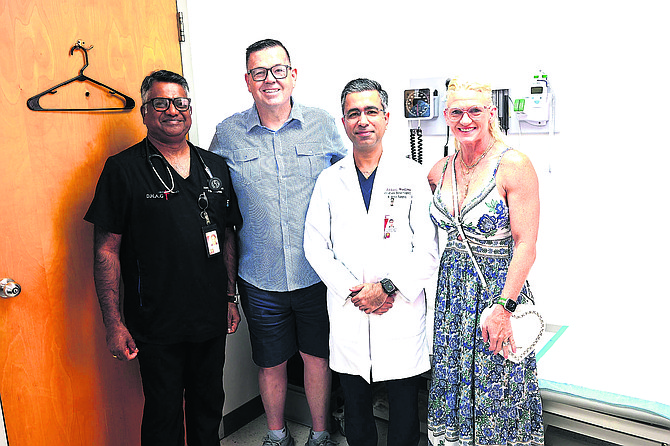
    For more than a year, Wood held one unwavering goal: to return to The Bahamas and meet the surgical team that saved him, to express his gratitude in person. That long-awaited meeting happened last Friday, when Wood and Wadhwa sat down together to revisit the original CT scan that showed the life-threatening brain bleed.

    With tears in his eyes, Wood reflected on the extraordinary circumstances of his survival. “I was a policeman for 28 years, I can’t tell you how many times I was shot at, how many times bad guys tried to take my life,” he told The Tribune. “Here I am, celebrating life and having a great time, and this comes out of nowhere — and a man that can save my life. Today I’m just grateful to be alive.”

    For Wadhwa and his medical team, these rare in-person reunions carry profound meaning, especially for intensive care staff who rarely get to see the long-term outcomes of the critical patients they treat. “When you are amidst all of this work, and you have a story like this that just comes back, it brightens the whole team,” Wadhwa said. “Even the team’s morale, especially with nurses in the ICU — they’re seeing very sick patients every day, and they so rarely get to find out what that person’s outcome ends up being. This means more than you know.”
  • PAC summons former UHWI leaders over audit findings

    PAC summons former UHWI leaders over audit findings

    Jamaica’s parliamentary Public Accounts Committee (PAC) has launched a deeper investigation into operational irregularities at the University Hospital of the West Indies (UHWI), moving to summon three key current and former leaders of the institution to answer for red flags raised in a critical Auditor General performance audit.

    The decision to call in the witnesses was formalized at the opening of the PAC’s weekly sitting on Tuesday, as committee members continued their review of the audit, which focused on three high-stakes areas of UHWI operations: procurement practices, institutional governance, and financial management.

    PAC Chairman Julian Robinson told fellow committee members that ongoing inquiry had already made one fact clear: the UHWI’s current sitting management team does not have the ability to provide satisfactory responses to a host of critical questions outlined in the Auditor General’s December 2025 report.

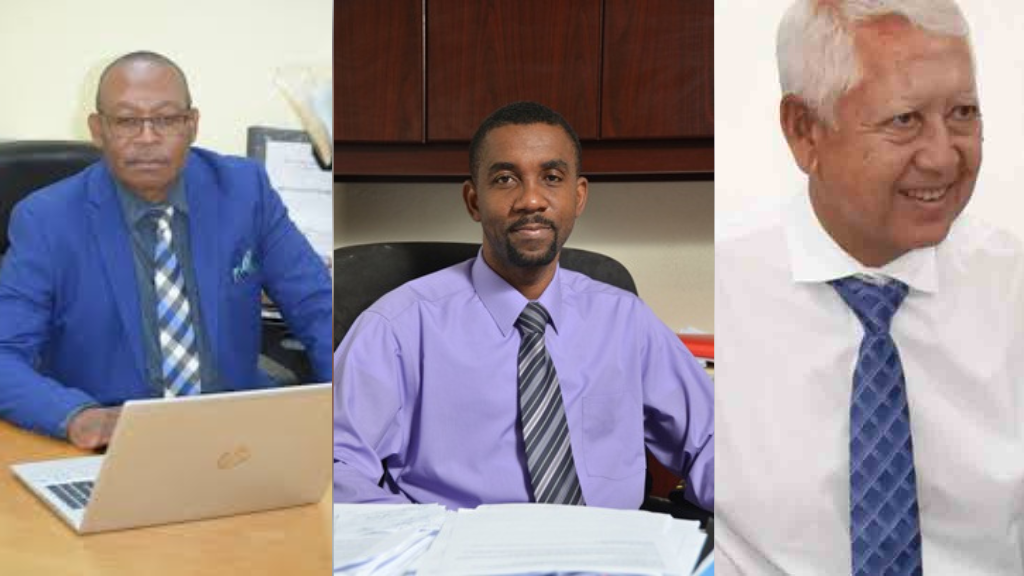
    “From our first meeting two weeks ago, it has been apparent to me that the current management of the university hospital is not positioned to answer many of our questions related to the facility’s day-to-day and strategic operations,” Robinson explained in remarks to the committee. “I am seeking this body’s approval to summon current CEO Fitzgerald Mitchell—who is currently on leave—former CEO Kevin Allen, and ex-board chairman Wayne Chai Chong, so we can get clear answers to the outstanding questions we have about this institution.”

    Mitchell, the UHWI’s sitting chief executive, has already been on approved leave since the public scrutiny of the hospital’s operations began. Allen led the facility’s operations in his tenure as the top executive, while Chai Chong oversaw the UHWI’s board and held ultimate governance and oversight responsibility during his time as chairman.

    The committee unanimously backed Robinson’s proposal, and parliamentary staff have already been instructed to draft and deliver formal summons letters to all three individuals ahead of the next scheduled PAC probe session.

    The damning Auditor General report, which was formally tabled in Jamaica’s parliament in December 2025, outlined a series of severe deficiencies across UHWI’s operational framework. Among the most pressing concerns highlighted in the audit are dysfunctional and high-risk procurement systems, gaping weaknesses in internal financial controls, missing or incomplete documentation for major transactions, and repeated, documented breaches of the government’s established public institutional operating procedures.

  • Mitchell, Pinder and Bonaby top list of most absent MPs in House

    Mitchell, Pinder and Bonaby top list of most absent MPs in House

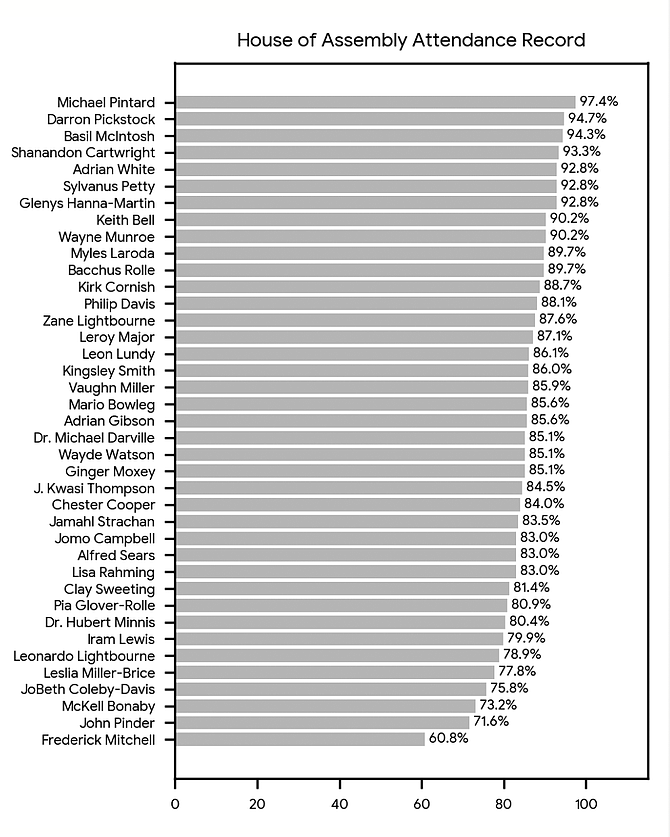
    Newly obtained official records from The Tribune have pulled back the curtain on attendance trends among members of the Bahamas’ House of Assembly, exposing significant disparities in participation among sitting lawmakers since the Davis administration took power in 2021. At the top of the list of the most frequently absent parliamentarians are three senior figures from the ruling Progressive Liberal Party (PLP): Foreign Affairs Minister and PLP Chairman Fred Mitchell, Central and South Abaco MP John Pinder, and Mount Moriah MP and Bahamas Public Parks and Beaches Authority chairman McKell Bonaby. All three have maintained attendance rates below 80 percent across the two parliamentary sessions covered in the data.

    The dataset spans two full parliamentary periods: 88 sittings held between October 2021 and August 2023, and an additional 106 sittings running from October 2023 through March 2026. Mitchell, who represents the Fox Hill constituency, has missed 76 total sittings, translating to an attendance rate of just 60.8 percent – the lowest among all sitting members. When reached for comment by The Tribune, Mitchell declined to provide any explanation for his high number of absences.

    Following closely behind Mitchell is Pinder, who has missed 55 sittings for a 71.6 percent attendance rate, and Bonaby, with 52 absences and a 73.2 percent attendance rate. Neither lawmaker responded to repeated requests for comment from The Tribune regarding their poor attendance track records. Energy Minister JoBeth Coleby-Davis came just behind this trio, missing 47 sittings to notch a 75.8 percent attendance rate. Seabreeze MP Leslia Miller-Brice missed 43 sittings, while North Andros and Berry Islands MP Leonardo Lightbourne missed 41 – with official records noting that one of Lightbourne’s absences was excused due to his participation in an official parliamentary conference.

    On the opposite end of the spectrum, opposition Free National Movement (FNM) lawmakers claim the top three spots for the most consistent attendance. FNM leader and Marco City MP Michael Pintard, MICAL MP Basil McIntosh, and St Barnabas MP Shanendon Cartwright hold the best attendance records in the entire body. After these three opposition figures, Englerston MP Glenys Hanna-Martin, North Eleuthera MP Sylvanus Petty, Carmichael MP Keith Bell and Freetown MP Wayne Munroe all posted attendance rates at or above 90 percent, placing them among the most active participants in House proceedings.

    One particularly notable entry in the records is the late Obie Wilchcombe, former MP for West Grand Bahama and Bimini, who maintained a perfect attendance record with zero absences before his unexpected passing in September 2023. The vast majority of other sitting lawmakers, including Prime Minister Philip Davis, Deputy Prime Minister Chester Cooper, and former Prime Minister Dr Hubert Minnis, all hold attendance rates above the 80 percent threshold. Kingsley Smith, who won the 2023 by-election to fill Wilchcombe’s vacant West Grand Bahama and Bimini seat, has missed 14 sittings since taking office, while Darron Pickstock – who won the Golden Isles by-election last November – has only missed one sitting in his short tenure so far.

  • Amazon says to buy Globalstar to expand satellite network

    Amazon says to buy Globalstar to expand satellite network

    PARIS, France – E-commerce and technology conglomerate Amazon announced Tuesday a definitive acquisition agreement to acquire U.S. telecommunications satellite operator Globalstar, a move designed to supercharge the expansion of Amazon’s planned space-based internet network and mount a direct competitive challenge to Elon Musk’s market-leading Starlink service.

    Under the terms of the deal, Amazon will offer Globalstar shareholders $90 per share through a combined cash-and-stock transaction, valuing the satellite firm at approximately $9 billion – a valuation first flagged by a Financial Times report earlier this month that fueled widespread market speculation of the impending acquisition.

    Jeff Bezos-founded Amazon has been developing its low-Earth orbit (LEO) satellite internet constellation, branded Project Kuiper, with the core mission of delivering high-speed broadband connectivity to underserved communities and users across every corner of the globe, a goal that has become an increasingly high priority for the tech giant as demand for global connectivity surges.

    “There are billions of customers out there living, travelling and operating in places beyond the reach of existing networks, and we started Project Kuiper to help bridge that divide,” stated Panos Panay, Amazon’s Senior Vice President for Devices and Services, in an official press release announcing the deal.

    The acquisition has already secured backing from roughly 58% of Globalstar’s existing shareholders, with regulatory and procedural approvals expected to push the closing of the transaction to 2027. A key strategic side agreement tied to the acquisition will see Apple – which currently holds a 20% minority stake in Globalstar – transition its existing satellite-based iPhone and Apple Watch services, including its popular Emergency SOS feature, to Amazon’s Project Kuiper network once the constellation is fully operational.

    At present, Project Kuiper has approximately 200 satellites active in low-Earth orbit, a fraction of the size of Starlink’s current deployed network of more than 10,000 satellites that have already cemented the SpaceX-owned service’s dominance in the fast-growing satellite internet market.

    The Globalstar acquisition comes at a moment of intense market anticipation around SpaceX, with widespread speculation that Musk is preparing to launch an initial public offering for the aerospace firm that could raise as much as $75 billion. If achieved, the IPO would become the largest public offering in global history, underscoring the massive commercial stakes in the burgeoning satellite internet industry.

  • PM and Church leaders reject FNM lottery plan

    PM and Church leaders reject FNM lottery plan

    A fresh political and social clash has erupted in The Bahamas over the opposition’s plan to launch a state-run national lottery, with Prime Minister Philip “Brave” Davis publicly dismissing the idea as a headline-grabbing, ill-conceived gimmick aligned with a proven failed, corruption-plagued model.

    The proposal was put forward Sunday by Michael Pintard, leader of the Free National Movement (FNM), who framed the independent board-overseen lottery as an untapped revenue source to drive national development. Pintard argued the new state system could operate alongside the country’s existing private gaming operators, pointing to frameworks already in place in jurisdictions including the Dominican Republic, Curaçao, Saint Martin and Ghana as successful blueprints for the plan.

    But Davis rejected the proposal outright during a press briefing with reporters, calling it a transparent political stunt born of desperation rather than a thoughtful policy solution. He pushed back particularly hard on Pintard’s choice of a model, noting the Dominican Republic’s national lottery has long been mired in confirmed corruption and fraud scandals. Davis questioned the opposition’s true motivations behind the push, suggesting the plan could create a slush fund open to abuse by corrupt actors. He also criticized the proposal for ignoring potential harm to the thousands of Bahamians already employed in the existing gaming industry, as well as the steady tax revenue the country already collects from private gaming operations. “It’s rather odd that you want to turn the Treasury into a gaming house,” Davis told reporters.

    The FNM’s announcement has reignited a decades-long contentious national debate that has killed every previous attempt to launch a national lottery in The Bahamas. Multiple past administrations have explored the policy, but all efforts have stalled amid fierce political pushback and widespread public concern. The Christie administration most recently attempted to legalize a lottery through provisions included in the 2014 Gaming Bill, but the plan collapsed after organized opposition from religious groups and large swathes of the public.

    Public resistance was clearly demonstrated in the 2013 national gambling referendum, when 59 percent of more than 81,000 participating voters cast ballots against approving a national lottery. Critics of the policy have repeatedly raised overlapping concerns: they question whether The Bahamas’ small population can support a state lottery without eating into existing tax revenues from private gaming, and they warn of persistent risks around lack of transparency, weak regulation, institutional corruption, and disproportionate social harm to low-income households. Supporters of a national lottery, by contrast, argue that a well-regulated system could generate significant new funding for critical public services including education and infrastructure, while also strengthening government oversight of the country’s entire gaming sector.

    In line with past opposition to the policy, senior church leaders have already renewed their vocal rejection of the new proposal, echoing the prime minister’s criticism. Bishop Walter Hanchell argued that a national lottery directly contradicts core Christian principles, pointing back to the 2013 referendum’s clear rejection of the policy. He recalled that even after voters rejected expanded gambling and lottery legalization a decade ago, then-Prime Minister Perry Christie moved forward with legalization anyway, against the explicit will of the Bahamian people. Hanchell said every negative outcome the church warned of at the time has since come to pass: rates of gambling addiction have risen sharply, and countless low-income Bahamians lose money earmarked for mortgages, rent and basic groceries to gambling operators every day. He called on national political leaders to abandon the lottery push and instead focus policy efforts on expanding social support and economic empowerment for vulnerable communities.

    Bishop Delton Fernander, president of the Bahamas Christian Council, echoed these concerns, noting that the proposal would disproportionately shift the burden of revenue generation onto low- and middle-income Bahamians. He pointed out that the public has already rejected the idea once, yet political actors continue to bring it back to the table. Fernander questioned whether repeated pushes for a national lottery are ultimately aimed at privatizing the lucrative sector for the benefit of a small, connected group of private actors. The Bahamas Christian Council has long maintained an unwavering opposition to the policy, he said, and past data already confirmed the country’s population is too small to sustain the system without major harm. Fernander added that critical public safeguards remain unaddressed more than a decade after the last debate, including targeted rehabilitation programs for people living with gambling addiction and formal systems to identify and support compulsive gamblers. Introducing a national lottery without first putting these protections in place, he warned, would only deepen the country’s existing social and economic inequalities.

  • Davis says Grand Bahama on rebound, warns Port Authority

    Davis says Grand Bahama on rebound, warns Port Authority

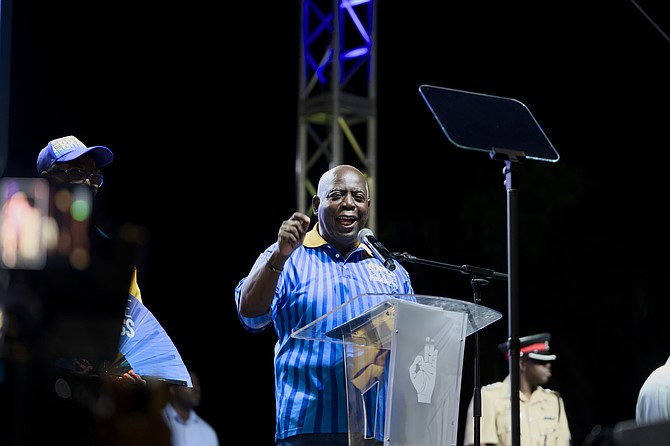
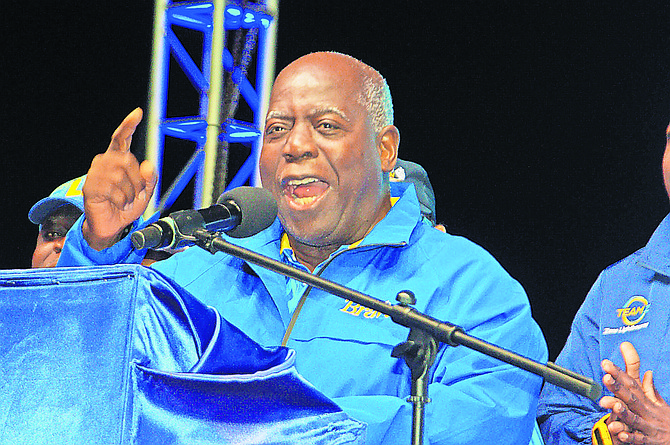
    At a packed political rally held Wednesday night in Grand Bahama’s West End, Bahamian Prime Minister Philip ‘Brave’ Davis delivered an optimistic address framing the island as firmly in the early stages of economic recovery, buoyed by new capital inflows, rising employment, and long-stalled infrastructure projects moving forward.

    The leader of the Progressive Liberal Party (PLP) told attendees that a long-awaited “new chapter” has opened for Grand Bahama, pointing to on-the-ground progress that residents can already see across the island. “People are working again. The new Freeport Health Campus is under construction. Major investments are moving forward. The Grand Bahama Shipyard is expanding, and local workers are accessing new skills training to advance their careers,” Davis said.

    Davis also highlighted a recent major investment announcement from global cruise operator MSC Cruises tied to Grand Lucayan, noting that the deal serves as external validation of the Davis administration’s years of targeted work to attract high-impact, sustainable investment to the island. He expressed full confidence that the four PLP candidates running for parliamentary seats across Grand Bahama — incumbent Pineridge MP Ginger Moxey, incumbent West Grand Bahama MP Kingsley Smith, Central Grand Bahama candidate Parko Deal, and Marco City candidate Eddie Whan — will keep the island’s recovery trajectory on track if elected.

    A core point of Davis’ address centered on the government’s ongoing standoff with the Grand Bahama Port Authority (GBPA) following recent arbitration proceedings. While Davis incorrectly stated that the administration secured a full victory in the arbitration, he emphasized that the PLP government took unprecedented decisive action to hold the private port authority accountable for failing to meet its long-term contractual obligations to the Bahamian people.

    “For far too long, this private authority has collected millions in public fees and concessions, but has never held up its end of the bargain for the communities of Grand Bahama,” Davis said. “The era of unaccountable license fee collection is coming to an end. We have put the Port on clear notice: Bahamian people will not continue to subsidize private profits while our local communities crumble from neglect.”

    Davis added that moving forward, the administration will take an unflinching stance to enforce the original terms of the Hawksbill Creek Agreement that established the port authority’s mandate. “We will use every legal tool at our disposal, every regulatory power granted to this government, and every bit of political capital we have to make sure the original promises of Hawksbill Creek are finally honored for the people of Grand Bahama,” he said.

    The prime minister also used the rally platform to criticize key policy proposals from Opposition Leader Michael Pintard and the Free National Movement (FNM), opening with a sharp rebuke of the opposition’s plan to abolish the Post Office Savings Bank. Davis told the crowd that roughly 7,000 residents of Grand Bahama rely on the community bank, with more than 35,000 users across the entire Bahamas who depend on its accessible savings services.

    He also dismissed the FNM’s proposal for a national government-run lottery as an empty political stunt with no real policy substance. “Their national lottery is not a serious plan for the country’s challenges — it’s just a gimmick,” Davis said. “They are chasing newspaper headlines instead of working on actual solutions that improve people’s lives.”

    In contrast to what he framed as the opposition’s shallow policy ideas, Davis argued that his administration has prioritized long-term, inclusive growth across the Bahamas through targeted policy action: energy sector reform to lower costs for residents and businesses, large-scale infrastructure investment, expanded workforce skills training, and opening new economic opportunities for all Bahamians.

    “While we are investing in real, lasting solutions for the Bahamian people, the opposition’s big idea is to turn the national government into a numbers house,” he added.

    Despite rising partisan tensions ahead of the upcoming election, Davis stressed that the progress Grand Bahama has made in recent years is undeniable and will continue under PLP leadership. “For the first time in a generation, we have a government that is finally standing up for the people of Grand Bahama,” he said. “We are not bowing to private special interests or clinging to outdated, unfair arrangements that shortchange local communities.”

    Deputy Prime Minister Chester Cooper also spoke at the rally, confirming that the planned redevelopment of Grand Bahama’s airport is now fully funded and construction is set to move forward. Cooper echoed Davis’ criticism of the previous FNM administration, noting that “for 34 years, the FNM gave the Port Authority a free pass on its obligations, but this PLP government has given them a clear deadline to deliver.”

  • New trial over Maradona’s death begins in Argentina

    New trial over Maradona’s death begins in Argentina

    BUENOS AIRES PROVINCE, Argentina — Eight years after the unexpected death of Argentine football icon Diego Maradona, and 10 months after judicial scandal derailed the first legal proceedings, a fresh negligence trial targeting his former medical care team got underway Tuesday in the Buenos Aires suburb of San Isidro.

    Widely regarded as one of the most talented and influential football players in the history of the sport, Maradona passed away in November 2020 at age 60, just two weeks after undergoing emergency surgery to remove a blood clot in his brain. He was undergoing at-home recovery when his condition suddenly deteriorated.

    Forensic examinations have confirmed Maradona’s cause of death as heart failure combined with acute pulmonary edema, a dangerous buildup of fluid in the lungs. Court documents allege the seven medical professionals who oversaw his post-surgical care committed gross negligence in the planning and execution of his home convalescence, directly contributing to his death. Prosecutors have upgraded the charges to wrongful homicide with possible intent, arguing the medical team continued their planned care plan despite clear awareness that their decisions put Maradona’s life at severe risk. If convicted, each defendant faces prison sentences ranging from 8 to 25 years.

    The first trial, launched last year, collapsed after two months of testimony amid a major judicial controversy. One of the three presiding judges, Julieta Makintach, was exposed for participating in a clandestine unauthorized documentary about the case, which included secret recordings captured inside the courtroom. The scandal led Argentine courts to annul the entire first proceeding, forcing a full retrial.

    When court opened this week, the packed San Isidro courtroom included several of Maradona’s immediate family members: daughters Dalma, Gianinna and Jana, as well as his former partner Veronica Ojeda. More than 120 witnesses are scheduled to testify over the course of the retrial, which legal teams estimate will conclude no earlier than July.

    In a pre-trial interview with Radio Con Vos over the weekend, Vadim Mischanchuk, a defense attorney representing psychiatrist Agustina Cosachov, pushed back against the prosecution’s narrative. “If there is one thing that has been definitively ruled out across all evidence, it is any malicious criminal plan to kill Maradona,” he said. Defense teams across the board maintain Maradona, who struggled publicly with substance use disorders involving cocaine and alcohol for decades, died of natural causes unrelated to medical negligence. Defense lawyer Francisco Oneto has also formally requested that the entire retrial be broadcast live on national television, a departure from the current plan that only allows live coverage of the opening session and the final verdict.

    Maradona’s death in 2020 sent waves of grief across Argentina and the global football community, coming in the middle of the first wave of the COVID-19 pandemic. Tens of thousands of fans lined up for hours to pay their final respects as his body lay in state at the Argentine presidential palace in Buenos Aires, capping a decades-long legacy that included leading Argentina to a 1986 FIFA World Cup victory and earning iconic status at top clubs Boca Juniors in Argentina and Napoli in Italy.

  • Express Fitness mourns death of beloved trainer

    Express Fitness mourns death of beloved trainer

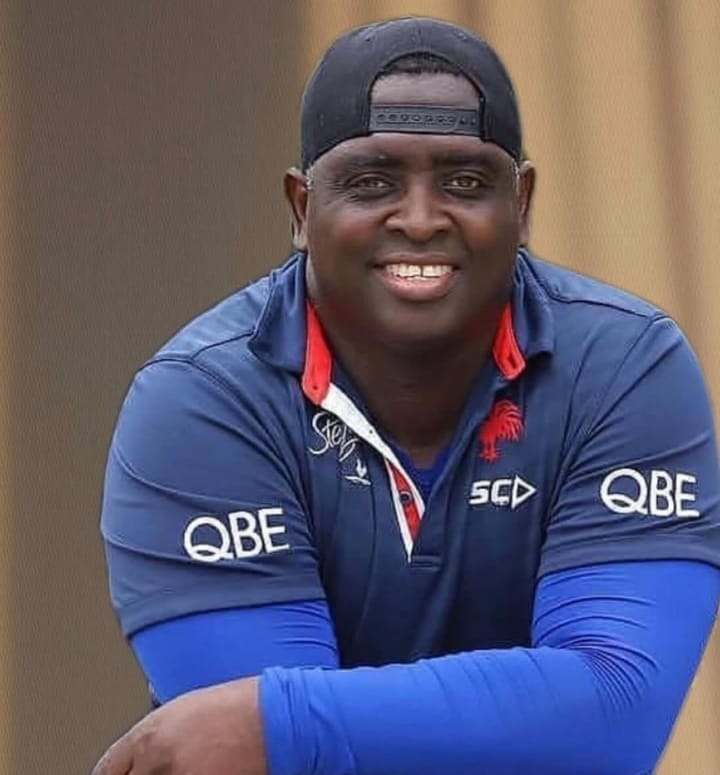
    Jamaica’s fitness sector is coming together to grieve the passing of Andro Henry, a widely respected and deeply adored trainer who spent more than three years as a core member of the Express Fitness Limited team. Henry, 51, passed away on Monday, one week after experiencing a combined heart attack and stroke that left him hospitalized. The 51-year-old, who left behind a spouse and children, built a reputation across the industry for his unwavering commitment and unmatched skill as an instructor, colleagues say.

    In an interview with Observer Online on Tuesday, Deon Earle, Express Fitness’ coordinator for fitness and wellness, reflected on Henry’s enduring legacy with the company. She shared that Henry first joined the Express network as an outside contract instructor before transitioning to a full, permanent role with the brand. Over his tenure, he built a loyal following, particularly among older adult clients who responded to his patient, encouraging coaching style. Henry taught three weekly daytime classes covering spin cycling, aerobics, and core-focused abs training, drawing consistent crowds to every session. “It is a tremendous loss for all of us,” Earle told reporters. “He was the kind of instructor who never missed a shift, no matter what challenges came his way. Rain or shine, he was there ready to work. Everyone in the local fitness industry knew who he was, and he was second to none at what he did. His influence stretched far beyond just the walls of Express Fitness.”

    Michelle Gordon, Chief Executive Officer of Express Fitness Limited, echoed those tributes, framing Henry as far more than an employee—he was a beloved member of the company’s extended family. Gordon emphasized that Henry had a unique gift for lifting up everyone he interacted with, infusing every class and conversation with contagious energy that left clients feeling stronger and more confident. For three years, she said, Henry pushed both his clients and his coworkers to grow and reach new personal goals. “Every spin class, every senior class, every quick chat in the hallway, he was a constant source of positivity,” Gordon said. “We are absolutely heartbroken to lose him far too soon. But we will carry the spirit he brought to this place forward, and honor him by living out that same commitment to lifting each other up every day.”

    As news of Henry’s passing spread across the local fitness community, tributes from former clients and fellow trainers began to circulate, highlighting his kind demeanor, professional dedication, and lasting impact on the health and wellness of hundreds of people who trained with him over his career.

  • Legend beer makes its debut in 2026 Carnival Road March

    Legend beer makes its debut in 2026 Carnival Road March

    Months after its official launch to Jamaican consumers, locally brewed Legend Beer has marked its first major public appearance at one of the island’s most iconic cultural celebrations: the annual Carnival Road March. The young domestic beer brand stepped in as an official sponsor of the fan-favorite Yardmas Carnival, building immersive experiences to amplify the energy of thousands of revellers taking part in the 2026 procession.

    As part of its sponsorship activation, Legend Beer installed branded viewing decks at key high-traffic spots along the parade route, stretching from popular hospitality venue TGI Fridays to the central gathering hub Trafalgar Park. The activation drew huge crowds of costumed marchers, local spectators and international tourists alike, turning every stop along the route into a vibrant showcase of Caribbean culture, where music blared, bold fashion took center stage, and unfiltered festive energy filled the air.

    Parade participants – known locally as masqueraders – glided through the capital’s streets in elaborate, shimmering designs heavy on sequins and elaborate featherwork. Among the standout looks this year was Pamputtae’s eye-catching costume for Yard Mas’ *Starry Night* collection, described as a moving work of art, while Najiba brought nonstop energy to the road in the same collection’s design, and Aindrea Sewell leaned fully into the celebration’s signature sparkle at Trafalgar Park.

    On the sidelines, groups of friends gathered to cheer on marchers, cold drinks in hand, as DJs kept the upbeat tempo going through the day. Whether marching along the route or relaxing on one of Legend Beer’s viewing decks with a cold pint, every attendee described the atmosphere as unforgettable, unapologetically joyful, and perfectly fitting for a brand carrying the name “Legend.”

    Janek Shillingford, sponsorship manager at Wisynco, Legend Beer’s parent company, spoke to *Observer Online* on the ground during Sunday’s road march, noting that the brand’s values align perfectly with the core spirit of Jamaican Carnival. “Legend really connects with the high energy and the vibrant vitality that carnival represents,” Shillingford explained. “We really wanted to make an impact, and we did a lot of product sampling today. This is really about getting the brand out there, so it can resonate with Jamaican people.”

    Shillingford added that the public’s reception of the newly launched local beer far exceeded the team’s internal expectations. “The beer is getting a lot more traction than we even thought we would get. We have to give thanks to the Jamaican people for that. Really and truly, it’s for Jamaicans, the everyday people that you see out here celebrating today,” he said.

    A branded Legend Beer truck also joined the official procession, rolling along the parade route with in-house DJs spinning tracks and keeping crowds dancing alongside the float. When asked about the brand’s future plans for Jamaican Carnival, Shillingford confirmed that the partnership is here to stay: “For sure, no doubt, we’ll be involved in Carnival going forward.”

  • Corinaldi Avenue hunt for fourth straight VMF U-13 title

    Corinaldi Avenue hunt for fourth straight VMF U-13 title

    Western Jamaica’s most anticipated youth football competition is poised to get underway this Tuesday at Wespow Park in Tucker, St James, where one program will chase a milestone no other local primary school has ever reached. Hosted by the St James Football Association in partnership with the Victoria Mutual Foundation, the annual Under-13 championship will open with a tightly scheduled double header that puts the tournament’s most dominant dynasty front and center from the first kick.

    Corinaldi Avenue Primary School, the three-time reigning back-to-back-to-back champion of the competition, will launch its bid for an unprecedented fourth consecutive title in the opening match of the 2024 season. The program has built a legendary legacy over the past three tournaments, not only claiming the title every year but doing so in extraordinary fashion: Corinaldi Avenue finished its last championship run undefeated and did not allow a single goal against any opponent throughout the entire tournament. Their opening test will come against Maldon Primary, with kickoff slated for 10:30 a.m. local time.

    The day’s second matchup will feature another exciting clash between two top contenders, as 2023 tournament runners-up Chetwood Primary will face off against Irwin Primary at 11:45 a.m. This year’s iteration of the championship has drawn a total of 20 participating primary schools from across the region, who have been divided into four five-team groups for the preliminary round robin stage. Following the conclusion of zone play, the top two finishing teams from each group will advance to the quarterfinal round, where the remaining competition will shift to a single-elimination knockout format that leaves no room for error for squads vying for the crown.

    The 2024 tournament also brings notable changes to the field of participants. Winners Prep will mark its debut as the only first-time entry to the competition this year, while three familiar programs are making their return to the tournament after time away: DMP Academy, Montego Bay Prep, and Adelphi Primary all rejoined the field for this season’s championship, adding new layers of competition to what is already shaping up to be one of the most exciting editions of the regional youth football event.