博客

  • Fedomu claims electricity companies owe municipalities millions

    Fedomu claims electricity companies owe municipalities millions

    A public dispute over reciprocal financial obligations has erupted between Dominican Republic’s municipal governments and the country’s main electricity distribution companies (EDEs), with the nation’s top municipal association leader challenging recent claims that local governments owe hundreds of millions in unpaid power bills.

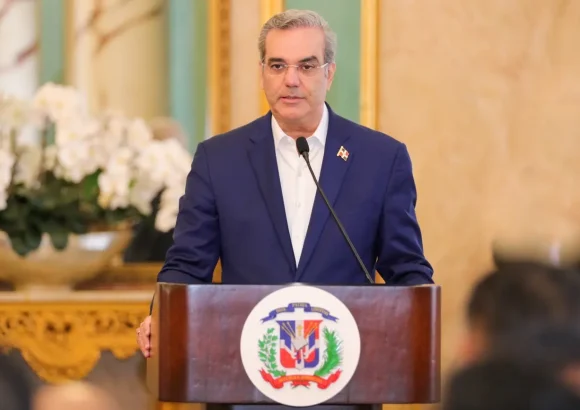
    Speaking publicly this Wednesday, Nelson Núñez — who leads the Dominican Federation of Municipalities (Fedomu) and also holds the position of mayor of Samaná — pushed back against recent remarks from economist and former public official Celso Marranzini. Marranzini recently drew attention to the growing debt of municipal governments, arguing that unpaid electricity bills from local councils have become a massive strain on Dominican public finances, hitting a total of roughly US$300 million by last year.

    While Núñez does not dismiss the existence of outstanding municipal payments for power used by public infrastructure and street lighting, he says the narrative that only local governments are in debt is deeply one-sided. He argues that the EDEs have themselves failed to uphold binding legal requirements laid out both in the country’s General Electricity Law 125-01 and a 2013 landmark ruling from the Dominican Constitutional Court.

    That specific ruling, labeled TC/0100/13, establishes a clear reciprocal framework: electricity distributors are required to transfer 3% of all revenue they collect from customers within each municipal jurisdiction and municipal district to local governments every month. In exchange, local governments are legally obligated to cover the cost of electricity for public streetlights and municipal-owned public facilities.

    Crucially, Núñez clarified that the 3% transfer is not an arbitrary tax imposed on power providers, as some critics have framed it. The Constitutional Court itself explicitly confirmed that the payment qualifies as a legally authorized compensation fee for municipalities, he noted.

    Yet according to Fedomu’s records, the EDEs have failed to comply with this ruling consistently ever since it was issued in 2013. The cumulative sum that power distributors owe to municipalities across the country is “incalculable,” Núñez stated, and this long-running noncompliance has been a major contributing factor to the tight financial straits many local councils now face. The missing funds have made it especially difficult for municipalities to cover the very street lighting costs they are obligated to pay, exacerbating the current standoff over mutual debts.

    Núñez closed by emphasizing that financial responsibilities run both ways: if municipalities owe the EDEs for power delivered, the power distributors owe municipalities for the legally mandated funds they have withheld for more than a decade.

  • Central Bank projects tourism revenues to surpass US$12.5 billion in 2026

    Central Bank projects tourism revenues to surpass US$12.5 billion in 2026

    Against a backdrop of mounting global geopolitical tension and economic volatility, the Dominican Republic’s tourism sector is emerging as a surprisingly resilient powerhouse, new projections from the Central Bank of the Dominican Republic (BCRD) show. The country’s central bank forecasts that total tourism-generated revenue will cross the $12.5 billion threshold by the end of 2026, cementing the industry’s position as the foundational pillar of the nation’s economic stability and primary source of foreign exchange.

    In a recent report titled “Dominican Republic Facing an Oil Shock of Uncertain Nature: An Analysis of the Impact of the Middle East War on the Economy,” BCRD outlined the strong early-year performance that is driving this optimistic forecast. Data from the first quarter of 2026 reveals the Dominican Republic welcomed 3,710,374 international visitors between January and March — a new all-time record for the first three months of any year. Of that total, 2,603,777 guests arrived via commercial air travel, while another 1,106,597 came through cruise ship ports.

    The growth trend accelerated through the first quarter, with March 2026 marking a historic milestone for the country: for the first time ever, air arrivals topped 900,000 in a single month. This surge was fueled by robust expansion in key European source markets. Tourist arrivals from Germany jumped 36% year-over-year, while France and the United Kingdom both posted 17% growth, outperforming expectations for travel demand amid global headwinds.

    The Dominican Republic Hotel and Tourism Association (Asonahores) has embraced BCRD’s analysis, noting the sector’s outperformance comes even as global shocks, including the ongoing armed conflict in the Middle East and rising global oil prices, threaten economic stability across much of the developing world. Asonahores emphasized that tourism has acted as a critical economic buffer insulating the Dominican Republic from broader global uncertainty.

    These strong numbers are more than just a win for the travel industry — they signal widespread international confidence in the Dominican Republic’s standing as a safe, competitively priced, and high-demand travel destination, the association said. “Tourism continues to demonstrate that it is much more than an economic activity; it is an engine of stability, foreign exchange earnings, jobs, and investment for the entire nation,” Asonahores said in a statement.

    Beyond tourism metrics, the broader Dominican economy has also retained investor confidence amid global turmoil. As of May 20, BCRD data shows the country’s Emerging Markets Bond Index (EMBI) spread stood at 177 basis points — well below the Latin American regional average of 264 basis points. This stable sovereign risk rating further confirms global investors’ positive outlook for the Dominican economy, industry leaders noted.

    Asonahores attributed the tourism sector’s consistent strong performance to sustained collaborative work between the Dominican public and private sectors. Targeted policy investments in international tourism promotion, expanded air connectivity with major global markets, upgraded tourism infrastructure, and pro-investment regulation have all combined to boost the country’s competitiveness as a top Caribbean travel destination, the association added.

  • Healthcare the focus of 2026 govt budget

    Healthcare the focus of 2026 govt budget

    Fresh off its re-election victory in the May 12 general election, the Davis administration of The Bahamas has laid out its ambitious fiscal roadmap in the 2026-2027 budget, unveiling a plan to boost recurrent revenues by $470 million even as it cuts its projected surplus by 24 percent and navigates ongoing global economic volatility. Newly sworn-in Finance Minister Michael Halkitis delivered his maiden budget address to the House of Assembly on Wednesday, outlining that the projected 2026-2027 fiscal surplus has been revised downward from the previously forecast $291.4 million to $223.1 million, a $68.3 million reduction that Halkitis framed as a deliberate policy choice.

    Halkitis explained the downward adjustment stems from two key driving forces: first, the administration’s commitment to prioritizing Bahamian citizens’ livelihoods by directing additional funding to upgrade the country’s healthcare system, and second, persistent volatility sparked by the unresolved Middle East conflict, which has disrupted global energy and fuel markets and reignited inflationary pressures that raise import costs for small open economies like The Bahamas. Despite the narrower surplus, Halkitis emphasized that the country’s overall fiscal position remains positive, noting that the projected $223.1 million surplus still means government revenue will outpace total spending.

    The administration is holding firm to its existing $75.5 million surplus target for the 2025-2026 fiscal year, which concludes at the end of June, even amid widespread volatility in global economic and trade conditions that threaten to dampen tourism demand — the backbone of The Bahamas’ economy — and push up consumer prices. Halkitis did not provide an updated closing surplus figure for the current fiscal year, but expressed confidence the target will be met, citing disciplined government spending restraint and growing optimism that the full $130 million in projected Domestic Minimum Top-Up Tax (DMTT) revenues will be collected before the fiscal year closes.

    The government’s bold $470 million, 12 percent revenue growth target for 2026-2027 — which would lift total recurrent revenues to $4.357 billion from the current 2025-2026 projection of $3.887 billion — comes against a mixed backdrop. Data shows that for the first nine months of 2025-2026 through the end of March, revenue collection has lagged the prior year’s pace, with only 65.3 percent of the full-year target collected, compared to 69.4 percent at the same stage in 2024-2025. Additionally, the budget forecasts that real GDP growth will slow sharply from 6.5 percent in the current fiscal year to 1.8 percent in 2026-2027, a rate that is projected to remain steady the following year. This growth projection also differs from the 3.8 percent 2025 growth estimate released last week by the Bahamas National Statistical Institute, which was stronger than the budget forecast. The disconnect between slowing projected growth and the large revenue increase has drawn attention, given The Bahamas’ consumption-focused tax system that ties revenue growth closely to economic expansion.

    A large portion of the projected revenue gain is expected to come from a dramatic expansion of DMTT collections. The 15 percent minimum corporate tax, introduced to bring The Bahamas into compliance with the G-20/OECD global minimum corporate tax initiative designed to curb profit shifting by multinationals to low-tax jurisdictions, is projected to see revenues nearly triple from $130 million in 2025-2026 to $350 million in 2026-2027, a 169 percent year-over-year increase. This $220 million year-over-year jump will account for nearly 47 percent of the total $470 million revenue increase the government is targeting.

    The Bahamas’ top independent fiscal watchdog, the Fiscal Responsibility Council, previously raised doubts that the full $130 million in 2025-2026 DMTT revenues would be collected on time, as the necessary collection frameworks, regulatory guidance and implementing mechanisms had not been finalized by the time of its mid-year assessment. But Halkitis pushed back on those concerns Wednesday, confirming he expects the first full round of DMTT revenues to be received in June, just before the current fiscal year closes. He also revealed that the expected taxpayer base for the new levy is larger than initial projections: when the 2025-2026 budget was drafted, officials expected fewer than five entities to be subject to the tax, but updated data shows the number of liable taxpayers will exceed that initial estimate, creating an upside surprise for the current year-end fiscal position.

    Major entities already expected to fall into the DMTT net include the country’s two largest resort complexes, Atlantis (owned by Canada’s Brookfield Asset Management) and Baha Mar (owned by Hong Kong’s Chow Tai Fook Enterprises), as well as regional resort chain Sandals. All three major Canadian banks operating in The Bahamas — Royal Bank of Canada, Scotiabank and CIBC — have already set aside funds to cover their DMTT liabilities. Other notable entities that will likely be subject to the tax include Commonwealth Brewery, the leading Bahamian beer maker majority-owned by Heineken, Bahamas Telecommunications Company (BTC) controlled by Liberty Latin America, and Hutchison Whampoa’s Freeport port and container terminal assets. Shell’s Bahamian subsidiary already reported a $248 million accrued corporate tax liability on its 2024 books, per prior reporting by Tribune Business. Commonwealth Brewery even requested an extension to publish its 2025 year-end financial statements to accurately calculate its full DMTT tax obligations.

    Beyond DMTT, the government has identified three additional key revenue streams to hit its $470 million target. First, it has added a $99.228 million charge to the Grand Bahama Port Authority to cover the cost of public services provided in the Freeport port area that exceed tax revenues generated by the city. Second, it projects $24 million in new annual revenue from a revised real property tax category for foreign-owned primary residences: the new 0.625 percent rate will be applied to properties qualifying as the owner’s primary residence (down from the previous 180-day annual occupancy requirement), while the maximum annual tax liability (or cap) for these properties will rise 33 percent from $150,000 to $200,000. Third, the government forecasts VAT revenues will rise $110 million year-over-year to $1.635 billion in 2026-2027, with more than 60 percent of that increase coming from VAT on property sales over $1 million, which is projected to rise from $170.472 million in 2025-2026 to $237.366 million. Current year VAT collection is already on pace to exceed its $1.525 billion 2025-2026 target.

    Outlining the full 2026-2027 fiscal breakdown, Halkitis confirmed total revenues are projected to hit $4.4 billion, equal to 23.6 percent of GDP, while total expenditure will reach $4.1 billion (22.4 percent of GDP). Recurrent expenditure accounts for $3.7 billion (20.1 percent of GDP), with capital expenditure totaling $415.8 million (2.2 percent of GDP). The $223.1 million surplus equals 1.2 percent of GDP, with a primary surplus of 5.2 percent of GDP, and the debt-to-GDP ratio is projected to fall to 59.9 percent by the end of the 2026-2027 fiscal year.

    “While this surplus is lower than previously projected in the Fiscal Strategy Report 2025, the revision reflects a changing global and domestic environment. Ongoing tensions in the Middle East have increased uncertainty, particularly around energy and import costs,” Halkitis said. “At the same time, we have made the deliberate decision to strengthen our healthcare system, including increased support for the Public Hospitals Authority and further investment in hospital services. These are necessary and responsible choices. Although they have narrowed the surplus, the fiscal position remains positive, underscoring this Government’s continued commitment to sound financial management while prioritising the needs of the Bahamian people.”


  • Neymar a doubt for Brazil’s World Cup opener due to injury — doctor

    Neymar a doubt for Brazil’s World Cup opener due to injury — doctor

    RIO DE JANEIRO, Brazil — A sudden calf injury has thrown 34-year-old Brazilian football star Neymar’s participation in the opening match of the upcoming World Cup into serious question, the Brazilian men’s national team’s medical head Rodrigo Lasmar confirmed in a press briefing Thursday.

    The injury, which Lasmar confirmed will require between 14 and 21 days of targeted treatment and rehabilitation, has already ruled the Al Hilal forward, who recently returned to his boyhood club Santos on a short-term deal, out of Brazil’s two scheduled pre-tournament warm-up friendlies. Those exhibition matches, scheduled to take place ahead of the World Cup kickoff against Panama and Egypt, will proceed without the team’s most high-profile attacking playmaker.

    Beyond the friendlies, however, the timeline for recovery also casts uncertainty over whether Neymar will be fit enough to feature when Brazil kicks off their World Cup campaign against Morocco on June 13. Following Neymar’s complaint of discomfort after training, the medical team conducted an MRI to assess the damage, which revealed a grade two muscle strain in the calf.

    “Our current medical expectation is that he will be cleared to return to team activity and available for selection within that two to three week window,” Lasmar explained, adding that the medical staff will adjust the rehabilitation plan as Neymar progresses to avoid any risk of re-injury ahead of the tournament.

    For Brazilian fans, the news comes as a major blow ahead of what is widely expected to be Neymar’s final appearance at a World Cup. The five-time champions have relied on Neymar’s creative attacking output for more than a decade, and his absence from the opening match would force head coach Dorival Júnior to adjust his starting lineup just days before the tournament gets underway.

  • ‘You are not alone’ in Ebola fight, says WHO chief heading to DR Congo

    ‘You are not alone’ in Ebola fight, says WHO chief heading to DR Congo

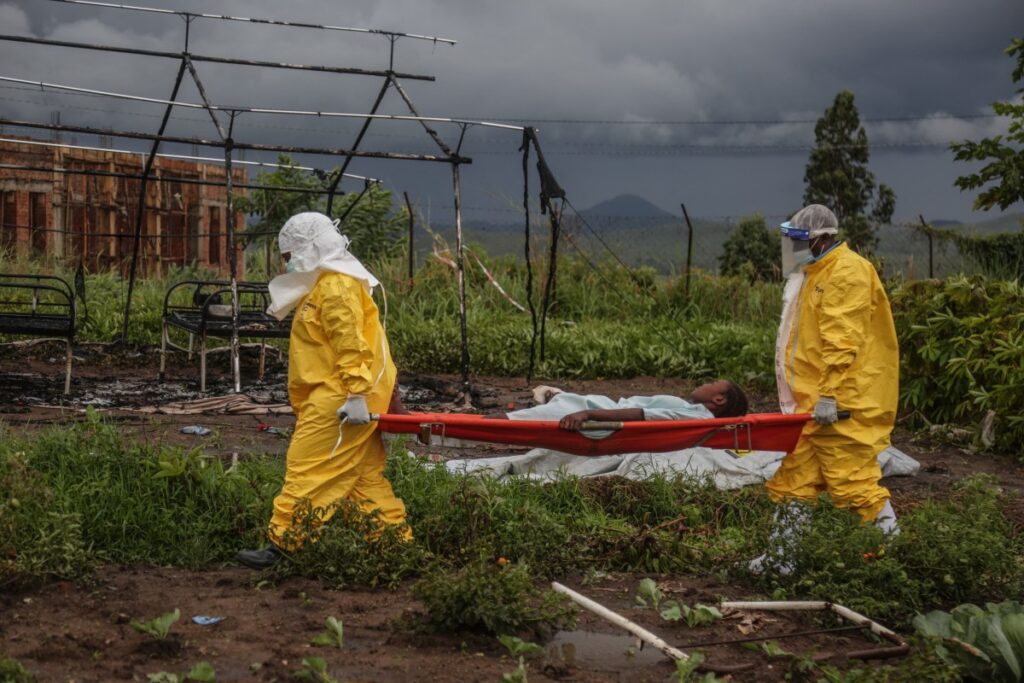
    GENEVA, Switzerland — As the Democratic Republic of Congo (DRC) grapples with a fast-spreading, deadly Ebola outbreak, World Health Organization (WHO) Director-General Tedros Adhanom Ghebreyesus departed for the African nation Thursday, making a public pledge to deploy every resource at his disposal to curb the epidemic.

    In a detailed public address shared on social platform X ahead of his trip, Tedros extended solidarity to Congolese communities affected by the outbreak, emphasizing that “together, we will overcome this outbreak.”

    Latest official data compiled by WHO, updated to May 24, shows that since the outbreak was formally declared on May 15, the country has recorded over 1,000 combined confirmed and suspected Ebola cases, with 10 confirmed deaths and 223 deaths among suspected cases.

    The outbreak is disproportionately concentrated in the country’s northeast, with more than 90% of all cases recorded in Ituri province. Smaller clusters of infections have also been identified in the adjacent North Kivu and South Kivu provinces.

    “I want to be with you in these moments. And I want you to know that you are not alone,” Tedros stated, acknowledging the fear and strain the outbreak has placed on local populations. “I know how frightening that is, and I know that the people of Ituri are bearing a burden that is not easy to carry.”
    He added that the regions impacted by Ebola were already confronting multiple overlapping crises before the outbreak, including endemic malaria, widespread food insecurity, and chronic armed conflict. “It is not fair, and I will not pretend otherwise,” he said.

    Tedros outlined that the international response to the outbreak will center on lifting up and supporting the existing resilience of local communities. “We do not come to Ituri with only medicine and expertise. We come to join a community that already knows how to fight for its survival,” he explained.

    A key barrier to containment efforts, Tedros noted, is the decades-long conflict and persistent insecurity that has destabilized eastern DRC for generations. Ongoing violence has blocked access to affected communities, slowing the rollout of response measures.

    Complicating the response further, the current outbreak is caused by the Bundibugyo strain of Ebola, for which no approved vaccine or targeted treatment currently exists. WHO has also warned that the virus circulated undetected for an unknown period before being declared, meaning the actual scope of infections is almost certainly far larger than the current confirmed and suspected case count suggests.

  • Jamaican model Romae Gordon shines in WWD eyewear spread

    Jamaican model Romae Gordon shines in WWD eyewear spread

    Formerly retired Jamaican fashion model Romae Gordon is steadily solidifying her triumphant return to the upper echelons of the global fashion industry, landing a lead spot in a new high-profile editorial spread for *Women’s Wear Daily (WWD)* that highlights one of summer 2026’s most prominent accessory trends: statement eyewear. The spread, which carries the headline “Heavy Metal Eyewear Trend: From 90s Inspired Shields to Sharp Rectangular Frames,” showcases Gordon modeling a curated collection of cutting-edge, futuristic outfits paired with luxury designer sunglasses from some of the world’s most iconic fashion houses, including Prada, Tom Ford, Ralph Lauren and Gucci.

    Captured on location in New York City by acclaimed fashion photographer Vanessa Granda, the editorial blends structured, sharp tailoring, polished leather outerwear and dramatic, bold silhouettes to craft a high-fashion tribute to the resurgent popularity of 1990s-inspired eyewear designs. The spread’s styling was helmed by *WWD* fashion director Alex Badia, with hairstyling by Andrew Chen and cosmetic work by makeup artist Shaina Ehrlich.

    In a statement released Thursday by the Sheldon Alexander Group, Gordon opened up about the experience of working on the project, noting that aligning with the creative team’s original vision was a seamless process. “It was super easy to translate the vision for the creative team,” Gordon said. “The looks are so me — I loved the movement, the edge, the sleekness of the direction throughout.”

    Gordon stepped away from professional modeling for a number of years before announcing her retirement exit last year, and in the months since, she has booked a steady stream of high-profile campaigns and runway shows with many of the luxury fashion industry’s leading brands. Her official comeback kicked off when she walked in Versace’s Ready-to-Wear Fall/Winter 2026 presentation during Milan Fashion Week, but her rise back to mainstream industry attention accelerated after she secured an exclusive runway spot for Mathieu Blazy’s highly anticipated couture debut in January 2026. She followed that milestone with a runway appearance for New York-based brand Proenza Schouler shortly after.

    Following her string of high-profile bookings, leading global fashion industry platform Models.com honored Gordon with the designation of “Model of the Moment,” cementing her status as one of the most in-demand rising (and returning) talents in contemporary fashion.

  • Air Europa honors top Dominican travel agencies for 2025 sales

    Air Europa honors top Dominican travel agencies for 2025 sales

    In an exclusive gala ceremony hosted at the Santo Domingo Bay Hotel in the Dominican capital, Spanish carrier Air Europa has formally recognized ten standout Dominican travel agencies that delivered the strongest sales results for the airline throughout 2025.

    The high-profile event was spearheaded by Francisco “Paco” Pérez, Air Europa’s regional director overseeing Caribbean operations, who was joined on stage by María José Hidalgo, chief executive officer of the Globalia Group — Air Europa’s parent company — alongside the full commercial leadership team of the airline’s Dominican division.

    In his keynote address to the gathered industry leaders, Pérez emphasized the outsized strategic importance of the Dominican travel market to Air Europa’s broader regional expansion goals, and offered warm praise for the critical partnership role local travel agencies play in scaling the airline’s presence across the Caribbean.

    “Air Europa has recorded exceptional growth across our network in 2025, and the single most foundational pillar of that success has been the unwavering support and trust you, our local agency partners, have extended to our brand,” Pérez stated. He went on to confirm that the Dominican Republic has solidified its position as one of the most dynamic and high-priority markets for Air Europa across the entire Caribbean region.

    Pérez further explained that the airline’s “Top Ten 2025” awards program was designed specifically to celebrate the hard work and innovation of local travel agents, who drive consistent growth for the Dominican tourism sector and deliver elevated experiences for end travelers even amid intensifying competition across the global travel industry.

    The full list of agencies recognized for their sales leadership in 2025 includes Travelwise, Viajes Alkasa, Grupo VDT, Rosedy Tours, Services Travel, Gestur, Turinter, Emely Tours, Incanto Travel, Olas del Caribe, and Sombrero Tours.

    Beyond honoring top-performing partners, the awards ceremony served as a platform for Air Europa to restate its long-term commitment to the Dominican Republic and its ongoing investment in robust distribution networks that strengthen air connectivity between the Caribbean nation and popular travel destinations across the European continent.

  • President Abinader donates entire 2025 salary to support social and community projects

    President Abinader donates entire 2025 salary to support social and community projects

    In a striking demonstration of commitment to public service and marginalized communities, Dominican Republic President Luis Abinader has announced he will donate his entire 2025 presidential salary to 16 non-profit organizations and religious institutions across the country. The total contribution amounts to 5,344,000 Dominican pesos, all earmarked for social welfare programs designed to lift up vulnerable populations.

    Each of the 16 recipient groups will receive an equal disbursement of 334,000 Dominican pesos, a decision aligned with Abinader’s long-stated pledge to direct all of his public earnings toward projects that deliver tangible social impact and raise living standards for citizens facing economic hardship.

    The allocated funds are spread across a diverse set of high-priority areas, spanning community development, public health, child and youth welfare, vocational training, grassroots sports, and religious infrastructure upgrades. Community development projects receive the largest share of funding, totaling 2,338,000 Dominican pesos distributed across seven local organizations.

    One key supported initiative is the Dominican Foundation for Integral Development (FUNDESI)’s vector-borne disease prevention campaigns, which target dengue, malaria, and Zika in high-risk low-income neighborhoods including Capotillo and Gualey. Other community-focused projects include the reconstruction of a rural healthcare clinic led by the Despertando Sonrisas Foundation, and the construction of new public recreational and community gathering spaces by the FUHUESAN Foundation and Colinas del Manzano Association.

    For public health and disability support programming, 1,336,000 Dominican pesos has been set aside. This funding supports cleft lip and palate corrective surgery campaigns run by the Operation Smile Foundation, covers the down payment for a new emergency ambulance for the Huellas Misioneras Volunteer Program, sustains housing operations for low-income cancer patients managed by the Faces Dominicana Foundation, and expands in-home medical care services for stroke survivors through the Dominican Stroke Foundation.

    Children and youth-focused initiatives receive a total allocation of 1,002,000 Dominican pesos. Funds will go toward therapeutic sponsorship programs and classroom accessibility modifications for children on the autism spectrum, run by the Manos Unidas por Autismo Foundation. Additional youth programming includes social inclusion activities for children in the municipality of Haina organized by FUNDECEV, and personal development workshops and skills training camps hosted by the Fundasocial Foundation.

    Remaining funding supports two other causes: the MC Deportes Foundation will use its allocation to purchase athletic equipment for community volleyball and baseball tournaments, while the Santa Lucía Mártir Parish will put its contribution toward construction of a new perimeter fence and facility air conditioning upgrades.

    The Dominican Presidency emphasized in its official statement that all donations are structured to deliver direct, publicly auditable impact across operations, equipment purchases, clinical services, and distribution of essential supplies to communities in need. Through this gesture, President Abinader has reaffirmed his commitment to partnering with grassroots organizations to reduce systemic social inequality and expand access to critical support services for vulnerable populations across the nation.

  • Caribbean urged to prepare for heat, drought and rising energy bills

    Caribbean urged to prepare for heat, drought and rising energy bills

    Against the backdrop of escalating climate volatility, a top Caribbean climate official has sounded a urgent call for regional preparedness, warning of overlapping climate and economic threats set to impact the area ahead of the 2026 Atlantic hurricane season, which kicks off in June.

    Speaking at the opening of the 2026 Wet and Hurricane Season Caribbean Climate Outlook Forum (CariCOF) held in Nassau, Bahamas this Wednesday, Dr. David Farrell, principal of the Barbados-based Caribbean Institute for Meteorology and Hydrology (CIMH), outlined that the climate phenomenon El Niño will drive worsening drought and record-breaking extreme heat across the region by the end of 2026. These dual climate hazards will arrive alongside already volatile global energy markets, he warned, bringing sharp increases in the cost of cooling for households and communities across the Caribbean.

    “We start preparing for a drier period,” Farrell told attendees of the regional climate gathering. “A drier period will induce droughts in some communities, and so we have to begin thinking about how we will deal with water. For other communities, it may mean excessive heat.”

    Farrell pointed out that these looming climate challenges are unfolding at a time of persistent global fuel price instability. Higher energy demand for cooling during prolonged heatwaves will directly translate to steeper utility bills for Caribbean families, placing additional financial strain on already vulnerable households. “It may mean that we pay more for cooling, and this could place a strain on communities and families. It’s going to be up to us to provide the best information possible to help people prepare,” he added.

    Beyond immediate household impacts, Farrell emphasized that El Niño-driven climate extremes will also create underdiscussed ripple effects across Caribbean regional trade and national economies, a topic that has not received enough attention within the Caribbean Community (Caricom). “We do not often discuss these issues within Caricom, but we trade,” he said. “What does a changing climate mean for regional trade and for how we engage with international markets? These are areas where we need to refocus our discussions within CariCOF and Caricom.”

    To improve regional climate action, Farrell stressed that the Caribbean must overhaul how climate science and risk information is shared with the general public, moving beyond dense technical language that is inaccessible to communities outside of scientific research circles. “We have to break down the scientific jargon, the equations and the technical language so we can communicate intelligently and meaningfully with the people of the Caribbean,” he explained. Stronger two-way public engagement and community feedback, he added, are core to building a more effective, responsive regional climate response framework.

    Farrell also recalled the severe whiplash of extreme climate events the region experienced between 2010 and 2011, when the Caribbean shifted abruptly from prolonged, debilitating drought to extreme rainfall and catastrophic flooding, as a reminder of how rapidly climate conditions can shift in the region.

    In a push to build intergenerational climate capacity, he called on public and private stakeholders across both English-speaking and Spanish-speaking Caribbean nations to expand investment in youth engagement, through expanded internship programs and accessible climate-focused training opportunities. “This is one of the ways we bridge the gap between older and younger generations,” he said. “Young people are the ones who will have to face the future climate challenges in this region, and they must become climate aware, climate smart and climate literate from an early age.”

    Alongside his warnings and calls to action, Farrell used the regional forum to officially soft-launch a landmark new regional climate resource: the Caribbean Climate Impacts Database (CID). Designed as a centralized, collaborative hub, the platform will underpin evidence-based climate decision-making and policy development across the entire Caribbean region.

    Farrell explained that the core mission of the new database is to connect fragmented emergency management systems across Caribbean nations and create a single unified repository for standardized climate impact data. The platform will also play a critical role in supporting Caribbean countries’ applications to the international Loss and Damage Fund, a global financing mechanism designed to support vulnerable nations dealing with climate change impacts. By providing verifiable, evidence-based data on past and projected climate impacts, the CID will help regional states secure critical financing for climate resilience projects and support the future expansion of the database itself.

    While CIMH will take on day-to-day management of the new platform, Farrell emphasized that the future development and governance of the database will be led by regional stakeholders from across the Caribbean. Roche Mahon, a lead facilitator for the CID initiative, revealed that the platform already boasts an robust initial dataset: more than 7,000 individual records tracking hazard impacts across 29 Caribbean countries.

  • Tamara Martínez sentenced to three months in prison for defamation against Gaby Desangles

    Tamara Martínez sentenced to three months in prison for defamation against Gaby Desangles

    In a high-profile ruling that has reignited public conversation about digital speech regulation and legal accountability in the Dominican Republic, a Santo Domingo judge has handed down a three-month prison sentence to communications professional Tamara Martínez after convicting her of defamation and slander against fellow media figure Gaby Desangles.

    Judge Clara Luz Almont, who presides over the Second Criminal Chamber of the National District Court of First Instance, ordered Martínez to serve her sentence at the Najayo Women’s Correction and Rehabilitation Center. The conviction rests on violations of the country’s Law 53-07, the national statute targeting high-technology crimes, which outlines specific penalties for defamatory and harmful content distributed through digital platforms and electronic communication channels.

    The legal dispute traces back to a complaint Desangles filed with authorities in April 2024. The well-known presenter and actress alleged that comments Martínez made during televised appearances and across social media platforms caused severe harm to her public image, personal honor, and professional reputation.

    Throughout the trial proceedings, prosecution teams pushed for a harsher penalty: a one-year prison term combined with financial damages equal to 200 minimum public sector wages. Prosecutors argued that a wealth of evidence, including recorded audiovisual materials and supporting documentation, clearly proved Martínez repeatedly shared defamatory content about Desangles through online channels.

    Martínez’s legal defense mounted a challenge to the prosecution’s claims during court hearings, pushing back against the validity of the defamation accusations. On the opposing side, Desangles’ legal representatives, attorneys Ángel Leonel Canó and Nelson Burgos, consistently maintained that the comments in question directly undermined their client’s personal dignity and standing in the public eye.

    The case quickly captured widespread public attention across the Dominican Republic, in large part because both women are established figures in the country’s media industry. It has also reopened long-simmering debates surrounding three critical issues: the boundaries of freedom of expression, the regulation of modern digital communication, and the parameters of legal liability for online speech under current Dominican law.

    This sentencing is not an isolated incident. It marks the latest in a growing string of defamation and slander prosecutions brought under Law 53-07, a piece of legislation that Dominican authorities have increasingly turned to in recent years to address allegedly offensive and defamatory content posted to social media and other digital platforms.