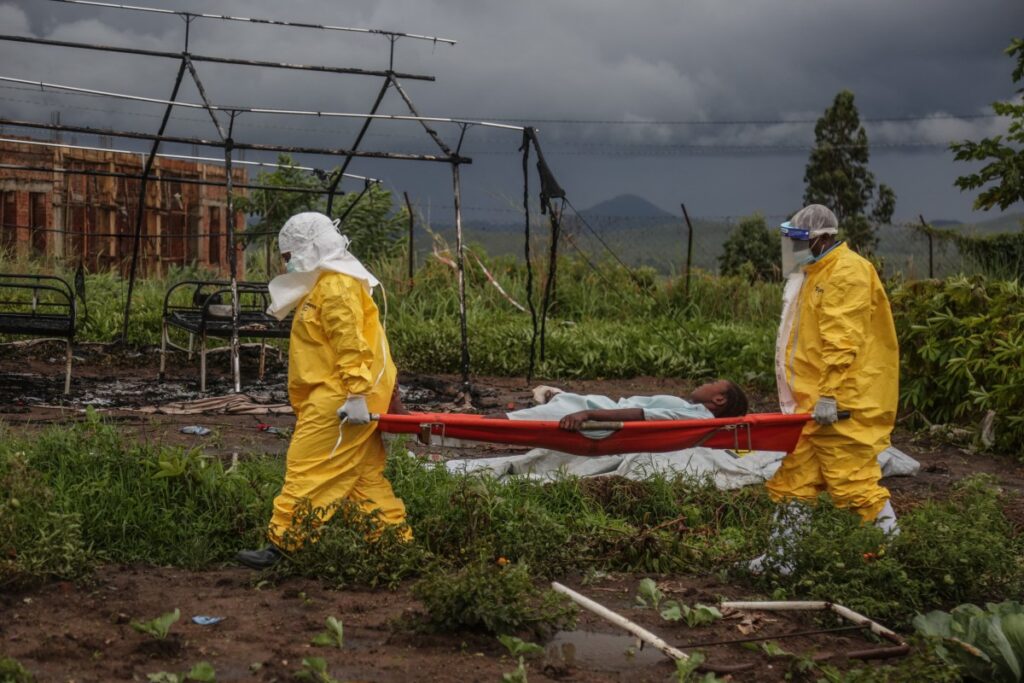
GENEVA, Switzerland — As the Democratic Republic of Congo (DRC) grapples with a fast-spreading, deadly Ebola outbreak, World Health Organization (WHO) Director-General Tedros Adhanom Ghebreyesus departed for the African nation Thursday, making a public pledge to deploy every resource at his disposal to curb the epidemic.
In a detailed public address shared on social platform X ahead of his trip, Tedros extended solidarity to Congolese communities affected by the outbreak, emphasizing that “together, we will overcome this outbreak.”
Latest official data compiled by WHO, updated to May 24, shows that since the outbreak was formally declared on May 15, the country has recorded over 1,000 combined confirmed and suspected Ebola cases, with 10 confirmed deaths and 223 deaths among suspected cases.
The outbreak is disproportionately concentrated in the country’s northeast, with more than 90% of all cases recorded in Ituri province. Smaller clusters of infections have also been identified in the adjacent North Kivu and South Kivu provinces.
“I want to be with you in these moments. And I want you to know that you are not alone,” Tedros stated, acknowledging the fear and strain the outbreak has placed on local populations. “I know how frightening that is, and I know that the people of Ituri are bearing a burden that is not easy to carry.”
He added that the regions impacted by Ebola were already confronting multiple overlapping crises before the outbreak, including endemic malaria, widespread food insecurity, and chronic armed conflict. “It is not fair, and I will not pretend otherwise,” he said.
Tedros outlined that the international response to the outbreak will center on lifting up and supporting the existing resilience of local communities. “We do not come to Ituri with only medicine and expertise. We come to join a community that already knows how to fight for its survival,” he explained.
A key barrier to containment efforts, Tedros noted, is the decades-long conflict and persistent insecurity that has destabilized eastern DRC for generations. Ongoing violence has blocked access to affected communities, slowing the rollout of response measures.
Complicating the response further, the current outbreak is caused by the Bundibugyo strain of Ebola, for which no approved vaccine or targeted treatment currently exists. WHO has also warned that the virus circulated undetected for an unknown period before being declared, meaning the actual scope of infections is almost certainly far larger than the current confirmed and suspected case count suggests.