
博客

  • Vredesvooruitzichten VS-Iran slinken na afgelasting vredesgesprekken door Trump

    Vredesvooruitzichten VS-Iran slinken na afgelasting vredesgesprekken door Trump

    After two months of open conflict between the United States, Israel and Iran, hopes for a diplomatic breakthrough to end the escalating regional crisis have faded significantly in the early days of this week, as both Tehran and Washington refuse to soften their non-negotiable preconditions, bringing peace talks to a complete standstill.

    The latest breakdown in negotiations came after Iranian Foreign Minister Abbas Araqchi concluded a visit to Pakistan on Saturday without securing any tangible progress, prompting US President Donald Trump to scrap the planned trip of his special envoys Steve Witkoff and Jared Kushner to the Pakistani capital Islamabad, where negotiations were set to take place. This latest development has pushed already dim peace prospects even further into uncertainty.

    The ongoing diplomatic impasse has trapped the world’s largest economy (the United States) and one of the Middle East’s most critical oil producers (Iran) in a protracted confrontation that has already sent global energy prices surging to multi-year highs, fueled broader global inflation, and dragged down projected economic growth across every major region worldwide. Compounding this economic risk, Iran has kept the strategically vital Strait of Hormuz largely closed to commercial shipping; the strait is the primary transit route for roughly 20% of the world’s daily oil and liquefied natural gas supplies, while US sanctions have blocked almost all Iranian oil exports to global markets.

    Iranian President Masoud Pezeshkian, who spoke by phone with Pakistani Prime Minister Shehbaz Sharif amid the collapsed talks, reiterated Tehran’s position that it will not participate in any negotiations that are imposed on the country under threat or economic blockade. Pezeshkian emphasized that the United States must first remove what Tehran calls “operational obstacles” — including the ongoing blockade of Iranian ports — before any productive talks can begin. While Araqchi described his Pakistan visit as “very productive,” an anonymous Iranian diplomatic source based in Islamabad made clear that Iran will reject what it views as the “maximalist demands” put forward by the US side.

    For his part, Trump defended his decision to cancel his envoys’ trip during remarks in Florida, claiming the journey would carry excessive costs and that Iran’s latest proposal did not meet US requirements. On his social media platform Truth Social, Trump also claimed there is “enormous internal strife and confusion” among Iran’s ruling leadership, writing, “Nobody knows who the boss is, not even they. We hold all the cards, they have none. If they want to talk, they just need to call!”

    Regional tensions have been further inflamed by Israel, which violated a three-week-old ceasefire by ordering Israeli forces to launch new strikes on Hezbollah targets in southern Lebanon, according to orders from Israeli Prime Minister Benjamin Netanyahu.

    Weeks prior, White House Press Secretary Karoline Leavitt had indicated that US officials saw some incremental progress from Iran, and said Vice President JD Vance — who led an initial, unsuccessful round of negotiations in Islamabad earlier this month — remained ready to return to the Pakistani capital for further talks. The current round of open conflict between the US, Israel and Iran began with joint US-Israeli airstrikes on February 28. In the months since, Iran has retaliated with strikes targeting Israeli territory, US military bases across the Middle East, and US-allied Gulf states. While a nominal ceasefire is currently in place, the regional situation remains highly tense and extremely fragile.

  • Onderzoek naar fraude met Moni Karta: coördinator tijdelijk ontheven

    Onderzoek naar fraude met Moni Karta: coördinator tijdelijk ontheven

    A fresh case of fraud linked to the Moni Karta social assistance program has been uncovered in Suriname, triggering an official probe that has already led to the temporary suspension of a senior coordinator at the country’s Ministry of Social Affairs and Housing (Sozavo). The investigation was launched after a program beneficiary filed a formal fraud allegation, marking the latest in a string of integrity concerns surrounding the welfare initiative.

    Sherwin Valies, department director at Sozavo, confirmed the development in an interview with local outlet Starnieuws, noting that the case has been handed over to national police for criminal investigation. Due to the active probe, Valies explained that few substantive details can be released publicly at this stage. “A formal report has indeed been filed. Since the investigation is still ongoing, I cannot go into detail about the specifics of the allegation,” Valies stated.

    The temporary removal of the implicated coordinator from her post aligns with the ministry’s strengthened integrity policy implemented in 2025, which requires that all staff under formal investigation be temporarily relieved of their official duties. Valies emphasized that the ministry followed this protocol strictly once the allegation was received from the claimant. “When we got the report from the client, we immediately applied our existing policy. The coordinator in question has been relieved of her duties, and we are now awaiting the outcome of the police investigation,” he explained.

    Despite the ongoing scandal, Valies stressed that core department operations and service delivery to program beneficiaries remain uninterrupted. A replacement has already been appointed to take over the suspended coordinator’s responsibilities, including critical work related to benefit distribution planning, ensuring no disruption to support for vulnerable populations.

    In response to repeated reports of irregularities connected to the Moni Karta program and within the General Social Assistance Benefits department, Valies also announced that the ministry will launch a separate internal administrative investigation to review systemic controls and governance gaps.

    The Moni Karta program was designed to deliver targeted financial support to low-income and socially vulnerable groups across Suriname. This latest discovery of potential fraud has reignited public and policy debate over the adequacy of oversight mechanisms and the effectiveness of the program’s implementation framework.

  • A trough will generate downpours and thunderstorms across much of the country this Sunday.

    A trough will generate downpours and thunderstorms across much of the country this Sunday.

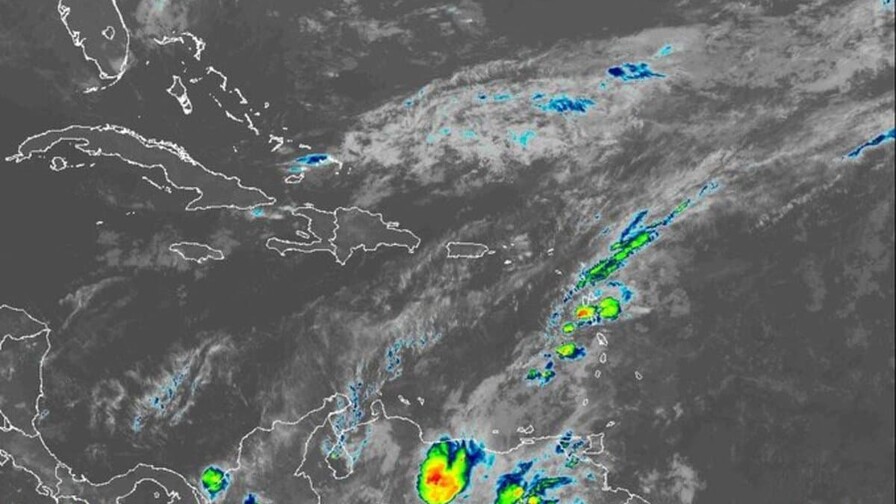
    On Sunday, the Dominican Institute of Meteorology (Indomet) issued an official update warning that a low-pressure trough will shape nationwide weather conditions, bringing a period of widespread rain that will ramp up through the day and stick around for the coming days.

    The wet weather is set to kick off in the early pre-dawn hours, with gradual building cloud cover and scattered light to moderate showers moving across the northwestern portion of the country by morning. Meteorologists specifically flagged Santiago Rodríguez, Montecristi, and Puerto Plata as the first provinces to see measurable rainfall as the system moves into the country.

    By mid-afternoon, conditions will worsen thanks to a combination of the existing trough and daytime atmospheric warming, which will supercharge cloud development and precipitation. Forecast models call for widespread thick cloud cover, followed by moderate to heavy downpours, rolling thunderstorms, and sudden gusty winds that will last into the early evening. A long list of provinces across the north and border regions are in the highest-risk zone, including Hato Mayor, Monte Plata, Sánchez Ramírez, Duarte, Hermanas Mirabal, María Trinidad Sánchez, and Espaillat.

    In response to the projected severe weather, Indomet’s National Forecast Center has issued formal weather advisories and alerts across multiple at-risk provinces. The main hazards highlighted are urban flooding, rapid rises in river and stream water levels, and an elevated risk of landslides in vulnerable terrain.

    For the Greater Santo Domingo area, forecasters predict mostly scattered cloud cover through most of the day, though they note that occasional thicker cloud formation and unexpected passing showers can not be completely ruled out. Across the entire country, temperatures will remain unseasonably hot despite the cloud cover and rain, with overnight lows ranging from 22°C to 23°C and daytime highs reaching between 29°C and 31°C.

    Indomet stressed that the weather pattern driven by the trough will not move on after Sunday, and that similar conditions – most notably afternoon rain and thunderstorms – will persist over the coming days. The agency has urged the general public to remain vigilant, keep updated with the latest official weather bulletins, and follow any safety guidance issued by local emergency management authorities.

  • Jhauw: Luchtverkeersleiding al jaren probleem, maar geen oplossing

    Jhauw: Luchtverkeersleiding al jaren probleem, maar geen oplossing

    Recurring outages of air traffic control services at Suriname’s Johan Adolf Pengel International Airport have triggered fresh, widespread disruptions to regional and international flight operations, forcing multiple commercial carriers to divert incoming and outgoing flights to alternate airports across the Caribbean and South American region. On Saturday, the Dutch flagship carrier KLM was forced to reroute one of its aircraft bound for Suriname to Piarco International Airport in Trinidad and Tobago, where the flight and its crew and passengers were required to overnight in Port of Spain due to the extended flight time incurred by the diversion. Other stranded passengers on diverted flights were forced to lay over indefinitely in neighboring Guyana as the airport remained non-operational for a large portion of the day, with no takeoffs or landings permitted during the service outage.

    Amichand Jhauw, chief executive officer of regional Suriname-based carrier Fly All Ways, has issued harsh public criticism of the ongoing crisis, labeling the air traffic control failures as a deeply rooted, structural problem that has plagued the country’s aviation sector for years. Jhauw noted that critical bottlenecks and staffing gaps in the air traffic control department have been well documented for years, but no meaningful, long-term solutions have been implemented by responsible authorities. “Problems continue to pile up because there is no structured, comprehensive approach to fixing the root causes,” Jhauw explained in an interview with local Surinamese outlet Starnieuws.

    An official Notice to Air Missions (NOTAM) issued by Suriname’s aviation authorities confirms that the temporary suspension of full air traffic control services stemmed from an acute staffing shortage, which forced the airport and surrounding airspace to be downgraded to a lower safety classification that could not support regular commercial operations.

    Jhauw warned that the consequences of inaction stretch far beyond costly flight delays and stranded passengers, stressing that the persistent instability could lead international airlines to permanently re-route flights away from Suriname, a shift that would cause long-term damage to the country’s national revenue. “If carriers decide they no longer want to fly through our airspace, we lose that critical stream of income entirely, and that kind of damage is not easy to repair – it can take years to recover from,” he said.

    Beyond lost revenue, Jhauw added that repeated disruptions are causing lasting reputational harm to Suriname’s aviation sector, and could erode the country’s international safety rating, making it even harder to attract reliable air service in the future. He emphasized that the crisis is particularly alarming because Suriname is almost entirely dependent on air connectivity to link it to the rest of the world, with no overland alternative transportation links such as cross-border rail or major highway connections to neighboring countries. “Aviation is our most important gateway to the world, and we cannot even keep that critical infrastructure operating reliably,” Jhauw said.

    The Fly All Ways CEO also slammed the responsible government agencies for their complete lack of communication and accessibility during the latest outage. He reported that airline operators were unable to reach any responsible officials to coordinate operational adjustments during the crisis, even as the outage triggered immediate operational costs and financial losses for carriers. “Airlines are being forced to absorb unnecessary extra costs with no prospect of compensation from authorities,” Jhauw stressed.

  • 37th Session of the Sectoral and Thematic Table on Social Protection in Haiti

    37th Session of the Sectoral and Thematic Table on Social Protection in Haiti

    Amid ongoing efforts to build a more inclusive and coordinated support system for vulnerable populations across Haiti, the country’s Ministry of Social Affairs and Labor (MAST) has brought together key sector stakeholders for the 37th gathering of its high-level Sectoral and Thematic Table on Social Protection (TSPS). Organized by MAST’s internal Studies and Programming Unit (UEP), the hybrid event, held both in-person at Port-au-Prince’s Montana Hotel and accessible to global participants via live videoconference, opened this week with a clear core mandate: strengthen institutional and multi-partnership coordination to address longstanding gaps in Haiti’s social protection ecosystem.

    In his formal opening address to attendees, Social Affairs Minister Marc-Elie Nelson centered his remarks on the critical role of Haiti’s National Policy on Social Protection and Promotion, framing the framework as a foundational strategic asset for MAST’s work. He explained that the recurring TSPS sessions serve a unique purpose in the sector: creating a structured space for cross-stakeholder dialogue, breaking down silos that have historically fragmented social protection interventions, and unifying diverse actors around aligned, collective action.

    “It is non-negotiable that every intervention, whether led directly by the Haitian state or implemented by our technical and financial partners, aligns fully with this national framework and contributes to its coherent rollout,” Nelson stated. He went on to reaffirm MAST’s unwavering commitment to sustaining collaborative partnerships, upholding alignment with national development priorities, ensuring intervention coherence, and leveraging complementary strengths across all participating organizations.

    Marie Hérolle Michel, Director General of MAST, followed the minister’s remarks by praising the consistent engagement and proactive energy of all stakeholders working to advance social protection across Haiti. She called for deeper cohesion and targeted collaboration to deliver tangible, practical results that directly improve the lives of Haitian citizens. “A cohesive national social protection system starts with cohesion right here within the Ministry of Social Affairs and Labor,” Michel emphasized, underscoring the importance of internal alignment to set an example for external partners.

    The 37th TSPS session featured a structured agenda focused on progress tracking and future planning. Attendees heard a joint presentation on the Social Protection and Employment Accelerator Joint Project from leads Sergot Jacob and Thomas Debrouwer. Barbara Canton and Jonès Pyram delivered a comprehensive overview of key progress and achievements delivered through the TSPS framework over the preceding term. Claudy Louis, the TSPS Focal Point, walked attendees through the newly revised Terms of Reference for the roundtable, updating operational guidelines to reflect evolving sector needs. Finally, Lucny Cadet, Coordinator of MAST’s UEP, presented a formal action plan designed to revitalize the TSPS mechanism and expand its impact moving forward.

  • The MTPTC is tackling the obstacles in the construction sector in Haiti

    The MTPTC is tackling the obstacles in the construction sector in Haiti

    Against a backdrop of widespread infrastructure stagnation and limited economic growth across Haiti, the country’s Ministry of Public Works, Transport and Communications (MTPTC) has launched a targeted effort to diagnose and resolve the systemic barriers holding back the nation’s critical construction industry. On April 26, 2026, MTPTC head Joseph Almathe Pierre Louis, a professional engineer, convened a high-stakes working meeting with leadership from the Haitian Association of Construction Companies (AHEC) to align public and private priorities for the beleaguered sector.

    The core mandate of the gathering was straightforward: map the most pressing challenges that have stalled industry progress, then build a collaborative regulatory roadmap to unlock the sector’s potential as a driver of national development. From the opening of discussions, participants agreed that sweeping restructuring of Haiti’s fragmented construction market is a non-negotiable first step. Minister Pierre Louis stressed that more rigorous, organized governance of the sector is required to deliver long-term, sustainable improvements that benefit both industry operators and Haitian communities at large.

    Two particularly pressing pain points emerged as top priorities for reform. First, attendees addressed longstanding frustrations around access to public procurement opportunities. Existing eligibility criteria for public tenders are widely viewed as overly restrictive and poorly aligned with the capacity of Haiti’s local construction firms, locking many domestic providers out of both national and international contracted projects. Second, the group flagged chronic payment delays for completed work as a major drain on the national economy. The consistent failure to disburse funds to construction companies on schedule has eroded the financial health of local operators, severely limiting their ability to invest in new equipment, expand workforces, and take on additional projects.

    By the close of the meeting, attendees had agreed on a concrete next step: develop a formal project summary that outlines shared strategic objectives and ranks the most urgent constraints to address. The overarching goal of the collaboration is to reshape Haiti’s construction sector into a well-structured, fiercely competitive, and fully transparent engine of national economic growth. This coordinated public-private initiative aligns directly with the Haitian government’s broader commitment to roll out large-scale national modernization projects across the country, while simultaneously creating space for local entrepreneurship to thrive.

  • Barbados Reggae Weekend delivers high-energy night as Guinness Showdown ignites crowd

    Barbados Reggae Weekend delivers high-energy night as Guinness Showdown ignites crowd

    BRIDGETOWN, Barbados – The 2026 iteration of Barbados Reggae Weekend is continuing to cement Caribbean reggae and dancehall as enduring, beloved cultural forces, drawing thousands of music fans to Bridgetown for back-to-back nights of world-class performances from across the region and beyond. Curated to bridge the gap between emerging new talent, established mid-career artists, and genre-defining legends, this year’s festival has earned widespread acclaim for its unrivaled lineup, solidifying its reputation as one of the can’t-miss entertainment events on the Caribbean calendar.

    Following a standout opening night headlined by the “Legends of Reggae” showcase, organizers carried their momentum into Saturday’s highly anticipated flagship event: the Guinness Showdown. The high-octane evening ran from early evening into the early hours of Sunday, delivering nonstop energy that held the packed crowd’s attention from the first opening chord to the final encore.

    Kicking off the night was rising Bajan star IDEA the Artiste, who set an electric tone with a dynamic opening set. Blending catchy, relatable lyrics with a commanding natural stage presence, he quickly warmed up the venue and drew early arrivals to the front of the stage. As the crowd swelled, a string of additional homegrown Barbadian performers took the spotlight, steadily building hype ahead of the event’s scheduled headline acts.

    The evening hit a brief bump when organizers announced that scheduled headliner Act 450 would be unable to perform, drawing a momentary wave of disappointment from attendees. But the lull in energy did not last long: fans quickly rallied around the replacement lineup, and fan-favorite local performer Master T stepped in to reignite the crowd, smoothly transitioning the energy toward the night’s international guest acts.

    Making his much-anticipated debut performance on Barbadian soil, veteran dancehall icon General Degree delivered a career-spanning set that left fans screaming for more. The pioneering artist took audiences on a nostalgic journey through his decades-long discography, performing era-defining hits including *Granny*, *Bodyguard*, and *Cartoon Character*. His throwback segment sparked a full venue frenzy, with crowd singalongs reaching a fever pitch for beloved deep cuts *When I Hold You Tonight* and *Traffic Blocking* – a performance that reaffirmed his legendary status in the reggae and dancehall communities.

    The energy only climbed higher when iconic reggae powerhouse Capleton, famously known as “The Fireman,” stepped onto the stage. Bringing his signature raw, unmatched intensity to every track, he ran through a catalog of genre anthems that had the entire crowd waving, jumping, and singing along in unison from the opening note to the final chord.

    Closing out the historic night was global dancehall superstar Popcaan, who delivered a dynamic, crowd-pleasing finale that exceeded all expectations. From his very first lyric, the entire venue sang along word for word to his biggest hits, capping off a night that solidified his standing as one of the genre’s most influential contemporary leaders.

    Saturday’s Guinness Showdown did not merely sustain the momentum of the 2026 Barbados Reggae Weekend – it elevated it, building seamlessly on the success of opening night to deliver an experience that will stand out in the history of the festival. The sold-out night stood as a powerful testament to the ongoing vibrancy and lasting cultural relevance of reggae and dancehall, leaving attendees already counting down to next year’s event. So far, the 2026 festival has earned glowing reviews from both performing artists and attendees, with praise directed at its thoughtfully curated lineup and seamless on-the-ground execution.

  • Explosie in zuidwest-Colombia eist minstens 14 levens

    Explosie in zuidwest-Colombia eist minstens 14 levens

    On Saturday, a devastating bomb blast ripped through a stretch of the Pan-American Highway in Colombia’s southwestern Cauca region, leaving at least 14 people dead and more than 38 others injured, five of whom are minors. The attack unfolded in the El Tunel area of Cajibio municipality, leaving a scene of chaos: destroyed civilian vehicles scattered across the roadway, debris littering the pavement, and emergency responders rushing to pull casualties from the wreckage, footage from the aftermath shows. Local and national leaders have swiftly condemned the attack as a deliberate act of violence against innocent civilians.

    Cauca Governor Octavio Guzmán labeled the incident an “indiscriminate attack targeting the civilian population” and called on the national government to launch a decisive and sustained response to curb the rising violence. The bombing comes amid a sharp surge in clashes between illegal armed groups fighting to control lucrative drug trafficking routes leading to the key Pacific port of Buenaventura. Over just 48 hours before the blast, the region recorded at least 26 separate violent incidents, including drive-by shootings and a drone attack on a civilian radar installation.

    Colombian President Gustavo Petro did not mince words in blaming the attack, calling the perpetrators “terrorists, fascists, and drug traffickers.” Defense Minister Pedro Sánchez, who was attending a security meeting in nearby Palmira when the explosion occurred, pledged immediate and forceful action against those responsible. “These criminals seek to sow terror among our population, but we will respond with unwavering resolve,” Sánchez stated.

    Colombian security officials have pointed to dissident factions of the former FARC guerrilla group as the primary suspects behind the wave of attacks, specifically identifying a network led by fugitive commander known as “Ivan Mordisco” and the Jaime Martínez faction as the responsible parties. Authorities have offered a reward of more than 1 million dollars for any information that leads to the arrest or capture of these key leaders.

    Francisca Toro, governor of the neighboring Valle del Cauca department, has also called on the national government to immediately deploy additional security forces to the region and step up intelligence operations to rein in the escalating terrorist activity. The Cauca region remains a strategically critical corridor for drug traffickers moving cocaine out of Colombia to consumer markets in Central America and Europe, and the ongoing power struggle between competing armed groups has kept the area in a state of persistent crisis, with civilians increasingly caught in the crossfire.

  • Training project in Haiti targeting 5,000 young people from high-risk neighborhoods

    Training project in Haiti targeting 5,000 young people from high-risk neighborhoods

    In a landmark bilateral cooperation gathering held on April 23, 2026, Haitian and Brazilian institutional stakeholders came together to advance two transformative initiatives focused on youth empowerment and community stabilization amid Haiti’s ongoing security challenges. The meeting brought together technical representatives from Haiti’s Ministry of Youth, Sports, and Civic Action (MJSAC), Brazil’s leading community security organization Viva Rio, and the Brazil-Haiti Cultural Center, all aligned around a shared goal of expanding opportunity for vulnerable young Haitians.

    At the core of the talks was the unveiling of an ambitious large-scale training project that aims to reach 5,000 young people residing in some of Haiti’s most high-risk urban neighborhoods. Designed to disrupt the cycle of violence that has drawn many disconnected youth into armed groups, the initiative frames skills training and mentorship as a concrete, life-changing alternative to recruitment by violent factions. Organizers have structured the project around a holistic model of prevention, one-on-one mentorship, and socio-community integration, seeking to reconnect marginalized youth to local support systems and economic opportunity.

    During discussions, stakeholders prioritized two neighborhoods for early intervention: Solino and Fort-Jacques. Both areas have been flagged as facing acute gaps in youth development resources, making them critical starting points for the initiative’s outreach and programming.

    Beyond the youth training project, MJSAC also presented a long-term strategic vision to its Brazilian partners: the “Sport Vision 2030” initiative. This multi-year plan centers on expanding access to quality sports infrastructure across Haiti and nurturing emerging athletic talent through inter-school championship programs. Backers say the project will create structured pathways to identify, mentor, and elevate a new generation of Haitian competitive athletes, while also using sports as a tool to build community cohesion and keep young people engaged in positive activities.

    The joint planning meeting marks a key step forward in bilateral cooperation between Haiti and Brazil, with both sides framing youth investment as a foundational strategy for long-term peace and development in the Caribbean nation.

  • The cleanup of Cap

    The cleanup of Cap

    Long plagued by chronic sanitation gaps that threaten public health and economic vitality, Haiti’s northern coastal hub of Cap-Haïtien is moving forward with sweeping cleanup efforts under the collective community initiative *Konbit Netwayaj*, paired with the monthly *Samedi Sitwayen* (Citizen Saturday) campaign that brings together residents and institutions for coordinated action on the last Saturday of every month. The ongoing effort, which first launched in September 2025, marked its latest major milestone on April 25, 2026, when Cap-Haïtien City Hall coordinated a cross-sector turnout of key national and local partners to clean up one of the city’s most high-profile public spaces.

    Joining the municipal team for the April cleanup were representatives from Haiti’s Ministry of the Environment, Ministry of Public Works, and the National Solid Waste Management Service (SNGRS), alongside dozens of civil society groups, all of whom turned out in force to advance the initiative’s goals. What makes this local effort particularly notable is that it forms an integral part of *Konbit Haiti Zero Waste*, a nationwide movement spearheaded by the Ministry of the Environment to overhaul the country’s fragmented waste management systems.

    The April cleanup operation focused specifically on the scenic coastline stretching along the key arterial road linking Cap-Haïtien’s international airport to its bustling city center. This corridor is widely recognized as the city’s primary gateway for visitors and commerce, making its upkeep a critical priority for boosting local tourism and economic activity.

    In opening remarks to participants, Cap-Haïtien Mayor Angie Bell welcomed the national program’s support, framing it as a long-awaited boost to the municipality’s ongoing work to build more sustainable waste management practices. Bell emphasized that poor sanitation has stood as one of the most pressing, long-running challenges facing the city, and that the collaborative initiative has injected new momentum into local efforts to turn the tide. The Cap-Haïtien Municipal Administration further reaffirmed its pledge to continue uniting community stakeholders around the shared goal of building a cleaner, more organized urban environment for all residents.

    Environment Minister Valery Fils Aimé used the event to highlight the collaborative model that underpins the national movement, noting that the effort draws together public sector agencies, private sector actors, and civil society organizations in a shared mission. He stressed that solving Haiti’s complex environmental and sanitation challenges requires collective responsibility, urging every resident and institution to commit to ongoing action. “The fight against environmental challenges cannot be won without everyone’s involvement. Every little bit counts,” Fils Aimé told attendees.

    Daril Baltaza, Director General of the SNGRS, echoed that sentiment, praising both Cap-Haïtien residents for their relentless determination and local leaders for their proactive commitment to rolling out the program successfully. Baltaza also called on residents to embed long-term change by adopting consistent, responsible waste disposal and recycling habits in their daily lives, beyond scheduled group cleanup events.

    The Cap-Haïtien event marks a key stepping stone in the national program’s gradual expansion across Haiti. On April 26, just one day after the Cap-Haïtien cleanup, Minister Fils Aimé traveled to the northeastern border city of Ouanaminthe to formally launch the *Konbit Haiti Zero Waste* program locally. The initiative will then roll out to the coastal city of Gonaïves starting April 27, with additional rollouts planned for other municipalities across the country in the coming weeks and months.