博客

  • Echoes of Waltham wins Best Video Production at CTO Media Awards

    Echoes of Waltham wins Best Video Production at CTO Media Awards

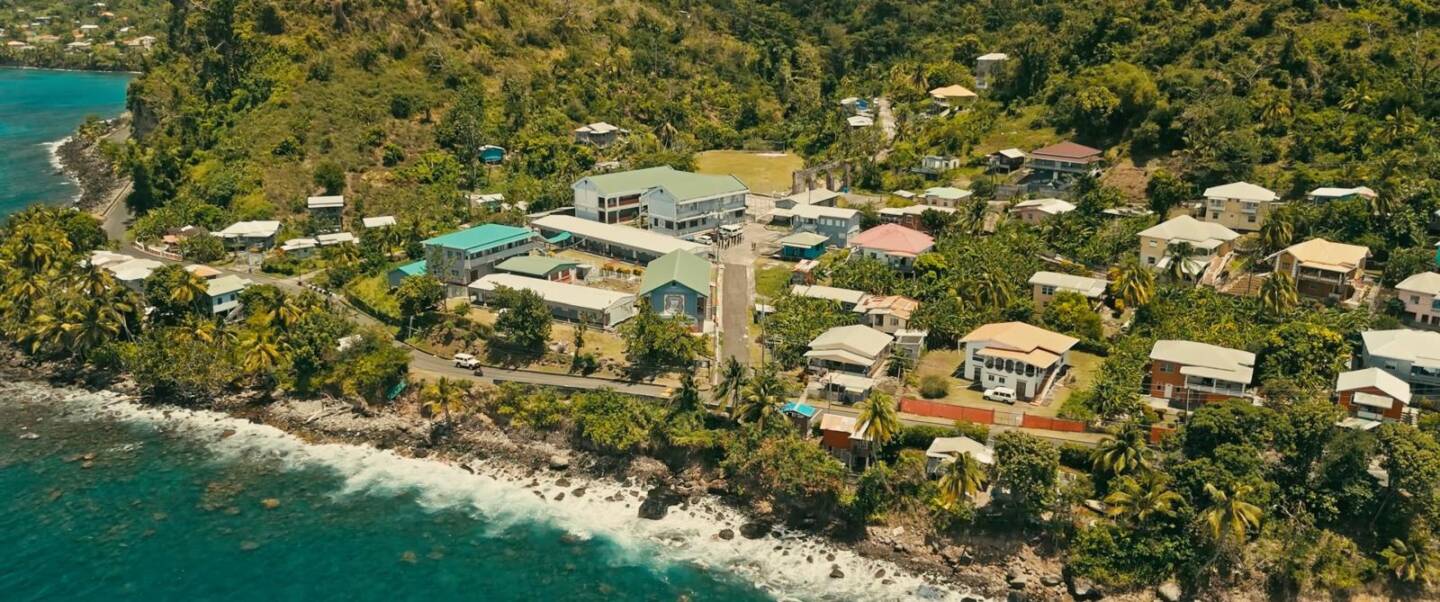
    A landmark community-led heritage documentary centered on the Grenadian village of Waltham has earned the region’s top tourism industry recognition, taking home the Best Video Production prize at the Caribbean Tourism Organisation (CTO) Media Awards.

    *Echoes of Waltham*, which captures the personal memories, intergenerational stories and distinct cultural landscape of Waltham in Grenada’s St Mark parish, emerged from the Island Echoes cross-cultural co-production initiative. The project is led by the Caribbean Institute for EcoLiberation (CIEL) in strategic partnership with Paxton House’s Caribbean Connections programme, an effort designed to unpack the little-known historical ties between the 18th-century Scottish Borders stately home and Caribbean communities shaped by the plantation economy.

    The transatlantic collaboration traces its origins to journalist Zoe Smith, who uncovered the hidden history of Waltham Estate while investigating the region’s plantation-era past. After discovering the estate was once owned by Ninian Home, a former colonial governor of Grenada who also owned Paxton House, Smith reached out to Home’s descendants to launch a community-focused heritage project that would center local voices rather than elite historical narratives. Over the course of the project, the partnership brought together a diverse coalition of Waltham residents, community organizers, academic researchers, creative artists, young participants and heritage institutions across Grenada, Scotland and England.

    For Smith, the project’s lead, the award is far more than an industry honor—it is a validation of the community trust that made the work possible. “This award is a beautiful recognition of Waltham’s story, but more than that, it is a recognition of the elders, residents and neighbours who trusted us with their memories,” Smith explained. “*Echoes of Waltham* was never simply about making a film. It was about honouring a village, preserving living memory, and creating a bridge between Grenada’s past, present and future. I’m especially proud that this work has connected Grenada, Paxton House and the wider Caribbean diaspora.”

    Unlike traditional historical documentaries that rely heavily on archival text and external expert narration, *Echoes of Waltham* centers the unrecorded voices of Waltham’s long-term residents and elders, preserving their oral histories that might otherwise have been lost to time. Through these personal stories, the film opens critical, accessible conversations about plantation history, the value of intergenerational storytelling, and the urgent need to safeguard Grenada’s vulnerable intangible cultural heritage. The production was shaped by collective input: historian and archivist Dr. Angus Martin provided deep contextual historical expertise, Scottish Paxton House curator Dr. Fiona Salvesen Murrell contributed guidance on transatlantic archival records, and Waltham residents Laslynn Andall and Anthony Patrick brought on-the-ground community perspective that anchored the entire project.

    Dr. Salvesen Murrell emphasized that the documentary aligns with the core mission of Caribbean Connections, which seeks to re-examine Paxton House’s colonial ties through a community-centered lens rather than a traditional institutional framework. “We are delighted that *Echoes of Waltham* has received this recognition from the Caribbean Tourism Organisation,” she said. “This highly meaningful film forms part of Paxton House’s wider Caribbean Connections work, which seeks to explore our historic links with the Caribbean in a thoughtful, creative and resident-centred way. We are deeply grateful to the people of Waltham and to all the partners who helped bring this story to life.”

    The award-winning documentary is just one component of the broader Caribbean Connections programme, which also includes *Palimpsest*, a major exhibition by Grenadian-born artist Billy Gérard Frank. Frank’s work served as a central creative anchor for the partnership, illuminating the layered cultural, historical and emotional connections that bind Grenada, the wider Caribbean, and the Scottish Borders to this day. For Frank, the documentary’s award win highlights the transformative power of centering marginalized voices in shared heritage work. “This film demonstrates the power of storytelling to connect generations, preserve local histories, and deepen our understanding of the enduring ties between Grenada, Scotland, and England,” Frank said. “At its heart, *Echoes of Waltham* is a celebration of memory, place, and the voices that shape our shared heritage.”

    Beyond the recognition from the CTO, the project has already sparked new academic and community engagement. It has catalyzed expanded research into the historical links between St Mark parish and Scotland, with a team of researchers from the University of Edinburgh already conducting an on-site visit to Waltham to advance their work. The film has also been screened locally for staff, students and residents at St Mark’s Bonaire Government School, bringing the story of Waltham back to the community that inspired it.

    Looking ahead, the Island Echoes initiative is set to expand its work in Waltham, with new funding secured from the Grenada Office of Creative Affairs. The next phase of the project will deepen the team’s oral history documentation work with Waltham residents, capturing more untold personal stories, and launch an interactive digital mapping project that preserves the village’s stories, historic sites and cultural landmarks for future generations. The project’s model of cross-border, community-led heritage work has already emerged as a groundbreaking example of how to confront shared colonial history while centering the voices of those most affected by that past.

  • Opposition Leader Says 80% NHI Funds Go to Private Clinics

    Opposition Leader Says 80% NHI Funds Go to Private Clinics

    On Thursday, June 8, 2026, Belize’s House of Representatives approved the second reading of the National Health Insurance Authority Bill 2026, capping off a heated debate that exposed deep partisan divides over the future direction of the Central American nation’s public healthcare system. The core point of contention revolves around the government’s growing reliance on private clinics to deliver services under the existing National Health Insurance (NHI) program, with the opposition accusing the ruling administration of sidelining public healthcare institutions to funnel the vast majority of program funds and contracts to private operators.

    Opposition Leader Tracy Panton levelled the sharpest critique of the government’s model during floor remarks, revealing that 80 percent of all NHI service contracts are currently awarded to private healthcare facilities, leaving just 20 percent for public sector providers. She questioned the logic of outsourcing core basic healthcare services to private entities, arguing that public institutions are better positioned to deliver equitable, universal primary care to all Belizeans. Panton called for a redirection of existing NHI procurement funds to upgrade underfunded public healthcare facilities, rather than continuing to channel resources to the private sector.

    Panton further warned that the new legislation, which formalizes the structure of the NHI authority, concentrates excessive regulatory power in the executive branch without adequate accountability safeguards. She argued that the current trajectory risks creating a parallel funding system that socializes financial risk for taxpayers while concentrating private profit for healthcare operators, warning that without urgent oversight reforms the program could become another corrupt, mismanaged public body similar to the troubled former LIU.

    Prime Minister John Briceño, who frames the NHI bill as a foundational long-term nation-building initiative, defended the mixed public-private delivery model on efficiency and cost-saving grounds. Briceño argued that contracting both public and private providers allows the NHI program to leverage bulk purchasing power to drive down service and medication costs for the system. He illustrated the savings with a concrete example: while an average patient pays $50 out of pocket for a private clinic appointment, the NHI negotiates a rate of just $12 per visit, thanks to the guarantee of more than 4,000 patients annually for participating providers. Briceño noted that this same bulk negotiation principle applies to pharmaceutical procurement, delivering broader savings across the entire program.

    Health and Wellness Minister Kevin Bernard did not directly refute Panton’s 80-20 funding split claim, but pushed back against her critique by highlighting the addition of seven new public sector NHI providers across the country, including new polyclinics in high-demand population centers Orange Walk, Belmopan, and San Ignacio. The bill now moves forward in the legislative process, as debates over the balance between public and private healthcare delivery in Belize continue to dominate political discourse.

  • St Lucy school shut as smoke, ash stall clean-up

    St Lucy school shut as smoke, ash stall clean-up

    A persistent nearby wildfire has derailed reopening plans for a northern Barbados secondary school, pushing back the expected resumption of classes after the campus was shuttered Monday due to hazardous air quality, the institution’s principal confirmed this week.

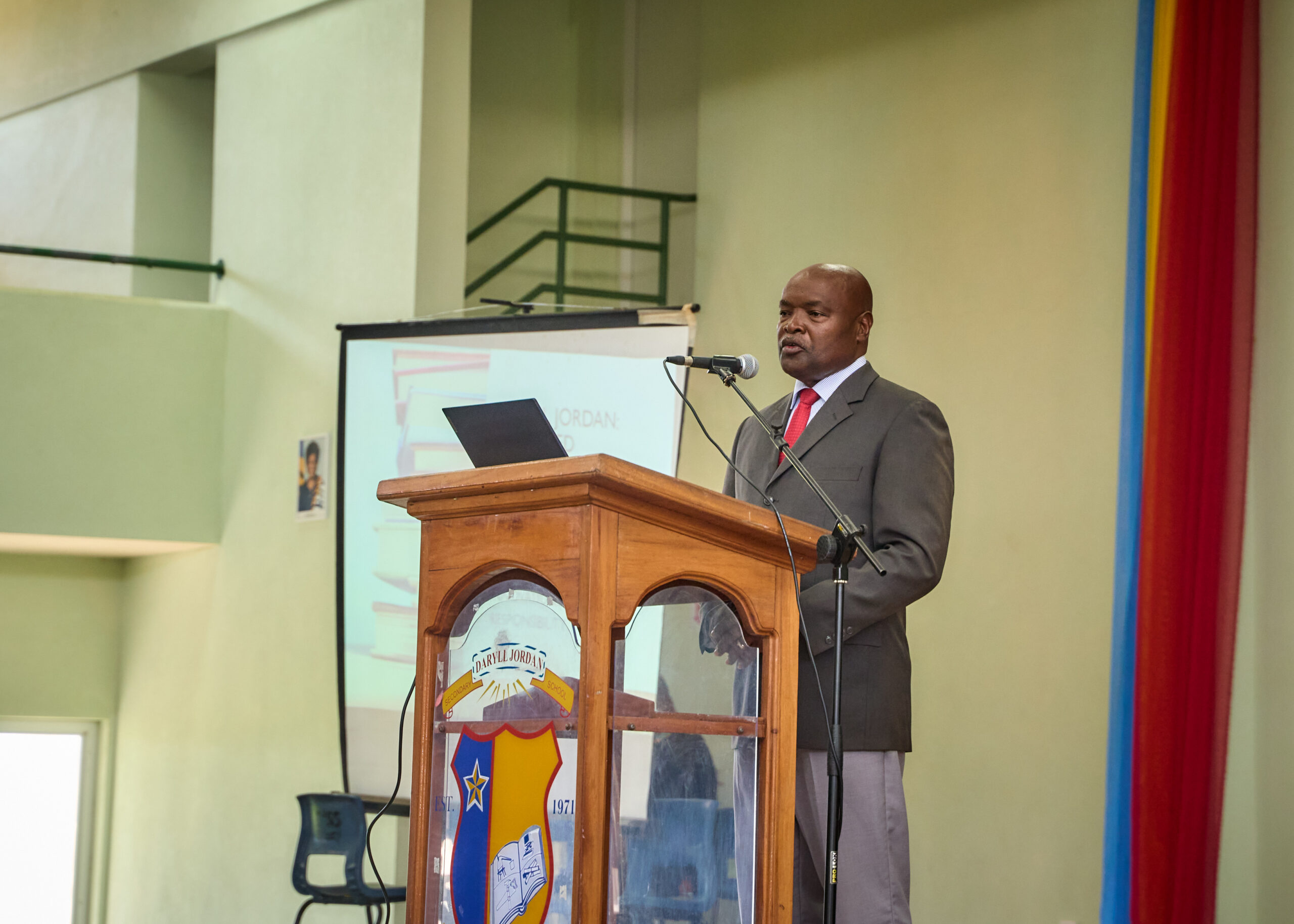
    Ken Layne, principal of Daryll Jordan Secondary School located in St. Lucy, announced Monday that scheduled classes set for Tuesday would not go ahead as planned. Uncontrolled smoldering embers continue to billow thick smoke and ash across the school grounds east of the fire line, creating unsafe conditions that have blocked clean-up and sanitation crews from accessing the campus to remediate the damage.

    The school was first forced to suspend in-person learning on Monday after wind carried toxic ash and smoke directly into campus buildings from the adjacent burning area. Layne explained that ongoing active combustion just a short distance from school property has made it impossible to even begin the deep cleaning required to make classrooms safe for students and staff, creating a critical bottleneck to restoring normal operations.

    “We are closed today because of the ash that has accumulated inside the building, and there is still a heavy concentration of smoke in the air today,” Layne said in an interview. “Right now, to the east of the school, you can still see active smoking — the embers are still smoldering up in that area. That is directly impacting our ability to respond, and it is even preventing us from starting the cleaning process at all.”

    The sudden closure has prompted urgent emergency adjustments for one high-stakes group of students: those sitting for the Caribbean Secondary Education Certificate (CSEC) exams. To avoid disrupting the critical assessments and putting candidates at an unfair disadvantage, education officials moved all scheduled CSEC exams from Daryll Jordan Secondary to The Alexandra School in the nearby town of Speightstown. Layne confirmed that the relocated students had settled into their new testing site by Monday morning and would complete their scheduled exams as planned that day.

    Layne added that school leadership, in partnership with emergency management and environmental officials, would conduct a second full assessment of campus conditions and air quality later on Monday. Following that evaluation, a further update will be distributed to all parents, guardians, and staff members outlining next steps, including any adjustments to the school calendar. Any decision on when classes can resume will be entirely contingent on the latest reports from emergency response and environmental health teams, with the inability to launch clean-up operations remaining the single largest barrier to reopening. “Everything hinges on being able to start that clean-up process, and right now, we cannot start cleaning yet,” Layne said.

    Addressing widespread community questions about whether large wildfire-related closures are a regular risk for the St. Lucy school, Layne clarified that events of this magnitude are extremely rare. While the school did face a similar closure due to a nearby fire last year, he noted that no incidents on this scale had occurred prior to 2023. He added that the 2024 fire is far more extensive than any the school has experienced in recent memory: the blaze ignited far to the east of the campus and has since spread west, crossing a major road and moving much closer to school grounds than previous fires.

    Despite the widespread disruption, Layne was quick to highlight the quick support the school has received from local landowners, specifically naming ABC Farms, which manages the large parcels of land east of the school. He explained that the school has built a proactive partnership with the farm in recent years to conduct regular vegetation clearing to reduce wildfire risk, and the farm has stepped up to support emergency response efforts as the current blaze spread. While the landowners could not stop the fire from spreading toward the campus, they deployed their on-site water tenders to support firefighters working to contain the blaze. “They have been good corporate partners with us. In the case of a fire, there is not much they can do to stop it once it starts, but they were out with their equipment assisting in putting out the fire,” Layne said.

  • Top former US govt trade expert to discuss “Growing Business with the United States” in Guyana

    Top former US govt trade expert to discuss “Growing Business with the United States” in Guyana

    Against a backdrop of shifting global trade dynamics and recent U.S. tariff policy changes that have impacted cross-border commerce, World Trade Centre Georgetown (WTCG) is preparing to host a high-profile business luncheon focused on expanding commercial ties between Guyanese enterprises and the U.S. market. Scheduled for Wednesday, June 17, 2026, the event titled “Growing Business with the United States” will feature Arun Venkataraman, a globally recognized veteran trade policy expert with decades of high-level experience in international commerce.

    This luncheon forms a core part of WTCG’s long-standing mission to foster and strengthen bilateral trade and investment links between Guyana and its international economic partners. As Guyana continues to grow its global economic footprint and work to diversify its national export base, the organization has curated this event to give local business leaders direct access to insights from one of the most authoritative voices on U.S. trade and commercial policy.

    Venkataraman brings over 25 years of specialized experience across international trade, commercial strategy, and global economic policy. Most recently, he held a Senate-confirmed position as Assistant Secretary of Commerce for Global Markets and Director General of the U.S. and Foreign Commercial Service at the International Trade Administration, serving from 2022 to 2025. In this senior role, he led U.S. federal government initiatives to expand commercial opportunities for both American enterprises operating abroad and international firms looking to enter and invest in the U.S. market.

    His core responsibilities during his tenure included facilitating cross-border business transactions, advocating for improved global commercial policy frameworks, resolving trade and investment barriers, and negotiating bilateral agreements to strengthen commercial cooperation between the U.S. and partner nations. During the upcoming luncheon, WTCG confirms Venkataraman will deliver actionable insights on current U.S. trade and commercial policies, existing trade preference programs, and other regulatory mechanisms designed to support foreign businesses entering the U.S. market. His presentation will center specifically on how Guyanese companies can leverage these frameworks to boost export volumes, build strategic cross-border partnerships, attract foreign direct investment, and strengthen their overall global competitiveness.

    The event comes at a critical juncture for Guyanese exporters, as global trade continues to be reshaped by evolving geopolitical dynamics, ongoing global supply chain realignment, and shifting trade and investment policies among the world’s largest economies. Policy decisions made by the U.S. on tariffs, market access, and commercial partnerships increasingly shape global business strategies and the competitive position of exporters across every region, including Guyana.

    For Guyana, deep familiarity with these evolving policy shifts has grown even more urgent following recent changes to U.S. tariff rules that affect a range of Guyanese exports. The elimination of duty-free treatment for certain products, replaced by tariff rates as high as 15 percent, has created new headwinds for exporters working to maintain and grow their share of the U.S. market. These policy changes underscore the urgent need for local businesses to stay updated on evolving U.S. trade rules and develop targeted strategies to preserve their competitiveness while capitalizing on new emerging opportunities in the U.S. market.

    In an increasingly complex global trading landscape, access to authoritative, first-hand insight on U.S. trade policy is an invaluable resource for local enterprises. WTCG emphasizes that Guyanese businesses need to understand both the challenges created by recent policy shifts and the untapped opportunities that remain within the growing framework of U.S.-Guyana commercial relations.

    This exclusive luncheon offers a one-of-a-kind chance to gain direct insight from a leader who helped shape and implement U.S. trade policy at the highest level of government. WTCG argues that equipping local businesses with timely, accurate information and practical industry knowledge is essential to allow Guyana to fully capitalize on its rapid economic expansion, while deepening its integration into regional and global value chains.

    The event is expected to deliver particular value for exporters, manufacturers, service providers, cross-border investors, business support organizations, and entrepreneurs seeking to expand their commercial operations beyond Guyana’s borders. Beyond the formal presentation, attendees will have the opportunity to engage directly with Venkataraman during a dedicated question-and-answer session, as well as in targeted private one-on-one discussions following the main program.

    The luncheon aligns with WTCG’s core institutional mission: connecting Guyanese businesses to global markets and creating avenues for meaningful international economic engagement. As a member of the World Trade Centers Association Network, which includes more than 300 World Trade Centers across over 100 countries, WTCG remains dedicated to providing local Guyanese enterprises with access to world-class expertise, actionable market intelligence, and high-impact business development opportunities.

    All members of Guyana’s business community and interested stakeholders are invited to register for the event. For registration details and additional information, interested attendees may contact the WTCG Secretariat at 592-763-9824 or 592-515-9824 to speak with Ms. Noel or Ms. Peters.

  • Defending champions Wales advance, Ellerton exit

    Defending champions Wales advance, Ellerton exit

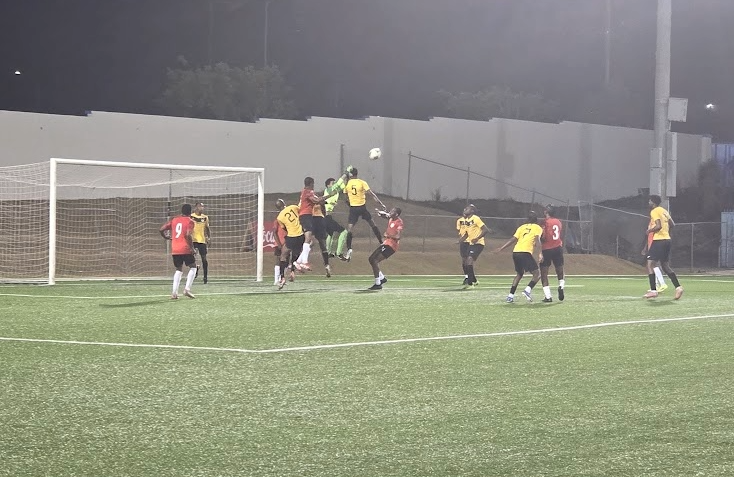
    The knockout stage of the Barbados Football Association (BFA) Champions Cup delivered dramatic twists and dominant performances on Sunday, as three more Round of 16 ties wrapped up at the Wildey Technical Centre. One title favorite secured a spot in the next round with a statement win, while another longtime contender exited the competition earlier than most projections predicted.

    Leading the day’s action was defending Premier League and BFA Champions Cup title holder Weymouth Wales, who snapped a season-long goal drought to hand second-placed Division One side Parish Land a resounding 5-0 defeat. The lopsided result came in the final match of a triple-header, and it served as a much-needed confidence boost for a side that has struggled to find the back of the net through the current domestic campaign.

    Wales got on the board in the 20th minute, after Parish Land squandered an early promising opportunity that saw the underdogs start the match brightly. Forward Hayden Holligan slotted home the opening goal to put the defending champions ahead. The second goal came via a stroke of bad luck for Parish Land in the 36th minute: a defender’s attempted clearance ricocheted off Wales midfielder Jaheim Neblett and trickled into the empty net, doubling Wales’ lead heading into halftime.

    Substitute Armando Lashley extended the advantage to 3-0 in the 59th minute, carrying over the strong run of form he has built in recent weeks. With Parish Land reeling and unable to mount a consistent counterattack, Weymouth Wales added two late goals to cap off the rout: Rommel Bynoe found the net in the 62nd minute, and Rashad Jules closed out the scoring in the 80th minute.

    Following the win, Weymouth Wales head coach Asquith Howell framed the result as a critical milestone ahead of upcoming regional and domestic competitions. The side qualified for the 2024 Caribbean Football Union (CFU) Club Shield by retaining their domestic Premier League title, and this year’s regional competition will follow a single-elimination knockout format, with Weymouth Wales entering at the Round of 16 stage.

    “One of the key focuses of our training lately has been expanding our attacking options ahead of the CFU competition,” Howell explained. “We’ve faced a lot of challenges with scoring goals this year, so tonight’s performance is a great starting point. We still have a long way to go, but this is solid progress. Since we know the CFU Club Shield will be knockout football, we definitely need to start finding the back of the net more consistently, and this win checked that box.”

    In the day’s second upset, traditional title contender Ellerton was ousted from the competition by UWI Blackbirds following a back-and-forth, tightly contested match. Teon Cadogan put UWI ahead early, netting in the 16th minute to put the Cave Hill-based side on the front foot. After 25 minutes of continuous end-to-end action, Ellerton capitalized on a UWI defensive mistake to equalize in the 40th minute through Marco St Hill, sending the two sides into halftime level at one apiece.

    Rovaldo Massiah restored UWI’s lead 12 minutes after the break, curling a well-placed strike past the Ellerton goalkeeper to make the score 2-1 in the 52nd minute. Despite sustained late pressure from Ellerton pushing for an equalizer, UWI held firm to defend their lead and secure a spot in the quarter-finals.

    Speaking after the win, UWI assistant coach Ricardo Goddard praised his side’s discipline in sticking to their pre-match game plan. “I think we played well in stretches, and we mostly stuck to what we drew up before the game, and when you execute your game plan, you usually get the result you want,” Goddard said. He noted that scoring first in a knockout competition is a massive advantage: “Our focus going in was to avoid giving up the first goal, because once you’re chasing the game in knockout football, the opposing side often drops back to defend their lead, and if you don’t have the creativity to break them down, you end up scrambling and making mistakes. Getting on the board first made all the difference today.”

    In the opening match of Sunday’s triple-header, Eyre’s Meatshop Pride of Gall Hill booked their quarter-final spot with a 2-0 victory over Notre Dame. Shakarie Mottley put Gall Hill ahead in the 19th minute, and an 88th-minute own goal from a Notre Dame defender sealed the win to send the side through.

  • Edmund O. Pennil, Who Served Belize’s Courts for 64 Years, Has Died

    Edmund O. Pennil, Who Served Belize’s Courts for 64 Years, Has Died

    The small Central American nation of Belize is in mourning this week following the passing of one of its most iconic public servants, Edmund O. Pennil, a man who dedicated nearly his entire life to upholding the country’s judicial system over 64 consecutive years of service. Known affectionately as “Mr. P.” to nearly every member of Belize’s tight-knit legal community, Pennil’s legacy of dedication, institutional expertise, and unwavering integrity has drawn tributes from the Government of Belize, former colleagues, and generations of court users, many of whom say the country will never see another public servant quite like him.

    Pennil’s extraordinary career in Belize’s court system began in 1958, when a 15-year-old Pennil took his first entry-level position at the General Registry. Unlike many young workers who move between roles and industries over the course of their careers, Pennil never left the institution that became his life’s work. Climbing the ranks through consistent dedication and a deep commitment to mastering every detail of the court system, he earned a promotion to the senior role of Deputy Registrar of the High Court in 1979, a post he held with distinction for 18 years.

    When he officially reached retirement age in 1997, Pennil was not ready to step away from the work he loved. That same year, he agreed to return to the judiciary on a contractual basis, continuing to share his vast knowledge with newer staff and the legal community. He later transitioned into the role of Supervisor of the General Registry, where he remained until his full retirement in 2022 – 64 years after he first walked through the doors of the registry as a teen.

    Long before the digital transformation of court records that swept through judicial systems around the world, Pennil served as Belize’s walking, living search engine for legal information. When lawyers needed to track down decades-old case documents, understand obscure filing procedures, or untangle complicated administrative workflows, they did not turn to a database – they turned to Mr. P. His memory held decades of irreplaceable institutional knowledge that no official manual, training program, or fellow staff member could ever replicate.

    Colleagues who worked alongside Pennil throughout his career remember him as a man defined by three core traits: unwavering punctuality, meticulous precision in every task he undertook, and a lifelong commitment to the oath of public service that he never violated. He prided himself on serving all court users equally, without fear of repercussion from powerful figures or favor for personal connections, a standard he upheld throughout his entire career. As tributes continue to pour in from across the country, Pennil’s legacy as a model public servant remains a touchstone for all who serve Belize’s institutions.

  • GBB moet SRD 128 miljoen betalen aan vonnissen, slechts SRD 32 miljoen op begroting

    GBB moet SRD 128 miljoen betalen aan vonnissen, slechts SRD 32 miljoen op begroting

    Suriname’s Ministry of Land Policy and Forest Management (GBB) is confronting a significant budget gap as it prepares to meet financial obligations stemming from binding court judgments for the 2026 fiscal year. According to budget documents released by the ministry, the department estimates it will require a total of SRD 128 million to satisfy all outstanding monetary obligations attached to court rulings against the state. However, constrained by tight national budget limits, only SRD 32 million has been allocated to the dedicated line item for court judgment payments, leaving a massive SRD 96 million deficit between identified needs and available funding.

    GBB officials have confirmed that there are roughly 25 active court rulings that impose enforceable financial responsibilities on the Surinamese state. Of these outstanding cases, the most urgent claims collectively add up to approximately SRD 55 million alone – an amount that already far outpaces the full SRD 32 million allocation granted for all 2026 obligations.

    In its budget documentation, the ministry noted that it has established a separate, dedicated budget line specifically for these court-ordered payments, as part of its formal commitment to fulfilling all judicial rulings in a timely manner. All payments stemming from judicial decisions against the state are supposed to be drawn from this dedicated allocation.

    The SRD 32 million allocation approved for 2026 actually represents a modest increase from the original budget proposal submitted in September 2024, which only earmarked SRD 23 million for court judgments. Even with the adjustment in the amended budget note, the total available funding still falls 75 percent short of the ministry’s projected full-year need.

    Notably, the published budget documents do not include detailed breakdowns of the specific cases covered by the outstanding judgments, nor do they identify which claims have been classified as urgent, or provide timelines for when the obligations were first incurred. What the budget documentation does make clear is that the ministry has fully accounted for the substantial financial impact of these rulings, and has openly acknowledged that current appropriations are insufficient to settle all outstanding obligations in full during 2026.

    This funding shortfall raises pressing questions about the ministry’s ability to comply with all judicial orders within the required timelines in the coming year. Based on information included in the budget documents, GBB plans to prioritize settling the most urgent claims first, leaving many lower-priority financial obligations without full funding for the foreseeable future.

  • New Online newspaper eyes different funding model

    New Online newspaper eyes different funding model

    On June 8, 2026, a new independent digital news platform Kiskadee Watch announced its official launch in Guyana, introducing an innovative alternative funding model designed to preserve independent journalism and press freedom across the nation. Helmed by Anand Persaud, former Editor-in-Chief of the shuttered Stabroek News, the new outlet is stepping into a gap created by the collapse of one of Guyana’s most long-standing and respected news publications earlier this year.

    Unlike many modern news outlets that rely on paid subscription models to generate revenue, Kiskadee Watch has adopted a hybrid financing framework adapted from two established global media organizations: the United Kingdom’s the Guardian and the United States’ National Public Radio. The model combines distributed share ownership with voluntary contributions from a broad range of stakeholders, including individual readers, non-profit foundations, civil society groups, and private sector businesses. Under this structure, all digital content on Kiskadee Watch’s official website kiskadeewatch.com will remain permanently free and accessible to all readers, both in Guyana and across the global Guyanese diaspora. While the organization has confirmed plans to launch a high-quality weekly print edition before the end of 2026, it has not yet announced whether the print publication will require paid access.

    The launch comes months after Guyana Publications Inc., the publisher of Stabroek News, ceased all operations after 35 years of independent reporting. The company cited crippling rising operational costs paired with a major industry-wide shift of advertising spending away from print media toward digital platforms, which have increasingly bypassed traditional local news outlets entirely. In its official statement, Kiskadee Watch emphasized that it is building directly on the 35-year legacy of journalistic professionalism, integrity, and editorial independence that Stabroek News established over its decades of operation. The outlet has committed to upholding that legacy as a trusted, fact-centered news institution dedicated to protecting editorial freedom and strengthening open democratic discourse in Guyana.

    Acknowledging that upholding press freedom and free expression carries significant financial costs, Kiskadee Watch has issued a public call for contributions from Guyanese residents, the diaspora community, and all supporters of independent journalism across the Caribbean and beyond. The organization will publish official bank details for public donations at a later date, noting that every contribution will help the outlet keep its digital content free for all readers.

    The outlet’s distinctive name and branding draw on a beloved local icon: the kiskadee, a common bird species found across every region of Guyana. Known for the loud, recognizable call that gives the bird its name, the kiskadee is a hardy, highly adaptable species that survives challenging environmental conditions including unregulated pesticide use, limited access to clean water in polluted urban areas, and widespread replacement of native vegetation with concrete development. In its statement, Kiskadee Watch drew a parallel between the bird’s resilience and that of the Guyanese people, saying the species embodies the endurance that independent journalism in the country requires.

    A six-member steering committee, composed of Janette Bulkan, Rhett Gordon, Jocelyne Josiah, GHK Lall, Cheryl Springer and Alissa Trotz, will guide the new outlet’s operations and governance as it builds out its audience and programming.

  • Magnitude 6.4 Earthquake Near Cuba Felt in Belize

    Magnitude 6.4 Earthquake Near Cuba Felt in Belize

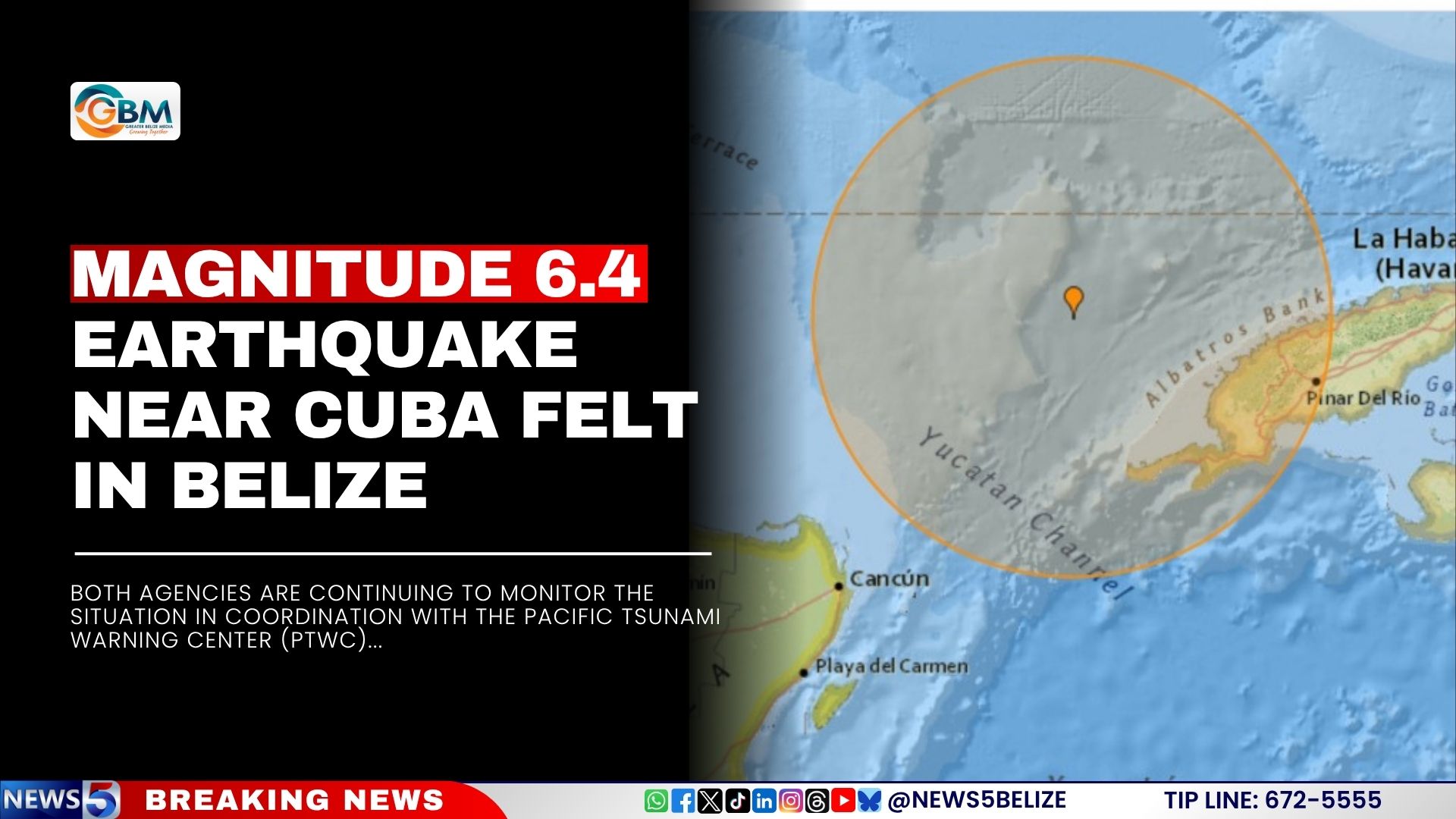
    On June 8, 2026, a magnitude 6.4 earthquake hit the region near Cuba, shaking parts of neighboring Belize and prompting rapid coordinated assessments from regional emergency management agencies.

    According to initial seismic data, the temblor struck at approximately 12:00 p.m. local time, with its epicenter positioned around 118 kilometers west-northwest of Mantua, a town in western Cuba. The earthquake originated at a depth of 33 kilometers below the Earth’s crust, a depth that typically reduces the severity of surface shaking compared to shallower seismic events.

    Within hours of the earthquake being detected, residents across multiple districts in Belize reported feeling noticeable tremors. In response, Belize’s National Emergency Management Organization (NEMO) and the country’s National Meteorological Service immediately launched situational assessments to rule out potential secondary hazards.

    Shortly after their initial evaluation, NEMO released an official informational bulletin reassuring the public that the earthquake does not pose a significant tsunami risk to coastal areas of Belize, and no emergency evacuation or protective action is required for residents at this time.

    Both Belizean agencies are maintaining continuous monitoring of the situation in close coordination with the Pacific Tsunami Warning Center (PTWC), the international body that provides regional early warning infrastructure and support for seismic and tsunami events across the Caribbean and adjacent regions.

    As of the latest update from Cuban state media, no reports of casualties or major structural damage have been confirmed across Cuba. However, national authorities are still working to compile damage and injury reports from more remote, harder-to-reach areas near the epicenter, with updates expected as more information becomes available.

  • RGPF warns against illegal activities associated with masquerading

    RGPF warns against illegal activities associated with masquerading

    Grenada’s top law enforcement body, the Royal Grenada Police Force (RGPF), has issued a formal warning over a wave of unapproved masquerading events that have spawned a string of illegal and disruptive behaviors across the island nation.

    In an official statement released from the Office of the Commissioner of Police, the RGPF outlined the multiple harms stemming from these unregulated gatherings: public roadways have been blocked, cutting off access for emergency and civilian vehicles; both public infrastructure and private property have been vandalized; residents and local business owners have faced repeated intimidation; and persistent excessive noise has upended daily life for communities across the country. All of these actions amount to widespread public nuisance that disrupts social order, the force confirmed.

    Beyond immediate public inconvenience, the RGPF emphasized that these rogue activities undermine the rich cultural heritage and positive communal values that define legal, properly organized masquerading and community cultural celebrations. What is intended to be a unifying, tradition-affirming cultural practice has been distorted by unregulated participants to become a source of harm and friction for local populations.

    The force stressed that it remains fully committed to upholding and protecting Grenada’s long-standing cultural traditions. However, this support comes with a clear requirement: all cultural activities must be carried out in full compliance with national and local laws, and organizers and participants must uphold the rights, personal safety and property interests of all Grenadian residents.

    Any behavior that disrupts community life, causes damage to property, or creates unnecessary public safety risks will not be tolerated, the statement warned. The RGPF has called on the general public to collaborate with law enforcement by promptly reporting any unlawful activity linked to unregulated masquerading, and to adhere to existing regulations that govern public gatherings and sanctioned cultural events.

    The force also appealed directly to key stakeholders, including community leaders, organized cultural groups, and other relevant parties, to take proactive steps to promote responsible participation in masquerading traditions. By guiding participants toward lawful, respectful behavior, these groups can help protect the positive reputation and cultural integrity of these beloved local practices.

    Moving forward, the RGPF confirmed that it will maintain active, continuous monitoring of masquerading activities across Grenada, and will not hesitate to implement appropriate enforcement measures in any location where unlawful behavior occurs. The force reaffirmed its core mandate: to preserve public safety, protect public and private property, and uphold stable public order across the entirety of the island for all residents and visitors.

    This statement is issued by the Office of the Commissioner of Police. NOW Grenada notes that it does not take responsibility for opinions or content shared by external contributors, and invites users to report any content that violates platform policies through official reporting channels.