博客

  • Republic Bank CPL announces player acquisition and draft rules for 2026 season

    Republic Bank CPL announces player acquisition and draft rules for 2026 season

    The 2026 edition of the Republic Bank Caribbean Premier League (CPL) has kicked off its pre-tournament preparations with the official release of updated player acquisition and draft regulations, launching a fresh three-year competition cycle that will run from 2026 through 2028.

    Crafted through collaborative discussions between league organizers, existing franchise owners, Cricket West Indies and other key stakeholders, the revamped regulatory framework introduces targeted adjustments designed to achieve three core goals: sharpen competitive balance across all participating sides, nurture young emerging cricket talent from the Caribbean region, and smoothly integrate the league’s first new franchise in recent years – the Jamaica-based Jamaica Kingsmen – into the 2026 tournament. All draft selections will be publicly revealed via the CPL’s official social media platforms on Friday, May 15, 2026.

    Under the new squad composition rules, every competing franchise will build a 17-player roster for the season, split into three defined groups: nine senior players eligible to represent the West Indies national side, five players sourced from outside the Caribbean, and three development-focused Breakout Players.

    As the expansion franchise joining the league for 2026, the Jamaica Kingsmen have been granted a set of unique draft privileges to help them build a competitive inaugural squad. The new side will hold the option to make the first three selections of the entire draft, with all three picks restricted to Jamaican-born or Jamaican-eligible players. The Kingsmen are not required to use all three of these priority picks, and none of these early selections can be countered by other teams using the league’s Right to Match Option (RMO). Additionally, the Kingsmen may only select a maximum of one player from any single existing franchise during this priority phase, and any team that loses a player to the Kingsmen in this opening round will be compensated with an extra RMO to use later in the draft.

    After the Kingsmen complete their priority selections, the rest of the draft will follow a structured order based on 2025 season standings, a system designed to boost competitive parity by giving weaker performing sides from the previous year earlier picks. The RMO system, which allows existing franchises to retain 2025 squad members if another side selects them during the draft, has also been updated for the 2026 cycle.

    Every returning franchise starts the draft with four RMOs: three can be used to retain any 2025 squad player regardless of their salary slot, while the fourth is reserved exclusively for domestic players (nationals of the franchise’s home territory) who occupied salary slots 7 through 17 on the 2025 roster. Any side that loses a player to the Kingsmen during the opening priority phase gains an additional RMO, which can be used in any draft round for any 2025 squad player from any salary bracket. The Jamaica Kingsmen will also receive one RMO of their own, which can only be used for a Jamaican player who held a salary slot between 7 and 17 in the 2025 CPL if they played last season.

    Ahead of the formal draft, each returning franchise is permitted to retain one Breakout Player from their 2025 squad – the only pre-draft player retention allowed under the new 2026 rules. Breakout Players remain a cornerstone of the CPL’s talent development strategy, with a new mandate requiring every team to field at least one player selected in rounds 15 through 17 of the draft in their matchday 11 for every game of the tournament.

    For overseas players, the rules allow franchises to sign up to five international players via direct private negotiation, and these signings will not enter the open draft. A maximum of four overseas players may be named in any matchday 11 during the tournament.

    Michael Hall, Tournament Operations Director for CPL, emphasized that the updated rules strike a careful balance between welcoming expansion and protecting the league’s competitive integrity. “We have worked closely with the seven CPL franchises, Cricket West Indies, and other key stakeholders to develop a framework that allows us to successfully introduce a seventh team while maintaining competitiveness and fairness across the league,” Hall explained. “We are excited to see how the squads take shape and are confident that the expanded tournament will raise the standard of the CPL even further.”

    This report is based on an official press release issued by Republic Bank CPL and distributed to regional sports media on April 30, 2026.


  • GPL threatens legal action against Chinese construction company for GY$30 million blackout losses

    GPL threatens legal action against Chinese construction company for GY$30 million blackout losses

    On Wednesday, April 29, 2026, state-owned Guyana Power and Light Inc. (GPL) announced it would pursue legal recourse against local subsidiary China Railway First Group (Guyana) Incorporated if the contractor fails to compensate GY$30.645 million for losses tied to a widespread four-hour power outage that disrupted tens of thousands of customers across Greater Georgetown earlier that week.

    The outage, which began at 8:50 a.m. on Sunday, April 26, was traced directly to unsafe construction work carried out by the firm on Dennis Street in the Sophia neighborhood of Greater Georgetown. According to GPL’s official investigation, heavy excavating machinery operated by the contractor came into unapproved contact with the L10 high-voltage transmission line that connects the new Georgetown and Sophia electrical substations. The accidental contact triggered a cascading failure that cut power to multiple communities for more than four hours.

    GPL confirmed that it has already delivered a formal demand letter to Ma Qiang, project manager of China Railway First Group (Guyana), giving the firm a 14-day window to remit the full claimed amount for damages and lost revenue. If the payment is not finalized within the deadline, GPL said it will initiate formal civil legal proceedings to recover the funds.

    In addition to the financial demand, the Guyana Police Force has already taken one person into custody in connection with the unsafe work that caused the outage. The incident also resulted in widespread disruption to daily life: local households, commercial operations, and critical public services all lost access to power for hours, leaving widespread inconvenience for residents and business owners across the affected area.

    GPL framed the incident as a serious violation of mandatory electrical infrastructure safety protocols. The utility emphasized that all construction work conducted near high-voltage lines and other critical electrical assets must follow strict clearance distance requirements, adhere to published national safety standards, and include pre-work coordination with GPL’s technical team.

    The company also warned that working too close to active electrical infrastructure poses an immediate lethal risk to workers and bystanders, capable of causing severe injury or death in addition to the widespread service disruption and critical infrastructure damage seen in this case. In a closing statement, GPL reiterated that all contractors and equipment operators operating in Guyana are required to follow all safety protocols when working near power lines, and any future violations will result in immediate, decisive action including financial recovery and legal action.

  • In them, work becomes their Homeland

    In them, work becomes their Homeland

    On the eve of International Workers’ Day 2026, Cuba held a solemn, emotion-filled ceremony to honor the nation’s most dedicated workers, recognizing their extraordinary contributions to national development amid persistent economic and social pressure from the long-standing U.S. blockade. The event, led by Miguel Díaz-Canel Bermúdez — First Secretary of the Central Committee of the Communist Party of Cuba and President of the Republic — celebrated workers who have embodied the resilience and collective commitment that define Cuban society.

    Before the official awards conferral began, Díaz-Canel held a closed-door gathering with approximately 80 workers from the country’s critical essential sectors, held in the El Laguito protocol hall. According to an official post from the Cuban Presidency’s X account, the discussion centered on the daily challenges workers navigate under the crippling effects of the U.S. trade and economic embargo. Workers across key fields including public health, education, culture, energy, and tourism shared firsthand accounts of how they have turned resistance and creative problem-solving into a way of life, sustaining critical services for communities across the island. During the meeting, Díaz-Canel emphasized that work in Cuba is far more than a routine professional obligation: it is an act of profound national commitment and patriotism, and a core pillar of the country’s ongoing resistance to external pressure.

    At the formal awards ceremony, which was attended by senior Cuban political figures including Rebel Army Commander José Ramón Machado Ventura, Esteban Lazo Hernández (President of the National Assembly of People’s Power and the Council of State), Prime Minister Manuel Marrero Cruz, and other top leaders from the Communist Party, government, and mass organizations, Díaz-Canel conferred Cuba’s highest labor honor — the title of Hero of Labor of the Republic of Cuba — on 24 outstanding individuals spanning diverse sectors of the national economy and public life. The honorees include Martha López Guzmán from the José Martí UBPC, Luis Oscar Gálvez Taupier from the Icidca, Graciela María Rodríguez Pérez from the Alejo Carpentier Foundation, Antonio Gómez Delgado from the TVC Information System and Estudios Revolución, and dozens of other workers from education, healthcare, mining, military construction, internal security, and cultural institutions.

    Beyond the Hero of Labor titles, the ceremony also recognized dozens of additional outstanding workers and labor collectives with the Lázaro Peña Order (awarded in first, second, and third classes) and the Jesús Menéndez Medal, honoring sustained, exemplary service across the country’s workplaces.

    Every honoree carries a unique story of quiet devotion, creative resilience, and unwavering loyalty to the core principles of Cuba’s social project, where individual sacrifice consistently aligns with collective progress. The timing of the ceremony, held on the cusp of May 1, carries special symbolic weight: as Cuban workers prepare to march and celebrate International Workers’ Day, the recognition reinforces a core national belief that the homeland is defended not just through political action, but through the daily effort, responsibility, and unity of ordinary working people. In his remarks, Díaz-Canel underscored the deep honor of gathering with workers who prove every day that the Cuban people have the ingenuity and determination to overcome any obstacle placed in their path.

  • Princess Sarah Zeid of Jordan makes a humanitarian visit to Haiti

    Princess Sarah Zeid of Jordan makes a humanitarian visit to Haiti

    In a high-stakes visit focused on addressing Haiti’s deepening humanitarian crisis, Princess Sarah Zeid of Jordan — Senior Special Advisor to the United Nations World Food Programme (WFP) — traveled to the Caribbean nation for an official mission in late April 2026, holding a series of strategic meetings with top Haitian government officials and global development stakeholders.

    On April 29, the first full day of her trip, Haitian Prime Minister Alix Didier Fils-Aimé formally welcomed Princess Sarah Zeid, opening talks centered on the country’s pressing humanitarian needs. Fils-Aimé used the meeting to reaffirm his administration’s unwavering dedication to lifting living standards for millions of Haitian residents, even amid the extraordinary security, economic and social instability that has defined the nation’s recent landscape. During their conversation, the prime minister also outlined the emergency and long-term measures his government has rolled out to bolster protections for Haiti’s most marginalized groups, with a specific focus on women and children, who bear the brunt of the ongoing crisis.

    The visit also included a cordial, outcome-focused discussion between Princess Sarah Zeid and Haitian Foreign Minister Raina Forbin. The pair centered their dialogue on expanding and deepening institutional cooperation between the Haitian government and the WFP, with particular attention to improving maternal and child health outcomes in the country’s challenging humanitarian context. Joining the meeting were Nicole Boni Kouassi, United Nations Resident Coordinator in Haiti, and Wanja Kaaria, WFP’s Country Director for the nation. Forbin publicly praised Princess Sarah Zeid’s decades-long dedicated leadership in global humanitarian action, specifically calling out her work advancing maternal and neonatal health equity around the world. She also reaffirmed the Haitian government’s commitment to growing this strategic partnership to deliver tangible support to the country’s most vulnerable communities.

    Beyond government bilateral talks, Princess Sarah Zeid led a high-level strategic gathering at Port-au-Prince’s Karibe Hotel, which convened a cross-section of Haitian national leaders and international representatives united around three core goals: building lasting peace in Haiti, advancing inclusive development, strengthening protections for women and girls, and expanding support for survivors of gender-based violence. Attendees framed discussions around two central priorities: providing targeted resourcing and policy support to grassroots Haitian feminist organizations, and advancing the sustainable restoration of security and peace across the country.

    The Karibe Hotel meeting included a diverse roster of attendees, among them Marie Goretti Nduwayo, UN Women Representative to Haiti; Nicole Kouassi, who serves dual roles as UN Resident and Humanitarian Coordinator with the UN Integrated Office in Haiti (BINUH); Wanja Kaaria, WFP’s Haiti representative; Yuki Takemoto, UNAIDS Country Representative for Haiti; Stéphanie Smith, Haiti’s Minister of Tourism; and Pédrica Saint-Jean, Haiti’s Minister for the Status of Women and Women’s Rights. The gathering also included delegations from roughly 10 grassroots Haitian women’s and feminist organizations, ensuring local voices shaped the strategic conversations around the future of gender equity and peacebuilding in the country.

  • Taxpayers Step In as Bus Talks End in Compromise

    Taxpayers Step In as Bus Talks End in Compromise

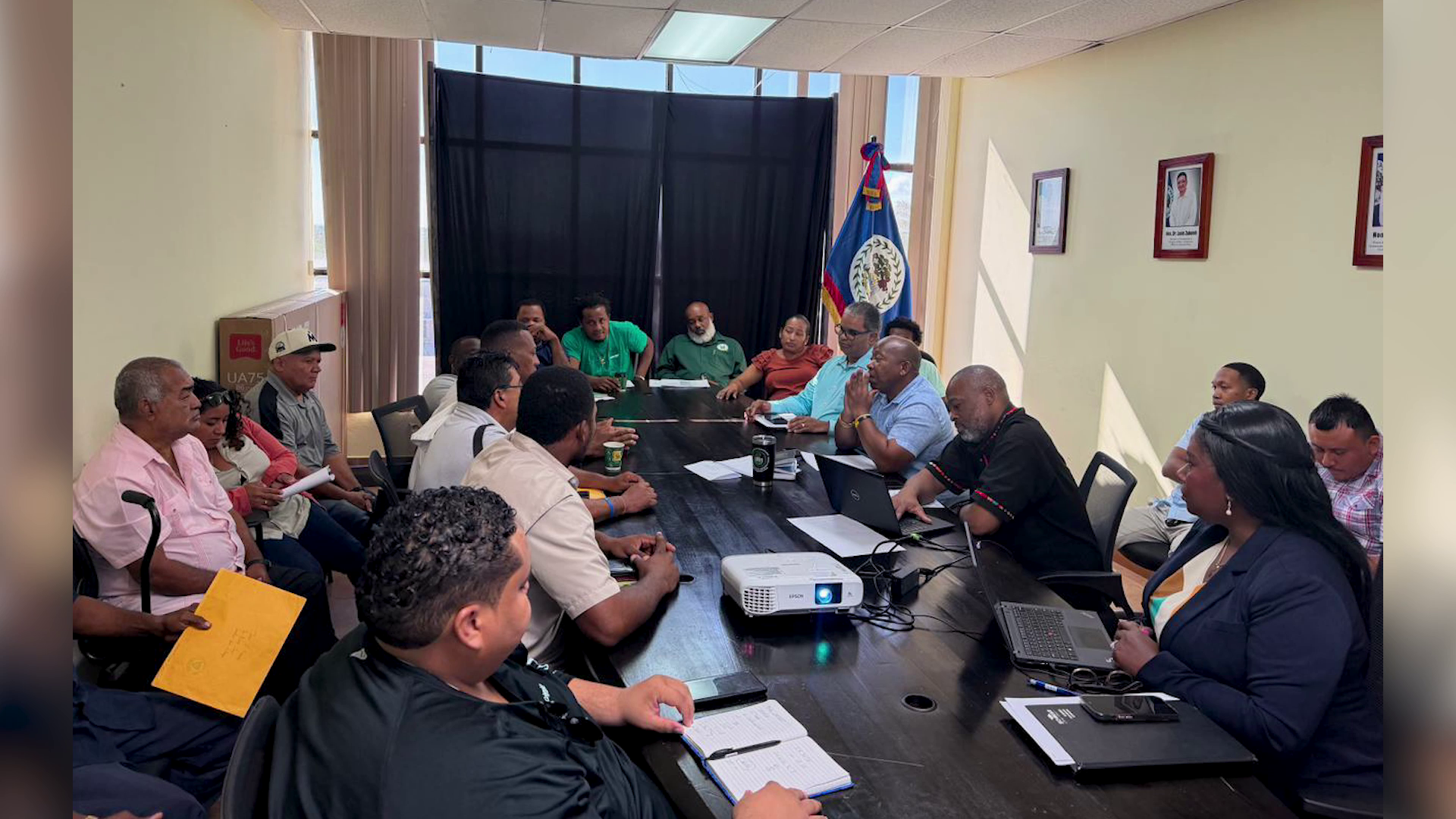
    After three days of tense, high-stakes negotiations that left Belizean commuters staring down a potential full suspension of bus services, the government of Belize and the Belize Bus Association (BBA) have finalized a last-minute compromise that will keep public transit running across the country starting next week. The deal, announced late last week, combines a small, tiered increase in passenger fares with a temporary three-month diesel subsidy funded by general taxpayers, designed to ease the financial pressure on bus operators that pushed the industry to the brink of a work stoppage. Talks stretched into closed-door sessions after operators warned they could no longer absorb soaring global diesel costs without either raising fares dramatically or halting service, which would have left thousands of daily commuters without access to work, school, and essential services.

    In an interview following the signing of the agreement, Minister of Transport Dr. Louis Zabaneh laid out the details of the compromise that pulled both sides back from a deadlock. Under the terms of the deal, the government will calculate subsidy payments based on the actual daily mileage each authorized bus operator covers, providing $3 per gallon in fuel cost offsets to keep operator expenses manageable. The agreement also includes minor adjustments to inter-municipal and village route stops, work that had already been completed in advance of negotiations, speeding up the finalization of the deal. Starting Monday, May 4, passengers will see fare increases of 50 cents for short trips between nearby stops, and up to $1 for longer cross-country commutes. This temporary pricing structure will remain in place for three months, while government and industry leaders monitor shifting fuel markets. The subsidy will cover any additional fuel costs beyond what the modest fare hike offsets, preventing passengers from shouldering the full burden of current high fuel prices.

    BBA President Philip Jones emphasized that the compromise represents a balanced outcome that prioritizes commuter well-being amid ongoing industry financial strain. After days of informal protests and minor service disruptions that put public pressure on both sides to reach a deal, Jones noted that operators pushed aggressively to cap fare increases at $1 even as they faced unsustainable costs. “The ultimate goal for both the Department of Transport and bus operators across the country was to keep the burden on daily riders as small as possible,” Jones explained. “This deal ensures that commuters don’t have to absorb the full impact of volatile fuel prices right now, and the three-month window gives both sides time to assess the market and plan for long-term adjustments.”

    When pressed about the commitments both sides have made to improve public transit quality, in exchange for the taxpayer support and approved fare increase, both leaders outlined next steps for service upgrades. Dr. Zabaneh confirmed that the agreement reminds all operators of their existing obligations under their road service permits to maintain consistent, reliable service. He also noted that discussions were held about the government’s long-term plan to modernize Belize’s public transit sector, including a proposal for a voluntary public-private partnership National Bus Company that operators have opted not to join, with the government agreeing to support the current structure based on that choice. Further talks on village route service improvements are scheduled for mid-next month.

    Jones echoed that service improvement has been the association’s top priority throughout the negotiation process. The three-month subsidy is framed as a critical financial lifeline that will allow operators to invest in minor upgrades and stabilize routes without cutting service or raising prices beyond the agreed cap. “All operators across the country are on board to deliver higher quality, more consistent service for passengers as part of this deal,” Jones said.

    As the new fare structure and subsidy program are set to launch in the coming days, questions remain about whether the temporary compromise will deliver the relief both sides have promised. Commuters will immediately face higher out-of-pocket costs for travel, while taxpayers will cover the cost of the subsidy, but leaders on both sides say the deal avoids the far more disruptive outcome of a full service shutdown, and buys critical time to address long-term cost pressures in Belize’s public transit sector.

  • “Who’s Next?” Orange Walk Shaken by Back-to-Back Robbery Murders

    “Who’s Next?” Orange Walk Shaken by Back-to-Back Robbery Murders

    A quiet agricultural district in northern Belize is reeling from an unprecedented wave of violent crime this week, after two separate fatal robberies killed innocent residents within a 24-hour window, leaving tight-knit communities stunned and fearful of what may come next.

    The first deadly attack unfolded off Santa Martha Road, where local law enforcement discovered the body of 70-year-old lifelong resident Francisco Perfecto Garcia, known affectionately to neighbors as “Sac Sac”, not far from his family farm. Garcia suffered multiple fatal chop wounds during what investigators have classified as a botched robbery.

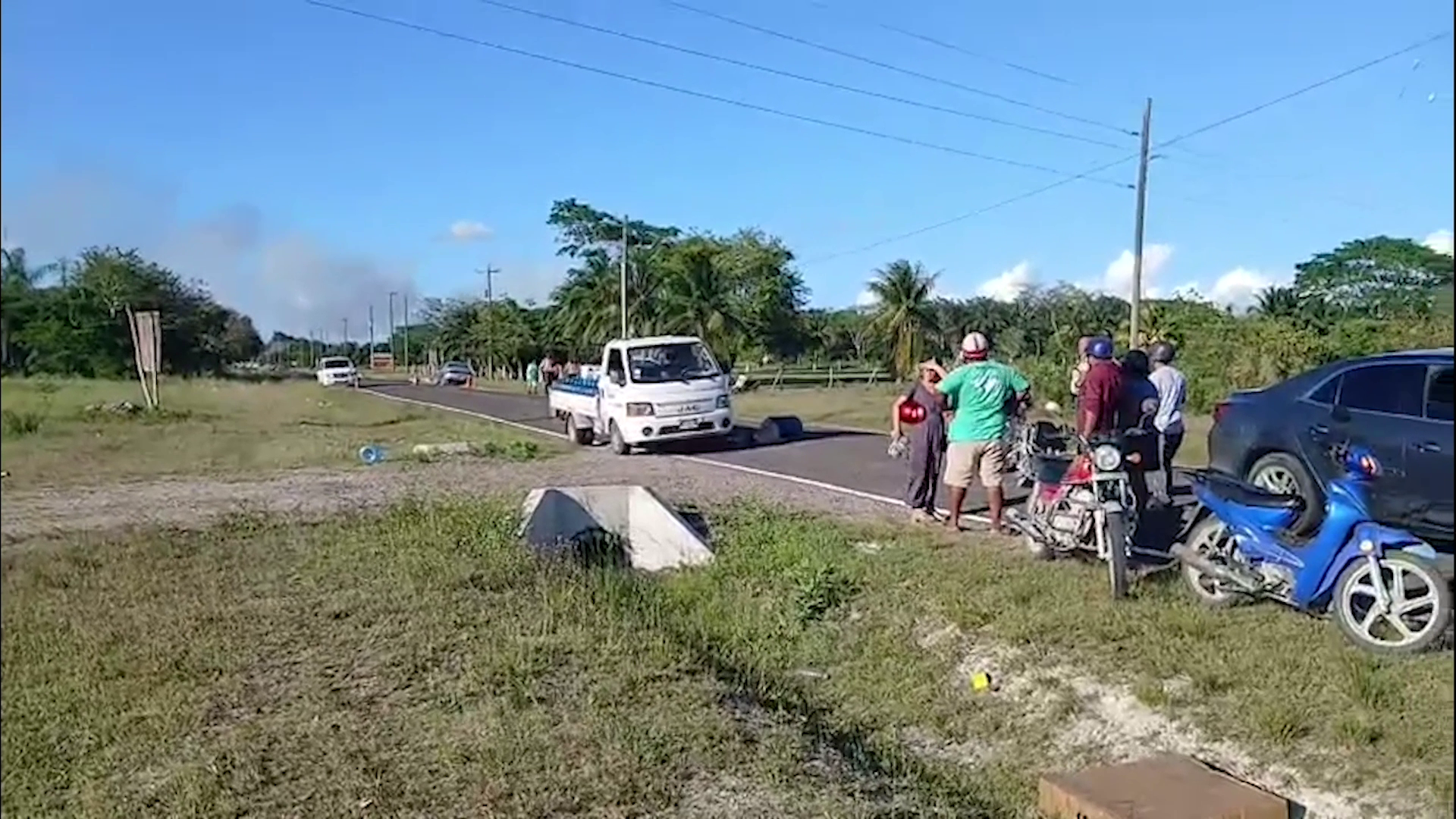
    Less than a day later, a second pre-planned attack claimed the life of a second local resident, this time targeting a pair of working delivery drivers. According to officials at Zeta Water, where 42-year-old victim Roberto Villafranco had worked for four years, the pair were lured to a remote location on Chan Pine Ridge Road by an unknown caller using a private phone number. The unlogged request for a water delivery was never processed through the company’s central system, because the call came through during the sales team’s lunch break when the work phone was left charging at the store.

    When the two drivers arrived at the requested location, a masked gunman flagged them down using an empty five-gallon water bottle as a ruse, before opening fire. Felipe Vasquez, Villafranco’s 42-year-old coworker, managed to escape with a non-fatal gunshot wound and is currently receiving treatment at a local medical facility. Villafranco was shot inside the company delivery truck and pronounced dead at the scene.

    What makes the attack even more senseless, Zeta Water officials say, is that delivery drivers carry almost no cash or valuables that would make them worthwhile targets for robbery. “Each five-gallon bottle sells for just three dollars, and the maximum a driver can collect on any route is $180 for a full 60-gallon load,” explained Eliezer Escalante, the company’s route supervisor. “That’s barely enough money to cover a week of groceries, yet a man lost his life over that. It doesn’t make any sense.”

    Escalante, who was the first company official to arrive at the scene after receiving a panicked alert from witnesses, described the moment he arrived as surreal. “I felt disbelief. I just stood there blank, I couldn’t find any words to process what I was seeing. Roberto had been with us for four years — he was a humble, hardworking man who loved his job. He talked about staying with us for years to come. This shouldn’t have happened to him,” Escalante said.

    For Orange Walk Town Mayor Ladrick Shepherd, the two killings hit particularly close to home. He had known Garcia for decades, from his early days working at the local BSI facility where Garcia was a senior colleague who offered guidance to the young new employee.

    “These are two good, humble people who didn’t do anything to deserve this,” Shepherd said in an interview. “This is like a dark cloud hanging over Orange Walk these past few days. This is not what our district is like. This kind of back-to-back violence never happens here.”

    As of Thursday evening, Belizean law enforcement had not announced any arrests in connection with either killing, and investigations are still ongoing. Shepherd has sought to reassure shaken residents that police are working around the clock to identify the perpetrators and prevent further violence.

    But for the two grieving families, no reassurance can bring back their loved ones. Adin Garcia, the elderly victim’s son, told reporters that the family had just gathered to celebrate his father’s 70th birthday on April 18, spending a quiet day together by the river that the Garcia family loves. His only regret now is that no one thought to take photos of that final happy gathering — memories that will have to live only in their minds forever. As the community mourns, many are left asking the same terrifying question: who could be next?

  • Caught on Camera: Murder Trial Ends in Instant Guilty Plea

    Caught on Camera: Murder Trial Ends in Instant Guilty Plea

    A dramatic turning point unfolded in a High Court murder trial this week, when 25-year-old James Lyson Cacho abruptly reversed his initial not guilty plea after prosecutors presented conclusive surveillance footage capturing the 2023 fatal attack. The killing of 23-year-old Jordan Waight occurred in broad daylight on Barbara Harris Street back in November 2023, and the graphic video evidence proved to be irrefutable for the defendant ahead of a full jury verdict.

    By the time prosecutors introduced the footage, they had already called two critical expert witnesses to the stand: a certified Scenes of Crime technician and a police department information technology specialist, who both authenticated the video’s authenticity and chain of custody. Immediately after the recording finished playing in the courtroom, Cacho formally changed his plea to guilty, cutting short the proceedings and eliminating the need for the Crown prosecution to call its remaining scheduled witnesses.

    Presiding Justice Candace Nanton formally accepted Cacho’s guilty plea and scheduled the sentencing hearing for June 15, 2026. Cacho is currently represented by defense attorney Ian Gray throughout the legal process. This report is adapted from a broadcast evening news transcript, with translated Kriol language segments formatted using a standardized spelling system for accessibility.

  • The Raid That Pulled a Guatemalan Teen from Captivity in Belize

    The Raid That Pulled a Guatemalan Teen from Captivity in Belize

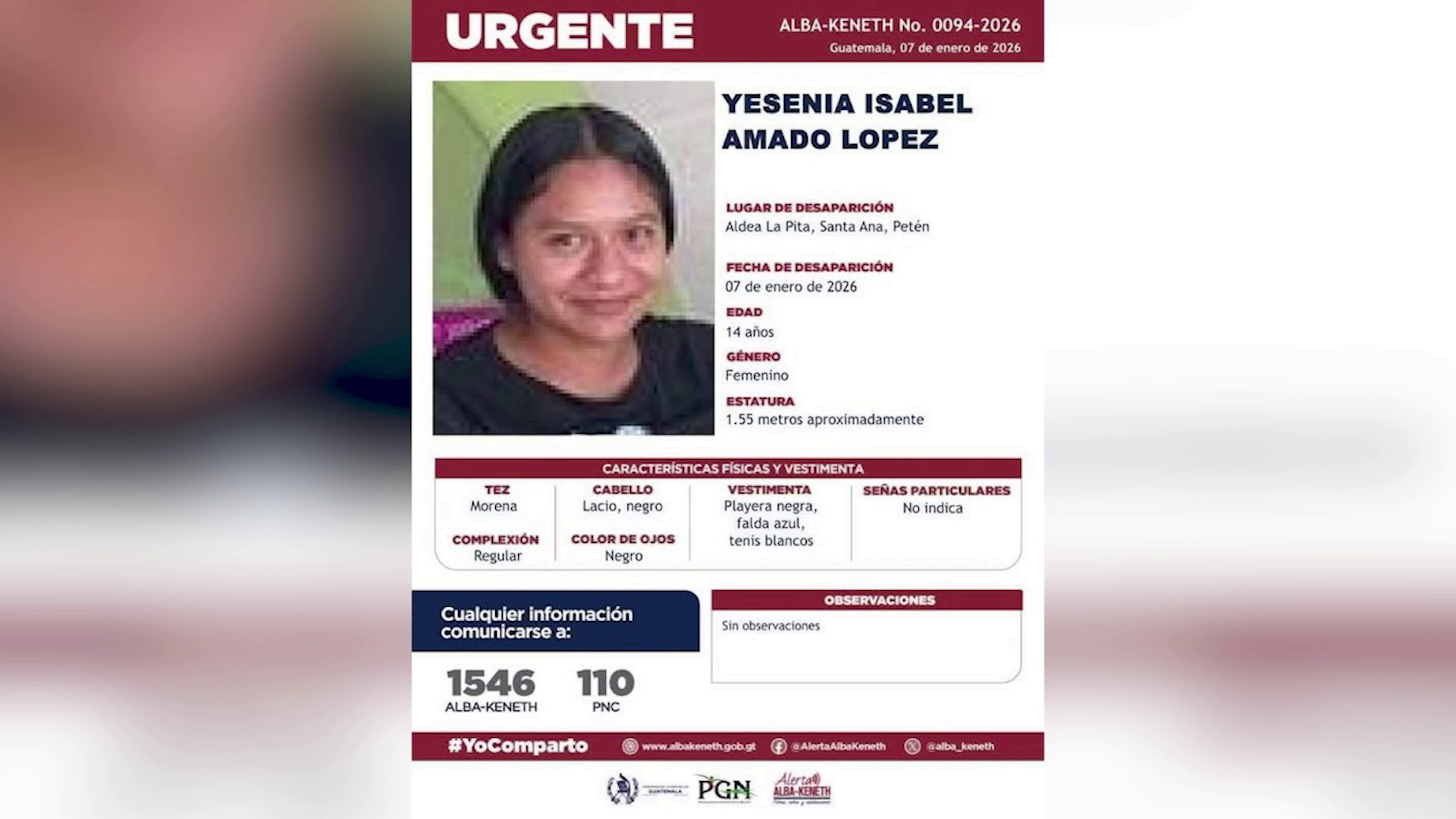
    In a landmark cross-border law enforcement success, security forces in Belize have rescued a 14-year-old Guatemalan girl who was held captive for months after disappearing from her home region. The minor went missing from Guatemala’s northern Petén department in January 2026, before being located in southern Belize as part of the coordinated mission dubbed “Operation Safe Return”.

    On April 21, tactical teams from the Belize Police Department and the elite Belize Special Assignment Group (BSAG) launched a pre-dawn raid on a rural farm located just outside San Roman Village in Stann Creek District. It was there that officers located and safely extracted the kidnapped teen from captivity. Elton Bennett, Chief Executive Officer of Belize’s Ministry of Home Affairs, characterized the operation as a major victory for disciplined, intelligence-led policing, emphasizing that the successful outcome depended on avoiding hasty action.

    “Outstanding work was done at every step of this mission,” Bennett stated in a press briefing following the rescue. “Information was managed carefully, intelligence was verified thoroughly, and we refused to act prematurely. The BSAG team carried out deliberate, meticulous planning, built a full picture of the site through sustained surveillance, and mapped out every possible course of action before moving in. The fact that they were able to bring this child out safely speaks to their extraordinary training and professionalism.”

    Despite the successful rescue, the operation leaves one key objective unmet: the prime suspect, identified by police as Jose Gilberto Duarte, managed to evade capture during the raid, fleeing the property before officers secured the area. Law enforcement officers did recover a loaded firearm left behind by the fleeing suspect, but the manhunt remains ongoing.

    Bennett confirmed that Belizean security agencies are prioritizing the recapture of Duarte, deploying extra resources to track him down across the country and coordinating with Guatemalan border authorities to prevent him from fleeing across the shared border. Even with the suspect still at large, Bennett noted that the operation’s core goal — returning the teenage victim to safety — has been achieved, a outcome that offers a significant win for cross-border anti-kidnapping cooperation.

    “Our priority will always be the safety of the victim,” Bennett added. “We are very happy that this child is now free, and that is what matters most. We will not stop searching for the suspect, and we will do everything in our power to take him into custody and hold him accountable for his crimes.”

    This rescue highlights growing collaboration between Belize and Guatemala to combat cross-border human trafficking and kidnapping, criminal activities that disproportionately affect vulnerable communities in the Petén region, which shares a long, porous border with Belize.

  • Relocation Talk Grows as 911 Center and Police HQ Upgrades Compete for Funds

    Relocation Talk Grows as 911 Center and Police HQ Upgrades Compete for Funds

    Plans for a long-term shift of the Eastern Division Police Headquarters have been confirmed by top Ministry of Home Affairs official Elton Bennett, who pushed back on swirling speculation that public property in the Lake-I district would be sold to finance overlapping public safety infrastructure projects.

    In comments made during an on-record interview on April 29, 2026, Bennett, the Ministry’s chief executive officer, clarified that the government is not walking away from the Raccoon Street site permanently, but has instead laid out a long-range strategy to move the headquarters to a purpose-built facility that can accommodate the police department’s steady expansion. “I wouldn’t use the word abandon, I would prefer to relocate,” Bennett told reporters, noting that short-term repair work is already underway to shore up the aging current headquarters while the long-term relocation plan moves forward.

    Speculation has circulated in local public discourse that the government plans to offload the Caye Caulker police-owned parcel of land to generate enough capital to build a new 911 emergency response center on Lake-I Boulevard, with eventual plans to develop the site into a full-service permanent police station. When pressed to address these rumors, Bennett rejected claims that any Lake-I public property is marked for sale, stating flatly that he is unaware of any active plans to dispose of government-owned land in the district. He also declined to add further comment on the previously addressed Caye Caulker land situation when reporters pushed for clarification.

    Both the upgrade of the 911 emergency system and the renovation or relocation of the Raccoon Street police headquarters remain high-priority urgent needs for the local public safety sector, Bennett confirmed. With two critical infrastructure projects competing for limited government resources, the Ministry of Home Affairs continues to actively search for viable funding sources to deliver both projects without sacrificing the quality or timeline of either.

    The original reporting is a published transcript of an evening television broadcast, transcribed for online publication with standardized spelling adjustments for Kriol-language remarks used by speakers in the original segment.

  • Police Officers Promoted, but are They Still Waiting to Get Paid?

    Police Officers Promoted, but are They Still Waiting to Get Paid?

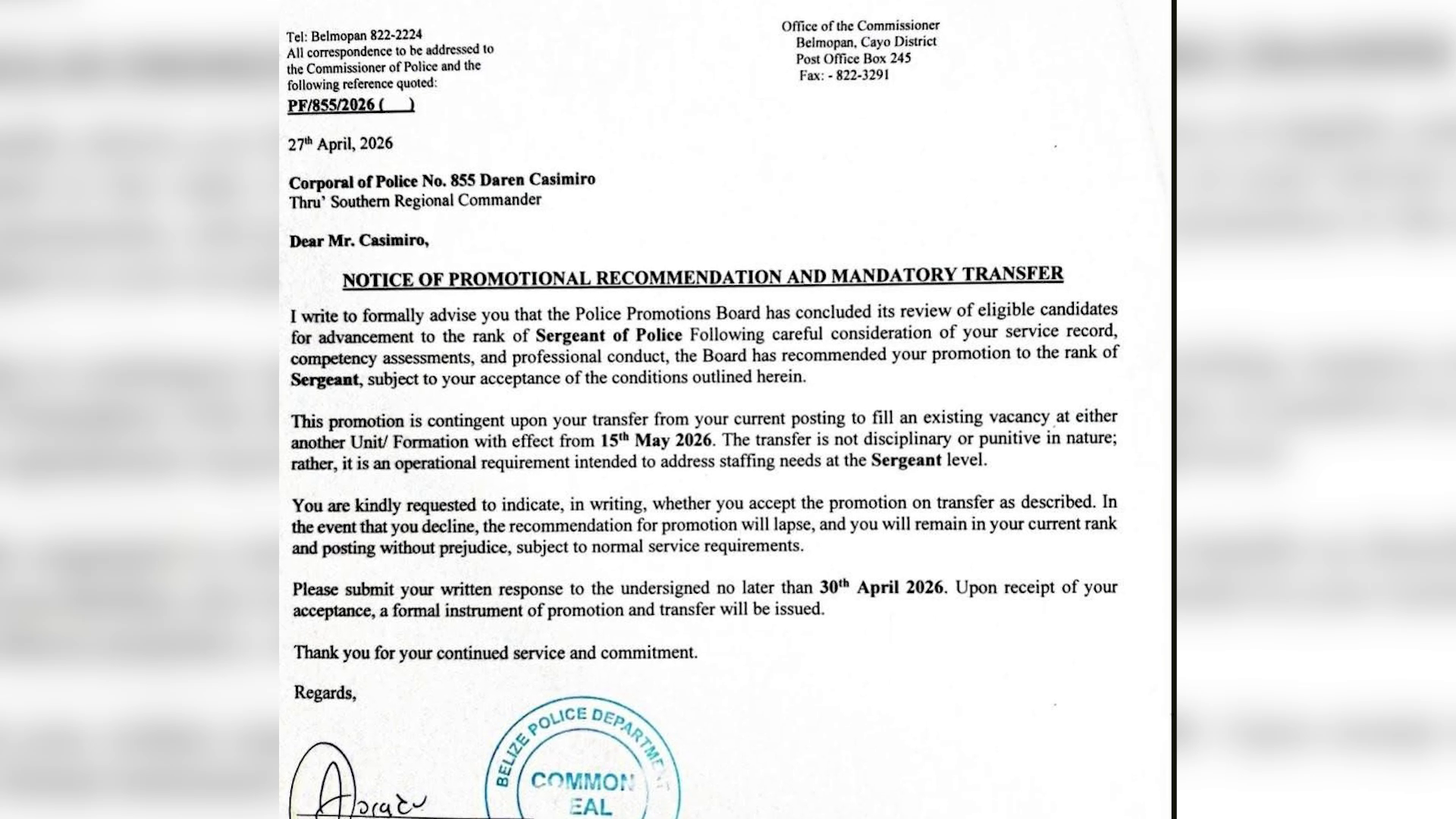
    As of April 29, 2026, public scrutiny is mounting over delayed compensation for promoted and transferred police officers, with top officials addressing growing concerns about unmet pay obligations in a recent public briefing. A journalist from the outlet pressed Elton Bennett, chief executive officer of the Ministry of Home Affairs, on two key questions: whether annual salary increments for police personnel are being held up, and if officers who earned promotions are receiving the adjusted pay they are entitled to.

    Bennett clarified that there are no ongoing backlogs or issues with the disbursement of annual increments, noting that he has not encountered any unprocessed increment requests during his tenure. However, he openly acknowledged that a number of outstanding payments remain stuck in bureaucratic processing, including one-off transfer grants and adjusted salary emoluments linked to recent promotions. Bennett admitted that applications for these delayed payments regularly cross his desk for review, confirming the backlog is an ongoing issue.

    When the reporter followed up asking if all outstanding payments are moving through administrative channels on a reasonable timeline, Bennett asserted that the process is being handled in a timely manner. Despite this official confirmation, the response offers little immediate relief for the officers waiting for their rightful compensation. Many have been waiting weeks or even months for pay adjustments after changing ranks or stations, and the acknowledgment of a backlog does not speed up the deposit of owed funds into their accounts.

    This report is a transcribed version of an evening television news segment broadcast by the outlet, with any regional Kriol language statements adapted to standard English spelling for clarity in the online publication.