
On the much-anticipated results day for primary school students transitioning to secondary education, the halls of St Paul’s Primary School, located on Brittons Cross Road in St Michael, hummed with a complex tapestry of emotions: unbridled excitement, quiet relief, and raw, heartfelt emotion. Students and educators gathered to mark the milestone, celebrating successful school placements before the cohort moves on to the next chapter of their academic journeys.
博客
-

Windies XI stun Sri Lanka
On Sunday at Antigua’s Coolidge Cricket Ground, a pair of West Indies fast bowlers produced one of the most dramatic late-game turnarounds in recent warm-up cricket, delivering an incredible 15-run comeback victory for the West Indies Select XI against Sri Lanka. Pace partners Nial Smith and Alzarri Joseph shared all but one of the opposition wickets between them, tearing through Sri Lanka’s batting order to turn a seemingly inevitable defeat into a historic upset.
Sri Lanka entered the fourth and final day of the warm-up fixture perfectly positioned to chase down their 124-run target, sitting comfortably at 30 for one overnight. For the opening phase of play, the result looked all but confirmed: batters Nishan Madushka and Dinesh Chandimal steadily pushed the score to 46 for one, putting the visitors well on course to hit the required mark with more than enough wickets in hand.
The match’s momentum shifted irreversibly in a single half hour, starting with Smith’s first breakthrough. The paceman trapped Chandimal leg before wicket for 19, then sent Madushka’s stumps cartwheeling for 30 just a few overs later. That collapse left Sri Lanka reeling at 60 for three, and Smith kept the pressure on by catching Dhananjaya de Silva behind the wicket for just one run to extend the visitors’ losing streak of wickets.
Joseph joined the demolition job shortly after, bowling Pasindu Sooriyabandara for a duck, while off-spinner Ojay Shields claimed the only wicket that did not go to the pace duo, removing Sonal Dinusha for four to drop Sri Lanka to 60 for six at the midpoint of their chase. Even with eight wickets down, Sri Lanka still held a narrow advantage, as Prabath Jayasuriya and Milan Rathnayake pushed the total to 89 for six, bringing the visitors within 35 runs of victory with just four wickets remaining.
Yet Smith and Joseph refused to let the chance of victory slip. Smith pouched a sharp return catch to remove Jayasuriya for 10, before Joseph bowled Rathnayake for six to leave the visitors reeling at 93 for eight. The pair closed out the contest in quick fashion, dismissing Vishwa Fernando and Lahiru Kumara in consecutive overs to skittle Sri Lanka out for just 108 from 29.5 overs, 15 runs short of their target. Smith finished the dominant bowling display with career-best figures of 5 wickets for just 30 runs, while Joseph backed him up with 4 wickets for 41 runs, wrapping up one of the most surprising comeback wins of the international cricket warm-up season.
-
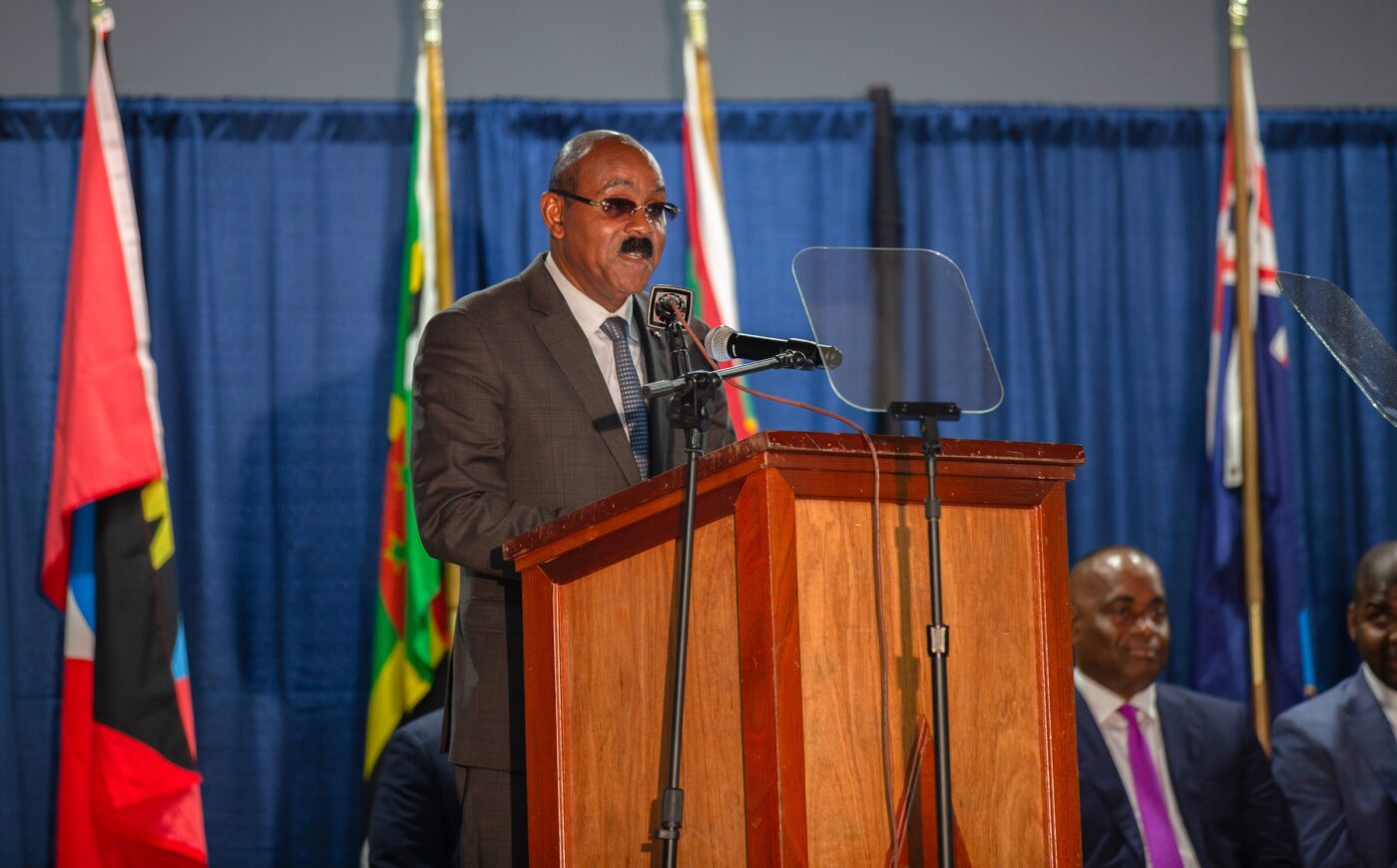
Prime Minister Browne Calls for Strategic OECS Partnership with Panama to Reduce Costs and Expand Trade Opportunities
Against a backdrop of growing regional economic integration efforts, Antigua and Barbuda Prime Minister Gaston Browne has publicly outlined a bold vision for a strategic collaborative partnership between the Organization of Eastern Caribbean States (OECS) and the Republic of Panama. Browne, who is currently spearheading discussions on expanding regional trade connectivity, argues that this alliance would address long-standing cost burdens that have held back Eastern Caribbean businesses while opening untapped commercial channels for the bloc’s member nations.
The core of Browne’s proposal centers on leveraging Panama’s established position as a global maritime and logistics hub. Panama’s flagship Panama Canal already serves as a critical artery for global maritime trade, and Browne points out that formalized cooperation between the OECS and Panama could streamline shipping routes, reduce transit fees, and cut down on customs delays that currently inflate the cost of imports and exports for the small island economies that make up the OECS. For these nations, which rely heavily on international trade for both domestic consumption and export-led growth, even marginal reductions in logistics costs can translate into significant competitive advantages for local producers and lower prices for consumers.
Beyond infrastructure and logistics, Browne also highlights the potential for expanded market access. A formal partnership could create new pathways for OECS agricultural products, tourism services, and specialty goods to reach global markets through Panama’s extensive trade networks, while also attracting increased foreign investment from Panamanian and international firms that use Panama as a regional base. Browne made the call during a recent diplomatic engagement, noting that the geographic proximity of the OECS bloc to Panama creates natural synergies that have yet to be fully exploited. He added that aligning trade regulations and facilitating cross-border business collaboration would lay the groundwork for more inclusive, sustainable economic growth across the entire Caribbean region.
Regional trade analysts have noted that the proposal comes at a time when small island developing states in the Caribbean are actively seeking ways to diversify their economies and reduce their vulnerability to global supply chain disruptions, which were amplified during the COVID-19 pandemic. A strategic partnership with Panama, they argue, could help the OECS address multiple pressing economic challenges simultaneously, from high trade costs to limited market access, while also creating new opportunities for cooperation in areas like tourism, maritime security, and climate resilience.
-
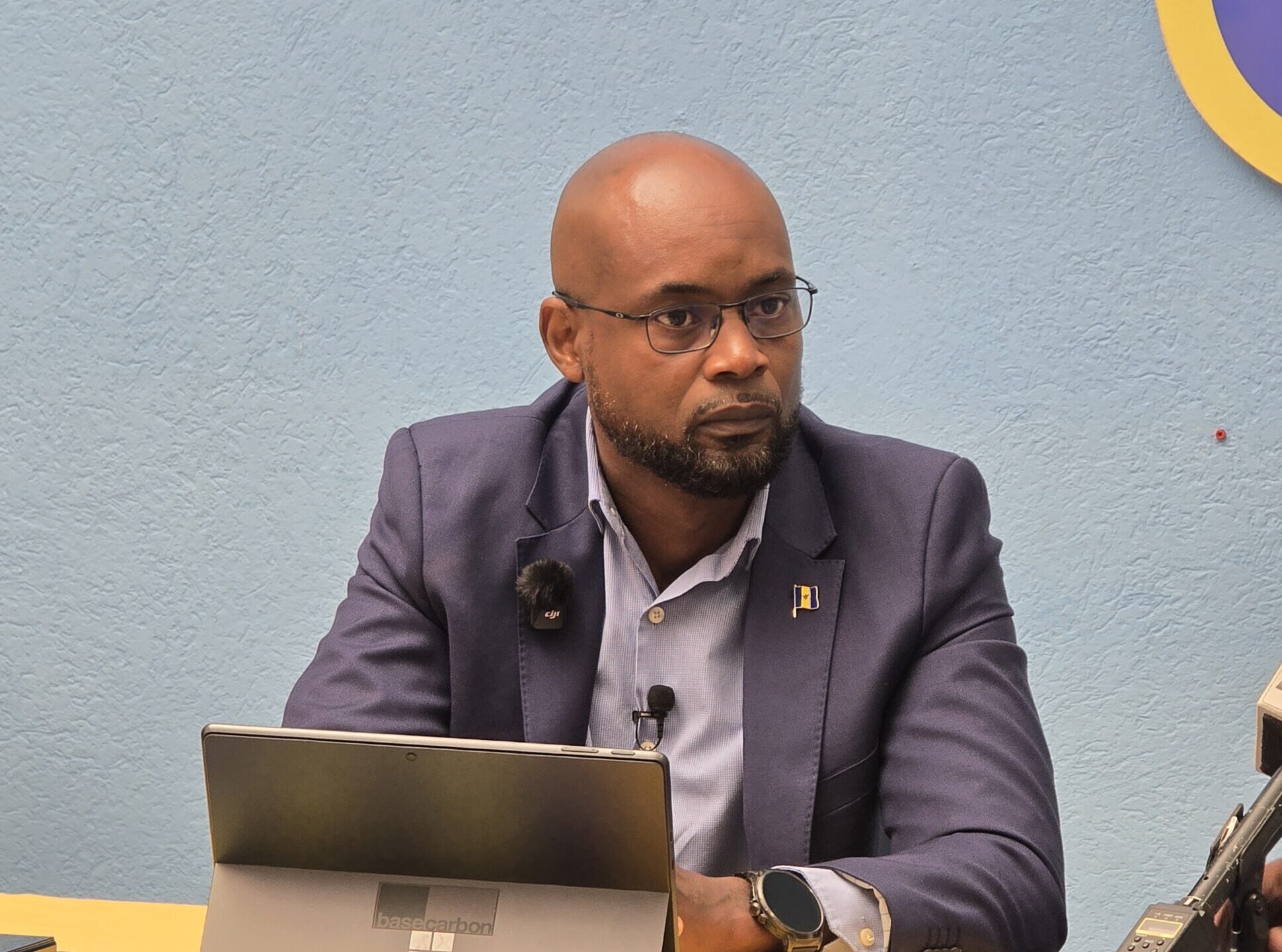
DLP urges caution over proposed citizenship law changes
Barbados’ main opposition Democratic Labour Party (DLP) is calling on national parliamentarians to approach proposed amendments to the country’s citizenship and immigration legislation with deliberate caution, following a bombshell investigative report uncovering a thriving transnational birth-tourism trade that markets Barbadian citizenship to high-net-worth clients overseas. Corey Greenidge, the DLP’s shadow minister for legal and home affairs and shadow attorney general, told reporters that the recent media exposé underscores exactly why gradual, thoughtful deliberation is non-negotiable as lawmakers debate the landmark Citizenship Bill and Immigration Bill.
“If unregulated organized groups are already actively marketing access to Barbadian citizenship across international markets, leveraging the global strength of the Barbados passport as a core selling point, parliament has a duty to ask three critical questions: do we actually need additional accelerated pathways to citizenship, what binding safeguards must be built into any reform to mitigate risk, and what cumulative effects will these changes have on our nation decades from now?” Greenidge said.
The front-page investigation, published by local outlet the Sunday Sun, lays out how foreign-based commercial operations are explicitly targeting expectant mothers in Nigeria, marketing Barbados as a premium birth-tourism destination that automatically grants newborns Barbadian citizenship and a passport. The report details that operators promote the travel document heavily on social media, highlighting its visa-free access to more than 150 countries and framing it as a gateway to expanded global educational, professional, and economic opportunities for children born in Barbados to foreign parents.
Greenidge emphasized that the core issue extends far beyond a question of whether existing laws are being broken by these commercial operations. Instead, he argued, the investigation offers concrete proof of a reality many ordinary Barbadians have not yet fully grasped: Barbadian citizenship and its associated passport carry substantial international value, and are increasingly sought-after assets for non-citizens seeking greater global mobility.
Throughout its submissions to the parliamentary Joint Select Committee reviewing the proposed bills, the DLP has consistently maintained that citizenship should not be treated as a mere bureaucratic classification or a commodity to be used for short-term economic gain. “Citizenship is first and foremost membership in the Barbadian national community,” Greenidge explained. “It carries binding legal, political, and constitutional implications, and every policy decision we make on this issue today will shape our country for generations to come.”
Greenidge noted that the investigation confirms foreign nationals are already exploiting existing legal pathways to Barbadian citizenship and all the benefits that come with the island’s passport. Regardless of whether lawmakers support or oppose the current legal provisions, he said, the exposé serves as a urgent wake-up call: citizenship policy cannot be drafted in isolation, and must always account for its international ripple effects.
The shadow minister was quick to clarify that the DLP is not calling for Barbados to close its borders to migration or turn away international investment. The country has long reaped the social and economic benefits of its identity as an open, welcoming society, he said, and that legacy remains a core strength. Even so, Greenidge stressed that the island nation has an non-negotiable responsibility to protect the integrity, credibility, and global standing of its citizenship system.
“Recent global developments have made clear that citizenship policies around the world are facing growing scrutiny from foreign governments and major international institutions,” he noted. “Small island states like ours face disproportionate risk when confidence in our citizenship framework erodes. That is why Barbados must move slowly and deliberately any time changes to citizenship access rules are proposed.”
In line with this position, the DLP has renewed its official call for thorough, line-by-line scrutiny of the pending Citizenship Bill and Immigration Bill, pushing for reforms that prioritize the long-term integrity and inherent value of Barbadian citizenship. “Citizenship is one of the most important legal statuses the nation of Barbados can grant to any person,” Greenidge added. “Its value has been built carefully over generations by the people of this country. It deserves the same level of care and vigilance to protect it that went into building its reputation in the first place.”
-
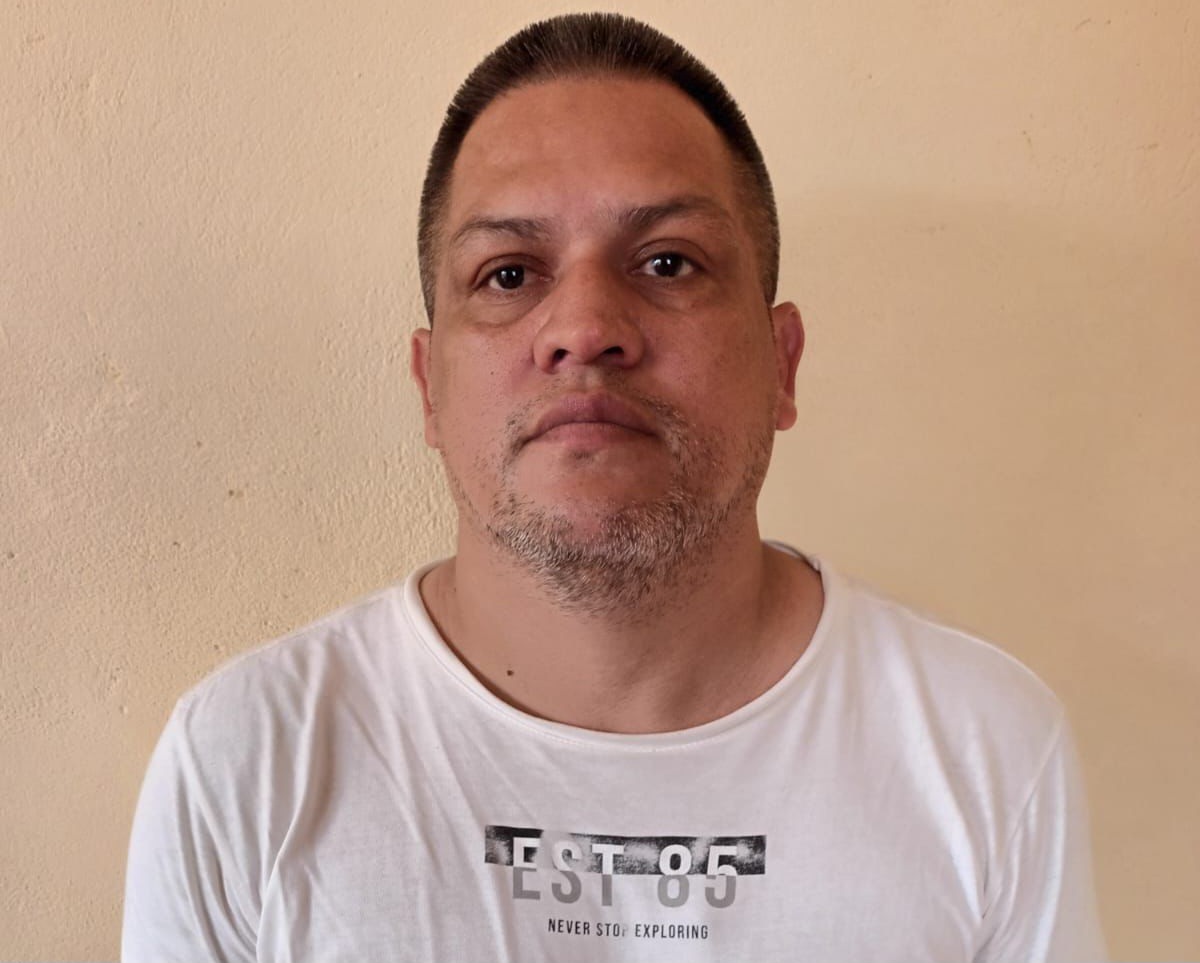
Second Venezuelan charged in AK-47s bust
On Monday, June 22, 2026, Guyana law enforcement announced that a second Venezuelan national has been formally charged and remanded to custody in connection with a major illegal arms seizure earlier this month that uncovered 23 AK-47 assault rifles.
The accused individual is 54-year-old Juan Felipe Gonzalez, a resident of Tuschen Housing Scheme located on Guyana’s East Bank Essequibo. According to official statements from the Guyana Police Force, Gonzalez faces one count of Conspiracy to Commit a Felony, a charge brought under Section 33 of the country’s Criminal Law (Offences) Act, Chapter 8:01.
The charge stems from an ongoing multi-agency investigation into the unauthorized possession of firearms and ammunition, an incident that was first uncovered on June 11, 2026, in Schoonard, a community on Guyana’s West Bank Demerara. Gonzalez was taken into law enforcement custody one week after the initial seizure, on June 18, 2026, and appeared before Magistrate Rhondell Weaver at the Wales Magistrate’s Court this Monday to hear the formal charges read.
Court procedures saw Gonzalez not required to enter a plea at this stage of proceedings. Requests for bail were rejected by the court, and Gonzalez was immediately remanded to prison to await further action in the case. The legal matter has been adjourned until July 14, 2026, when a progress report on the investigation is scheduled to be submitted to the court.
Gonzalez is the second person to face charges connected to this high-profile arms cache. The first suspect, 27-year-old construction worker Jonathan David Gans, a resident of Great Diamond on East Bank Demerara, was arrested on the same day the cache was discovered. Gans has already been charged with two separate offenses: possession of an unlicensed firearm and possession of unlicensed ammunition.
The illegal arms stockpile, which included 23 fully automatic AK-47 assault rifles alongside more than 500 rounds of matching ammunition, was seized during a coordinated joint operation conducted by the Guyana Police Force and the Customs Anti-Narcotics Unit, launched to target illicit contraband smuggling in the region.
-

Defending champs advance to netball final
Two under-division netball fans witnessed two gripping semifinal matches at the Garfield Sobers Gymnasium this week, as top contenders Shirley Chisholm Primary and West Terrace Primary fought their way into the final of the Pedialyte Sport National Sports Council Netball Competition. As defending title holders, Shirley Chisholm Primary entered the semifinal against Wilkie Cumberbatch Primary as the team to beat, and they lived up to every expectation with a dominant 17-5 win over their opponents. The defending champions built their lead steadily through each quarter of play. By the end of a tightly contested first quarter, Shirley Chisholm held a narrow 4-2 advantage. They expanded their gap to six points by halftime, sitting comfortably at 9-3, and pushed their lead further to 13-4 heading into the final quarter. Top scorers dominated the scoreboard for the winning side: Lashanae Pasley delivered an impressive performance, sinking 9 of her 11 shot attempts, while teammate Kimaria Allen-Farell followed closely behind converting 8 of 12 attempts. For the defeated Wilkie Cumberbatch Primary, Zuri Stoute turned in a flawless shooting performance, making all four of her attempts, and Empress Nurse added one more point from three tries. In the first semifinal of the day, West Terrace Primary claimed their own spot in the championship match with a solid 12-6 win over Christ Church Girls. Similar to the second semifinal, West Terrace built their lead incrementally through each quarter. They jumped out to an early 4-1 lead after the first 15 minutes of play, and held a two-point 5-3 lead at halftime. By the end of the third quarter, West Terrace had expanded their advantage to 9-5, putting the match out of reach for Christ Church Girls. Ajela Gittens led all scorers for West Terrace, connecting on 7 of 11 shot attempts, and Lyah Williams put in an especially efficient performance with 5 successful shots from just 6 attempts. For Christ Church Girls, Hailey Bourne Skeete made her only shot attempt of the match, and Aaniyah Folkes converted 5 of 9 tries to round out the scoring. With both semifinal matches now completed, the stage is set for a high-stakes final between the defending champion Shirley Chisholm Primary and the undaunted West Terrace side, with the national title on the line.
-
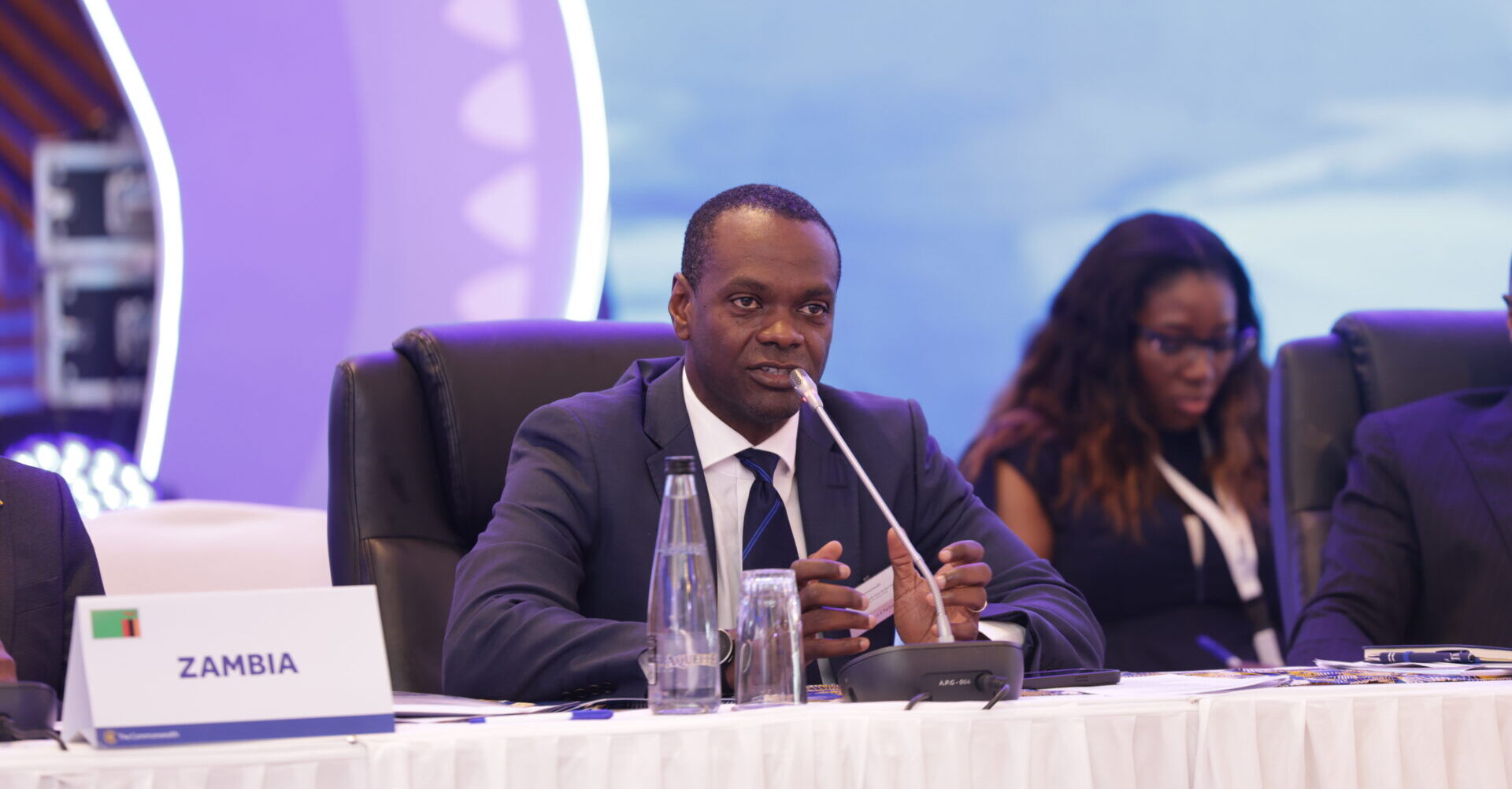
UWI Five Islands Campus launches Blue Finance and Ocean Innovation event ahead of CHOGM
During the 11th Our Ocean Conference held on June 16, a major new initiative to advance sustainable ocean development took center stage. The Centre of Excellence for Oceanography and the Blue Economy (COBE) based at The University of the West Indies (UWI) Five Islands Campus formally announced the launch of its Blue Finance and Ocean Innovation Side Event, which will run parallel to the upcoming Commonwealth Heads of Government Meeting (CHOGM) scheduled for November 2026.
The launch announcement was delivered as part of a partner progress update during the Commonwealth Ocean Ministers Roundtable, a joint initiative hosted by the government of Kenya and the Commonwealth Secretariat. Dr. Branson Belle, COBE’s Executive Director, opened his address by introducing attendees to the core research and outreach missions of both the UWI Five Islands Campus and the specialized center, before walking stakeholders through the full planned agenda for the November side event.
Per official event plans, the gathering will kick off with a multi-stakeholder exhibition highlighting cutting-edge ocean conservation projects led by organizations across local, regional and international levels. After the exhibition, participants will gather for an informal, solutions-focused “beachside chat” moderated by Charles Goddard of Economist Impact, which will bring together C-suite executives and senior leaders from the blue finance and ocean innovation sectors to share insights and opportunities. The full program also includes keynote presentations from participating heads of government, before the event concludes with a networking reception.
Ocean restoration and sustainable ocean governance have long been top policy priorities for the Commonwealth, a bloc that brings together nations with extraordinary stakes in global ocean health. Collectively, Commonwealth member states manage roughly one-third of the world’s total ocean area under national jurisdiction, host 45 percent of the planet’s coral reef systems, and count 25 Small Island Developing States among their ranks — nations that are disproportionately reliant on healthy ocean ecosystems for economic and social stability.
In 2024, the bloc reinforced this commitment when member nations unanimously adopted the Apia Commonwealth Ocean Declaration, a landmark agreement that binds signatories to take urgent, coordinated action to protect and restore global marine environments. The upcoming side event builds directly on this commitment, organizers said, by creating a dedicated space to connect policymakers, researchers, and financial leaders.
Against this backdrop, the Blue Finance and Ocean Innovation Side Event aims to reframe global conversations about the ocean, emphasizing its irreplaceable role in supporting inclusive economic growth and livelihoods across all Commonwealth nations. Beyond discussion, the gathering is designed to catalyze new, increased investment in ocean conservation projects and scale up innovative, sustainable blue economy initiatives that balance human use with long-term marine protection. COBE is organizing the event in formal collaboration with two key institutional partners: the Commonwealth Secretariat and the Association of Commonwealth Universities.
-

Grenada’s new Atlantic bridge to Nigeria could be a diplomatic turning point
By Michael Derek Roberts
For small island nations across the Caribbean, economic survival and growth depend entirely on the ability to expand beyond traditional trading and diplomatic partnerships. Now, the Caribbean country of Grenada is taking a deliberate, ambitious step in that direction: opening full visa-free access to Nigerian passport holders, a policy shift that extends far beyond a simple update to immigration rules. This move represents a calculated strategic gambit to broaden Grenada’s diplomatic and economic footprint far beyond its conventional focus on the Caribbean and North Atlantic regions.
Against a global backdrop where small developing states face fierce competition to attract investment, tourism revenue, skilled talent and new trade routes, Grenada is wagering that stronger bilateral ties with Nigeria will unlock untapped opportunities across the vast African diaspora. Beyond the visa waiver itself, the island government has outlined plans to deepen collaboration across five key sectors: trade, tourism, investment, education, with the long-term goal of establishing direct air connectivity between the two nations.
This initiative marks a meaningful departure for a country of Grenada’s size, signaling an outward-facing foreign policy that frames diplomacy not as a purely ceremonial practice, but as a core driver of economic expansion. The move is also rooted in practical economic necessity. For decades, Grenada’s economy has relied heavily on tourism, service sector exports and foreign exchange inflows, making any policy that opens access to new markets a high-stakes, high-reward proposition. Nigerian entrepreneurs, investors, students and professional workers represent a promising new stream of economic activity, with particular potential for growth in healthcare, sustainable agriculture, real estate and financial services. If Grenada can translate initial diplomatic goodwill into tangible, regular cross-border exchanges, the gains will reach far beyond increased tourist arrivals and formal diplomatic statements.
What makes this development particularly significant is its timing and symbolic weight. Connections between African and Caribbean nations have been gaining renewed global and regional attention in recent years, and Grenada is positioning itself as an active bridge between the two regions, rather than a passive bystander. This is no small step: while many small Caribbean states pay lip service to the abstract ideal of South-South cooperation, few have taken decisive, concrete action to turn that vision into reality. For Grenada, Nigeria is the logical starting point for this new push: as Africa’s most populous nation and one of its largest and most dynamic economies, it offers unmatched access to the continent’s fast-growing markets.
Yet success is far from guaranteed. The visa-free announcement is only the first step in a long process of implementation. The true test of the policy will be whether Grenada can build out the required administrative frameworks, transport infrastructure, business facilitation systems and sustained diplomatic follow-through to turn its policy of openness into measurable economic gains. Concrete actions — from launching direct flights between the two countries to streamlining business entry procedures and forging active private-sector partnerships — will make all the difference, but these steps must move from planning and discussion to on-the-ground delivery.
The policy also carries a broader geopolitical message. Grenada is making clear that small Caribbean nations can pursue ambitious, commercially focused, globally connected foreign policies without sacrificing their national or regional identity. This brand of quiet, strategic diplomacy — rooted in smart alignment rather than loud geopolitical posturing — is exactly what can deliver tangible benefits for small states. If executed well, the new Grenada-Nigeria partnership could serve as a replicable model for other Caribbean governments looking to deepen tangible, economically profitable and culturally meaningful ties with African nations.
In the final analysis, Grenada’s outreach to Nigeria is best defined as a bold bet on shared, mutual opportunity. It will only stand as a successful diplomatic masterstroke if it delivers real growth in trade, tourism, investment and people-to-people exchange. If it does, Grenada will have transformed a simple visa policy change into a far larger story of repositioned economic diplomacy across the Atlantic.
*Disclaimer: NOW Grenada does not take responsibility for opinions, statements or third-party content contributed by external authors. To report inappropriate content, follow the official channel for abuse reports.*
-
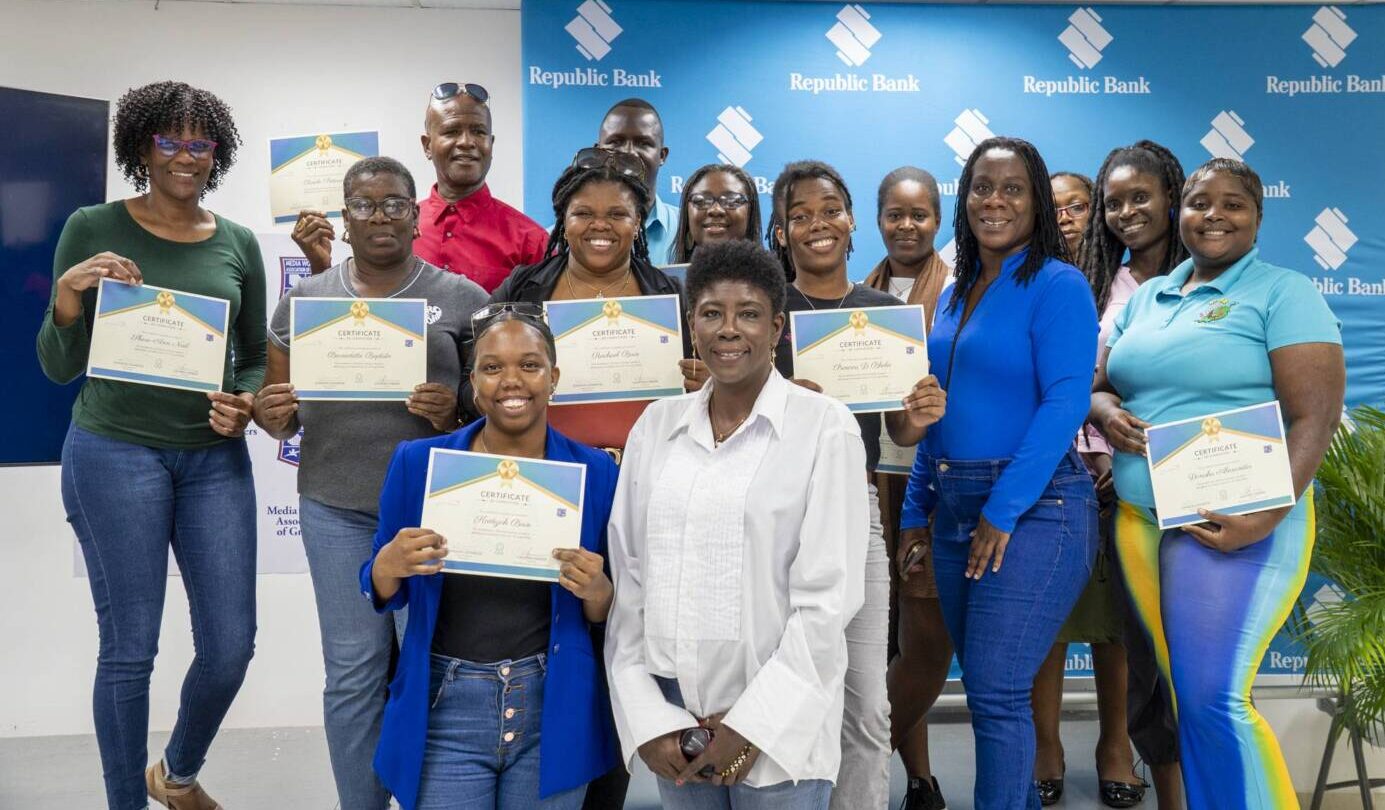
Republic Bank commends MWAG on successful media development programme
Grenada’s media sector took a major step toward professional growth last month, as the Media Workers Association of Grenada (MWAG) wrapped up a week-long intensive journalism training initiative with key support from Republic Bank. Held between June 15 and 19 at the island’s National Cricket Stadium, the program brought together a diverse cohort of working media professionals, aspiring early-career journalists, and young communications specialists to elevate core journalistic standards across the country’s local media landscape.
Unlike passive training formats, the workshop centered on hands-on skill building, covering critical topics ranging from foundational news writing and advanced interviewing techniques to narrative story development and core principles of ethical reporting. Beyond technical instruction, the program created dedicated space for peer connection and one-on-one mentorship, linking up-and-coming communicators with veteran media practitioners to share on-the-ground insights and career guidance.
In a statement following the program’s conclusion, Republic Bank Managing Director Naomi De Allie praised MWAG for leading the forward-thinking initiative, emphasizing the long-term value of investing in professional development for the media sector. “At Republic Bank, we recognize the vital role that journalists and media practitioners play in informing, educating, and empowering our communities,” De Allie said. “A strong and responsible media sector contributes significantly to national development, transparency, and public engagement. We are therefore proud to have supported a programme that helps strengthen the skills and capacity of both current and future media professionals.”
De Allie added that the bank’s sponsorship of the training aligns with its broader institutional commitment to advancing education, cross-sector knowledge sharing, and sustainable community development across Grenada. “The participants in this programme represent the future of journalism in Grenada. By investing in their growth and development, we are helping to build a more informed society and a stronger communications environment for generations to come,” she noted.
Leading the instructional design and delivery of the program was Johnson John Rose, a widely respected regional media leader with decades of experience across journalism, broadcasting, strategic communications, and media management across the Caribbean. Drawing on his deep roots in the regional media industry, John Rose walked participants through the unique challenges and opportunities of modern journalism, sharing actionable insights on upholding professional standards, maintaining ethical reporting practices, and crafting compelling storytelling in a fast-changing digital media ecosystem. Industry observers and participants alike credited John Rose’s expertise and hands-on mentorship as a core driver of the program’s success, noting that the skills gained will have a lasting positive impact on the next generation of Grenadian journalists.
Moving forward, Republic Bank extended formal congratulations to all participants who completed the full training curriculum, and expressed gratitude to MWAG for the collaborative partnership to deliver the impactful initiative. As a socially responsible financial institution operating across the Caribbean, Republic Bank reaffirmed its ongoing commitment to supporting learning-focused initiatives that expand access to professional growth opportunities, drive individual advancement, and support inclusive national development throughout Grenada and the wider region.
-
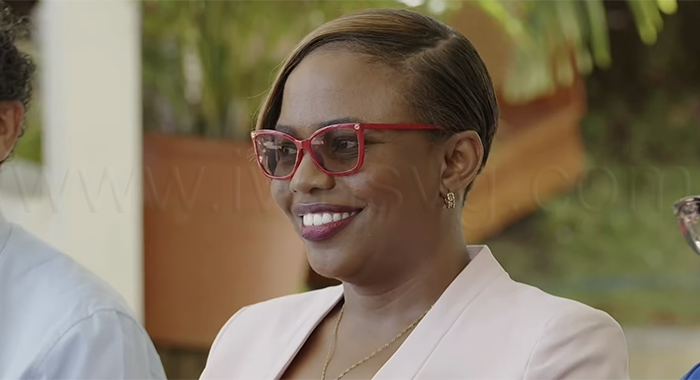
New SVG Tourism Authority CEO lays out results-driven vision
On Monday, at a press conference held in Villa, St. Vincent and the Grenadines, incoming Chief Executive Officer of the St. Vincent and the Grenadines Tourism Authority (SVGTA) Shafia London outlined her bold, inclusive vision for the nation’s tourism sector ahead of her official 1 July start date. London, who will serve a three-year contract after returning home following a decade of work across the Caribbean region, has pledged to build a results-focused, collaborative tourism framework that delivers widespread benefits to all Vincentian communities.
London opened her remarks by expressing gratitude for the appointment, emphasizing that her core mission is to serve the people of St. Vincent and the Grenadines. She framed tourism as far more than a single industry, positioning it as the central economic engine that touches every corner of the nation – from the northern community of Fancy to the southern tip of Mayreau. The sector empowers a broad cross-section of workers, she noted, including taxi drivers, small-scale tour operators, local farmers, artisans, hotel staff, and fisherfolk, weaving economic opportunity into every village, family, and generation.
Acknowledging the solid foundation laid by previous tourism leaders, staff, and policymakers, London highlighted the significant momentum the sector has already built. She noted that stay-over visitor arrivals have recorded double-digit growth in recent years, driven by major investments in hotel infrastructure, new international air routes, and the tireless work of industry predecessors. Building on this progress, London outlined a clear two-part immediate mandate: continuing to grow visitor arrivals, and elevating the overall visitor experience to exceed traveler expectations from arrival to departure.
London stressed that the nation’s greatest competitive advantage lies in its unique authenticity, rather than imitation of other Caribbean destinations. “We are a small nation, but we are a remarkable one,” she said. “Our strength is our authenticity, our culture, our diverse, unspoiled beauty, and our people. That is our competitive advantage, and we are going to protect it, package it properly, and present it to the world with confidence.”
After months of preliminary research, London identified three core strategic positioning platforms for SVG’s tourism brand, pending consultation with cabinet, the SVGTA board, and key industry stakeholders: adventure and nature tourism, a global sailing paradise, and authentic culture and celebration.
For the adventure and nature platform, London laid out a 2027 vision for a structured, internationally certified immersive eco-tourism network across SVG’s existing trails and natural sites. The plan calls for trained local guides, formalized safety protocols, and adherence to globally recognized sustainable tourism standards, demonstrating the nation’s commitment to protecting its natural assets.
In the sailing segment, London proposed an aggressive push to establish SVG as the premier sailing capital of the Caribbean. Key initiatives include expanding mooring infrastructure, implementing dedicated ranger systems, improving wastewater management for yachting visitors, partnering with international yacht charter companies, and curating exclusive official yachting experiences that position SVG as a top global sailing itinerary.
For culture and celebration, London argued that SVG’s existing events calendar should be developed into a intentional strategic economic and branding asset. The plan calls for professional packaging of iconic local events including Vincymas, the Bequia Regatta, and Garifuna heritage celebrations, alongside targeted investment in artisans, storytellers, and heritage sites to transform raw cultural assets into compelling, marketable visitor experiences.
Drawing on her background in engineering, London emphasized that sector success will be measured by tangible, hard data rather than empty rhetoric or ceremonial announcements. For London, success is defined as growing the number of high-value visitors who respect SVG’s culture, environment, and communities, increasing average length of stay and visitor spending, improving sector infrastructure, creating new quality jobs, and ensuring widespread local community benefit. Her overarching vision is to position SVG as the Caribbean’s most uniquely diverse destination, where travelers across all three core tourism segments can engage with the nation’s authentic natural and cultural heritage, while every community, business, and family shares in the sector’s growth. The ultimate goal, she noted, is to deliver such exceptional experiences that visitors return home as passionate brand ambassadors for SVG.
London acknowledged that delivering this ambitious vision will require unprecedented coordination across the public sector, private industry, local communities, and the Vincentian diaspora. Improving accommodation capacity, maintaining bookable visitor products, and preserving the nation’s pristine natural sites demands collaborative action across all levels of society, she said, issuing an open invitation for all stakeholders to join the effort as active builders, not passive observers. “SVG can only be built by all of us moving in the same direction with the same intent,” she noted.
In the coming weeks ahead of her official start, London plans to conduct a nationwide outreach tour, meeting with tourism stakeholders at every level – from frontline workers and small business owners to airline partners and community leaders. She emphasized that she will spend dedicated time in rural and outer-island communities, to ensure tourism benefits people where they live, not just in popular tourist hubs. Her goal is to build a sense of ownership and opportunity for ordinary Vincentians across the entire sector.
Closing her remarks, London reaffirmed her commitment to delivering results and transforming the SVGTA into a more proactive, outcome-focused organization. “I return home committed to listening, to working, and to delivering,” she said. “In the months ahead, you will see this Tourism Authority show up differently — with focus, with urgency, and with results. The future is bright. Let’s build it together.”