博客

  • Department of Culture Announces Return of National Secondary Schools Theatre Festival

    Department of Culture Announces Return of National Secondary Schools Theatre Festival

    The Department of Culture, operating within the Ministry of Education, Sports and Creative Industries, has officially unveiled plans for the 2026 National Secondary Schools Theatre Festival. Scheduled for April 13th-18th, 2026, this prestigious event will spotlight the artistic talents of the nation’s youth through competitive performances in both dance and drama disciplines.

    Ten secondary schools will participate in the dance competition while six institutions will contend in the drama category, creating a diverse platform for creative expression. The festival is positioned as a dynamic celebration of cultural heritage, innovation, and performing arts excellence, featuring student demonstrations of artistic mastery, collaborative spirit, and national pride.

    Organizers emphasize the event’s role in fostering youth development through cultural engagement and disciplined artistic practice. The public is enthusiastically invited to attend all festival activities to support emerging talent and experience the vibrant creative energy of Antigua and Barbuda’s next generation of performers.

    Complete details regarding venue locations, performance timetables, and ticket acquisition procedures will be released in subsequent announcements over the coming weeks.

  • Hogere goudprijs stuwt staatsinkomsten en internationale reserves

    Hogere goudprijs stuwt staatsinkomsten en internationale reserves

    Suriname’s Finance and Planning Minister Adelien Wijnerman announced Friday that soaring global gold prices have generated substantial revenue gains for the nation throughout 2025 and early 2026. The mineral-rich South American country has experienced measurable improvements in both mining sector revenues and international reserve levels, marking a significant turnaround in fiscal stability.

    Minister Wijnerman detailed that beyond conventional tax revenues, non-tax receipts have shown particular strength—primarily royalties and dividends from the mining industry. The international gold market’s robust performance has directly translated into increased sectoral income, contributing to a stronger governmental financial position compared to 2024. While final 2025 figures remain under processing, the minister characterized these developments as “positively transformative” for national finances.

    By January 2026, Suriname’s international reserves climbed to approximately $1.8 billion, providing import coverage for 7.8 months. This reserve accumulation stems largely from enhanced mining revenues, particularly gold exports. Minister Wijnerman emphasized that fortified reserves play crucial roles in exchange rate stabilization, meeting foreign debt obligations, and buffering against external economic shocks.

    Despite these fiscal improvements, inflation persists as a pressing concern. Annual inflation reached 11.4% in 2025, exceeding 2024’s 10% rate. The minister attributed persistent price pressures to elevated utility tariffs, rising food costs, and broader economic expense developments.

    During questioning, Minister Wijnerman corrected previous communications regarding gold royalty rates, confirming the current 5.5% levy remains effective. While a potential reduction to 4.5% remains under discussion, earlier references to 3.5% were acknowledged as erroneous.

    The minister cautioned that while elevated gold prices provide immediate fiscal breathing room, Suriname’s economy remains heavily dependent on mining revenues. She stressed that economic diversification remains imperative to reduce vulnerability to commodity price fluctuations and build sustainable long-term resilience.

  • US Agency gives green flag to St. Kitts Citizenship Programme  – WIC News

    US Agency gives green flag to St. Kitts Citizenship Programme  – WIC News

    In a significant diplomatic development, the United States Financial Crimes Enforcement Network (FinCEN) has formally withdrawn its 2014 advisory against St. Kitts and Nevis’ Citizenship by Investment Programme. The withdrawal, effective February 2, 2026, marks a substantial vote of confidence in the Caribbean nation’s reformed governance framework.

    Chairman Calvin St Juste, overseeing the revitalized programme, confirmed that the Citizenship Unit has been restructured as a statutory body with an independent Board of Governors. This institutional transformation has strengthened accountability mechanisms and regulatory independence, directly addressing previous concerns about oversight vulnerabilities.

    The original advisory (FIN-2014-A004) had highlighted potential risks associated with economic citizenship programmes. In response, St. Kitts and Nevis implemented comprehensive reforms including enhanced multi-layered due diligence protocols, mandatory applicant interviews, advanced biometric verification systems, and alignment with global anti-money laundering and counter-terrorism financing standards.

    The programme has also established deeper collaboration with international law enforcement agencies, improving information sharing and security coordination. Notably, upcoming 2026 reforms will introduce a mandatory ‘genuine link’ requirement, compelling applicants to demonstrate substantive connections through physical presence, economic activity, or national development engagement.

    St Juste emphasized that the government treated the advisory with utmost seriousness, implementing sustained reforms that have now received international validation. The removal signifies that the corrective measures have effectively addressed previous concerns while establishing a robust framework for continued operational excellence.

  • Fietsboom in Havana door Amerikaanse brandstofblokkade

    Fietsboom in Havana door Amerikaanse brandstofblokkade

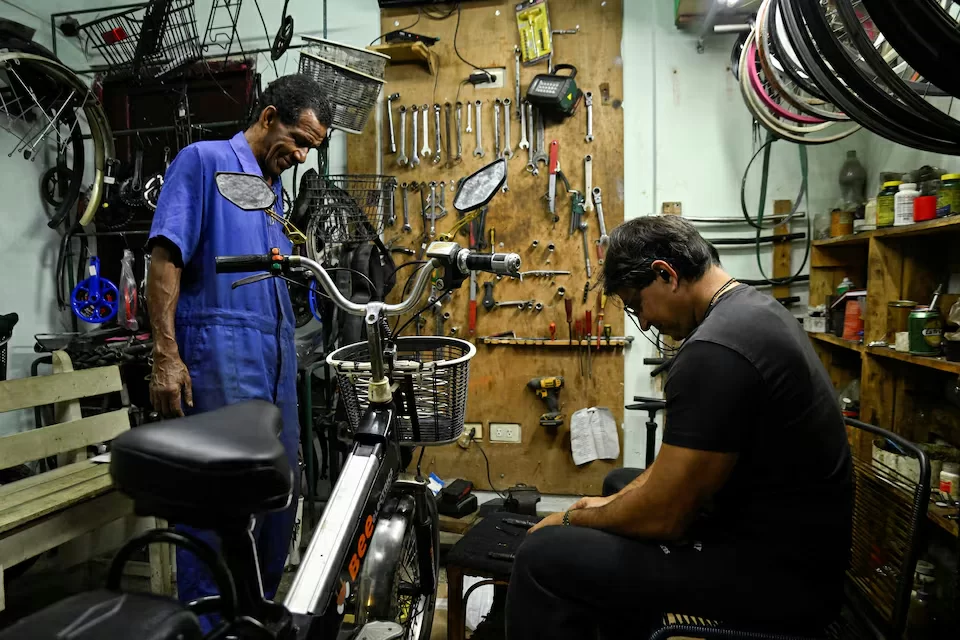
    Havana’s streets are witnessing an unprecedented transportation transformation as Cubans increasingly turn to bicycles amid a severe fuel shortage crisis. The shift comes as direct consequences of tightened U.S. sanctions that have disrupted oil supplies from Venezuela and other traditional sources.

    The current situation stems from January 2026 when the United States arrested Venezuelan leader Nicolás Maduro, effectively cutting off Cuba’s primary oil supply that had sustained the island nation for over a quarter-century. Subsequent American threats against oil-exporting nations have further constrained deliveries from Mexico and other potential suppliers.

    This energy crisis has forced Havana residents to adopt innovative survival strategies. Across the city, people are retrieving long-stored bicycles from storage, repairing worn tires, and even learning to ride for the first time. The movement represents both practical adaptation and symbolic resistance to economic pressures that have made traditional transportation increasingly unaffordable.

    Transportation costs have tripled in recent months, compelling citizens like 23-year-old Gabriela Barbon to embrace cycling. ‘Cycling is no longer a hobby, it’s a necessity,’ she remarked during a training session with local organization Citykleta. Their ‘Learn to Pedal’ campaign has seen overwhelming response, attracting nearly four times the expected participants.

    The trend has created parallel economic opportunities and challenges. Bicycle repair shops like that of Pedro Carrillo report an ‘explosion’ in business, though they simultaneously face shortages of replacement parts. ‘Sometimes I don’t have what people need—those supplies are nowhere to be found,’ Carrillo noted from his sidewalk workshop.

    Meanwhile, the Cuban government is implementing emergency measures including investments in solar energy and other renewable sources. International aid organizations attempt to provide humanitarian assistance, though political tensions and the ongoing embargo continue to limit their effectiveness.

    According to United Nations reports, food security remains critically compromised while energy supplies stay unreliable. The six-decade American embargo, recently intensified under the Trump administration, continues to weigh heavily on Cuba’s economic stability.

    Despite these challenges, the bicycle phenomenon demonstrates Cuban resilience. As resident Yoandris Herrera explains while preparing to transport his children to school: ‘Fuel is now so expensive, cycling is simply more practical.’ This two-wheeled revolution represents both immediate practical solution and powerful symbol of adaptation in difficult times.


  • Rare earth elements could become a major source of non-tax revenue, says Luis Abinader

    Rare earth elements could become a major source of non-tax revenue, says Luis Abinader

    The Dominican Republic’s mining industry has reached an unprecedented milestone, achieving record-breaking export revenues while making significant strides in rare earth element exploration that could transform the nation’s economic landscape.

    President Luis Abinader announced during his accountability address that the mining sector generated over US$2.6 billion in exports—representing a remarkable 52% increase compared to the previous year. This performance solidifies mining as one of the country’s primary generators of foreign exchange and a cornerstone of its economic development strategy.

    Concurrently, exploratory efforts for rare earth elements—a group of 17 minerals critical for manufacturing advanced technologies including smartphones, semiconductors, space industry components, and military applications—are yielding increasingly optimistic results. Initial findings have confirmed gross deposits exceeding 150 million tons, with international laboratories verifying exceptional purity levels and extraction feasibility that rank among the world’s most promising reserves.

    The President revealed that formal mineral resource determination will be finalized this year, with reserve certification scheduled for completion by the first quarter of 2025. This timeline will pave the way for subsequent exploitation and refining phases, potentially establishing the Dominican Republic as a significant global player in the strategic rare earth market.

    Beyond their technological significance, these mineral resources could become the nation’s primary non-tax revenue source, creating a substantial strategic income stream. The mining sector’s success has already attracted substantial foreign investment, with US$556 million flowing into mining operations between January and September, while the energy sector received over US$1.01 billion during the same period. Combined, these sectors accounted for approximately 40% of total foreign direct investment, demonstrating strong international confidence in the country’s resource development capabilities.

  • 75% of Dominican households are overcrowded

    75% of Dominican households are overcrowded

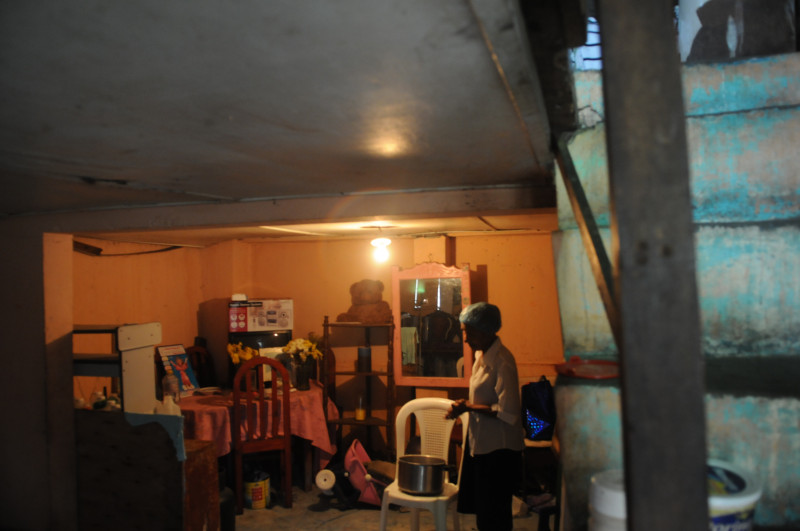
    A comprehensive analysis of the 2022 National Population and Housing Census by Habitat for Humanity Dominican Republic (HFHDR) has uncovered a severe housing crisis, with three-quarters of households across the nation experiencing critical overcrowding conditions. The findings reveal that approximately 75% of Dominican families lack the minimum spatial requirements necessary for adequate human development and dignified living.

    The organization’s Monitoring, Evaluation, Accountability and Learning (MEAL) team conducted detailed research indicating that overcrowding extends beyond mere square footage limitations. The crisis fundamentally impedes families’ abilities to maintain functional areas for essential activities including sleeping, food preparation, and personal hygiene.

    Regional disparities present particularly alarming patterns, with northern provinces demonstrating significantly worse conditions than the national average. Hermanas Mirabal province records the most severe overcrowding at 86%, followed closely by Santiago Rodríguez and Sánchez Ramírez at 85%. Dajabón and Monseñor Nouel complete the most affected regions with 84% and 83% respectively.

    Cesarina Fabián, National Director of HFHDR, emphasized the profound implications: “Living in constrained conditions directly compromises health standards, personal privacy, and family coexistence dynamics. When residential spaces cannot accommodate their inhabitants, individual development becomes severely restricted.”

    The organization has implemented strategic interventions including structural assessments, room expansions, and layout optimizations to address the crisis. To date, these initiatives have successfully transformed living conditions for over 57,000 Dominican families, eliminating overcrowding while significantly enhancing health outcomes and overall wellbeing.

    HFHDR additionally highlights the critical importance of tenure security, ensuring that home improvements don’t inadvertently cause displacement through increased property values. Legal ownership verification remains essential to guaranteeing permanent benefits for families receiving housing interventions.

    As a global nonprofit organization, Habitat for Humanity maintains its commitment to ensuring decent living conditions worldwide. In the Dominican Republic specifically, the organization continues to combat overcrowding through comprehensive housing solutions and community transformation initiatives.

  • Inflatie in januari licht gestegen; jaarinflatie op 11%

    Inflatie in januari licht gestegen; jaarinflatie op 11%

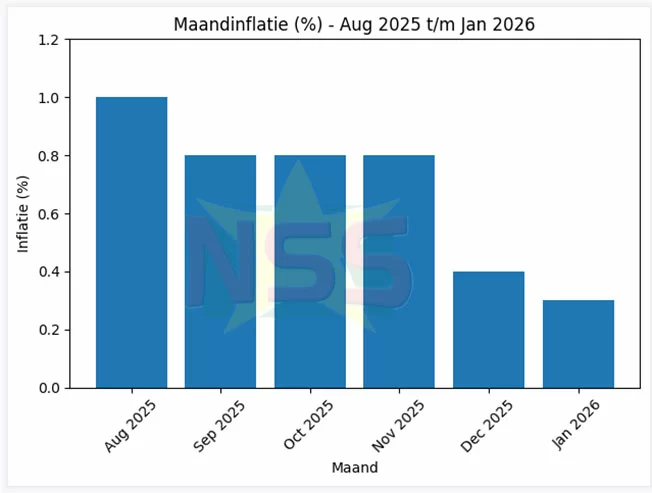
    January 2026 witnessed a continued upward trajectory in consumer prices, with official data revealing a 0.3% month-over-month increase from December 2025. The more striking figure emerges from the annual comparison, showing prices have surged by 11% compared to January of the previous year, indicating persistent inflationary pressures within the economy.

    The Consumer Price Index (CPI), a crucial gauge of inflation, climbed to 934.3 points in January from 931.4 the preceding month. This incremental monthly rise masks the substantial year-on-year price growth that continues to affect consumers’ purchasing power.

    Analysis of spending categories reveals uneven price movements across different sectors. The most significant increases were recorded in housing and utilities, alongside alcohol and tobacco products. Conversely, the transportation sector experienced a slight reprieve with modest price decreases, providing some relief to consumers in this category.

    The overall inflation rate, while appearing relatively moderate in monthly terms, conceals considerable volatility at the product level. Certain goods and services have actually become more affordable, while others have undergone substantial price hikes, creating a mixed experience for consumers depending on their spending patterns.

    These inflation metrics are derived from comprehensive monthly price collections covering a wide basket of goods and services across seven districts. Notably, the regions of Marowijne, Brokopondo and Sipaliwini are excluded from these measurements, areas where prices are reportedly significantly higher, suggesting the reported inflation figures may not fully capture the economic reality across all demographic and geographic segments.

  • Twenty Years Strong: Hypasounds Celebrates Music, Legacy, and Home in Barbados

    Twenty Years Strong: Hypasounds Celebrates Music, Legacy, and Home in Barbados

    Barbados prepares to honor one of its most enduring musical talents as international soca artist Hypasounds celebrates two decades in the entertainment industry. The milestone will be commemorated on June 20 with a special anniversary concert titled “Soca For Her: The Coronation,” serving as both a retrospective of his influential career and a testament to his artistic evolution.

    The artist first captured public attention with his 2006 breakthrough single “Sunshine Girl,” which established his signature sound characterized by sweet lyrics and captivating presence. This early success laid the foundation for what would become a remarkable journey from emerging local talent to internationally recognized performer, songwriter, and producer.

    Unlike many Caribbean artists who relocate overseas following international success, Hypasounds made a conscious decision to maintain his roots in Barbados. This choice, deeply influenced by his commitment to family and his daughter Kenza, has allowed him to balance his global career with his role as a present father and community member.

    His impact extends far beyond musical achievements. Hypasounds has emerged as a cultural ambassador, serving as representative for the Holetown Festival, mentoring emerging creatives, supporting youth initiatives, and investing in community development. His philanthropic work demonstrates his belief that success carries broader responsibilities beyond personal achievement.

    The upcoming concert will feature a carefully curated journey through his musical evolution, spanning from early hits like “Dutti” and “How She Like It” to recent international releases including “Made Fuh Dat” and “Happy.” The performance will be enhanced by a live band and special guest appearances, creating an immersive experience that reflects both artistic growth and cultural significance.

    Reflecting on his career, Hypasounds emphasizes the lessons of patience and gratitude gained through twenty years in the music industry. His story stands as a powerful example of sustained artistic excellence and the possibility of maintaining global success while staying connected to one’s cultural origins.

  • Saint Lucia secure get first Concacaf U20 qualifying win

    Saint Lucia secure get first Concacaf U20 qualifying win

    In a remarkable turnaround performance, Saint Lucia’s Under-20 men’s football team claimed a decisive 3-0 victory against Dominica in their CONCACAF qualifying match on Friday, February 27th. The Group C encounter, held at Complejo Deportivo FCRF-Plycem in San Rafael de Alajuela, Costa Rica, showcased the team’s resilience following their earlier defeat to Antigua & Barbuda.

    Captain Eymani Butcher emerged as the standout performer, netting two crucial goals that propelled the young Piton Boyz to third position within the five-team group. The technical staff implemented strategic changes to the starting lineup, with A’dee Germe replacing Tyrell Vidal as goalkeeper and Dervaj Edward taking the forward position instead of Messiah Pinel.

    The scoring opened in the 10th minute when Butcher capitalized on a perfectly executed play. Alfred Hippolyte’s long clearance found Kevin Blackstock, who demonstrated impressive physicality to overcome three Dominican defenders before delivering a precise cross to Butcher. The Soufrierian midfielder calmly converted from just outside the six-yard box, establishing an early lead.

    The match maintained its 1-0 scoreline through halftime. Early in the second period, Blackstock was substituted by Tashawn Walter in a tactical move that immediately paid dividends. Moments after the change, Edward’s ambitious attempt from 25 yards resulted in a handball violation by a Dominican defender. Butcher stepped up to the penalty spot and delivered a powerful low shot to the goalkeeper’s right, doubling Saint Lucia’s advantage.

    Butcher nearly completed a hat-trick in the 70th minute with a powerful strike from 22 yards. While the goalkeeper managed to parry the attempt, substitute Edrick Popo demonstrated exceptional awareness by immediately pouncing on the rebound and skillfully nutmegging the keeper to secure the final 3-0 margin.

    The victory positions Saint Lucia with three points from two matches, trailing group leaders Antigua & Barbuda who maintain a perfect record from two games. The Dominican Republic follows with three points from their single fixture. Saint Lucia faces a critical challenge against the Dominican Republic on Sunday, March 1st, where an upset victory could dramatically reshape the group dynamics before their final match against the British Virgin Islands on March 3rd.

  • US$ 180 miljoen uit obligatie-uitbreiding voor sociale en economische projecten

    US$ 180 miljoen uit obligatie-uitbreiding voor sociale en economische projecten

    Suriname’s Ministry of Finance has announced that approximately $180 million from its recently expanded $265 million state bond will be directed toward critical social and economic development projects. Finance Minister Adelien Wijnerman detailed the allocation during a press conference on Friday, emphasizing that these funds are specifically earmarked for capital investments rather than operational expenses like salaries or subsidies.

    The 10-year bond extension, maturing in 2035 and carrying an 8.5% interest rate, has already been deposited into a dedicated account. These resources are strictly designated for pre-approved initiatives across several key sectors:

    – Healthcare: Strengthening hospital infrastructure, enhancing primary care services, and improving access to essential medicines
    – Education: Renovating school facilities, upgrading sanitation systems, and implementing digital learning support
    – Government Digitalization: Modernizing public services while increasing transparency and revenue collection capabilities
    – Agriculture and Food Security: Boosting agro-processing capabilities and reinforcing local production systems
    – SME and Youth Programs: Creating financing opportunities for emerging entrepreneurs
    – Energy and Basic Utilities: Supporting improved energy and drinking water infrastructure for schools and healthcare institutions

    While exact sectoral distributions remain under discussion, Minister Wijnerman confirmed that project specifications are being finalized in collaboration with relevant ministries.

    A portion of the total bond amount will address outstanding commercial debts, allowing the government to further reduce previous obligations. The bond’s semi-annual interest payments amount to approximately $11.3 million, with the first payment scheduled for May 2026. Notably, interest payments for the initial 2.5 years have been incorporated into the borrowed amount, meaning they will be drawn from the reserved special account rather than impacting the current operational budget.

    Minister Wijnerman defended the strategic timing of these investments, stating they are essential for strengthening social infrastructure ahead of anticipated oil revenues expected from 2028 onward. Although the bond expansion increases the national debt burden, the minister emphasized that previous refinancing operations and extended repayment terms have created additional fiscal space for these development priorities.