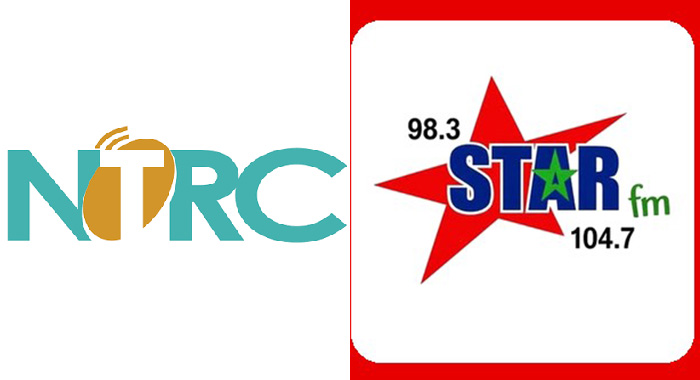
A sharp public dispute over the regulatory status of Unity Labour Party-owned Star FM has erupted in St. Vincent and the Grenadines, after the National Telecommunications Regulatory Commission (NTRC) released a detailed chronology of events that directly contradicts opposition claims the new governing administration is targeting the broadcaster to silence it.
Former opposition MP and ex-information minister Camillo Gonsalves, who leads the Unity Labour Party (ULP), ignited the controversy in comments delivered on Star FM October 12, 2026. Gonsalves framed the NTRC’s recent cease-transmission order as an unlawful, politically motivated attack by the newly elected New Democratic Party (NDP) administration, which won office in November 2025. The lawyer and former lawmaker claimed the regulator had imposed extra-legal requirements on the station to block its licence renewal, and warned the move threatened freedom of expression. He said the ULP was prepared to sue over the issue, while also calling for a de-escalation to avoid a damaging public legal battle.
But NTRC Director Apollo Knights pushed back against these claims in an official press release, publishing a full timeline of the licence renewal process that places the initial documentation request squarely during the period when the ULP was still in power, and when Gonsalves himself oversaw the NTRC as minister of information.
According to Knights’ account, regulatory protocols require all FM radio licensees to submit renewal applications one year before their existing licences expire, with licences issued for five-year terms. Star FM’s previous licence was granted April 15, 2021, and was scheduled to expire April 14, 2026. The NTRC first sent the station a renewal request, including a requirement to submit a valid certificate of status from the Commercial and Intellectual Property Office (CIPO), all the way back on February 14, 2025 – when the ULP still held full control of government. Follow-up reminders were sent May 29 and October 31 of that same year, still months before the NDP’s election win.
Star FM ultimately submitted its renewal application November 13, 2025. Just eight days later, on November 21, 2025, the NTRC – still governed by commissioners appointed entirely by the ULP, who remained in post through the end of December 2025 – requested an updated certificate of status, because the document the station had submitted fell outside the required six-month validity window.
When Star FM finally provided an updated certificate February 12, 2026, it confirmed the station was not in good standing with CIPO, a mandatory requirement for all licence renewals regardless of ownership or political affiliation. The NTRC notified the station of the issue March 20, 2026, and sent three additional follow-up letters between April and June of that year. After Star FM’s original licence expired April 14, 2026, the regulator granted the station four separate extensions between May and October 2026 to resolve its outstanding status issues with CIPO, allowing it to continue broadcasting for nearly six months past the licence expiry date.
The controversy became public after a letter Knights sent October 8, 2026 to Julian Francis, secretary of Star Broadcasting Corporation Ltd., was leaked to the public. In that letter, Knights informed the station that it currently held no valid broadcast licence or frequency authorization, and was required to immediately cease transmission on its 98.3MHz and 104.7MHz frequencies until the required documentation was submitted and approved by the minister responsible for telecommunications. Knights stressed that Star FM can resume broadcasting as soon as it resolves its CIPO standing and the minister issues a new licence.
Telecommunications Minister Phillip Jackson, a member of the ruling NDP, dismissed all claims of political interference, framing the entire exchange as routine regulatory work. Jackson told listeners on the NDP’s own *New Times* programme on NICE Radio that the leaked letter was just the latest in a long chain of routine correspondence between the regulator and the regulated entity, noting the station had been notified of the renewal requirement as early as 2025 and received repeated reminders. He argued all broadcasting entities must be held to the same consistent standards under the law, rejecting accusations the administration was seeking to silence the ULP-owned station. He described NTRC staff as competent professionals, and said he was confident Star FM would meet the required requirements to have its licence renewed. Jackson confirmed the station had been operating without a valid licence for six months after its original expiry.
Gonsalves offered a competing narrative, however, claiming the station submitted its renewal application before the deadline, paid all required fees, and provided every document the NTRC requested – even materials that he argues the regulator had no legal right to demand. He said the regulator first asked for a certificate of status, then suddenly upped the requirement to a certificate of good standing, applying rules that do not exist in the current legislation or standard licence conditions. He also disputed claims the station was operating illegally, noting longstanding NTRC practice has allowed broadcasters to continue operating while renewal applications are pending, even if processing extends past the original licence expiry date. Gonsalves called the cease-and-desist order unlawful, arguing the NTRC could not issue such an order without completing a formal investigation, notifying the station of specific violations, and proving continued transmission poses serious public harm. He also noted that only the minister has the legal authority to deny a renewal, following statutorily defined process.
The former MP also raised questions about potential institutional bias, pointing out that NTRC Chair Benjamin Exeter previously ran as an NDP candidate in the 2015 and 2020 general elections, when Star FM openly criticized and mocked his candidacy. Gonsalves stopped short of claiming bias was proven, but said the connection demands public scrutiny.
Interestingly, both Gonsalves and Jackson publicly praised NTRC Director Apollo Knights’ leadership. Jackson acknowledged he had not been involved in the day-to-day correspondence between the regulator and the station, only becoming aware of the matter when it took on political overtones. While Gonsalves said the ULP was prepared to file legal action, he also called for de-escalation, warning a prolonged, high-profile dispute could harm St. Vincent and the Grenadines’ international reputation and fuel unwarranted concerns about press freedom. He urged the NTRC to ease tensions and resolve the standing issue through dialogue rather than confrontation.