博客

  • British Chamber of Commerce of the Dominican Republic announces the 27th British Golf Cup at Casa de Campo

    British Chamber of Commerce of the Dominican Republic announces the 27th British Golf Cup at Casa de Campo

    One of the Dominican Republic’s most highly anticipated annual events blending athletic competition and business networking is set to return next year: the British Chamber of Commerce of the Dominican Republic (BritChamDR) has officially announced plans to host the 27th iteration of the British Golf Cup on Saturday, August 8, 2026.

    The prestigious tournament will take place at the world-famous Dye Fore Golf Course, located within the luxury Casa de Campo resort in La Romana. This acclaimed course has earned international recognition for its technically demanding, strategic layout that challenges even experienced golfers, paired with sweeping, panoramic coastal views that draw players and visitors from across the globe every year.

    Since its launch, the British Golf Cup has carved out a unique reputation as more than just a sporting competition. It serves as a key annual gathering that unites a diverse cross-section of attendees: C-suite executives, leading business owners, diplomatic representatives, and dedicated amateur golf enthusiasts all come together for a full day that balances competitive play, intentional professional networking, and relationship-building between British and Dominican business communities.

    Staying true to the tournament’s long-standing tradition, the 2026 competition will follow the popular two-person Scramble format, with players split into three skill-based divisions: Categories A, B, and C. A full range of prizes will be awarded to top-performing participants, with honors going to the top three net scores in each division, alongside the tournament’s coveted Best Gross Score award. Additional special prizes are reserved for players who achieve the Longest Drive and land the shot Closest to the Pin. After a full day of on-course play, the event will wrap up with a celebratory awards ceremony, interactive raffles, curated local and international product tastings, and the presentation of a custom replica of the iconic Claret Jug — the traditional trophy associated with the British Open — to the winner of the Best Gross Score.

    For golfers eager to take part, registration for the 2026 tournament is already open via the official sign-up portal hosted at https://forms.gle/LwtbQeedeKp3BDTH8. Beyond individual player participation, BritChamDR is also actively welcoming brand and organizational partnerships to act as event sponsors. For sponsors, the tournament offers a high-value opportunity to put brands in front of an influential, high-net-worth and professional audience through a range of activation options, including on-course branding, interactive product sampling, dedicated exhibition spaces, and logo inclusion in every player’s official gift kit. Organizations interested in exploring sponsorship packages are encouraged to reach out directly to the BritChamDR team for more details.

    In its announcement, BritChamDR emphasized that the annual golf tournament is a core reflection of the chamber’s long-term mission: to foster stronger, more collaborative ties between the United Kingdom and the Dominican Republic by creating informal, accessible spaces for connection through sport. For additional updates or inquiries about registration and sponsorship opportunities, event organizers ask interested parties to contact the BritChamDR administration directly.

  • From Remittances to IP: The Dominican Republic’s next economic Play

    From Remittances to IP: The Dominican Republic’s next economic Play

    For decades, the Dominican Republic has been celebrated for its robust economic growth story, built on a core foundation of tourism, free-trade zones, construction and foreign direct investment. This model has delivered tangible results: faster expansion than most of its Latin American and Caribbean peers, widespread poverty reduction, and a growing middle class that has expanded economic opportunity across the country. But as analyst Jonathan Joel Mentor argues in a provocative new analysis of the nation’s economic trajectory, this familiar growth model has a hard ceiling—and the country’s greatest untapped asset is being systematically overlooked: the nearly three million Dominicans living and working abroad.

    Most discussions of the Dominican diaspora center almost exclusively on remittances, which hit a historic milestone in 2024, surpassing $10 billion in annual inflows. These funds are undeniably critical, supporting household consumption, education, housing and basic needs for communities across the country, and accounting for a major share of the nation’s foreign currency reserves. But Mentor stresses that remittances only reveal the tip of the iceberg of the diaspora’s economic value. Behind each money transfer sits a vast, underutilized reservoir of professional expertise, accumulated savings, global credit access, cross-border industry relationships and on-the-ground market knowledge that the Dominican Republic has yet to leverage for long-term growth.

    Currently, the country frames the diaspora as little more than a source of cash, cultural identity and political symbolism, celebrating the income they send home while ignoring the global professional ecosystem that generates that wealth. Mentor calls this one of the most dangerous blind spots in modern Dominican economic strategy. The traditional growth model relies on expanding physical capacity—adding more hotel rooms, more construction, more industrial factory space—to drive activity. But this approach cannot permanently substitute for gains in productivity, institutional strengthening, and the development of scalable, Dominican-owned intellectual assets that can compete in global markets.

    Today, the Dominican Republic finds itself in an awkward transition: it is far too successful to be categorized as a marginal developing economy, but far too dependent on traditional sectors to evolve into a knowledge-based economy. Existing vulnerabilities—weak human capital outcomes, high exposure to climate risks that threaten infrastructure, persistently burdensome energy costs, institutional uncertainty that discourages high-value investment, and ongoing brain drain as talented Dominicans leave to pursue faster career growth abroad—all signal that the current model cannot deliver sustainable long-term development. Building another hotel or another high-rise will create short-term activity, but it does not answer the central question that will define the Dominican economy over the next decade: What valuable assets does the country intend to own?

    Mentor offers a radical new framing of the diaspora: rather than viewing this community as separate from the national economy, connected only by annual remittances and occasional holiday visits, the Dominican Republic has already built a distributed professional class embedded within the world’s most advanced economies. Dominican engineers build fintech and digital systems across the United States; product managers based in Spain develop digital services used across Europe and Latin America; senior executives in Miami and Panama manage regional logistics, finance and trade networks. This enormous productive capacity barely registers in official Dominican economic statistics. A collaborative software product built by a developer in Santiago and a data scientist in New York, for example, can generate global revenue and hold valuable intellectual property, yet it falls outside the outdated production and export categories that Dominican institutions use to track economic activity.

    In short, migration has inadvertently given the Dominican Republic a global base of talent and market access that few peer countries enjoy—but the nation still treats this base as nothing more than an offshore emergency fund of disposable cash. That is convenient for the status quo, but it is not a intentional development strategy. Remittances deliver steady cash flow to support households, but they do not build lasting domestic capital structure. A Dominican professional working for a foreign firm, using foreign infrastructure and intellectual property, who sends a share of their salary home delivers immediate benefits to the country, but the Dominican Republic does not own the underlying company, platform or technology that created that value. The far more important question is whether the country can convert diaspora income, expertise and global connections into productive domestic assets: export-ready Dominican companies, licensable intellectual property, and regional digital systems that generate recurring, long-term revenue. The Dominican Republic has mastered the art of receiving money from its diaspora, but it has not yet learned how to build lasting national wealth with that resources—a difference that separates an economy that is merely sustained from one that is fundamentally transformed.

    Traditional Dominican exports are still almost exclusively conceptualized as physical goods: agricultural products, manufactured goods, tourism services, and free-trade zone output. But the next generation of exports will not fit in a shipping container, a hotel room or an industrial park. Software, algorithms, data products, licensing rights, digital platforms and proprietary systems can be built collaboratively across multiple countries and sold globally without being tied to a single geographic location. Once these assets are officially recognized as legitimate Dominican exports, the entire map of national production shifts: a founder based in Santo Domingo, an engineer in New Jersey, and a commercial strategist in Madrid can co-own the same product, sell it across multiple global markets, and generate steady hard-currency revenue for the Dominican economy.

    This shift is critical because long-term economic power accumulates through ownership. A country cannot build a knowledge economy simply by attracting foreign firms that own the core intellectual property; it must grow its own domestic enterprises and institutions capable of owning and scaling knowledge themselves. This transition creates political and institutional discomfort, because physical assets are easy to see, regulate, inaugurate, and control through existing power structures. Intellectual property is far less visible, it can scale and move across borders quickly, and it often remains in the hands of stakeholders that are less dependent on domestic political gatekeepers. The challenge is therefore not only economic—it is a question of who gets to shape and own the next Dominican growth model.

    If this opportunity is so clear, Mentor asks, why has it not become a core priority of national development strategy? The answer lies in institutional incentives: the current arrangement satisfies nearly every existing domestic institution. The central bank tracks remittance inflows, consular offices support citizens abroad, government agencies organize ceremonial diaspora events, and political leaders pay tribute to overseas Dominican communities. These activities have symbolic value, but they treat the diaspora as an audience, a political constituency, and a source of funding—not as co-authors of national industrial policy, suppliers of cutting-edge technology, or investors in productive domestic assets. This setup preserves the existing balance of power: ceremonial events are easy to control, but shared decision-making is not. Inviting a successful Dominican executive to speak at a national conference is simple; giving that executive real influence over investment vehicles, export strategy, and national innovation mandates is an entirely different proposition. The first delivers political visibility; the second would redistribute authority. No deliberate conspiracy is needed to maintain the status quo—existing institutional incentives are enough to keep change from happening.

    To unlock the diaspora’s full potential, Mentor argues, the country must shift from ceremonial recognition to intentional institutional architecture. The first step is to formally classify diaspora-developed intellectual property as legitimate Dominican economic production. If these assets are not categorized in official statistics, the country cannot measure, finance, or promote them. National export and innovation strategies must explicitly include software, algorithms, data products, digital platforms and other intangible assets, and institutions should track not just the number of new startups, but the amount of recurring Dominican-owned revenue generated abroad and who holds the underlying intellectual property rights.

    The second step is to build professional, credible investment and commercialization vehicles designed for diaspora collaboration. Too often, the country appeals to diaspora investors through patriotic rhetoric, asking them to support their home country and fellow Dominican entrepreneurs. While sentiment can open doors, it cannot replace strong governance, rigorous risk management, and competitive returns that attract long-term investment. A modern diaspora investment facility could combine public guarantees, revenue-based financing, professional independent management, and co-investment from global development institutions and private capital. Its core mandate would be to support companies building exportable intellectual property, rather than just redirecting more diaspora savings into domestic real estate or traditional small businesses.

    Third, major Dominican institutions must become active buyers of diaspora-developed products and services. Domestic banks, insurance companies, telecommunications firms, logistics groups, universities and public agencies should commission custom solutions from Dominican professionals working abroad. A national bank could partner with Dominican data specialists in New York and Madrid to build next-generation risk management infrastructure; an insurer could work with Dominican actuaries across multiple markets to develop innovative climate insurance products; a logistics firm could collaborate with Dominican operators based in key Caribbean trade corridors to build regional digital management systems. These partnerships should not be framed as charity, sponsorship, or ecosystem support—they should be structured as formal commercial mandates with dedicated budgets, executive leadership, clear procurement pathways, and measurable performance outcomes. The diaspora only becomes part of the productive national economy when it is integrated into core value chains, not just added to a guest list for ceremonial events.

    Finally, qualified diaspora professionals must be given a seat at the table where key decisions about capital and national priorities are made. The country does not need another ceremonial advisory council; it needs experienced founders, investors, engineers and executives from the diaspora to participate directly in investment committees, national export strategy development, and digital infrastructure planning. This is not about replacing local talent—it is about connecting complementary capabilities that geography and outdated bureaucracy have long kept separate.

    The Dominican Republic does not need to abandon its successful traditional economic sectors to pursue this new path. But as Mentor notes, countries do not secure their long-term future by only defending what already works; they thrive by identifying the next source of competitive advantage before other countries do. The diaspora is already producing knowledge, managing complex global systems, and building valuable assets within international markets. The productive base already exists—what is missing is the national architecture that connects that capacity to Dominican ownership.

    The country faces a clear choice: it can continue to celebrate the success of Dominicans abroad after that success has been created and owned by foreign entities, or it can build the institutions, investment vehicles and commercial relationships needed to participate in creating that value from the very beginning. Today, the Dominican Republic already exports talent. The greatest risk is that it will continue exporting people, only to import back the platforms, systems and intellectual property that those same people helped build for other countries.

    Global markets and capital will not wait for Dominican policy to catch up. Intellectual property does not need permission to move across borders. A global Dominican knowledge economy is already emerging— the only question is who will own it when it fully takes shape.


  • Dominican Republic’s field hospital treats over 1,200 earthquake victims in Venezuela

    Dominican Republic’s field hospital treats over 1,200 earthquake victims in Venezuela

    Six days after the Dominican Republic’s Emergency Medical Team (EMT-RD) arrived in earthquake-stricken Venezuela to deliver aid to impacted local communities, the unit has already conducted more than 1,200 medical consultations, turning its purpose-built field hospital into one of the busiest and most in-demand medical facilities operating across the entire disaster zone.

    This life-saving deployment forms a core part of the Dominican government’s Quisqueya Solidaria Humanitarian Mission, and marks a historic milestone for the Caribbean nation: it is the first time any Dominican emergency medical team that holds Type 1 certification from the World Health Organization has been deployed to support international humanitarian operations.

    A breakdown of the team’s work in the first week of the mission reveals the wide range of critical care services they have delivered to vulnerable communities. The unit has completed 710 general and emergency medical consultations, provided 232 gynecological care services, carried out 144 pediatric check-ups and treatments, and delivered 114 targeted mental health support interventions for residents traumatized by the disaster. Beyond direct patient care, the team has also distributed much-needed prescription medications, administered routine and emergency vaccines, run on-site diagnostic testing, set up systems to produce safe drinking water for local populations, and implemented sanitation protocols alongside community-wide health promotion outreach.

    Demand for the team’s services continues to climb, as reflected by treatment numbers from Saturday alone: the field hospital cared for 181 individual patients in just a single 24-hour period. All staff working on the deployment are specialized public health professionals from the Dominican Republic’s Ministry of Public Health, including attending physicians, registered nurses, clinical psychologists, licensed pharmacists, water and sanitation experts, and dedicated logistics coordinators.

    Dominican government officials note that this successful international mission underscores the significant progress the country has made in building its capacity to deliver internationally certified humanitarian and emergency medical assistance to communities in need outside its own borders. The milestone highlights the Dominican Republic’s growing role as a contributor to global disaster response efforts.

  • Dominican Republic hosts 31st International Congress of Caribbean Archaeology

    Dominican Republic hosts 31st International Congress of Caribbean Archaeology

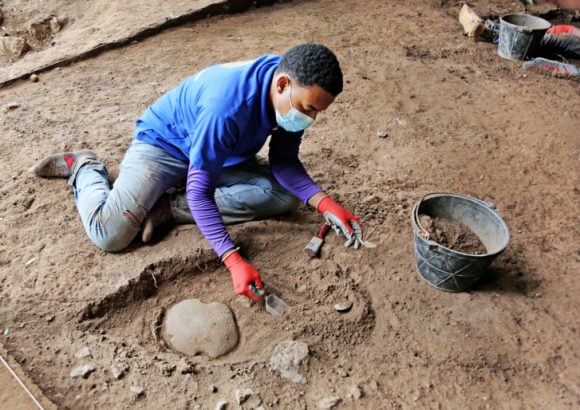
    SANTO DOMINGO – The Caribbean’s most prominent academic gathering focused on unlocking the history of the region’s Indigenous societies and centuries of colonial rule has officially opened its doors in the Dominican Republic, with the 31st International Congress of Caribbean Archaeology (IACA/AIAC) kicking off in the capital city of Santo Domingo.

    Running through July 18 in Santo Domingo’s iconic Colonial City district, the week-long event has drawn 237 archaeological specialists from 23 countries and territories around the world. The congress serves as a platform for these scholars to share groundbreaking new findings, debate evolving interpretations of the Caribbean’s pre-Columbian societies and viceregal era, and foster cross-border collaboration. All core academic sessions are being hosted at the auditorium of the Dominican Telecommunications Institute (Indotel) Cultural Center.

    The 2024 congress is organized by the Academy of Sciences of the Dominican Republic, in formal partnership with four leading regional cultural and research institutions: the García Arévalo Foundation, Centro León, the Guahayona Institute, and the Casa del Cordón Taíno Cultural Center. Additional institutional and financial support comes from a wide network of public and private entities, including the Dominican Ministry of Culture, Vice Ministry of Cultural Heritage, General Directorate of Museums, the Central Bank of the Dominican Republic, and Banco Popular, among other cultural organizations.

    The academic program is structured across 15 specialized thematic symposia, featuring a total of 97 individual presentations that showcase cutting-edge methodological advances in the field. Research topics span a diverse range of modern archaeological techniques, from ancient DNA sequencing and isotopic analysis to starch grain studies, archaeozoology, archaeobotany, underwater archaeology, and digital heritage documentation using photogrammetry and 3D modeling. Participating researchers hail from many of the world’s top academic and research institutions, including Harvard University, the Max Planck Institute for Evolutionary Anthropology, the University of Copenhagen, the University of Minnesota, and Leiden University, bringing diverse global expertise to the regional conversation.

    Beyond formal lecture hall sessions, the congress has planned a full slate of complementary cultural and field-based activities for attendees throughout the week. These include public academic lectures hosted at the Academy of Sciences of the Dominican Republic, guided tours of the Museum of Underwater Archaeology, a hands-on skills workshop at Centro León in the city of Santiago, and a guided on-site archaeological survey at prehistoric sites located within the Cabo Samaná Natural Monument.

    Event organizers emphasized that hosting the congress carries broader strategic and cultural significance for the Dominican Republic. Beyond providing a space for scientific exchange, the gathering strengthens the country’s position as a leading regional hub for archaeological research and international collaborative work, while also raising global awareness of the need to preserve and study the Caribbean’s extraordinarily diverse and understudied cultural heritage.

  • Dominican among six arrested in Italy over fatal train station stabbing

    Dominican among six arrested in Italy over fatal train station stabbing

    Authorities in Italy have taken six young men linked to the notorious Latin Kings street gang into custody, charging them in connection with the brutal fatal stabbing of 27-year-old Gianluca Ibarra Silvera that unfolded at Milan’s busy Certosa train station on May 26, law enforcement officials confirmed this week.

    The group of detainees includes a 19-year-old national of the Dominican Republic, alongside five Peruvian citizens ranging in age from 18 to 22 years old. Prosecutors have outlined that each suspect faces differing levels of accusation for their alleged roles in the deadly attack. The arrests were executed in coordinated operations across the provinces of Milan and Monza, coming after law enforcement had already taken two additional suspects into custody in earlier phases of the ongoing probe.

    Investigative accounts of the attack paint a violent picture: Silvera, his brother, and a close friend were unexpectedly surrounded by a large group of assailants, who immediately launched an attack using knives, broken bottles, and loose stones as weapons. The three victims were forced to flee for their safety, running along active railway tracks adjacent to the station to escape the onslaught. According to official police accounts, Silvera stumbled and fell during his attempt to get away, and was captured by his attackers before being stabbed multiple times, inflicting fatal injuries.

    At this stage, the entire investigation remains under the active supervision of the Milan Prosecutor’s Office, with authorities yet to publicly announce what specific motive prompted the deadly attack, or whether additional arrests are expected as the probe moves forward.

  • Mivhed advances permit modernization to accelerate construction approvals

    Mivhed advances permit modernization to accelerate construction approvals

    Santo Domingo, Dominican Republic – The Dominican Republic’s construction sector is seeing explosive growth in private investment, driven by sweeping government reforms to streamline and modernize the building permit approval process. New data released by the country’s Ministry of Housing, Habitat and Buildings (Mivhed) shows that total approved private construction projects reached more than RD$330.2 billion in the first half of 2026, marking a staggering 157% jump compared to the same six-month period in 2025.

    Beyond the massive increase in total project value, Mivhed’s half-year report highlights broad-based growth across the sector. Between January and June 2026, the ministry issued 921 formal building permits, an 80% increase from the 512 permits granted one year prior. The number of new permit applications also climbed 13% year-over-year to 878, a clear indicator that construction activity will continue expanding in the coming months.

    Housing Minister Víctor “Ito” Bisonó emphasized that these strong results confirm the effectiveness of the government’s regulatory modernization push. Bisonó noted that faster, more transparent approval processes are not only attracting greater private capital to the sector but also supporting more organized, sustainable urban and infrastructure development across the country.

    As part of its ongoing modernization agenda, Mivhed is currently developing a new state-run digital permitting platform, which was designed in close collaboration with private sector stakeholders including real estate developers, civil engineers, licensed architects, and other industry representatives. The new digital system is on track to enter a pilot testing phase in the near future, with core goals that include improving real-time application tracking for applicants, cutting down overall processing wait times, and delivering more consistent, predictable timelines for investors planning new projects.

    Mivhed officials reiterated that the broader regulatory reforms are targeted at unlocking long-term potential for the Dominican Republic’s construction industry: by removing bureaucratic barriers to private investment, upgrading public service delivery for industry participants, and creating a more welcoming operating environment, the government aims to position the sector as a key driver of sustained national economic growth.

  • Mining drives Dominican economy with surge in exports and investment

    Mining drives Dominican economy with surge in exports and investment

    Santo Domingo — The Dominican Republic’s mining industry has sustained its robust upward trajectory through the first five months of 2026, delivering across-the-board gains in production, export volumes, foreign investment, and job creation, new industry data from the Dominican Republic Mining and Petroleum Chamber (CAMIPE) confirms.

    Compared to the same period one year prior, mining and quarrying activity expanded by 9.7% year-over-year between January and May. This growth rate is more than double the 4.2% expansion recorded by the Dominican Republic’s overall national economy during the same window, positioning the sector as a key engine of the country’s economic momentum. In the first quarter of 2026 alone, mining contributed 2.1% of the country’s total gross domestic product.

    Export performance has been particularly striking for the sector. Through the end of May, total mining exports hit $1.45 billion USD, marking a 67.6% jump from the same period in 2025. These exports generated nearly $1.4 billion USD in net foreign exchange for the country. According to CAMIPE’s analysis, mining now accounts for more than half of the Dominican Republic’s total national exports, and has become the country’s fastest-growing source of foreign currency — outpacing long-standing foreign exchange earners including tourism, remittances, and all other export categories combined.

    Foreign direct investment (FDI) in the Dominican mining sector has also surged, making up 17.5% of all FDI inflows received by the country so far this year. Total reported sector sales climbed 52% year-over-year, and the industry currently employs 7,491 workers across the country. These mining jobs also pay well above the national average: the average monthly salary for mining workers stands at 78,456 Dominican pesos, nearly twice the national average monthly wage.

    CAMIPE’s report emphasizes that these strong results highlight the ongoing strategic importance of the mining sector to the Dominican Republic’s broader economic stability and growth. To keep this momentum going, the industry group is calling on national policymakers to implement new frameworks that encourage further mineral exploration, streamline burdensome regulatory processes, attract additional global and domestic investment, and advance responsible, environmentally sustainable development practices across the sector.

  • Dominican Republic and the University of Texas partner on geology and hydrocarbon research

    Dominican Republic and the University of Texas partner on geology and hydrocarbon research

    In a landmark move to map out untapped energy and critical mineral wealth, the Dominican Republic has launched a collaborative research initiative with the University of Texas at Austin, focused on upgrading national geological data and evaluating hydrocarbon reserves across the country’s onshore and offshore sedimentary basins.

    Spearheaded by the Dominican Ministry of Energy and Mines and the university’s Bureau of Economic Geology (BEG), the multi-year project is scheduled to run through March 2027. Beyond mapping oil and gas deposits, the core mission of the collaboration is to generate high-precision geological data that will streamline future exploration efforts, attract greater international private investment to the Dominican energy sector, and shore up the country’s long-term energy security.

    Dominican Energy and Mines Minister Joel Santos emphasized that the project will extend far beyond hydrocarbon assessment, adding critical evaluation of strategic minerals including rare earth elements to its scope. This expanded work will give the Dominican government and industry stakeholders a clear, comprehensive picture of the nation’s untapped strategic natural resources, laying the groundwork for responsible, targeted development.

    For BEG, the partnership represents more than a one-off research project: it will deepen ongoing technical collaboration and cross-institutional knowledge sharing, while bringing world-class geological expertise to bear on the Dominican Republic’s resource evaluation efforts. The collaboration also builds on existing work already underway in the country.

    During the UT Austin delegation’s visit to the Dominican Republic, the team received a progress update on the nation’s active rare earth exploration program in the Pedernales region. That initiative, led by the Ministry of Energy and Mines in partnership with state-owned Dominican Mining Company (Emidom), is already working to quantify the extent of the country’s critical mineral reserves, the outcome of which will complement the broader joint resource assessment.

  • Fenatrano warns of possible fare hike over high fuel prices

    Fenatrano warns of possible fare hike over high fuel prices

    In the capital city of the Dominican Republic, Santo Domingo, the head of one of the nation’s largest public transportation organizations has issued a stark warning that a fare increase for riders across the greater metropolitan area may be unavoidable in the coming weeks. Juan Hubieres, president of the National Federation of New Transportation Option (Fenatrano), stated that his organization has repeatedly intervened to block affiliated drivers from raising fares over the past several months, even as global and domestic fuel costs have climbed steadily. But growing financial strain on independent transport operators has pushed the union to the edge, he said, and leadership may soon lose the ability to hold back price hikes. For months, Fenatrano has chosen to absorb inflated fuel costs rather than pass extra expenses to commuters, who already grapple with rising daily living costs across the country. Now, however, that buffer has been exhausted, Hubieres explained, as independent operators continue to see their profit margins shrink against elevated fuel expenses. Beyond just blaming global market trends, Hubieres levied sharp criticism at the Dominican government’s current fuel regulatory framework, claiming that domestic fuel prices are marked far higher than the average price seen on global commodity markets. To avoid passing costs onto everyday passengers, the union leader laid out a series of clear policy demands for national authorities. First, Hubieres called for the government to expand the existing Bonogás subsidy program, which provides financial support to public transport drivers to offset fuel costs. Second, he pushed officials to follow through on long-overdue pension commitments to retired workers in the transportation sector, a promise that has remained unfulfilled for years. Beyond sector-specific demands, Hubieres also called for broader economic policy reforms to ease pressure on working- and middle-class Dominicans. He urged the government to reduce the overall tax burden for low- and middle-income households, and proposed reallocating the tax burden to large corporate and mining entities that currently benefit from heavily subsidized fuel. Reversing current subsidies for large actors and applying new taxes to their fuel use, he argued, would generate enough government revenue to offset cuts to working-class taxes and fund expanded support for public transportation. Hubieres closed by warning that unaddressed economic pressure across critical sectors like public transport will not just lead to higher fares for commuters – it will also fuel growing social discontent across the country. He reiterated that Fenatrano will continue pressing authorities to implement targeted measures to cut operating costs for public transport operators, to protect both drivers and riders from the impact of soaring fuel prices.

  • Carnival, Royal Caribbean and Norwegian account for over 84% of cruise passengers in the Dominican Republic

    Carnival, Royal Caribbean and Norwegian account for over 84% of cruise passengers in the Dominican Republic

    The Caribbean cruise sector continues to evolve, and the Dominican Republic has released new tourism data showing steady incremental growth in cruise arrivals during the first six months of 2026. Official figures from the nation’s tourism authorities confirm that 1,653,129 cruise passengers passed through Dominican ports between January and June, marking a 1.36% year-over-year increase. This growth was supported by 482 scheduled ship calls distributed across the country’s eight commercial cruise ports, which serve as key entry points for international maritime travelers.

    The bulk of cruise traffic to the Dominican Republic is concentrated among three major global cruise operators, which together handle more than 84% of all cruise passenger arrivals to the nation. Carnival Corporation, one of the world’s largest cruise groups, retained its position as the leading operator in the Dominican market with 751,17 passengers, accounting for 45.5% of total arrivals. However, the company reported a 7.4% year-over-year drop in passenger volume following the opening of its new private cruise destination, Celebration Key, in the Bahamas. This operational shift has redirected a portion of Carnival’s sailings away from the Dominican Republic, creating ripple effects across local port operations.

    The most visible impact of this shift has been at Amber Cove, one of the Dominican Republic’s major cruise ports, which recorded a nearly 16% decline in arrivals compared to the first half of 2025. In contrast, Taíno Bay, another leading Dominican cruise facility located near Amber Cove, has solidified its status as the country’s busiest cruise port for the second consecutive year. The port welcomed 693,369 passengers in H1 2026, capturing traffic diverted from other regional stops and benefiting from ongoing investments in port infrastructure.

    Among the big three operators, Royal Caribbean Group delivered the strongest performance, posting a 34% year-over-year increase in passenger volume that brought 344,966 travelers to Dominican ports. The company’s robust growth is directly tied to its strategic expansion of operations in the Dominican Republic, as it looks to capitalize on growing demand for Caribbean cruise itineraries that include stops at the nation’s ports and attractions. Meanwhile, Norwegian Cruise Line continued its pattern of steady growth in the Dominican market, carrying 293,102 passengers in the first half of 2026, a modest 3.1% increase from the same period last year.

    Over the past four years, a total of 22 international cruise lines have launched operations in the Dominican Republic, a trend that underscores the nation’s rising profile as a core stop on Caribbean cruise itineraries. Industry analysts note that while the minor overall growth and shifting traffic patterns reflect broader adjustments to regional cruise routes, the long-term trajectory for the Dominican Republic’s cruise sector remains positive as more operators add the country to their schedules.