博客

  • Belize Expresses Solidarity Following Guyana Ferry Tragedy

    Belize Expresses Solidarity Following Guyana Ferry Tragedy

    In the wake of a devastating ferry disaster off Guyana’s northern coast that has left dozens of people presumed dead and dozens more unaccounted for, the Central American nation of Belize has formally extended its deepest condolences and unwavering solidarity to the government and people of Guyana.

    The tragic incident unfolded late Saturday, when the MV Barima, a passenger vessel carrying 116 passengers and 17 crew members, capsized mid-journey en route from Guyana’s capital Georgetown to the far-northern port of Port Kaituma. As of Sunday, local rescue authorities had successfully pulled 67 survivors from the water, but hope is fading for the remaining passengers and crew who have not been located.

    In an official statement released Sunday, Belizean Prime Minister John Briceño voiced his country’s shared grief with Guyana amid ongoing search efforts. “The thoughts of the people of Belize are with the people of Guyana as they grapple with this tragedy,” Briceño’s statement read. The prime minister added that the entire nation of Belize is praying for the miraculous safe recovery of those still missing, and extends heartfelt comfort to the families waiting anxiously for any update on their loved ones.

    To date, a large-scale multi-agency search and rescue operation is still underway. The effort brings together personnel from the Guyana Defence Force, the Guyana Coast Guard, privately owned local vessels, and regional partner organizations, all working around the clock to locate survivors and recover the remains of victims of the disaster.

  • Too Many Agencies, Too Little Coordination? Here’s the New Plan for Protecting Children

    Too Many Agencies, Too Little Coordination? Here’s the New Plan for Protecting Children

    On July 18, 2026, the Central American nation of Belize launched a groundbreaking institutional reform to strengthen its national safeguards for vulnerable youth, merging two disconnected oversight bodies into the unified Child Protection and Child Justice Steering Committee (CPJSC). Designed to address longstanding systemic weaknesses, the new committee will steer national-level reforms rather than handling individual child protection cases, operating under a structured five-year action plan spanning from 2026 to 2031.

    The consolidation brings together the former Child Protection Thematic Working Group and Child Justice Steering Committee, creating a single collaborative platform that unites stakeholders across government ministries, the judicial branch, law enforcement agencies, civil society organizations, and international development partners. The restructuring comes after a nationwide audit of Belize’s existing child protection framework, which identified critical gaps: fragmented institutional coordination and misaligned strategies among bodies tasked with preventing and responding to childhood violence, abuse, neglect, and exploitation.

    Attorney General Anthony Sylvestre, whose ministry holds a seat on the new committee, emphasized that years of parallel operations under two separate bodies made clear that a more integrated approach was non-negotiable. “Experience has shown over time that it’s best to have a collaborative effort,” Sylvestre noted. “You have stakeholders from various agencies, whether it be law enforcement, whether it be the court, whether it be in social service, all coming together to address the issue of child protection and child justice.” He added that having the Attorney General’s office represented directly on the committee will accelerate the legislative process for policies impacting children and families, ensuring urgent reforms move through parliament far more quickly than in previous years.

    Leadership of the CPJSC is headed by Justice Natalie Dixon, with the Director of Belize’s Department of Human Services serving as Vice-Chair and the National Commission for Families and Children acting as the body’s administrative secretariat. Justice Dixon reiterated that the committee’s core mandate is focused on systemic oversight, not case management, clarifying that its work will center on tracking and guiding national reform efforts across the sector.

    The committee’s work is anchored in five core strategic priorities: fortifying the overall national child protection infrastructure, updating and modernizing Belize’s outdated child justice system, expanding access to prevention programming and early intervention services, improving data collection practices and institutional accountability, and upskilling the workforce that supports children and families across the country.

    Sajid Ali, representative for the United Nations Children’s Fund (UNICEF) in Belize, which has supported the reform process, pointed out that children have historically been sidelined from key policy discussions that shape their lives. Ali stressed that young people’s perspectives must be placed at the center of all decisions that impact their well-being. “Strong coordination and accountability are essential to building a child protection system that can effectively respond to the needs of children and families,” he said.

    The CPJSC’s 2026-2031 action plan is fully aligned with both Belize’s national Children’s Agenda and the United Nations Convention on the Rights of the Child, the global treaty outlining fundamental rights for all children.

  • LETTER: The Street Will Never Love You Back

    LETTER: The Street Will Never Love You Back

    On a quiet Sunday in Potters, a routine gathering turned into a senseless tragedy that cut short a young life. Twenty-nine-year-old Leyandrew Hubbard was killed when a gunman opened fire on a group of people playing cards under a simple roadside shed. A second man survived the attack but remains in hospital, fighting to recover from serious gunshot wounds, a stark reminder of how random violence leaves lasting scars on communities.

    As is all too common after such events, the wheels of official response have begun to turn: local police have launched an investigation into the shooting, elected officials have released formal statements of condolence to Hubbard’s family, and grieving friends have taken to social media to share old photos of the young man, paired with tearful broken-heart emojis. For most of the community, life will gradually return to its normal rhythm, the memory of this latest violence fading until the next tragedy makes headlines.

    But for one small group of young men who gather regularly at that same roadside shed, the routine is already set to resume. By tomorrow, they will pull up worn wooden chairs, reshuffle a well-worn deck of cards, light cigarettes, pass around cold drinks, and laugh as if the fatal gunfire that echoed through the area just days earlier never happened. This open letter is written specifically for them.

    Across too many marginalized communities, countless young men have grown so deeply anchored to life on “the block” that they no longer recognize how the street has become their prison. They wake each morning with no clear plans, no tangible goals to work toward, and no sense of urgency to build a safer, more fulfilling future. The street corner replaces a professional office; the informal gambling table becomes their daily “workplace.” The conversations stay the same, year after year, and their lives stagnate along with them.

    Then, without warning, a burst of gunfire shatters that hollow routine. Many of these young men cling to the false belief that they are safe because they are “not involved” in local gang or criminal activity. But bullets do not stop to check identification or ask whether a person is innocent. Random violence does not care if you only stopped by for an hour to socialize, or if you were just passing through the neighborhood on an errand. It only takes being in the wrong place at the wrong wrong time for a life to be destroyed.

    Every funeral held for a victim of community gun violence reinforces the same brutal, unchanging truth: life is precious, but it is also incredibly fragile. Even so, far too many young people continue to live as if they are guaranteed an unlimited number of tomorrows. This letter asks them to answer one simple, honest question: What has the street ever given you?

    Has life on the block helped you save for a home of your own? Has it taught you a marketable trade that can support you for a lifetime? Has it given you the tools to care for aging parents, raise your own children, or build the stable future you once dreamed of as a kid? Or has it simply eaten away your most precious years, convincing you that doing nothing with your potential is normal and acceptable?

    Idle hours turn into empty days, empty days stretch into unfulfilled years, and before you realize what has happened, the big dreams you once held have been pushed aside by lazy excuses. You become known not for the goals you achieved or the good you brought to the world, but for where you spent every idle afternoon.

    But there is always another choice. You can learn a skilled trade that will open new doors. You can start a small business that builds wealth for you and your family. You can go back to school to finish your degree or learn new skills. You can find a mentor who has built the life you want and learn from their example. You can volunteer in your community to build connections and gain experience. You can get a steady job that gives you purpose and stability. Most importantly, you can walk away from people who celebrate wasting time, and surround yourself with people who push you to demand more from yourself and your future.

    The most heartbreaking part of tragedies like the shooting in Potters is that they become routine. We scan the headlines, shake our heads in disappointment, and move on with our lives, waiting for the next shooting to shock us for a day or two. But it does not have to stay this way.

    If even one young man reads this and decides today that he has wasted enough time on the corner, and chooses to invest that time in himself instead, then Hubbard’s death will not be entirely for nothing – it may yet save another life from being cut tragically short. Do not wait until your family is forced to plan your funeral. Do not wait until your face is printed on a memorial T-shirt worn by grieving friends. Walk away from the corner while you still have the chance. The future you deserve is waiting somewhere else.

    Sincerely,
    A Concerned Citizen
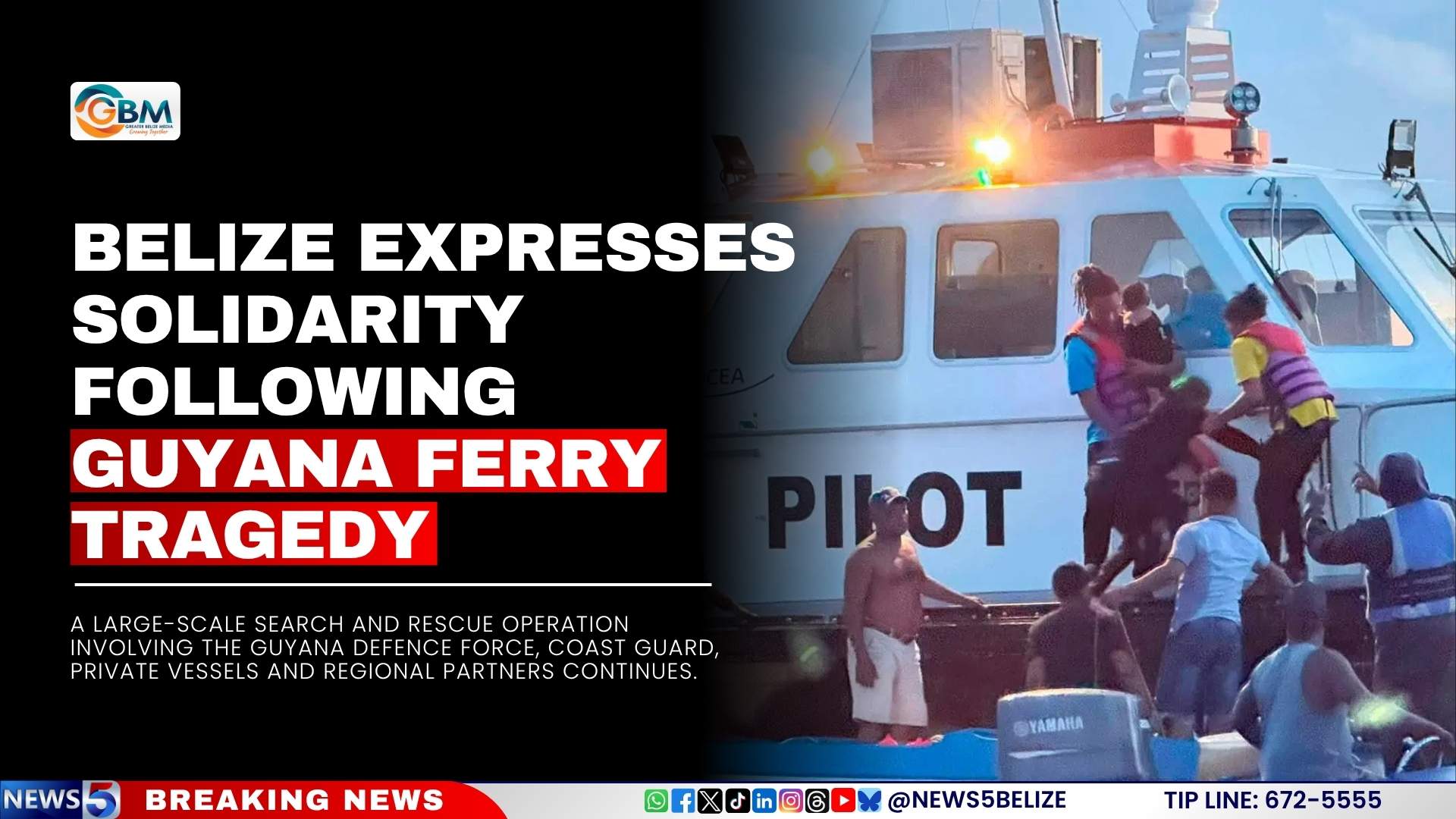
  • Captain Arrested, Scores Feared Dead After Guyana Ferry Disaster

    Captain Arrested, Scores Feared Dead After Guyana Ferry Disaster

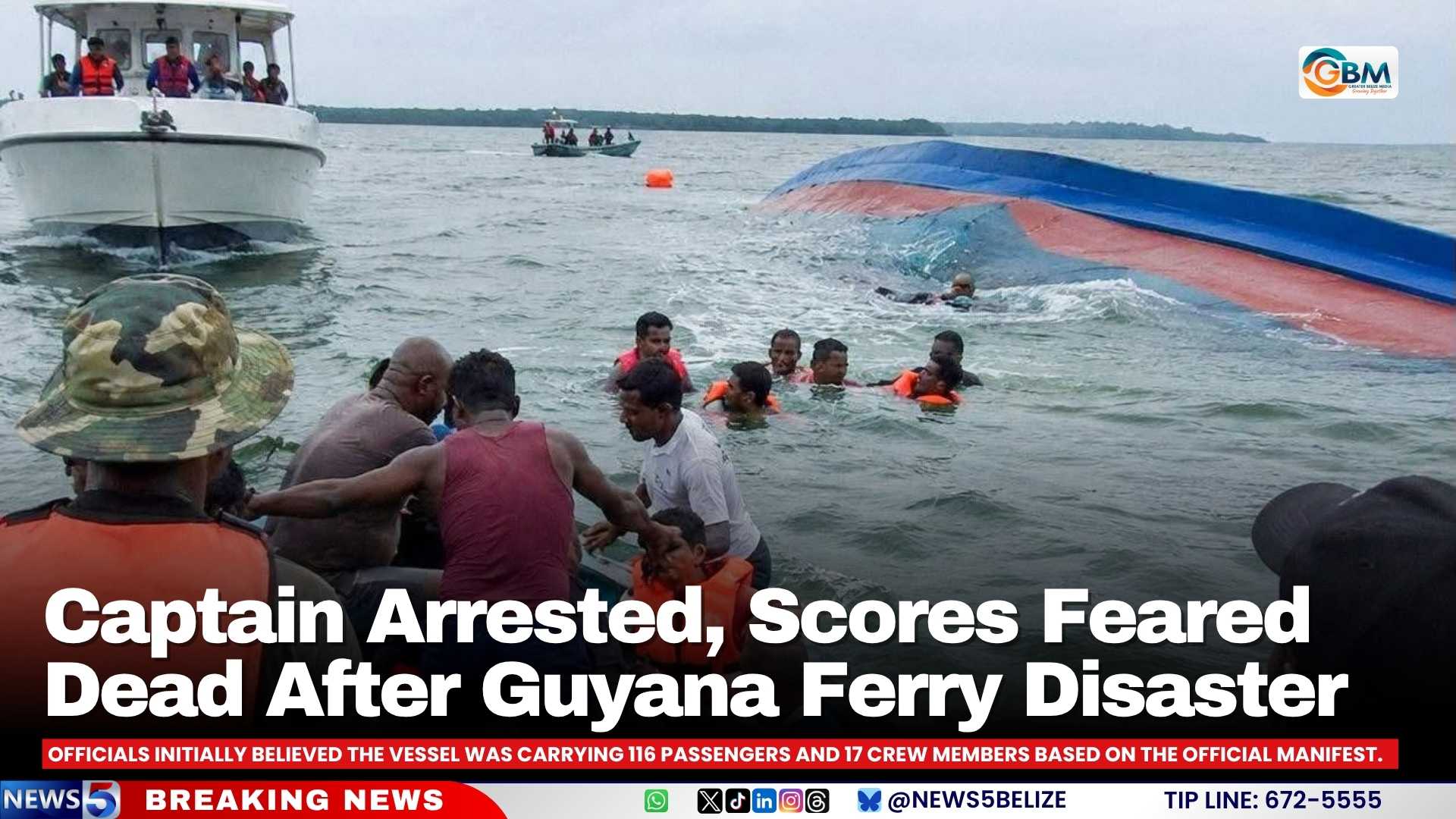
    Two full days after a aging passenger ferry overturned in open waters off Guyana’s northern shore, regional emergency crews pressed on with a massive search and rescue mission Monday, as authorities confirm at least two fatalities, hold 67 survivors in care, and brace for what could become the South American nation’s deadliest maritime disaster in more than 50 years. The incident, which unfolded late Saturday, has already sparked a full criminal probe into systemic safety failures, with the vessel’s captain and lead engineer taken into custody on Sunday following positive drug tests.

    The MV Barima, a 87-year-old ferry that provided critical transportation between the capital city of Georgetown and the remote northwestern community of Port Kaituma, issued a frantic distress call to maritime authorities at approximately 11:00 p.m. local time. Roughly 15 minutes after the call went out, the vessel overturned roughly seven miles from the coast, according to initial incident reports.

    From the earliest hours of the response, officials have grappled with severe uncertainty over just how many people were aboard the ferry when it capsized. Initial official passenger manifests listed 116 passengers and 17 crew members set to make the voyage, but investigators have since confirmed that the document is wildly inaccurate — a discrepancy that has deepened fears that far more people were on the vessel than officially recorded, raising the potential death toll far higher than initial estimates. Public Works Minister Juan Edghill confirmed Monday that just 35 of the 67 people pulled alive from the Atlantic appear on the official passenger roll, confirming that dozens of unregistered travelers boarded the vessel without being logged.

    Edghill framed the unrecorded boardings and broader safety gaps as a deliberate operational failure that has severely hampered rescue efforts, telling reporters Monday the situation qualifies as a criminal matter. “We are talking about operational breaches. People will be dealt with,” the minister said.

    Retired Brigadier and Prime Minister Mark Phillips echoed that commitment to accountability in a public address Sunday, noting that the full scope of the disaster cannot be assessed until investigators untangle the true passenger count and root causes of the capsizing. “Where negligence, misconduct or criminal wrongdoing is established, those responsible will face the full force of the law,” Phillips said.

    The investigation’s first major arrests came Sunday, when authorities took the ferry’s captain and first engineer into custody after both tested positive for marijuana. The two remain in police detention as investigators continue to question witnesses and comb through evidence related to the vessel’s operations, passenger logging procedures, cargo loading practices, and overall compliance with national maritime safety regulations.

    As search operations stretch into a third day, rescue teams have warned that hopes of finding additional surviving passengers are fading fast. Most of the 67 survivors pulled from the water spent between 12 and 24 hours clinging to overturned hull debris, life jackets, and floating cargo before rescuers could reach them. Among the survivors are 15 children, the majority of whom are being treated for minor injuries including cuts, bruises, and hypothermia from prolonged exposure to cold Atlantic waters.

    Multiple survivors have given consistent first-hand accounts that the vessel began taking on water soon after it encountered rough sea conditions mid-voyage, with several reporting that water had been seeping into the lower cargo hold for hours before the ferry suddenly rolled and capsized. Shipping records confirm the MV Barima was originally constructed in 1939, and underwent routine scheduled maintenance in 2024. The vessel was slated to undergo a major full dry docking refit later this year, according to Guyana’s maritime authority.

    Local community leaders have described the ferry route as a critical lifeline for residents of the remote interior, who rely on the vessel to travel to the capital for medical care, work, and family visits. As the search continues, Guyana’s government has come under renewed pressure to overhaul the country’s aging maritime transportation infrastructure and enforce stricter safety regulations for inter-island and inter-community passenger vessels.

  • US-Iran Conflict Escalates: What Has Been Targeted So Far?

    US-Iran Conflict Escalates: What Has Been Targeted So Far?

    Just one month after diplomatic peace talks failed to de-escalate long-running tensions between the United States and Iran, the region has slid into a rapidly intensifying armed conflict that is leaving a rising toll of civilian casualties and widespread destruction of critical infrastructure. The core point of contention driving the latest wave of violence is strategic control over the Strait of Hormuz, the world’s most important chokepoint for global oil trade, where neither superpower is willing to concede dominance to the other.

  • Police Open Carnival City Satellite Post Ahead of Antigua Carnival 2026

    Police Open Carnival City Satellite Post Ahead of Antigua Carnival 2026

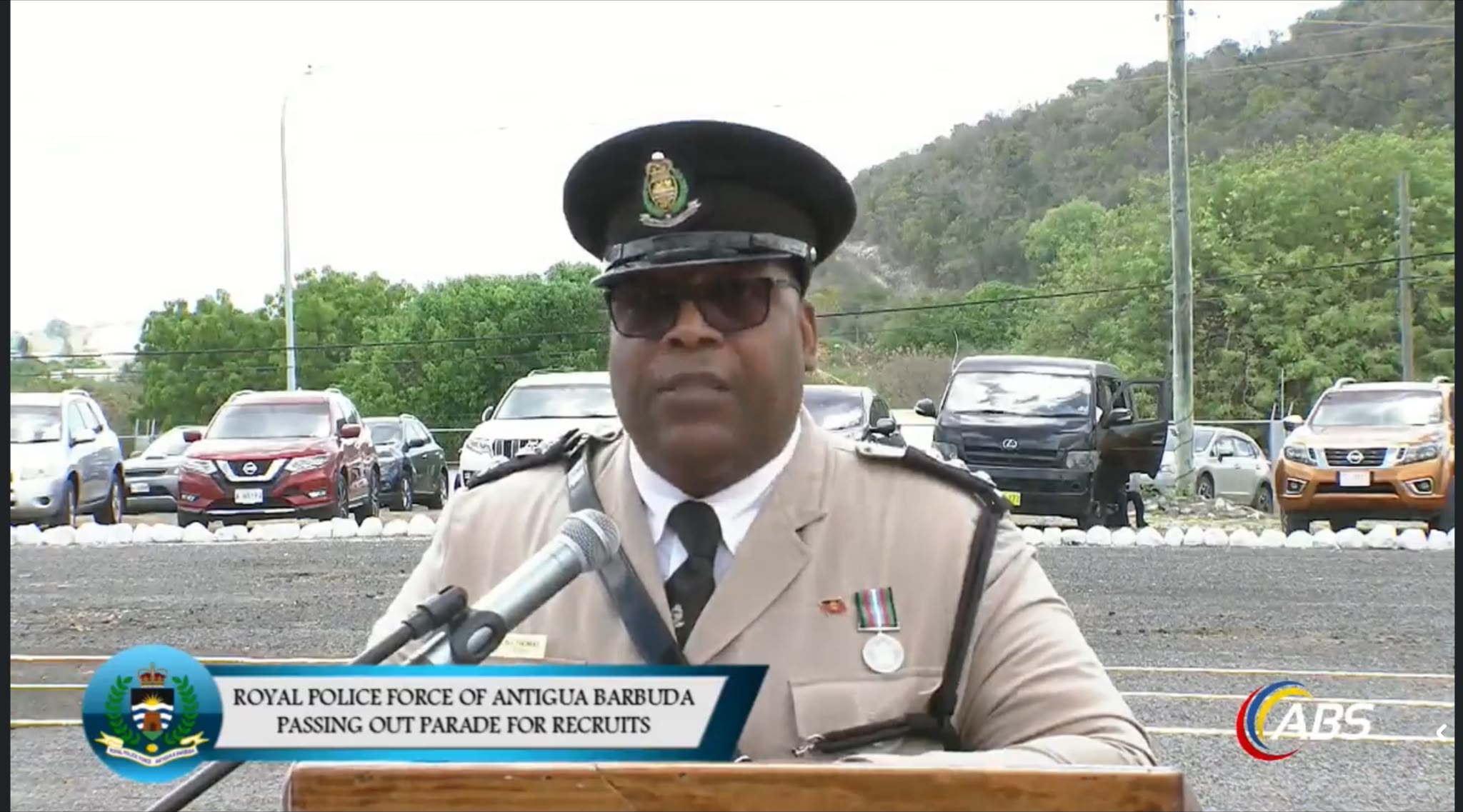
    As the twin-island nation of Antigua and Barbuda finalizes preparations for its highly anticipated annual Carnival, law enforcement officials have unveiled a purpose-built satellite police hub to boost public safety throughout the festive season. The new facility, which opened its doors officially on July 20, 2026, is positioned at the heart of Carnival activities at the Antigua Recreation Grounds, widely known locally as Carnival City. The satellite post occupies the repurposed space that once housed the iconic Sir Vivian Richards Players’ Pavilion, placing it at the center of the majority of large-scale events scheduled for the celebration period running from July 25 to August 4, 2026. This strategic placement allows responding officers to cut response times and maintain a consistent, visible presence across the grounds and surrounding neighborhoods. Fully operational from its opening day, the post is outfitted with all core infrastructure and amenities required to support on-duty officers throughout their shifts, giving them a centralized, comfortable base from which to coordinate patrols, respond to incidents, and manage security logistics for the full 11-day event. Everton Jeffers, Commissioner of the Royal Police Force of Antigua and Barbuda, has praised the new facility as a critical, well-timed upgrade to the force’s Carnival security framework. Jeffers emphasized that the satellite post delivers two key improvements to seasonal safety operations: it puts more uniformed officers visibly on the ground across Carnival City, and it eliminates the need for officers to travel long distances from distant central stations to respond to incidents during peak event times. This allows for faster intervention and more consistent engagement with event attendees, fostering a safer environment for all participants. The police administration has highlighted that the project would not have been possible without cross-sector collaboration across public and private institutions in Antigua and Barbuda. Officials extended formal gratitude first to the Antigua and Barbuda Festivals Commission, whose partnership and support were foundational to getting the initiative off the ground and completed ahead of the Carnival launch. Additional recognition went to the Antigua Public Utilities Authority (APUA), which delivered all necessary electricity, water, and connectivity infrastructure to enable continuous operation of the facility. Local business Townhouse Mega Store also contributed to the project, generously donating a desk and telephone to equip the on-site command center. The satellite post will run full operations for the entire duration of the 2026 Carnival, with leadership confirming that officer deployment will be ramped up during the highest-profile events drawing the largest crowds to Carnival City. In closing, the Royal Police Force of Antigua and Barbuda extended well wishes to all local residents and international visitors attending this year’s celebrations, urging everyone to enjoy the festivities safely and reminding the public that officers are on hand to assist anyone in need. Administration officials also called on attendees to cooperate fully with law enforcement instructions throughout the season to help ensure Carnival 2026 is a peaceful and enjoyable experience for everyone.

  • Motie’s fifer not enough as New Zealand clinch series in Sobers tribute ODI

    Motie’s fifer not enough as New Zealand clinch series in Sobers tribute ODI

    On July 19, the Kensington Oval in Bridgetown, Barbados played host to a tense, low-scoring One Day International that delivered heart-stopping drama on and off the pitch. Before the first ball was bowled, the venue fell into a reverent hush, as both the West Indies Men’s Maroon team and New Zealand’s Black Caps gathered to honor the life and irreplaceable legacy of Sir Garfield Sobers, the iconic Bajan all-rounder widely regarded as one of the greatest cricketers of all time, who passed away just days before the fixture. In a touching gesture of community remembrance, all fans were granted free entry to the ground to share in the tribute.

    After winning the pre-match coin toss, New Zealand captain Mitchell Santner made the call to field first, a decision that would pay early dividends as the West Indies’ batting order struggled to find rhythm from the outset. Opener Ackeem Auguste put up a gritty fight, compiling a patient 33 runs off 50 deliveries, but his dismissal left the hosts reeling at 62/4. The collapse continued, and West Indies slipped to 81/6 just 25 overs into their innings, leaving lower-order batters Gudakesh Motie and Amir Jangoo with an uphill battle to post a competitive total. The pair defied the New Zealand attack with an 81-run seventh-wicket stand – Motie contributing 41 and Jangoo hitting a half-century – to drag the West Indies to a final total of 188 all out.

    Chasing a modest but tricky target on a slow Barbadian pitch, New Zealand got off to a disastrous start when Matthew Forde removed Henry Nicholls for a golden duck in the very first over, leaving the Black Caps 0/1. Wickets continued to fall at regular intervals, and by the middle of the innings, New Zealand was 77/4, with the West Indies on the cusp of a much-needed win. But a 65-run fifth-wicket partnership between Michael Bracewell, who scored 32, and Mark Chapman, who anchored the chase with an unbeaten 80, turned the tide back in New Zealand’s favor. Motie, who had rescued the West Indies with the bat, shone with the ball too, breaking the critical stand and finishing with an impressive five-wicket haul of 5/47.

    In the end, New Zealand held on by the narrowest of margins, scraping across the finish line with just one wicket in hand to seal a dramatic one-wicket victory. The win also gave the Black Caps an unassailable lead in the ODI series, wrapping up the tournament result before the final fixture.

    For the West Indies, the devastating last-ball defeat carries far more weight than just a single series loss. The team is currently in a fight for direct qualification to the 2027 50-over ICC Men’s Cricket World Cup, with a March 2025 cutoff for rankings points. To avoid having to go through the grueling qualifying tournament – and risk missing out on a second consecutive 50-over World Cup – the side will need to pick up the vast majority of available points from their remaining fixtures in the qualification cycle.

  • Pilot accused of LPIA sentenced to six months for marijuana possession

    Pilot accused of LPIA sentenced to six months for marijuana possession

    A 28-year-old pilot already held on remand for a high-profile murder and a multi-million dollar international drug smuggling case has been handed additional prison time after authorities discovered marijuana in his jail cell. Donald Ferguson II, who is set to go on trial for the fatal shooting of Giovanni Rolle and involvement in a $15.3 million cocaine seizure, entered a guilty plea to a reduced charge of simple possession of marijuana on Thursday, receiving a six-month custodial sentence from Senior Magistrate Raquel Whyms.

    The contraband, a one-ounce package of marijuana, was located during a search of Ferguson’s housing unit at the Bahamas Department of Correctional Services on June 9 of this year. Ferguson was already in pretrial detention at the facility facing two sets of extremely serious charges.

    First, he is accused of gunning down 38-year-old Giovanni Rolle, a father of two, in Rolle’s vehicle on Coral Harbour Road, directly outside Rolle’s place of work at Jet Aviation, during the morning hours of June 16, 2024. Beyond the homicide allegation, Ferguson is also facing charges related to one of the largest recent drug seizures in Bahamian history. Prosecutors claim Ferguson and a group of co-conspirators plotted to smuggle 1,982 pounds of cocaine and 50 pounds of hydroponic marijuana into The Bahamas between the start of October and early December 2024.

    The smuggling operation was disrupted after law enforcement recovered the entire drug shipment, packaged into 24 multi-colored bundles, from the wreckage of a blue-and-white plane that crashed near Acklins on December 6, 2024. The street value of the seized cocaine alone is estimated at $15.3 million, with the hydroponic marijuana adding an additional $50,000 to the total value of the bust.

    Ferguson’s legal troubles extend beyond The Bahamas as well. He is one of 13 individuals who have been indicted in the United States in connection with an alleged transnational cocaine trafficking ring. Prosecutors on both sides of the border claim the network exploited weak security at Bahamian airports and even included high-ranking members of the Royal Bahamas Police Force and Royal Bahamas Defence Force in its operations.

    Just last week, Ferguson’s legal team saw their latest bid for pretrial release rejected by Supreme Court Justice Dale Fitzpatrick, who ruled that releasing the defendant would carry unacceptable public safety and flight risk. In the current jail contraband case, prosecutors initially pursued a more severe charge of possession with intent to supply, but the count was downgraded to simple possession ahead of Ferguson’s plea. Alongside the six-month sentence for the marijuana possession, Magistrate Whyms added a three-month prison term for Ferguson violating the terms of probation from a prior offense. Both sentences will run concurrently with one another. Inspector 2257 Wilkinson served as the prosecuting officer for the case.

  • Hope for housebound mother after public appeal

    Hope for housebound mother after public appeal

    For nearly a decade, 47-year-old Philippa Armbister has watched her health and independence slowly erode, trapped in her Nassau home by a severe, progressive case of lymphedema compounded by hypertension and heart failure. After years of isolation and unmet medical need, a public appeal aired on local Eyewitness News has opened the door to the first meaningful intervention she has received in years, bringing newfound hope that she may one day regain her mobility, reunite with her two young daughters, and rebuild the independent life she lost.

    Armbister’s health struggles began long before her total confinement to home. She was already diagnosed with lymphedema, a chronic condition marked by painful fluid buildup that causes extreme tissue swelling, before welcoming her first child. Two closely spaced pregnancies accelerated the disease dramatically, she says, with her second pregnancy in 2019 pushing her condition over the edge. By December of that year, she was unable to leave her home at all. The severe swelling has left both of her legs enormously enlarged, leaving her dependent on a walker for limited movement and confining her to her house for more than six years.

    Weighing nearly 500 pounds, Armbister pushes back against common misconceptions that her size stems from poor lifestyle choices. She clarifies that the majority of her excess weight comes directly from lymphedema-related swelling, noting she eats modest portions of home-cooked meals and has never regularly consumed fast food. Though she has always carried extra weight, she says the combination of her chronic condition and consecutive pregnancies permanently altered her body and robbed her of the ability to move freely.

    Unemployed since 2017, Armbister has struggled to adapt to a life of dependence after decades of supporting herself. Currently, she relies on her elderly father and limited government assistance to cover her daily needs — a reality that has been difficult to accept for a woman who values self-sufficiency above all else. The hardest blow of her declining health, however, has been separation from her 8-year-old and 11-year-old daughters. When Armbister’s health worsened, one of the girls became seriously ill and required extended hospital care, and child welfare authorities placed the girls in the care of their godmother. The pain of that separation was amplified when Armbister could not even visit her hospitalized daughter, only able to connect via video call. That devastating experience, she says, is what finally pushed her to agree to a public appeal for help.

    In the weeks since her story was broadcast, the outpouring of support has exceeded Armbister’s wildest expectations. Top on the list of critical support is an intervention from Dr. Tornette Hanna, director of the country’s National Health Insurance Authority (NHI), who reached out directly to coordinate care. Armbister is now scheduled to undergo a full comprehensive medical evaluation on July 29, which will map out the specialized treatment and care she needs to manage her conditions and begin to reverse her mobility loss. Beyond NHI’s support, two local fitness professionals have also stepped forward voluntarily, already preparing customized, gentle exercise plans that will help Armbister gradually build strength and mobility once she receives medical clearance to begin physical activity.

    For the first time in years, Armbister feels optimistic about her future, though she admits to small moments of anxiety ahead of her upcoming evaluation — including a well-known fear of needles that makes the required blood work daunting. When asked about her goals for the next year, her answer is simple and heartfelt: she wants to regain enough health to bring her daughters home, return to work, and once again earn her own income. Even facing hurtful comments from some relatives who blame her second pregnancy for her condition, Armbister remains unshaken, calling her younger daughter a blessing and refusing to dwell on negativity. For now, her focus is fixed firmly on the path ahead, as the upcoming evaluation marks the first critical step toward the recovery she has waited so many years for.

  • Roadside memorial for Shirley Street crash victims removed

    Roadside memorial for Shirley Street crash victims removed

    Five teenagers lost their lives in a tragic car crash on Shirley Street, and their families have been left reeling from a second devastating blow: the unannounced, complete removal of the roadside memorial they created to honor their children. The makeshift site held irreplaceable personal mementos, including photographs of the victims, and had become a quiet space for grieving parents to process their overwhelming loss. As of press time, local newspaper The Tribune has not been able to identify who ordered or executed the memorial’s clearance, leaving families without answers or a party to hold accountable.

    Damian Stubbs, father of 17-year-old victim Diamond Stubbs, was the first family member to discover the removal during a visit this Monday. It had taken Stubbs weeks to gather the emotional courage to return to the crash site, and he initially mistook the construction activity for routine water infrastructure work. He told reporters he was so stunned by the sight of workers burying the memorial that he left the site immediately, too overcome with anger and grief to confront the crew.

    Urged by his wife to return the following morning to retrieve Diamond’s portrait — which he had planned to bring with him to Cat Island to hang above his bed — Stubbs arrived to find the entire memorial gone. He immediately began reaching out to the families of the other four victims: 19-year-old Keno Gordon Jr, 18-year-old Betrica Brown, 19-year-old Evalena “Lilly” Johnson, and 19-year-old Stania Webb. None of the families had received prior warning of the removal. When Stubbs traveled to Cat Island to share the news with Stania Webb’s father, he too was completely caught off guard.

    Stubbs emphasized that the oversight was an unnecessary cruelty to families already deep in mourning. All the families asked for was the chance to collect the personal items that mattered most, before any removal took place. “If they had approached us, we would have moved what we wanted and if they wanted to get rid of whatever at least they could have given us the opportunity to say what we had to move, if only the girls’ pictures,” Stubbs said. Many of the photos were intended to be moved to the teenagers’ gravesites once burials were complete, a process that is still ongoing for the families.

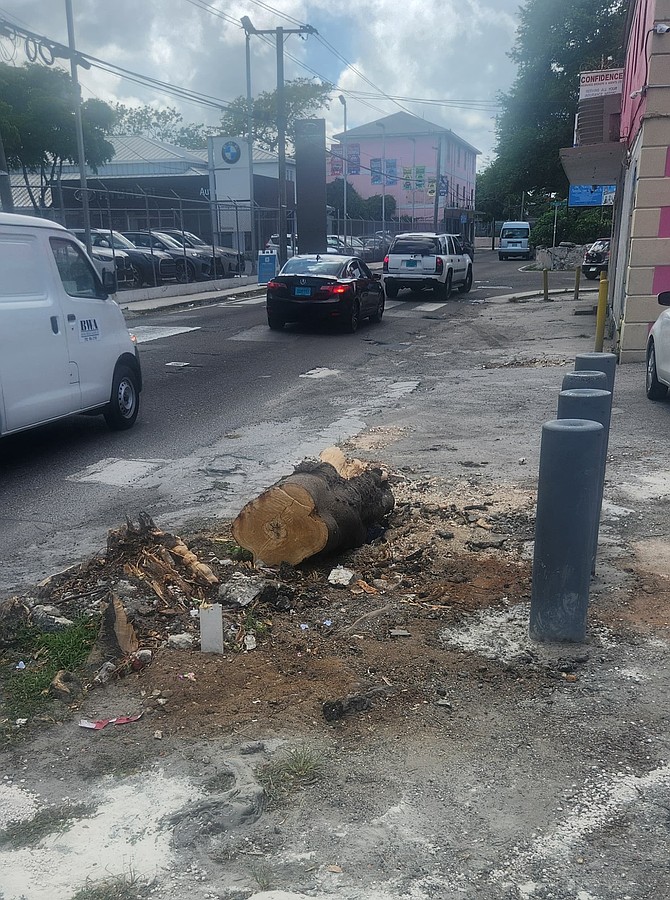
    In a bewildering detail that has added to the families’ frustration, the large tree stump at the crash site was left untouched even as the entire memorial was cleared away. Addressing the unknown parties responsible for the removal, Stubbs issued a direct plea: “Tell those people Mr Stubbs say find his daughter picture because I’m coming for it.”

    Shantika Williams-McQueen, mother of victim Keno Gordon Jr, told reporters she had no idea the memorial had been cleared, and had not yet found the emotional strength to visit the crash site herself. She explained that the removal came at an especially raw moment: none of the five victims have had their funerals or completed burial arrangements, and families are still in the acute phase of grieving.

    “I can’t speak for everybody, but especially at this time, you know that there’s still a lot of grieving and stuff going on,” she said. “There hasn’t even been, like, the funerals or anything like that for the complete burial of them as yet. I don’t think it should have been removed at this time.” Williams-McQueen added that many of Keno’s friends had left personal items at the memorial for him, and she had been looking forward to the chance to collect those mementos to place at his gravesite once the service was held.