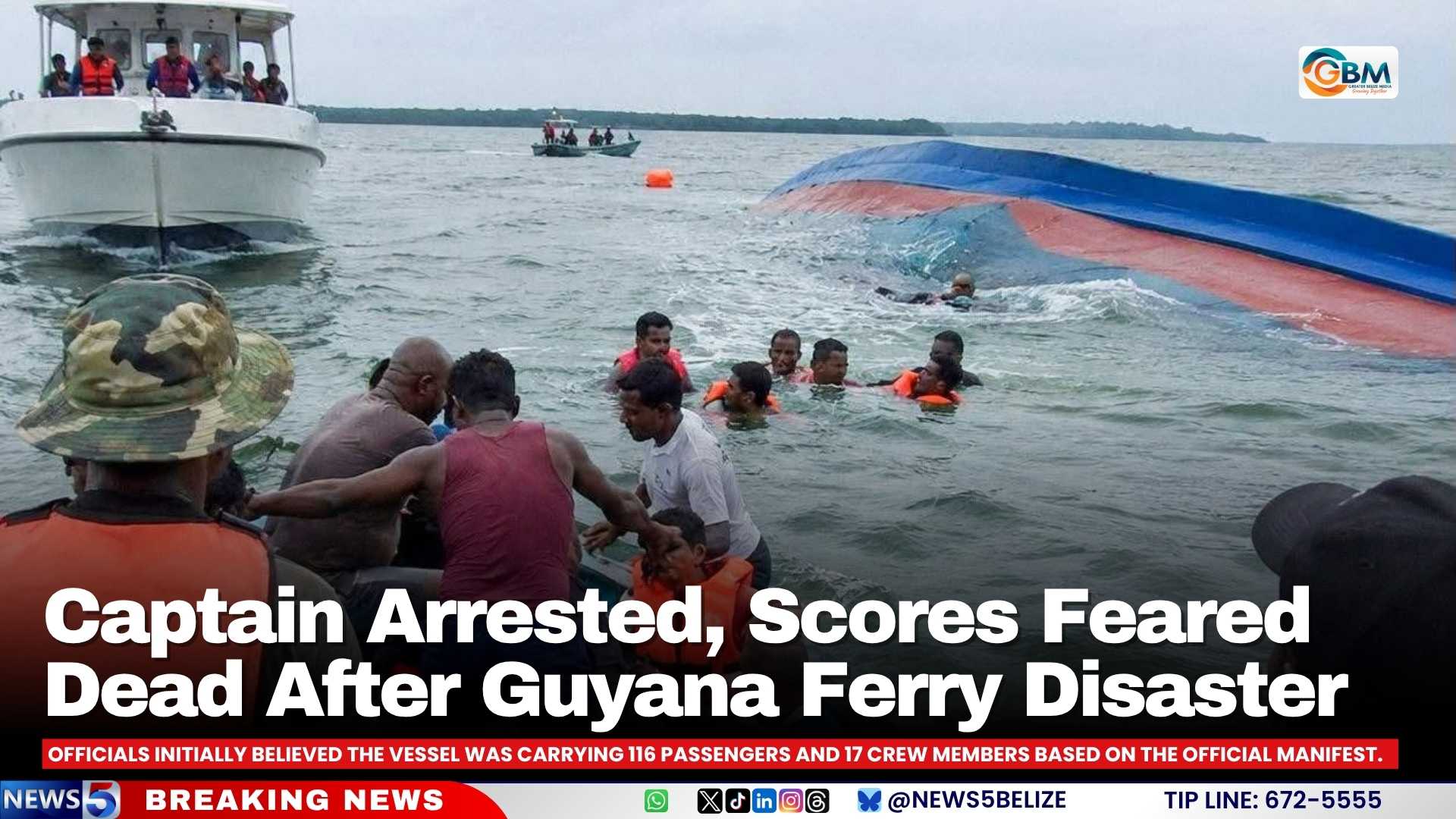
Two full days after a aging passenger ferry overturned in open waters off Guyana’s northern shore, regional emergency crews pressed on with a massive search and rescue mission Monday, as authorities confirm at least two fatalities, hold 67 survivors in care, and brace for what could become the South American nation’s deadliest maritime disaster in more than 50 years. The incident, which unfolded late Saturday, has already sparked a full criminal probe into systemic safety failures, with the vessel’s captain and lead engineer taken into custody on Sunday following positive drug tests.
The MV Barima, a 87-year-old ferry that provided critical transportation between the capital city of Georgetown and the remote northwestern community of Port Kaituma, issued a frantic distress call to maritime authorities at approximately 11:00 p.m. local time. Roughly 15 minutes after the call went out, the vessel overturned roughly seven miles from the coast, according to initial incident reports.
From the earliest hours of the response, officials have grappled with severe uncertainty over just how many people were aboard the ferry when it capsized. Initial official passenger manifests listed 116 passengers and 17 crew members set to make the voyage, but investigators have since confirmed that the document is wildly inaccurate — a discrepancy that has deepened fears that far more people were on the vessel than officially recorded, raising the potential death toll far higher than initial estimates. Public Works Minister Juan Edghill confirmed Monday that just 35 of the 67 people pulled alive from the Atlantic appear on the official passenger roll, confirming that dozens of unregistered travelers boarded the vessel without being logged.
Edghill framed the unrecorded boardings and broader safety gaps as a deliberate operational failure that has severely hampered rescue efforts, telling reporters Monday the situation qualifies as a criminal matter. “We are talking about operational breaches. People will be dealt with,” the minister said.
Retired Brigadier and Prime Minister Mark Phillips echoed that commitment to accountability in a public address Sunday, noting that the full scope of the disaster cannot be assessed until investigators untangle the true passenger count and root causes of the capsizing. “Where negligence, misconduct or criminal wrongdoing is established, those responsible will face the full force of the law,” Phillips said.
The investigation’s first major arrests came Sunday, when authorities took the ferry’s captain and first engineer into custody after both tested positive for marijuana. The two remain in police detention as investigators continue to question witnesses and comb through evidence related to the vessel’s operations, passenger logging procedures, cargo loading practices, and overall compliance with national maritime safety regulations.
As search operations stretch into a third day, rescue teams have warned that hopes of finding additional surviving passengers are fading fast. Most of the 67 survivors pulled from the water spent between 12 and 24 hours clinging to overturned hull debris, life jackets, and floating cargo before rescuers could reach them. Among the survivors are 15 children, the majority of whom are being treated for minor injuries including cuts, bruises, and hypothermia from prolonged exposure to cold Atlantic waters.
Multiple survivors have given consistent first-hand accounts that the vessel began taking on water soon after it encountered rough sea conditions mid-voyage, with several reporting that water had been seeping into the lower cargo hold for hours before the ferry suddenly rolled and capsized. Shipping records confirm the MV Barima was originally constructed in 1939, and underwent routine scheduled maintenance in 2024. The vessel was slated to undergo a major full dry docking refit later this year, according to Guyana’s maritime authority.
Local community leaders have described the ferry route as a critical lifeline for residents of the remote interior, who rely on the vessel to travel to the capital for medical care, work, and family visits. As the search continues, Guyana’s government has come under renewed pressure to overhaul the country’s aging maritime transportation infrastructure and enforce stricter safety regulations for inter-island and inter-community passenger vessels.