
One of the Caribbean’s most iconic cultural celebrations has moved one step closer to its 2026 showcase, with organizers officially confirming the seven competing delegates who will now vie for the coveted title of Queen of Carnival. This long-running pageant is far more than a traditional beauty contest; it stands as a cornerstone of Carnival heritage, celebrating the creativity, cultural pride, and community spirit that define one of the world’s most famous annual festival traditions. Each delegate selected this year has already gone through a rigorous multi-stage screening process, designed to test not only their public poise and performance ability but also their deep knowledge of local Carnival history and their commitment to ongoing community outreach initiatives. In the months leading up to the 2026 Carnival season, the seven sashed delegates will participate in a series of public engagement events, charity fundraisers, and cultural workshops across the region. These pre-competition activities are intended to help each contestant connect with local communities, refine their performance pieces for the final show, and build momentum ahead of the coronation night, which will draw thousands of spectators and millions of online viewers from across the globe. Festival organizers have noted that this year’s candidate pool represents one of the most diverse groups in recent competition history, with contestants coming from a range of professional backgrounds including education, healthcare, the arts, and small business ownership. All seven delegates have now received their official competition sashes in a formal launching ceremony that was attended by past Queens of Carnival, local government officials, cultural leaders, and thousands of enthusiastic festival supporters. As preparations ramp up for the 2026 Carnival season, all eyes will turn to these seven contenders as they work to claim the most prestigious title in the global Carnival community.
博客
-
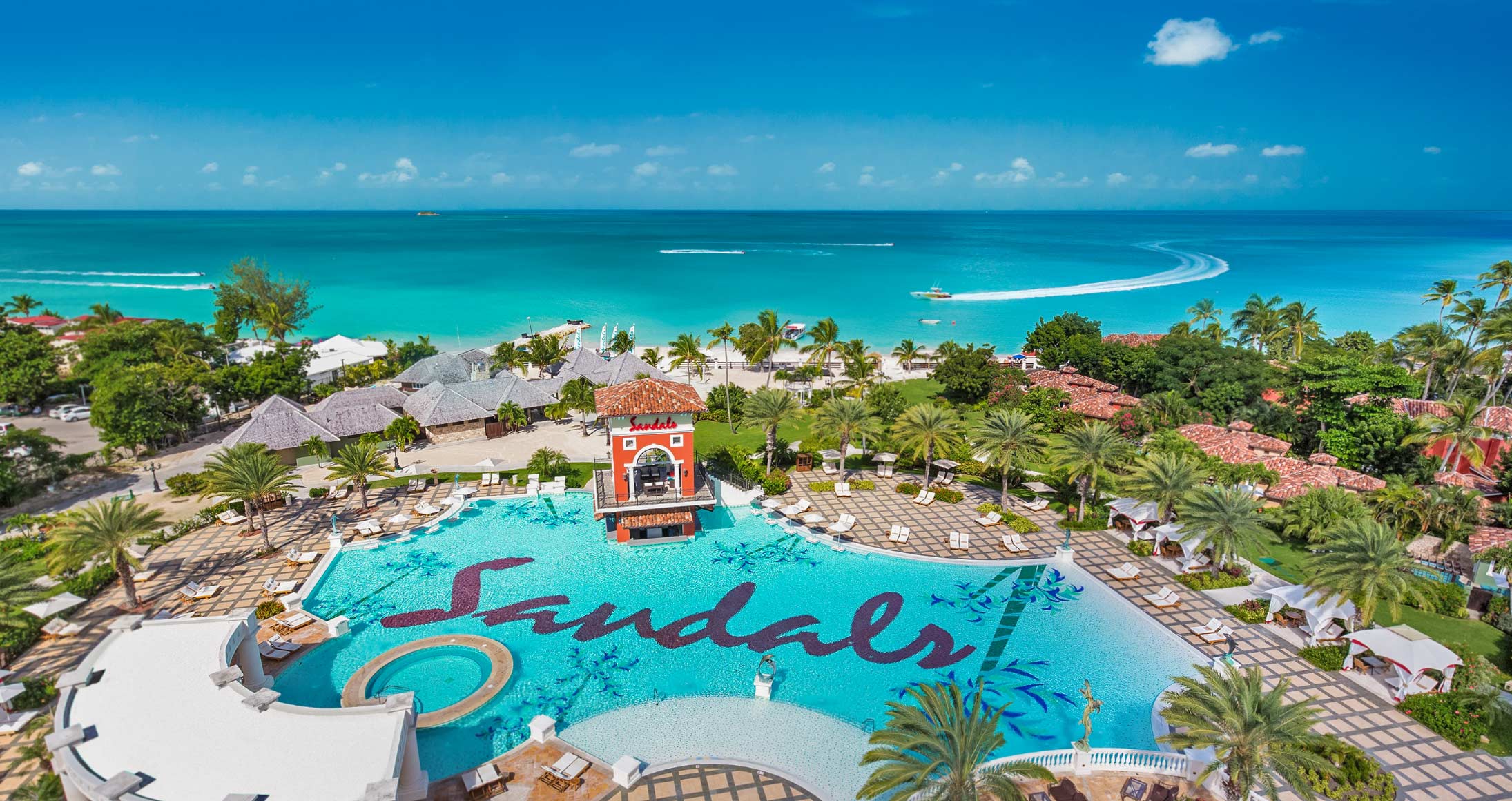
Sandals Foundation and Hands Across the Sea Deliver Targeted Literacy Support to More Than 1000 Students in Antigua
A well-chosen book has the power to ignite a child’s self-assurance, open the door to boundless imagination, and lay the foundation for a lifelong passion for learning. This core conviction is what drives the enduring collaboration between the Sandals Foundation and Hands Across the Sea, a prominent non-profit organization dedicated to advancing childhood literacy across the Eastern Caribbean. This partnership has entered a new phase, rolling out expanded, customized literacy support to 1,192 students across five primary and secondary schools in Antigua through the non-profit’s flagship Caribbean Literacy and School Support (CLASS) programme.
With a total investment of EC$54,607 from the Sandals Foundation, the project has delivered custom-tailored resources to each participating campus, including carefully selected collections of new release books, specialized learning materials designed to boost reading skills, and upgraded on-campus lending libraries. These revamped library spaces now function as dynamic, welcoming hubs where students are encouraged to dive into new stories, explore new ideas, and foster personal growth through reading.
The five beneficiary campuses—TOR Memorial School, St. Michael’s Primary, Urlings Primary, Parham Primary, and Princess Margaret Secondary School—already see students reaping the benefits of the upgraded facilities. Local school teams, classroom educators, and trained librarians are on-site to facilitate programming that encourages consistent reading engagement across all grade levels.
Ben Engle, Executive Director of Hands Across the Sea, explained that the organization’s work goes far beyond simply stocking shelves with new books. “We help communities build or revitalize school libraries, train and mentor local literacy advocates, and collaborate closely with educators to ensure our resources stay active, relevant, and impactful for years after the initial donation,” Engle said. He added that this intentional, community-centered approach is what sets the partnership apart, rejecting generic, one-size-fits-all programming in favor of needs-based support. “Schools are selected based on demonstrated need, and every book collection is assembled to match the specific reading levels, classroom contexts, and developmental stages of the student body,” Engle noted. “The outcome is literacy support that is both practical and deeply personalized.”
For the Sandals Foundation, this multi-year collaboration is a key pillar of its mission to build stronger, more resilient communities across the Caribbean. “Education is one of the most transformative tools we have to strengthen communities, and literacy is the very foundation of all educational progress,” said Heidi Clarke, Executive Director of the Sandals Foundation. “Our partnership with Hands Across the Sea is particularly meaningful because it unites our shared mission with their proven on-the-ground expertise. Their deep understanding of regional literacy challenges lets us make investments that are thoughtful, strategic, and fully responsive to the needs of both children and educators.”
Established in 2007, Hands Across the Sea has grown into one of the Eastern Caribbean’s most respected literacy-focused organizations, working directly with local schools, classroom teachers, national Ministries of Education, and regional literacy specialists to build sustainable, inclusive reading cultures across island nations. This latest Antiguan initiative builds on five years of successful partnership with the Sandals Foundation, which has already supported the outfitting of dozens of school libraries across Antigua, Saint Lucia, and Grenada. Together, the two organizations share a core commitment to ensuring every Caribbean child gains access to the tools, safe spaces, and encouragement they need to grow into confident, lifelong readers—because every strong reader starts with access to opportunity, and a community that believes in their potential.
-

Works Ministry Replaces Missing Drain Covers in Grays Farm and Grace Green
Infrastructure upgrades are now underway in two residential neighborhoods of Antigua and Barbuda, after the Ministry of Works launched a project to replace damaged and missing drain covers along a major community water channel.
Works Minister Maria Browne announced the start of field operations in an official update shared this Monday, confirming that work crews have already mobilized to the Grays Farm and Grace Green area. The core objective of the initiative, Browne noted, is to eliminate long-standing safety risks and boost accessibility for local residents and passersby who traverse the area daily.
The scope of work centers entirely on swapping out crumbling, broken concrete slabs and filling gaps left by missing covers along the large drainage line that cuts through the two communities. Local residents have for months raised alarms about unprotected exposed drain sections, warning that these open gaps create serious dangers for both pedestrians walking along adjacent paths and motorists traveling through nearby roadways.
This current repair drive is part of a broader, sustained program by the Ministry of Works to tackle unaddressed infrastructure issues and uphold public safety standards across residential districts throughout Antigua and Barbuda. As of the latest update, the ministry has not yet released a projected completion date for the Grays Farm and Grace Green drain replacement work.
-

Barbuda Land Rights Challenge Returns to Court as Council Fights Adjudication Process
A high-stakes legal battle that stands to redefine the future of land tenure and local governance on the Caribbean island of Barbuda is scheduled to resume in court this Tuesday. At the heart of the dispute is a confrontation between the Barbuda Council, the island’s local governing body, and the national government of Antigua and Barbuda over the central administration’s ongoing land adjudication initiative.
The conflict traces back to a 2024 decision by the national government to designate Barbuda as an official adjudication district, roll out the country’s national land registration framework to the island, and open a window for local residents to file claims over documented land interests. From the government’s perspective, the program is designed to formalize unclear land holdings, streamline property transactions, and create a clear regulatory framework for future development on the island.
But the Barbuda Council has rejected the process entirely, launching a legal challenge to halt it entirely. The council argues that the national government rolled out the program without any meaningful consultation with either the local governing body or the broader Barbudan community, and that the entire initiative poses an existential threat to the centuries-old communal land system that has shaped life on Barbuda for generations. Under the current communal system, most land on the island is held collectively by the community rather than owned by private individuals, a structure that has long been central to Barbudan cultural identity and social organization.
Legal teams for both sides will face off in the resumed hearing, with the Barbuda Council represented by prominent King’s Counsel Leslie Thomas, and the national Attorney General’s Chambers represented by Deputy Solicitor General Carla Brookes-Harris. Three core questions will sit at the center of the court’s deliberations: the formal legal status of Barbuda’s long-recognized communal land rights, whether the national government’s implementation of the adjudication process complies with existing law, and what legal authority the Barbuda Council holds over local land administration.
In remarks ahead of the hearing, Barbuda Council Chairman John Mussington framed the case as one of the most consequential legal proceedings in the island’s modern history. “This outcome will make clear whether the principles that have governed how we hold and use land for generations will continue to carry real weight, both in law and in how we live,” Mussington said.
Local interest in the hearing runs extraordinarily high, with the vast majority of Barbudans viewing the case as a defining moment for the island’s future. A ruling favoring the government could open the door to widespread private land ownership and large-scale development, while a ruling for the council would entrench the communal land system that forms the foundation of Barbudan self-governance and cultural identity. Whatever the outcome, the court’s decision is expected to leave a lasting imprint on land ownership, sustainable development, and local autonomy across the island for decades to come.
-
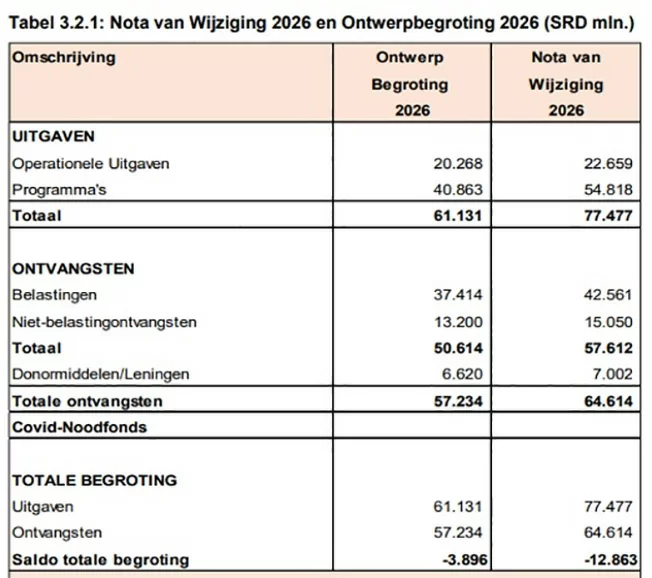
VES betwist begrotingstekort van 5,1%: Werkelijk tekort is 7,7% van BBP
Paramaribo, Suriname – The Association of Economists of Suriname (VES) has raised sharp questions over the methodological approach the current administration has used to calculate its projected 2026 national budget deficit, arguing that the actual gap between public spending and revenue is far larger than the government has reported. According to VES Secretary Swami Girdhari, the real deficit will reach 7.7% of gross domestic product (GDP), not the 5.1% officially claimed by the Surinamese government.
The Council of Ministers gave its approval to the 2026 Amended Budget Memorandum on May 21, which outlines total projected public spending of 77.4 billion Surinamese dollars (SRD) against total projected revenue of 64.6 billion SRD. Under the government’s calculation framework, this results in a deficit of 12.8 billion SRD, which equals 5.1% of the 252.2 billion SRD official projected GDP for 2026.
Girdhari, in an interview with local outlet Starnieuws, noted that the biggest red flag is the sharp upward revision to the 2026 GDP estimate. As recently as September 2025, official projections put national GDP at roughly 180 billion SRD. The new 252.2 billion SRD estimate represents a 40% increase in just nine months. Even after accounting for projected annual inflation of roughly 10%, the implied real GDP growth comes out to nearly 30% – a figure Girdhari says lacks clear justification. “The question is whether this level of growth is realistic,” Girdhari said. “The Ministry of Finance and Planning needs to provide the public with a full breakdown of the underlying calculations that led to this estimate.”
A core point of VES criticism centers on the government’s classification of borrowed funds as regular revenue. Per the amended budget, the government expects 42.5 billion SRD in direct and indirect tax revenue and 15 billion SRD in non-tax revenue, totaling 57.5 billion SRD in baseline receipts. The administration then adds 7 billion SRD in new loans to hit the 64.6 billion SRD total revenue figure.
This accounting approach is fundamentally incorrect, Girdhari argues. “Loans are not revenue – they are financing instruments that increase the state’s future debt obligations, and should never be counted as regular operating income,” he explained. When the 7 billion SRD in new loans is excluded from revenue in line with standard international budget accounting rules, the actual financing gap grows to nearly 20 billion SRD, pushing the deficit up to the 7.7% of GDP the VES estimates. The association emphasizes that international fiscal standards require a clear separation between regular revenue streams (including taxes, non-tax receipts, and grants) and financing sources such as loans and reserve withdrawals, noting that this distinction is required to produce a transparent, accurate picture of the government’s true fiscal position.
VES also warns that financing the deficit and meeting existing debt obligations remains a major unaddressed risk for 2026. The current budget framework leaves the government heavily dependent on new borrowing to cover a large share of planned spending, and 9.4 billion SRD in existing debt repayments are scheduled for next year. The association is calling for the publication of an up-to-date debt sustainability analysis to give the public a complete view of the country’s overall fiscal standing, saying the government has not yet explained how it will meet its existing debt repayment obligations.
Beyond 2026, VES has raised concerns over the government’s medium-term fiscal projections included in the budget’s Medium-Term Fiscal Framework, which covers the 2026 to 2030 period. The government projects steady growth in both revenue and spending over the five-year window, with budget surpluses emerging between 2027 and 2029, growing to 9.6 billion SRD by 2029. However, the framework projects a return to deficit in 2030, with a shortfall of 9.9 billion SRD.
Girdhari calls this swing from a nearly 10 billion SRD surplus to a nearly 10 billion SRD deficit in just one year – a 20 billion SRD shift – extremely unusual. He notes that the shift is driven almost entirely by soaring debt repayment requirements: scheduled debt repayments rise from 9.3 billion SRD in 2029 to 32.3 billion SRD in 2030. This jump is tied to the November 2025 debt restructuring agreement, which requires Suriname to repay roughly $1 billion in 2030. “In practice, this shifts a massive financial burden onto the administration that takes office in 2030,” Girdhari said.
Finally, the association is warning against excessive optimism around anticipated future oil revenue, which appears to underpin much of the current budget framework. VES says the government risks implicitly counting unearned future oil income in its current spending plans, despite the fact that these revenues have not yet been realized. Girdhari pointed to global precedent showing that countries that increase public spending before commodity revenues actually materialize often face severe fiscal crises when output or prices fall short of projections.
To address these risks, VES is calling for strict fiscal discipline, full public transparency around all budget calculations, a robust savings and investment strategy for future resource revenues, and strong institutional safeguards to reduce the impact of politically driven budget cycles that prioritize short-term spending over long-term fiscal stability.
-

Cricket West Indies Announces Squad for T20 Series Against Sri Lanka in Jamaica
On Tuesday, June 9, 2026, Cricket West Indies (CWI) officially announced its 15-player squad for the upcoming three-match T20 International series against Sri Lanka, set to take place between June 11 and 14 at Kingston’s iconic Sabina Park in Jamaica. This home series marks the Caribbean side’s first T20I outing since their impressive run at the ICC Men’s T20 World Cup earlier this year, and it serves as a critical building block for long-term preparations ahead of the 2028 ICC T20 World Cup co-hosted by Australia and New Zealand.
Three new faces have earned call-ups to the squad that competed in the 2026 World Cup, held across India and Sri Lanka, where the West Indies, popularly known as the Men in Maroon, narrowly missed out on a semi-final berth. Young batting prospects Ackeem Auguste and Jewel Andrew, alongside versatile all-rounder Shamar Springer, are the three inclusions that bring fresh depth to the side. Star fast bowler Alzarri Joseph has been rested from the series as part of CWI’s structured workload management strategy; he will remain in training to prepare for the upcoming two-match Test series scheduled to be held in Antigua.
West Indies head coach Daren Sammy expressed optimism about the upcoming contests, noting that the series provides a valuable platform for emerging and established players alike to connect with home fans while displaying the aggressive, entertaining brand of cricket the region is known for. “This series is an important one for us as it’s our first since the World Cup in India, where the team played with passion, fight and the togetherness that West Indies cricket is built on,” Sammy said in the official announcement. “Our focus now is to build on those foundations, continue growing as a team and make our fans proud with the way we compete against Sri Lanka.”
Fast bowler Shamar Joseph, who exited the Caribbean side’s recent ODI tour of Sri Lanka early to attend to personal matters, is confirmed to rejoin the squad ahead of the series opener on June 11. The full 15-member squad led by captain Shai Hope includes: Jewel Andrew, Ackeem Auguste, Roston Chase, Matthew Forde, Shimron Hetmyer, Jason Holder, Akeal Hosein, Shamar Joseph, Brandon King, Gudakesh Motie, Rovman Powell, Sherfane Rutherford, Romario Shepherd, and Shamar Springer.
Alongside the player squad, CWI also confirmed the full team management unit for the series, with Rawl Lewis serving as team manager, Floyd Reifer as assistant batting coach, Ravi Rampaul as assistant bowling coach, Rayon Griffith as fielding coach, Dr Denis Byam as physiotherapist, Darc Browne as strength and conditioning coach, Harone Jackson as massage therapist, Avenesh Seetaram as performance analyst, and Jerome Foster as content and media officer.
All three matches of the series will be hosted at Sabina Park, with the first T20I kicking off at 7:30 pm local time (8:30 pm Atlantic Standard Time) on June 11. The second match will follow on June 13 at the same time, with the third and final series decider scheduled for June 14, also under lights at the Jamaican venue.
-
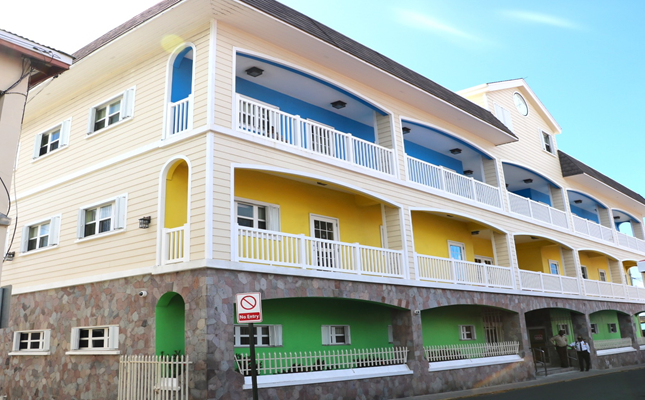
Premier Brantley: Steps Being Taken to Cushion Impact on Homeowners Amid Property Tax Revaluation
CHARLESTOWN, NEVIS – June 8, 2026 – As the Caribbean island of Nevis nears completion of its first comprehensive property valuation exercise in nearly 18 years, Premier Mark Brantley has moved to reassure resident homeowners that the Nevis Island Administration (NIA) is putting targeted safeguards in place to prevent undue financial strain from potential tax increases tied to updated property assessments.
The island-wide valuation initiative, led by the local Inland Revenue Department (IRD), launched its on-the-ground data collection phase in July 2025. The core goal of the project is to modernize Nevis’ outdated property tax system, bringing official assessed property values in line with current real estate market conditions that have shifted dramatically since the last full valuation was completed in 2008.
Speaking at a recent public press briefing, Brantley emphasized that the NIA’s top priority is shielding lower and middle-income homeowners from sudden, unaffordable tax hikes while updating the system. To achieve this balanced outcome, the administration is actively reviewing policy recommendations from the Property Tax Division focused on expanding the property tax exemption threshold.
Under Nevis’ current tax framework, the first Eastern Caribbean $80,000 of a property’s assessed value is exempt from property taxation, with levies only applied to the assessed value exceeding this threshold. Brantley confirmed that adjusting this exemption level upward is the central policy proposal under consideration, to reduce or eliminate tax increases for most residential homeowners.
“As a government, our clear priority is to cushion the impact of any potential tax increase for local homeowners, particularly those in lower and middle-income brackets,” Brantley said during the briefing. “We are working closely with the Property Tax Division to expand the exemption threshold, and Cabinet will conduct a thorough review of the IRD’s final proposals before moving forward. Our goal is to modernize the tax system without making property tax unaffordable for residents. The core principle guiding this work is that the heaviest tax burden should fall on those most able to pay – specifically owners of high-value multi-million-dollar villas and luxury properties. That is the intentional design of this approach.”
Brantley added that once the Cabinet reaches a final decision on the adjusted exemption threshold, the new terms will be publicly announced immediately. To ensure the entire revaluation process meets global benchmarks for fairness and accuracy, the NIA has structured the exercise around internationally recognized standards set by the International Association of Assessing Officers (IAAO), which guarantees assessments are consistent, transparent, and objective across all property types.
The department has also adopted the International Property Measurement Standards (IPMS), a modern uniform framework for measuring buildings and property improvements. This update may lead to minor adjustments to previously recorded building measurements for some properties, which Brantley noted is a normal part of aligning local practices with global norms.
The full valuation exercise is on track to be substantially completed by the end of June 2026, which will give the IRD adequate time to process new assessments and prepare for the 2026 tax cycle. To accommodate the ongoing revaluation work, the IRD has already extended the 2026 property tax payment deadline from the original June 30 date to September 30, 2026, giving homeowners extra time to adjust to the new framework.
Once individual assessments are finalized, every property owner will receive an official Certificate of Valuation detailing their property’s updated assessed value. Taxpayers will have a 30-day window from the date of issuance to review their assessment, submit formal objections if they disagree with the valuation, or request clarification from IRD staff if they have questions about the process.
-

Tizzy Ignites Carnival 2026 With New Ep Featuring Road Anthems And A Powerful Message Of Unity
As carnival communities around the Caribbean and beyond gear up for the 2026 celebration season, breakout soca artist Tizzy has launched a highly anticipated new extended play (EP) built specifically to fuel the festivities. The seven-track collection centers on high-energy road anthems crafted to match the exhilaration of parades, street parties, and masquerade processions that define modern carnival culture.
What sets this release apart from typical carnival projects is its intentional undercurrent of social cohesion. Across each track, Tizzy weaves lyrics that emphasize cross-community solidarity, bridging divides of class, nationality, and background that can sometimes fragment carnival spaces. In a post-pandemic era where many regional festival communities are still working to rebuild connectedness, the artist’s focus on unity strikes a particularly resonant chord with fans and industry observers alike.
Early previews of the EP have already generated viral buzz across social media platforms dedicated to carnival culture, with listeners praising the blend of infectious, bass-heavy instrumentals and meaningful lyrical content. Festival organizers across Trinidad and Tobago, Jamaica, and several Caribbean diaspora communities in North America and Europe have already added multiple tracks from the EP to their official event playlists for the 2026 season. Industry analysts note that the release signals a growing shift in carnival music toward more purpose-driven content, without sacrificing the upbeat energy that keeps crowds moving through days of celebration. -
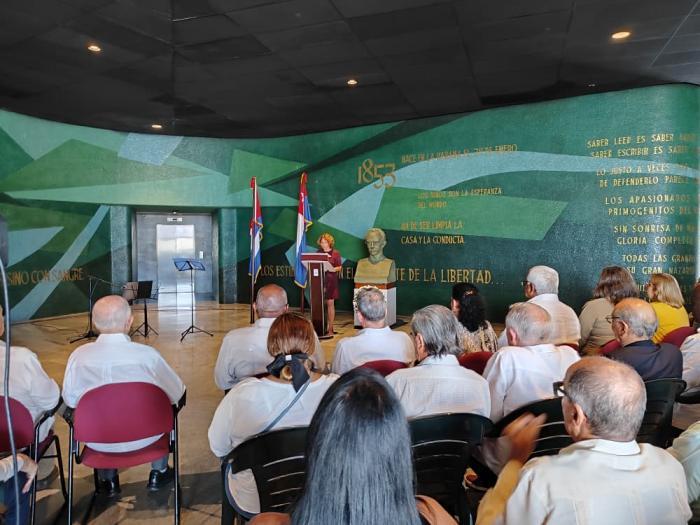
Cuban jurists, firm in defending revolutionary legality
On Cuba’s annual Jurist’s Day, marking the 49th anniversary of the National Union of Jurists of Cuba (UNJC), legal professionals across the nation have issued a unified rebuke of heightened coercive measures and the ongoing energy blockade imposed by the United States, while reaffirming their unwavering commitment to defending the country’s sovereignty, socialist legality, and national government. The main national commemorative event was hosted in the eastern province of Guantánamo, which earned the distinction of being named the Most Outstanding Province in UNJC work for the ninth consecutive year, sharing the 2026 honor with six other Cuban regions: Villa Clara, Granma, Havana, Ciego de Ávila, Holguín, and Santiago de Cuba.
Presided over by high-ranking Cuban officials including Salvador Valdés Mesa, Vice President of the Republic and member of the Communist Party Political Bureau, and Roberto Morales Ojeda, Organization Secretary of the Party Central Committee, the ceremony also featured a special appearance by veteran Rebel Army Commander José Ramón Machado Ventura. In his keynote address, UNJC national president Alexis Ginarte Gato emphasized the irreplaceable role of Cuba’s legal community in sustaining the socialist state, upholding the rule of law, and shielding national sovereignty from external interference. He reiterated the jurists’ solemn commitment to defending the homeland, advancing social justice, and protecting Cuba’s independent self-determination.
Ginarte Gato specifically condemned the recent escalation of U.S. aggressive actions, labeling the unilateral coercive measures and energy blockade as a deliberate act of genocide against the Cuban people that flagrantly violates fundamental tenets of international law and the United Nations Charter. During the event, the UNJC formally announced the convening of its 10th National Congress, scheduled to take place in June 2027, centered on the core theme: “Strengthening Institutions as a Guarantee of the Country’s Economic and Social Transformation.”
Reading the official 49th anniversary declaration on behalf of the organization, young jurist Patricia Romero Madrigal underscored the community’s dedication to upholding foundational international principles: sovereign equality of all nations, non-interference in the internal affairs of sovereign states, and the peaceful settlement of international disputes. Yamila González Ferrer, UNJC vice president, also read a solidarity message from the International Association of Democratic Jurists, which praised the Cuban jurists’ organization for its long-standing commitment to legality, sovereignty, and social justice, and joined Cuba in condemning the intensification of the U.S. blockade, including the executive order-imposed energy restriction, reaffirming the international body’s steadfast solidarity with the Cuban people and their legal community.
Speaking from Guantánamo, the host province, UNJC representatives issued a sharp public warning amid growing U.S. aggression aimed at undermining Cuban resolve, crippling the national economy, and silencing the country’s voice. “When the U.S. government becomes more aggressive in its efforts to break our will, stifle our economy, and silence our voice, Cuban jurists, with our laws and the Constitution as our shield, tell them they will not succeed,” the declaration read, delivered by rising legal professional Lisandra Premión Torres. The document stressed, “In Cuba, the law does not bend, nor does justice negotiate its dignity,” adding that current imperialist threats are merely the latest iteration of a decades-long blockade that operates without basic humanitarian principle, repeatedly violating established international law, agreements, and treaties.
The declaration reiterated: “We reaffirm to our people that the law is on their side, and to the empire, that there will be no retreats, no concessions to blackmail. Not one step back in the defense of our socialist, independent, and sovereign Cuba.” On behalf of Cuba’s younger generation of legal professionals, the proclamation reaffirmed full support for the Cuban government’s position against imperialist threats, noting: “We inherit the tradition of decorum from those who, like Ignacio Agramonte, José Martí, and Fidel Castro, established a revolutionary law at the service of the people.”
Guantánamo was selected to host the national event in recognition of its comprehensive work advancing jurist professional development and cracking down on crime, corruption, illicit activity, and social disorder. During the celebration, which was held in honor of the centennial of Fidel Castro, local authorities inaugurated a new headquarters building for the Guantánamo Provincial People’s Court, constructed at a cost of more than 20 million pesos to improve working conditions for legal professionals defending socialist legality and national sovereignty. The event concluded with honors awarded to individual outstanding lawyers, exemplary local organization chapters, and winners of the national competition for legal scientific societies, attended by Yoel Pérez García, Guantánamo’s First Secretary of the Party, Governor Alis Azahares Torreblanca, and other regional and national authorities.
-
Kabinet President krijgt begroting van ruim SRD 1,2 miljard
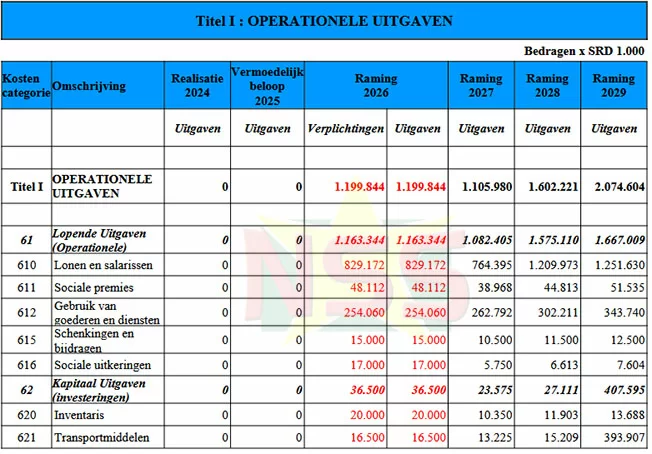
Newly released 2026 budget documents for the South American nation of Suriname outline a total operating allocation of more than 1.2 billion Surinamese dollars (SRD) for the Office of the President, with nearly 70% of the total budget earmarked for employee wages and salaries.
According to the budget breakdown published June 9, the total operating expenditure for the Presidential Cabinet and its affiliated directorates and agencies is projected at 1.199 billion SRD for the 2026 fiscal year, with ongoing current expenditures set at 1.163 billion SRD. The single largest line item is payroll costs, accounting for 829.2 million SRD – an increase of more than 127.5 million SRD compared to the 2017 baseline of 701.7 million SRD.
Budget documentation attributes this wage increase to standard periodic pay adjustments, promotional scale upgrades, new appointments, the hiring of additional staff and external consultants, stipends for committee members, and various statutory allowances for civil servants. The allocation also includes medical benefits for executive staff, equivalent senior roles, and retired personnel.
As of the end of March 2025, a total of 2,237 employees are registered on the payroll across the Presidential Cabinet, its subordinate directorates, and associated agencies. Budget projections anticipate that 56 employees will retire during the 2026 fiscal year, while 23 long-serving public servants will be honored for their decades of service to the government.
Beyond payroll, 254 million SRD is allocated for goods and services, 48.1 million SRD for social security contributions, 17 million SRD for social benefits, and 15 million SRD for grants and contributions. Capital expenditures for 2026 are projected at 36.5 million SRD, up from the previous projection of 23.5 million SRD. Of this capital allocation, 20 million SRD is reserved for office equipment purchases, with budget documents noting that upgrades are required to replace outdated inventory across multiple directorates and agencies, and to accommodate planned expansions to the Cabinet’s organizational structure. The remaining 16.5 million SRD is earmarked for the acquisition of new transportation vehicles.
The core priority outlined in the budget is to preserve the regular daily functioning of the Presidential Cabinet and all its subordinate bodies. Allocated funds are designated to support the implementation of the president’s administrative, governance, and policy objectives, and to enable the efficient fulfillment of presidential obligations. Consistent with recent budget cycles, personnel costs remain the single largest expenditure category for the office, holding a nearly 70% share of the Cabinet’s total operating budget for 2026.