博客

  • Minister Dwayne George Honours Destroyer and Young Destroyer as Antigua Carnival 2026 Grand Marshals

    Minister Dwayne George Honours Destroyer and Young Destroyer as Antigua Carnival 2026 Grand Marshals

    Antigua and Barbuda’s iconic father-son calypso duo Ogliver “Destroyer” Jacobs and Leston “Young Destroyer” Jacobs have earned one of the highest honors in the island nation’s celebrated cultural calendar, being named grand marshals for the 2026 Antigua Carnival. On Thursday, Dwayne George, the government minister with oversight for the annual Carnival celebration, formally presented the pair with a custom token of appreciation to mark their decades of transformative work shaping Antigua and Barbuda’s beloved calypso scene and broader cultural identity.

    For generations, the Jacobs name has been synonymous with calypso, a foundational Caribbean musical genre that blends social commentary, storytelling, and rhythmic celebration. Ogliver “Destroyer” Jacobs first rose to prominence as a trailblazing calypso artist decades ago, building a reputation for sharp, thoughtful lyrics that captured the experiences of Antiguan communities while pushing the artistic boundaries of the genre. Following in his father’s footsteps, Leston “Young Destroyer” Jacobs has carried on the family legacy, becoming a respected performer and cultural advocate in his own right, introducing calypso to new generations of audiences while honoring its traditional roots.

    The naming of the two as 2026 grand marshals is far more than a ceremonial title: it is a formal recognition of the indelible mark the pair have left on Antigua’s national cultural landscape. Carnival, which draws thousands of visitors and locals each year to celebrate the island’s heritage, music, and community, reserves the grand marshal role for individuals who have made exceptional, long-standing contributions to the event and the broader cultural ecosystem it supports.

    Speaking during the presentation ceremony, Minister George highlighted the unique significance of honoring both father and son together, noting that their shared legacy reflects how Antigua’s cultural traditions are passed down, evolve, and remain vibrant across generations. The Jacobs family’s work, George emphasized, has not only entertained audiences across the Caribbean and beyond but has also helped preserve and promote Antiguan identity for decades to come. As preparations for the 2026 celebration begin to ramp up, the designation of the duo as grand marshals sets the stage for a celebration that will center and celebrate the rich history of calypso that forms the backbone of Antigua Carnival.

  • 12 injured after tourist boat catches fire near Saona Island

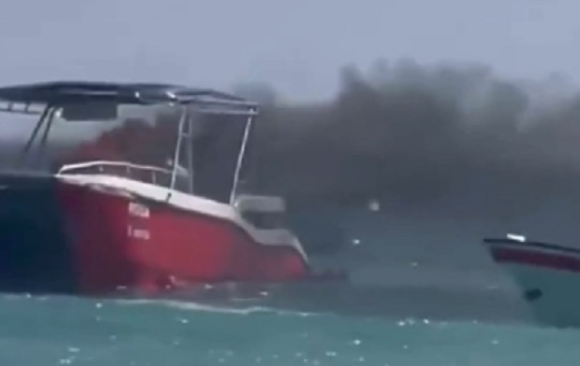
    12 injured after tourist boat catches fire near Saona Island

    A tourist excursion vessel sailing off the coast of Bayahibe, a top travel hub in the Dominican Republic’s La Altagracia province, erupted in fire on Monday, leaving at least a dozen people with burn injuries, local authorities confirmed Tuesday. Early preliminary accounts from emergency teams confirm that more than 30 people — a mix of international tourists and on-board crew consisting of a captain, tour guide, and sailor — were aboard the craft when the blaze ignited unexpectedly. Rapid response teams from local emergency services reached the scene quickly after receiving distress calls, pulling every passenger and crew member from the burning vessel before the fire could spread out of control. All 12 injured people suffered burn wounds from the incident. Of those hurt, 11 have been admitted for care at regional public health centers, while one patient with more severe injuries was transferred to a private medical clinic to receive advanced specialized treatment. Injured victims were distributed across multiple care facilities in the region, including the Nuestra Señora de La Altagracia General and Specialty Hospital, the Central Romana Medical Center, and the Canela Clinic located in La Romana. As of Tuesday, authorities have not released any details on the root cause of the fire, nor have they confirmed whether full passenger evacuation was ordered before emergency teams managed to extinguish the blaze. Emergency personnel remained on site at the coastal location for the remainder of the day, supporting displaced passengers who lost personal belongings in the fire, collecting physical evidence for official investigation, and coordinating with local maritime and law enforcement agencies to advance the inquiry. Located along the Dominican Republic’s southern Caribbean coast, Bayahibe stands as one of the country’s most visited tourist destinations. It is the primary departure point for daily boat excursions to Saona Island, a world-famous tropical get-away, as well as other natural attractions located within the protected Cotubanamá National Park, which draws hundreds of thousands of international and domestic visitors every year.

  • Cabarete aims to attract more adventure travelers with new global campaign

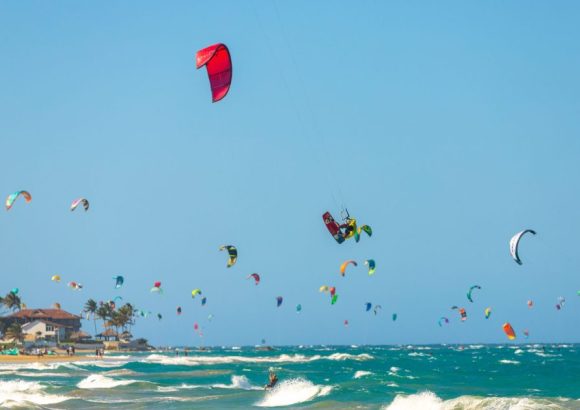
    Cabarete aims to attract more adventure travelers with new global campaign

    The Dominican Republic has kicked off a landmark global promotional drive, the “Cabarete Surf and Wind City” initiative, crafted to cement Cabarete’s status among the world’s top-tier destinations for water-based adventure sports including surfing, kitesurfing, and windsurfing.

    The official launch of the campaign took place on Miami Beach, hosted by the Dominican Republic’s Ministry of Tourism (Mitur). Beyond spotlighting Cabarete’s consistent year-round wind and wave patterns that have long drawn professional athletes and casual outdoor lovers alike, the initiative also showcases the region’s stunning natural landscapes and one-of-a-kind adventure-focused way of life.

    David Collado, the country’s Tourism Minister, emphasized that the new campaign forms a core part of the nation’s broader tourism diversification strategy. Instead of leaning solely on the classic sun-and-seaside vacations that have long dominated the Dominican Republic’s travel brand, the country is now looking to attract visitors seeking genuine, active experiences rooted in connecting with the natural environment.

    Three standout locations take center stage in the promotional materials. Playa Encuentro, widely acknowledged as the Dominican Republic’s top surfing hotspot, features prominently alongside Kite Beach and Cabarete Bay, two sites globally celebrated for their reliable, ideal conditions for kitesurfing and windsurfing in every season.

    Per Ministry of Tourism plans, the campaign will roll out across key tourism markets in North and South America, Europe, and the Caribbean. Promotional efforts will leverage targeted digital platforms, niche outdoor and water sports media outlets, and tailored marketing initiatives designed to resonate specifically with adventure travelers and global water sports enthusiasts.

  • Dominican Republic ranks among world’s top 25 beach destinations for 2026

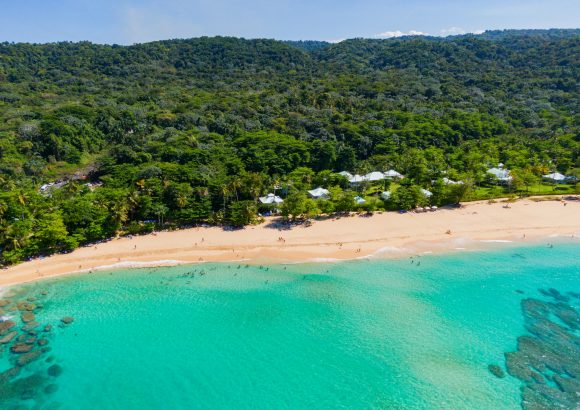
    Dominican Republic ranks among world’s top 25 beach destinations for 2026

    The Dominican Republic has earned a coveted spot among the world’s top beach travel destinations, securing the 25th position on Travel And Tour World’s (TTW) highly anticipated 2026 ranking of the 50 Best Beach Destinations globally. The Caribbean nation beat out hundreds of other coastal locations to claim the honor, drawing recognition for its powdery white shorelines, world-class luxury accommodation, rich underwater biodiversity, and dynamic local cultural heritage.

    TTW’s annual ranking is one of the tourism industry’s most respected assessments of global coastal destinations. To build the 2026 list, reviewers evaluated more than 500 beach locations across the globe, scoring each candidate against a strict set of criteria that includes natural scenic beauty, diversity of beach landscapes, commitment to sustainable tourism, overall visitor satisfaction, health of marine ecosystems, ease of access for international travelers, quality of tourism infrastructure, and unique cultural appeal. Only destinations that excel across all these metrics earn a place on the final top 50.
    In its analysis, TTW specifically highlighted the extraordinary diversity of the Dominican Republic’s 1,600-kilometer coastline, which caters to every type of traveler. From the bustling, resort-packed stretches of Punta Cana and Bayahibe, popular with family and luxury travelers, to the rugged, unspoiled scenic shores of Samaná and Puerto Plata that draw adventure seekers and eco-tourists, the country offers experiences for every taste and travel style. Visitors can choose from a wide menu of ocean and coastal activities, including snorkeling among vibrant coral gardens, scuba diving to explore shipwrecks and underwater caves, surfing along Atlantic-facing breaks, kayaking through mangrove forests, sailing across calm Caribbean waters, deep-sea fishing for trophy game fish, and leisurely catamaran cruises along the coast.
    The publication also extended praise to the Dominican Republic’s booming hospitality sector, particularly its collection of luxury all-inclusive resorts that have become a hallmark of the country’s tourism brand. Additional standout features highlighted by TTW include the nation’s healthy, biodiverse coral reefs, its flavorful and diverse Caribbean cuisine that blends Spanish, African, and indigenous Taino influences, its lively nightlife scene, and the famously warm hospitality of the Dominican people that keeps visitors returning year after year. All these qualities combine to cement the Dominican Republic’s reputation as one of the Caribbean’s leading beach getaway destinations, TTW noted.
    TTW also singled out 10 of the Dominican Republic’s most exceptional beaches for special recognition, showcasing the breadth of quality across the country. The honored shorelines include Canto de la Playa on Saona Island, a postcard-perfect tropical escape; Bávaro Beach in Punta Cana, the country’s most famous resort beach; Rincón Beach in Samaná, a hidden cove favored by nature lovers; Playa Bonita in Las Terrenas, a popular spot for digital nomads and surfers; Bahía de las Águilas in Pedernales, a remote, protected wilderness beach; Frontón Beach in Samaná, a rugged surf destination; Cosón Beach in Las Terrenas, a quiet, crescent-shaped shore; Juanillo Beach in Cap Cana, a luxury private resort beach; Playa Grande in Río San Juan, known for its dramatic cliffside views; and Macao Beach in Punta Cana, a public beach popular with both locals and visitors.
    The 2026 ranking is topped by Greece, which took first place overall, followed by Australia in second, Mexico in third, the Philippines in fourth, Thailand in fifth, Spain in sixth, Turkey in seventh, the United States in eighth, Italy in ninth, and Portugal in tenth. According to TTW, the 2026 list places a renewed focus on destinations that balance unforgettable coastal vacation experiences with long-term commitments to sustainable tourism development and environmental conservation, ensuring that fragile coastal ecosystems remain protected for future generations of travelers.

  • National Assets to hold second public auction of 2026 with more than 180 lots available

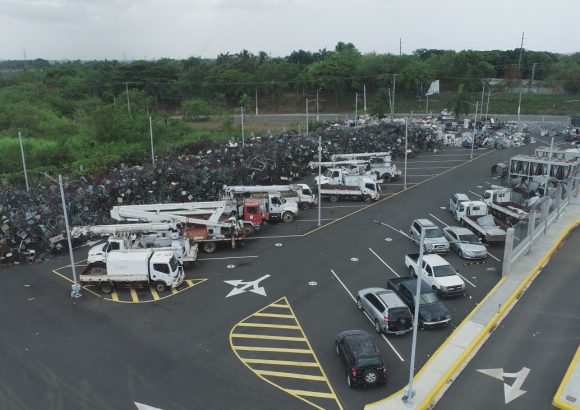
    National Assets to hold second public auction of 2026 with more than 180 lots available

    Authorities in Santo Domingo have announced plans for a major public surplus auction, organized by the nation’s General Directorate of National Assets (Bienes Nacionales), scheduled to launch on July 31 of 2026. The event will put 184 distinct lots of state-owned assets up for open bidding, with inventory ranging from fully transferable road vehicles and raw vehicle chassis to assorted office furniture, motorcycles stripped for reusable parts, miscellaneous mechanical components, and bulk scrap metal.

    The auction will kick off at 9:00 a.m. local time, hosted in the auditorium of the Higher Education Police Institute (commonly abbreviated IPES). Ahead of the bidding process, all items included in the auction will be open to pre-sale public inspection at two dedicated National Assets storage facilities: one situated along the Mella Highway corridor, and a second located at Merca Santo Domingo. Nelson Gómez, head of the directorate’s Auction Department, confirmed the inspection arrangements in public comments.

    For prospective bidders hoping to participate in the event, the directorate has outlined clear eligibility requirements: all interested parties must pay a non-refundable registration fee of 2,000 Dominican pesos (RD$2,000) and finalize their registration paperwork at the National Assets Auction Department no later than July 29, two full days ahead of the auction start.

    Once bidding concludes, successful buyers will follow a structured payment and pickup timeline. Winners are required to settle the full cost of their purchases within five business days of the auction, via certified check made out directly to the Dominican National Treasury. After payment is confirmed, buyers receive an additional five business days to transport their won items out of the designated storage warehouses.

    To guarantee full transparency and strict adherence to national public auction regulations, the entire event will be overseen by Rafael Burgos Gómez, Director General of National Assets and Honorary Executive Director of the State Sugar Council (CEA). Additional oversight will be provided by an independent public auctioneer, a licensed notary public, and voting members of the National Assets Sales Commission, all of whom will be present throughout the bidding process.

  • Da Pond Band vows to continue after losing five members in crash

    Da Pond Band vows to continue after losing five members in crash

    Eight days after a catastrophic plane crash in North Andros, Bahamas, claimed the lives of five of its 14 members, beloved Bahamian musical group Da Pond Band made its emotional return to the stage, rejecting any plans to disband and honoring the legacy of their fallen bandmates. The July 10 crash, which killed all 10 people on board the Flamingo Air Cessna 402 en route to a regatta performance, stands as one of the deadliest aviation accidents the Caribbean nation has seen in decades. Among the victims were the band’s founder and leader Giovanni “Geo” McKenzie, Rashad Storr, Mateo Winder, Toniquea Gilot and Tra’vis Johnson.

    For the nine surviving musicians, led by co-leader Lamar Polhamus, stepping back into performance was not a business decision alone — it was a act of grief, honor, and survival. Founded in 2022 as a six-member ensemble that grew to 14 before the crash, Da Pond Band has built a distinct sound and deep relationships within the Bahamas’ tight-knit entertainment community. Polhamus explained that continuing to play is the only way to honor the work the group built with the five lost members.

    “Music is our coping mechanism right now,” Polhamus shared in an interview with The Tribune. “So, at the end of the day, music stops, we stop. We cannot stop.”

    The band’s first post-tragedy show came on July 18 at the Cat Island Boat Cruise, followed by performances at Nassau’s iconic Goombay Festival on July 24 and the Made in The Bahamas showcase at Nassau Cruise Port on July 25. Another scheduled appearance is set for Beer Fest 2 on August 2. All of these engagements were commitments arranged before the crash, with many organized by close personal friends of the band, Polhamus noted.

    The tragedy cast a shadow over the Bahamas’ 53rd Independence anniversary, turning a national celebration into a period of nationwide mourning. It also sent shockwaves through the country’s small entertainment industry, as the lost musicians contributed far beyond Da Pond Band. Winder, a multi-instrumentalist skilled in drums, keyboard, guitar, bass, and saxophone, had recently toured as keyboardist for Grammy-winning Bahamian group Baha Men in Milwaukee. Storr, a guitarist, also worked as a mechanic at Western Air, and his partner, singer Patrice Glinton, has said she cannot yet return to the stage after the loss.

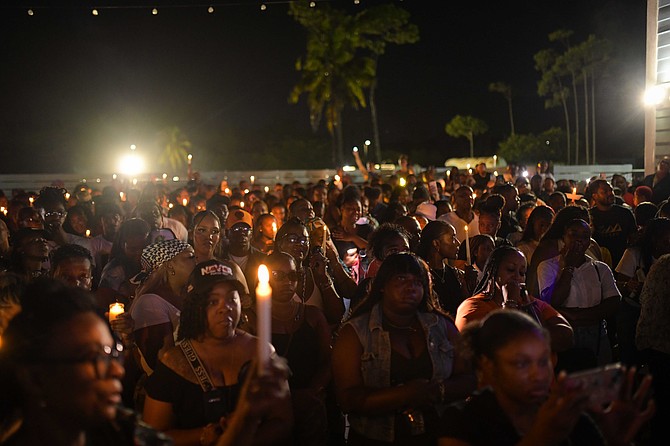
    A candlelight vigil honoring all 10 crash victims drew more than 300 relatives, friends, and supporters to The Pond, a legendary Bahamian entertainment venue closely tied to the band, on July 14. For the surviving members, grief has only pulled them closer together. Polhamus described the band as a chosen family, saying that being together, sharing memories, and playing music is the only way they can process their loss.

    “Apart, all hell breaks loose, basically, but once we’re together and we travel, and we’re able to talk to each other, be able to share some jokes, share some memories, and share some laughs,” Polhamus said. The band has no plans to name a new leader, he added, confirming that McKenzie will forever remain Da Pond Band’s only leader.

    Moving forward, the band plans to continue playing the music that earned them a loyal following across the Bahamas, weaving tributes to their fallen bandmates into every performance. Polhamus asked the public for ongoing support and prayers as the group adjusts to performing without nearly a third of its members, noting that continued public love is the greatest help the band can receive right now.

    In addition to the five Da Pond Band members, the crash claimed the lives of veteran DJ Melvin “DJ Fresh International” Henfield, Andros residents Quintin Myers and Macaro Rolle, pilot Franklyn Cambridge, and 16-year-old Nicholas Oliver Jr. Following the accident, the Bahamas Aircraft Accident Investigation Authority secured the crash site, preserved evidence, and launched a formal investigation, appointing Chief Investigator Kendall Dorsett Jr. to lead the probe. As of the latest update, investigators have not determined a cause for the crash or identified contributing factors, and have asked the public to avoid speculation while the investigation proceeds.

  • Dominican Republic showcases first locally built Van’s RV-8 aircraft at AirVenture Oshkosh 2026

    Dominican Republic showcases first locally built Van’s RV-8 aircraft at AirVenture Oshkosh 2026

    Oshkosh, Wisconsin – The Dominican Republic is stepping onto the global general aviation stage in a big way at EAA AirVenture Oshkosh 2026, the world’s most prestigious and largest annual aviation gathering. The Caribbean nation is using the high-profile event to position itself as a top-tier destination for general aviation travel and operations, while showcasing a major milestone in its domestic aviation industry: the first locally assembled Van’s RV-8 experimental aircraft.

    Running from July 20 through 26 at its traditional Wisconsin venue, the 2026 AirVenture features a dedicated national pavilion organized jointly by the Dominican Republic’s Airport Department (DA) and Ministry of Tourism. At the booth, delegation representatives have been highlighting the country’s expanding network of airports, investor- and pilot-friendly aviation regulations, and the newly implemented Protocol for Non-Commercial Private Aviation, a framework crafted specifically to streamline entry and transit for private and general aviation pilots visiting the country.

    The undisputed centerpiece of the Dominican Republic’s showcase is the debut of the first Van’s RV-8 ever fully built and certified within the country’s borders. Crafted by a team of Dominican aviators – Carlos Sanlley, Alejandro Marranzini, and Andrés Sánchez – the aircraft made history even before arriving at AirVenture: it completed an international cross-border flight from the Dominican Republic to Oshkosh, marking only the second time a Dominican-built experimental aircraft has completed such a journey.

    In comments on the project, Sanlley shared that the team invested five years of work from the early conceptual planning stage to the aircraft’s successful maiden flight. He noted that the completed plane stands as tangible proof of the expanding technical and industrial capabilities of the Dominican Republic’s fast-growing domestic aircraft assembly sector, which has emerged as a new area of economic opportunity for the country.

    Beyond promoting the country’s aviation sector and unveiling the new aircraft, the Dominican delegation also took time during the event to honor the legacy of Franklin Polanco, a late Dominican aviator widely celebrated as a founding pioneer of modern aviation in the country for his decades of contributions to the industry’s growth.

    As the world’s leading gathering for aviation professionals and enthusiasts alike, this year’s AirVenture Oshkosh is drawing tens of thousands of attendees from across the globe, including active pilots, aircraft manufacturers, industry stakeholders, and casual fans. The week-long event features a packed schedule of static aircraft displays, high-flying aerobatic performances, professional development and educational workshops, and showcases of the latest cutting-edge aviation technology.

  • Newly renovated PMH A&E floods after heavy rainstorm

    Newly renovated PMH A&E floods after heavy rainstorm

    Just weeks after officials celebrated the completion of a years-delayed renovation project, the Accident and Emergency (A&E) department at Nassau’s Princess Margaret Hospital (PMH) fell victim to severe weather, experiencing localized flooding on Sunday after intense thunderstorms dumped record levels of rain across New Providence island.

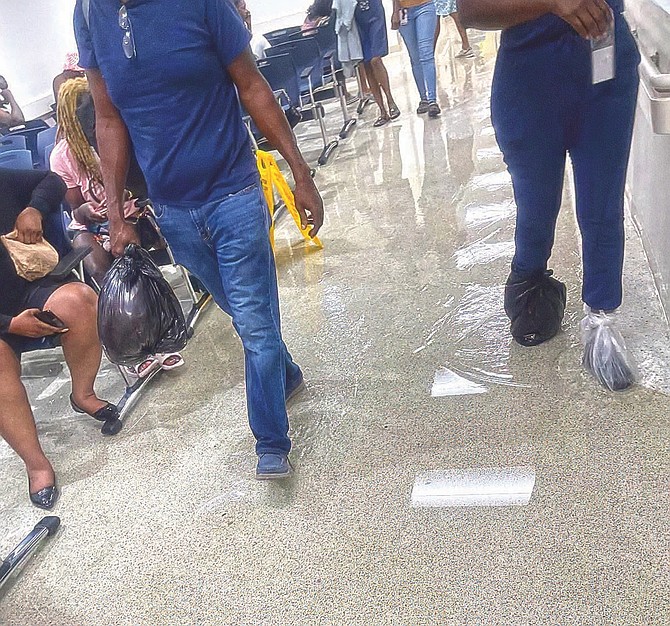
    The floodwater entered the facility through the department’s ambulance bay doors, leaving stagnant water pooled in several critical sections of the newly updated wing. Images and video footage of the incident quickly spread across social media platforms, showing medical personnel and other people walking through the standing water while wearing disposable protective shoe coverings.

    In an official statement released after the incident, hospital leadership moved quickly to clarify that the flooding was not caused by structural defects to the roof or ceiling of the renovated building. Instead, the hospital attributed the incident to an extraordinary accumulation of rainwater outside the facility, noting that PMH sits in a low-lying area that was disproportionately impacted by the extreme downpour. Nearby commercial buildings and other local structures also reported significant flooding challenges from the same storm system, the statement added.

    Hospital teams responded to the emergency within minutes, launching immediate mitigation efforts to restore normal operations. Affected zones were fully cleaned and disinfected, while patients and staff were temporarily relocated to unaffected alternate areas to ensure no interruption to critical emergency care. As a temporary precaution, physical barriers were installed at the flood-impacted entrance, and emergency vehicle access was rerouted to an alternate entry point while engineering teams assess the site and develop long-term fixes.

    The incident comes just three weeks after Health and Wellness Minister Dr. Michael Darville formally announced that the full renovation of the A&E department was complete, and the facility had entered full operational status following a phased transition. Darville framed the project’s completion as a major landmark for the country’s public health system, ending years of delays that had drawn widespread public criticism. The renovation was launched in response to longstanding public complaints over inadequate conditions at PMH, including persistent overcrowding and widespread aging infrastructure failures across the hospital campus.

    Moving forward, PMH officials confirmed they will work alongside infrastructure partners to identify additional adaptive measures to prevent similar disruptions during future extreme weather events. “The Public Hospitals Authority and Princess Margaret Hospital remain committed to ensuring the safety and continuity of care for patients, staff, and visitors,” the statement concluded.

  • Govt seeks US tariff exemption for seafood

    Govt seeks US tariff exemption for seafood

    As the Bahamas’ high-stakes commercial crawfish season approaches just days away, the Davis administration is racing to secure a targeted exemption from a newly implemented 12.5 percent United States tariff that threatens to upend the country’s critical fisheries sector. The tariff entered into force on July 24, following a determination by the Office of the United States Trade Representative (USTR) that The Bahamas had not enacted and effectively enforced a ban on imports produced through forced labour.

    Agriculture and Marine Resources Minister Jomo Campbell has moved quickly to clarify that the USTR’s ruling is not an indictment of Bahamian fishing industry labour practices. He emphasized that the penalty stems from gaps in the country’s broader regulatory framework for imported goods from third parties, not evidence of forced labour in local commercial fisheries. All licensed Bahamian commercial fishing vessels are locally owned, operate in full compliance with Bahamian labour law, and do not rely on foreign labour, Campbell said, adding that the sector’s ethical track record remains uncompromised.

    The timing of the tariff is particularly problematic: the annual crawfish season, the most commercially valuable period for the country’s fishing industry, opens on August 1, leaving exporters and small-scale fishers bracing for increased costs in their largest export market. Spiny lobster (commonly called crawfish in The Bahamas) and stone crab are the two Bahamian seafood products most exposed to the new duty, with roughly 60 percent of the country’s spiny lobster exports destined for the US market. Data from the Marine Stewardship Council shows the sector exports over four million pounds of lobster tails annually, supporting roughly 9,000 Bahamian fishers. Adrian LaRoda, president of the Bahamas Commercial Fishers Alliance, estimates annual crawfish shipments to the US generate between $50 million and $70 million in revenue. These exports make up a substantial portion of The Bahamas’ total $120 million in annual export-generated foreign currency earnings, a critical lifeline for the country’s economy.

    In response to the tariff, the Bahamian government has outlined a three-pronged strategy to mitigate harm and resolve the dispute with Washington. First, the government has already passed amendments to the Customs Management Act that formally prohibit imports of forced labour-produced goods, aligning the country’s laws with USTR requirements. Campbell noted that six other countries have already updated their legislation following USTR’s action and successfully moved from the 12.5 percent tariff rate to a lower 10 percent levy, and The Bahamas intends to become the seventh. The government is currently investigating why its recent regulatory changes did not qualify the country for the lower rate, and identifying remaining gaps to address.

    Second, the administration is actively pursuing a product-specific exemption for Bahamian crawfish and stone crab, given their outsized importance to the local industry and the lack of forced labour concerns in the sector. Third, the Ministry of Agriculture and Marine Resources is coordinating with the Ministry of Finance, Bahamas Customs, and The Bahamas’ embassy in Washington to provide direct support to seafood processors and exporters as they navigate the new regulatory and cost requirements ahead of the season opening.

    The 12.5 percent tariff was imposed as part of 60 separate Section 301 investigations launched by the US into countries and trading blocs that Washington determined had failed to block forced-labour goods from entering their markets. USTR initially named 54 economies, including major US allies and trading partners such as Canada, the United Kingdom, the European Union, Australia, Japan and New Zealand, as failing to both enact and enforce forced labour import prohibitions, with six others cited for failing to enforce existing bans. Countries that met USTR’s requirements by enacting a full ban, committing to one via trade agreement, or establishing a partial blocking system were assigned a 10 percent tariff, while non-compliant economies faced the higher 12.5 percent rate. The final determination for The Bahamas went into effect at 12:01 a.m. on July 24, with goods already in transit before the deadline and entered into the US by July 28 exempted from the additional duty.

    Campbell also moved to correct misinformation about the magnitude of the cost increase for exporters. He explained that The Bahamas had already been subject to a temporary 10 percent US import surcharge since August 2025, implemented by the US to address what the White House called serious international payments imbalances and a large US balance-of-payments deficit. That temporary surcharge expired the same day the new 12.5 percent tariff took effect, meaning exporters face only a 2.5 percentage point increase in total duties, rather than a full 12.5 percentage point added to the existing charge. “Our fishermen should not go into this season believing the figure is five times what it is,” Campbell said.

    Even so, the additional cost lands on an industry that already operates on very narrow profit margins. A US seafood importer previously urged the US administration to grant an exemption for Bahamian crawfish and stone crab, arguing that the Bahamian fishery has no documented forced labour issues, and the tariff would harm not just Bahamian suppliers but also US distributors and American consumers. The importer warned that the full additional cost cannot be absorbed by the seafood supply chain, and would risk disrupting long-standing commercial relationships between US buyers and Bahamian fishing operations.

    Beyond the fisheries sector, the tariff could have much broader economic impacts for The Bahamas, which relies heavily on the US as its primary trading partner. A submission during the US public consultation period estimated that up to $985 million in 2024 Bahamian exports to the US could be affected, including refined petroleum, styrene polymers, pearl products, and financial documents of title. US trade data shows 83.3 percent of The Bahamas’ imports originate in the US, which exported $5.48 billion in goods to The Bahamas in 2024 and held a $3.7 billion trade surplus with the country.

    Campbell emphasized that the new tariff will not impact seafood sold within The Bahamas, nor exports to the European Union and Canada, and that the opening of the 2025 crawfish season will proceed as scheduled on August 1 across New Providence, Grand Bahama, and all of the country’s Family Islands.

  • Widespread BPL blackouts spark anger across islands

    Widespread BPL blackouts spark anger across islands

    Over the weekend, communities across two major Bahamian islands — Abaco and New Providence — were thrown into chaos by a series of prolonged, repeated power outages that upended daily life, shuttered local businesses, and reignited long-simmering public anger over the inconsistent service provided by Bahamas Power and Light (BPL).

    For Abaco residents, the latest wave of disruptions began as early as midweek, with one outage stretching to an 18-hour stretch of darkness. Across the country’s most populous island, New Providence, intermittent power cuts continued from Friday through the end of the weekend, with BPL attributing the issues to a perfect storm of natural and infrastructure failures: lightning strikes, damaged high-voltage cables, faulty transformers, degraded equipment, and crippling strain on the grid from excessive energy demand.

    Chantelle Sands, president of the Abaco Chamber of Commerce, described Thursday as one of the most devastating days for local commerce, with extended blackouts halting normal operations across the island. “Businesses that do not have backup generators are at an even greater disadvantage,” she explained. “When power fails, many are forced to close entirely, lose critical daily sales, and face the risk of losing entire inventories of refrigerated and frozen goods. Reliable power is not a luxury — it is a foundational requirement for keeping businesses open, protecting jobs, and sustaining the country’s economic momentum.”

    BPL officials have confirmed a string of separate failures across Abaco between Wednesday and Saturday. The issues started Wednesday with a sudden power surge at the Marsh Harbour Power Station that cut service to Murphy Town, Dundas Town and Forest Drive, which was restored shortly after. That same day, repairs to a damaged high-voltage cable in South Scotland Cay caused a second temporary outage for local residents.

    The most serious breakdown hit the Wilson City Power Station just after 1 p.m. Thursday, when one of the facility’s primary generating units unexpectedly tripped offline, cutting power to all of Central and South Abaco as well as the surrounding cays. According to Marvin Green, BPL’s Northern Regional Manager, this type of failure would typically take between 45 minutes and 90 minutes to resolve, but unforeseen additional complications dramatically slowed restoration efforts.

    Technicians eventually managed to restart the generating unit, but power only remained active for roughly 20 minutes before a second failure forced the entire station offline. Green explained that much of the repair work focused on the plant’s critical uninterruptible power supply system, which supports the station’s automated operations. After crews resolved that issue and restarted the engine, the station’s main transformer tripped, triggering yet another full blackout.

    Additional outages continued to plague Central and South Abaco and Guana Cay on Friday and Saturday, each tied to separate new infrastructure issues. For residents and business owners, these repeated disruptions are not an unexpected one-off event — they are the latest chapter in a years-long crisis that has raised daily stress and added unplanned costs across the islands.

    Sands shared one particularly striking example of the chaos: a local business that had its generator transfer switch damaged by BPL technicians, leaving the company completely without power even when it had planned for backup. While many business owners have invested thousands in private generators to keep operations running, Sands noted that the recurring costs of fuel and maintenance eat into already razor-thin profit margins for local companies.

    To address the long-term crisis, Sands is calling on local businesses to invest in solar energy infrastructure where feasible, and is urging the Bahamian government to eliminate import duties and value-added tax on renewable energy systems. She argued that lower upfront costs for renewable systems would encourage more widespread adoption, reduce strain on BPL’s overburdened grid, and strengthen the country’s overall energy security.

    Abaco resident Roscoe Thompson, who endured one 18-hour outage, said the problem has persisted since Hurricane Dorian hit the islands, and successive political administrations have failed to deliver on promises to fix the grid. “This isn’t an issue that just popped up out of nowhere,” he said. “Every new administration promises things will change, but when summer rolls around with higher demand, we end up right back where we were last year.” He added that the outages hurt not just local residents, but also the country’s critical tourism industry: without power, credit card machines do not work, and businesses cannot open at all for visitors.

    Another Abaco resident, Danny Sawyer, recalled an outage that started between 9 a.m. and 10 a.m. one day last week, with power restored to some neighborhoods by 3 a.m. the next day, while others waited until 7 a.m. or 8 a.m. to get service back. Outage lengths vary wildly, he said, ranging from two or three hours to more than six, and any severe thunderstorm with lightning typically prompts BPL to shut down power stations as a safety precaution. For residents without backup power, extended outages in the Bahamian heat become unbearable — Sawyer recalled one friend who was forced to sleep in his car to escape the high temperatures. Even for those who have portable generators, the cost is prohibitive, he said, with gasoline selling for roughly $8 per gallon.

    On New Providence, residents also faced days of repeated, intermittent outages, with BPL confirming that lightning strikes, cable faults, damaged transformers, broken equipment, and high demand affected communities across the island. Crews worked around the clock to complete repairs and gradually restore service, but frustrated residents took to social media to vent about the frequency and duration of the cuts. One Facebook user reported going seven hours and counting without power by Sunday, while another complained that power had fluctuated on and off five times, putting household appliances at risk of permanent damage from irregular voltage.

    Eastern New Providence was among the hardest hit areas over the weekend. Rosemary Sands, a resident of Joe Farrington Road, said her power was cut from 10 a.m. to 2 p.m. Sunday, following a shorter outage the day before. “We are annoyed but we’re used to this thing now,” she said. “It feels like we’re living in a third world country, dealing with these constant outages.” Still, she added that she believes BPL crews are doing the best they can with aging infrastructure.

    For small service businesses that rely entirely on electricity to operate, the outages create persistent financial and operational strain. Shanice Carey, owner of True Beauty Salon in New Providence, explained that every service her business offers depends on power — from hood dryers and heated styling tools to hot water and air conditioning. When power goes out, all work stops, pre-scheduled appointments have to be rescheduled, and sensitive salon equipment is put at risk of damage. “Frequent power outages disrupt client schedules, strain our equipment, and create significant unexpected operational costs,” Carey said. “While we do everything possible to adapt and minimize the impact on our clients’ experience, persistent outages place a heavy burden on our salon when trying to provide quality, efficient service.”