博客

  • Department of Culture to Host Soca and Calypso Adjudicators’ Training Workshop

    Department of Culture to Host Soca and Calypso Adjudicators’ Training Workshop

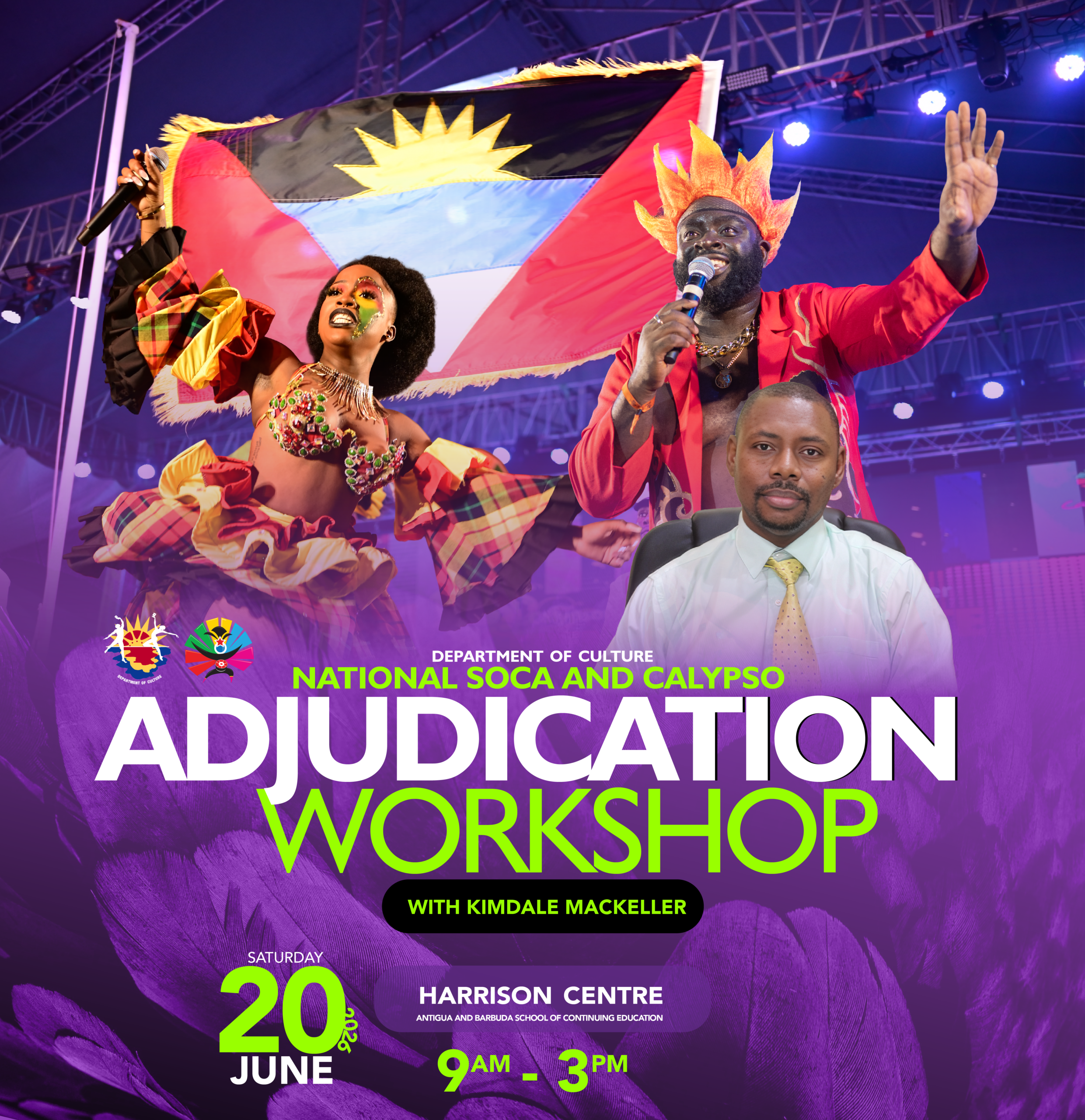
    Antigua and Barbuda’s Department of Culture, operating under the Ministry of Creative Industries, has announced a specialized training workshop for Soca and Calypso competition adjudicators, scheduled for Saturday, June 20, 2026. The event will take place on the campus of the Antigua and Barbuda College of Advanced Studies at the Harrison Centre, marking a key step in the department’s long-running mission to bolster the professionalism, integrity and public trust in the country’s iconic Carnival judging processes.

    Running from 9 a.m. to 3 p.m. on the scheduled date, the workshop will welcome both sitting adjudicators who oversee the island nation’s most high-profile Carnival contests—including the widely popular Soca Monarch, Party Monarch and Calypso Monarch competitions—and emerging candidates hoping to join judging panels in future events. Over the course of the day, participants will build practical skills in core judging competencies, ranging from standardized scoring methodologies and consistent rubric application to nuanced performance analysis and proactive implicit bias awareness.

    Leading the training will be Kimdale Mackellar, an experienced cultural practitioner and adjudication specialist with deep expertise in Caribbean performance arts. Mackellar will guide attendees through a deep dive into the key assessment criteria that shape competition outcomes, covering everything from lyrical depth and musical composition to originality of work, stage presence, audience connection, thematic communication and overall performance quality.

    Unlike traditional passive training formats, the workshop will center on interactive, hands-on learning to help participants put new skills into practice immediately. Scheduled activities include small-group discussions on common judging challenges, supervised mock adjudication exercises, cross-adjudicator calibration sessions, audio and video analysis of past performances, side-by-side score comparison activities, and one-on-one guided feedback sessions to address individual growth areas.

    As Carnival continues to grow in cultural significance and draw increasing public and tourism attention across the Caribbean, the Department of Culture has emphasized that consistent, transparent judging is more critical than ever. The department notes that the workshop is rooted in a core priority: ensuring every person sitting on a competition judging panel has a complete, up-to-date mastery of official judging criteria, and can apply those standards fairly, uniformly and transparently across all performances.

    Through capacity-building initiatives like this specialized training, the Department of Culture is working to systematically strengthen the institutional frameworks that underpin Carnival competitions, with the goal of ensuring all artistic achievements are evaluated consistently, objectively and to the highest professional standards.

    Individuals interested in participating in the workshop or seeking additional logistical details are invited to contact the Department of Culture directly by phone at 562-9606 for more information.

  • Anika Chadee from Piparo among 11 detained

    Anika Chadee from Piparo among 11 detained

    In a move timed alongside parliamentary debate over a three-month extension of the country’s state of emergency, Trinidad and Tobago’s state authorities have issued 11 new preventive detention orders (PDOs) targeting alleged members and leaders of transnational and local organized criminal networks. The orders, covering legal notices 410 through 420, were published shortly before 8 p.m. on Wednesday, and bear the signature of Homeland Security Minister Roger Alexander, in full compliance with Paragraph 2 of the Schedule to the 2026 Emergency Powers Regulations.

    Under Regulation 14 of the same legislation, PDOs are authorized to hold individuals preventively when intelligence indicates their actions would threaten public safety. The signatures on the 11 new orders were finalized between May 19 and June 5 of this year. All 11 detainees have been publicly identified by authorities: Akeem Cole, Akino Warner, Akeema Ferguson, Eric Goring, Wayne Havelock, Curtis Isaac, Jasiniho Boneo, Nicholas Sumner, Mark Williams, Shane Dindial, and Anika Chadee. Two of the 11 detainees are women, while three are accused of holding top leadership positions in their respective criminal operations.

    According to official legal notices, all detainees are tied to organized criminal groups active across multiple Trinidadian districts, including Port of Spain, Morvant, Tunapuna, Central Trinidad, Claxton Bay, Couva, Chaguanas, Gasparillo, Marabella, and Piparo. The two women detained face specific, serious allegations tied to enabling violent criminal activity. Akeema Ferguson, also known by the alias “Kima” and a resident of Longdenville and Edinburgh 500, is accused of providing real-time surveillance intelligence to a criminal syndicate during armed home invasion operations across Central Trinidad. The second woman, Anika Chadee of Piparo, is alleged to have participated in a criminal group’s plots to acquire additional firearms and carry out a public attack, after authorities previously seized a weapon and ammunition from her home.

    Three detainees are flagged as senior gang leaders. Akino Warner, widely known as “Boogsie”, is named as the head of the notorious Bayshore 3 Gang. Wayne Havelock, who uses multiple aliases including “Joey” and “Haveblock”, is identified as the leader of a large-scale organized criminal group and narcotics trafficking network active across Claxton Bay, St Margaret’s, Couva, and Chaguanas. Shane Dindial, also of Piparo, is the third accused leadership associate, with a prior history of murder investigation and a recent offense of illegal firearm possession; intelligence indicates he was seeking to acquire a second weapon to carry out a public attack.

    Multiple other detainees are described as armed enforcers or shooters for their respective gangs. Eric Goring of St Joseph is an alleged enforcer for the Bangladesh Gang, a group linked to shootings, assaults, home invasions, and drug and firearms trafficking. Goring is also accused of participating in targeted attacks against rival gang factions. Curtis Isaac, also known as “Donkey” and “Road” from North Malick, Morvant, serves as an armed shooter and enforcer for the Seven Gang, and is accused of patrolling rival territory, protecting gang turf, and targeting opposing members amid ongoing violent conflict in the Morvant area. Jasiniho Boneo, alias “Elmo” of Tunapuna, is named as a core operative and armed enforcer for the ABG Resistance group, and is tied to a March 22 armed crime spree across Tunapuna and El Dorado, as well as a plot to target a commercial establishment near the Tunapuna Market.

    Lower-ranking gang members facing detention include Akeem Cole, a member of the 6 Gang based in Clifton Towers, Mt Hope, and East Dry River. The 6 Gang is accused of running extortion rackets, trafficking narcotics and illegal firearms, carrying out armed robberies, and plotting retaliatory attacks against its bitter rival, the Seven Gang, following the killing of a 6 Gang member known as “Dappa Six”. Nicholas Sumner (alias “Izy” and “Mr Spin It”) and Mark Williams are both listed as members of the SIXX Gang operating out of East Dry River, a syndicate linked to armed robbery, motor vehicle theft, and firearms offenses. The two men are accused of planning new armed robberies to raise funds for ongoing gang operations and support for members already incarcerated.

    Havelock, the Claxton Bay-based network leader, faces particularly severe allegations: authorities claim he oversees a smuggling operation that uses maritime routes, mangrove channels, and unregistered vessels to move narcotics and firearms across borders. He is also accused of authorizing contract killings and retaliatory attacks against both rival gang members and law enforcement officers. His counterpart Warner, leader of Bayshore 3 Gang, is tied to both local and international trafficking of narcotics and firearms, with intelligence linking his network to a recent large-scale narcotics seizure intended for both domestic and international distribution.

  • ‘Take any evidence against me to the police’

    ‘Take any evidence against me to the police’

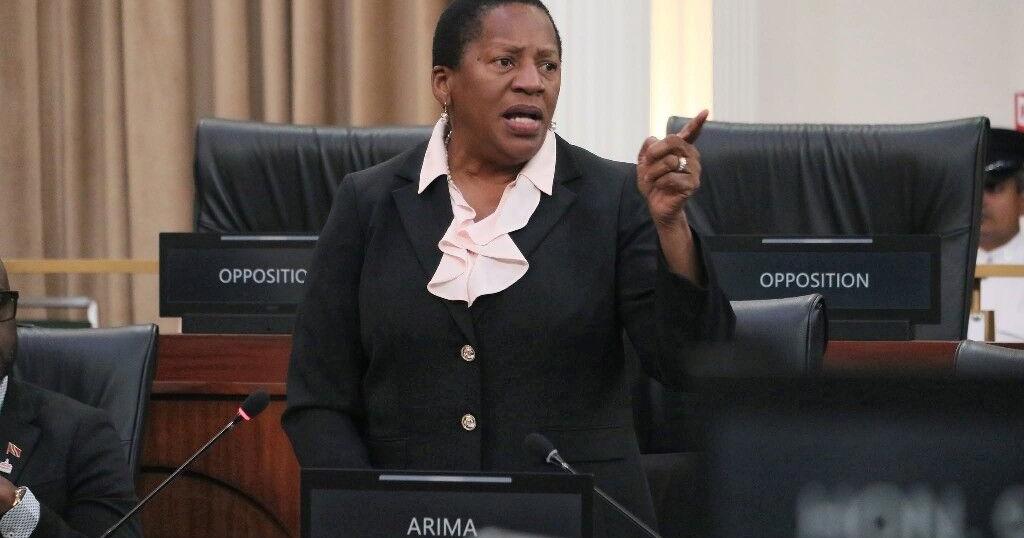
    A sharp political confrontation has erupted in Trinidad and Tobago’s Parliament over unsubstantiated claims of illegal activity linked to the opposition People’s National Movement, after Attorney General John Jeremie dropped a bombshell announcement during a Wednesday debate focused on extending a national state of emergency. Jeremie told the legislative body that the United States government had revoked visas belonging to a group of figures labeled the “1%”, a comment widely interpreted to hint at connections between opposition figures and criminal activity. Now, opposition leader Pennelope Beckles is pushing back forcefully, challenging the ruling government to act on its claims rather than hiding behind parliamentary immunity.

    In a fiery address to government lawmakers, Beckles argued that the governing administration has abused the legal protection of parliamentary privilege to smear the PNM and its members without offering any concrete proof of wrongdoing. “It is one thing to stand on this floor and level accusations against the opposition, but if you actually hold evidence, take it to the police,” Beckles stated, doubling down on her demand that officials stop making unproven claims behind the protection of parliamentary immunity. “Do not hide behind this privilege to spread baseless accusations when you know you lack the evidence to back them up. If you have proof tying me to any illegal activity, take it directly to law enforcement.”

    Beckles went on to accuse the ruling party of being fixated on targeting the so-called “1%” for political gain, rejecting any implication that she or any fellow opposition parliamentarian are involved in unlawful activity. She issued an open challenge to the government to release any formal reports that name opposition members or tie the PNM to criminal networks, stating that the public has a right to see the evidence if it actually exists.

    Noting the context of the debate around the state of emergency, which is tied to public safety and gang violence, Beckles acknowledged the government’s attempt to link its accusations to broader national security concerns. She insisted, however, that if authorities have credible evidence of wrongdoing, they must follow formal legal processes instead of using parliamentary privilege to make unchallenged claims that cannot be legally answered outside the chamber. “If you have the information, act on it properly,” she said. “You cannot keep coming into Parliament to level these smears, when you refuse to repeat them outside these walls where you can be held accountable – and everyone knows why that is.”

  • CDB VP says honesty shown by SVG gov’t is ‘rare’

    CDB VP says honesty shown by SVG gov’t is ‘rare’

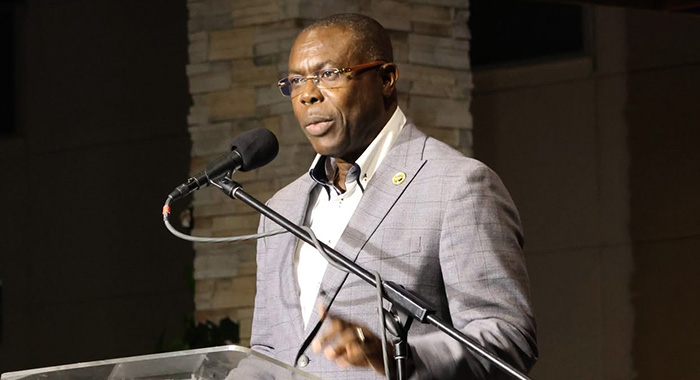
    At the closing cocktail event for the first day of the Development Partners Round Table in Villa on Tuesday, Caribbean Development Bank (CDB) Vice President Isaac Solomon delivered high praise to the Government of St. Vincent and the Grenadines (SVG), highlighting the small island nation’s rare combination of confidence, clarity, and humility in its engagement with international development partners. Solomon emphasized that this open, collaborative approach has already laid critical groundwork for impactful external support — but stressed that progress now depends on translating verbal commitments into tangible on-the-ground action.

    Solomon noted that convening a round table of this scale does not occur by chance. Such events, he explained, only come together when a national government demonstrates the confidence to welcome external scrutiny, the clarity to lay out a cohesive national development vision, and the humility to acknowledge it cannot address complex challenges alone. “That combination is rarer than it should be. I think it deserves recognition,” he told attendees.

    The CDB delegation, Solomon added, was particularly struck by the candor and rigor of the morning presentations delivered by SVG Prime Minister Godwin Friday and the country’s Finance and Investment Ambassador Kevin Hope. Unlike many engagements with development partners that either downplay obstacles or become overwhelmed by them, Solomon said the SVG administration offered an unflinching, grounded, and analytically rigorous assessment of the country’s current position. Officials plainly named key challenges: persistent fiscal pressures, the heavy burden of climate vulnerability, and deep-seated structural constraints shaped by SVG’s geography and history as a small island developing state. At the same time, the government refused to frame these barriers as insurmountable, instead laying out a coherent, nationally owned development vision that provides a clear framework for partners to align their support around.

    This openness from the SVG side set a productive tone for cross-partner discussions, Solomon observed. In response to the country’s clear direction, development partners in attendance made concrete commitments, held substantive talks about coordination, and forged a shared sense of collective purpose — outcomes Solomon described as far from trivial. He credited both the SVG government and the local United Nations team for creating the conditions for this collaborative dialogue.

    From CDB’s institutional perspective, Solomon confirmed that SVG’s development priorities and reform trajectory align closely with the bank’s own core strategic goals of inclusive economic growth, climate resilience, and investment in human capital. This alignment, he stressed, is not valuable because it validates CDB’s internal framework, but because it allows the bank to deliver genuinely useful support tailored to SVG’s self-defined needs. “When a country has defined its own direction with this degree of clarity, a development bank’s job becomes more straightforward. It becomes one of deploying our instruments in service of that direction, not in competition with it. That is the kind of partner we intend to be,” Solomon said.

    Moving beyond discussions of institutional alignment, Solomon warned that the complex challenges SVG faces cannot be solved by financing alone. In today’s more challenging global economic landscape, meaningful progress requires the right policy tools, coordinated action across partners, and sustained political will to see long-term reforms through. He noted that this political will is clearly present in SVG, and it is now the responsibility of development partners to match that commitment with equivalent energy and action.

    Solomon pointed out that the global operating environment has grown significantly more hostile for small island developing states (SIDS) over the past five years, marked by soaring financing costs, shifting geopolitical alliances, and an accelerating frequency of extreme climate events. These pressures impact SIDS far more severely than large economies, which can absorb shocks that smaller nations cannot. For SVG, Solomon said this reality is not abstract: the country is still navigating the long recovery process following the 2021 eruption of La Soufriere, and the significant fiscal compression that followed the disaster, as it works to shift from post-eruption recovery to long-term transformation and resilience building.

    Crucially, Solomon noted that SVG is uniquely well-positioned to capitalize on the current global moment, as the international community reconsiders how it supports climate-vulnerable small states. Global debates around the Bridgetown Initiative — a Barbados-led push to overhaul the global financial system, allowing developing nations to address climate change without taking on unsustainable debt — and broader reforms to the global development finance architecture have created a new opening for SIDS to shape global policy. SVG lived experience with climate shocks gives the country a powerful, evidence-based voice in these negotiations, and its transparent, collaborative governance style makes it a strong leader in this space, Solomon added.

    Responding to Prime Minister Friday’s opening observation that SVG’s development needs are too large and multi-faceted for any single institution to address, and that success depends on partners aligning their contributions to deliver more than the sum of their parts, Solomon pushed back against the idea that this gap is a weakness. “This is not a gap to apologise for. It is simply the nature of small island development finance,” he said. The core question, he argued, is whether partners can organize effectively to meet that reality — and the first day of the round table demonstrated that this is possible.

    Despite the positive momentum, Solomon reminded attendees that the ultimate success of the round table will be measured by tangible improvements in the lives of ordinary Vincentians, not just productive dialogue. He reaffirmed CDB’s commitment to supporting SVG beyond financing, offering ongoing policy dialogue and advocacy for the country’s priorities in broader international forums. “We come to this as a leading voice and also as a committed partner, grateful for the invitation and clear about the responsibility that comes with it,” he said. Closing out the first day of discussions, Solomon called the event a success: “This has been a good day — a day that began with honesty about the challenges ahead, moved through serious substantive conversations, and ends here among partners with a sense of shared purpose.”

  • US hits Cuba with more sanctions, hints at military action again

    US hits Cuba with more sanctions, hints at military action again

    On Thursday, the United States government unveiled a fresh round of economic restrictions targeting Cuba, with the island nation’s state-owned oil and gas conglomerate, Cuba Petróleo (Cupet), bearing the brunt of the new measures. U.S. Secretary of State Marco Rubio made the announcement, claiming the company controls assets that were illegally seized from U.S. property owners decades ago.

    Beyond the sanctions designation, Rubio placed full responsibility for Cuba’s ongoing national energy crisis squarely on the country’s ruling leadership. He argued that while ordinary Cuban citizens have endured crippling fuel shortages and widespread power outages driven by years of underinvestment in critical energy infrastructure, the island’s communist leadership has siphoned off energy resources for personal gain.

    “Cuban officials resell thousands of barrels of this already scarce fuel on unregulated secondary markets, hoard the majority of available energy supplies for the country’s military, intelligence services and repressive state apparatus, and deliberately ration access to power as a tool to enforce social control over the population,” Rubio alleged during the announcement.

    This latest action comes as Cuba continues to grapple with the cumulative economic pressure of a more than 60-year U.S. trade embargo that has gutted the country’s ability to import essential goods, including fuel. Washington has long maintained pressure on Havana to overhaul its existing economic and political systems, and the new sanctions mark a further escalation of that long-running campaign.

    The penalties also arrive alongside a sharp uptick in aggressive military rhetoric from U.S. officials. Just one day before the sanctions announcement, U.S. Secretary of Defence Pete Hegseth conducted an official visit to the U.S. Naval Base at Guantanamo Bay, a facility that has remained a point of contention between the two nations for decades. During his tour of the base, Hegseth did not rule out the possibility of direct U.S. military action against Cuba, issuing a stark warning to Havana against making what he called a “wrong decision” that would create a threat the U.S. would be forced to respond to militarily.

  • NTI, BIMAP, Coursera seal partnership to boost skills, jobs

    NTI, BIMAP, Coursera seal partnership to boost skills, jobs

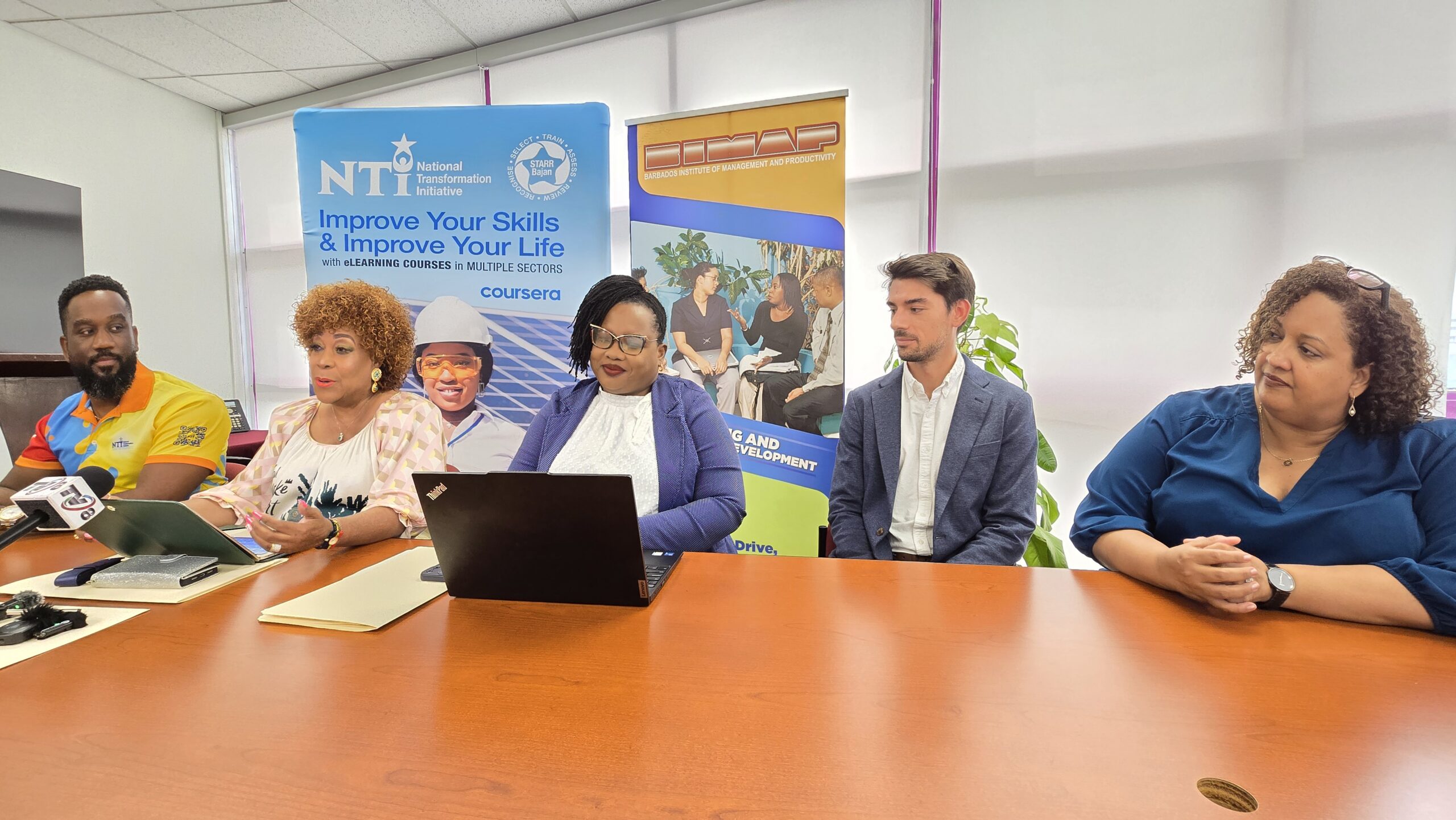
    On Thursday, three organizations – Barbados’ National Transformation Initiative (NTI), the Barbados Institute of Management and Productivity (BIMAP), and U.S.-based for-profit online learning platform Coursera – formalized a five-year strategic partnership designed to reshape the Caribbean nation’s education system and workforce development landscape.

    The new Memorandum of Understanding (MOU) cements a collaboration that has already delivered tangible results for Barbadian workers and learners since NTI first partnered with Coursera in May 2021. BIMAP was the first domestic institution to embrace the initiative, integrating Coursera’s global digital content into its local training programs from the earliest stages.

    Reflecting on the partnership’s growth to date, NTI Director Dr. Allyson Leacock highlighted the rapid expansion of access and uptake: from just 1,600 completed certifications in 2021, the initiative has now crossed 60,000 certifications, with more than 201,000 total course enrollments and over 51,000 active learners on the national platform co-integrated with Coursera. Under the new expanded agreement, the partners will roll out a customized 40-hour digital training protocol to upskill public sector workers, with the goal of building a forward-thinking public service that leads change rather than falling behind.

    Dr. Leacock emphasized that boosting national productivity is the central mission of the expanded collaboration, framing the work as critical to Barbados’ long-term sovereignty and economic resilience. “For a small nation like ours with no natural oil reserves and limited land area, productivity is not just a metric on a spreadsheet – it is national sovereignty. It lets us hold our own on the global stage and pay our own way. For individual workers, productivity means dignity: it is the difference between a family just getting by and a family getting ahead,” she explained.

    She noted that the partnership aligns directly with the government’s “Mission Barbados” national development agenda, centering worker empowerment and inclusive digital transformation. “A truly fully digital Barbados is not just one with fancy technology. It is one where no one is left behind,” Dr. Leacock added.

    One of the key lessons the NTI learned over its first five years of collaboration with Coursera is that standalone certification is not enough to move the needle on employment outcomes. For too long, many Barbadian workers’ learning journeys ended with a certificate, never translating to better jobs, higher wages, or new small business opportunities. Dr. Leacock noted that education providers and employers have long operated in separate spheres, and the NTI is positioned to bridge that communication gap. The new five-year agreement aims to close this divide by directly linking upskilling programs to tangible workplace opportunities.

    “NTI and Coursera bring world-class digital learning content to the table, but BIMAP brings connections to the local business community, employers, small business owners, and on-the-ground real-world workplace challenges that need solutions,” Dr. Leacock explained. “Together, we close the loop: turning learners into earners, skills into jobs, and completed courses into meaningful contributions from active Barbadian citizens.”

    To kick off the expanded partnership, Dr. Leacock announced three pilot initiatives that will launch and wrap up within the first 90 days. The pilots include upskilling a local coconut vendor to grow their roadside trade into a linked value-added segment of Barbados’ tourism development program, leadership training for frontline retail supervisors to help them manage whole teams rather than just individual shifts, and hands-on hazardous waste disposal and industrial safety training for frontline workers, hosted on BIMAP’s real training equipment to ensure workers can return home safely every day. The partnership will also explore practical applications of artificial intelligence to boost local productivity and solve everyday industry challenges.

    BIMAP Executive Trustee Andrea Burgess outlined the institute’s key contributions to the collaboration: its existing relationships with local and regional employers, expert training facilitators, hands-on practical training infrastructure, and decades of regional development expertise. “We are ready to serve as a core part of this delivery engine for national transformation, and eventually regional and even international transformation, all with a constant focus on improving productivity. Our shared goal is to help Barbadian learners move from learning to earning through the combined strength of NTI, Coursera, and BIMAP,” Burgess said.

    Burgess explained that under the new agreement, Coursera content will be progressively integrated directly into BIMAP’s credentialed programs, rather than operating as a separate standalone offering. “This integration lets learners benefit from both global cutting-edge expertise from Coursera and local contextualized facilitation, assessment, and workplace connection from BIMAP,” she noted. The integrated model offers multiple flexible pathways: Coursera courses can count toward full BIMAP degree programs, serve as prerequisite preparation for program entry, or allow learners to waive foundational coursework and shorten their time to completion, depending on alignment of learning outcomes.

    Jennifer Campbell, special advisor for higher education at Coursera, reaffirmed that expanding accessible learning opportunities for all remains the platform’s core mission. “What stands out to me is seeing how lives are being transformed: from learners who took a chance on a new course to faculty who have embraced new training models. Right now, every single person in Barbados has access to these opportunities, and it is an honor for Coursera to be part of this work,” Campbell said. She also pledged that Coursera will continuously update its content to reflect global labor market demands, emerging technologies, and the latest skills data to ensure it remains relevant to Barbadian workers’ needs.

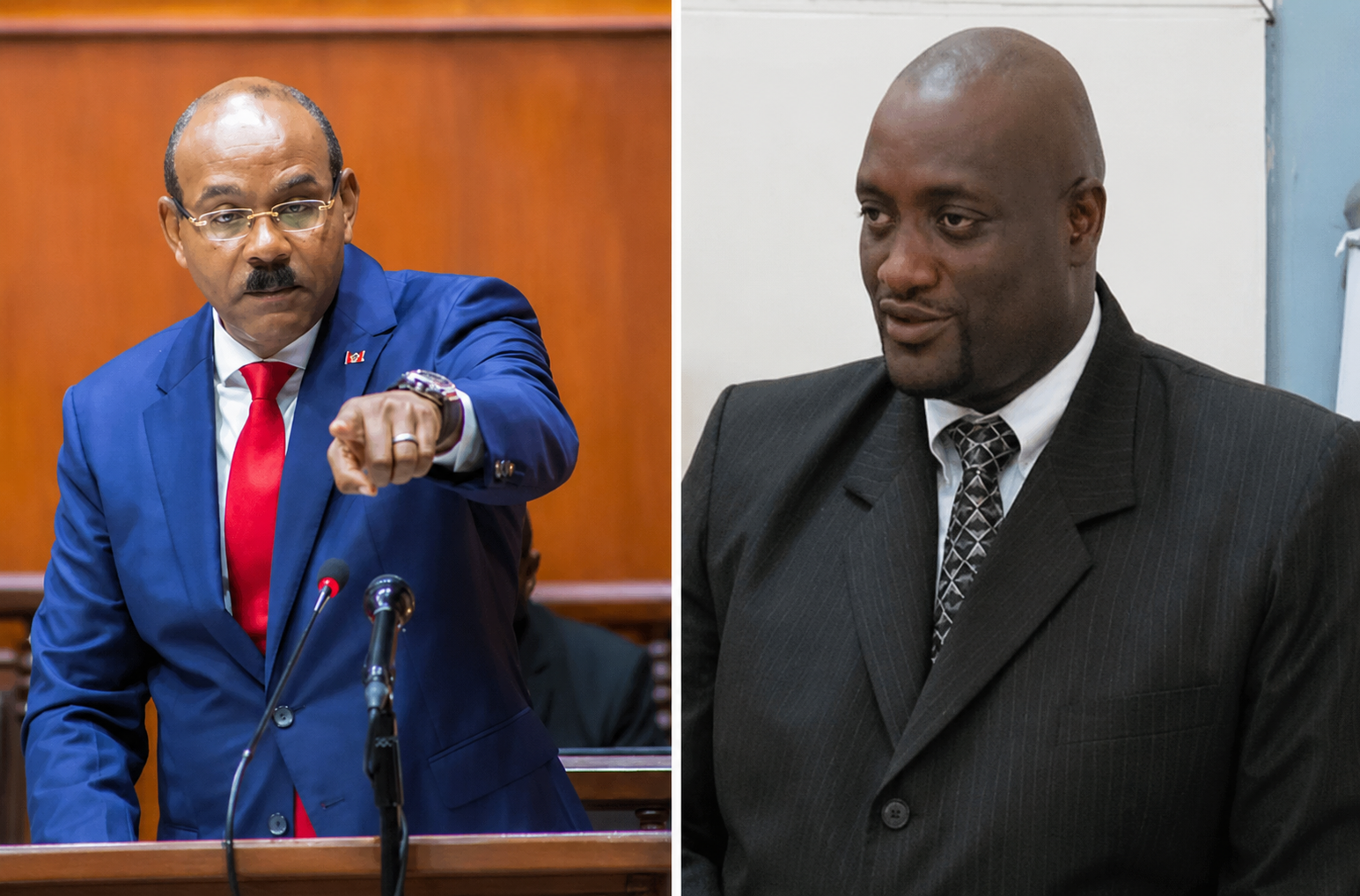
  • Skerrit urges patience as geothermal plant commissioning continues amid power outages

    Skerrit urges patience as geothermal plant commissioning continues amid power outages

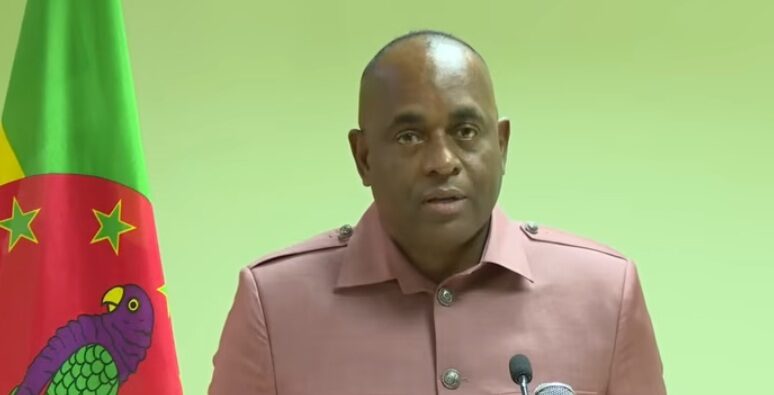
    Dominica’s Prime Minister Roosevelt Skerrit has issued a public call for patience from customers of Dominica Electricity Services (DOMLEC), following widespread recent power disruptions tied to the ongoing commissioning of the country’s landmark geothermal power plant.

    Addressing reporters during a Wednesday press conference, Skerrit highlighted that Dominica has made history as the first country in the Caribbean region to integrate geothermal energy into its national power grid. As a trailblazer in this regional energy transition, he emphasized, the nation is navigating uncharted technical and logistical territory that comes with being the first mover.

    “The geothermal facility is still in its commissioning phase, which involves extensive testing, fine-tuning of equipment, and full system integration before it can launch into full commercial operations,” Skerrit explained. “I am not downplaying the disruption and inconvenience these rolling outages have caused for households and businesses across the country. But these growing pains of recent weeks are the necessary price we pay for pioneering a new energy future for our nation.”

    Once all commissioning work is finalized, Skerrit outlined the transformative long-term benefits the project will deliver for Dominica. Consumers will see reduced electricity rates, the national power supply will gain far greater reliability, and the country will cut its heavy dependence on costly imported fossil fuels that have long left its energy market vulnerable to global price volatility.

    Since the plant began initial power generation in March, Skerrit confirmed that temporary service interruptions have stemmed from technical challenges inherent to testing and integrating brand-new energy infrastructure into the existing national grid. Crucially, he added, every issue that has emerged during the testing process has already been identified, targeted, and fully resolved as part of standard commissioning protocols.

    Beyond the main geothermal generation facility, commissioning work is also progressing on a suite of associated critical infrastructure: a new 33-KV underground transmission line, the Fond Cole substation, and an on-site battery energy storage system. All these components must work in perfect synchronization to form a fully functional, integrated national power system, Skerrit noted.

    The Dominican government remains fully confident in the geothermal project and its ability to deliver sustained, long-term benefits to the country, the prime minister reaffirmed. “While we recognize the frustration caused by recent outages, rolling out a project of this scale requires rigorous, meticulous testing to guarantee that when it enters full commercial service, it operates safely, reliably, and efficiently for decades to come,” he said. Skerrit closed by thanking the Dominican public for their ongoing understanding and patience as the project nears completion.

  • Ministry pushes for donations on World Blood Donor Day

    Ministry pushes for donations on World Blood Donor Day

    In a coordinated global observance of World Blood Donor Day, the Caribbean island nation of Saint Lucia will join communities across the planet on Sunday, June 14, to celebrate the life-saving power of voluntary blood donation, under this year’s unifying slogan “One Drop of Humanity: Give Blood, Save Lives.”

    Local health authorities have launched a month-long public outreach initiative to boost blood supply and encourage widespread participation. Lead organizing partners include the country’s Ministry of Health, Wellness and Nutrition, alongside two of the nation’s leading care providers: the Millennium Heights Medical Complex and St. Jude Hospital. The collaborative campaign is calling on all Saint Lucians who meet donor eligibility criteria to contribute to this critical public health effort throughout the month of June.

    Beyond direct blood donation drives, the campaign has rolled out a simple but impactful public engagement action: every Friday during June, health officials are urging government staff, partner organizations, and all members of the public to wear red clothing as a visible tribute to World Blood Donor Day. This small, accessible gesture serves dual purposes: it publicly demonstrates support for the cause, and keeps the issue top of mind for communities, highlighting the countless donors, patients, and lives that depend on consistent, voluntary blood donations.

    To amplify the campaign’s reach beyond in-person gatherings, the Ministry of Health is encouraging participants to capture photos of their teams or groups wearing red, then share those images across personal and public social media platforms. This social sharing strategy is designed to spread the campaign’s core message organically, reaching wider audiences and inspiring more people to get involved.

    For those ready to make a direct contribution, the Ministry has outlined clear next steps: eligible residents can donate blood at two fixed donation sites, the Owen King EU Hospital and St. Jude Hospital. Organizers also urge participants to extend the invitation to their family members, friends, and workplace colleagues, encouraging them to register as blood donors and help build a sustainable, reliable blood supply for the island nation.

  • Beyond Sustainability: OECS launches communications campaign

    Beyond Sustainability: OECS launches communications campaign

    With the official implementation phase of the Organization of Eastern Caribbean States (OECS) Programme for Educational Advancement and Relevant Learning (PEARL) scheduled to conclude on 30 June 2026, the OECS Commission has announced the launch of a new Communication for Development (C4D) initiative named *The OECS PEARL Legacy*.

    Over the course of its implementation, the PEARL initiative has delivered transformative progress across the region’s education sector: it has upgraded critical educational infrastructure, updated outdated curricula to meet modern learning standards, overhauled frameworks for Special Education Needs (SEN) and Early Childhood Education (ECE), and built robust digital learning ecosystems accessible across all participating member states. Now, the new C4D campaign marks a strategic shift from centralized regional project management to a grassroots, community-driven social movement, formally handing ownership of the initiative’s gains to residents of the eight OECS member states that have participated in PEARL. The core goal of this transition is to mobilize key education stakeholders to lead continued, organic evolution of the regional education system.

    Targeting a broad cross-section of education actors—including national policymakers, administrative and technical education leaders, school principals, classroom teachers, parents, and primary caregivers—the campaign does not only aim to secure the long-term sustainability of PEARL’s existing achievements. It also seeks to catalyze a broader regeneration of Eastern Caribbean education, enabling the system to grow and thrive from the ground up, led by the communities it serves.

    The C4D strategy centers on six high-priority interventions designed to embed and expand PEARL’s impact. First, it works to empower national education leaders to translate regional education frameworks into local policy and everyday classroom practice. Second, it prioritizes protecting frontline educators from professional burnout by actively promoting the “de-implementation” of low-impact, non-essential administrative tasks that drain educator time and energy. Third, it positions the OECS Learning Hub—home to the OECS Harmonised Primary Curriculum—as a culturally attuned, high-quality educational resource for regional classrooms, encouraging students and teachers to use learning tools designed specifically for the Eastern Caribbean context rather than relying on generic, one-size-fits-all artificial intelligence alternatives. Fourth, it advocates for long-term sustained fiscal prioritization of ECE, SEN, and curriculum and assessment reform, to ensure every child across the region has an equitable opportunity to succeed. Fifth, it reframes high-stakes national and regional diagnostic assessments as routine “educational health checks”—tools for growth that are non-punitive and essential to improving learning outcomes—to reduce widespread anxiety around these evaluations. Sixth, it works to secure the long-term future of the MyPD teacher professional development platform by highlighting its direct, measurable impact on broader social progress across the region.

    To reshape how member state institutions and local communities perceive and support the future of regional education, the campaign deploys a diverse suite of targeted communication resources. These range from visual tools such as branded posters and data-driven infographics to multimedia content including educational videos and live online interactive broadcasts. It will also roll out strategic stakeholder surveys, regular stakeholder newsletters, and official press releases to keep communities and partners updated.

    Running across June, July, and August 2026, the campaign’s messaging will be distributed through a mixed network of traditional and digital channels to maximize accessibility for all stakeholders. Distribution channels include in-person community and stakeholder meetings, email outreach, major social media platforms, regional radio and television broadcasts, and local print newspapers.

    Preparations are currently underway for the official PEARL project closeout conference, scheduled to take place in St. Lucia from 24 to 26 June 2026, alongside additional upcoming engagement and information events. The OECS Commission has encouraged all education stakeholders across the region to follow official OECS social media platforms, as well as the social and official channels of local Ministries of Education, for the latest updates on upcoming opportunities. The commission also extends an open invitation to media organizations, independent journalists, and members of the public to participate in this historic transition of regional education leadership.

  • PM Browne Rejects DPP’s ‘I Owe the Public No Explanation’ Position

    PM Browne Rejects DPP’s ‘I Owe the Public No Explanation’ Position

    A high-profile public dispute has erupted between Antigua and Barbuda’s Prime Minister Gaston Browne and Director of Public Prosecutions (DPP) Clement Joseph, centered on a fundamental question: are top prosecutorial officials obligated to explain their case decisions to the general public?

    The conflict was sparked after Joseph recently made public comments arguing that the country’s Constitution grants his office broad prosecutorial independence, and does not require him to justify individual case rulings to the public. His remarks came amid mounting public criticism following his office’s dismissal of two high-profile recent criminal cases.

    In a sharp public rebuke, Browne pushed back directly against Joseph’s stance, warning that the DPP’s position could erode public trust in the nation’s entire justice system. In a scathing public post, Browne questioned: “Really Mr DPP? You are El supremo – Beyond reproach? As a public servant, you are not accountable to the public who pays your bill and at whose ultimate discretion and pleasure you serve?”

    The Prime Minister added that he holds out hope Joseph’s controversial comments were the result of misquotation, framing the claim that the DPP owes no public explanation as a reckless statement that risks damaging public confidence in the prosecutorial office. “For any avoidance of doubt, no one is above the law and no one is beyond reproach,” Browne emphasized.

    For his part, Joseph has stood by his original position, while acknowledging that judicial oversight provides a check on his authority. He clarified that parties aggrieved by his decisions are permitted to challenge rulings in court if they are deemed unreasonable or amount to an abuse of power. The DPP also noted that while he supports transparency as a core principle, some prosecutorial matters must remain confidential, only disclosed on a strict need-to-know basis. He rejected calls to break confidentiality for political gain or to appease public criticism, adding that his office already publishes annual updates on broad prosecutorial trends at the opening of each law term, and the constitutional framework does not mandate explanations for individual case outcomes.

    The debate has drawn perspectives from other legal experts in the country, with Wendell Alexander, an attorney-at-law and former Police Commissioner, aligning with the Prime Minister’s position. Alexander argued that proactive transparency around high-interest cases strengthens, rather than weakens, public confidence in the justice system. “In the interest of transparency, I would say that the public has a right to know because the Office of the Director of Public Prosecutions is a public office,” he explained.

    Alexander added that when a prosecutorial decision sparks widespread public concern, offering a clear public explanation benefits the entire administration of justice. He also echoed Joseph’s note that the DPP’s constitutional powers are not unlimited, noting that all decisions remain open to judicial review by the High Court if found to be unreasonable or abusive.

    The public clash has now reignited a broader national debate over the delicate balance between three core principles of Antigua and Barbuda’s justice system: prosecutorial independence, the need for case confidentiality, and the public’s right to government accountability.