博客

  • People can get sick, lose their lives

    People can get sick, lose their lives

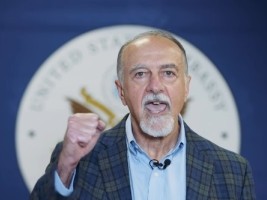
    During a heated Senate debate yesterday, Finance Minister Davendranath Tancoo has robustly defended controversial increases to legal penalties outlined in the new Finance Bill, framing the tougher measures as a non-negotiable safeguard for public welfare rather than an overreach of government power.

    Tancoo pushed back against opposition criticism, arguing that the current, overly lenient fines have devolved into little more than a trivial operational cost for repeat violators who flout industry and safety regulations. “A weak fine essentially tells offenders that they can break the law, pay a negligible sum, and go right back to business as usual,” he stated during proceedings. “This administration will not enable lawlessness.”

    Taking direct aim at the opposition People’s National Movement (PNM), Tancoo claimed the party’s longstanding comfort with unregulated practices made its opposition to the new penalty structure entirely predictable. “When they come here to argue against consequences for breaking the law, no one should be surprised,” he said. “This mindset appears to be rooted in the very veins of the PNM. They have come to this parliament only to drum up sympathy for a position that puts convenience before public safety.”

    To underscore the stakes of weak regulatory enforcement, Tancoo pointed to decades of deadly contaminated product incidents around the world, opening with a 2011 Associated Press report that linked antifreeze-tainted vinegar to 11 deaths and over 120 illnesses in China. He noted that similar fatal events involving unsafe, unregulated products ranging from counterfeit vinegar to locally produced illicit spirit “babash” have been recorded across more than 30 countries, spanning every inhabited continent from North America to Southeast Asia. The full list of affected nations includes Brazil, Australia, Cambodia, Costa Rica, the Czech Republic, El Salvador, Estonia, India, Indonesia, Iran, Ireland, Italy, Kuwait, Laos, Madagascar, Malaysia, Mexico, Morocco, Nigeria, Norway, Peru, the Philippines, Russia, Serbia, Spain, Turkey, Uganda, and the United States.

    “When products are manufactured, distilled, transported or sold without proper regulatory standards, the consequences stretch far beyond simple financial losses,” Tancoo emphasized. “People can get sick. People can lose their lives. It is the government’s fundamental duty to guard against those real-world dangers.”

    The minister argued that any legitimate product market requires clear legal standards, meaningful accountability, and proportionate consequences for rule-breakers. He challenged the opposition to justify their stance to the families of people who have been killed or harmed by unsafe, unlicensed production practices. “When the Opposition makes light of distilling without a licence, let them explain that to the families of persons who have been injured or who have died from unsafe alcohol and unsafe practices,” he said.

    Tancoo extended the same safety argument to the new penalties for violations of the Motor Launches Act, specifically calling out the opposition for dismissing overloading of passenger vessels as a minor offense. “They spoke about party boats as though passenger safety is any little thing. But overloading a vessel is not any little thing. Operating without proper safety equipment is not any little thing,” he said.

    Carrying passengers beyond a vessel’s legal capacity, he noted, carries a constant risk of catastrophic tragedy, and it is the sitting government, not the opposition, that is left to confront grieving families when disaster strikes. “When a vessel is overloaded and tragedy strikes, it is not the Opposition who must face the grieving family. It is not the Opposition who must look into the eyes of a mother, a father, a child, a spouse, and explain why basic safety rules were treated as an inconvenience,” he said.

    He further highlighted that unlicensed, non-compliant operation often voids insurance coverage, leaving victim families with no path to fair compensation after an incident. Tancoo stressed that no responsible government can wait for mass casualties to act, arguing that allowing weak fines to become a routine cost of cutting corners amounts to sacrificing public safety for private convenience. “No serious government can say that the life of a passenger is worth less than the convenience of an operator. No government that cares about people can allow this status quo to stand,” he said.

    Closing his address, Tancoo made a direct appeal to Independent senators to throw their support behind the legislation, urging them to back measures explicitly designed to protect the nation’s citizens. He also issued a public challenge to opposition members, expressing confidence that patriotic, right-minded members of the public will ultimately support the bill’s public safety goals.

  • Beckles defends MP’s ‘N-word’ comparison

    Beckles defends MP’s ‘N-word’ comparison

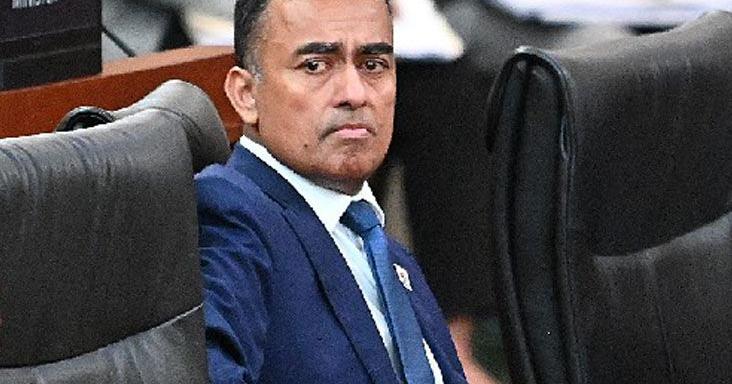
    A brewing political firestorm in Trinidad and Tobago has taken center stage this week, after ruling People’s National Movement (PNM) Member of Parliament for Laventille West Kareem Marcelle made explosive remarks accusing the United National Congress (UNC)-led government of weaponizing the PNM party label as a racial slur targeting Afro-Trinidadians. Speaking at a public PNM gathering held at the Laventille Community Community Centre on Thursday night, Marcelle doubled down on scathing criticism of the ruling administration, claiming that government officials use the phrase “PNM people” as a modern-day racial slur, equating it to the anti-Black N-word in public discourse, particularly on social media.

    Marcelle went on to allege that the current UNC government holds overt hostility toward Black Trinidadians and residents of working-class districts historically aligned with the PNM, including Beetham, Sea Lots, Maloney, Arima and Carenage. He issued a direct challenge to Prime Minister Kamla Persad-Bissessar, calling for an early national election and claiming PNM supporters are fully prepared to oust the UNC and elevate opposition leader Pennelope Beckles to the office of prime minister. The incendiary remarks drew immediate cheers from the PNM supporters in attendance, but sparked widespread debate across the nation’s political landscape.

    In the aftermath of the speech, Marcelle has stood firmly by his comments, pushing back against claims that his words were intended to stoke racial division. Speaking to reporters outside Parliament, locally known as the Red House, in Port of Spain on the following day, Marcelle clarified that his criticism was aimed exclusively at the current UNC government leadership, not at private UNC supporters or any specific ethnic group. He argued that his remarks were a direct response to a pattern of disparaging and discriminatory behavior by UNC officials toward PNM-aligned constituencies.

    To back his claims, Marcelle cited multiple past incidents: a recent incident where a UNC minister referred to PNM attendees at a San Juan candlelight vigil as “vagrants” and “rats in white jerseys”; a deeply disrespectful comment made by a sitting UNC minister toward former PNM legislator Camille Robinson-Regis as she mourned the death of a former colleague and her children in a house fire 18 months prior; and the trivialization of the fatal shooting of 9-year-old J’Layna Armstrong in Belmont, when government officials framed the tragedy as a problem exclusive to PNM-held districts. Marcelle argued that online commentators have deliberately misrepresented his words to paint him as racially divisive, and that any reasonable observer would understand his remarks targeted government policy and rhetoric, not a racial group.

    Now, opposition leader Pennelope Beckles has stepped forward to publicly defend Marcelle, arguing that his comments have been widely misinterpreted by critics and that he was only giving voice to long-simmering frustration among his Laventille West constituents. Beckles emphasized that Marcelle’s remarks reflected the on-the-ground sentiment of residents in the constituency, many of whom have lost jobs through government-led work programs including CEPEP, URP and the national reforestation initiative, and who overwhelmingly feel the current government has abandoned their communities.

    Beckles also reaffirmed the PNM’s long-standing core commitment to multiracial solidarity, a principle that has anchored the party since its founding 70 years ago. She added that the opposition’s broader criticism of the UNC extends far beyond PNM-held constituencies, noting that the ruling party has failed to deliver on the vast majority of campaign promises it made ahead of taking office, broken promises that have negatively impacted voters across every district in Trinidad and Tobago, regardless of which party holds the seat.

  • Venezuela hekelt Trinidad en Tobago om olielek: milieu- en economische schade dreigt

    Venezuela hekelt Trinidad en Tobago om olielek: milieu- en economische schade dreigt

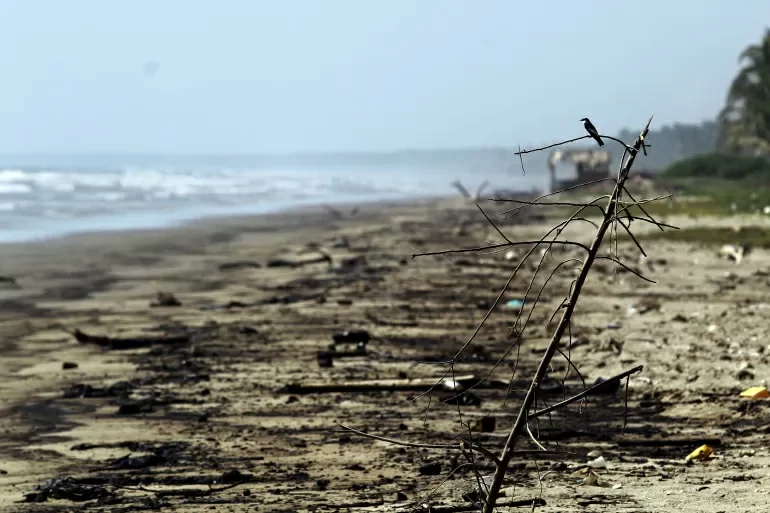
    A new cross-border oil leak originating from waters near Trinidad and Tobago has reached Venezuela’s coastline, triggering a formal environmental and diplomatic alert from Caracas that risks pushing already frayed bilateral relations to a breaking point.

    Venezuela’s Ministry of Foreign Affairs issued a public statement Friday warning that the unregulated spill poses severe risks to the region’s sensitive coastal marine ecosystems, local artisanal and commercial fishing industries, and small coastal communities that depend on marine resources for their livelihoods. The statement formally demands that the government of Trinidad and Tobago accept full accountability for the incident, take immediate emergency action to stop the spread of the leak and prevent further contamination events, and provide complete public transparency on the leak’s root cause, the total volume of oil released, and the full scope of potential environmental damage.

    In response to Caracas’ allegations, authorities in Port of Spain have launched a full investigation into the suspected spill. Energy Minister Roodal Moonilal confirmed to Reuters that the country’s air guard and coast guard have been deployed to conduct on-site marine surveys, supplemented by drone monitoring to map the extent of any pollution and confirm the facts of the incident. Trinidad and Tobago’s Ministry of Foreign Affairs has also reached out to the Venezuelan embassy in Port of Spain to request additional details and coordinate preliminary information sharing.

    While Venezuelan officials have not yet released a detailed list of specific affected coastal areas, independent satellite imagery has confirmed the presence of an active oil slick moving toward the Venezuelan coastline. The close geographic proximity of the two countries – their maritime territories lie just 10 kilometers apart at the closest point – means any pollution event originating near Trinidad and Tobago spreads rapidly to Venezuelan waters, explaining the immediate impact reported by Caracas.

    Bilateral relations between the two neighboring Caribbean nations have remained tense since Prime Minister Kamla Persad-Bissessar took office in 2022. Persad-Bissessar’s administration has implemented strict restrictive migration policies targeting Venezuelan refugees fleeing the country’s ongoing political and economic crisis, and has significantly deepened diplomatic and economic ties with the United States. Tensions escalated further earlier this year following the controversial 2024 arrest of Venezuelan President Nicolás Maduro in an international incident that split regional diplomacy.

    This latest spill echoes a nearly identical incident just five months prior, in February 2024, when an oil tanker sank in Trinidad and Tobago’s territorial waters. The resulting oil slick drifted north into Venezuelan territorial waters, triggering a similar diplomatic row between the two governments that left long-running environmental damage along Venezuela’s southern coast.

    International observers tracking Caribbean regional relations warn that this new set of mutual accusations over the oil leak could push the already fragile bilateral relationship into a deeper crisis, with both environmental damage and economic harm to local communities hanging in the balance. Regional diplomatic bodies have called for urgent, transparent collaborative action between the two governments to contain the spill, mitigate environmental harm, and prevent further diplomatic escalation that would undermine efforts to address the crisis.

  • BiMPay goes live: Barbados launches instant digital payments system

    BiMPay goes live: Barbados launches instant digital payments system

    Barbados has marked a major milestone in its digital economic evolution with the official launch of BiMPay, the country’s first national instant payment infrastructure, which now enables round-the-clock, real-time money transfers for individuals, private businesses and public sector agencies across the island nation.

    The launch ceremony, held as an informal “Go-Live Pyjama Party” on Friday evening, saw Prime Minister Mia Mottley complete the system’s first public live transaction: purchasing a burger from a local small business owner. In her remarks shortly after the transaction, Mottley emphasized that in an always-connected global economy, a country that restricts financial transactions to standard business hours cedes critical economic opportunity.

    Calling the launch a source of national pride, the Prime Minister noted that BiMPay is just the latest in a string of new digital public and private services rolled out across Barbados in recent weeks, with more initiatives planned to fully integrate the island into a comprehensive digital national framework in the coming months.

    Mottley pointed to other ongoing digital transformation projects already delivering results for Barbados, including telemedicine partnerships that have cut through a critical backlog of diagnostic reads at the Queen Elizabeth Hospital. Through a collaboration with medical specialists in India, the country has leveraged cross-border digital connectivity to significantly reduce wait times for X-ray and CT scan reviews, addressing gaps created by a persistent domestic skills shortage.

    “Addressing our national skills deficit is my top ongoing priority,” Mottley explained. “We do not have enough skilled workers locally to meet all our needs, so we are turning to technology to augment our capacity and keep our economy moving. Beyond closing skills gaps, digital infrastructure like BiMPay makes it possible to do business at any time, breaking down the old barriers of clock and calendar.”

    The Prime Minister also outlined two key public benefits of the new instant payment system: it will reduce opportunities for financial-related crime by cutting reliance on unrecorded cash transactions, and it will build a formal digital transaction history for micro-enterprises and informal workers who have historically struggled to access formal credit from financial institutions. From neighborhood shopkeepers and auto mechanics to itinerant coconut vendors, Mottley emphasized that BiMPay was designed to serve marginalized groups that have long been excluded from formal financial infrastructure.

    Dr. Kevin Greenidge, Governor of the Central Bank of Barbados, added that BiMPay has been two years in development, with plans for ongoing expansion to eventually fully integrate all government agencies into the system. Currently, six commercial banks, three credit unions, the Barbados Stock Exchange and the Accountant General’s Office have already connected to the new infrastructure.

    Greenidge noted that a modern, competitive economy cannot thrive on outdated payment infrastructure. “Whether it is a family sending funds to a child studying abroad, a small vendor waiting for payment to restock inventory, or a business needing immediate access to working capital, people and enterprises can no longer afford to wait days for transactions to clear,” he said. “Beyond improving daily financial activity, BiMPay creates the foundational infrastructure we need to grow a dynamic, competitive fintech sector that will drive future economic growth for Barbados.”

  • 2026 World Cup : Ambassador Henry Wooster wishes Haiti the greatest success !

    2026 World Cup : Ambassador Henry Wooster wishes Haiti the greatest success !

    It has been 52 years since Haiti’s men’s national football team last qualified for the FIFA World Cup, and the small Caribbean nation’s long-awaited return to the global tournament has already captured the imagination of millions of Haitian fans at home and across the diaspora. As the team – nicknamed the Grenadiers – prepared to kick off its first group stage match against Scotland on June 13, 2026, followed by upcoming fixtures against global powerhouses Brazil and Morocco, the top American diplomat in Port-au-Prince extended a message of warm congratulations and well wishes.

    Ambassador Henry Wooster, the United States Chargé d’Affaires in Haiti, released a public statement honoring the national team’s historic milestone, highlighting the far-reaching significance of the achievement beyond the pitch. “This is a moment of great pride for Haiti. After more than five decades, Haiti is back on one of the biggest stages in world football, inspiring millions of people both at home and abroad,” Wooster said in his address.

    The ambassador emphasized that the current squad, a new generation of Haitian football talent, earned their spot in the 2026 tournament through relentless effort, collective dedication, and unwavering belief in their shared goal. For a nation that has navigated ongoing political instability, economic hardship, and widespread social challenges in recent years, Wooster noted that the team’s success stands as a powerful symbol of Haitian perseverance, resilience, and collective national identity.

    “This achievement goes far beyond football. It represents a celebration of perseverance, resilience, and national pride. This team embodies the aspirations and dreams of an entire nation that continues to move forward with courage, despite the challenges it faces,” he added.

    On behalf of the U.S. Embassy in Port-au-Prince, Wooster extended congratulations to every person who contributed to the team’s historic qualification: the players who trained and competed for years, the coaching staff that built a cohesive and competitive squad, the families that supported the athletes through every setback, and the passionate fans that never lost faith in their national team.

    Addressing the Grenadiers directly, the envoy urged the team to compete with confidence, carry their national flag with pride, and savor every moment of their once-in-a-lifetime World Cup journey. “We wish Haiti the greatest success. May you inspire young people across the country to dream big, work with determination, and never give up,” Wooster closed his statement with the rallying cry “Grenadye alaso!” – Go Grenadiers!

  • President geeft ambassadeurs duidelijke opdracht: Surinaams belang voorop

    President geeft ambassadeurs duidelijke opdracht: Surinaams belang voorop

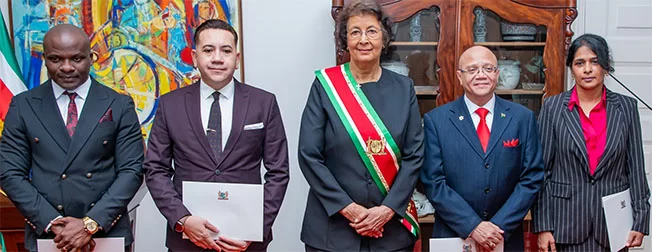
    On Friday, a formal swearing-in ceremony for four newly appointed Surinamese ambassadors was held at the country’s presidential palace, where President Jennifer Simons administered the oath of office and issued clear guidance for the diplomats’ upcoming missions. The core mandate given to all four envoys, Simons emphasized, is to advance and protect Suriname’s national interests in all diplomatic activities, while working to deepen the nation’s international partnerships, unlock new economic opportunities, and strengthen Suriname’s global standing.

    The four appointees received distinct postings aligned with Suriname’s diplomatic strategy. Gilbêrt Antoine van Lierop will serve as Suriname’s ambassador to the Kingdom of Morocco. Aashna Kanhai has been appointed ambassador to the Swiss Confederation, while also taking on the role of permanent representative to the United Nations Office at Geneva. Stephanus Meye and Stevanus Noordzee will serve as non-resident ambassadors to Israel and Argentina, respectively.

    Addressing the new ambassadors, President Simons stressed that in an increasingly shifting global landscape, Suriname must continue investing in robust bilateral relations and proactive representation at multilateral international platforms. To advance the nation’s core priorities and long-term ambitions, she explained, the country requires skilled, committed diplomatic representatives who can effectively advocate for Suriname’s interests on the global stage.

    “Your first and foremost loyalty must be to Suriname; this is your starting point: protecting Suriname’s national interest,” President Simons told the envoys, according to official statements from the Suriname Communication Service. She added that Suriname’s diplomatic work should extend beyond traditional political and administrative cooperation, placing equal focus on economic diplomacy, attracting foreign investment, expanding bilateral trade, and elevating Suriname’s international profile.

    Simons also outlined targeted priorities for each ambassador’s specific region of responsibility. For the posting to Morocco, key areas for expanded cooperation include education, energy, agriculture, tourism, and trade. At the UN Geneva office, Kanhai will center her work on advancing multilateral cooperation, upholding international law, and advocating for a fair global trading system. For the bilateral relationship with Israel, collaboration will be deepened in agriculture, water management, technological innovation, and healthcare. For Argentina, Suriname will prioritize exploring new trade opportunities, building institutional capacity, and improving cross-border connectivity between the two nations.

    Speaking on behalf of all four newly sworn-in ambassadors, van Lierop framed his appointment not as a ceremonial honor, but as a profound responsibility to serve Suriname and represent the nation’s interests globally. He noted that Suriname holds unique strengths and untapped opportunities that deserve greater global recognition, highlighting that the nation’s power and potential extend far beyond its natural resources, rooted instead in its people and its future trajectory. “The strength and potential of Suriname lie not only in what we have, but above all in who we are and who we will become,” van Lierop said.

  • Derde helft WK 2026: Amerika walst met 4-1 over Paraguay

    Derde helft WK 2026: Amerika walst met 4-1 over Paraguay

    On June 13, co-hosting nation the United States delivered a commanding 4-1 win over Paraguay in a Copa America group stage fixture held at Los Angeles’ iconic stadium, capping off a one-sided display of attacking dominance from the opening whistle. From the first kick of the match, the US seized total control of possession and territorial advantage, pushing Paraguay’s entire squad deep into their own half of the pitch. A relentless wave of attacking pressure left Paraguay’s backline scrambling to contain wave after wave of American forward runs, and it did not take long for the deadlock to be broken.

    Just eight minutes into the contest, an own goal from Paraguay defender Damián Bobadilla opened the scoring for the hosts. A whipped cross from Weston McKennie bounced off Bobadilla and into the back of the net, putting the US ahead 1-0. The American side never looked back from that early breakthrough, doubling their advantage in the 29th minute. Folarin Balogun, starting as the US’ lead striker, converted a pinpoint cross from captain Christian Pulisic to stretch the lead to 2-0.

    On the stroke of halftime, Balogun struck once more to put the result virtually beyond doubt. A perfectly weighted long through ball from Malik Tillman caught Paraguay’s offside trap flat-footed, allowing Balogun to outpace the retreating defenders and slip a calm finish past Paraguay goalkeeper Orlando Gil, sending the US into the halftime break with a comfortable 3-0 lead.

    After the interval, Paraguay launched a full-scale fightback, throwing numbers forward in search of a way back into the match. Their efforts finally paid off in the 73rd minute, when forward Maurício found the back of the net to pull one goal back for the South American side, making the score 3-1. Just 60 seconds later, Tillman had a golden chance to restore the US’ three-goal advantage but wasted the opportunity with a poor, underpowered effort that failed to test the Paraguay defense.

    Paraguay continued to push forward in the final 15 minutes in search of a second consolation goal, but the US retained calm control of the tempo of the match, creating several more good scoring opportunities of their own. After late substitutions that saw both Tillman and Balogun withdrawn from the action, the US attack was unable to convert further chances until stoppage time. In the final minute of regulation, substitute Giovanni Reyna put the icing on the cake with a well-taken late strike to seal the final 4-1 scoreline, securing a statement opening win for the co-hosts.

  • Schenking US$ 3 miljoen Caribisch Ontwikkelingsbank bestemd voor ontwikkelingsprojecten

    Schenking US$ 3 miljoen Caribisch Ontwikkelingsbank bestemd voor ontwikkelingsprojecten

    The Caribbean Development Bank (CDB) has greenlit a $3 million grant for Suriname as part of the 11th cycle of its long-running anti-poverty initiative, the Basic Needs Trust Fund (BNTF 11). The full non-lending funding package totals more than $3.42 million, with the Surinamese government contributing a matching $422,245 to support five targeted development projects focused on education, water access, community growth, and economic empowerment for Indigenous populations across the country. Details of the approved projects are outlined in Suriname’s Ministry of Finance and Planning 2026 budget documentation.

    The first of the five initiatives aims to strengthen ICT knowledge within Suriname’s vocational education sector. As regional and national labor markets face growing demand for workers with technical and digital skills, the project is designed to better align young job seekers’ competencies with employer needs. The second project will deliver comprehensive renovations to five public primary schools; while specific site locations have not yet been released, the upgrade is expected to dramatically improve learning conditions for thousands of students.

    One of the most unique projects approved is an initiative to expand stingless bee cultivation among Indigenous communities in southern Suriname. Regarded globally as a sustainable livelihood activity, the apiculture project not only creates new income streams for marginalized groups but also supports regional biodiversity conservation and natural ecosystem protection. Fourth, a new footpath connecting multiple schools in the Brokopondo district will be constructed, addressing a longstanding barrier to education access for remote inland villages that currently struggle with limited transportation connectivity. The final project will upgrade water infrastructure for the Wayana Indigenous community in Lensidede, with the core goal of expanding reliable access to safe drinking water for residents.

    Established in 1979, the BNTF is the CDB’s flagship grant program focused on poverty reduction across the Caribbean region. To date, the initiative has reached more than 3 million people across participating member states and supported thousands of local development projects. The 11th funding cycle, BNTF 11, runs from 2025 through the end of 2028, with a total regional allocation of approximately $53.6 million. Of that total, $46 million comes from the CDB’s Special Development Fund, with remaining contributions provided by participating national governments including Suriname.

    The program’s core priorities across all funding cycles align closely with the projects approved for Suriname: expanding access to education and vocational training, improving livelihoods and employment outcomes, upgrading water and sanitation access, building critical basic infrastructure, and supporting vulnerable populations including youth, women, people with disabilities, and Indigenous communities. Suriname has been a long-standing participant in the BNTF program, with the Ministry of Finance and Planning serving as the national implementing partner for all initiatives. Importantly, the funding is not general budget support, nor is it a loan; all resources are earmarked exclusively for on-the-ground projects that directly serve low-income and vulnerable communities across the country, in line with the BNTF’s core mission of reducing poverty and protecting marginalized groups.

  • AFC backs Ambassador Rodrigues-Birkett for UN Secretary General

    AFC backs Ambassador Rodrigues-Birkett for UN Secretary General

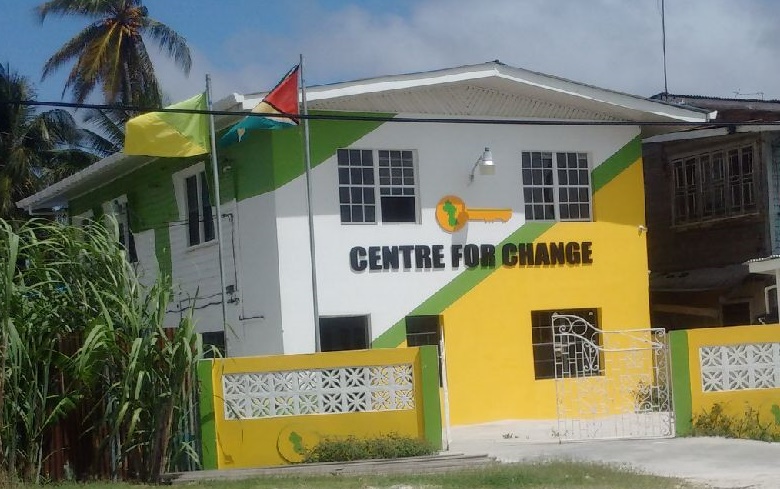
    Just three hours after Guyanese President Irfaan Ali formally put forward Ambassador Carolyn Rodrigues-Birkett as the country’s candidate for the next United Nations Secretary-General, the nation’s opposition Alliance For Change (AFC) has thrown its full weight behind the government’s decision.

    In an official statement released hours after the nomination announcement on 12 June 2026, the AFC praised Rodrigues-Birkett as an outstanding Guyanese diplomat whose decades of public service, proven professionalism, and longstanding dedication to multilateral cooperation make her uniquely suited for the UN’s top leadership role. “The AFC is proud to endorse her candidacy and wishes her every success in this historic endeavour,” the statement read.

    The opposition party has also called on the Guyanese government to move quickly to rally international backing for the nomination, urging immediate outreach to blocs and partners including the Caribbean Community (CARICOM), the Commonwealth, the Organization of American States, the Non-Aligned Movement, and other global stakeholders to build broad cross-regional support.

    At 52, Rodrigues-Birkett brings a wealth of high-level diplomatic and international experience to the candidacy. She served as Guyana’s Minister of Foreign Affairs and International Cooperation from 2008 to 2015, before taking on a senior leadership role as a Director at the UN Food and Agriculture Organization. In 2022, she was appointed Guyana’s Permanent Representative to the United Nations, and she currently leads the country’s 2024-2025 term as a member of the UN Security Council. She also previously served as President of the 65th Session of the UN General Assembly, a role that put her consensus-building skills across diverse nations on full display.

    The AFC emphasized that Rodrigues-Birkett holds all the core attributes required to steer the UN through a period of unprecedented global strain. “Ambassador Rodrigues-Birkett possesses the experience, diplomatic acumen, integrity, and global perspective required to lead the world’s foremost multilateral institution during a period of unprecedented international challenges,” the statement noted, adding that her decades of work across public service, diplomacy, and global affairs have already earned her widespread respect across the Caribbean, Latin America, and the broader international community.

    The party also highlighted Rodrigues-Birkett’s longstanding commitment to foundational global principles: international law, peaceful resolution of cross-border disputes, sustainable development, and the greater inclusion of small states in global decision-making. At a moment when the world faces overlapping crises – from ongoing armed conflicts and accelerating climate change to rising geopolitical division, growing humanitarian need, and mounting challenges to the rules-based international order – the AFC argues the UN needs principled, inclusive, forward-looking leadership, a standard Rodrigues-Birkett meets fully.

    Beyond her personal qualifications, the AFC noted that her nomination marks a key milestone for both Guyana and small developing nations globally. Her candidacy not only reflects Guyana’s expanding role in global diplomacy, it also creates a critical opportunity to center the perspectives and lived experiences of small developing states at the highest levels of global governance. The party expressed confidence that under her leadership, the United Nations would emerge better equipped to advance shared goals of peace, security, sustainable development, and cross-national cooperation.

    Rodrigues-Birkett becomes the fifth official candidate in the race to succeed outgoing Secretary-General António Guterres, whose second term concludes on 31 December 2026. She joins a growing field of contenders that includes four previously announced nominees: Rafael Mariano Grossi of Argentina, nominated in November 2025; Rebeca Grynspan Mayufis of Costa Rica, nominated in March 2026; Macky Sall of Senegal, nominated by Burundi that same month; and Michelle Bachelet Jeria of Chile, whose nomination was backed by Brazil, Chile, and Mexico before Chile withdrew its sponsorship in late March.

  • Politic : Validation of the recovery and development plan (2025-2030) for the Great North

    Politic : Validation of the recovery and development plan (2025-2030) for the Great North

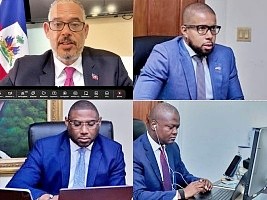
    On June 13, 2026, the Haitian government formally approved the Medium-Term Recovery and Development Plan for the country’s Great North region, a strategic roadmap spanning 2025 to 2030, during a national videoconference hosted under the patronage of Prime Minister Alix Didier Fils-Aimé. The cross-sector gathering drew more than 120 stakeholders, including representatives from national public agencies, local governing bodies, the private business community, domestic civil society organizations, and international technical and financial partners (TFPs) backing the initiative.

    In his opening address to attendees, Marc-Kenley Mogene, Chief of Staff for Haiti’s Ministry of Economy and Finance, outlined the plan’s core mission: to drive accelerated economic transformation across the Great North by rolling out large-scale structuring investments, generating thousands of new formal jobs, and boosting the region’s overall competitiveness to attract additional outside investment. Mogene stressed that successful execution of the plan depends on three non-negotiable foundational conditions: mobilizing sufficient domestic and international financing to fund planned projects, strengthening collaborative alignment between all public and private sector stakeholders, and leveraging the central coordinating role of the Northern Corridor Development Council, which will oversee implementation tracking, cross-initiative alignment, and accountability for all activities outlined in the plan.

    Prime Minister Fils-Aimé framed the plan’s validation as a landmark milestone for Haiti’s broader national efforts to rebuild the economy and address long-standing territorial development imbalances across the country. He reiterated that the regional planning initiative grows out of a new national development vision centered on leveraging the unique realities, inherent strengths, and untapped potential of each of Haiti’s geographic regions. The prime minister added that the region-first framework, first piloted in the Great North, will be gradually rolled out to other parts of the country, with the Far South slated as the next region to receive a customized development plan, all in service of building more inclusive, sustainable national growth.

    Senior public sector officials presented the plan’s four mutually reinforcing strategic pillars that guide all priority actions. First, the plan prioritizes broad economic diversification to reduce the Great North’s dependence on a small set of vulnerable industries. Second, it targets transformative infrastructure upgrades and private sector revitalization to build a resilient productive base that supports long-term expansion. Third, it commits to large-scale investments in human capital and expanded access to essential public services to widen economic opportunity and advance social inclusion for marginalized communities. Fourth, it includes targeted reforms to strengthen regional governance, rebuild public trust in state institutions, and ensure long-term accountability for results.

    The plan was developed over months of collaborative work under the leadership of Haiti’s Ministry of Economy and Finance, in close coordination with national sectoral ministries, and with technical and financial support from key international partners including the Inter-American Development Bank (IDB), the World Bank, the European Union, and the United Nations system operating in Haiti. It now serves as the official strategic framework guiding all public and private investments, policy reforms, and priority development actions focused on the Great North for the next six years.

    Following the formal validation, representatives of international technical and financial partners, local government leaders, and private sector executives all expressed broad support for the initiative, and reaffirmed their ongoing commitment to working alongside the Haitian government to turn the plan’s development vision into tangible results for residents of the Great North. With the approval process complete, the milestone marks the end of an extensive nationwide consultation process that incorporated input from all affected stakeholder groups, and clears the way for the formal implementation phase, where planned investments, governance reforms, and accountability mechanisms will be put in place to drive lasting, sustainable development across the Great North region.