分类: world

  • Diaz-Canel sends condolences to China for death toll on a fire

    Diaz-Canel sends condolences to China for death toll on a fire

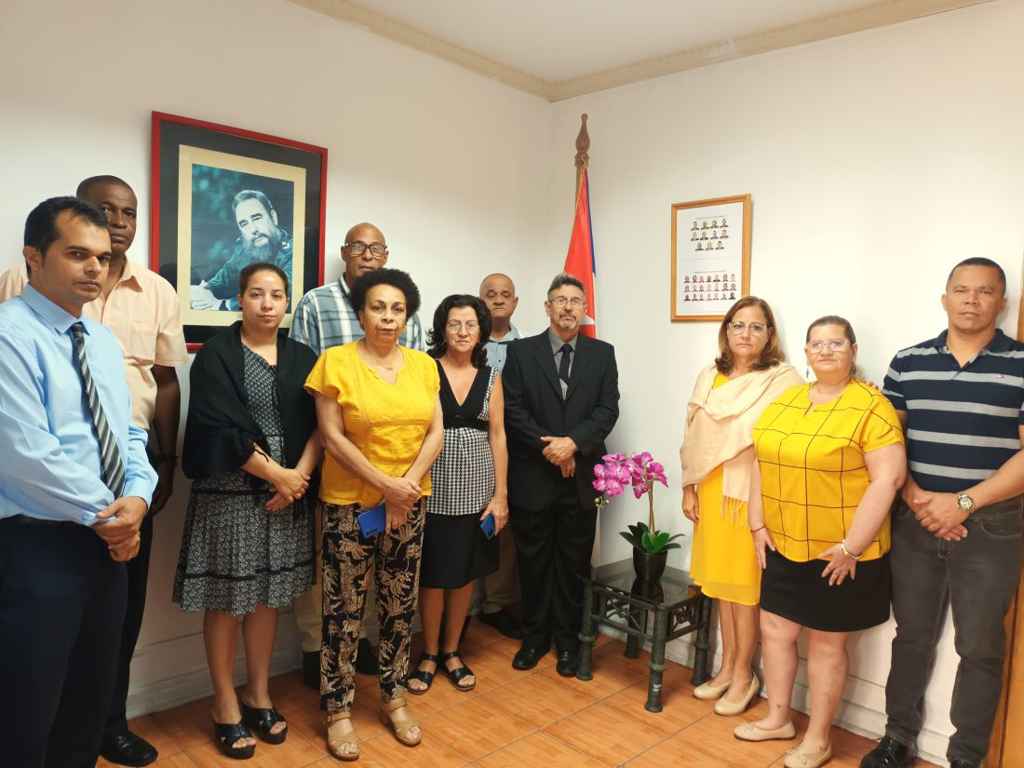
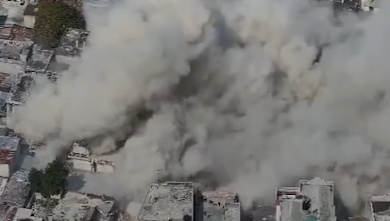
    Cuban President Miguel Díaz-Canel has publicly expressed his nation’s solidarity with China following a devastating residential fire in Hong Kong that has resulted in massive casualties. Through his official X (formerly Twitter) account, the Caribbean leader conveyed profound sorrow regarding the tragic incident.

    Díaz-Canel’s message specifically extended heartfelt condolences to the families and friends of those who perished in the blaze. This diplomatic gesture follows similar sentiments expressed by Cuban Foreign Minister Bruno Rodríguez, who earlier communicated messages of support and encouragement to both Chinese authorities and citizens.

    The fire erupted at a high-rise residential building in Hong Kong’s Tai Po district, culminating in one of the territory’s most severe fire disasters in recent history. According to the latest statistics released by the Hong Kong Fire Services Department on Thursday, the catastrophe has claimed 65 lives with approximately 70 individuals sustaining injuries. Rescue operations continue as hundreds remain unaccounted for, suggesting the death toll may further escalate.

    Emergency response teams have been working tirelessly at the disaster site since the fire broke out, facing challenging conditions to extinguish flames and locate survivors. The incident has prompted preliminary investigations into building safety standards and emergency response protocols within Hong Kong’s densely populated urban areas.

  • COP30 again sounds climate alarm

    COP30 again sounds climate alarm

    BELEM, BRAZIL – The recently concluded COP30 United Nations Climate Summit has reignited global concerns about the accelerating pace of environmental degradation, with small island developing states (SIDS) including Trinidad and Tobago expressing particular alarm about climate impacts. Delegates from vulnerable nations highlighted the interconnected crises of ocean system disruption, biodiversity collapse, increasing natural disasters, and food insecurity that collectively threaten human welfare worldwide.

    Despite decades of international environmental conferences dating back to the 1992 Rio Earth Summit, global responses remain critically inadequate. Observers consistently identify insufficient funding and lack of political commitment as primary obstacles to implementing meaningful climate action.

    Trinidad and Tobago’s delegation, led by the Minister of Planning, Economic Affairs and Development, emphasized the necessity for coordinated action across all levels, with particular focus on climate financing mechanisms. The minister outlined national mitigation efforts including electric vehicle promotion, residential solar water heater installation, transition to green hydrogen energy, and implementation of a National Adaptation Plan.

    A compelling case was made for accelerated forest development as a cost-effective climate strategy. Forests serve as the planet’s primary terrestrial carbon sinks, working in tandem with oceanic systems to maintain atmospheric balance through carbon sequestration. Trinidad and Tobago maintains significant forest coverage spanning approximately 25% of its land area, providing critical ecosystem services including watershed protection, wildlife conservation, ecotourism opportunities, rural employment, and public health benefits.

    However, these vital ecosystems face persistent threats from unauthorized development, illegal squatting, and unregulated quarrying activities that have left thousands of hectares degraded and abandoned without restoration efforts.

    Global reforestation initiatives offer promising models for emulation, including Africa’s Great Green Wall project aiming to restore 100 million hectares across 11 nations, Brazil’s Amazon rainforest restoration efforts, and similar programs in Australia and India. Such investments in preventive conservation rather than costly recovery represent economically prudent pathways, with potential carbon credit revenues providing additional financial incentives for developed nations to support these initiatives.

    Collaboration between governmental forestry agencies, civil society organizations, and private sector stakeholders will prove essential to preserving Trinidad and Tobago’s environmental legacy for future generations.

  • Guyana sends more emergency relief supplies to Jamaica

    Guyana sends more emergency relief supplies to Jamaica

    GEORGETOWN, Guyana — Demonstrating regional solidarity, the Guyanese government has mobilized its second major consignment of critical emergency supplies destined for hurricane-ravaged Jamaica. The shipment, which set sail from the AFS Shipping Wharf at Friendship aboard the vessel MV Falk on Thursday, represents a coordinated effort between national agencies and private sector partners.

    This humanitarian initiative follows the recent diplomatic visit of Guyana’s President Dr. Mohamed Irfaan Ali to Jamaica, where he joined other CARICOM leaders in assessing the aftermath of Hurricane Melissa. The relief cargo includes essential reconstruction materials such as lumber and zinc sheeting sufficient to repair approximately 200 damaged roofs. Additionally, the shipment contains vital living supplies including mattresses, water storage tanks, and substantial quantities of rice.

    Notably, the mattresses and water tanks were produced locally by Guyanese manufacturers A&F Foam Factory and Lion Tank, highlighting domestic industrial capability while supporting international relief efforts. Colonel Nazrul Hussain, Director General of Guyana’s Civil Defence Commission (CDC), emphasized the deeper significance of the mission: “This endeavor transcends material assistance—it embodies regional solidarity and enables Jamaican families to reconstruct their livelihoods with dignity.”

    In a further display of support, a specialized team of engineers from the Guyana Defence Force will be deployed to Jamaica to provide hands-on assistance with roof reconstruction upon the supplies’ arrival. The MV Falk, originally chartered by Barakat Timbers & Trading Company Ltd for commercial transport, was leveraged by the government to accelerate delivery through available cargo space.

    With an estimated transit period of six days, this shipment forms part of an ongoing commitment, as authorities confirm a third shipment of food and construction materials is scheduled for departure within the next fortnight.

  • Declaration of The Peoples’ Summit towards COP30

    Declaration of The Peoples’ Summit towards COP30

    BELÉM DO PARÁ, BRAZIL – From November 12-16, 2025, the historic We, the Peoples’ Summit convened in the heart of the Brazilian Amazon, culminating in a powerful declaration that represents months of preparation and the collective voice of over 70,000 participants from diverse global movements.

    The unprecedented gathering brought together indigenous communities, traditional peoples, peasants, quilombolas, fishermen, extractivists, shellfish gatherers, urban workers, trade unionists, homeless populations, babassu coconut breakers, terreiro peoples, women, LGBTQIAPN+ communities, youth, Afro-descendants, elders, and representatives from forest, rural, peripheral, marine, river, lake, and mangrove regions worldwide. Their unified mission: to build a just, democratic world centered on the principle of ‘buen vivir’ or ‘good living’ for all humanity.

    The Summit’s declaration identifies capitalism as the fundamental driver of the escalating climate emergency, asserting that the current mode of production directly causes environmental destruction through its relentless pursuit of profit. The document condemns transnational corporations in collusion with Global North governments as primary beneficiaries of this system, specifically naming mining, energy, arms, agribusiness, and Big Tech industries as major contributors to the planetary crisis.

    A significant portion of the declaration addresses geopolitical conflicts, expressing unequivocal solidarity with Palestine against what participants term ‘genocide perpetrated by the Zionist state of Israel.’ The document also condemns US imperial expansion in the Caribbean through military operations like ‘Southern Spear,’ and stands with resistance movements in Venezuela, Cuba, Haiti, Ecuador, Panama, El Salvador, Colombia, Democratic Republic of Congo, Mozambique, Nigeria, Sudan, and emancipatory projects in the Sahel and Nepal.

    The Summit rejected market-based climate solutions, warning that financialized programs like the Task Force on Fossil Fuels (TFFF) perpetuate harmful practices without addressing root causes. Instead, delegates demanded transformative approaches including land demarcation for indigenous territories, popular agrarian reform, agroecology, and climate justice centered on ancestral knowledge and popular participation.

    Key demands include: complete demilitarization and redirection of military spending to climate recovery; fair compensation for losses and damages from destructive projects; feminist justice recognizing care work as essential labor; a just energy transition that respects national sovereignty; and climate financing mechanisms independent of IMF and World Bank influence.

    The declaration concludes with a call for strengthened international organizing against common enemies of humanity, invoking the spirit of popular internationalism with the rallying cry: ‘Peoples of the world: Unite!’

  • Grenada to host Connected Caribbean Summit 2025

    Grenada to host Connected Caribbean Summit 2025

    Grenada will serve as the host nation for the pivotal Connected Caribbean Summit 2025 (CCS2025), scheduled from December 1-5 at the Radisson Grenada Beach Resort in Grand Anse. This high-level gathering will bring together over 200 senior leaders from Caribbean nations and the international community under the unifying theme “Catalysing Caribbean Transformation.

    The summit represents a decisive shift from conventional conferences, positioning itself as an action-oriented working session dedicated to accelerating tangible regional progress. Core focus areas include economic resilience, digital innovation, justice system reform, governance strengthening, educational modernization, and financial inclusion—all identified as critical enablers for sustainable development and inclusive growth throughout the Caribbean region.

    CCS2025 will convene an unprecedented assembly of regional power brokers including heads of government, chief justices, utility regulators, corporate CEOs, international investors, development partners, and civil society representatives. The explicit objective is to transcend dialogue and initiate concrete implementation strategies across three priority areas: scaling financial investment and inclusion mechanisms, addressing escalating crime and security challenges, and enhancing digital and climate resilience capabilities.

    The summit architecture features several innovative components:

    The CCS Leadership Alliance will facilitate closed-door and plenary sessions among government leaders and regional institutions to coordinate action on shared development objectives.

    A dedicated Justice Forum will spotlight comprehensive approaches to modernizing judicial organizations, improving operational efficiency, and expanding citizen access to legal services.

    CCS MasterClasses will deliver high-level instruction on artificial intelligence, cybersecurity, and digital transformation led by international and regional experts specifically tailored for senior executives.

    The NextGen Forum will create a unique platform for Caribbean youth to engage directly with regional leaders and gain exposure to emerging career opportunities.

    An Innovation Showcase will exhibit Grenadian and regional technological solutions addressing Caribbean-specific challenges.

    The program will culminate in a Cultural Gala hosted by the Grenadian government, highlighting national culture and investment potential while providing curated networking opportunities.

    Prime Minister Hon. Dickon Mitchell emphasized Grenada’s commitment to regional cooperation through hosting this event, stating: “We look forward to welcoming leaders, experts and investors to our shores to work with us on practical solutions that benefit our citizens and our region.”

    Bevil Wooding, CCS2025 convener and Executive Director of the Caribbean Agency for Justice Solutions, reinforced the action-focused nature of the summit: “We are convening the leaders and institutions that have both the responsibility and the authority to act—so that ideas discussed in Grenada swiftly translate into concrete programmes, partnerships and investments across the Caribbean.”

    The summit will feature global broadcasting capabilities and a dedicated media center to facilitate press briefings, interviews, and real-time coverage. Media organizations seeking accreditation or interview arrangements are directed to contact the CCS Secretariat, with additional information available at connectedcaribbean.org.

  • Major boost for farming communities in Grenada

    Major boost for farming communities in Grenada

    In a significant move to bolster climate-resilient agriculture, the Partnership Initiative for Sustainable Land Management (PISLM) has delivered a substantial shipment of advanced farming equipment to Grenada’s Ministry of Agriculture and Lands, Forestry and Marine Resources. The consignment, valued at over US$114,000, arrived in a 40-foot container containing critical resources for sustainable farming practices.

    The comprehensive equipment package includes state-of-the-art drip irrigation systems, robust shade house structures measuring 9m x 32m (576 m²), and solar-powered pumping units complete with solar panels and suction piping. These technologies are specifically designed to mitigate heat stress, protect crops from extreme weather conditions, and enable irrigation through renewable, off-grid energy sources.

    Project Manager Trevor Thompson formally presented the equipment to Allison Haynes, National Focal Point and Chief Agronomist within the Ministry. This initiative forms part of the broader Caribbean Small Island Developing States (SIDS) multicountry soil management program under the SOILCARE Project’s first phase, focusing on Integrated Landscape Restoration and Climate Resilient food systems.

    Financed by the Global Environment Facility (GEF) with implementation support from the Food and Agriculture Organisation (FAO), this investment specifically targets enhanced land and water management across key farming communities in Chambord, St Patrick, Belair, and Dumfries. The strategic distribution plan allocates irrigation equipment to Chambord, climate-resilient shade house structures to Dumfries, and additional support for the Belair Propagation Facility through the Carriacou Integrated Landscape Management Project.

    Thompson emphasized the urgency of this intervention, noting that “Chambord, along with Carriacou, was severely impacted by Hurricane Beryl last year. These areas continue to face severe land degradation. We are working hand-in-hand with national partners to ensure farmers have the tools, technologies, and support needed to adapt, thrive, secure their livelihoods, and achieve land degradation neutrality.”

    Haynes expressed the Ministry’s appreciation, stating that the support would significantly help farmers and government institutions become more productive while restoring landscapes affected by degradation. The equipment will also facilitate nursery development and restoration activities at the Government Estate Nursery.

    Headquartered in Grenada, PISLM reaffirmed its ongoing commitment to supporting Caribbean farmers in sustainable land and soil management, enhancing climate-smart production, and reducing vulnerability to drought and extreme weather events across the region.

  • ICJ Wraps Up Hearings on Sapodilla Cayes Dispute

    ICJ Wraps Up Hearings on Sapodilla Cayes Dispute

    The International Court of Justice (ICJ) has concluded a three-day public hearing on Guatemala’s request to intervene in the sovereignty dispute over the Sapodilla Cayes, a contested territory between Belize and Honduras. Guatemala invoked Article 62 of the ICJ Statute, asserting its strategic interest in the case. While Belize did not oppose the intervention, Honduras criticized the move as unnecessary and an abuse of the legal process, urging the court to reject Guatemala’s application outright. The ICJ will now deliberate on the matter, with a ruling on Guatemala’s participation expected in the coming months. During the hearings, Guatemala argued that the case exemplifies the purpose of Article 63, which allows third-party intervention in disputes involving shared territorial claims. However, Belize’s legal counsel, Ben Juratowitch, countered that the unique circumstances of the case do not justify Guatemala’s involvement. He referenced the Gulf of Fonseca case and the Eritrea/Yemen arbitral award to highlight the complexities of the dispute. The outcome of this case could set a significant precedent for international territorial disputes.

  • American Airlines Flight Makes Safe Emergency Landing at PGIA

    American Airlines Flight Makes Safe Emergency Landing at PGIA

    A routine flight turned into a moment of high tension at the Philip Goldson International Airport (PGIA) on November 26, 2025, when an American Airlines aircraft was forced to make an emergency landing. The incident occurred shortly after midday when the pilot reported an engine malfunction while the plane was en route to El Salvador. Emergency protocols were swiftly activated, with fire and rescue teams standing by as the aircraft approached the runway. Fortunately, the landing was executed flawlessly, with no injuries or fatalities reported. Passengers were calmly evacuated and escorted to the terminal, where they awaited further instructions regarding their travel plans. Authorities emphasized that the landing was primarily precautionary, and no additional issues arose post-landing. While American Airlines has yet to issue an official statement, detailed information regarding the cause of the engine problem is anticipated to be released shortly. The incident serves as a reminder of the critical importance of aviation safety protocols and the swift response of emergency teams in ensuring passenger safety.

  • Belize Praised as Pioneer in Protected Areas Management

    Belize Praised as Pioneer in Protected Areas Management

    Belize has garnered international acclaim for its innovative approach to conservation, where government agencies and non-governmental organizations (NGOs) collaborate to protect critical ecosystems. This partnership has established a comprehensive network of protected areas spanning both land and sea, ensuring the preservation of biodiversity and access to clean water for local communities. As the International Court of Justice concludes hearings on Guatemala’s attempt to intervene in the Belize-Honduras dispute over the Sapodilla Cayes, Jose Perez, Executive Director of the Association of Protected Areas Management Organizations (APAMO), shared insights on the significance of these efforts and the future of Belize’s conservation initiatives. Perez emphasized the delicate balance between development and environmental preservation, stating, ‘We cannot halt development, but we must recognize the crucial role protected areas play, especially in the face of climate change.’ He highlighted the recent approval of a project operation grant by the Green Climate Fund, a milestone achieved after years of planning since 2019. This funding will support a five-year proposal aimed at assessing the vulnerability of protected areas and implementing strategies to mitigate climate change impacts. Belize, despite its small size, is globally recognized as a pioneer in conservation. Perez noted, ‘When you look at Google Maps, our neighbors often appear brown, while Belize remains green. We are committed to maintaining this distinction.’ APAMO continues to lead governance reforms and collaborative efforts to ensure the sustainability of Belize’s natural heritage for future generations.

  • ICJ Concludes Hearings on Guatemala’s Bid to Intervene in Sapodilla Cayes Case

    ICJ Concludes Hearings on Guatemala’s Bid to Intervene in Sapodilla Cayes Case

    The International Court of Justice (ICJ) has concluded public hearings on Guatemala’s application to intervene in the ongoing sovereignty dispute over the Sapodilla Cayes (Cayos Zapotillos). The hearings, held from November 24 to 26 at the Peace Palace in The Hague, centered on Guatemala’s request to participate in the case between Belize and Honduras under Article 62 of the ICJ Statute. Represented by Ambassador Ana Cristina Rodríguez Pineda, Guatemala argued that its interests could be significantly impacted by the Court’s eventual ruling. Belize, represented by Special Envoy Assad Shoman, expressed no objection to Guatemala’s intervention. In contrast, Honduras vehemently opposed the application, labeling it as “redundant and an abuse of the institution of intervention” and urging the Court to reject it. The Sapodilla Cayes, situated in southern Belizean waters, have long been a focal point of regional geopolitical tensions. The ICJ case aims to resolve the competing sovereignty claims between Belize and Honduras, with Guatemala’s involvement adding further complexity to the decades-old territorial dispute. The Court will now deliberate on Guatemala’s request, with a decision to be announced at a future public sitting.