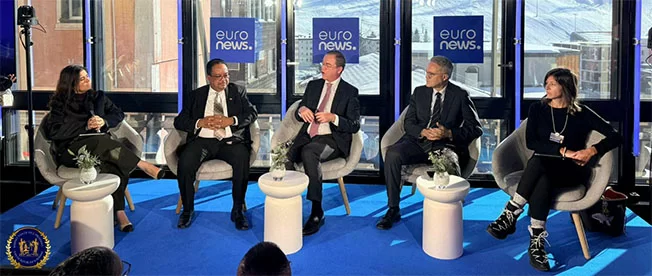
Suriname has declared its intention to build economic development around sustainable tourism rather than petroleum revenues, according to Vice President Gregory Rusland’s address at the World Tourism Forum in Davos, Switzerland on January 20, 2026. Speaking during a panel discussion, the vice president positioned ecotourism as a strategic pillar for national development while inviting international investment and collaboration.
Rusland presented Suriname as a distinctive destination characterized by 93% pristine rainforest, preserved indigenous and tribal communities, and remarkable religious coexistence exemplified by a synagogue and mosque standing peacefully side by side. ‘Though our population numbers merely 600,000, our nation possesses exceptional offerings,’ Rusland stated, highlighting that Suriname ranks among only three carbon-negative countries worldwide.
The vice president cautioned against mass tourism, advocating instead for high-quality, low-volume tourism where visitors pay premium rates for authentic experiences centered on nature, tranquility, and ecological preservation. ‘Maintaining our current status is crucial,’ he emphasized, underscoring the need to protect the country’s environmental and cultural assets.
Panel participants broadly agreed that sustainable tourism represents a shared responsibility among governments, businesses, travelers, and local communities. Preservation of natural and cultural heritage for future generations emerged as a central theme, particularly as younger demographics grow increasingly critical of environmental degradation and legacy impacts.
Rusland challenged the perception of sustainable tourism as costly, arguing that it generates reciprocal value when travelers contribute positively to destinations they visit. In his concluding remarks, he reinforced Suriname’s commitment to avoiding oil dependency and emphasized the essential role of public-private partnerships with active local community involvement. ‘The Surinamese government will support everything necessary to further develop sustainable tourism,’ Rusland affirmed, identifying inclusion as a key component in this strategic direction.