分类: world

  • DGM eases entry requirements for tourists from the EU, U.S. and Latin America

    DGM eases entry requirements for tourists from the EU, U.S. and Latin America

    The Dominican Republic has officially prolonged its streamlined entry protocol for international visitors, eliminating the standard six-month passport validity mandate for tourists from major source markets. This strategic immigration policy extension, enacted through Resolution DGM-01-2024, will remain effective for a full year from December 1, 2025, through December 31, 2026.

    Travelers originating from Argentina, Brazil, Canada, Chile, Colombia, Ecuador, the United States, the United Kingdom, and all European Union member states now only require a valid passport for admission, regardless of its remaining expiration timeframe. The policy also encompasses foreign nationals from other countries who possess valid documentation permitting entry into any of the aforementioned nations.

    The General Directorate of Migration (DGM) characterizes this measure as a deliberate governmental effort to revitalize and strengthen the nation’s tourism sector by simplifying border control procedures. Immigration authorities have highlighted that reducing administrative barriers is crucial for enhancing the visitor experience and accelerating processing times at ports of entry. This initiative forms part of a broader national strategy to position the Dominican Republic as a more accessible and competitive destination within the global tourism landscape.

  • The promise that changed history

    The promise that changed history

    December 2, 1956, marked a definitive turning point in Cuban history when 82 revolutionary expeditionaries led by Fidel Castro embarked on their perilous landing at Los Cayuelos near Playa Las Coloradas. After seven grueling days aboard the overcrowded Granma yacht battling violent storms and treacherous seas, the determined rebels faced their ultimate test upon reaching Cuban shores.

    The landing itself proved more challenging than anticipated. What appeared as solid ground from the yacht revealed itself as a treacherous swamp, with thick, cold mud clinging to the revolutionaries’ legs as they waded through chest-deep waters for two exhausting hours. The physical ordeal of dragging themselves through the sucking terrain while carrying heavy equipment and weapons pushed the men to their absolute limits.

    At dawn, their position was discovered by government forces. Heavy naval artillery fire targeted the stranded Granma yacht while aerial attacks sent bursts of gunfire across the marshland. Despite extreme fatigue, hunger, and the immediate threat of enemy engagement, the expeditionaries maintained their unbreakable resolve—a collective determination to achieve Cuban liberation or martyrdom.

    This historic landing gave birth to what would become Cuba’s Revolutionary Armed Forces, inheriting the legacy and mettle of the original Rebel Army. The events of that December morning transcended the immediate struggle, evolving into a powerful symbol of national resistance and self-determination. The ordeal at Los Cayuelos planted the seeds of revolutionary triumph that would ultimately reshape Cuba’s political landscape, creating a living legacy that continues to influence subsequent generations of Cubans.

  • Nederland stelt 66 miljoen euro beschikbaar voor Surinames herstelprojecten

    Nederland stelt 66 miljoen euro beschikbaar voor Surinames herstelprojecten

    The Netherlands has pledged €66 million to fund social projects in Suriname aimed at addressing the legacy of colonialism and slavery. This allocation forms part of the broader €200 million Slavery Past Fund established by the Dutch government following King Willem-Alexander’s formal apology in July 2023.

    During a high-level dialogue at the Surinamese Presidential Cabinet, Dutch Foreign Minister David van Weel announced the commitment to representatives of Indigenous and tribal communities, descendants of enslaved Africans, and government officials. The meeting occurred as part of the Dutch royal couple’s official visit to Suriname.

    Minister van Weel emphasized that the royal apology marked not an endpoint but a beginning: “There is no period placed, but a comma. This fund is designed to support the process of restoration and healing,” he stated.

    Surinamese President Jennifer Simons expressed appreciation for the pledged resources while clarifying their intended purpose. “The €66 million is not reparations but rather a consciousness-raising fund for education and societal development,” she explained. President Simons indicated that discussions regarding proper reparations, aligned with the Caricom 10-point plan, would need to occur separately at a later stage.

    King Willem-Alexander reinforced the Netherlands’ commitment to listening and learning throughout the process. “This is a moment to hear what lives among you. I realize that the pain of the past continues through generations, and I feel responsible for my predecessors,” the monarch stated.

    Community representatives used the dialogue to request structural support. Granman Albert Aboikoni of the Saramaccaners called for increased consultation regarding “restitution and financial support” to address historical disadvantages. Wilgo Ommen of Fiti Makandra acknowledged the importance of apologies while emphasizing they shouldn’t represent the conclusion: “We look forward to a process after the comma.”

    Armand Zunder, Chairman of the Restoration and Reparation Commission, concluded contributions by requesting the establishment of a mandated commission specifically focused on healing and restoration within affected communities.

    President Simons confirmed the dialogue would lead to forming a joint team from both nations to advise on implementing the healing and restoration process. The meeting was chaired by Edgar Dikan, advisor to the Presidential Cabinet.

  • FLASH : Artibonite, Emergency Appeal for Help from SPNH-17

    FLASH : Artibonite, Emergency Appeal for Help from SPNH-17

    Haiti’s Artibonite region, historically known as the nation’s agricultural core, faces an unprecedented security crisis as armed gangs now control over 50% of police territories according to emergency reports. The SPNH-17 Police Union has issued an urgent appeal to national authorities after receiving multiple distress calls from officers overwhelmed by escalating gang violence.

    The deteriorating situation has paralyzed daily life across the region, with residents unable to work, travel, or conduct basic activities due to widespread terror. Despite the presence of Kenyan peacekeeping forces stationed at Pont Sondé, criminal elements continue their brutal campaign, exemplified by the November 29th atrocities where multiple civilians were burned and killed.

    SPNH-17’s emergency petition targets the Presidential Transitional Council, Police Superior Council, Acting Director General Vladimir Paraison, and departmental leadership, demanding immediate large-scale military intervention. The proposed operation requires comprehensive tactical deployment including:

    • Combat helicopters for targeted strikes on gang strongholds
    • Naval patrols to secure coastal waters from Montrouis to L’Estère
    • Special forces units to liberate blockaded communities including Gonaïves, Gros Morne, and Montrouis

    The police union emphasizes that current security measures have proven tragically inadequate against well-armed criminal networks. Their statement underscores the national strategic importance of Artibonite, describing it as both “the breadbasket of the country” and “the heart of Haiti” whose agricultural output sustains the entire nation.

    This crisis represents a critical juncture in Haiti’s ongoing security challenges, with implications for both national food security and regional stability in the Caribbean basin.

  • Magnitude 3.7 Earthquake Felt Near Antigua and Barbuda

    Magnitude 3.7 Earthquake Felt Near Antigua and Barbuda

    A minor seismic event registering 3.7 magnitude occurred in the Eastern Caribbean basin on Monday afternoon, as detected by the automated monitoring systems of the University of the West Indies Seismic Research Centre (UWI-SRC). The tremor was recorded at precisely 12:32 local time (16:32 GMT), with its seismic epicenter positioned at geographical coordinates 16.05°N latitude and 62.51°W longitude. The quake originated at an intermediate depth of 53 kilometers beneath the Caribbean Sea floor. According to seismic mapping data, the epicentral region was located approximately 88 kilometers southwest of Brades, Montserrat; 110 kilometers west-southwest of Point-à-Pitre, Guadeloupe; and 138 kilometers southwest of St. John’s, Antigua and Barbuda. Initial assessments indicate no immediate reports of structural damage, injuries, or tsunami alerts following the event. The UWI-SRC emphasized that their preliminary report was automatically generated by their seismic monitoring network and remains subject to potential revision once seismologists conduct comprehensive manual analysis. The Eastern Caribbean region resides within an active seismic zone characterized by complex tectonic interactions between the Caribbean and North American plates, making such minor tremors relatively frequent geological occurrences.

  • Antigua hosting regional conference on nuclear material inventory

    Antigua hosting regional conference on nuclear material inventory

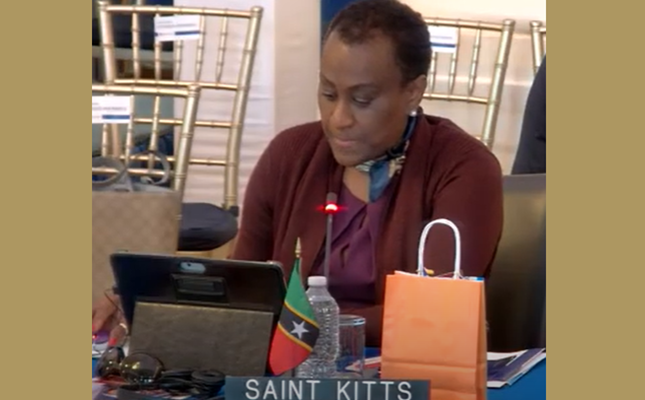
    ST JOHN’S, Antigua – A pivotal regional conference is underway in Antigua and Barbuda, focusing on enhancing the precision and reliability of nuclear material inventory reporting through the modified Small Quantities Protocol (SQP). This week-long assembly has drawn government delegates from across the Caribbean, including St Kitts and Nevis, St Vincent and the Grenadines, St Lucia, Suriname, the Bahamas, Grenada, and Belize.

    The SQP serves as a critical international accord that streamlines safeguard implementation for nations possessing minimal or no nuclear materials. As an adjunct to a Comprehensive Safeguards Agreement with the International Atomic Energy Agency (IAEA), it temporarily suspends extensive reporting and inspection mandates for states operating beneath defined nuclear material thresholds. A 2005 revision to the protocol reinforced this system by activating essential reporting and inspection stipulations.

    This strategic initiative is collaboratively organized by the US Department of Energy, the National Nuclear Security Administration, the International Nuclear Safeguards Engagement Programme, and the IAEA. In his opening address, Ambassador Dr. Clarence Pilgrim, Permanent Secretary in the Ministry of Foreign Affairs, emphasized the conference’s critical timing. He underscored the imperative for all nations, regardless of their nuclear material holdings, to fulfill their international non-proliferation commitments diligently.

    The core objective of the technical sessions is to equip participating states with the advanced skills necessary to generate accurate nuclear inventories and ensure compliant reporting to the IAEA. Organizers confirm that this specialized training is instrumental in supporting regional endeavors to satisfy the stringent requirements of both the Comprehensive Safeguards Agreement and the Additional Protocol, thereby reinforcing the foundational architecture of global nuclear security.

  • ‘We were like saviours’: Jimmy Cliff’s historic performance in Apartheid era South Africa

    ‘We were like saviours’: Jimmy Cliff’s historic performance in Apartheid era South Africa

    During the height of South Africa’s Apartheid regime—a system condemned by the United Nations as a crime against humanity—the country faced global isolation as a pariah state. International entertainers, athletes, and business figures risked United Nations blacklisting for engaging with the racially segregated nation. Despite these sanctions, Jamaican reggae icon Jimmy Cliff made history in May 1980 by becoming the first Jamaican artist to perform in South Africa, undertaking a controversial two-week tour with three landmark concerts.

  • News : Zapping…

    News : Zapping…

    Haiti continues to grapple with escalating gang violence while simultaneously witnessing efforts toward institutional stability and community development. A recent terrorist attack by the ‘Gran Grif’ gang in Pont-Sondé, Saint-Marc, resulted in significant casualties and property destruction during an overnight assault on November 29, 2025. Automatic weapon fire terrorized residents from evening until dawn, with houses and vehicles set ablaze, though official casualty figures remain unconfirmed.

    Amid the violence, Haiti’s institutional framework demonstrates resilience. The Haitian Football Federation celebrated the 95th anniversary of Association Sportive Capoise, honoring the club’s enduring legacy since 1930. Simultaneously, former Deputy Jerry Tardieu received international recognition from the France-Latin America-Caribbean Association for his peacebuilding efforts in Paris.

    Disturbing reports reveal sexual violence against women and girls is systematically employed as a weapon of intimidation and territorial control by gangs, with approximately 76% of victims avoiding seeking help according to recent surveys.

    On the development front, reintegration programs for deportees from the Dominican Republic are underway through collaborative efforts between Haiti’s Ministry of Agriculture, International Organization for Migration, and the French Embassy. These initiatives focus on restoring irrigation systems in Plaine-du-Nord to support communities and address displacement causes.

    The justice system is also undergoing reforms, with government officials assessing juvenile detention facilities and working to establish dedicated correctional and criminal courtrooms beginning December 2025.

  • Hurricane Season 2025 ended quietly

    Hurricane Season 2025 ended quietly

    The 2025 Atlantic hurricane season has been officially characterized by meteorologists as a period of extreme contrasts, marked by unprecedented calm and record-shattering ferocity. According to a comprehensive analysis from The Weather Network, this season delivered one of the most powerful hurricanes ever recorded to make landfall—Hurricane Melissa, which left a trail of devastation across Jamaica.

    Contrary to typical patterns, the season commenced with exceptional tranquility, experiencing its latest start in a decade. The inaugural storm, Tropical Storm Andrea, did not form until the final days of June, initiating a series of unusually long and quiet intervals. These prolonged lulls defined the first half of the season, creating a deceptive sense of calm.

    The narrative shifted dramatically as the season progressed, erupting into periods of extreme intensity. The term ‘all or nothing’ has been used to encapsulate the season’s bipolar nature, where stretches of atmospheric inactivity were abruptly severed by some of the most potent storms ever documented in the Atlantic Basin.

    The statistical outcome reveals a season that defied averages. The total count reached 13 named storms, alongside 5 hurricanes. Notably, 4 of these hurricanes intensified into major hurricanes (Category 3 or higher). This final tally presents a complex picture when measured against the 30-year average of 14 named storms, 7 hurricanes, and 3 major hurricanes, indicating a season with fewer overall storms but a higher concentration of severe events.

  • Citizens report large holes in Dominican–Haitian border wall

    Citizens report large holes in Dominican–Haitian border wall

    A significant security breach has been identified along the heavily fortified border separating the Dominican Republic from Haiti. Travelers passing through the Dajabón border region have reported discovering at least six substantial openings in the barrier system, strategically located between the old and new customs checkpoints.

    Photographic evidence provided by concerned citizens reveals these breaches are sufficiently large to permit unimpeded passage of individuals. The compromised structural integrity not only facilitates unauthorized border crossings but also creates vulnerabilities for irregular movement of commercial goods, potentially undermining customs enforcement and revenue collection.

    The Dominican government’s ambitious border security initiative, launched in 2022, envisioned a technologically advanced ‘smart wall’ system combining concrete foundations, metal fencing, and surveillance technology across strategic sections. This 392-kilometer barrier project, reported 84% complete in late 2024 with anticipated delivery in early 2025, was specifically designed to combat irregular migration, drug trafficking, arms smuggling, and human trafficking operations.

    Official statements have highlighted additional benefits including protection of agricultural interests, with some local ranchers reporting approximately 80% reduction in cross-border livestock theft following partial implementation. Despite these security priorities, authorities have yet to issue any official response regarding the recently discovered damage to this critical infrastructure project.

    The timing of these breaches raises questions about maintenance protocols and monitoring capabilities of the border security system, particularly as the project approaches its scheduled completion date.